DD
MM
YYYY

PAGES

DD
MM
YYYY

spot_img

PAGES

Home Blog Page 7351

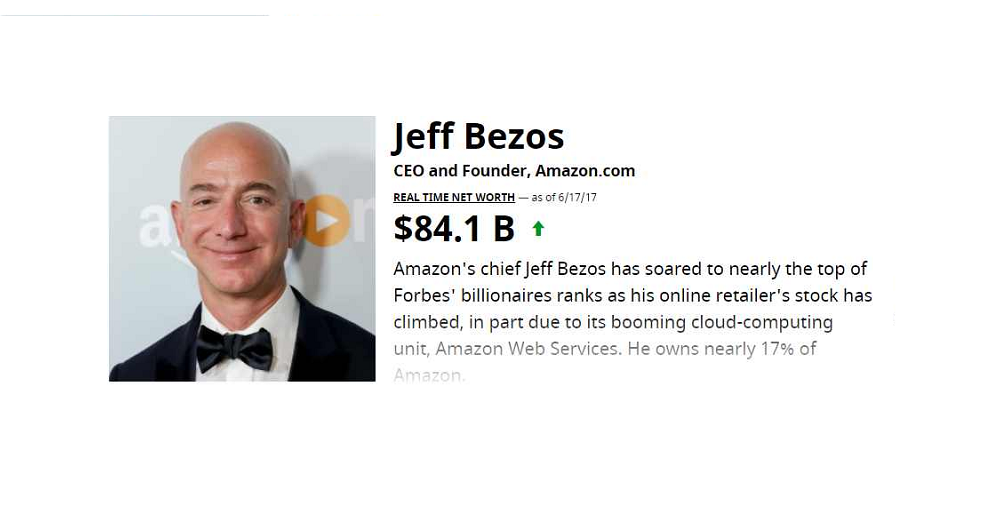
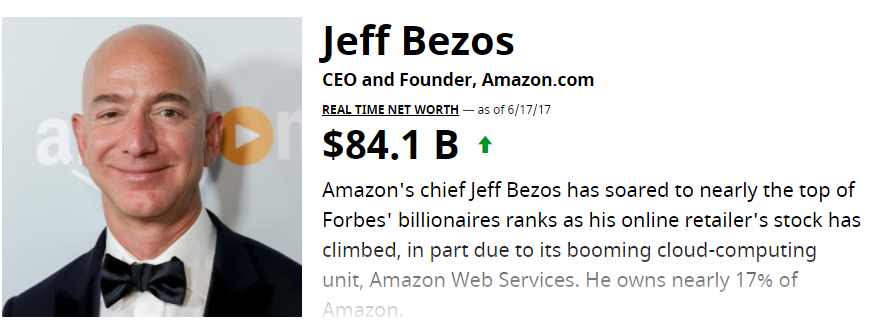
Amazon’s Jeff Bezos To Top Bill Gates As The World’s Richest Man In 2018, Now Worth $84.1B

0

Jeff Bezos did a great deal by buying Whole Foods for Amazon. The Amazon’s deal to buy Whole Foods may be remembered as the dawn of a new era in business, when an old industry stubbornly resistant to change suddenly gave way to something modern and innovative. But supermarkets were once themselves a cutting-edge concept, according to QZ in a newsletter.

It wasn’t that long ago that shoppers went to the butcher for meat, the baker for bread, and the green grocer for produce. Starting in 1930, the supermarket pulled it all together. The bounty of the American supermarket, with its towers of toilet paper and freezers full of meat, was so arresting to Soviet officials who visited one in 1989 that it shattered their faith in communism and helped end the Cold War.

Modern supermarkets were made possible by a host of changes, from industrial-scale farming to the interstate highway system. But after pioneering a logistics revolution that paved the way for shopping malls and big-box stores, progress pretty much stopped. While virtually every other domain of commerce has changed dramatically with the advent of the internet, online grocers were stymied by the challenge of delivering perishables while operating within the tight margins that make groceries a competitive business.

Why is this time different? Part of it is the track record of Amazon and Jeff Bezos; from books to television shows, there is little, if anything, they haven’t been able to sell online.

Bezos will soon be the richest person in the world. After today, Amazon is headed toward being the biggest company. And just as flip phones became obsolete the day after iPhones were introduced, Amazon-powered food buying could soon make us wonder how we ever managed before. He is the second richest man right now at $84.1 billion.

Here is Bill Gates number today – $89.3 billion. Jeff is just behind

By Q2 2018, Jeff will top Bill Gates, looking at the growth of his wealth over the years and the impact of this huge deal.


Keystone Bank Nigeria Unveils E-commerce Marketplace, Pink Network, For Merchants

0

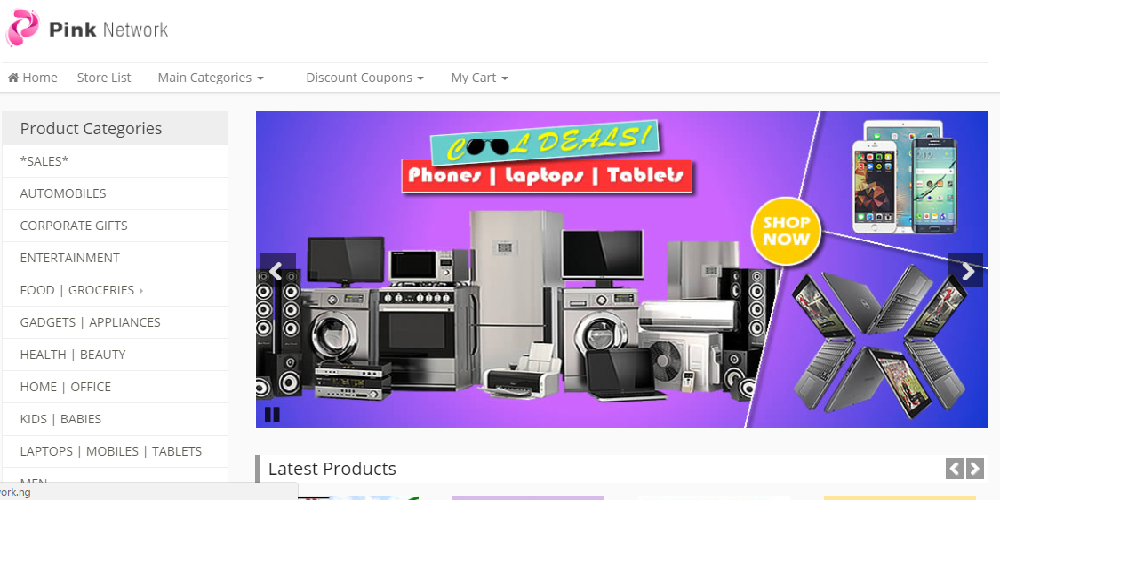
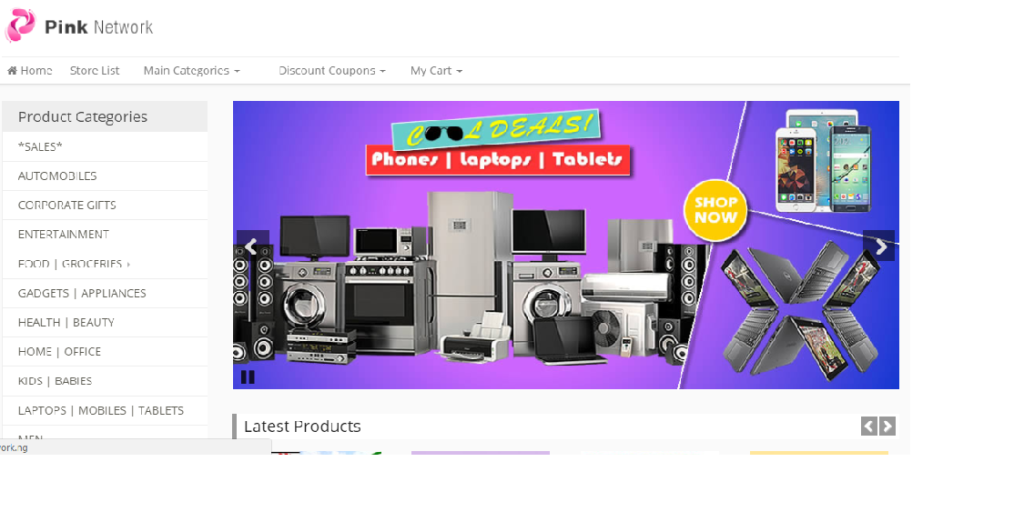
Keystone Bank Nigeria has unveiled an e-commerce marketplace to bring merchants in its ecosystems.

Keystone Bank Limited (hereinafter referred to as Keystone Bank) provides the information contained on the Pink Network and Marketplace portal and any of the pages so contained in the portal (“Portal”) is subject to the terms and conditions (“the terms”) set out herein and referenced herein.

It is copying GTBank here which has used its own marketplace to bring small businesses in its banking network. In the Pink Network, merchants can showcase their goods in stores where buyers can interact with them. The key is that all processing of transactions will be handled by Keystone Bank.

Etisalat Nigeria Press Release – Negotiation With Banks Ongoing, All Options On Table

0

Etisalat Nigeria has provided information on its efforts to resolve its loan challenges after the bombshell news that its principal shareholder had pulled out of Nigeria. Full statement below.

Etisalat Nigeria is aware of news reports to the effect that Mubadala Development Company, the majority shareholder of the company is exiting the business. Whilst it is premature at this stage of the ongoing discussion to affirm that this is the conclusive option, Etisalat Nigeria considers it pertinent to state that parties in the negotiation are considering a number of options and discussions are at an advanced stage regarding the syndicated loan agreement with the banks. It will therefore be presumptive and in bad faith to begin to predict the outcome.

Discussions have so far been quite collaborative and we expect to reach a final resolution next week, by which time we will be in the position to make a definitive announcement.

Etisalat Nigeria can confirm that negotiations with the consortium of banks regarding the syndicated loan agreement signed in 2013 have reached an advanced stage. As noted in an earlier statement, we are considering a number of options and are not taking anything off the table at this time.

Etisalat remains a viable business, having recorded its best financial year in 2016. So parties are keen to ensure that the ongoing discussions and eventual outcome do not affect the day to day operations of the business whether now or after the announcement of our agreement. All parties have continually demonstrated an interest in the continued operations of Etisalat as a business as it remains a backbone of millions of small business owners; multinationals, government and indeed Nigerian subscribers in general.

Etisalat therefore appeals to our partners in the media to exercise some restraints in speculating the outcome of the ongoing discussions being held by parties behind closed doors. We appreciate the tremendous support we have received since inception from the media and we count on the continued support of our media partners as we navigate this path and emerge as a stronger business.

Signed:
Ibrahim Dikko
VP, Regulatory & Corporate Affairs
Etisalat Nigeria

Only 3% Of Nigerian Family Businesses Have Laid Down Strategy For Wealth Transfer – KPMG

0

Clearly defined structures for leadership succession and wealth transfer are essential building blocks for sustainable family businesses. However, only about 20% of family businesses in Nigeria have a plan for leadership succession and a minuscule 3% have a laid down strategy for wealth transfer. These findings were presented by KPMG Nigeria in its recently released ‘Nigerian Family Business Barometer’ publication.

The report followed a survey of family businesses in Nigeria carried out by KPMG with the aim of assessing the key issues and challenges affecting family businesses across Nigeria, proffering solutions to these challenges and positioning them to thrive and endure beyond the founder’s generation.

Commenting on the report, Segun Sowande, Partner and Head, Management Consulting, KPMG in Nigeria remarked that, “Families in business have an opportunity to create a lasting legacy that brings with it a sense of accomplishment and pride. However, family businesses like every other business in Nigeria have their peculiarities and challenges. While family businesses have the unique characteristics of a family, they, like other companies are often in search of financing to propel their growth. In his words, “as a family grows and changes, the family business must also evolve to accommodate changing family dynamics”. He also noted that preparing and training the next generation as well as improving financial literacy among family members are critical success factors to building businesses that will outlast the founder’s generation.

The first edition of the Nigerian Family Business Survey Report is replete with insights from family businesses across Nigeria and draws comparisons between the Nigerian, African and European family business community. The survey revealed that family businesses in Nigeria have demonstrated strong resilience to external pressures and challenges in the last one year and are optimistic about the future.

Some of the insightful findings presented in the Report are shared below:

  • To better define the top of the mind issues of Nigerian family businesses, we asked our respondents to highlight their top three “stay awake” issues. 47 percent of the respondents cited Limited access to finance as their most important stay-awake issue followed by fluctuating exchange rate, 42 percent and declining profitability, 27 percent. In Nigeria, 58 percent of family businesses have a formal board of directors in place, compared to about 46 percent of respondents across Africa. For family businesses in Africa, the future is all about sustainable growth and although they are optimistic, there are still major challenges inhibiting their growth plans. Like all companies, family businesses need financing. Expansion is the priority for most in both the short term and the long term. The short-term focus is on organic growth in existing markets, but in the long term, the more ambitious strategies of acquisitions and expansion into new geographical markets are the main focus.

When asked to identify future objectives, unsurprisingly, 62 percent cite improved profitability, 38 percent, higher turnover and 27 percent – diversification as their top business goals.

  • In Nigeria and Africa, Family Businesses identified easier access to financing, infrastructure development, reduced administrative burden and lower tax rates, as key changes required to boost their growth prospects.Family businessses in Nigeria may need to start looking at HNWIs (High Net Worth Individuals) as a viable source of financing. HNWIs are happy to be involved and offer their advice, which is a trait that many family businesses are looking for. They would often like to have an equity stake, which (in some cases) could be a barrier to investment.
  • The highest priorities for family businesses over the next two years relate to improved profitability, increased turnover and diversification.Family businesses must begin to enforce strategic cost optimization as a means of tackling decline in profit levels. Businesses that do not take firm and sustainable cost optimisation measures will likely soon find themselves dealing with ever tightening profit margins and a stagnant bottom line.
  • Only 20 percent of family businesses in Nigeria have put in place formal structures for leadership succession while 3 percent have defined structures for wealth transfer and participation in the business – which are essential building blocks for effective transition and sustainability for the family and its businesses. These structures include family councils, clearly defined vision and constitution for the family, requirements for participation in the business, etc.

To read the full report, visit https://home.kpmg.com/ng/en/home/insights/2017/05/nigerian-family-business-barometer.html

KPMG Press Release, title modified.

Cumulative Profits of MTN, Glo, Airtel And Etisalat In Nigeria

1

In this videocast, I estimate how much MTN, Glo, Airtel and Etisalat have made in profits, in Nigeria. To do this, I looked into their total payments to  the National Information Technology Development Agency (NITDA). The Act establishing NITDA mandates that telecommunications companies in Nigeria are required to pay 1% of their annual profits as levy for National Information Technology Development Fund (NITDEV) which NITDA controls. (For in-depth analysis, you can read here.)