


In this videocast, we discuss ALAT. The ALAT by Wema Bank is a new product which the bank promised to use to revolutionize banking in Nigeria. According to the bank, ALAT is a fully functional digital bank. With ALAT, a customer can do all his or her banking transactions without being physically present at a bank. It goes beyond a banking app as they claim that it was built to be a bank branch in the internet and not just an extension of a bank via app. I do not have a Wema Bank account and yet to review the product, but merely reading the press release, this is promising. They have some bugs which they are fixing. Generally, they are on a path to the future. Now, Wema Bank has an opportunity to extend its capabilities and make a pan-African digital bank.
Nigerian Startups Rule Inaugural Google Launchpad Accelerator Africa

Nigerian startups continue to dominate in the African startup ecosystem. In the inaugural Google Launchpad Accelerator Africa, six companies were selected – four from Nigeria, one from each of Kenya and South Africa. The companies are as follows:
Twiga Foods, Kenya
Tech-enabled sourcing and distribution platform that replaces informal wholesale markets in Africa’s urban markets
Delivery Science, Nigeria
Mobile forms that help large organizations obtain field data
Paystack, Nigeria
Helps businesses in Africa accept payments from their customers
JUMO, South Africa
The largest scale, lowest cost financial services marketplace for emerging markets
Launchpad Accelerator is a program to empower founders by supporting their startups through mentorship and equity-free support. The Accelerator leverages all that Google has to offer, to help participating tech startups reach their true potential.
For the next application phase, add your email in the newsletter to be informed when the next application cycle begins.
Beyond Konga and Jumia – Winning Africa’s E-commerce Market [Video]
In this videocast, I discuss the future of e-commerce in Africa and why the sector is still anyone’s game to win despite the presence of key competitors. The loss-making sector demands someone with capital to boost logistics and accelerate scale to make money. Today’s leaders are not doing that yet, and can be easily disrupted and displaced. But there are challenges in competing in this sector because the environment and the fundamentals are toxic with largely no infrastructure to key in. The business competitive factor is not the internet or website but logistics. Winning this sector to become a category-king will be settled by a company that can invest, at scale, in logistics to serve more cities and countries.
The Problems With Inventive Societies [Video]

In this cast, I discuss some of the big challenges of inventive societies characterized by so many ideas but little products and services to show for them. I explain why nations must transition into innovative societies where solutions are provided and where human welfare accelerates.
A simple math: Innovation = Invention + Commercialization was used in the explanation.
Qualcomm Chip Wirelessly Charges A Moving Electric Vehicle

Qualcomm is innovating big in the mobile device space. Now, it is moving into the electric vehicle space. We do know that the biggest stumbling block in the way of electric vehicles becoming commonplace is their limited range. A petrol or diesel powered car currently has roughly four to five times the range on a tank-full compared to an electric car with fully charged batteries.
Countries like UK and US have charging stations even on the highways to counter this. But stopping frequently to charge the batteries seems like a massive waste of time. And it is. So this new development by Qualcomm is like a godsend.
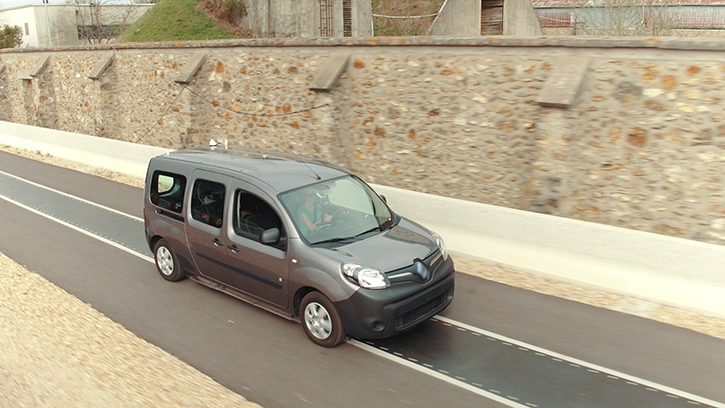
The company, known more for its semiconductor chips that power mobile phones, claims to have successfully demonstrated its wireless charging technology for cars. While others too are working on inductive charging for cars, Qualcomm’s system is said to work even on moving cars. Wireless charging is a feature found in some flagship mobile devices, so we’re not surprised Qualcomm has translated the technology for use in cars.
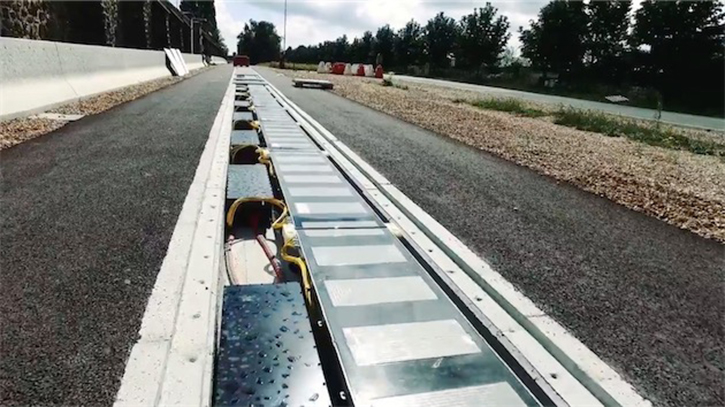
Qualcomm built a 100 meter track in France, where a Renault Kangoo EV was charged at up to 20 kilowatts while on the move at highway speeds. The tech promises to be able to charge a suitably equipped vehicle while moving in either direction. The track used for the test had been prepared with the source part embedded under the tarmac while the receiver was integrated into the car.
If the technology picks up and can be implemented on a large scale, electric vehicles might just become the norm. That is disruption and another source of technology licensing at massive scale for the chip maker.