DD
MM
YYYY

PAGES

DD
MM
YYYY

spot_img

PAGES

Home Blog Page 7378

The World is Numbers [Video]

0

I am updating the title of today’s videocast to “The World is Numbers” which is really what the cast is about.

In today’s videocast, I discuss the material component of the universe and while our world, with all we do therein, is about numbers. Just as Pythagoras noted many centuries ago, about 600 BC, the world is made up of numbers. And if that is the case, we live to process and manipulate numbers. Automating that process is computing, generally branded as technology, and it is at the heart of our civilization. It brings speed, and accelerates productivity, and it continues to evolve.

In The Beginning…Computing [Video]

1

In today’s videocast, I discuss the material component of the universe and while our world, with all we do therein, is about numbers. Just as Pythagoras noted many centuries ago, about 600 BC, the world is made up of numbers. And if that is the case, we live to process and manipulate numbers. Automating that process is computing, generally branded as technology, and it is at the heart of our civilization. It brings speed, and accelerates productivity, and it continues to evolve.


Unveiling Tekedia Daily [VideoCast] w/ Ndubuisi Ekekwe

0

At the beginning of this year, one of the things we planned in Fasmicro Group (which I own) is to have a videocast. My colleagues have asked me to make time to share some of the insights and perspectives we have  picked up as we build our business across continental Africa. The cast will be a medium to have deeper conversations on technology, business, education, entrepreneurship, etc on Africa – a changing continent in a globalized world.

I just returned from Kenya where I visited Kenya Red Cross, Craft Silicon and other entities. I met innovators solving local problems. Africa is working and the future is bright. From Lagos to Kigali, Cape Town to Nairobi, and around the continent, a new generation of leaders are redesigning the economic architecture of this continent, for good.

Every decade, African innovators fix one key industry problem. In 1990, they took care of banking. Before then, banking was extremely terrible. Legends in Nigeria started new banks and brought speed and automation in the sector. In 2000, it was time for telecommunications. Icons from South Africa and Zimbabwe redesigned the continent with their business skills and acumen, providing voice telephony to their fellow citizens. In 2010, we saw the age of data morphing and we are going to experience higher productivity in 2020 in agriculture and other sectors as IoT powers many sectors in the continent.

The fact is this – despite all the efforts from foreign governments and institutions, it is only when African entrepreneurs take action to fix a sector do we see real impacts. This tells me that only the locals understand how to fix the challenges we have. As I noted in a new piece in Harvard Business Review, the time for agriculture is now as digital technology makes way into farms. In coming years, our farmers will earn more and we will see the beginning to curing extremely hunger in the beautiful continent.

My plan is to use this videocast to break down what is happening, chronicle the people, companies and institutions leading them. I do hope that the time you will be spending with us will be worthwhile.

Tekedia Daily will appear online, daily, before 6.30 am Lagos time. The archives will be here and new casts will be posted on Tekedia homepage.

My colleagues in Fasmicro Group who curate Tekedia will help in sharing the casts across our social media platforms.

Good to have you here. Please stay around and check daily. Thanks.


NB: Tekedia is Fasmicro Group blog.

How SMAC Can Drive Your Connected Consumers

1

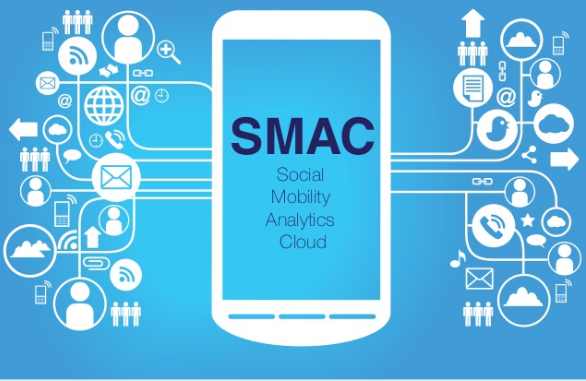
The IDC CIO Summit, currently underway in Lagos, is focusing on how the next wave of social, mobile, analytics and cloud (SMAC) technologies will unleash innovation and productivity in the enterprise by delivering better employee and customer experiences.

These technologies empower people by making apps, services and information accessible everywhere (mobile), collaborative and easy-to-use (social) and tailored and responsive to their needs and context (analytics). In the background, the power of the cloud makes it affordable and easy to deploy the latest applications and solutions to users wherever they are.

Nigerian CIOs should look at how they can use SMAC (also known as the Third Platform) to deliver personalised experiences that are tailored to new working styles across social and mobile as well as the expectations of the connected customer. It’s all being made possible by growing Internet penetration, with more than 90 million Internet users in Nigeria looking to organisations to provide them with digital services and experiences.

Business software: SMAC’s foundation

SMAC should be built on the foundation of a next-generation business management system that gives end-users access to real-time information and services wherever they are. Such a system has a simple user interface, requiring little or no training, but delivers a powerful user experience. It resembles and is as easy to use as a mobile app for a social media service.

It features social networking features that make it easy for people to collaborate with others and share information. As such, today’s business management solutions are tailored to the needs of a digital native accustomed to WhatsApp, Netflix  and Snapchat rather than a worker used to email and old-fashioned ERP.

The solution can be accessed from a mobile app or a standard web browser, extending CRM, ERP, project management and business process management software to any place where there is an Internet connection. With wearables and the Internet of Things coming of age, enterprises will have new interfaces where they can interact with employees and customers, as well as collect data.

Analytics tools democratise data

Analytics tools give managers and leaders access to real-time data about the business’s performance on their mobile devices for strategic decision-making. But they also extend data to everyone in the business.  At an operational level, the combination of big data and machine learning will allow companies to tailor customer and employee experiences to the needs of different segments to optimise sales and productivity.

Paired with the Internet of Things, advanced analytics and machine learning are bringing about the fourth industrial revolution. Connected devices and sensors, cloud computing, advanced robotics, intelligent software, and a range of other technologies are enabling companies to produce complex products in a smooth, automated process using specialist robots with very little human input.

In this environment, analytics is used to forecast issues such as machine errors or supply chain interruptions so that quality levels and uptime remain high. The Nigerian CIO’s role will be about managing the challenges and opportunities presented by digital transformation and the Internet of Things. Expect this trend to bring the same level of disruption to old-style industries such as mining, manufacturing and construction as the Internet has already brought to banking, media and retail.

By Magnus Nmonwu, Regional Director for Sage in West Africa

Cyber-Insurance Must Evolve In Africa To Manage Cybersecurity Threats

0

This week’s WannaCry ransomware attack achieved unprecedented scale, infecting more than 230k computers across 150 countries. The virus hit car factories, hospitals, and even the U.K.’s National Health Service, with many employees forced to pay a ransom in bitcoin.

WannaCry leverages NSA (National Security Agency) malware that had been leaked just two months prior, illustrating the increased ability for hackers to move quickly on seemingly minimal resources. Further illustrating the point this week, Docusign confirmed that hackers had breached a customer email address database and sent phishing emails to a broad group of users.

The recent events demonstrate a sobering fact – as organizations have become increasingly tech-enabled, the “attack perimeter” for hackers has expanded. As a result, it is much easier for hackers to play offense than it is for organizations to play defense.

The only feasible solution is for innovators to re-think how we communicate and transact more securely. With tools such as blockchain, advanced encryption, two-factor authorization, and cyber-insurance, startups will need to find elegant and low-friction ways for large enterprises to improve their security.

Africa has to evolve its cybersecurity insurance sub-sector to manage the risks associated with digital business. Corporations have to be prepared to use insurance to mitigate risk as technology is proving not to have the capabilities to comprehensibly secure and protect us from cyber-attacks.


Updated: This post has been updated, after a representative of Docusign reached out to Tekedia, to indicate that the breach affected database of customer email addresses only, and not customer database.