DD
MM
YYYY

PAGES

DD
MM
YYYY

spot_img

PAGES

Home Blog Page 74

BitGo IPO Goes Live Priced Around $18

0

BitGo’s IPO has gone live, marking the first major crypto-related initial public offering of 2026.

The digital asset custody and infrastructure firm BitGo Holdings (ticker: BTGO) priced its IPO at $18 per share on January 21, 2026—above the marketed range of $15–$17—and began trading on the New York Stock Exchange (NYSE) on January 22, 2026.

The company sold approximately 11.8 million shares, raising about $212.8 million, with a valuation of around $2.08 billion at the IPO price. On its debut day: Shares opened up significantly, jumping as much as 25–36% in early trading reaching highs near $24.50 in some reports.

It closed modestly higher at around $18.49 up about 2.7% from the IPO price, with some intraday volatility. This performance signals renewed investor interest in crypto infrastructure plays, even amid broader market uncertainty including Bitcoin’s recent selloff.

BitGo, founded in 2013, is a leading provider of crypto custody, wallets, staking, trading, and other services, with over $90 billion in assets on platform as of mid-2025. It serves institutions, financial firms, and others, and acts as a custodian for various spot crypto ETFs.

The strong though tempered debut is seen as a positive sign for crypto’s integration into traditional finance, potentially paving the way for more listings. Recent X posts and news reflect excitement around this milestone, with some noting tokenized versions of the stock appearing on-chain via platforms like Ondo Finance shortly after the NYSE debut.

BitGo’s IPO, which priced at $18 per share above the $15–$17 range and raised $212.8 million on January 21, 2026, before debuting on the NYSE (ticker: BTGO) on January 22, carries several key implications for the company, the broader crypto industry, and traditional finance integration.

BitGo focuses on “plumbing” — secure custody, wallets, staking, and infrastructure services — rather than volatile trading or speculation. Over 80% of its revenue comes from recurring, sticky fees tied to custody and staking, making earnings more predictable than peers like Coinbase which relies more on transaction volumes.

Assets under custody grew ~96% year-over-year to $104 billion as of late 2025, with revenues up ~65% in a down market, showing resilience. The company turned profitable recently— net income in the low millions for 2025 after prior losses and is on track for significant scaling.

Analysts from VanEck project revenues exceeding $400 million and EBITDA over $120 million by 2028, potentially justifying a premium valuation due to its high-quality, service-driven earnings.

With federal trust status, zero hacking losses historically, and services for spot crypto ETFs, BitGo benefits from stricter disclosures as a public company, which could build trust and attract more institutional clients amid evolving rules.

As the first major crypto-related IPO of 2026 following others like Circle and Gemini in 2025, its solid debut — opening up ~25–36% intraday before closing modestly higher at ~$18.49 — signals renewed investor appetite despite Bitcoin’s recent selloff and market headwinds.

This acts as a bellwether: success could encourage more listings, while struggles might delay them. The positive reception highlights demand for regulated, compliant “picks-and-shovels” plays in crypto rather than direct token exposure.

This aligns with growing trends like real-world asset (RWA) tokenization up sharply and stablecoin adoption, where secure custody is essential. Analysts see 2026 as a possible “supercycle” for IPOs, with BitGo’s performance potentially paving the way for unicorns in AI, space, or other sectors — but especially more crypto infrastructure names.

It underscores crypto’s maturation: from 2021’s hype-driven listings to 2026’s focus on cash-flowing, profitable businesses backed by blue-chip underwriters. BitGo’s listing and quick on-chain tokenization of shares via platforms like Ondo Finance on Ethereum, Solana, etc. bridges TradFi and crypto, offering regulated exposure to digital asset services.

This could accelerate institutional inflows, as custody providers become gateways for ETFs, tokenized securities, and corporate balance sheets. Volatility in crypto prices could still impact sentiment, and competition in custody is intensifying. But the debut defied recent Bitcoin weakness, suggesting investors view BitGo as less correlated to token swings.

This milestone reinforces crypto’s shift toward institutional-grade infrastructure and mainstream acceptance — a positive sign for long-term adoption even in uncertain markets.
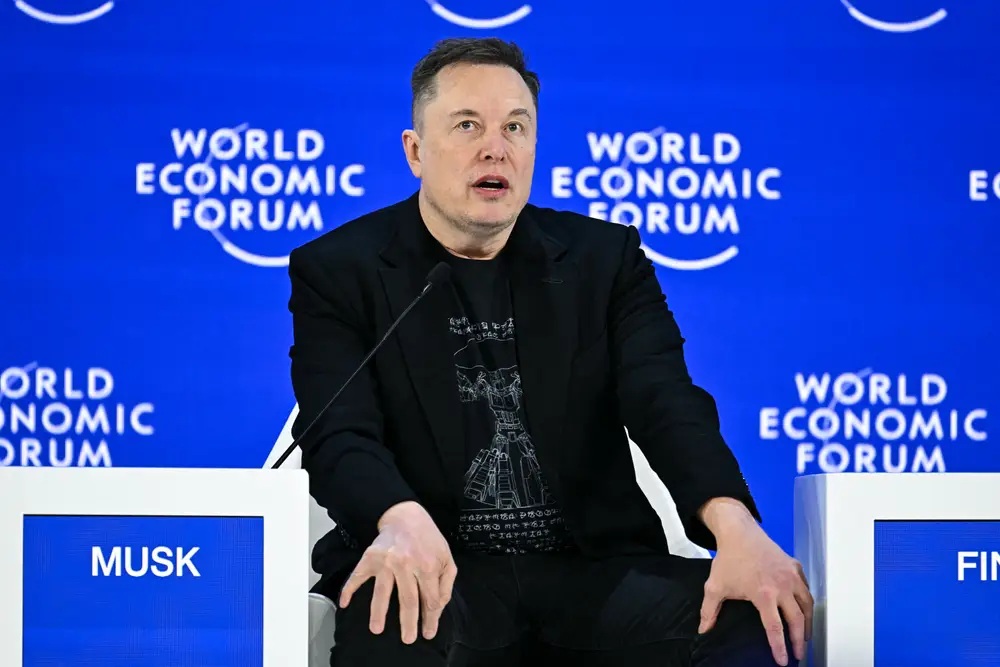

At Davos, Musk, Others Point Out Energy as China’s Edge in the AI Race

0

The race to dominate artificial intelligence has a new—and often overlooked—frontline: electricity. At the World Economic Forum in Davos, Switzerland, industry and political leaders converged on one point with striking clarity: AI development at scale cannot exist without abundant, affordable power, and China has a decisive advantage.

Tesla CEO Elon Musk, in his Davos debut, framed the issue bluntly during a conversation with BlackRock CEO Larry Fink.

“It’s clear that maybe later this year, we will be producing more chips than we can turn on,” Musk said. “Except for China: China’s growth in electricity is tremendous.”

The comments highlighted what U.S. and European AI executives have long feared: that the global race for AI supremacy will be as much about power grids and kilowatt-hours as it is about algorithms and talent.

China’s expansion in energy capacity is staggering. Beijing added roughly 445 gigawatts of generation in the first 11 months of 2025, compared with an anticipated 64 gigawatts for the United States across the entire year, according to the National Energy Administration and the U.S. Energy Information Administration. This gap illustrates how energy-intensive operations such as AI data centers and chip fabrication plants could be limited outside China, potentially slowing AI training cycles, infrastructure deployment, and large-scale experimentation.

Europe’s Energy Bottleneck and Policy Hurdles

European policymakers are acutely aware of the challenge. At a panel on clean power, Romanian Energy Minister Bogdan Ivan framed the issue as a matter of urgency.

“We need speed. We are in a world competing with China, which has one of the most affordable prices in energy,” Ivan said.

He emphasized that without streamlined permitting, diversified energy portfolios, and strategic investment, Europe risks falling behind.

Energy costs in Europe remain structurally higher than in China, with stark variations across member states. For example, EU data shows that in the first half of 2025, Hungary’s non-household electricity price was 17.7% above the EU average, while other nations, including Germany and Italy, faced similarly steep costs. Such disparities have direct implications for energy-intensive industries, particularly AI infrastructure, which consumes megawatts at an unprecedented rate.

Bureaucratic delays compound the problem. Ivan noted that constructing a nuclear or hydroelectric plant can take up to 11 years due to permitting hurdles.

“This timeline is incompatible with the global pace of technological competition,” he said, arguing that Brussels must allow member states to pursue energy solutions suited to local conditions.

Southern European countries may favor solar power, while nations with nuclear expertise, like Romania, should be encouraged to expand along that path.

U.S. Strategy: Nuclear, Permits, and AI Readiness

U.S. President Donald Trump echoed the theme of energy as a critical foundation for AI in his Davos address. He framed energy expansion as national infrastructure, asserting that an adequate supply is essential to maintain America’s AI competitiveness. Trump highlighted efforts to expand nuclear capacity and to expedite permits for new power plants, including private facilities built by tech companies. He framed this approach as a strategic imperative for AI development, positioning the U.S. to keep pace with China’s rapid buildout.

However, Trump’s remarks contained factual inaccuracies. He claimed that China exports wind turbines to Europe but does not operate wind farms domestically. In reality, China leads the world in installed wind capacity, with hundreds of gigawatts deployed nationally. Analysts noted that misstatements like these may undermine confidence in U.S. policy coherence even as the administration accelerates domestic energy production.

The Stakes for AI Infrastructure

The energy-AI link is no longer theoretical. Training a single large language model can require tens of millions of kilowatt-hours, and global AI infrastructure is poised for unprecedented expansion. Nvidia CEO Jensen Huang called the AI buildout “the largest infrastructure buildout in human history,” estimating trillions of dollars will be invested in compute and data centers over the next decade.

Without affordable and reliable energy, such investments could stall or shift to regions with lower costs, amplifying the competitive imbalance.

European leaders are particularly concerned that high electricity prices and regulatory delays will not only hinder AI adoption but also risk ceding industrial leadership to China. Microsoft CEO Satya Nadella, speaking at the same forum, warned that GDP growth in the AI era will be closely linked to energy costs.

“If you have a cheaper commodity, it’s better,” Nadella said, stressing that regions failing to secure low-cost electricity will struggle to translate AI capabilities into economic growth.

China’s head start in energy infrastructure has implications beyond AI competitiveness. Affordable electricity gives Chinese data centers a lower total cost of ownership, while companies can rapidly expand high-performance computing clusters without incurring the capital and operational penalties seen in the U.S. and Europe. The advantage may extend to other strategic sectors, from semiconductor fabrication to electrified manufacturing, reinforcing a broader technology and industrial lead.

For Europe and the U.S., the Davos conversations underscored a pressing reality: AI supremacy will require more than innovation in algorithms or investment in startups. It will demand bold infrastructure policies, accelerated permitting processes, and significant capital commitment to energy generation. Without these steps, experts warn, the gap between energy-rich regions and constrained ones could translate into a durable technological and economic imbalance.

Against this backdrop, the question for policymakers in Washington and Brussels is whether they can move fast enough to ensure that constraint does not define the next decade of AI leadership.

UBS Plans to Offer Cryptocurrency Investment and Trading Services to Select Private Banking Clients

0

UBS, the world’s largest wealth manager with approximately $4.7 trillion in client assets, is planning to offer cryptocurrency investment and trading services to select private banking clients.

UBS is currently in the process of selecting partners for the offering, with discussions ongoing for several months. No final decisions have been made on the exact rollout, timeline, or full scope.

The service would initially allow select clients in Switzerland via the private bank to buy and sell Bitcoin (BTC) and Ethereum (ETH). It could later expand to other regions, including Asia-Pacific and the United States. The move responds to growing demand from wealthy clients for direct exposure to digital assets.

This builds on UBS’s prior blockchain initiatives like tokenized funds and exploring crypto-linked products, but represents a step toward more direct crypto access compared to indirect exposure like ETFs. This aligns with a broader trend among major financial institutions—such as JPMorgan, Morgan Stanley, and others—accelerating their involvement in crypto amid increasing regulatory clarity and client interest.

UBS has not issued an official confirmation yet, and the plans remain under evaluation. This could mark a significant milestone in institutional adoption if implemented, potentially channeling substantial capital into Bitcoin and Ethereum from high-net-worth individuals.

The reported plans by UBS to offer direct cryptocurrency trading and investment services to select private banking clients carry several significant implications across markets, institutions, and the broader crypto ecosystem.

This move represents another major step in the convergence of traditional finance (TradFi) and crypto. UBS joins peers like JPMorgan, Morgan Stanley, and others that have expanded crypto access via ETFs, custody, or direct trading for high-net-worth individuals (HNWIs) and institutions.

It signals growing acceptance among conservative wealth managers that crypto—particularly Bitcoin and Ethereum—is maturing beyond speculation into a legitimate asset class for portfolio diversification. Wealthy clients have increasingly demanded direct exposure beyond just spot ETFs or indirect products, driven by performance, inflation hedging, and digital asset trends.

UBS’s response could unlock substantial new capital flows from ultra-high-net-worth individuals (UHNWI) who previously lacked seamless, regulated on-ramps through trusted banks. If rolled out starting in Switzerland’s private bank, with possible expansion to Asia-Pacific and the US, this could channel billions from conservative portfolios into BTC and ETH. HNWIs often allocate smaller portions (1–5%) to alternatives like crypto for upside potential with limited downside risk in diversified portfolios.

Even modest adoption from UBS’s client base could create meaningful buying pressure. It reinforces the narrative of crypto as “digital gold” or a store-of-value/tech play, especially amid clearer regulations in key jurisdictions (e.g., Switzerland’s progressive stance and improving US clarity).

This follows institutional pilots like UBS’s tokenized funds, cross-border blockchain payments on Ethereum with partners like Sygnum. It could accelerate tokenized real-world assets (RWAs) and stablecoin integration in wealth management.

Client retention and growth — Offering crypto helps UBS compete with digital-native platforms and other banks already providing such services, preventing asset outflows to crypto-specialist firms. The phased, select-client approach with robust controls allows UBS to test demand while minimizing exposure to volatility, custody risks, or regulatory pitfalls.

Trading fees, custody, advisory, and potential tokenized product expansions could add new streams in a low-margin wealth management landscape. Direct access from a $multi-trillion institution validates them as “blue-chip” digital assets, potentially boosting liquidity and legitimacy.

Switzerland’s crypto-friendly environment enables this pilot; expansions to the US/Asia would depend on evolving rules e.g., clearer classifications and custody standards. It aligns with global trends where banks explore stablecoins and blockchain to stay relevant.

Volatility remains a concern; any major crypto downturn could lead to client losses and reputational risks. It also highlights crypto’s maturation but doesn’t eliminate systemic questions e.g., integration with traditional settlement.

Overall, this isn’t a full retail pivot but a targeted, high-touch offering for sophisticated clients—yet it underscores 2026’s accelerating institutional embrace of digital assets. Plans remain in evaluation no final decisions or timeline confirmed, so watch for official updates from UBS.

Adani Stocks Slide as U.S. Regulators Push to Serve Summons in High-Stakes Bribery Case

0

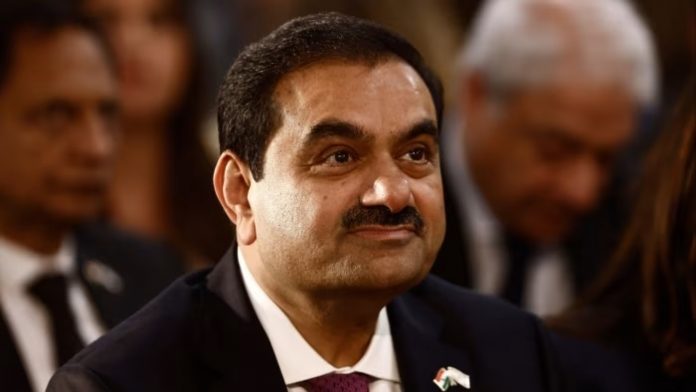
Shares of several Adani Group companies tumbled sharply on Friday after fresh U.S. court filings revealed that the Securities and Exchange Commission is seeking to formally serve legal summons on group founder Gautam Adani and his nephew, Sagar Adani, escalating a case that has weighed heavily on investor confidence in the Indian conglomerate.

Adani Group stocks fell between 5% and 13% in Mumbai trading, with the sharpest losses seen in Adani Green Energy, which closed nearly 14% lower. The group’s flagship firm, Adani Enterprises, slid 10.7%, while Adani Power ended the session down 5.7%, underscoring how developments in the U.S. legal process are quickly feeding through to market sentiment at home.

According to the filings, the SEC has approached U.S. District Judge Nicholas Garaufis in Brooklyn to seek permission to issue a summons to Gautam Adani, chairman of the Adani Group, and Sagar Adani, executive director of Adani Green Energy. The regulator is attempting to advance its civil case after India’s Ministry of Law and Justice declined on two occasions last year to deliver the summons under the Hague Convention, a key international framework for serving legal documents across borders.

In its submission to the court, the SEC said Indian authorities appeared to argue that the U.S. regulator lacked the authority to invoke the Hague Convention or to seek service of the summons in this manner. That refusal has slowed the progress of the case and highlights the legal and diplomatic complexities that arise when U.S. enforcement actions intersect with powerful business figures operating primarily outside American jurisdiction.

The civil case runs alongside criminal charges filed in November 2024, when Gautam Adani and seven other individuals were indicted in New York federal court over what prosecutors described as a wide-ranging bribery and fraud scheme. U.S. authorities allege that Adani and other executives paid more than $250 million in bribes to Indian government officials to secure solar power supply contracts that ultimately generated more than $2 billion in profits.

Regulators say Adani Group executives misled U.S. and international investors about the company’s adherence to anti-bribery and anti-corruption standards while raising more than $3 billion in capital to finance those energy projects. The alleged misconduct strikes at the heart of investor disclosures, a core concern for the SEC, particularly when foreign companies tap global capital markets that include U.S.-based funds and institutions.

The sharp selloff on Friday reflects renewed anxiety among investors that the legal overhang facing the group is far from resolved. While Adani companies have spent the past year trying to stabilize their balance sheets, reassure lenders, and rebuild trust after earlier controversies, the latest court filings signal that U.S. regulators remain intent on pursuing accountability, even in the face of jurisdictional resistance.

The episode also illustrates a broader tension in cross-border enforcement. From Washington’s perspective, access to U.S. capital markets brings with it obligations to comply with American securities laws, regardless of where a company is headquartered. From New Delhi’s standpoint, repeated refusals to serve summons suggest unease about the extraterritorial reach of U.S. regulators, particularly when cases involve prominent Indian nationals and companies central to domestic infrastructure and energy policy.

The immediate impact has been financial and reputational for the Adani Group. The steep drop in share prices adds pressure on market capitalization and could complicate future fundraising, especially for capital-intensive businesses such as renewable energy and power generation. Longer term, the outcome of the U.S. proceedings could shape how global investors price governance risk across Indian conglomerates with international exposure.

Investors are likely to remain sensitive to any sign of progress or pushback as the legal process unfolds, aware that its implications extend beyond a single group to questions of regulatory reach, investor protection, and the rules governing global capital flows.

Farcaster Remains Operational Despite Acquisition by Neynar 

0

Farcaster co-founder Dan Romero has directly clarified that the protocol and app are not shutting down following its acquisition by Neynar.

This came amid rumors and speculation after the announcement that Neynar, a decentralized social infrastructure firm backed by Haun Ventures is acquiring Farcaster from Merkle Manufactory; the company behind it, founded by Romero and Varun Srinivasan.

Key Points from Romero’s Clarification

In a post on X, Romero addressed the rumors head-on: Farcaster is not shutting down: The protocol continues to function normally and will keep running. User stats remain solid: It had ~250,000 monthly active users (MAU) in December and over 100,000 funded wallets.

New direction under Neynar: The acquirer plans to shift focus toward a more developer-oriented approach, maintaining the core infrastructure, Farcaster app, and related tools like Clanker (an AI token launchpad).

Investor capital return: Merkle plans to fully repay the ~$180 million raised from venture backers over the years, emphasizing responsible stewardship of funds.

Romero addressed side speculation about his recent home purchase in LA, stating it was funded by proceeds from Coinbase’s IPO where he previously worked, not project funds.

This move is seen as a rare “responsible” transition in crypto: founders stepping back after building the protocol, returning VC money, and handing stewardship to a aligned player in the ecosystem (Neynar, which has long built on Farcaster).

The acquisition was first announced around January 21, 2026, and has sparked both positive views (decentralization in action, clean exit) and some criticism/debate in crypto circles about past growth challenges or expectations.

Farcaster remains operational as a decentralized social protocol on Ethereum and Base, with no immediate changes for users. The focus now shifts to Neynar’s developer-first vision for its future evolution.

Neynar’s developer vision for Farcaster, following the acquisition from Merkle Manufactory, centers on transforming the protocol into a builder-first network that empowers developers and creators to efficiently turn ideas into sustainable, revenue-generating products.

This shift emphasizes infrastructure, tools, and an ecosystem designed specifically for builders, rather than prioritizing mass consumer growth or competing directly as a centralized social app like X or Threads.

Core Elements of the Vision

According to Neynar’s official announcement and related coverage: Enable builders to go from idea to recurring revenue: Neynar aims to create a streamlined path where developers can ideate, build, launch, and monetize applications on Farcaster.

This includes leveraging AI-assisted software generation, crypto-native payment rails for global transactions, asset issuance, and onchain interactions from day one, and a supportive community ecosystem.

Builder-focused ecosystem: Farcaster’s true strength lies in its long-cultivated community of builders often called the “scenius”. Neynar plans to accelerate this by making building easier—through better APIs, tooling, analytics, push notifications, and simplified processes for creating mini apps formerly known as Frames, AI agents, and other experiences.

The vision integrates: Advanced software generation (e.g., AI tools to speed up development). Crypto-native features (seamless onchain payments, tokens, and ecosystems). A deliberate focus on developers over broad user acquisition.

Products usable anywhere: Applications built on Farcaster will remain interoperable and composable, extending beyond any single client or app. Neynar will maintain the core Farcaster protocol, run the main client app, and operate tools like Clanker (the AI token launchpad).

They plan to keep existing services and pricing unchanged while improving developer experience—potentially including open-sourcing more components, reducing node operation complexity, and enhancing the overall stack.

This approach is seen as a stabilization move: Neynar, a long-time infrastructure provider in the Farcaster ecosystem, backed by firms like Haun Ventures has deep expertise in developer tools and has powered much of the current activity.

The pivot moves away from earlier consumer-growth pressures toward sustainable, utility-driven development in decentralized social.

In short, Neynar views Farcaster not primarily as a social media platform, but as open social infrastructure where builders thrive, experiment quickly as seen with past hits like Frames, Degen, and Warplets, and build real economic value—fixing incentive issues that plague centralized social media at scale.