DD
MM
YYYY

PAGES

DD
MM
YYYY

spot_img

PAGES

Home Blog Page 7412

Facebook Honors These 10 African Startups – Nigeria, Ghana And Kenya Dominate

0

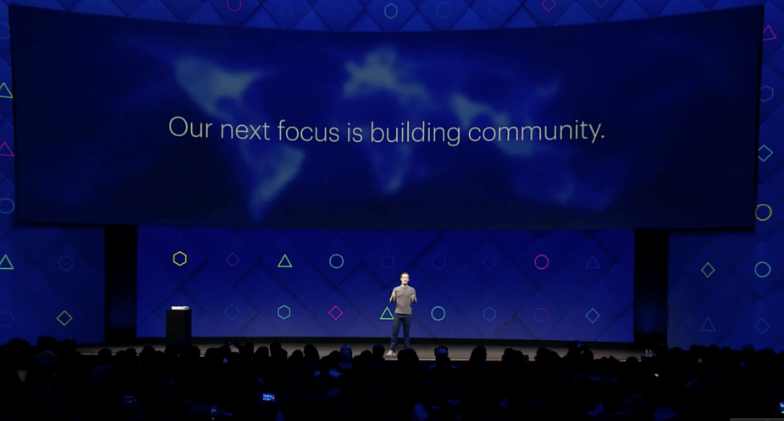
Facebook celebrated the achievements and products of its growing African developer and partner ecosystem at its annual F8 developer conference  held in San Jose, California, on 18 and 19 April. African developers shared the stage with Facebook and developers from around the world, showcasing innovative products and services they have created for their local communities and the global market.

F8 hosts more than 4000 people in person and hundreds of thousands of people watching via Facebook Live for two days of new products, tools, interactive demos and speakers to help developers build, grow and monetise their apps.

This year Facebook brought F8 to developers around the world through F8 Meetups hosted with tech hubs around the world. In Africa, it hosted F8 Meetups in Nairobi, Lagos, and Cape Town, where participants watched live streams of the sessions in San Francisco.

African developers who featured in F8 sessions include the following:

  • Asoriba: A Ghanaian start-up that has built software that enables churches to better manage member engagement, donations, and attendance. The company was featured in the Keynote for its work using Facebook Analytics.
  • Rancard, a mobile solutions company based in Ghana. Its Rendezvous, social recommendation system was featured in two sessions at F8.
  • Pass.NG is an education start-up from Nigeria that helps students practice for their university entrance exams.
  • Truppr  is a social fitness start-up from Nigeria.
  • Afrinolly  is an app that allows users to catch up with Nollywood content on their mobile phones. It is one of the first Nigerian companies to build the Facebook Surround 360 camera.
  • Quiz.ng , an online quiz platform based out of Nigeria.
  • Kudi.ai : Messenger Bot to send money for free to any bank, buy airtime and pay bills; first African bot to be featured on Messenger Blog
  • Kangpe : A health service from Nigeria that lets users ask real doctors their health questions.
  • Eneza Education: An educational app from Kenya.
  • Refunite : A service from Kenya that helps refugees to reunite with their families and loved ones.

African students and developers showcase their talent

In attendance were two representatives each from the winners of Internet.org’s Innovation Challenge in Africa awards. These awards from Facebook’s Internet[dot]org recognised leading examples of ideas, apps, websites and/or online services that provide real value in the categories of education and economic empowerment.

  • Economic Empowerment Innovation Challenge Award Winner: Ghana’s Esoko makes it easier for businesses, governments, NGOs and others to connect with farmers through its web and mobile apps.
  • Economic Empowerment Impact Award Winner: mPedigree Goldkeys  from Ghana is an anti-counterfeiting, tracking and tracing solution that uses consumers’ mobile phones as a verification tool.
  • Economic Empowerment Impact Award Winner: Nigeria’s SaferMom provides pregnant and new mothers with simple tools to help make informed health decisions via sms, voice services and its mobile app.
  • Education Innovation Challenge Award Winner: Founded in South Africa, Hyperion Development  is a social enterprise that has built the first online course platform for computer science education.
  • Education Impact Award Winner: Launched in Ghana, Mutti by mPharma  is a drug affordability service that enables patients to access high quality medicine at lower prices with flexible payment terms through micro-payments.
  • Education Impact Award Winner: Nigeria’s Tuteria  connects people seeking to learn with people around them who can teach.

Facebook also invited four graduate students from Carnegie Melon University Africa in Rwanda to attend after they won the CMU-Africa Messenger Bot Hackathon.

Launch of Developer Circles

At F8, Facebook also announced a new program for developers all over the world to connect, learn, and collaborate with other local developers. Developer Circles is a community-driven program that’s free to join and open to any developer.

Each Developer Circle is led by members of the local community who act as leads for the circle, organising events offline and managing a local online Facebook community. Developer Circles are forums to share knowledge, collaborate, build new ideas and learn about the latest technologies from Facebook and other industry leaders. Lagos, Nigeria was the first place that Facebook piloted this global program and Innocent Amadi, one of the community leads for the Lagos Circle was featured at the Keynote.

Defining The Future Through The Evolution of AI

0

In recent years, the surge of artificial intelligence innovation and steady improvements to the associated technology has reached a point where the promises of the past can perhaps finally be fulfilled. A technology first introduced in 1955, AI has achieved many successes but also several failures, leading many to question whether we would ever witness its full potential for everyday use. Most people remember examples from the 1970’s and ‘80s when the HAL 9000, Star Trek computers and programs like ELIZA entered our collective consciousness. However, due to cost limitations and resource constraints, a lack of advanced technology and dwindling consumer interest, AI failed to realize those early promises and had retreated into research areas and highly specialized niches in the last 25 years.

Fast forward to today where we are once again in the midst of rapid AI innovation. Interest, capabilities and involvement in information technology are at an all-time high and the applications for AI have penetrated into thousands of everyday tasks. With the latest advancements in machine learning technology and growing consumer demand, we have recovered from the low point of AI and are looking towards seemingly endless possibilities. New-age voice-powered personal assistants like Alexa and Google Home, Apple’s HomeKit to control all electronic home devices, and the ubiquitous presence of chatbots streamlining processes from online banking to answering health related questions promise to grow the current technology wave and rebuild consumer trust and demand.

However, this new tide has led to one important question – is AI here to stay or are we merely in another bubble of unrealistic expectations that will burst a few years down the line? Although AI has penetrated everyday activities, is it sufficient to say that AI has managed to rectify all the misgivings of the past? Consider the recent spectacle we witnessed with the botched rollout and expectations of Tesla’s autopilot mode. Is the technology behind the modern AI movement – machine learning, big-data, data mining, deep learning, neural nets and natural language processing – worthy of the AI moniker?

The answer is both yes and no. Certainly, the recent advancements in artificial intelligence have proven to be of greater use and success in comparison to the past. While the past hype surrounding AI set unrealistic expectations for immediate consumer applications (given the limitations of the technology and data available at the time) advances in just the last five years have enabled AI to become a viable, mainstream business solution. Today’s technology thrives on data and the last five years have witnessed the accumulation of enormous amounts of data for this purpose. Coupled with improvements in database technology and increased computer horsepower to process the available data, AI has made a paradigm shift from scientific and academic use to widespread enterprise software consumption and consumer acceptance.

The success of today’s AI movement is largely the by-product of a few critical factors including new platforms from major players in the field including Google, Microsoft and Amazon, which have supported the mainstream practice of AI, building a critical mass of practitioners leveraging these platforms. Further, commitments from large corporations and technology leaders including IBM, Yahoo!, Salesforce and Apple have helped secure a place for AI in the future as they double down on the technology to improve processes in areas such as data security, computer-assisted diagnosis in healthcare, purchase prediction, fraud detection and much more. Long-term investments by these big players are further evidence toward the staying power of AI this time around. If you combine a lower price point for the technology, commitments from industry giants, a growing mass of available data waiting to be analyzed and changing consumer expectations about what is achievable, it becomes clear that the renewed interest in AI is real and not a bubble that is ready to pop.

But are these companies leveraging genuine AI technology? As the performance of AI is at an all-time high, one must understand that “artificial intelligence” in its truest sense is still years, if not decades away, as machines have yet to operate independently of human intervention. Technology like machine learning, data mining and neural nets – while all classified under the AI moniker and driving the next generation of solutions – cannot learn on its own or invent anything new with their knowledge. As ironic as the name AI implies, machines cannot adequately function without relying on known data sets and pre-programed responses and behaviors. In other words, AI can find patterns in enormous volumes of data – even patterns that a human would fail to see – and rapidly and efficiently handle routine tasks, yet they cannot invent novel solutions to problems due to their dependency on programmed algorithms.

AI as we know it today leverages modern advances in statistical techniques that some may say do not qualify as traditional AI and are not inherently ‘intelligent’ however this recent resurgence of AI has proven to be very useful across a variety of applications for both business and consumer. How far we advance AI depends on the continued investment of big industry players, additional improvements in data techniques and algorithms and applications that consumers and businesses find useful.

by Terence Davis – Terence holds a BS in Astrophysics from UCLA and formerly served as VP-Product Management for an SDN/NFV startup delivering solutions for US and European customers.

MTN Nigeria Opens Pre-Order for Samsung Galaxy S8/ S8+

0
A brand with unique identity

Key Features:

  • Infinity Screen
  • Water and dust resistant
  • Unlocks with a Look
  • 100% bonus on 3.5GB data for 3months
  • BIXBY Vision
  • 64GB on board memory with 256GB extendable memory

What’s in the Starter Kit:

  • Powerbank
  • Screen protector
  • Customized Back cover
Purchases made between 5th & 7th of May 2017 only qualifies you for a starter Kit. Offer valid while stock last.
Link is here.

5G internet on its way with speed of 100mpbs in rural Africa

0

Intracom Telecom, a global telecommunication systems and solutions vendor, announced today that EOLO SpA, an Italian telecommunications operator focusing on ultra-broadband in sub-urban and rural areas, selected its WiBAS™-Connect for the implementation of an ultra-broadband wireless residential network across rural Italy. EOLO intends to complete the rollout of its new network within a period of 5 years, being the first to offer 5G speeds to homes and businesses.

Within the framework of this multimillion contract, Intracom Telecom will supply its Point–to-Multipoint (PtMP) systems to EOLO enabling the operator to deploy a wireless network to connect homes and businesses across Italy that cannot be reached by fiber and ADSL/VDSL. This first ever PtMP deployment will enable EOLO to improve its coverage (13 regions, 70 provinces) of Italy and offer internet speeds up to 100Mbps to its subscribers. The total agreed scope is for a PtMP network for several hundred thousand subscribers, consisting of base stations and CPEs operating in the 28GHz frequency band, recently awarded by the Italian government to EOLO.

The installation of WiBAS™-Connect is part of EOLO’s current extensive investment in its fast expanding network in the whole of Italy, aiming at becoming the first provider of ultra-broadband services to residential and SME subscribers in the country’s suburban and rural areas. The selection of Intracom Telecom’s Multipoint technology came following rigorous testing by EOLO experts. The WiBAS™-Connect was proven to be the optimal solution presently available in the market satisfying the long list of technical criteria.

Commenting on the project award, Mr. Luca Spada, President of the Board & CEO of EOLO, said: “As EOLO expands its coverage and introduces new value-added services for its subscribers, it was important to form a strategic partnership with a company like Intracom Telecom that can assist us achieve our goals to deliver 5G ready services in more regions in Italy, so to enrich subscriber experience.” Moreover, Mr. Spada added: “Starting from the second semester of 2017, a “5G ready” network, able to supply a real connectivity of 100Mbps in download and 50Mbps in upload, will support our country to achieve a leading position in 5G, with an important focus on those peripheral areas where fiber networks will not be deployed in the next years.

Mr. Mohamed Ahmed, President of the Board & CEO of Intracom Telecom, said: “We are delighted to partner with EOLO and support them accomplish their vision to be the first provider in Italy for Ultra-Broadband Internet connectivity to rural residential subscribers. We worked diligently with EOLO during the past years to provide our state-of-the-art technology to meet their high-end demanding requirements. We are determined to be part of their success.”

Intracom Telecom has been accumulating expertise for the past 40 years in providing innovative wireless access solutions, having successfully developed and deployed its Point-to-Multipoint systems with numerous operators in Europe, Southeast Asia and Africa, meeting the constantly growing demand for broadband access services.

Facebook Developing The Brain Operating System For Computing With Keyboardless Interface

0

During the second day of its annual F8 conference, the head of the social networking company’s mysterious hardware research division talked up the idea of letting people “type” commands or messages by using their minds. Don’t get too excited: it’s not ready to announce a product anytime soon. Meanwhile, it would love for people to try out its new 360-degree digital cameras, built for collecting video that could be used in virtual reality apps

Facebook is working to create a data input method that doesn’t rely on a keyboard, but instead allows the user to type directly from the brain, the company said at its two-day developers conference in San Jose, California.

“In a few years’ time we expect to demonstrate a real-time silent speech system capable of delivering 100 words per minute,” or about five-times faster than a person can type with a smartphone, said vice president of engineering Regina Dugan on the second day of the conference.

Ms. Dugan also heads Facebook’s hardware research unit known as Building eight, which has more than 60 scientists and engineers working on the new keyboardless typing method.

The input method could, for example, allow users to send a text message or email to a friend without taking out a smartphone to type.

Ms. Dugan also tried to calm consumers at the conference, saying the California-based social media giant isn’t interested in detecting a person’s thoughts, but only what the person intends to type.

“We’re not talking about decoding your random thoughts. That might be more than any of us care to know,” she said.

Ms. Dugan referred to research at Stanford University, which has allowed a paralysed woman to type at about eight words per minute directly from her brain.

But the current method requires invasive surgery in which an array of electrodes is implanted to receive data where the brain would normally control the person’s motor functions.

“That simply won’t scale,” Ms. Dugan said, referring the surgery process.

“So we’ll need new non-invasive sensors.”

Facebook is considering wearables such as caps that can read data through the human skull.

While the company may need years to produce a mass-scale device, any advances in the research have potential to be a huge breakthrough in human communications, Ms. Dugan said.

“Even something as simple as a yes-no brain click would fundamentally change our capability.”