DD
MM
YYYY

PAGES

DD
MM
YYYY

spot_img

PAGES

Home Blog Page 7420

Why Fortune Global 500 companies are still running African operations from London and Paris

0

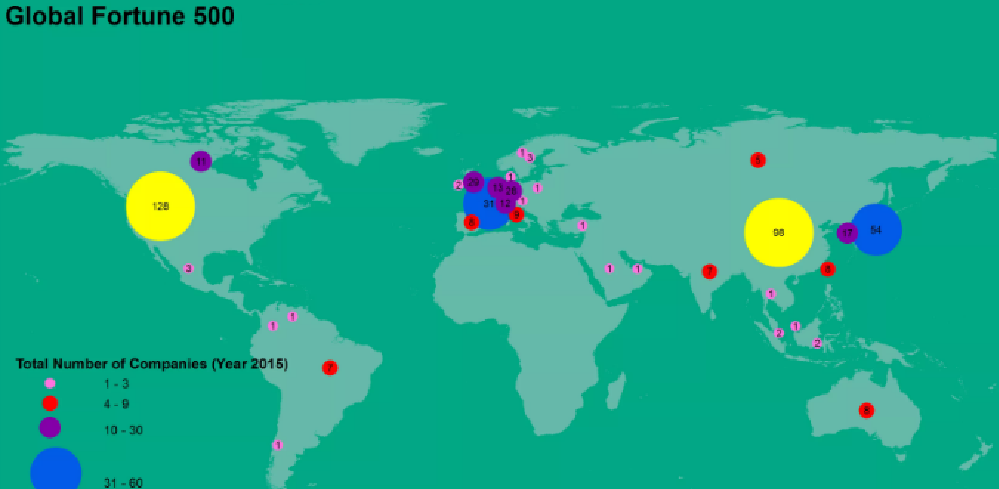
Global Fortune 500 companies are still reluctant to open shop in the Middle East and Africa based on data which shows that only 196 of some of the world’s biggest companies in the world have offices in the region.

Specifically, Africa’s most attractive destination for regional headquarters is Johannesburg with up to 29 companies have Africa offices there. It may seem unsurprising that the commercial capital of Africa’s most advanced economy—and home to its biggest stock market—is most attractive to global companies. What’s less obvious is that the next two most popular destinations for running African operations are London and Paris. Fourteen major international companies base their Africa offices in Europe.

It’s easy to claim to be surprised but there are many practical reasons many of these companies find it easier to oversee their Africa-wide operations from an office outside the continent.

The report’s authors at Infomineo point to several factors which make some global cities more popular than others. These include local market potential, competitive environment, political stability, laws and regulations, and business language in use. Then there’s quality of the employment market and local resources and infrastructure.

Most major African countries would struggle to get top marks if they were being assessed on all those factors. In fact, London, thanks to the finance and energy industries, is expanding as a center for companies opening offices to run their Middle East and African operations. The report didn’t explicitly mention logistics, but as we’ve noted several times, it is sometimes easier to navigate Africa from a European hub city like London or Paris than many African cities which have much fewer flights and limited cross-border road networks due to poor infrastructure investment.

But that doesn’t mean all hope is lost as far as African countries attracting Fortune 500 companies. In sub-regional terms, Casablanca, Nairobi and Lagos are increasingly attractive to international companies, says the report.

Ultimately, established businesses are going to make the same cold fact-based decisions that investors also have to make when it comes to deciding where to invest in Africa.

It comes down to the basics. If infrastructure development is moving in the right direction; laws and regulations are observed and respected alongside political stability and a workforce that promises as much quality and potential as enthusiasm, then that’s a good start.

Yinka Adegoke, Quartz Africa editor .via Newsleletter

Verizon 2017 Data Breach Investigations Report shows why tech sector is better on cybersecurity

0

If you haven’t suffered a cybersecurity breach you’ve either been incredibly well prepared, or very, very lucky. Are you incredibly well prepared?

Whether it’s design plans, medical records or good, old-fashioned payment card details — someone, somewhere will see it as their meal ticket. Most cybercriminals are not fussy about who they steal from.

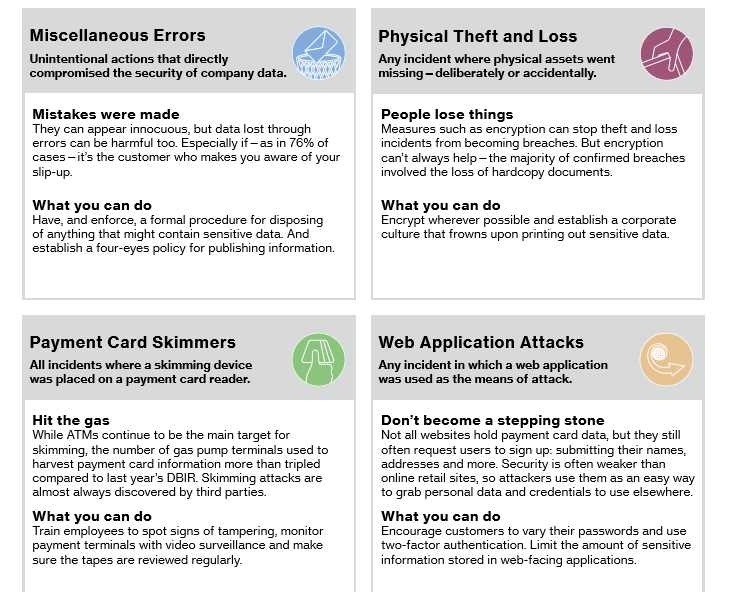
You could be the next victim of a data breach. And that could impact every part of your business. That’s why everyone in your company — not just the security experts — needs to understand the threats and how to mitigate them.

  • Cybercrime can come in any shape or size, and not always the form you’d expect
  • Each industry faces a distinctive pattern of threats

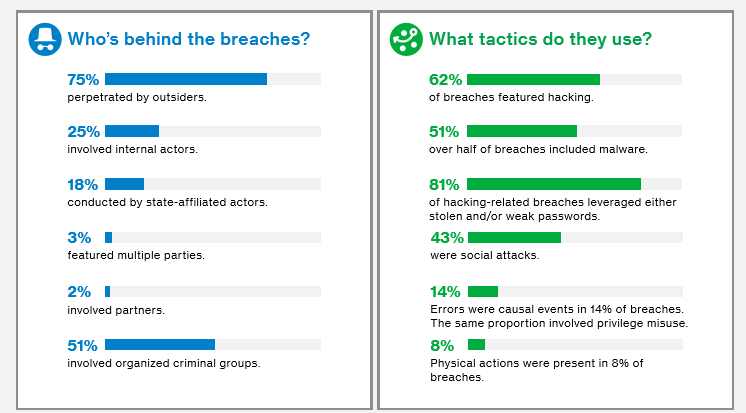
Verizon released its 10th edition of Data Breach Investigations  Report early Thursday morning. Teaming up with 65 contributing organizations, Verizon’s analysts scrutinized 42,068 security incidents, of which 1,935 qualified as full-blown data breaches. They sliced and diced the data every which way.

Here are some of the bits: First, each industry has its own flavor. The tech sector is the most reliable at patching its systems, sealing up 97.5% of known holes within 12 weeks of a vendor releasing software updates. (Compare that to retail and to food and hospitality, where little over 60% gets patched in the same time period.) The manufacturing, education, and public sectors are the most rife with cyberespionage, where spies seek to steal intellectual property, proprietary research, and state secrets. Healthcare is the only industry in which insider threats, meaning rogue employees, are the predominant threat actor. And financial services and insurance companies most commonly contend with distributed denial of service attacks, which overload computer servers with Internet traffic.

Another notable finding: ransomware continues to explode. The frequency of attacks featuring this malicious software, which holds victims’ computer files for ransom, increased 50% in 2016 compared to the year prior. This year ransomware clocked in as one of the top five most common varieties of malware, rocketing from 22nd place in 2014. It’s worth noting that Verizon’s analysts counted ransomware attacks as “incidents” rather than “data breaches” in the report, “because typically we cannot confirm that data confidentiality was violated.” In other words, it’s hard to know whether the attackers actually laid eyes on the data they locked up.

For some Saturday reading, I recommend the full report. No document provides a more rigorous overview of the security challenges businesses face today. In an industry where marketing puff often crowds out reliable information, the Verizon report is a welcome read.

Forget Samsung and Android makers, this chipmaker is Apple iPhone key competitor

0

If you ask knowledgeable people about competition for Apple’s iPhone, most will say it’s Android mobile phones, especially Samsung. This response is acceptable but fails to identify the more prominent aggressor.

Yes, Android mobile phones are, worldwide, the largest sellers, but from a profit standpoint, the Apple iPhones pick up the major share. There is one other player that doesn’t directly compete with Apple but holds the edge for Android capability: Qualcomm.

Qualcomm Snapdragon 835 vs. Apple A10

We’re about to see the major rivalry of the Samsung Galaxy S8 and the to-be-announced Apple iPhone 8. But under the hood of the S8 is the Qualcomm Snapdragon 835 processor versus the Apple-designed A9 or possibly a speculated-about newer model A10. The performance of these new mobile phones will be directly attributable to which processor platform best satisfies mobile users.

There’s plenty that we don’t know yet about which performs better. We do know that the Snapdragon 835 can support Gigabit LTE through its 4×20-MHz carrier aggregation and 256 QAM, as Qualcomm reports:

“We are proud to continue our long and productive collaboration with Samsung to help bring the most advanced mobile experiences, such as Gigabit LTE and mobile VR, to consumers with the new Samsung Galaxy S8,” said Alex Katouzian, senior vice president and general manager, mobile, Qualcomm Technologies, Inc. “Featuring a thin and light design with superior battery life, immersive multimedia, and exceptional photography with Gigabit LTE speeds, the Samsung Galaxy S8 powered by the Snapdragon 835 Mobile Platform delivers the experiences [that] today’s mobile users demand.”

Behind the Scenes

There are more maneuvers behind the scenes on a corporate level that also drive the rivalry. For example, Apple has filed lawsuits against Qualcomm in three different countries: China, USA, and now the UK. Essentially, Apple asserts that Qualcomm has charged unfair heightened royalties for the use of its Intellectual Property, including patents, on the selling price of the whole mobile phone. This is an unusual circumstance of a user suing a supplier while still being supplied the goods. In the U.S., Apple is seeking $1B plus other amounts in the other suits.

Furthermore, Apple has been a behind-the-scenes driver in the U.S. of the FTC complaint lodged against Qualcomm for using unfair trade practices against other semiconductor suppliers in monopolizing the mobile phone device market. This will likely face court review in May.

Meanwhile, these suits by Apple and the FTC have taken a toll on Qualcomm’s stock price. It has languished about 15% below the price at the time of the lawsuits in January 2017.

From afar, it would appear that Apple has identified Qualcomm as their most pressing competitor, with Qualcomm’s processor and internet connectivity allowing mobile phone manufacturers around the world to challenge Apple with high performance, off-the-shelf device selection, and lower prices. That’s demonstrated by the 115 Chinese manufacturers that Qualcomm supplies.

Profitability

Both Apple and Qualcomm are formidable profit machines. Thus, both companies have plenty of economic weapons at their disposal. We’ll watch this rivalry play out over the next several months. Expect the FTC to overturn the ruling against Qualcomm now that the Trump administration is in charge, but the existing lawsuits will play a continuing role.

In the end, the outcome of how these new mobile phones perform in the market is in the hands of consumers. Place your bets now!

by Fred Molinari, Former CEO, Data Translation

Facebook and Microsoft financing $50 million affordable energy accelerator in East Africa, Others

0

Facebook Inc., Microsoft Corp. and venture capitalists at Allotrope Partners have set up a facility to finance energy access projects in Indonesia, India and East Africa.

The Microgrid Investment Accelerator, or MIA, will seek to mobilize $50 million from 2018 to 2020, according to an emailed statement. It will tap grants and loans from foundations and development banks to attract private capital into projects that help to transmit renewable energy over small electricity networks.

A microgrid is a localized grouping of electricity sources and loads that normally operates connected to and synchronous with the traditional centralized grid (macrogrid), but can disconnect and function autonomously as physical and/or economic conditions dictate. It isa miniature power system that operates independently of a national grid. The International Energy Agency estimates that more than 1.2 billion people don’t have access to electricity, mostly in Sub-Saharan Africa and developing Asia. As renewable energy technologies such as solar panels become cheaper, microgrids have emerged as an option to more people.

“MIA will test the commercial opportunity for microgrids and demonstrate how concessionary finance can unlock progressively larger proportions of private capital as risks are discovered, priced, and mitigated,” Chief Executive Officer Alexia Kelly said.

Helping provide energy access is a method to tie corporate social responsibility together with business development at companies peddling electronic services and devices. Providing power to people off the grid could eventually open up large new markets for computers and social networks.

According to Bloomberg, MIA has signed up more than a dozen implementing partners and observers. It will start to request plans for pilot projects from in the third quarter this year and expects to begin disbursing funds in 2018.

“The Microgrid Investment Accelerator will not only be a powerful tool in driving much-needed capital into projects, but will also help to bring down costs, build a stronger ecosystem, and catalyze innovation,” said Microsoft’s Kevin Connolly, the director of affordable energy access initiatives at the software company.

USAID and Partner Invest $1.8 million to help African Farmers

0

Syngenta in Zambia, through its subsidiary MRI Seed, has partnered with the Feed the Future Partnering for Innovation, a United States Agency for International Development (USAID) programme implemented by Fintrac Inc., to help smallholder farmers gain access to high-quality, disease-free horticultural seedlings, giving them the opportunity to become commercially viable vegetable farmers.

The programme aims to build a sustainable seedling distribution model for hybrid vegetables; provide access to market information and linkages; train farmers on good agricultural practices and business management; and introduce new technologies to help smallholder farmers dramatically improve their yields.

In 20 districts across Zambia, Syngenta will establish 20 seedling production sites, each owned and operated by an Entrepreneurial Young Plant Raiser (YPR). The YPR will provide business and technical training, as well as facilitate market linkages for the benefit of 12,000 smallholder farmers. Although the primary focus of the project will be on tomato and cabbage seedlings, Syngenta will also conduct trials and testing regarding the commercial viability of other crops with a high potential in Zambia such as kale (rape), cauliflower, broccoli, carrot, and potato.

Furthermore, Syngenta will help in promoting a pilot programme for YPR’s “Vegetable in a Bag” concept, where a small portion of YPR seedlings will be sold in reusable packaging, with no ground soil and minimal water, making them suitable for urban and peri-urban use.