DD
MM
YYYY

PAGES

DD
MM
YYYY

spot_img

PAGES

Home Blog Page 7422

The Risks Of Public Wi-Fi And How To Avoid Them

0

Wi-Fi users are at risk from hackers, but fortunately there are safeguards against them. The recent explosion of free, public Wi-Fi has been an enormous boon for working professionals. Since these free access points are available at restaurants, hotels, airports, bookstores, and even random retail outlets, you are rarely more than a short trip away from access to your network, and your work. This freedom comes at a price, though, and few truly understand the public Wi-Fi risks associated with these connections. Learning how to protect yourself will ensure your important business data remains safe.

The Risks of a Public Wi-fi

The same features that make free Wi-Fi hotspots desirable for consumers make them desirable for hackers; namely, that it requires no authentication to establish a network connection. This creates an amazing opportunity for the hacker to get unfettered access to unsecured devices on the same network.

The biggest threat to free Wi-Fi security is the ability for the hacker to position himself between you and the connection point. So instead of talking directly with the hotspot, you’re sending your information to the hacker, who then relays it on.

While working in this setup, the hacker has access to every piece of information you’re sending out on the Internet: important emails, credit card information and even security credentials to your business network. Once the hacker has that information, he can — at his leisure — access your systems as if he were you.

Hackers can also use an unsecured Wi-Fi connection to distribute malware. If you allow file-sharing across a network, the hacker can easily plant infected software on your computer. Some ingenious hackers have even managed to hack the connection point itself, causing a pop-up window to appear during the connection process offering an upgrade to a piece of popular software. Clicking the window installs the malware.

As mobile Wi-Fi becomes increasingly common, you can expect Internet security issues and public Wi-Fi risks to grow over time. But this doesn’t mean you have to stay away from free Wi-Fi and tether yourself to a desk again. The vast majority of hackers are simply going after easy targets, and taking a few precautions should keep your information safe.

Use a VPN

A virtual private network (VPN) connection is a must when connecting to your business through an unsecured connection, like a Wi-Fi hotspot. Even if a hacker manages to position himself in the middle of your connection, the data here will be strongly encrypted. Since most hackers are after an easy target, they’ll likely discard stolen information rather than put it through a lengthy decryption process.

Use SSL Connections

You aren’t likely to have a VPN available for general Internet browsing, but you can still add a layer of encryption to your communication. Enable the “Always Use HTTPS” option on websites that you visit frequently, or that require you to enter some kind of credentials. Remember that hackers understand how people reuse passwords, so your username and password for some random forum may be the same as it is for your bank or corporate network, and sending these credentials in an unencrypted manner could open the door to a smart hacker. Most websites that require an account or credentials have the “HTTPS” option somewhere in their settings.

Turn Off Sharing

When connecting to the Internet at a public place, you’re unlikely to want to share anything. You can turn off sharing from the system preferences or Control Panel, depending on your OS, or let Windows turn it off for you by choosing the “Public” option the first time you connect to a new, unsecured network.

Keep Wi-Fi Off When You Don’t Need It

Even if you haven’t actively connected to a network, the Wi-Fi hardware in your computer is still transmitting data between any network within range. There are security measures in place to prevent this minor communication from compromising you, but not all wireless routers are the same, and hackers can be a pretty smart bunch. If you’re just using your computer to work on a Word or Excel document, keep your Wi-Fi off. As a bonus, you’ll also experience a much longer battery life.

Stay Protected

Even individuals who take all the possible public Wi-Fi security precautions are going to run across issues from time to time. It’s just a fact of life in this interconnected age. That’s why it’s imperative to keep a robust Internet security solution installed and running on your machine. These solutions can constantly run a malware scan on your files, and will always scan new files as they are downloaded. The top consumer security software will also offer business protection solutions, so you can protect yourself while you’re out and about, and your servers back at the office, all at the same time.

Throughout any business traveller’s life, there’s going to come a time when an unsecured, free, public Wi-Fi hotspot is the only connection available, and your work simply has to get done right then. Understanding public Wi-Fi risks will ensure your important business data doesn’t become just another hacking statistic.


African Universities Should Offer This MIT Course On Technology Innovation In Agriculture

0

Innovation is critical for success. Agriculture is one of those areas we will need innovation especially in Africa. There are several major universities across the world that are putting agriculture technology at the forefront of their curriculum. Classes cover everything from using drones to capture crop information, applying variable rate prescriptions to crop fields, and managing water usage.

While many current courses are helping to arm the next generation of tech-savvy farmers and agribusiness professionals, Massachusetts Institute of Technology (MIT) is taking its students in a slightly different direction.

The prestigious Boston-based university is offering a course for agricultural professionals called “Innovation and Technology in Agriculture and the Environment.”

The Earth’s population will likely exceed 10 billion people in just a few decades, requiring an 80% increase in agricultural production. This presents an urgent need for innovative technologies to make agriculture more efficient, as well as to optimize and adapt existing processes to changing conditions. This course focuses on three fundamental areas that underpin agricultural innovation:

  1. Nano/micro/global aspects of environmental impacts including climate, weather, and microbiological
  2. The application of advanced technologies, such as new materials and machines, in agricultural processes
  3. The use of data and modeling to improve yield by enhanced precision and predictive power using large-scale data analytics and simulation

This course offers a unique interdisciplinary experience, bringing together faculty and practitioners from related areas. It’s the only place you can get such a concentrated and comprehensive view of this emerging field.

Maybe we need to replicate this type of course across universities in Africa. We need to feed our people and end hunger in the continent.

African Startups – Win This €500,000 Dutch Challenge

0

For African startups, there is a deal to pursue – it is called the Postcode Lottery Green Challenge.

The Postcode Lottery Green Challenge is one of the world’s largest competitions in the field of sustainable entrepreneurship. From 1 March 2017 until 1 June 2017, green start-ups from all over the world can submit their promising sustainable business plans to the the 11th edition. The winner will receive €500,000 to further develop the product or service, and to bring it to market. The runner-up will receive €200,000. An international jury selects the winner and runner-up.

The Dutch Postcode Lottery started the competition in 2007, after being inspired by president Clinton to look for those dedicated entrepreneurs with brilliant green business plans. Plans that are ready to speed up the transition towards a low carbon economy. The answers to the issues of our time are already in front of us. But it takes entrepreneurs like the Postcode Lottery Green Challenge finalists to present us with sustainable solutions and get them out into the world.

How does the competition work?

People from all over the world can (free of charge) submit their sustainable business plans at www.greenchallenge.info. Mid-July, the organization will announce the 25 nominees who will have a chance of becoming a finalist. Five finalists will then be selected Mid-August for the final round of the competition, where they will present their business plan in front of a selected audience and an international panel of experts during the grand final in Amsterdam on 14 September. After the decision round the judges will announce the winner of the €500,000 as well as the runner?up.

As this is an international competition, all entries must be submitted in English. 

Eligibility

  • be willing to bring your idea to market yourself, and to commit to working with any organisation necessary for developing the product and/or implementing the service
  • be 18 years or older
  • be willing to attend the Postcode Lottery Green Challenge in Amsterdam if you are selected as a finalist to present your idea to the jury (reasonable travel and lodging expenses for one person per finalist will be reimbursed)

Timeline

The registration is open from 1 March 2017 until 1 June 2017. Apply here.

Facebook Honors These 10 African Startups – Nigeria, Ghana And Kenya Dominate

0

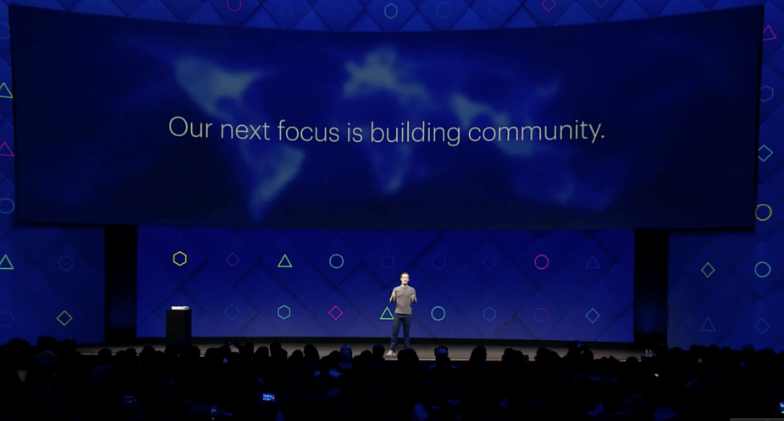
Facebook celebrated the achievements and products of its growing African developer and partner ecosystem at its annual F8 developer conference  held in San Jose, California, on 18 and 19 April. African developers shared the stage with Facebook and developers from around the world, showcasing innovative products and services they have created for their local communities and the global market.

F8 hosts more than 4000 people in person and hundreds of thousands of people watching via Facebook Live for two days of new products, tools, interactive demos and speakers to help developers build, grow and monetise their apps.

This year Facebook brought F8 to developers around the world through F8 Meetups hosted with tech hubs around the world. In Africa, it hosted F8 Meetups in Nairobi, Lagos, and Cape Town, where participants watched live streams of the sessions in San Francisco.

African developers who featured in F8 sessions include the following:

  • Asoriba: A Ghanaian start-up that has built software that enables churches to better manage member engagement, donations, and attendance. The company was featured in the Keynote for its work using Facebook Analytics.
  • Rancard, a mobile solutions company based in Ghana. Its Rendezvous, social recommendation system was featured in two sessions at F8.
  • Pass.NG is an education start-up from Nigeria that helps students practice for their university entrance exams.
  • Truppr  is a social fitness start-up from Nigeria.
  • Afrinolly  is an app that allows users to catch up with Nollywood content on their mobile phones. It is one of the first Nigerian companies to build the Facebook Surround 360 camera.
  • Quiz.ng , an online quiz platform based out of Nigeria.
  • Kudi.ai : Messenger Bot to send money for free to any bank, buy airtime and pay bills; first African bot to be featured on Messenger Blog
  • Kangpe : A health service from Nigeria that lets users ask real doctors their health questions.
  • Eneza Education: An educational app from Kenya.
  • Refunite : A service from Kenya that helps refugees to reunite with their families and loved ones.

African students and developers showcase their talent

In attendance were two representatives each from the winners of Internet.org’s Innovation Challenge in Africa awards. These awards from Facebook’s Internet[dot]org recognised leading examples of ideas, apps, websites and/or online services that provide real value in the categories of education and economic empowerment.

  • Economic Empowerment Innovation Challenge Award Winner: Ghana’s Esoko makes it easier for businesses, governments, NGOs and others to connect with farmers through its web and mobile apps.
  • Economic Empowerment Impact Award Winner: mPedigree Goldkeys  from Ghana is an anti-counterfeiting, tracking and tracing solution that uses consumers’ mobile phones as a verification tool.
  • Economic Empowerment Impact Award Winner: Nigeria’s SaferMom provides pregnant and new mothers with simple tools to help make informed health decisions via sms, voice services and its mobile app.
  • Education Innovation Challenge Award Winner: Founded in South Africa, Hyperion Development  is a social enterprise that has built the first online course platform for computer science education.
  • Education Impact Award Winner: Launched in Ghana, Mutti by mPharma  is a drug affordability service that enables patients to access high quality medicine at lower prices with flexible payment terms through micro-payments.
  • Education Impact Award Winner: Nigeria’s Tuteria  connects people seeking to learn with people around them who can teach.

Facebook also invited four graduate students from Carnegie Melon University Africa in Rwanda to attend after they won the CMU-Africa Messenger Bot Hackathon.

Launch of Developer Circles

At F8, Facebook also announced a new program for developers all over the world to connect, learn, and collaborate with other local developers. Developer Circles is a community-driven program that’s free to join and open to any developer.

Each Developer Circle is led by members of the local community who act as leads for the circle, organising events offline and managing a local online Facebook community. Developer Circles are forums to share knowledge, collaborate, build new ideas and learn about the latest technologies from Facebook and other industry leaders. Lagos, Nigeria was the first place that Facebook piloted this global program and Innocent Amadi, one of the community leads for the Lagos Circle was featured at the Keynote.

Defining The Future Through The Evolution of AI

0

In recent years, the surge of artificial intelligence innovation and steady improvements to the associated technology has reached a point where the promises of the past can perhaps finally be fulfilled. A technology first introduced in 1955, AI has achieved many successes but also several failures, leading many to question whether we would ever witness its full potential for everyday use. Most people remember examples from the 1970’s and ‘80s when the HAL 9000, Star Trek computers and programs like ELIZA entered our collective consciousness. However, due to cost limitations and resource constraints, a lack of advanced technology and dwindling consumer interest, AI failed to realize those early promises and had retreated into research areas and highly specialized niches in the last 25 years.

Fast forward to today where we are once again in the midst of rapid AI innovation. Interest, capabilities and involvement in information technology are at an all-time high and the applications for AI have penetrated into thousands of everyday tasks. With the latest advancements in machine learning technology and growing consumer demand, we have recovered from the low point of AI and are looking towards seemingly endless possibilities. New-age voice-powered personal assistants like Alexa and Google Home, Apple’s HomeKit to control all electronic home devices, and the ubiquitous presence of chatbots streamlining processes from online banking to answering health related questions promise to grow the current technology wave and rebuild consumer trust and demand.

However, this new tide has led to one important question – is AI here to stay or are we merely in another bubble of unrealistic expectations that will burst a few years down the line? Although AI has penetrated everyday activities, is it sufficient to say that AI has managed to rectify all the misgivings of the past? Consider the recent spectacle we witnessed with the botched rollout and expectations of Tesla’s autopilot mode. Is the technology behind the modern AI movement – machine learning, big-data, data mining, deep learning, neural nets and natural language processing – worthy of the AI moniker?

The answer is both yes and no. Certainly, the recent advancements in artificial intelligence have proven to be of greater use and success in comparison to the past. While the past hype surrounding AI set unrealistic expectations for immediate consumer applications (given the limitations of the technology and data available at the time) advances in just the last five years have enabled AI to become a viable, mainstream business solution. Today’s technology thrives on data and the last five years have witnessed the accumulation of enormous amounts of data for this purpose. Coupled with improvements in database technology and increased computer horsepower to process the available data, AI has made a paradigm shift from scientific and academic use to widespread enterprise software consumption and consumer acceptance.

The success of today’s AI movement is largely the by-product of a few critical factors including new platforms from major players in the field including Google, Microsoft and Amazon, which have supported the mainstream practice of AI, building a critical mass of practitioners leveraging these platforms. Further, commitments from large corporations and technology leaders including IBM, Yahoo!, Salesforce and Apple have helped secure a place for AI in the future as they double down on the technology to improve processes in areas such as data security, computer-assisted diagnosis in healthcare, purchase prediction, fraud detection and much more. Long-term investments by these big players are further evidence toward the staying power of AI this time around. If you combine a lower price point for the technology, commitments from industry giants, a growing mass of available data waiting to be analyzed and changing consumer expectations about what is achievable, it becomes clear that the renewed interest in AI is real and not a bubble that is ready to pop.

But are these companies leveraging genuine AI technology? As the performance of AI is at an all-time high, one must understand that “artificial intelligence” in its truest sense is still years, if not decades away, as machines have yet to operate independently of human intervention. Technology like machine learning, data mining and neural nets – while all classified under the AI moniker and driving the next generation of solutions – cannot learn on its own or invent anything new with their knowledge. As ironic as the name AI implies, machines cannot adequately function without relying on known data sets and pre-programed responses and behaviors. In other words, AI can find patterns in enormous volumes of data – even patterns that a human would fail to see – and rapidly and efficiently handle routine tasks, yet they cannot invent novel solutions to problems due to their dependency on programmed algorithms.

AI as we know it today leverages modern advances in statistical techniques that some may say do not qualify as traditional AI and are not inherently ‘intelligent’ however this recent resurgence of AI has proven to be very useful across a variety of applications for both business and consumer. How far we advance AI depends on the continued investment of big industry players, additional improvements in data techniques and algorithms and applications that consumers and businesses find useful.

by Terence Davis – Terence holds a BS in Astrophysics from UCLA and formerly served as VP-Product Management for an SDN/NFV startup delivering solutions for US and European customers.