DD
MM
YYYY

PAGES

DD
MM
YYYY

spot_img

PAGES

Home Blog Page 7427

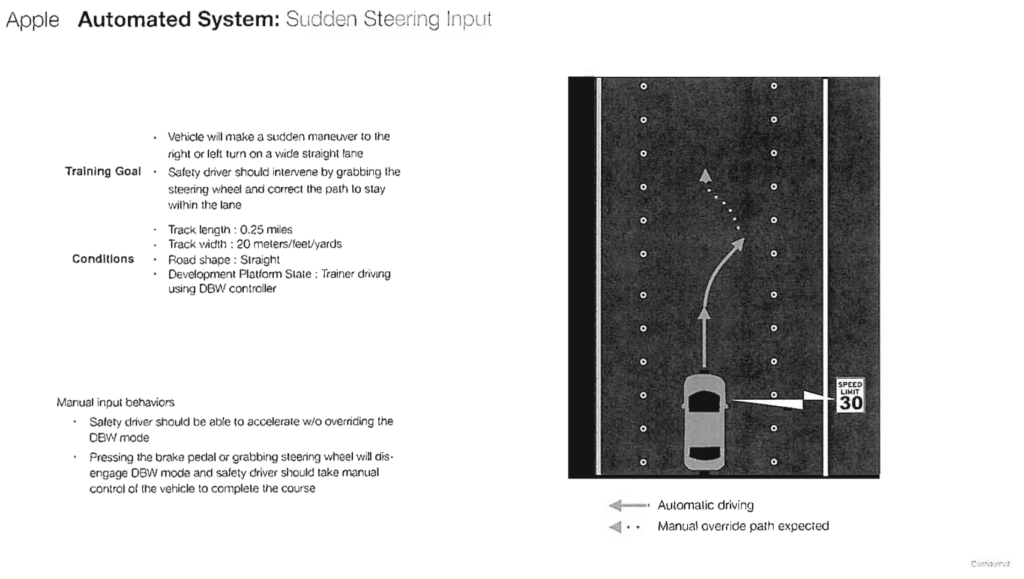
This is the interior of the Apple Car – the “Automated System” for self-driving cars

0

It seems that Apple Car is coming very soon.  The giant tech firm has developed an “Automated System” for self-driving cars, and the company is planning to put staffers through a training program to operate the vehicles ahead of testing on California roads.

Apple documents obtained by Business Insider through a public-records request provided the first look at the technology that the company is building for self-driving cars.

Apple obtained permits to test self-driving cars on California roads earlier this month. But the company has kept details of its car effort under wraps and has never really discussed any of its technology or business plans for self-driving cars.

The documents shed light on Apple’s effort to develop autonomous-driving technology and represent the latest sign of the tech giant’s seriousness about self-driving cars, a market analysts believe could be worth tens of billions of dollars and will pit Apple against Google, Uber, and Tesla, among others.

Profile of James Momoh, Appointed by Buhari As NERC (Nigerian Electricity Regulatory Commission) Chairman

2

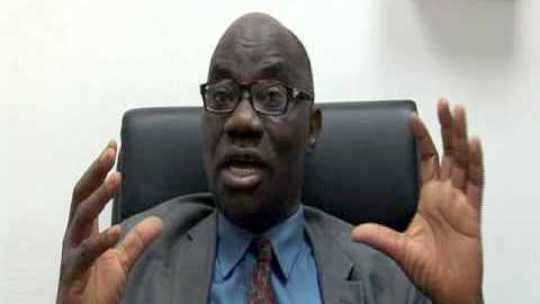
President Muhammadu Buhari has nominated James Momoh, a professor, for the position of Chairman of the Nigerian Electricity Regulatory Commission (NERC), a statement by the presidency has said.

The President’s nominee to the Senate for confirmation is a Professor of Electrical Engineering and Computer Science; and Director of Energy Services and Controls at Howard University, United States of America.

Mr. Momoh, a Life Fellow of the Institute of Electrical and Electronics Engineers and Fellow of the Nigeria Society of Engineers, has over three decades of teaching and research experience in power system, smart grid, optimisation and power communications.

The 1987 recipient of the National Science Foundation-US White House Presidential Young Investigator Award is a widely published scholar and has held several professional leadership positions in the academia.

Prof Momoh has a Doctorate degree in electrical engineering from Howard University; Master’s degrees in systems engineering from the University of Pennsylvania; and electrical engineering from Carnegie University.  He obtained his Bachelor’s degree in electrical engineering in 1975 from Howard University.

“President Buhari strongly believes that Prof Momoh has the technical knowledge, capacity and integrity to lead the Commission’s effort to bring about the much needed change in Nigeria’s power sector,” the statement by Garba Shehu, Senior Special Assistant to the President on media and publicity, said.

James Momoh received a BSEE degree (1975) from Howard University, a MSEE degree (1976) from Carnegie Mellon University, a MS degree (1980) in Systems Engineering from the University of Pennsylvania and a Ph.D. degree (1983) in Electrical Engineering from Howard University. He was Chair of the Electrical Engineering Department at Howard University and Director of the Center for Energy Systems and Control. In 1987, Momoh received a National Science Foundation (NSF) Presidential Young Investigator Award. He was Program Director of the Power program in the Electrical and Communications Systems (ECS) Division at NSF from 2001-2004. Momoh is a Fellow at the Institute of Electronics and Electrical Engineering (IEEE) and a Distinguished Fellow at the Nigerian Society of Engineers (NSE). He was inducted as a Fellow Member of Nigerian Academy of Engineering (NAE) in 2004.

Link “For more information about Dr. James Momoh”

Momoh’s current research activities for utility firms and government agencies span several areas in systems engineering, optimization and energy systems control of terrestrial, space and naval complex and dynamic networks. These include but are not limited to the development of multi-agent, intelligent optimization technologies; next-generation optimization for the design of future intelligent power grids; computational tools and algorithms for deregulated/restructured power economies; and advanced power management strategies for stressed power systems with uncertainty, dynamics and stochasticity of parameters. He has also led research and education outreach and collaborations in information technology, environment, energy and human capacity building to involve the United States and other countries worldwide. This has led to a number of international conferences, workshops and seminar series, and research and education in engineering programs that are sponsored by NSF, Howard University and several universities and public-private agencies.

Presently, he is developing interdisciplinary research and education programs in power, economics and environmental adaptive systems. The goal is to build cross-disciplinary partnerships among engineering, economics and other related disciplines that address socioeconomic issues, environmental issues, new teaching pedagogy and curricula to prepare the workforce of the future.

Momoh’s research and professional activities have led to over 225 technical papers in refereed journals, transactions, proceedings and also production of several textbooks in his areas of expertise. These papers are presented at conferences, workshops, seminars, tutorial sessions and several other IEEE events to benefit the wider community of engineers, students and policy makers. He has contributed to and is engaged in the development of specialized computational applications of classical optimization, intelligent systems and advanced optimization techniques for the new tools needed by terrestrial, naval and space power systems. In particular, he has been developing special topical contributions in the area of Dynamic Stochastic Optimal Power Flow (DSOPF) using Adaptive Dynamic Programming (ADP) methods. His activities also extend to the development of Multi-Agent Systems (MAS) for coordination and control of complex power systems. His work continues to impact the research and innovations needed in optimization for planning and operational security, efficiency, reliability and stability, and autonomous control of sustainable energy system


The Risks Of Public Wi-Fi And How To Avoid Them

0

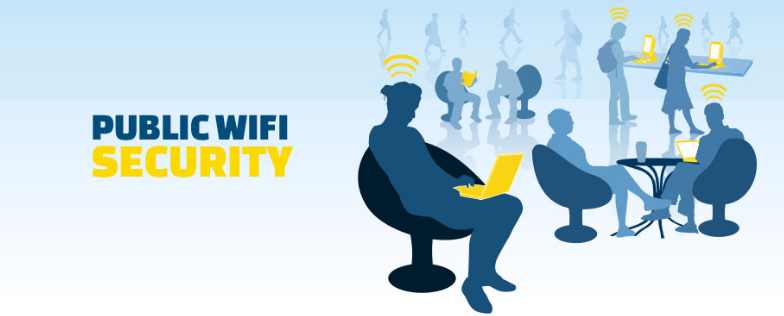
Wi-Fi users are at risk from hackers, but fortunately there are safeguards against them. The recent explosion of free, public Wi-Fi has been an enormous boon for working professionals. Since these free access points are available at restaurants, hotels, airports, bookstores, and even random retail outlets, you are rarely more than a short trip away from access to your network, and your work. This freedom comes at a price, though, and few truly understand the public Wi-Fi risks associated with these connections. Learning how to protect yourself will ensure your important business data remains safe.

The Risks of a Public Wi-fi

The same features that make free Wi-Fi hotspots desirable for consumers make them desirable for hackers; namely, that it requires no authentication to establish a network connection. This creates an amazing opportunity for the hacker to get unfettered access to unsecured devices on the same network.

The biggest threat to free Wi-Fi security is the ability for the hacker to position himself between you and the connection point. So instead of talking directly with the hotspot, you’re sending your information to the hacker, who then relays it on.

While working in this setup, the hacker has access to every piece of information you’re sending out on the Internet: important emails, credit card information and even security credentials to your business network. Once the hacker has that information, he can — at his leisure — access your systems as if he were you.

Hackers can also use an unsecured Wi-Fi connection to distribute malware. If you allow file-sharing across a network, the hacker can easily plant infected software on your computer. Some ingenious hackers have even managed to hack the connection point itself, causing a pop-up window to appear during the connection process offering an upgrade to a piece of popular software. Clicking the window installs the malware.

As mobile Wi-Fi becomes increasingly common, you can expect Internet security issues and public Wi-Fi risks to grow over time. But this doesn’t mean you have to stay away from free Wi-Fi and tether yourself to a desk again. The vast majority of hackers are simply going after easy targets, and taking a few precautions should keep your information safe.

Use a VPN

A virtual private network (VPN) connection is a must when connecting to your business through an unsecured connection, like a Wi-Fi hotspot. Even if a hacker manages to position himself in the middle of your connection, the data here will be strongly encrypted. Since most hackers are after an easy target, they’ll likely discard stolen information rather than put it through a lengthy decryption process.

Use SSL Connections

You aren’t likely to have a VPN available for general Internet browsing, but you can still add a layer of encryption to your communication. Enable the “Always Use HTTPS” option on websites that you visit frequently, or that require you to enter some kind of credentials. Remember that hackers understand how people reuse passwords, so your username and password for some random forum may be the same as it is for your bank or corporate network, and sending these credentials in an unencrypted manner could open the door to a smart hacker. Most websites that require an account or credentials have the “HTTPS” option somewhere in their settings.

Turn Off Sharing

When connecting to the Internet at a public place, you’re unlikely to want to share anything. You can turn off sharing from the system preferences or Control Panel, depending on your OS, or let Windows turn it off for you by choosing the “Public” option the first time you connect to a new, unsecured network.

Keep Wi-Fi Off When You Don’t Need It

Even if you haven’t actively connected to a network, the Wi-Fi hardware in your computer is still transmitting data between any network within range. There are security measures in place to prevent this minor communication from compromising you, but not all wireless routers are the same, and hackers can be a pretty smart bunch. If you’re just using your computer to work on a Word or Excel document, keep your Wi-Fi off. As a bonus, you’ll also experience a much longer battery life.

Stay Protected

Even individuals who take all the possible public Wi-Fi security precautions are going to run across issues from time to time. It’s just a fact of life in this interconnected age. That’s why it’s imperative to keep a robust Internet security solution installed and running on your machine. These solutions can constantly run a malware scan on your files, and will always scan new files as they are downloaded. The top consumer security software will also offer business protection solutions, so you can protect yourself while you’re out and about, and your servers back at the office, all at the same time.

Throughout any business traveller’s life, there’s going to come a time when an unsecured, free, public Wi-Fi hotspot is the only connection available, and your work simply has to get done right then. Understanding public Wi-Fi risks will ensure your important business data doesn’t become just another hacking statistic.

African Universities Should Offer This MIT Course On Technology Innovation In Agriculture

0

Innovation is critical for success. Agriculture is one of those areas we will need innovation especially in Africa. There are several major universities across the world that are putting agriculture technology at the forefront of their curriculum. Classes cover everything from using drones to capture crop information, applying variable rate prescriptions to crop fields, and managing water usage.

While many current courses are helping to arm the next generation of tech-savvy farmers and agribusiness professionals, Massachusetts Institute of Technology (MIT) is taking its students in a slightly different direction.

The prestigious Boston-based university is offering a course for agricultural professionals called “Innovation and Technology in Agriculture and the Environment.”

The Earth’s population will likely exceed 10 billion people in just a few decades, requiring an 80% increase in agricultural production. This presents an urgent need for innovative technologies to make agriculture more efficient, as well as to optimize and adapt existing processes to changing conditions. This course focuses on three fundamental areas that underpin agricultural innovation:

  1. Nano/micro/global aspects of environmental impacts including climate, weather, and microbiological
  2. The application of advanced technologies, such as new materials and machines, in agricultural processes
  3. The use of data and modeling to improve yield by enhanced precision and predictive power using large-scale data analytics and simulation

This course offers a unique interdisciplinary experience, bringing together faculty and practitioners from related areas. It’s the only place you can get such a concentrated and comprehensive view of this emerging field.

Maybe we need to replicate this type of course across universities in Africa. We need to feed our people and end hunger in the continent.

African Startups – Win This €500,000 Dutch Challenge

0

For African startups, there is a deal to pursue – it is called the Postcode Lottery Green Challenge.

The Postcode Lottery Green Challenge is one of the world’s largest competitions in the field of sustainable entrepreneurship. From 1 March 2017 until 1 June 2017, green start-ups from all over the world can submit their promising sustainable business plans to the the 11th edition. The winner will receive €500,000 to further develop the product or service, and to bring it to market. The runner-up will receive €200,000. An international jury selects the winner and runner-up.

The Dutch Postcode Lottery started the competition in 2007, after being inspired by president Clinton to look for those dedicated entrepreneurs with brilliant green business plans. Plans that are ready to speed up the transition towards a low carbon economy. The answers to the issues of our time are already in front of us. But it takes entrepreneurs like the Postcode Lottery Green Challenge finalists to present us with sustainable solutions and get them out into the world.

How does the competition work?

People from all over the world can (free of charge) submit their sustainable business plans at www.greenchallenge.info. Mid-July, the organization will announce the 25 nominees who will have a chance of becoming a finalist. Five finalists will then be selected Mid-August for the final round of the competition, where they will present their business plan in front of a selected audience and an international panel of experts during the grand final in Amsterdam on 14 September. After the decision round the judges will announce the winner of the €500,000 as well as the runner?up.

As this is an international competition, all entries must be submitted in English. 

Eligibility

  • be willing to bring your idea to market yourself, and to commit to working with any organisation necessary for developing the product and/or implementing the service
  • be 18 years or older
  • be willing to attend the Postcode Lottery Green Challenge in Amsterdam if you are selected as a finalist to present your idea to the jury (reasonable travel and lodging expenses for one person per finalist will be reimbursed)

Timeline

The registration is open from 1 March 2017 until 1 June 2017. Apply here.