DD
MM
YYYY

PAGES

DD
MM
YYYY

spot_img

PAGES

Home Blog Page 7428

Fasmicro Group Unveils Reconcia, an AI-driven Financial Reconciliation Software for the Digital Era

0

Owerri, Nigeria: Today, FASMICRO Group, a young and dynamic African brand built on the tripod pillars of integrity, professionalism, and entrepreneurial spirit, delivering quality across its business segments and sectors with unparalleled insights, is unveiling a new subsidiary – Reconcia.

Reconcia is smart software. It uses logical and algorithmic reconfigurable artificial intelligence engines to perform financial reconciliations at scale. It requires no programming skills; just logic engines which are available in Reconcia dashboard. Once reconciliation desired state is established, a company can automate its reconciliation across different platforms. As the data to be reconciled is fed, Reconcia uses the established logical model to effect the reconciliation. It does this by using AI and machine learning to build trend analysis and automate at scale the most repetitive reconciliation activities. This saves cost and puts companies in the dawn of the digital age where more transactions are required to be reconciled nearly in real-time.

Reconcia delivers a smart reconciliation technology that learns on the job – it thinks. The following are the key attributes of Reconcia:

  • Use of Cognitive Learning to absorb business knowledge and auto-learning of match rules; Cognitive Learning tools identify patterns and enhance auto matching
  • High Match Rates – High performance matching algorithm with Artificial Intelligence
  • High Processing Speed – Intelligent transaction matching algorithm which ensures high processing speed and volumes
  • Single Platform – Single solution for all the reconciliation needs (Cash/Nostro, OTC Derivatives, Trade confirmations, Forex, ETC)
  • Complete Data / Transaction Lifecycle Management – Integrated solution which can transform, cleanse, and reconcile the transactions across their lifecycle

Reconcia runs on the cloud which makes it easy for any client to implement. Reconcia Enterprise is also available and can be localized within a firm’s data center. The solution is scalable and supports any size of firm across industrial sectors. The data can be live electronic stream of data or uploaded data depending on the choice of the firm.

The Founder of Fasmicro Group, Prof Ndubuisi Ekekwe, notes: “Again, we have brought the amazing power of AI in another area to facilitate innovation and productivity in Africa. Companies are spending huge resources on reconciliation because most are still manually executed requiring running departments with many headcounts. With Reconcia, you save time and resources while improving quality. I welcome African businesses to take advantage of this solution”.

To schedule a demo, please email info@reconcia.com


About Reconcia:

Reconcia is AI-driven reconciliation software that uses machine learning-anchored trend analysis to facilitate financial reconciliation at scale. It has built-configurable AI models which do not require any programming for clients to implement. For more visit http://reconcia.com/


About Fasmicro Group:

FASMICRO Group is a young and dynamic group of companies and an emerging brand in Africa. Built on the tripod pillars of integrity, professionalism, and entrepreneurial spirit, FG delivers quality across its business segments and sectors with unparalleled insights. Our key focus is Africa and we operate through three main services – technology/engineering, investments and strategic advisory – to cover a broad range of sectors including technology, education, public sector, financial services, manufacturing, real estate and agriculture. For more visit http://fasmicrogroup.com

 

Arresting Folashade Oke May Lead To Clues On The True Owners of The EFCC Seized $50m

0

The story is developing on the $50m corruption case in Nigeria.

While Ayodele Oke, the Director-General of the Nigerian Intelligence Agency (NIA) has claimed that the $43 million, N23.2 million and £27,800 (N13billion) cash found in an apartment in Lagos last week belongs to his agency, information available to SaharaReporters suggests that the woman seen hauling the money into the apartment in Ghana-Must-Go bags may have been Folashade Oke, his wife.

It has been gathered that investigation has revealed that the owners of Apartment 7B gave Folashade Oke, with phone number +2348059833410, as their contact. Sources at the NIA confirmed Folashade to be the spouse of their Director-General, Mr Oke.

The day after the money was discovered, Mr Oke had told SaharaReporters he could not verify any information about the money as he had not read any report linking his agency to the cash.

One of the whistleblowers responsible for the discovery told our correspondent that since he started working on the property as a guard, a woman who spoke fluent Yoruba repeatedly brought huge bags of money to Apartment 7B. That particular property was known to guards as Apartment “Dash-Dash” because in the records there were two dashes where the name of the owner ought to be.

He recalled that on two occasions, he helped the woman, who was always curiously dressed in a haggardly way, to carry the money to “Dash-Dash”.

The building in Ikoyi where the money was found


The woman, on the first occasion, gave him N10, 000 as a gift, and on the second, N500. He said the woman would spend about two hours in the apartment, then go freshen up in the gym at the back of the building before leaving. While Mrs. Oke appears to be that person, who was quietly trying to traffic the money to the apartment for some reason, a quick check on True Caller shows phone number +2348059833410 to be customized as “Okemob Niger”.

According to the whistleblower, who is in hiding for fear of his life, there are about 19 fully occupied apartments and 2 penthouses at the 16 Osborne Road, Ikoyi, property. Estate valuers estimate each of the apartment with four bedrooms and state of the art facilities to cost about N250 million.

An EFCC source also told SaharaReporters that the reason they went ahead and raided the apartment was because the EFCC has in the past year investigated several NIA operatives involved in corruption, finding widespread malfeasance within the agency, with several NIA operatives owning hotels, apartment buildings and luxury cars in Abuja and elsewhere.

That background may have emboldened the EFCC chairman to ignore pleas by Mr. Oke when he arrived suddenly at the EFCC offices asking them to call off the raid after they had already commenced. The question now is: how did Mrs Oke become involved in discreetly and personally ferrying money supposedly belonging to the federal government into a private apartment she appears to own, and apparently trying to hide it there?

Arresting this woman could help solve this case.

Five things to do to make your child’s screen time more productive

0

Screen time is not what it used to be. The digital devices our kids are using today may frustrate us, annoy us, or even scare us, but with some active and mindful parenting strategies, these devices can be used in a positive way. Though I’m a realist about the dangers that exist in the digital world, I also see unprecedented opportunities for our kids to create and learn and grow into thoughtful digital leaders.

Let’s look at a few different ways to change our perspective from fear to opportunity.

From Consumption to Creation
When we lump everything into simple “screen time,” we fail to make a crucial distinction between creativity and consumption. Is your kid sprawled out in front of the TV or bingeing on her favorite YouTuber? Or is she live-tweeting the presidential debate, composing a song using GarageBand, or building a hobby website?

If kids are using their screen time for creativity instead of idle consumption, that makes you think differently about imposing limits, doesn’t it? Assess what they are doing and what value it might bring. It might not be passive “zombie time,” but learning and stretching their imaginations instead. If your kid is composing a song or creating an ebook or producing a podcast, you may still urge her to do homework or power down to get some sleep, but you might feel more positively about their screen time.

From Silence to Savviness
As parents, we can cultivate social consciousness in our kids through media literacy. If used properly, screen time can be a conversation starter for big issues. Engage with them about stereotypes and other issues in the media they consume, without forcing the issue. For instance, instead of insisting, “that video game is sexist,” ask your kids what they think about the male and female characters, or about the way that characters of different ethnicities are portrayed.

Try to stock your media library with shows that portray diverse, positive role models. Can you find movies and books with strong female heroes and smart and nuanced characters of color? Unfortunately, it won’t be as easy as it should be—but there are some gems out there. Ask your librarian, and consult websites such as A Mighty Girl as a resource. (It’s not just for parents raising girls!)

If you simply hate a show, character, genre, or company—and especially if you prohibit it—tell your children why. “Because I said so” may have our parents’ methodology, but explaining your reasoning is likely to yield more buy-in from your kids, even when you aren’t looking over their shoulders.

From Passivity to Participation
The Web offers so many opportunities to have your child “try on” different roles and responsibilities. Why not have your kid take the lead on a family project?

Does your child enjoy watching cooking shows on TV? Using the wealth of instructional content on YouTube or the numerous foodie blogs, could he make dinner for the family? Have him pick some recipes, plan a healthy meal, and create a shopping list. Help him and encourage him along the way, but make sure that he feels ownership over the process. It’s an activity you can do together, and will foster an enormous sense of pride, for you and your kid!

What about planning a family trip? Let her direct—or at least participate in the research and planning. Give her some constraints (budget, time frame, etc.) so that she understands the limits, and set age-appropriate tasks, from looking into museums or nature hikes near your potential destination to calculating the mileage and budget for gas needed on the road trip.

Maybe your child would like to create a blog, Instagram feed, or use an app like Anchor to make an audio narrative dedicated to the trip. These are useful skills!

From Customer to Critic
Since today’s teens and tweens view media as participatory, take advantage of that! Use this inclination to teach them to make critical assessments of the content they are consuming. This will allow your child to discover and develop his or her own value set, and feel ownership over it. And of course, you will be there to help guide them along the way.

In today’s media environment, we don’t have to just accept apps and content as they are. Let’s get creative and make some changes! Have them create a parody of their least favorite TV show by directing and shooting a video of their own. First, get them to articulate why they don’t like it—with specific reasons. Challenge them on this. For instance, why is this app or video game so popular? Can they see it from a perspective other than their own?

Next, what could they do to make it better? Have them try to improve one of their video games. Could the objectives be clearer, or the plot line more (or less) direct? If this is too challenging, get them to focus on one particular facet—the main character, or one “level” in the game.
There are so many great possibilities for creative criticism.

From Slavery to Citizenship
Kids are facile with technology, and many parents feel their child is enslaved to something that they can’t keep up with. Don’t use this as an excuse. We can’t rely on others to teach our kids good digital citizenship. It’s up to us!

Limiting screen time may seem like the easy solution for those parents who are paralyzed by fear of this new digital world. But let’s face it, their world already looks a lot different than ours—and it will continue to do so. What’s more is that their future success depends on the digital life skills they acquire now.

You want to play a part in helping them navigate their world. That doesn’t mean that you need to be an expert on their apps. It really doesn’t matter what the next “big thing” is. Something will be next multi-player game (like Minecraft), the next augmented reality phenomenon (like Pokemon Go), or the next social platform (like Musical.ly). Your strategy will remain the same: teach them the critical skills and self-awareness that will serve them in their future.

Heitner is the founder of Raising Digital Natives and the author of Screenwise: Helping Kids Thrive (and Survive) in Their Digital World, a guide for mentoring digital kids. This was originally pbublished as “Five Ways to Transform Your Kids’ Screen Time”

African Innovation – How Zenvus Is Using 3D Printing To Build Soil Fertility Sensors

2

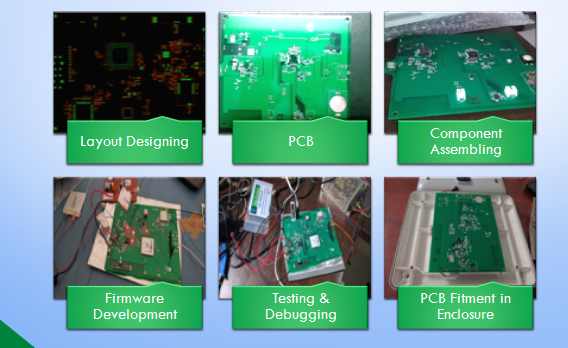
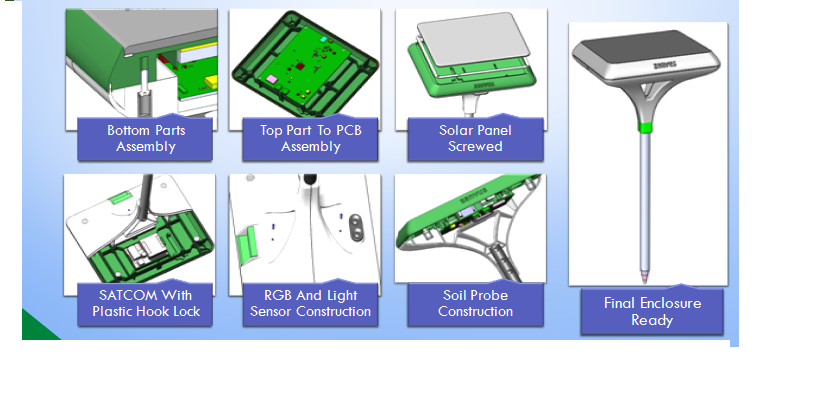
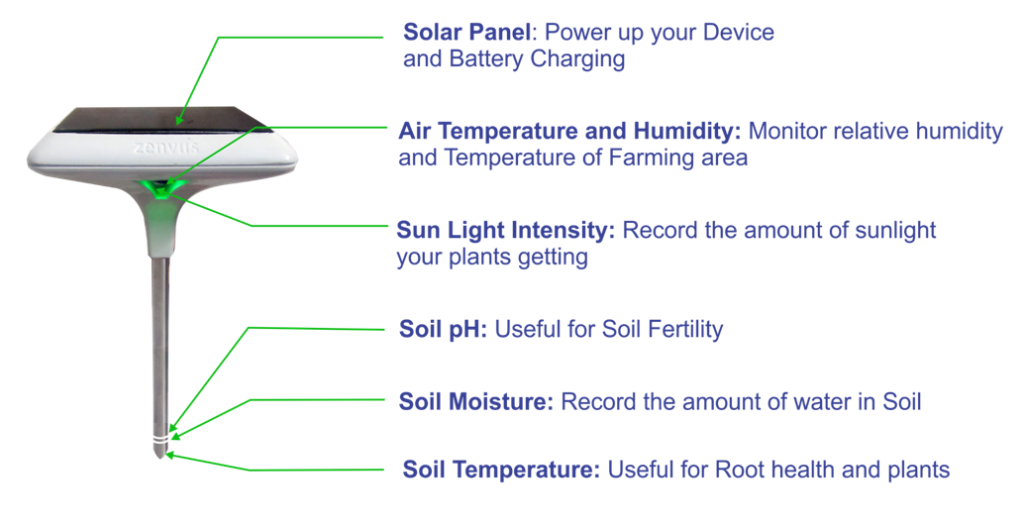
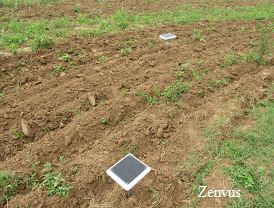
Zenvus is an intelligent solution for farms that uses proprietary electronics sensors to collect soil data like moisture, nutrients, pH etc and send them to a cloud server via GSM, satellite or Wifi. Algorithms in the server analyze the data and advice farmers on farming. As the crops grow, the system deploys special cameras to build vegetative health for drought stress, pest and diseases. Our system has the capability to tell a farm what, how, and when to farm. Here are some images from the design and development of Zenvus.

The pieces


The 3D printing

The enclosure


Serving farmers in farms

Download Nigeria’s Official National Cybersecurity Policy and National Cybersecurity Strategy (pdf)

0

Cyberspace, also known as the Internet or the 5th global domain, has transformed Nigerian government functions, citizens’ interactions, and corporate organisations  ways of communicating, conducting personal and commercial interactions at great  speed and efficiency. It has greatly transformed the way many Nigerians interact with  the world at large.

While accolades to the commercial success of the Internet may be made, there is  also a challenge in identifying and curbing cyber threat in cyberspace. It is well documented that the Internet is being used as a vehicle to carry out criminal activity  within Nigeria’s borders. These activities adversely affect the country economy, individuals and organisations within Nigeria’s physical territorial boundaries from a  financial, reputational, security and privacy perspective.

Where external threat actors such as foreign intelligence agencies, hackers and other online criminals, are carrying out the activities they can also threaten the national security posture, which includes the economic, political and social fabric of  Nigeria.

The Nigerian government developed two documents – National Cybersecurity Policy and National Cybersecurity Strategy – within the constructs of cybersecurity. They were launched by the former National Security Adviser during Goodluck Jonathan administration.


Download the documents

These documents are the exact official ones which were later signed by the NSA in office then for the Nigerian government.

Click and download the Policy here

Click and download the Strategy here

Cybersecurity Training

Facyber (First Atlantic Cybersecurity Institute)  is providing training on these policies and strategies and helping Nigerian companies with training. Please register today for any of the programs.