DD
MM
YYYY

PAGES

DD
MM
YYYY

spot_img

PAGES

Home Blog Page 7431

KPMG invests in agtech $6.5 million Series A funding

0

The Yield, the Australian sensing, IoT and predictive analytics startup for aquaculture and agriculture, has raised $6.5 million in Series A funding from three global corporations; hardware giant Bosch, consultancy group KPMG, and online investment platform AgFunder.

The startup will use the funding to expand beyond aquaculture, its first target market in Australia, and into the US where it will focus on customers on the West Coast growing intensive, irrigated crops.

The Yield focuses on monitoring microclimates to give farmers granular and predictive insights about what’s happening at multiple points on their farm using artificial intelligence and predictive modelling.

In aquaculture, the ability to measure small changes in the environment can save hundreds of thousands of dollars. The Yield has specifically focused on oyster production until now, which is a $76 million market in Australia.

As filter feeders, oysters are particularly susceptible to pollution, so regulators conservatively shut down harvesting when heavy rains might wash contaminants into bays. The decision to open or close bays has typically been done by monitoring rain gauges from public weather stations that could be hundreds of miles away. The impact of these closures is significant. In New South Wales alone in 2015, closures resulted in 161 days of lost productivity. Farmers can lose between $20k-$100k a day during a closure, depending on the time of the year. The Yield collects real-time data from sensors that sit in oyster leases and analyze water. This information is ingested into the cloud, where artificial intelligence and advanced analytics make data-based predictions on the impact of weather events on the quality of the water. These data are shared with growers and regulators to prevent the closure of bays at unnecessary times.

Measuring microclimate changes is important for crop growers too. Speaking at The Forbes Mixing Bowl conference in New York recently, Tom Am Rhein, VP at berry producer Naturipe Growers, complained that existing technologies didn’t account for all the microclimates across his land.

Petra Doust, crop production manager at Houston’s Farms in Australia, agrees.

“At the moment, we make most of our critical decisions about timing and harvest by just manually looking at the crop or sampling the soil or plants and waiting a couple of days for the results. There’s a time lag, and often that means we miss the best opportunity to rectify the problem, which then affects the quality and shelf life of our bagged salad mixes,” she said.

Houston’s Farms, which is one of Australia’s largest lettuce operations, loses about 200 tons of lettuce each year to water-related issues, and the producer is hopeful predictive sensing technologies like The Yield will take the guesswork out of farming.

A key differentiator of The Yield compared to other sensing & IoT companies is that it doesn’t sell its sensors; they are provided to customers as part of an end-to-end subscription package including hardware, apps, and the data analytics platform. All the responsibility of maintaining, servicing, and calibrating them sits with The Yield, answering some pain points expressed by growers and retailers using sensors in the past.

Major Technology Trends and Challenges in 2017

0
Abstract 3D illustration.

In a digitally-enabled world, technology is embedded in its core. Companies will harness their best potential to provide rich digital services to consumers. For example, the introduction of the first-ever touch screen smartphone in China in 2003 led to a paradigm shift in the ease of using such phones. These technologies are poised to bring a revolution in the marketplace, where consumers are continuously adapting to new innovations and eagerly awaiting something new every time. People have actually become addicted to the terminology “everything on demand”. Consequently, telecom manufacturing companies are always striving to fulfil the wishes of consumers.

Besides this, there are other trends and challenges that one needs to be aware of to meet market expectations. IoT (Internet of Things) will be a major focus for all technology companies because consumers are already experimenting and using different apps and new technologically-advanced devices that have made their lives most comfortable. Therefore, mainly to ensure them utmost satisfaction, rigorous research is underway about how devices can always remain well connected to each other, with the entire control being in human hands only.

Ubiquitous IoT

Basically, one is making devices talk to each other in a virtual world and processing this information to perform the desired task. In reality, IoT will impart a physical meaning to all objects. This will become possible via MQTT or Message Queuing Telemetry Transport. A lightweight messaging protocol, MQTT will permit network clients with resource constraints to use simple means to distribute telemetry information. Deploying a communication pattern termed publish/subscribe, the protocol can be utilised for M2M (machine-to-machine) communications, thereby playing a pivotal role in IoT (Internet of Things).

IoT will soon be ubiquitous, with each object able to think and talk to one another, resulting in reduced human efforts to perform any task. Obviously, the initial start of IoT can be achieved with the development of smartphones that almost everyone generally carries these days. Therefore, smartphones have become an integral part of our lives. This is the gadget that will usher a revolution in the world of connected devices.

In the absence of Internet or Wi-Fi connectivity, however, will these gadgets still work? That is where BLE comes into the picture. Also known as Bluetooth Smart or BLE (Bluetooth with Low Energy), this is considered the fulcrum for wireless connectivity. Thanks to BLE, developers can create tiny sensors running on minuscule coin-cell batteries for months, or years, on end. Given this incredible energy source, billions of devices today come with Bluetooth technology – an underlying basis for the IoT revolution.

Meanwhile, people have begun thoroughly enjoying Augmented and Virtual Reality items. This was evident in the market mania when Pokémon Go was launched. It indicates people are welcoming these innovative technologies, which ensures much space to the R&D sector to think out-of-the-box and produce something totally different. This is an era in which people prefer 3D, 4D and 5D, where they can feel and sense the virtual object. But soon, an era of 7D or 8D will arise, when people will also smell and touch the virtual thing, much like a real thing.

The major change will come about when these technologies are embedded as normal features in consumers’ smartphones, whereby they can make any virtual thing on their own and experience it in a real way. In fact, perhaps in the near future, consumers will own a solar smartphone where the problem of repetitive charges will vanish. Consumers will simply use their smartphones throughout the day without worrying about battery consumption.

Security via Biometrics

Fingerprint sensors in smartphones are already in the market. Soon, retina-scan sensors in smartphones will be a major technology trend. Authentication with Biometrics involves accessing a product or service via identification by deploying biometric data such as fingerprints, eye scans, voice or facial recognition. Biometric identification uses a unique identifier.

For instance, a fingerprint scan can identify a unique fingerprint, while voice recognition does the same with a person’s voice. In the case of eyes, an iris or retina scan could include recognising the blood vessels in the eye. The latter is effective because blood vessels in a person’s eye never change over time and are recognisable even through glasses as well as contact lenses.

This form of biometric identification even works with a tablet camera or smartphone. After the tablet or smartphone has mapped the user’s blood vessels, an encryption key is created that is akin to a complex 50-character password. This information is then scrambled and encrypted on the device, ensuring it cannot be intercepted. Using blood vessels in the eyes as biometric identification to access services is a secure option. Hackers can’t copy the blood vessels in a person’s eyes and it doesn’t take expensive hardware to implement the solution.

Biometric identification can be used in tandem with passwords for two-factor authentication or multifactor authentication. When a person accesses an online service, such as a bank or email account, biometric authentication can capture the account holder’s eye image after the password has been entered. Biometric information is an excellent security mechanism because cyber criminals cannot access this unique data.

Privacy and Control

Limitless data is being transferred between all devices, allowing access to practically infinite information worldwide. With billions of new devices and technologies emerging, cloud computing will be the sole domain to store and analyse such massive data. In other words, as cloud computing is vital to IoT, these technologies will need to be extremely well synchronised with future smart gadgets of all kinds in order to attract the interest of consumers.

In this scenario, the main challenge will be the tremendous outflow of personal data to the outside world, making everyone’s lives an open book and breaching the personal security layer. Therefore, cyber security will become a major concern for everyone to protect personal information. Indeed, people are already enjoying and living in a virtual world, which is making everyone akin to robots.

Against this backdrop, the advent of Artificial Intelligence (AI) brings new advances to the fore. As AI scales new levels, humans are being beaten in many fields traditionally considered the sole preserve of human intelligence, including chess and Go. The latter is a Chinese game considered more complex than chess. Robots with AI are even programmed to mimic human facial emotions.

As things stand, AI is poised to take over human work. While this will definitely speed up the pace of work, there are seen and unforeseen perils in AI. The framework of AI is such that humans will be imparting machines the ability to think. This can be constructive as well as destructive. The latter is truly frightening because machines could think and perform tasks as per their cold calculations and comfort levels, while human ‘masters’ remain mere spectators in everything with little power to stop any negative initiative or outcome.

Is this a safe scenario? Not at all! With AI and other technological advancements, it is imperative we decide extremely carefully about the extent humans can permit technology to rule their lives. We should ensure that not only do we enjoy innovative technologies but also do so safely in future.

Such a safe scenario may only be possible if AI is perpetually programmed to operate under human command only with an auto-stop or self-destruct mechanism that prevents machines from turning upon humans. The wellbeing of the human race could depend upon it.


By Mr Leon Zhang, Marketing Head, South Asia, Meizu

We can “cure” poverty in Africa in this generation with Zenvus precision agriculture

0
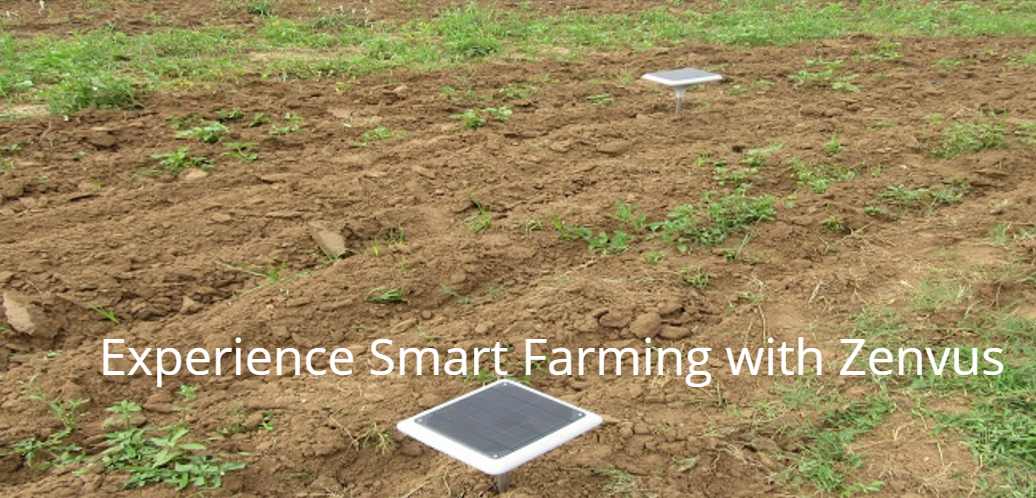
Zenvus precision sensors in farms

By 2050, it’s expected that the world’s population will reach 9.2 billion people, 34 percent higher than today. Much of this growth will happen in developing countries like Brazil, which has the largest area in the world with arable land for agriculture. To keep up with rising populations and income growth, global food production must increase by 70 percent in order to be able to feed the world.

For IBM researcher and Distinguished Engineer Ulisses Mello and a team of scientists from IBM Research – Brazil, the answer to that daunting challenge lies in real time data gathering and analysis. They are researching how “precision agriculture” techniques and technologies can maximize food production, minimize environmental impact and reduce cost.

“We have the opportunity to make a difference using science and technological innovation to address critical issues that will have profound effect on the lives of billions of people,” said Ulisses.

What is precision agriculture?

Traditionally agriculture is practiced by performing a particular task, such as planting or harvesting, against a predetermined schedule. But by collecting real-time data on weather, soil and air quality, crop maturity and even equipment and labor costs and availability, predictive analytics can be used to make smarter decisions. This is known as precision agriculture.

With precision agriculture, control centers collect and process data in real time to help farmers make the best decisions with regard to planting, fertilizing and harvesting crops. Sensors placed throughout the fields are used to measure temperature and humidity of the soil and surrounding air. In addition, pictures of fields are taken using satellite imagery and robotic drones. The images over time show crop maturity and when coupled with predictive weather modeling showing pinpoint conditions 48 hours in advance, AI is able to build models and simulations that can predict future conditions and help farmers make proactive decisions.

Optimizing planting, harvesting and distribution

In order to grow crops optimally farmers need to understand how to cultivate those crops in a particular area, taking into account a seed’s resistance to weather and local diseases, and considering the environmental impact of planting that seed. For example, when planting in a field near a river, it’s best to use a seed that requires less fertilizer to help reduce pollution.

Once the seeds have been planted, the decisions made around fertilizing and maintaining the crops are time-sensitive and heavily influenced by the weather. If farmers know they’ll have heavy rain the next day, they may decide not to put down fertilizer since it would get washed away. Knowing whether it’s going to rain or not can also influence when to irrigate fields. With 70 percent of fresh water worldwide used for agriculture, being able to better manage how it’s used will have a huge impact on the world’s fresh water supply.

Weather not only affects how crops grow, but also logistics around harvesting and transportation. When harvesting sugar cane, for example, the soil needs to be dry enough to support the weight of the harvesting equipment. If it’s humid and the soil is wet, the equipment can destroy the crop. By understanding what the weather will be over several days and what fields will be affected, better decisions can be made in advance about which fields workers should be deployed to.

Once the food has been harvested the logistics of harvesting and transporting food to the distribution centers is crucial. A lot of food waste happens during distribution, so it’s important to transport the food at the right temperature and not hold it for longer than needed. Even the weather can affect this; in Africa, many of the roads are dirt, and heavy rain can cause trucks to get stuck in mud. By knowing where it will rain and which routes may be affected, companies can make better decisions on which routes will be the fastest to transport their food.


The future of precision agriculture

Currently, precision agriculture technologies are used by larger companies as it requires a robust IT infrastructure and resources to do the monitoring. However, Ulisses envisions a day when smaller farms and co-ops could use mobile devices and crowd sourcing to optimize their own agriculture. A good startup working in Africa is Zenvus.

“A farmer could take a picture of a crop with his phone and upload it to a database where an expert could assess the maturity of the crop based on its coloring and other properties. People could provide their own reading on temperature and humidity and be a substitute for sensor data if none is available,” he said.

With growing demands on the world’s food supply chain, it’s crucial to maximize agriculture resources in a sustainable manner. With expertise in high performance supercomputing, computational sciences, and analytics and optimization, agtech  is uniquely able to understand the complexities of agriculture and develop the right weather forecasts, models and simulations that enable farmers and companies to make the right decisions.

Africa has got Zenvus and the firm is ready to serve farmers around the continent.


Innovation = Execution x Creativity

0

You may have heard about the sword of Damocles, hanging above its target by a single hair. It’s a metaphor often used to describe impending doom, yet this is not the actual meaning. The story goes that a servant was taken by all of a king’s wealth and wanted to partake in that luxury. The king offered the servant supper on his throne, but with a sword hanging above him held by a single strand. Afterwards he asked the servant if he enjoyed the meal, but the servant was too worried about the sword falling.

The sword of Damocles is not about impending doom. It’s about the pressures of power and responsibility. Every business leader feels this, knowing that it takes only a few wrong decisions, or a dollop too much complacency, for disaster to land. Today this pressure is more poignant than ever. Change, as always, is in the air, only now it is happening at breakneck speed. The lifespans of companies are fast become shorter and even historic precedent fails to contextualise what is happening today.

Speed matters and technology is the means to accomplish that speed. Yet technology is not a fix. Any solution purchased to catalyse change is a waste of money. The real reason why companies fail to change and to shift into new spaces, is because they lack the right innovation cultures.

Innovation is a tricky principle to nail down, but it has a simple formula: Innovation = Execution x Creativity. Companies struggle to engage this dynamic, because they suffer from corporate cholesterol. These are the unwelcome fats clogging a company’s arteries: rigid processes, risk avoidance and complacency – anchored through faith in existing frameworks – all effectively suffocate a business’ ability to push forward.

Digital transformation has brought this problem to a head. But, as said earlier, technology is not the solution. Digital transformation is not a process. It is actually an end goal, a new state of business defined by a revolution in technology. Getting there requires transformation on a different level. A transformation that enables people.

Humans are key to innovation. It is human thought that creates new ideas and tests new opportunities. A common barrier for any transformation is a reliance on the familiar. Companies seek out to improve on existing solutions and discover ‘comfortable’ problems that can be turned in a familiar context. But real innovation means going where the business has not gone before – and for that, humans are crucial. The best AI can accomplish incredible things, but what it can’t do is be creative. Technology helps to amplify and augment humans, not replace them.

SAP stumbled upon this concept a number of years ago. In the early 2000s one of its founders wrestled with the company’s wayward direction. The exciting, customer-focus culture of SAP’s startup days – and which brought it success – had been replaced by a regime of prescriptive thought patterns. Then came the concept of Design Thinking.

Design Thinking is a human-centered approach to innovation. It helps companies be empathic around customer and business needs, use collaboration to bring functions and perspectives closer together, and aims to be highly iterative so to better understand and embrace the market. When you focus on people, processes and environments, you encourage creativity. Turn that into a scalable culture and you invite disruptive innovation, not the incremental innovation that translates to little new value.

Harnessing a Risk-taking culture is key. McKinsey, the same consultancy that helped change corporate thinking in the early 20th century, has noted that digital performance and positive risks are joined at the hip. This type of culture not only understands that exponential rewards come with increased risk, but that failure (at least fast failure) is a powerful learning opportunity. Just like learning to ride a bike – if you never fall, you will not know how to find ways to be better.

It’s interesting to note that delivering iterations, far outweighs the importance of delivering the perfect product. 3D Robotics, a drone company established by technology evangelist Chris Anderson, pulled out of its ambitious drone-manufacture plans because it spent all its resources to make the ‘perfect’ drone. Meanwhile DJI, a Chinese company, used constant innovation to drive new products to market. Not all of DJI’s products succeeded, but its momentum held ground. Today DJI rules the drone space while 3D Robotics has exited this market altogether. Enable rapid innovation and you progress.

Design thinking creates a mindset to merge technological feasibility, business viability and human experience. This doesn’t just pertain to outward-facing products. Design thinking is as much about innovating internal processes and ideas. For example, creating new career paths facilitating a wider talent pool, requires a creative approach to what is important to a business.

I won’t claim that SAP has perfected Design Thinking, but it has done amazing things for the company. The goal of moving out of its stoic enterprise trappings is being achieved in unbelievable ways. We have engineered groundbreaking new products, created a workplace for a very diverse workforce, and realised digital transformation by becoming a real-time data-driven business. I’m not pitching a product here. I am stating that without Design Thinking, SAP may today be facing extinction. Nobody is immune from this.

We have since realised the value of bringing this message to our customers and offer free insights into how Design Thinking can help an organisation. The sword of pressure hangs over every business leader. Instead of worrying if it will fall, you can find confidence in a new philosophy that will change your company’s creative and innovation cultures. If you are worried about your business tomorrow, look at Design Thinking today.

 
By Brett Parker, Managing Director – SAP Africa at SAP originally published this with title “Design Thinking: The X factor in your digital transformation”

Transform your career: enroll in nanodegree in cybersecurity technology, policy and management

0

Enroll in our nanodegree in cybersecurity technology, policy and management..

First Atlantic Cybersecurity Institute (Facyber) is a cybersecurity training, consulting and research company specializing in all areas of cybersecurity including Cybersecurity Policy, Management, Technology, Intelligence and Digital Forensics. Facyber is based in United States.

The clientele base covers universities, polytechnics, colleges of education, governments, government labs and agencies, businesses, civil organizations, and individuals. Specifically, the online courses are designed for the needs of learners of any discipline or field (science, engineering, law, policy, business, etc) with the components covering policy, management, and technology.

Structure

Programs are structured as Certificate, Diploma and Nanodegree programs with deep resources to support Learners.   Please see complete Facyber catalog and detailed Table of Contents.

Learn about
– Cybersecurity Policy (Certificate, Diploma, or Nanodegree)
– Cybersecurity Management (Certificate, Diploma, or Nanodegree)
– Cybersecurity Technology (Certificate, Diploma, or Nanodegree)
– Cybersecurity Intelligence and Digital Forensics (Certificate, Diploma, or Nanodegree)

Our Cybersecurity education is structured around four key pillars of policy, management, technology and digital forensics. This implies that we cover all the core needs of any organization or state institutions. While some staff like corporate lawyers may require training on policy, some staff like IT managers may need technical skills. Others like business leaders will find the management module useful. We deliver all these programs through our web portal . The program structure is presented below: certificate programs take 12 weeks; diploma programs which require certificate programs as perquisites take 24 weeks (inclusive of the certificate programs) and the nanodegree programs require a live (virtual) one week training with the diploma programs as prerequisites

Program Descriptions

  • Certificate in Cybersecurity Policy (CCYP): Certificate in Cybersecurity Policy deals with the policy analysis and implementation aspects of cybersecurity. It presents theory and topical issues, at government and enterprise levels, with both technical and managerial components in the fields of information systems security. The program helps learners develop skills on the policy, ethical, and legal issues associated with cybersecurity and information security.
  • Diploma in Cybersecurity Policy (DCYP) Capstone: This is a practical-oriented program where learners are tasked with developing solutions for a theoretical or real case cybersecurity policy issue with the guidance of a mentor. A project report is required at the end of the program.
  •  Certificate in Cybersecurity Technology (CCYT): The Certificate in Cybersecurity Technology is designed to provide learners with skills to analyze multi-faceted complex cybersecurity issues, develop capabilities to make strategic decisions to protect organizations from threats and become competent cybersecurity professionals.
  • Diploma in Cybersecurity Technology (DCYT) Capstone: This is a practical-oriented program where learners are tasked with developing capabilities in the core technical aspect of cybersecurity. Learners will have access to some tools and equipment to work throughout this program. A project report is required at the end of the program.
  • Certificate in Cybersecurity Management (CCYM): The Certificate in Cybersecurity Management equips and prepares learners with modern skills to become effective managers across the broad nexus of cybersecurity and intrusion preventions in organizations. The central core is developing capacity to prevent anticipated cyber intrusions, using experiences to mitigate future threats, and formulating and implementing enterprise-level cybersecurity roadmaps. The program also explores the roles of regulation, policy developments, legal instruments and civil liberties.
  • Diploma in Cybersecurity Management (DCYM) Capstone: This is a practical-oriented program where learners are tasked with developing cybersecurity project management capabilities with the guidance of a mentor. Here, learners develop cybersecurity implementation frameworks. A project report is required at the end of the program.
  • Certificate in Cybersecurity Intelligence & Digital Forensics (CCDF): The Certificate in Cybersecurity Intelligence & Digital Forensics is structured to provide modern skills to those interested in digital forensics, digital intelligence and uncovering digital evidence. The program equips learners with broad analytical frameworks and prepares them to become competent cyber investigators.
  • Diploma in Cybersecurity Intelligence & Digital Forensics (DCDF) Capstone: This is a practical-oriented program where learners are tasked with developing capabilities in digital forensics, digital evidence and digital intelligence. Learners will have access to some tools and equipment to work throughout this program. A project report is required at the end of the program.