DD
MM
YYYY

PAGES

DD
MM
YYYY

spot_img

PAGES

Home Blog Page 7438

Prof Umar Danbatta of Nigerian Communications Commission explains why telcos QoS is poor in Nigera

0

The Executive Vice Chairman of the Nigerian Communications Commission, Prof Umar Danbatta  has raised alarm over what he described as unwarranted cutting of fiber cables and unending community attack on telecommunications infrastructures, saying these are some of the factors responsible for poor quality of services in the country.

Danbatta, who was a guest on the popular Channels TV programmes ‘Sunrise Daily’ this morning said, though the hitherto drop call rates being experienced by telecom consumers is not acceptable, findings by the Commission shows that fiber cut and community issues are largely responsible for the poor quality of networks.

“Based on the measurement of quality of service we have conducted, the call drop rate is not acceptable; the call success rate is equally not encouraging. But our findings also show that there are technical and non technical factors responsible for the poor quality of networks. These factors include fiber cut, community issues and unsteady electricity supply,” the former University lecturer said while answering questions centered around quality of telecoms services on the TV programme.

Danbatta argued that electricity supply is closely tied to the quality of service as all the network operators depend on electricity supply on a daily basis. “Even though they do depend also on generating power on their own, they still have challenges of diesel most of the times,” he asserted.

He said in order to address some of these issues, the Commission has suggested to the network operators to look for alternative means of powering their base stations. Some of such alternative means include resorting to solar energy, which also requires additional investment, but that will ultimately be a solution to lack of electricity supply.

Nigerian technology integrator pioneers ATM as a Service with subscription to banks

0

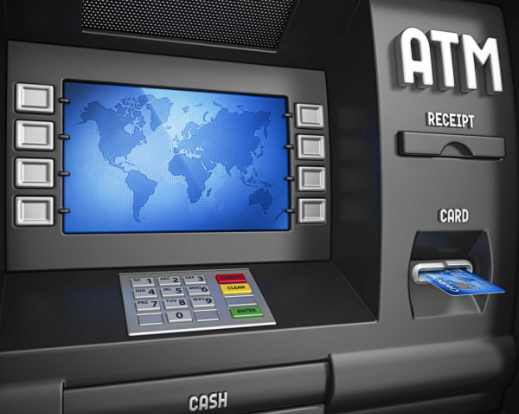
CWG Plc, a technology solution provider that enables the growth of businesses, said it is promoting the ATM as a Service initiated because of its inherent capability to help banks and other financial institutions focus on their core business of rendering financial services to their customers.

“The rationale behind ATM as a Service is the operational efficiency, whereby companies can focus on their core business and allow contractors take care of other areas of their business that are not very critical to them,” said Henry Erigha, CWG’s Senior Manager, Financial/SME.

Erigha,who stated this in a statement said having realized the many headaches around operating an ATM machine in Nigeria, CWG decided to be handling the operation of the ATM as a service and take the headaches off the banks so they can have time to operate more efficiently within their organization.

He believes that ATM as a Service model is the new wave around solution providers, stressing that with the model, banks do not need to roll out huge CAPEX to procure an ATM, which he disclosed requires a minimum of N7 million to make one machine function.

“To acquire one ATM machine based on current foreign exchange requires minimum of N7million in Nigeria today, and a bank is expected to deploy 300 ATM machines across Nigeria. This is huge for the banks. So we desire to take this headache from the banks; we have access to the fund and we are the custodian of the ATM,” Erigha asserted.

He stated that all that is required from the banks is for them to pay a subscription, which could be monthly or quarterly for them to make use of the ATM as a Service, which he assures is a more secure way of doing business because it helps operational efficiency and realigns business roadmap in such a way that the banks are now more focused on the direction and organizational goals as agreed with their board.


What Zenvus offers to African governments exploring smart farming initiatives

0
Zenvus

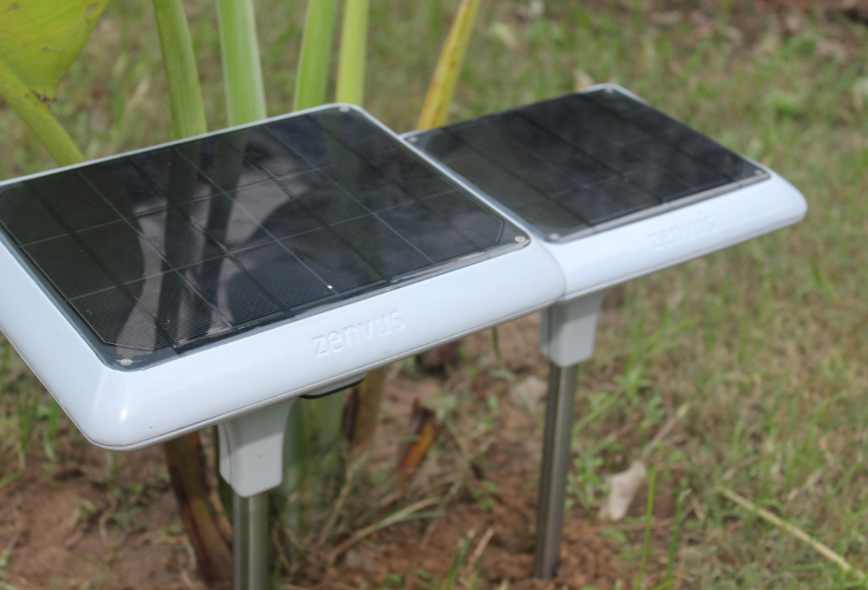
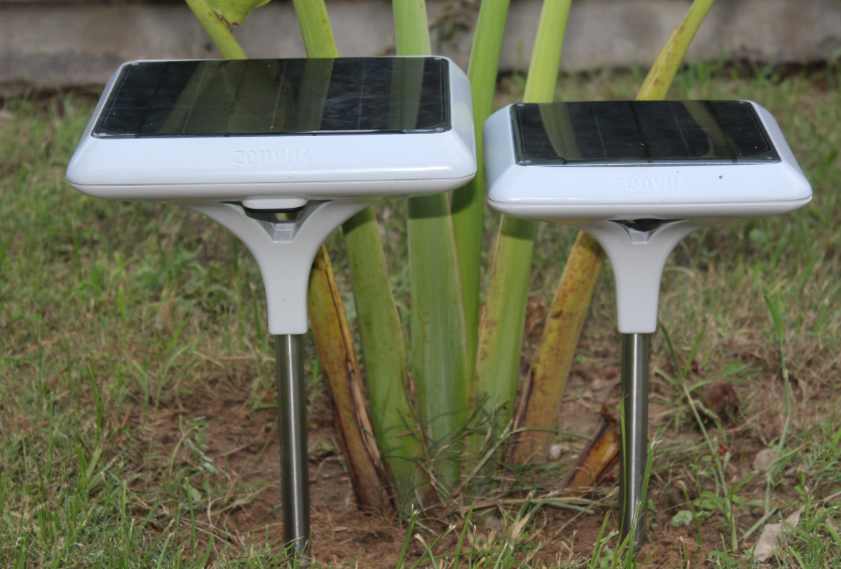
When inserted in the soil, Zenvus sensor gathers and analyzes data about changing weather and soil conditions. It then communicates to farmers helping them make decisions on what, when and how to farm. Besides the analytics of the soil, Zenvus provides a special spectral camera which helps to track crop vegetation. The camera provides farmers with deep insights on the vegetative health of their crops. By analyzing the images, stressed crops, droughts, outbreaks of pests and diseases etc can be seen and managed. Also, by aggregating data on the soil and vegetation, farmers can evaluate the effectiveness of irrigation and fertilizer application by correlating soil data with overall vegetative crop health.

Zenvus Services

Our goal is to work with government to on-board Ebonyi farmers in these portals

  • zManager is an electronic farm diary that helps Zenvus farmers record all phases of farming from planting through harvest to sales. It keeps all records – financial, staff, tools, etc
  • zPrices empowers rural Zenvus farmers with real-time produce prices across major cities. It provides farmers with data to effectively negotiate prices with merchants
  • zCapital helps Zenvus farmers raise capital (loan or equity) by providing independent farm data from our sensors to help banks and investors evaluate overall profitability of farms.
  • zCrowdfund helps Zenvus farmers crowdfund capital from local donors who they can deliver produce after harvest. Our sensors validate these farms providing partners with confidence.
  • zInsure helps Zenvus farmers insure their farms by providing independent farm data from our sensors to insurers. This helps them evaluate the risks based on actual farm data.
  • zMarkets provides a platform for Zenvus farmers to sell their produce. It is an avenue to expand their markets by removing geographic limitations. Farmers list their harvest days and buyers connect.

Zenvus Solutions

  • Zenvus Boundary – helps farmers map the boundaries of their farms and then print same so that they can obtain farmland titles from governments.
  • Zenvus Fusion – Zenvus Fusion is a service for governments and development organizations which is designed to help build Soil Fertility Geography in constituencies like states
  • Zenvus Insights: Provide a platform where government can monitor and track performances of all farms it has supported in the state.

We seek partnerships with governments to deploy these solutions to their farmers and help improve farming productivity

Why Snap stock struggles

0

Monday was a great day to be Snap Inc. That’s when the brokerage firms that underwrote its IPO were released from their quiet period, and presto! All of them coincidentally came out with strong buy recommendations, which boosted the stock by about 10%.

The warm glow of all those “buy” ratings soon faded, however. Why? Because Facebook announced new features on Tuesday that duplicated most of the popular aspects of Snapchat, the company’s flagship product. Facebook has more than 10 times as many users, and a market cap that is 10 times as large.

Shares of Snap tumbled in response, not surprisingly, because competition from Facebook is one of the biggest shadows hanging over the stock. But there are others, as Pivotal Research notes: It rates the stock a “sell,” with a target of just $10.

Snap’s revenue is expected to climb by as much as 160% this year, to about $800 million. But even that number is smaller than expected, because of higher revenue-sharing with partners. Is that going to be a trend? Snap isn’t saying, but it could curb growth expectations.

On top of that, Snap isn’t expected to be cash-flow positive until 2020, and that’s the forecast from a relatively bullish research firm. That’s a long time to wait for proof that the company’s business model is sound.

Meanwhile, investors are paying more than 20 times Snap’s projected revenues, which is more than twice what Facebook is selling for, and Facebook is a massive cash-generating machine with a proven track record. Snap didn’t produce any revenue until 2014.

Those kinds of multiples are going to be difficult to live up to. And if Snap doesn’t manage to do so, better look out below


Mathew Ingram, Newsletter

Reviews of Samsung Galaxy S8 and S8+

0

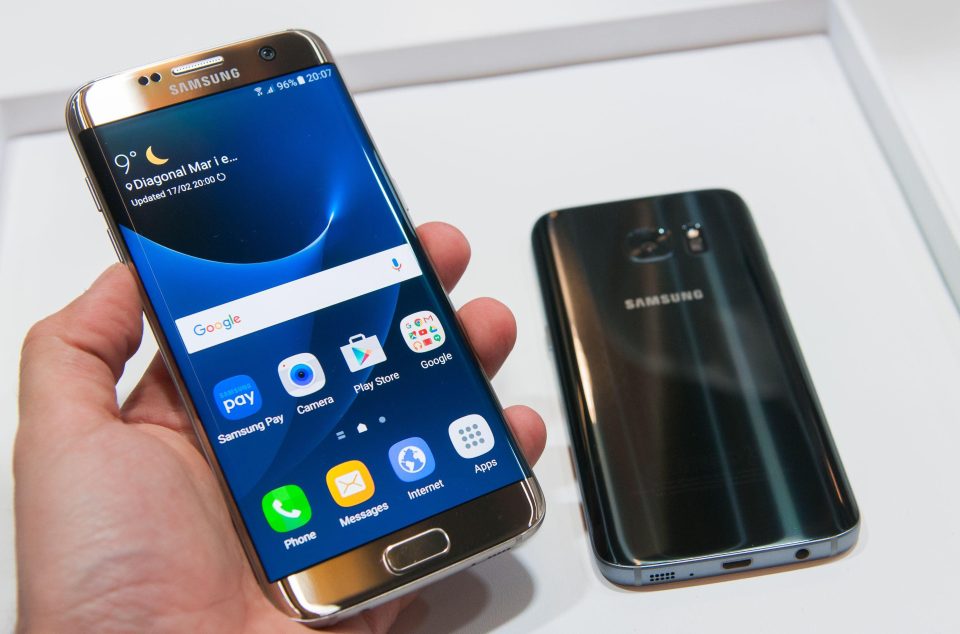
Samsung on Wednesday revealed two new flagship smartphones – the Galaxy S8 and Galaxy S8+. They will go on sale April 21.

In an effort to prevent issues like those that affected the Note 7, both of Samsung’s new phones have been built following the company’s new battery protocol, which calls for an eight-point safety check. If that new quality control process works as planned, the Galaxy S8 and S8+ could succeed in reversing the company’s misfortunes.

As expected, the gadget has a whole new design—notably, a curved screen, slimmer profile, and personal assistant software that goes by the name of Bixby. Plus, Samsung is courting corporate buyers with a new docking station that theoretically turns the Galaxy S8 into a desktop computer. Great new features like an impressive edge-to-edge screen, a new virtual assistant, and facial recognition technology..

The Screen

Pick up one of the Samsung’s new Galaxy devices and the first thing you’ll notice is how big the screen looks. The Galaxy S8 features a 5.8-inch display, while the larger model boasts a 6.2-inch display, both of which are notably larger than the Galaxy S7’s 5.1 inches and the Galaxy 7 Edge’s 5.5 inches. Samsung here ditched the home button in favor of a touch sensor, allowing the screen to be embiggened without making the device physically larger.

The Interface

A slimmer profile, meanwhile, helps the devices feel more manageable to hold than their predecessors. On the software side, a simpler interface also makes the new phones easier to use — instead of an app launcher, users tap the bottom of the screen to view their app library.

The Usuals

Samsung diehards will be happy to learn the Galaxy S8 and S8+ inherit fan-favorite features like dust and water resistance, a microSD card slot for expanding storage, and a 3.5mm headphone jack. (Samsung’s doubling the default storage this time around, offering 64GB instead of 32GB.)

Bixby

The Galaxy S8 and S8+ also herald the arrival of Bixby, Samsung’s new voice-activated assistant. The company is aiming to differentiate it from rival services like Apple’s Siri by making it better at understanding situational context, as a human aide would.

Samsung claims that Bixby can accomplish any task a user might otherwise do via taps and swipes, though it’s unclear which third-party apps will work with it. Both devices have a dedicated button on their sides for summoning Bixby. And Bixby can use the phones’ camera to scan items and retrieve information about them — one might, for example, get food pairing suggestions by scanning a bottle of wine. (Amazon’s ill-fated Fire Phone also attempted to use its camera in a similar way.)

Facial Recogniton

Both the Galaxy S8 and S8+ boast facial recognition and eye-scanning technology allowing owners to unlock their phone by looking at it, the latter of which Samsung debuted on the Note 7. Photography-wise, the new devices show little improvement from the Galaxy S7, though the front-facing camera has been upped to 8 megapixels from 5 and has face-detecting autofocus. Samsung also claims the new phones have better image processing technology, which should help them take better photos in low light and reduce blur.
Multi-purpose computers

Samsung is additionally pitching its new devices as multi-purpose computers. Both phones can control household gadgets compatible with the company’s SmartThings platform and work with its DeX dock, which simulates the experience of using a desktop. When attached to this dock, the S8’s interface looks like that of a computer rather than a smartphone. Apps optimized for the accessory run full-screen rather than in smaller windows, and the phone will work with enterprise software to run a virtual version of Windows. Microsoft announced a similar feature for its Lumia 950 phone in 2015 called Continuum. Still, it’s unclear how much consumer demand exists for such a feature outside the workplace.

Rounding Up

Samsung’s Galaxy S8 and S8+ face the formidable challenge of convincing buyers it’s worth taking another chance on the company’s smartphones after the Note 7 fiasco. To some degree, the company can bank on its brand, having long made some of the best Android handsets available. For more interesting product reviews visit top9rated.com site online.

(Sources Sun Time )Rating: 9/10 for both devices