DD
MM
YYYY

PAGES

DD
MM
YYYY

spot_img

PAGES

Home Blog Page 7440

These African hospitals are adopting artificial intelligence in their healthcare operations

0

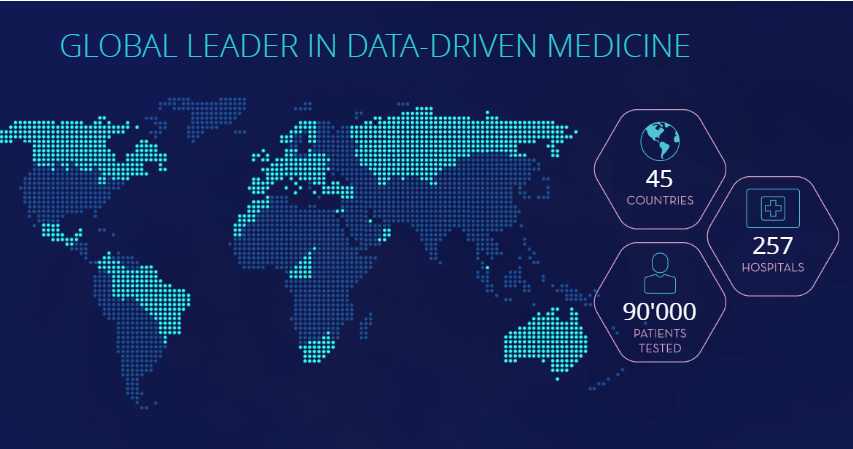
Sophia Genetics, global leader in Data-Driven Medicine, unveiled today, at the 2017 Annual Meeting of the American College of Medical Genetics and Genomics (ACMG) in Phoenix, the list of African hospitals that have started integrating SOPHiA, the company’s artificial intelligence, into their clinical workflow to advance patients’ care across the continent.

Medical institutions at the forefront of innovation already using SOPHiA in Africa include:

  • PharmaProcess in Casablanca, Morocco;
  • ImmCell in Rabat, Morocco;
  • The Al Azhar Oncology Center in Rabat, Morocco;
  • The Riad Biology Center in Rabat, Morocco;
  • The Oudayas, Medical Analysis Laboratory, Morocco;
  • The Center for Proteomic & Genomic Research (CPGR) in Cape Town, South Africa;
  • The Bonassama District Hospital in Douala, Cameroon.

African hospitals are adopting SOPHiA to – no matter their experience in genomic testing – get up to speed and analyze genomic data to identify disease-causing mutations in patients’ genomic profiles, and decide on the most effective care. As new users of SOPHiA, they become part of a larger network of 260 hospitals in 46 countries that share clinical insights across patient cases and patient populations, which feeds a knowledgebase of biomedical findings to accelerate diagnostics and care.

Among other diseases, SOPHiA will be a key partner for African hospitals in oncology. Breast cancer, for instance, has been described as a “serial killer” on the continent as lack of relevant diagnostics and personalized care means that 60% of women with breast cancer in Africa die versus 20% in the US and EU.

According to a 2012 global report from the International Prevention Research Institute, an earlier diagnostic of breast cancer could increase life expectancy by 30%. Globally, on the continent, the number of new cases of cancer every year should jump to 1.6 million by 2030. As oncology expertise might be based in different places across the globe, SOPHiA, ensures that the knowledge of a specialist in Paris will for instance be accessible to save patients in Nairobi.

Visa’s Everywhere Initiative is back for entrepreneurs to win $50,000

0

Participate for a chance to win up to $50,000 and the opportunity to work directly with Visa.

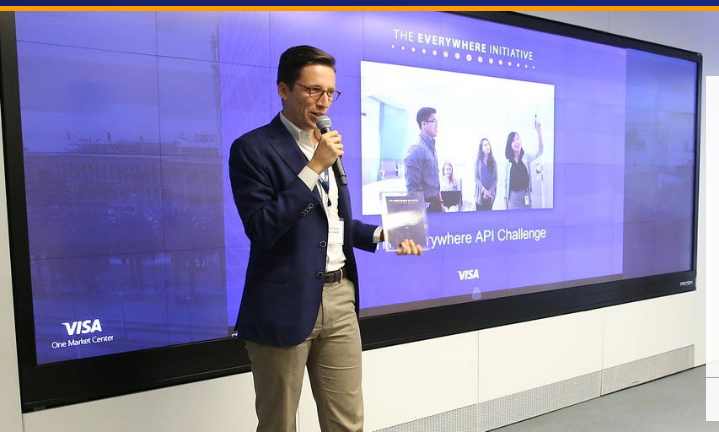
In its third annual Everywhere Initiative., Visa will once again present three real-life business challenges for startups to help solve. If you’re a startup, enter your submission for a chance to win up to $50,000 and the opportunity to work directly with Visa and collaborate on the innovative payment solutions of the future.

  • Challenge 1: How can your company use connected devices to facilitate simpler, more seamless and powerful commerce experiences for consumers?
  • Challenge 2: How can Visa APIs augment your company’s product or service offerings and ultimately drive more meaningful commerce or finance related experiences for customers?
  • Challenge 3: How can you harness Visa capabilities and other third party services to create transformative commerce experiences at sporting events, transportation hubs or other venues where people congregate?

Submit your proposal here by April 6. Submissions will be reviewed on a rolling basis, so don’t wait, says Visa.

Securing energy grid gets boost as Kaspersky unveils CyberSecurity for Energy

0

Malicious attacks on industrial systems – including industrial control systems (ICS) and supervisory control and data acquisition systems (SCADA) – have increased significantly in recent years. As the Stuxnet and BlackEnergy attacks have shown, one infected USB drive or single spear-phishing email is all it takes for attackers to bridge the air gap and penetrate an isolated network.

Traditional security is no longer enough to protect industrial environments from cyber threats. As threats targeting critical infrastructure increase, choosing the right advisor and technology partner to secure your systems has never been more important.

https://youtu.be/UKnrEoqiI50

Kaspersky Lab has announced the global availability of Kaspersky Industrial CyberSecurity for Energy, a vertical advanced package for energy enterprises, based on Kaspersky Lab’s suite for protection of industrial infrastructure.

Modern electrical power grids are complex networks, with integrated automation and control functions. However, because they communicate through open protocols, they do not have sufficient built-in cybersecurity functions to combat the increasingly sophisticated range of security threats they face.

The Report

Kaspersky Lab’s recent report on industrial cybersecurity found that 92% of externally available industrial control system (ICS) devices use open and insecure Internet connection protocols. Since 2010 the number of ICS-component vulnerabilities has also increased by a factor of 10, making these devices an easy and lucrative target for cybercriminals. The challenge for energy companies is clear, with Ernst & Young’s most recent Global Information Security Survey revealing that 42% of power and utilities companies say it’s unlikely they would be able to detect a sophisticated attack.

Kaspersky Industrial CyberSecurity (KICS) for Energy is dedicated to helping energy companies secure every layer of their industrial infrastructure, without impacting on the operational continuity and consistency of technological processes. Kaspersky Lab’s solution protects SCADA level control centers and Substation Automation Systems on every level: upper level of automation including Servers, HMI, Gateways, Engineering workstations. Secondary automation equipment: Protection relays, Bay Controllers, Merging units, RTU and other substation bus and process bus IED and overall network infrastructure.

The Key Solution Benefit

The solution provides a variety of advanced technologies to protect industrial nodes (including servers, HMI, Gateways and Engineering workstations) and network infrastructure. The latter offers network monitoring and integrity checking with the capability of deep application protocol inspection (including IEC 60870-5-104, IEC 61850, and other standards and protocols for electric power infrastructures).

“Electrical power equipment automation, control and protection are no longer handled by closed systems and, as things stand, detecting a potential threat is extremely difficult, both technically and organisationally,” said Andrey Suvorov, Head of Critical Infrastructure Protection, Kaspersky Lab. “That’s why energy enterprises need to bolster their defences to combat increasingly prevalent cyberattacks and avoid the nightmare scenario of complete loss of service and the impact that would have on citizens and society in general.”

Alexander Golubev, Chief IT Security Officer at Electrical Distribution Network Northwest Federal District, Rosseti, commented: “Being one of the major operators of electric grids in Russia, it is very important for our company to ensure uninterrupted operations, including those caused by cyberattacks on our IT infrastructure. A large number of our subsidiaries has been using Kaspersky Lab’s solutions for a long time, as they allow them to effectively detect and block all types of cybersecurity threats in a timely manner. As a result of this positive experience, we are evaluating the option to extend cooperation to the field of industrial security. The test deployment of Kaspersky Industrial CyberSecurity for Energy on one of our substations has become the first important step in this direction”.

Training

You can get solid top grade training on cybersecurity at First Atlantic Cybersecurity Institute.

V-Exchange sues Etisalat Nigeria for $5 million copyright infringement

0

It is not looking good for Etisalat these days.

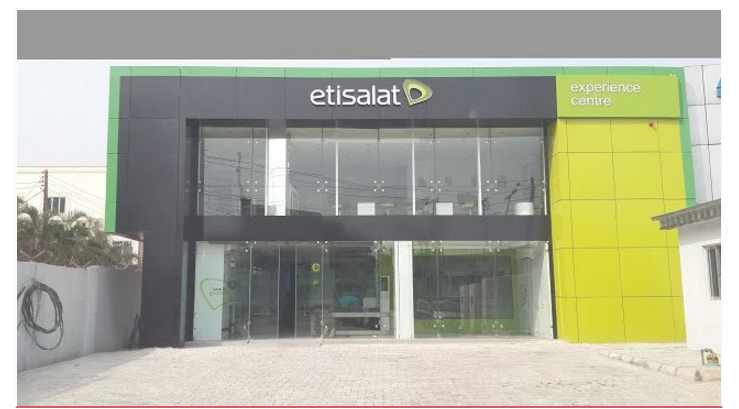
According to The Guardian, mobile fintech firm, V-Exchange Limited, is suing Etisalat Nigeria for N2 billion for alleged copyright infringement. V-Exchange specialises in providing instant finance solutions to individuals and corporate entities, and the story is they offered to partner with Etisalat to launch an instant loan service. According to them, Etisalat one-upped them by launching a similar service – KwikCash – without permission or due credit. Hmm.

The V-Exchange co-founder said he was however shocked when it heard that Etisalat had gone ahead to launch the instant loan service without his approval.Also speaking at the media briefing, the Chief Executive Officer, V-Exchange, Mrs Kemi Ayinde, noted that well-wishers had called to congratulate her on the successful launch of the product not knowing that her firm was not involved with the launch.

Etisalat denies the allegations.

This new product from Kenya shows why Kenya is unrivaled in Africa’s digital innovation

0

The sale of the mobile-based M-Akiba Treasury bond starts on Thursday, ending a one-and-a-half-year wait for small retail investors to invest in government debt. This also shows that Kenya has no rival in digital innovation in Africa. You can learn more about this product here.

M-Akiba, whose proceeds are earmarked for infrastructure development, will pay investors tax free interest of 10 per cent, setting the stage for competition between the government, banks and saccos for cash deposits.

The prospectus for the Sh5 billion three year bond — which is being issued by the Central Depository & Settlement Corporation on behalf of Treasury — says that the initial tranche is for Sh150 million.

Mobile Bond

The minimum amount per investor has been set at Sh3,000 and additional amounts in multiples of Sh100.

The bond is open for registered mobile users on the Safaricom and Airtel networks, with interest paid every six months through the same platforms. It will be on sale between Thursday and April 10, and will thereafter be listed on the stock exchange.

“The bond will be listed on the Nairobi Securities Exchange and will be traded on the secondary market via mobile phones commencing April 11,” reads the prospectus.

If successful, the sale of the bond will likely shake up the financial services, where cash depositors holding small sums have been keeping their money in low interest earning accounts in banks or in their mobile money wallets.

These investors have previously been locked out of lending to the government due to high minimum purchase amounts of Sh100,000 and Sh50,000 on Treasury Bills and Bonds respectively.

Economic Impacts

The success of this bond is likely to see the government raise the amount it targets in future M-Akiba issues, making the mobile bond an influencing factor in pricing of deposits among different players in the money markets.

Under the law, banks offer a minimum of seven per cent for deposit earning accounts, although they also have the option of offering customers transaction accounts that do not pay interest.

Small savers are also forced to put their money in illiquid options such as chamas where they have to wait for months on end before being paid a lump sum, mostly without interest.

The mobile bond will also allow the State to lower its cost of debt, which is an issue of concern at a time when the public debt to GDP ratio had hit 50 per cent.

The prevailing rates on a five year bond on the yield curve stand at about 13 per cent, with the most recent infrastructure bond issued last month fetching a rate of 13.55 per cent in the primary sale.

Rounding Up

M-Akiba has been in the works since October 2015, with its launch being postponed multiple times as the Treasury worked out modalities of trading it on the secondary market at the Nairobi Securities Exchange. Now it is here and this is the future of Africa’s digital innovation.