DD
MM
YYYY

PAGES

DD
MM
YYYY

spot_img

PAGES

Home Blog Page 7447

Notes on Strategy; Where Does Disruption Come From?

0

Introduction

You can imagine my surprise when I was browsing my Twitter feed one night last month and came across one of Marc Andreessen’s tweetstorms. This time he was tweeting about Clayton Christensen’s Theory of Disruptive Innovation.

Coincidentally, I have been thinking about writing a blog post on the subject since the Fall of 2014 – after a string of successive meetings with startup founders in which it became starkly clear to me that they were using the term “disruption” without actually understanding what it meant, or perhaps I should say, they used the term in a context that differs markedly from my understanding of what it means.

The purpose of this blog post is to;1

  1. Synthesize my understanding of Disruptive Innovation as popularized by Clayton Christensen’s work,
  2. To examine instances in which that process has unfolded in various industries,
  3. To develop a framework by which I can analyze a startup founders’ claims about “being disruptive” during my conversations with them, and
  4. Examine extensions of, and arguments against, Clayton Christensen’s work on Disruptive Innovation

I am thinking of this from the perspective of an early stage Seed and Series A investor in technology startups, not from the perspective of a management consultant advising market incumbents about how to avoid or prevent competition.

To insure that we are on the same page; first some definitions.

Definition #1: What is a startup? A startup is a temporary organization built to search for the solution to a problem, and in the process to find a repeatable, scalable and profitable business model that is designed for incredibly fast growth.2 The defining characteristic of a startup is that of experimentation – in order to have a chance of survival every startup has to be good at performing the experiments that are necessary for the discovery of a successful business model.2

Definition #2: What is Sustaining Innovation? A “sustaining innovation” is an innovation that leads to product improvements without fundamentally changing the nature or underlying structure of the market to which it applies; it enables the same set of market competitors to serve the same customer base.3

In other words; a sustaining innovation solves a problem that is well understood within an existing market. The innovation improves performance, lowers costs and leads to incremental product improvements. The customers are easily identified, and market reaction to the innovation is predictable. Lastly, traditional business methods known within that market are sufficient to bring the innovation to market.4

Additionally;

  1. A sustaining innovation is evolutionary if it leads to product improvements that are gradual in nature, progressing along what might be described as a gradual step function.
  2. A sustaining innovation is revolutionary, discontinuous, or radical when it leads to product improvements that are dramatic and unexpected in nature, but that nonetheless leaves the market structure largely intact – even if there is a rearrangement of counterparties within the existing competitive hierarchy.
  3. Even the most dramatic and difficult sustaining innovations rarely lead to the failure of leading incumbents within a market.5

Definition #3: What is Disruptive Innovation? A “disruptive innovation” is one that starts out being worse in product performance in comparison to the alternative, in the immediate term. However, as time progresses the disruptive innovation leads to a significant and fundamental shift in market structure – new entrant competitors serve an entirely changed customer base.6

In other words; a disruptive innovation solves a problem that is not well understood by the market, thus creating a “new market” for the new entrant. The innovation is dramatic and game-changing in ways that initially elude the mainstream customers as well as market incumbents serving those customers. The customer is often difficult to identify at the outset, and market reaction toward the innovation is unpredictable – from the perspective of the mainstream. Traditional methods and business models that have served the market can not support the innovation.7

Additionally;

  1. A disruptive innovation introduces a different and “comparatively inferior” value proposition than the value proposition the existing market is accustomed to; as such
  2. Disruptive innovations start out being attractive only to a relatively “fringe” and “new” but altogether “unprofitable” customer base with products that are;
  3. “Cheaper, simpler, smaller, and more convenient” for the customers that find them most attractive at the outset, and
  4. These products perform so “poorly” that mainstream customers in that market will not use them, and incumbent players are happy to keep “their best, and most profitable customers” while ceding “their worst, and unprofitable customers” to the startup bringing the disruptive innovation to market, but
  5. Eventually the disruptive innovation leads to market shifts which cause leading incumbents to fail as the new entrants supplant them.

Image Credit: Vadim Sherbakov

Understanding What is Happening When a Market Undergoes Disruption

So what exactly is going on when a market experiences disruption? Contrary to what the term “disruptive innovation” suggests . . . the process is not sudden.

As Clayton Christensen states; Disruptive innovations are generally straightforward technologically. They consist of off-the-shelf components combined in a product architecture that is far simpler than existing alternatives or substitutes in a way that does not meet the needs of the core customers in an established market. They will often be derided and dismissed by incumbents as “inferior” because they offer benefits prized by an emerging class of customers in an emerging, but as yet unnoticed market. The disruptive innovation starts out being unimportant to the mainstream customer and so it is unimportant to the mainstream incumbent. 1

Mainstream customers and mainstream investors hold mainstream incumbents captive – with demands for sustaining innovations, and demands for meeting or beating financial performance metrics like internal rate of return, net present value, return on equity, return on invested capital, gross margins, net margins etc. Faced with the choice between pursuing an unprofitable emerging class of customers or doubling down in the competition for the most profitable mainstream customers in that market, management teams running mainstream incumbents do the rational thing; they double down in heated competition for profitable customers.

The disruptive innovation improves so rapidly, that it soon starts to meet the needs of segments of the mainstream customer base. As the cycle continues, it reaches a stage where the incumbents find themselves squeezed into a tiny corner of the market, driven out of it altogether, or dead.

This process describes a “low-end disruption.”

Disruptive innovation might take another form; in a “new market disruption” the startup initially sets its sights on customer segments that are not being served by mainstream incumbents within a given market. A new market disruption starts by competing “outside” of an existing market; in new use-cases, or by bringing in customers who previously did not consume because of they lacked the know-how or financial resources needed to use the incumbent product. The new market is “small and ill-defined” . . . However, as the new entrant grows and improves its product, customers begin to abandon the incumbent in favor of the disruptive innovation. Usually, the incumbent cannot compete with the new entrant because the new-market disruption is accompanied by a structurally distinct business model which makes it feasible for the new entrant but infeasible for the incumbent, for example a cost structure that is so thin that it could not support the incumbent’s fixed costs.8

What Is The Innovator’s Solution; For Early Stage Startups and Early Stage Venture Capitalists?


Of the many dimensions of business building, the challenge of creating products that large numbers of customers will buy at profitable prices screams out for accurately predictive theory.

– Clayton M. Christensen and Michael E. Raynor, The Innovator’s Solution


First: Understand Why Customers Buy What causes customers to buy a product? A startup wishing to disrupt an established market needs to be able to answer this question in a way that existing incumbents have not. The “Jobs-To-Be-Done” (JTBD) framework enables a startup to develop its product at the “circumstance” in which its customers find themselves at the time they need its product, and not directly at the circumstances. As Christensen and Raynor put it: “The critical unit of analysis is the circumstance and not the customer.”

The basic idea behind the jobs-to-be-done framework is that customers “hire” a product when they need to get a specific “job” done. The entrepreneur who understands what job the startup’s product is being hired to do can also develop an understanding of the other jobs that might be related and ancillary to the primary job. The regularity and frequency with which customers need to get that job done plays a role in product development; what features should be prioritized? Which features should be de-prioritized even though they at first seemed important? How should the product’s value proposition be communicated? What other features should be built so that customers need not combine several different products in order to complete the job, or if they do how does the startup capture those markets too?  2

In my opinion startups stand an even better chance of success if they can combine the JTBD framework with an understanding what broad needs their product satisfies for their customers using the parameters laid out by Maslow’s Hierarchy of Needs. This matters especially in the determination of how a startup should communicate the product’s value proposition to its target customer base. An incongruence between the startups marketing message and the customers’ psychological notions about the product will lead to missed opportunities for the startup. It might also lead a startup to chase after the wrong customer base at the outset.9


When new ventures are expected to generate profit relatively quickly, management is forced to test as quickly as possible the assumption that customers will be happy to pay a profitable price for the product.

– Clayton M. Christensen and Michael E. Raynor, The Innovator’s Solution


Second: Be Patient For Growth But Impatient For Profits The investors and founders of a startup that claims to be disrupting a market must quickly test if the market dynamics the startup must confront are such that it can earn a profit given its business model. This is important because it indicates that for those startups that answer those questions positively, it is possible for them to pursue growth in a way that is healthy and sustainable irrespective of the magnitude of the growth.

The Startup Genome Report reached conclusions that support this notion. In an extra to the 2011 version of that report they study the effect of premature scaling on the longevity of startups. They found that 70% of the 3200+ high-growth technology startups scaled prematurely along some business model dimension.

Before delving deeper into the findings from the Startup Genome Report, we should understand “Product-Market Fit“. An early stage startup is approaching the product-market fit milestone when demand for its product at a price that is profitable for the startup’s business model, begins to outstrip the demand that could have been explained by its marketing, sales, advertising, and PR efforts.


Product/market fit means being in a good market with a product that can satisfy that market.

You can always feel when product/market fit isn’t happening.The customers aren’t quite getting value out of the product, word of mouth isn’t spreading, usage isn’t growing that fast, press reviews are kind of “blah”, the sales cycle takes too long, and lots of deals never close.

And you can always feel product/market fit when it’s happening. The customers are buying the product just as fast as you can make it — or usage is growing just as fast as you can add more servers. Money from customers is piling up in your company checking account. You’re hiring sales and customer support staff as fast as you can. Reporters are calling because they’ve heard about your hot new thing and they want to talk to you about it. You start getting entrepreneur of the year awards from Harvard Business School. Investment bankers are staking out your house. You could eat free for a year at Buck’s.

– Marc Andreesen10


In other words, the product-market fit milestone is that milestone at which we start to realize that the startup has an opportunity to grow in sustainable and profitable way. As organic demand for the product starts to overwhelm the startup – i.e. as the market starts to pull the product out of the startup, that is the point at which it makes sense for investors to become impatient for growth. Before Product-Market Fit (BPMF) a startup must “push” its product onto the market – customers and revenue grow in direct, linear proportion to sales and marketing expense. After Product-Market Fit (APMF) the market “pulls” the product out of the startup – customers and revenue grow positively, disproportionately, and exponentially out of proportion to any sales and marketing expense incurred by the startup. Investors and startup founders should become impatient for growth when the startup is in the APMF phase of its life-cycle. This approach should hopefully avoid situations like: Case Study: Fab – How Did That Happen?

According to Startup Genome Report Extra on Premature Scaling:

Note: They use the term “inconsistent startups” to describe startups that scale prematurely and “consistent startups” to describe startups that scale successfully.

  1. 74% of startups scale prematurely.
  2. Startups that scale appropriately grow about 20x faster than startups that do not.
  3. Inconsistent startups that raise funding from investors tend to be valued 2x as much as consistent startups and raise about 3x as much capital prior to failing.
  4. Inconsistent startups have teams that are 3x the size of the teams at consistent startups at the same stage.
  5. However, once they get to the scaling stage, consistent startups have teams that are 1.38x the size teams at inconsistent startups.
  6. Consistent startups take 1.76x as much time to reach the scale-stage team size than their inconsistent peers.
  7. Inconsistent startups are 2.3x more likely to spend more than one standard deviation more than the average cost to acquire a customer than their consistent peers.
  8. Inconsistent startups write 3.4x more lines of code and 2.25x more lines of code in the discovery and efficiency stages of their life-cycle.1 Discovery and efficiency are the first and third stages of the startup lifecycle, as described in the report.11
  9. A majority of inconsistent startups are more likely to be efficiently executing irrelevant things at the Discovery, Validation, and Efficiency stages of their life cycle, while a majority of consistent startups seek product-market fit during those stages.
  10. The following attributes have no correlation to the likelihood that a startup will be inconsistent or consistent: market size, product release cycles, educational attainment, gender, age, length of time over which co-founders have known one another, location, tools used to track KPIs etc.

What are some of the mistakes that inconsistent startups make as they travel from launch to dysfunctional scaling to failure? The Startup Genome Report provides some examples:

Customer

  1. Spend too much on customer acquisition BPMF and before discovering a profitable, repeatable and scalable business model, and
  2. Attempt to ameliorate that problem with marketing, press, and public appearances.

Product

  1. Build a “perfect product” before knowing enough about the “Problem-Solution Fit”, and
  2. Investing into scaling the product BPMF, and
  3. Focusing on advanced product features which are later proven to be unimportant to customers.

Team

  1. Growing the team too fast,
  2. Hiring specialists and managers too early and not having enough people who can or will actually do the work that needs to get done, and
  3. Having too much hierarchy too early.

Finance

  1. Raising too little money at the outset,
  2. Raising too much money.12

Business Model

  1. Not spending enough time developing the business model, and only realizing after the fact that revenues will never support the startup’s cost structure.
  2. Focussing too much on maximizing profit too early in the startup’s life-cycle,
  3. Executing without observing and analysing the input from customers and the market, and
  4. Failing to pivot appropriately in the face of changing market conditions that are relevant to the startups based on its discovery-focused experiments.

The 4 Stages Of Disruption

In his article, Four Stages of Disruption, Steven Sinofsky describes the process of disruption using an analogy to the well known and well understood rubric for understanding the experience of someone experiencing significant loss.

The 4 stages of disruption are:

  1. Disruption: A new product appears on the market but is seen to be inferior to the existing mainstream alternative.
  2. Evolution: The new product undergoes rapid sustaining innovations.
  3. Convergence: The new product is now seen as a plausible replacement for the incumbent mainstream product because it has undergone enough sustaining innovations to make it comparable to the incumbent.
  4. Reimagination: During this stage there is a complete re-examination of the assumptions on which the market operates and new products are brought to market.

Sinofsky describes them as a process, as shown in the following diagram:

The 4 Stages of Disruption (Credit: Steven Sinofsky)

The 4 Stages of Disruption – Process (Credit: Adapted from Steven Sinofsky)


I think the framework is better understood as a cycle; because every incumbent must face a new entrant or new entrants seeking to disrupt the market and eventually every successful new entrant that disrupts a market itself becomes an incumbent facing disruption by a successive hoard of disruptive new entrants. The cycle is ongoing and continuous, and is driven by more than simple advances in technology. Human behavior plays a central role in shaping the cycle that creates room for disruption to occur because our tastes change over time, and as time progresses we begin to value things that we did not value in the past, and it is that insight into the confluence between technology and human behavior that enables certain entrepreneurs to build startups that become industry disruptors.


4 Stages of Disruption - Cycle

The 4 Stages of Disruption – Cycle (Credit: Adapted from Steven Sinofsky)


How Did That Happen? – Disruption in Action; Industries

Digital Cameras vs. Film Photography: Digital cameras threatened to disrupt film photography, but they mainly represented a sustaining innovation – largely improving on existing form factors already in use in that market and fulfilling the needs of people one would consider casual or professional photographers. It was not until digital camera technology was integrated into smart-phones that the photography market started to experience disruption. They appealed to anyone who had the desire to take a picture, photographer or not, it did  not matter. As Craig Mod argues in his 2013 New Yorker article Goodbye, Cameras: “In the same way that the transition from film to digital is now taken for granted, the shift from cameras to networked devices with lenses should be obvious.” Standalone cameras are simply no longer good enough because: “They no longer capture the whole picture.” Kodak’s demise follows the classic format of every great incumbent that has fallen into obscurity in the face of an onslaught from new entrants. Kodak was itself a disruptor at one point – taking photography out of the sole preserve of professionals and putting it in the hands of every casual photographer seeking to preserve memorable moments. In his 2012 Wall Street Journal article, Kamal Munir outlines the rise and fall of Kodak in The Demise of Kodak: Five Reasons. It is important to note that Kodak developed technology for a digital camera in 1975, yet it failed to understand why customers bought its products and so failed to shift its business model as aggressively as it could have to avoid the fate that began staring it it in the face in 1975, nearly 4 decades before it filed for bankruptcy.13

Mobile Phones vs. Fixed Line Telephones: One sign that mobile and broadband telephony is disrupting fixed line telephony is the European Commission’s 2014 decision to stop regulating fixed line telephony. The situation for fixed line telephony is no different with telephone companies announcing that they are abandoning their landline telephone infrastructure in favor of mobile and broadband phone service. Their reaction is being driven by consumer’s willingness to rid themselves of landlines in favor of cellphones for individual personal use and/or VOIP-enabled phones at home. Liquid Crystals were first discovered by the Austrian physicist Friedrich Reinitzer in 1888. Nearly 7 decades later, engineers and scientists at RCA were conducting research that led them to file the first LCD patent on November 9, 1962. The USPTO granted them the patent on May 30, 1967. However, RCA did not move aggressively enough to make the LCD technology that had been developed by its employees the center of its business model.

Liquid Crystal Displays vs. Cathode Ray Tubes: The emergence of LCD technology marked the beginning of the end for CRT technology in the TV market. The technology that led to the development of LCD televisions originated in 1888, when an Austrian Physicist, Friedrich Reinitzer discovered the strange behavior of cholesteryl-benzoate. Nearly 4 decades later, scientists and engineers working at RCA filed a patent application based on LCD technology on Nov 9, 1962. It was granted on May 30, 1967. Predictably, RCA did not do much with its head-start in the development of LCD technology, instead it gave up its advantage to Japanese, Korean, and Taiwanese upstarts.


Find more statistics at Statista


How Did That Happen? – Disruption in Action; Companies/Products

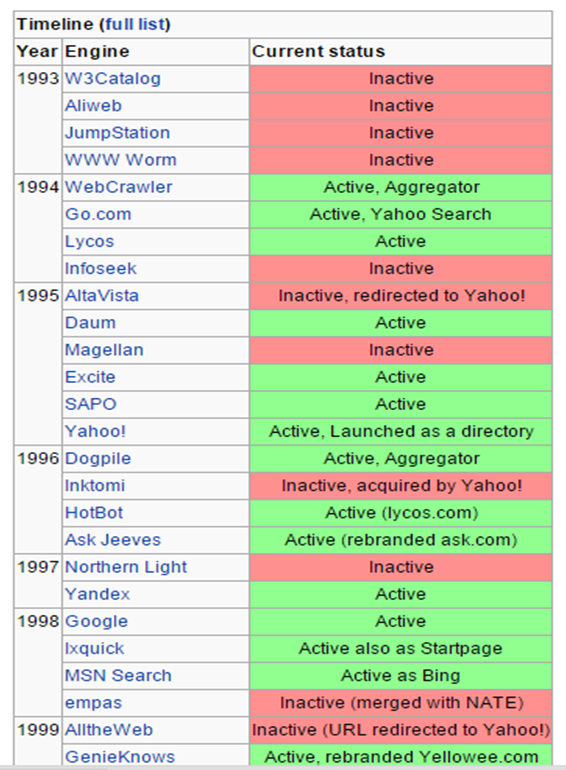
Google – Launching Sustaining and Disruptive Innovations:

View image on Twitter
View image on Twitter


While Google’s innovation in search are impressive, and helped it win that market at the expense of other search engines, it gained near absolute dominance in that market by developing a sustaining innovation in the form of its PageRank Algorithm, which is described in the paper by Sergey Brin and Lawrence Page: The Anatomy Of A Large Hypertextual Web Search Engine.

Find more statistics at Statista


Rather, the industry that has been disrupted by Google is the online advertising market. Describing this in his article “What Disrupt Really Means” Andy Rachleff writes: “It was AdWords, its advertising service. In contrast with Yahoo, which required advertisers to spend at least $5,000 to create a compelling banner ad and $10,000 for a minimum ad purchase, Google offered a self-service ad product for as little as $1. The initial AdWords customers were startups that couldn’t afford to advertise on Yahoo. A five-word text ad offered inferior fidelity compared with a display ad, but Google enabled a whole new audience to advertise online. A classic new-market disruption. Most have forgotten that Google added significant capability to its advertising service over time and then used its much-lower-cost business model (enabled by self-service) to pursue classic Internet advertisers. Thus it evolved into a low-end disruption.”

Find more statistics at Statista   Salesforce – Launching New Market and Low-End Disruptions: When Salesforce launched in 1999 it did so as a software-as-a-service (SaaS) platform that enabled companies that needed sales management software but could not afford the cost of annual multimilion dollar licenses for the mainstream products of the day. It’s initial product was lacking in features, and unreliable for the mainstream customers of the incumbent players in the CRM software market at that time. It built its business on non-consumption. As time progressed and its product matured in terms of reliability and features, Salesforce caused a low-end disruption as customers adopted its product while abandoning the more expensive CRM products sold by CRM market incumbents like Siebel Systems, Amdocs, E.piphany, PeopleSoft, and SAP.     Find more statistics at Statista   Apple: Has Apple launched any disruptive innovations? Not if you asked Clayton Christensen in 2006 or again in 2007, or even in 2012. Yet I suspect that Nokia and Research in Motion feel differently about that question. The chart below is instructive.       Apple’s products have not been disruptive in the way that one might think of disruption if one adheres strictly to the line of analysis followed by Clayton Christensen and his collaborators. Perhaps one can argue that the iPod, the iPhone, and the iPad, each taken individually represents a sustaining innovation in the personal music player, the mobile phone, and the personal computer markets respectively. However, when one combines each of those products with the other elements in Apple’s product lineup there’s no denying that Apple has been disruptive to more than one industry. The “iPod + iTunes” has reshaped how people consume music, and has upended the music industry. The iPhone has led to a rethinking of what people expect from a mobile phone, and “iPod + iTunes + iPhone + AppStore” is responsible for the demise of Nokia and Research in Motion’s Blackberry as it has redefined how people consume media of all types. The “iPad + AppStore” combination is redefining how people consume media of all types, and redefining the relationship people have with their personal and laptop computers. Apple demonstrates the power of technology + design + branding + marketing as a powerful force in the process of disrupting established industries in consumer markets.14     Find more statistics at Statista   You will find more statistics at Statista   Netflix: At the outset Netflix seemed like a joke to executives at Blockbuster which dominated the US market for home-movie and video-game rental services, reaching its peak with 60,000 employees and 9,000 physical stores in 2004 after its launch on october 19, 1985. Netflix was founded in 1997 and started out as a flat-rate DVD-by-mail service in the United States using the United States Postal Service as its distribution channel. Presumably, the idea for Netflix was born after Reed Hastings, one of its co-founders was hit with a $40 late-fee after returning a DVD to Blockbuster well after its due date.

Netflix DVD Mailer (Image Credit: Netflix)

Netflix DVD Mailer (Image Credit: Netflix)

Automated Netflix Mailer Stuffer (Image Credit: Netflix)

Order Processing & Shipping Center (Image Credit: Netflix)

Order Processing & Shipping Center: Sleeve Labels (Image Credit: Netflix)

Order Processing & Shipping Center: Sleeve Labels (Image Credit: Netflix)

As you might imagine, executives at Blockbuster did not see the threat posed by Netflix and passed on 3 opportunities to buy Netflix for $50 Million. They failed to understand that people would rather not pay exorbitant late fees and that people valued the convenience of dropping the DVD from Netflix in the mail more than they enjoyed driving to Blockbuster’s physical retail stores. In other words; Netflix fulfilled the JTBD of “entertain me at home with something better than my options on TV” more conveniently than Blockbuster. The challenge that netflix must now face is how that original JTBD that it was hired to do by consumers is changing given the proliferation of mobile devices and the shift in consumer preferences away from physical media towards streaming media.      You will find more statistics at Statista


 But management and vision are two separate things. We had the option to buy Netflix for $50 million and we didn’t do it. They were losing money. They came around a few times.  – Former High-ranking Blockbuster Executive15


To anyone that ever rented a movie from BLOCKBUSTER, thank you for your patronage & allowing us to help you make it a BLOCKBUSTER night. — Blockbuster (@blockbuster) November 10, 2013

Blockbuster filed for bankruptcy in 2013. Today Netflix is streamed online through many internet-enabled smart tvs, streaming media players, game consoles, set-top boxes, blu-ray players, smartphones and tablets, as well as personal and laptop computers.

What Common Traits Do the Startup Founders Who Lead Disruptive Startups Share?

Disruptive innovation is built on much more than technology innovation. The startups that go on to disrupt markets combine innovation in technology with innovative approaches to market segmentation, product positioning, marketing strategy, business model innovation, business strategy, corporate strategy, customer psychology, and organizational design and culture.

As an investor in early stage technology startups that are still in the searching for and trying to validate a repeatable, profitable, and scalable business model it is critical that I become good at recognizing startup founders who can successfully see disruption through to a profitable harvest for the founders, and the LPs to whom I am responsible.

According to The Innovator’s DNA, startup founders capable of leading disruptive new market entrants display the following traits:

  1. Association: They make connections between seemingly disparate areas of knowledge, leading them to novel conclusions that elude other people.
  2. Questioning: They exhibit a passion for questioning the status quo.
  3. Observing: They learn by watching the world around them more closely than their peers and competitors.
  4. Networking: They have a social network that is wide and diverse, which enables them to test their own ideas as well as seek ideas from people who may see the world from a  distinctly different point of view.
  5. Experimenting: They continuously test their assumptions and hypotheses by unceasingly exploring the world intellectually and experientially.

These skills are echoed in The Creator’s Code, which describes extraordinary entrepreneurs as people who:

  1. Find The Gap: by staying alert enough to spot opportunities that elude other people by transplanting ideas across divides, merging disparate concepts, or designing new ways forward.
  2.  Drive For Daylight: by staying focused on the future, and making choices today on the basis of where they see the market going instead of where the market has been.
  3. Fly The OODA Loop: by continuously and rapidly updating their assumptions and hypotheses through the Observe, Orient, Decide, and Act framework. Fast cycle iteration helps them gain an edge over their competition, and catchup with the mainstream market incumbents.16
  4. Fail Wisely: by preferring a series of small failures over a few catastrophic setbacks by placing small bets to test new ideas in order to gain further insight before they place big bets. By doing this they create organizations that learn how to turn failure into success and develop an inbuilt structural resilience.
  5. Network Minds: by harvesting the knowledge and brainpower from cognitively and experientially diverse individuals they develop unique approaches to solving multifaceted problems, problems whose solution might elude competitors.
  6. Gift Small Goods: by behaving generously towards others they strengthen relationships and build goodwill towards themselves and the organizations that they lead.

In The Questions Every Entrepreneur Must Answer, Amar Bhidé outlines a number of questions the feels every entrepreneur must answer in order to determine fit of the entrepreneur to the startup venture and of the startup venture to its context.17 The questions are as follows;

  1. Where does the entrepreneur want to go?
    1. What kind of enterprise does the entrepreneur need to build in order to get there?
    2. What risks and sacrifices does such an enterprise demand?
    3. Can the entrepreneur accept those risks and sacrifices?
  2. How will the entrepreneur and the startup get there?
    1. Is there a strategy that can get the startup there?
    2. Can that strategy generate sufficient profits and growth within a time-frame that make sense for the entrepreneur and for the startup’s investors?
    3. Is the strategy, and the startup’s business model defensible and sustainable?18
    4. Are the goals for growth too conservative, or too aggressive?
  3. Can the founder or co-founders do it?
    1. Do they have the right resources and relationships?
    2. How strong is the relationship between the co-founders with one another, how strong is the organization’s team cohesion?
    3. Can the founder play her role?

The Role of Experts in Predicting The Success or Failure of Disruptive Innovations

Early stage investors often rely on the advice of subject matter experts as part of the due diligence process. Experts are great for determining if the technical innovation works as the founders say it does, however where investors can go wildly wrong is when they rely on subject matter experts for investment recommendations for disruptive innovations.

It should be obvious by now that most experts are poorly placed to offer advice that will be seen as correct when examined in hindsight if they are faced with a disruptive innovation.


The Only things we really hate are unfamiliar things.

– Samuel Butler, Life and Habit


The difficulty subject matter experts face in predicting how markets will evolve is captured in The Lexicon of Musical Invective, where the author captures the vituperous reactions of music critics to works that are now widely considered as masterpieces in the pantheon of Western music history. Why did these experts fail? They did not allow for the possibility that the future might differ from the present in which they were performing their analysis, nor did they allow for the possibility that people’s tastes in music would evolve away from what they had grown accustomed.

Experts experience too much cognitive dissonance when they have to make an investment recommendation regarding a disruptive innovation; what does it mean for their personal career security, what does that mean for the skills that they have worked so hard and so long to accumulate, what does that mean for their employer’s business?

Moreover, the fact that an individual is an expert in the technology behind the disruptive innovation does not mean that the same individual is an expert in all the other disciplines that are required to turn the technological innovation into a disruptive innovation.

Here are a few examples of instances in which experts got things horribly wrong:19

  1. In 1977 Ken Olson said: “There is no reason anyone would want a computer in their home.” He was an engineer by training, and president, chairman and founder of Digital Equipment Corporation. Microsoft and Apple were startups.
  2. In 1956 Herbert Simon said: “Machines will be capable, within twenty years, of doing any work a man can do.” He made this statement after attending an AI conference at Dartmouth.
  3. In 1946 Darryl Zanuck said: “Television won’t be able to hold on to any market it captures after the first six months. People will soon get tired of staring at a plywood box every night.” He was a Hollywood magnate.
  4. In 1995 Robert Metcalfe said: “I predict the Internet will soon go spectacularly supernova and in 1996 catastrophically collapse.” He co-invented Ethernet technology and co-founded 3Com in 1979 with 3 other people. 3Com develops computer network products.
  5. In 1995 Clifford Stoll said: “The truth is no online database will replace your daily newspaper, no CD-ROM can take the place of a competent teacher and no computer network will change the way government works.” He was an astronomer, a hacker, and author, and a computer geek.
  6. In 2007 Steve Balmer said: “There’s no chance that the iPhone is going to get any significant market share.” He was the CEO of Microsoft.20

Criticisms of Clayton Christensen’s Theory of Disruptive Innovation

  1. In her 2014 New Yorker article; The Disruption Machine: What The Gospel of Innovation Get’s Wrong,JillLepore argues that:
    1. The theory is based on handpicked case studies, and it is not clear that these case studies are provide a sound basis upon which to build a theory.
    2. What Christensen describes as “disruption” can often be more accurately described as “bad management”
    3. The theory of disruption is built on retrospective analysis, it is unclear how useful it is in predicting how events will unfold.
  2. In his 2013 blog post: What Clayton Christensen Got Wrong, Ben Thompson examined the theory of disruption in the context of Apple’s introduction of the iPod, and later the iPhone. He argues that:
    1. The theory works well when we consider new market disruptions, but fails when we consider low-end disruptions, in consumer markets.
    2. The theory fails because consumers do not behave rationally.
    3. The theory fails to account for product attributes that cannot be documented but which consumers prize highly, all thing being equal.
    4. Vertical integration is a competitive advantage in consumer markets, because it allows vertically integrated producers to exert control over product attributes that customers value, but which would be near-impossible to control using a modular production framework.

Closing Thoughts

  1. The ideas on which “disruptive innovation” is built are not inviolable and permanent laws of nature. Early stage investors and startup founders should subject them to testing on a frequent basis. Disruption works in different ways in consumer markets than it does in enterprise, or business to business markets.
  2. Startup founders and their investors should combine Clayton Christensen’s ideas with those of Michael Porter in order to build a more complete strategic plan that can stand the vicissitudes of competition from the startup’s peers and the reaction from mainstream market incumbents.
  3. Good strategy is not a substitute for good management. Good strategy does not make good management obsolete.
  4. Building a better mousetrap is not necessarily the path to disruptive innovation and winning the market in which a startup is a new entrant.
  5. Low end disruptions almost always begin with a product that is significantly inferior in comparison to the product embraced by the mainstream market. Low end disruptions also have to be simpler, cheaper or more convenient than the mainstream product.
  6. New market disruptions do not necessarily have to be less expensive than the comparable product that is embraced by the mainstream market.
  7. Disruptive innovation entails much more than technological disruption. Incumbents can compete with technological disruption, and they always win in those scenarios. To succeed, startups seeking to disrupt a market must design business models that support their effort to bring their technological innovation to market and make it impossible for the mainstream market incumbents to respond in a manner that causes the startup to fail prematurely.
  8. The kernel of disruptive innovation is an insight that the mainstream market has ignored.
  9. Beware of investment advice from subject matter experts as it pertains to potentially disruptive startups. Test your biases against what can be proved by the market niche that the startup is first going to enter.

Further Reading

Blog Posts & Articles

  1. What “Disrupt” Really Means – Andy Rachleff
  2. The Four Stages of Disruption – Steven Sinofsky
  3. Marketing Myopia – Theodore Levitt, original 1960 HBR article
  4. Marketing Myopia – Theodore Levitt, 2004 HBR update
  5. How Disruption Happens – Greg Satell
  6. Good Disruption / Bad Disruption – Greg Satell
  7. Did RCA Have To Be Sold? – L.J. Davis
  8. What Clayton Christensen Got Wrong – Ben Thompson
  9. Clayton Christensen Becomes His Own Devil’s Advocate – Jean-Louis Gassée
  10. The Disruption Machine: What The Gospel of Innovation Gets Wrong – Jill Lepore
  11. Disruptive Business Strategy: What is Steve Jobs Really Up To? – Paul Paetz
  12. Clayton Christensen Responds to New Yorker Takedown of “Disruptive Innovation” – Drake Bennet
  13. How Useful Is The Theory of Disruptive Innovation? – Andrew A. King and Baljir Baatartogtokh, MIT Sloan Management Review Fall 2015 Issue
  14. What Is Disruptive Innovation? – Clayton Christensen et al, HBR December 2015 Issue
  15. Patterns of Disruption: Anticipating Disruptive Strategies of Market Entrants – John Hagel et al

White Papers

  1. Time To Market Cap Report
  2. Startup Genome Report Extra on Premature Scaling [PDF]
  3. Netflix: Disrupting Blockbuster [PDF]

Books

  1. The Innovator’s Dilemma
  2. The Innovator’s Solution
  3. The Innovator’s DNA
  4. Seeing What’s Next
  5. The Lean Entrepreneur
  6. What Customers Want
  7. The Creators Code
  8. The Entrepreneurial Venture
  9. Disruption By Design

  1. Any errors in appropriately citing my sources are entirely mine. Let me know what you object to, and how I might fix the problem. Any data in this post is only as reliable as the sources from which I obtained them. ?
  2. I am paraphrasing Steve Blank and Bob Dorf, and the definition they provide in their book The Startup Owner’s Manual: The Step-by-Step Guide for Building a Great Company. I have modified their definition with an element from a discussion in which Paul Graham, founder of Y Combinator, discusses the startups that Y Combinator supports. ?
  3. Clayton M. Christensen, The Innovator’s Dilemma. 2006 Collins Business Essentials Edition. ?
  4. Brant Cooper and Patrick Vlaskovits, The Lean Entrepreneur. Wiley, 2013, pp. xx. ?
  5. Clayton M. Christensen, The Innovator’s Dilemma. 2006 Collins Business Essentials Edition, pp. xviii. ?
  6. Ibid. ?
  7. Brant Cooper and Patrick Vlaskovits, The Lean Entrepreneur. Wiley, 2013, pp. xx. ?
  8. Clayton M. Christensen and Michael E. Raynor, The Innovator’s Solution. 2003, Harvard Business School Publishing, pp. 45. ?
  9. Startups building products for the enterprise customer should be able to develop an analogous framework, assuming one does not already exist. ?
  10. Marc Anrdeesen, Product/Market Fit, Jun 25, 2007. Accessed on Jul 18, 2015 at http://web.stanford.edu/class/ee204/ProductMarketFit.html ?
  11. In their report they describe the stages of a startup’s life-cycle as Discovery, Validation, Efficiency, Scale, Sustenance, and Conversation. The report covers the first four. ?
  12. This is a risk for early stage investors as well as startups. ?
  13. Theodore Levitt’s seminal HBR article “Marketing Myopia” first introduced this concept in 1960. You should read the original article as well as this update from 2004. ?
  14. It is worth noting that Clayton Christensen’s analysis and research focuses on business-to-business markets. ?
  15. Marc Graser, Epic Fail: How Blockbuster Could Have Owned Netflix. Nov 12, 2013, accessed on Jul 18, 2015 at http://variety.com/2013/biz/news/epic-fail-how-blockbuster-could-have-owned-netflix-1200823443/ ?
  16. See statements like: “Move fast and break things.” or “Let chaos reign.” ?
  17. Amar Bhidé,The Questions Every Entrepreneur Must Answer. From The Entrepreneurial Venture, readings selected by William A. Sahlman et al. 2nd edition, pp. 65 – 79. ?
  18. I have discussed economic moats here: Revisiting What I Know About Network Effects & Startups and here: Revisiting What I Know About Switching Costs & Startups ?
  19. Adapted from Top 10 Bad Tech Predictions, by Gordon Globe. Nov 4, 2012, accessed on Jul 19, 2015 at http://www.digitaltrends.com/features/top-10-bad-tech-predictions/5/ ?
  20. Mark Spoonauer, 10 Worst Tech Predictions of All Time. Aug 7, 2013. Accessed online on Jul 19, 2015 at http://blog.laptopmag.com/10-worst-tech-predictions-of-all-time ?

Developing Vibrant Industrial Clusters in Africa – Pillars and Lessons from Advanced Economies

0

Developing Vibrant Industrial Clusters in Africa – Pillars and Lessons from Advanced Economies

by Ndubuisi Ekekwe


Executive Summary

Around the world, it has been recognized that industrial clusters are more than a collection of companies since they offer a unique business-sphere for stimulating technological innovation, nurturing new startups, attracting investment and generating socio-economic growth. The popularity and growing significance of cluster in development are underpinning new policy supports in national economic initiatives as nations seek ways to stimulate growth by supporting business environments to improve competitive positions. Silicon Valley remains the global benchmark with its leading hi-tech firms. In Africa, Nairobi in Kenya is an emerging cluster for information and communication technology (ICT) sector. Italy is known as the world’s footwear capital because of clusters in Parma, Montebelluna and other towns that have existed since the time of Michelangelo. In all these places, there are inherent business advantages arising from clustering of firms.

Clusters are effective mechanisms that help to concentrate resources and align trade routes, diagnosing ways to generate and accelerate development processes besides being growth poles in economies. The birth of Silicon Valley stimulated a vibrant venture capital and brought lawyers with specializations in intellectual property as well as professionals in other fields that serve the technology ecosystem. Cluster developments are very strategic for national competitiveness in the global economy.

In Africa, many of the economies are experiencing high economic growth rates. However, those rosy statistics have not translated into better living standards for Africans with close to 49% of sub-Saharan African population surviving on less than $1.25 a day according to the World Bank. The asymmetry between economic growth and job opportunities cannot be decoupled from the structures of most African economies. They remain dependent on minerals, hydrocarbon and overall commodities for their foreign exchange earnings. Besides the obvious challenges which could emerge on post-mineral era, Africa is challenged by the fact that regional integration may not happen effectively without homogeneity in the economic structures. But regional integration is a vital catalyst to drive the competitiveness of the continent and expand its economic system with shared prosperity.

Competitiveness driven by knowledge based economies with industrial capacities in new areas of technology will help Africa overcome the cyclical budgetary turbulence associated with commodities. If that happens, welfare loss associated with budget shortfalls could be minimal across regional economies.  This implies that African governments must invest to drive sustainable competitiveness which will usher higher living standards for the citizens. Though most African economies have broad-based growth strategies which are tailored for the domestic market and anchored by ICT, light manufacturing, agriculture and trade, the progressive innovation process has not been stellar. We note four main factors which have stymied these countries to build prosperous diversified economies that are balanced, sustainable and largely decoupled from trade shocks and welfare loses tied to overdependence on commodities:

  • Poor Governance: Despite the human capital, the quality of governance in most African countries must improve for them to be competitive in redesigning their economies for the opportunities of the 21st century.
  • Education: At the tertiary education level, Africa has education crises. In the 21st century where knowledge will define the wealth of nations and competitiveness will be driven more by brainpower than minerals and hydrocarbon, without improving its educational system, its recent achievements may be unsustainable especially in the post-mineral era. The continent must push for higher quality and relevance of tertiary education as the schools have underperformed across many metrics.
  • Health: Despite the efforts of many successive governments, life expectancy at birth, infant mortality, child malnutrition and access to improved water source have only improved marginally. It could be opportunistic for the governments to reform the healthcare sector just as they have done in the telecommunication sector through privation of government clinics.
  • Infrastructure: Africa must invest in power, roads, waterways and other critical infrastructure that support trade and commerce.

Most clusters in Africa are inventive with minimally scaled organic and homegrown innovations. Yet, the trajectory of advancement is promising especially in some economies as the markets attract foreign investors, better managerial and technical talents. In this paper, we explain how African can approach the development of its industrial clusters and make them vibrant. We observe that United States, Canada and Europe built their hi-tech sectors through specific intervention programs that galvanized the participations of the universities, private sector and government research labs. Exploring those countries and recent efforts in Brazil and China, we propose Five Pillars that will help Africa develop hi-tech industrial clusters across its regions. In a decade of economic growth that has brought optimism about the continent’s future, these pillars will help not just to develop vibrant industrial clusters but also help the continent live up to its promise of creating prosperity for its citizens.

1.      Introduction – The Need of Vibrant Industrial Clusters

Information and communication technology (ICT) is playing major roles in the course of socio-economic development of the Africa economy. It has redesigned major industrial areas by enabling more efficient business processes even at lower costs. In both the public and private sectors, it is driving a new vista of human and organizational capabilities that will equip the continent to compete at international levels (Oshikoya, 1998). As ICT transforms the region into a knowledge-based economic system and a cashless society made of the citizens, companies and the states in electronic-linked mutually dependent relationships, the continent will be expected to benefit in ways that will drive opportunities for the citizens (Islam, 2012). While there are potentials across different technology spheres to improve competitiveness in the continent, lack of deep structures on growing and nurturing industrial clusters are major challenges that continue to stymie developments in the continent.

As the 21st Century enters the mid of its second decade, Africa is confronted with daunting challenges of building a new generation of workforce and critically-needed infrastructure to not just compete globally but also to prepare for its post-mineral era. The continent must foster a climate of innovation and pursue sustainable growth despite evolving economic realities that strain national budgets (Ekekwe, 2010). Harvard Business School Michael E. Porter (Porter, 2003) has through his work on competitiveness explained how economic prosperity can be driven through clustering. The co-existence of firms enables them to collaborate, improve, compete, stimulate demand of supplier industries, develop specialized talents and spur innovation. This jockeying enhances productivity with abilities to venture into new markets for new revenues translating to better local jobs, industrial growth and regional prosperity. In other words, there is a correlation between clusters on other side and business growth, competitiveness and globalization on the other.

Globally, data shows that clusters play major roles in regional job growth, wages and formation of new companies. This virtuous cycle has encouraged many governments to work on ways to support clusters because of their impacts on sustainable economic growth. Since the dawn of the new democratic dispensation across most African economies, the governments have embarked on different reforms geared to retool their economies and make them more competitive (YouWin, 2014). The planning process has elements for growth, preservation, good governance and economic sustainability. Governments have also identified specific industries and consequently advocated for strategic investments to enable these industries thrive. Different initiatives have been structured to support economic and workforce development as governments work to position Africa as the preferred destination for foreign direct investment (FDI) in the emerging world.

In 2014, the African Institution of Technology, with funding from the Tony Elumelu Foundation, spent six months studying the innovation ecosystem in Nigeria by looking at the formation of clusters and how companies located therein prove relatively more competitive with better growth (Ngclustermap, 2014). The goal was to investigate the relationship between some industry clusters and the existing infrastructure to understand how Nigeria’s goals of strategic investment and economic development align. This study has shaped our understanding of some key industrial systems in Africa and what the continent must do for sustainability especially in the post-mineral era. Also, a homogenous African economy, based on knowledge economy, can support regional integration without welfare loss arising out of commodity trade shocks (AUC, 2009).

As Africa works to achieve some economic targets, developing capabilities in the industrial system will help. The continent needs vibrant clusters and companies to drive development. As the continent looks for ways to diversify its economy from hydrocarbon, clusters operating more efficiently can assist companies to develop stronger competitive capabilities that will help them succeed globally. When firms collaborate, their chances of identifying market niches, accessing the export market and influencing policy improve (Porter, 2003).  Efficient clusters with needed infrastructural support give rise to higher productivity, more business opportunity and deeper technical capabilities.  The typical triple helix of state, industry and academia must exist in Africa to improve infrastructure, university system and provide strong legal systems that will help protect and accelerate innovations.

  1. Developing Industrial Cluster Infrastructure

Infrastructures perform vital services for states, firms and citizens (Enright, 1998). They improve the quality of life of people and in the process serve as catalysts to attract them to live in some communities. In Africa, it is very evident that infrastructure is an important factor that drives the formation and nurturing of the organic clusters around the continent. Most of these organic clusters are forming in the big and important cities and if these facilities are improved upon, the effectiveness of the clusters will be enhanced. The following infrastructures will impact the development of the regional clusters across Africa:


Table shows infrastructural impacts on cluster development

Infrastructure Cluster Relationship
Transportation Without the means to move goods and services, commerce will suffer. Africa needs investment to develop its road, rail and air networks. Unlocking the clusters could be as simple as providing transportation networks that will link raw materials in rural areas to the cities where some of these organic clusters have formed.
Technical Workforce Though the government has opened more new universities, the need to pick few ones and transform them into global centers of learning and research that can attract top international talents will be helpful.
Legal System Intellectual property and property rights are essential elements for the development of any advanced economic system. From land ownership to prosecuting violators of software IPs, Africa must demonstrate that it can enforce its property rights laws.
Standards Industrial ecosystem works on products standards which help define quality. Helping to build a culture of product quality will help accelerate acceptance of local products in African economies. People that can afford them overwhelmingly prefer foreign brands over local ones mainly due to standards and quality factors.
Investment Climate The investment climate in African economies suffers owing to the perception of corrupt public institutions at all levels of government. Some international investors will be turned off by corruption. Investment is an amalgam of many factors like legal system, infrastructure and security.
Power African countries are slowly making progress on providing electricity to help drive their respective industrial policies.  Most national power industry has been commercialized; the success of these new power players will define the success of the respective nation’s industrial ecosystem. No nation can incubate a manufacturing sector without power.
Broadband & Telecoms In most of the big African capital and cities, there is broadband internet. However, the cost remains very high compared to most global economies. The industry is dynamic and it is expected that competition will bring the cost down as well as help improve service quality in sector.
Hospitals / Recreation The health sector in Africa is a key component in the sustenance of the wellbeing of the citizens. Cluster players, especially those planning to move from other countries will evaluate the quality of care in the nation. African private sector must work to improve the sector. The same argument applies to recreation.
Higher Education Institutions Despite hundreds of universities in the continent, Africa has few technical institutions that can drive an innovative ecosystem and build a process that will technologically redesign the economy.
Parks, Centers and Labs Africa has a duty to improve the quality of research in government labs and centers. In most Western economies, transformative technologies have emanated from government labs. Africa needs to institute new systems and processes to fund, measure and accelerate local innovation.
Water and Sewer Water is very expensive in Africa. There is need to provide water along with a well planed sewage to improve the quality of lives of the citizens and make the cities also welcoming for entrepreneurs.
Capital The lending structure in most African economies is not designed to build a strong industrial sector. They are high-interest short term loans which cannot drive major projects. The Development Finance Institutions (DFIs) across African capitals must expand capacity to meet growing needs. Nevertheless, the breakthrough will come when private sector pushes capital to fund and grow ideas in the nation.
Security Africa must find a lasting solution to the pockets of security crises across the region, from Somali to Nigeria.


What Regional African Governments Can Do

Globalization is pushing multinational companies to seek for opportunities in any place they can find them. This trend which has been facilitated by new technologies will continue to determine companies that win and lose. As they seek places to invest, states, regions and nations have to compete for them. In Africa, regional governments must strengthen their comparative advantages to attract these opportunities (Elumelu, 2013). Even within a country, there will be evolving regional competitions on where firms locate their plants and factories. Just as in U.S. where California few years ago to get-ahead in stem-cell research approved a $3B bond in order to attract the best minds in biotech in the area, regions in Africa must look at ways to finance shared infrastructure by pooling resources together (Saskal, 2014). To stimulate vibrancy in the current organic clusters across Africa, the following are programs or initiatives we advocate at regional levels across the continent.

Innovation Hub Initiative: All the regional economic communities in Africa must work to designate certain areas within existing clusters as Innovation Hubs. This will help to bring regional integration at industrial level. The economic strengths of some nations may not optimally execute some serious projects, so, we reason that a regional-level plan will be more successful. The region will leverage its assets including the universities, government labs and linkages to boost competitiveness and drive investment growth (Ekekwe, 2012). They will allow private firms to administer and manage these hubs with agreed KPIs (key performance indicators). For Africa to attract multinational firms like Intel, HP, and Apple, they may need to invest in the foundation structures that may require high capital-intensive projects in semiconductors, only when they pool resources together can they achieve success.

Development Finance Institutions (DFIs): The regions must setup DFIs (development finance institutions) in order to provide capital and other resources towards promoting and developing new technologies, products and enterprises. African Development Bank and such likes are not structured for small firms. These present institutions have legal and administrative requirements that some agile and small firms are not designed to participate in. So, Africa needs to have new models to finance industry. We recommend having crowdfunding platforms managed by NEPAD regional offices that seek new ideas on industry and trade. They can partner with banks or registered investing firms to deploy capital in their regions. A key requirement will be a competitive and rigorous process that is decoupled from political patronage in funding decisions.

Accelerated Growth Hubs: Regions must setup special economic zones that will be geographically confined areas within existing clusters that enjoy tax incentives.  The goal will be to use such incentives to get disparate companies operating in the region to co-locate so that resources can be more appropriately provided to them.


  1. African Regional Integration and Industrial Economy

The pursuit of industrialization and development of industrial clusters by stimulating organic clusters or setting up new ones will help in creating more homogenous economies across regions in Africa. Unlike presently where most of the countries depend on minerals, hydrocarbons and commodities to finance their budgets with disparities in their economic structures, industrializations will bring order. The key advantage will be shocks that can result to welfare loses owing to the varying prices of commodities in the international market will be solved.

For regional integration to take place, Africa must look at having ways to ensure the economic structures are largely uniform. Many African nations are still oriented in trade toward former colonizers in Europe than immediate neighbors and across African capitals; there is an understanding that integration could be a key catalyst to transform the continent (AUC, 2009).  The major challenge is how the continent could develop the plan considering the lopsided economic structures among the nations (e.g. Nigerian GDP is big in the ECOWAS region), which can affect response strategy during economic crises. This is fundamental as if major regional economic powers stay out of this integration for fear of being net losers, it could have adverse effects to realizing the continental goal.

Regions must be supported to diversify their industrial structures to enable more homogenous trade shocks, stabilize inflation and interest rates. Africa Union needs to ensure that NEPAD (New Partnership for Africa’s Development) delivers on its peer-review mechanism towards economic growth, good governance and strong fiscal policies across all economic regions. With vibrant industrial clusters across African economic communities which can morph into one African integrated community even in currency union as time grows, regional integration will evolve with strengths and competitive viabilities.

Most African economies have broad-based growth strategies which are tailored for the domestic market and anchored by ICT, light manufacturing, agriculture and trade. Four main factors have stymied these economies to build prosperous diversified economies that are balanced, sustainable and largely decoupled from trade shocks and welfare loses tied to overdependence on commodities. These issues noted below must be properly managed:

  • Poor Governance: Despite the human capital, the quality of governance in most African countries must improve for them to be competitive in redesigning their economies for the opportunities of the 21st century.
  • Education: At the tertiary education level, Africa has education crises. In the 21st century where knowledge will define the wealth of nations and competitiveness will be driven more by brainpower than minerals and hydrocarbon, without improving its educational system, its recent achievements may be unsustainable especially in the post-mineral era. The continent must push for higher quality and relevance of tertiary education as the schools have underperformed across many metrics. According to World Bank, most African economies will not meet the Millennium Development Goals (MDGs). This means, they are not effectively preparing their youth for the economic opportunities of the future.
  • Health: Despite the efforts of many successive governments, life expectancy at birth, infant mortality, child malnutrition and access to improved water source are still low in the region. It could be opportunistic for the governments to see how more resources can go into its legacy hospitals by privatizing them and open them to market forces.
  • Infrastructure: Reforms are underway in the electric power sector with the privatization of most national grid companies (IMF, 2013). It is expected that the private investment will address the chronic issues that have affected service delivery and consequently unlock new opportunities in the region.


Besides these challenges, until Africa retools its industrial capacity, it faces a structural economic threat in near future as the world looks into a future where some of the commodities will be displaced; if automobiles are powered by hydrogen, solar and electricity, the petroleum exporting countries in Africa could suffer consequences. Also, the shale gas revolution that has enabled U.S. to reduce its oil imports will unravel oil producing countries. Across the board, declining oil revenue owing to both lower production output and weaker prices could cause shortfalls in budgetary revenues, disappearing balance of payment surplus and reduction in the foreign reserves possibly triggering macroeconomic problems.


Minerals and commodities will remain the dominant sectors in most African economies owing to their contributions in the foreign exchange earnings. They can turn these capabilities into strengths by investing appropriately in developing catalysts for an industrial economy driven by knowledge. Our state of innovation is low and one of the reasons is the overall lack of competition in the education sector both at the university and faculty levels. Africa can learn from the United States National Science Foundation (NSF) and the National Institute of Health (NIH) on how it can structure its science policy on funding and assessments of outcomes. The NSF has a mission to advance the progress of science and it accomplishes it by funding proposals for research and education made by scientists and engineers. Its medical counterpart is the National Institutes of Health. While Africa may not have the scale of NSF and NIH, it must map funds for S&T research and have a process to use rigorous peer-review system to fund grants. It must be blind to quotas and the need to balance geographical spread. It must focus on talents and the best ideas. Without a visible competitive atmosphere in education that is driven by merit and hardwork, Africa will find it difficult to develop an innovation system. Only an innovation system will bring the necessary structural economic homogeneity to support effective regional integration.


  1. Pillars and Lessons from Advanced Economies

African countries need to retool their economies. Building a hi-tech sector will help create jobs in ICT and other sectors. Largely, the technology participation has been driven by consumerism and imports. For the continent to provide social inclusion by providing jobs to its citizens, light manufacturing and a new sector are vital. Here, we propose a five pillar strategy for the continent. This draws from the models that have worked for different countries/regions such as United States, Canada, and Europe through MOSIS, CMC Canada and CMP/Europractice respectively (mosis.com, cmc.ca, and europractice.com). In these programs, the governments centralized and subsidized the production of specialized electronics – key sector for modern industrial societies – to help drive innovation by reducing barrier of entry. These are government intervention programs that have driven innovations and growth in electronics in these regions. The five pillars, focusing mainly in the hardware side over the software, are:


a.       Pillar 1 – Education and Training

The goal will be to recruit top engineering talents across the continent and train them on key areas of hardware development. We identify the following areas

  • Microcontroller programming:  Nearly all hardware systems rely on microcontroller as its engine.
  • FPGA (field programmable gate arrays): These are microchips that can be reprogrammed based on the requirements of the applications.
  • ASIC (application specific integrated circuits): Developing integrated circuits at the level of transistors.
  • PCB (printed circuit board): PCB is the board used in electronics. This is very important as the product of electronics is usually packaged in PCB. PCB ensures that ideas are packaged as products.
  • Embedded software development: software with emphasis on how to control hardware systems


Factor Description
Target Graduate level students
Objective Grow quantity and quality of hardware designers, developers and software professionals
Value Provide top talents to drive a new industry via design
Action Required Expand capacity in different electronics related labs across the continent. These labs have to develop the ability to provide specialized services in training, education and resources that can help SMEs (small and medium scale enterprises), hobbyists, students, etc across the nation to test prototypes of their inventions. By having the opportunity to develop these prototypes, they can later use them to seek funding. In U.S., most microelectronics firms tested their first chips under MOSIS free, as students or at subsidized rates as startups. By having prototypes, investors could see their ideas clearly for investment.


b.      Pillar 2 – Commercial Hardware Development Training

The goal is to assemble pockets of embedded systems and hardware developers (and hobbyists) in Africa and provide them with modern skills that can help them compete in quality and scale.  The one-man business that programs electronics display boards which depend on hand wiring can be trained on PCB (printed circuit board) design and development. That competence will help drive quality, ramp up volume and reduce cost through automation. This will also mean helping some hardware ICT entrepreneurs to innovate in design and development of the products they currently sell. Brazil followed this strategy when few years ago, they invested in training their citizens not just through university systems. Today, it commands more than 75% of all FDIs into South America in the sector with Apple and Foxconn committing billions of dollars in investment (Mishkin, 2013).


Factor Description
Target Industry practitioners and hobbyists
Horizon 6 – 12 months training
Objective Elevate participants to become design professionals over salespeople
Value Consolidate and map all the local pockets of hardware professionals
How Industry workshops supported by government and delivered by universities and companies.–          Train them on “Designing for industry” and design automation

–          Advanced training on the areas identified in  Pillar 1

Action Required Partner with world-class leading African training partners such as First Atlantic Semiconductors & Microelectronics and provide the opportunities to some of the top talents in the continent. The goal is that an aluminum door maker, for example, could see why adding motion sensors on his door will add more value than installing the doors without the systems.

c.       Pillar 3: Local Hardware Business Enablement

The hardware design and development environment in Africa is at infancy though ICT has a lot of vibrancy. The most critical structure is not available. A key structure is where to produce PCB after they have been designed. In this phase, efforts will be made to nurture the industry. One key element is PCB design equipment. We propose for government to setup a PCB production plant, via public private partnership, and offer open and subsidized paid services to companies and schools across Africa. So when companies send their designs, they pay and the company makes the PCB and ships to them. Without a PCB plant, the hardware industry will not develop in the continent. Also, the students will have the platform to move simulations and prototypes to final product concepts which are packaged neatly for demos before investors. Offering services across the whole ecosystem makes this project a sustainable one with lesser cost-factor to the governments.

It is very important to note that Africa has the capacity to develop this industry. What is needed is not any raw material but skilled manpower and the right policy. Taiwan has demonstrated that any nation with a strategic intervention program can grow the electronics industry. Africa is emerging as a region with focused strategy to develop deep technical workforce. This makes it well positioned to lead the region in this area. An electronics industry will bring Intel, HP, Dell and Apple to come to Africa and setup fabrication facilities, design centers and manufacturing bases. The semiconductor industry is the largest in the world and Africa can play a role if a PCB plant that serves to seed that sector is developed.

Expecting the startups to purchase them will slow the penetration of the sector. So, government can help fund the project. Alternatively, government can have a tender for companies to compete and the one that wins will run it and after a period pay back the government the funds. With this, they can make high quality electronics boards. Africa with a PCB plant will become the hub of electronics manufacturing as all the schools and companies in the region will send design files to be manufactured here over U.S. and China. The comparative lower wage in Africa makes it very attractive that markets from U.S. and Europe could be interested.

At this phase, we will expect most students’ projects, undergraduate and postgraduate ones, to transition from prototypes on breadboards for the awards of diplomas to ones that investors will pay attention to commercialize. The impact of PCB plant will be huge as students will have a process to miniaturize their designs. It is very possible that across Africa, engineering students have tried to solve most local problems. But most are yet to be commercialized because without PCB, they cannot improve quality and performance to seek for funds. PCB will help them to improve quality, performance and packaging that will enhance the overall marketability of the ideas.


Factor Description
Target Local talents, students, entrepreneurs
Horizon Short- medium term
Objective –          Enable growth of the hardware business–          Facilitate design and manufacturing of PCB in Africa

–          Enable product development in Africa through local sourcing of parts

–          Include design into the product evolution

–          Put incentives to those that push to develop the industry

–          Incentivize students to turn their projects into products

Value Improves African product competitiveness and advances the economics of scale at higher quality. It also provides higher economic value.
How –          Provide design infrastructure like centralized PCB in Africa that operates as manufacturing boutique for the local design community–          Support design house through cross-pollination of ideas

–          Create hardware startup program for all graduates of Pillar 1 or/and 2

o   Phase 1: technical feasibility study and guidance during inception

o   Phase 2: Provide design solution, support prototype, risk mitigation, initial product development

Action Required The governments must develop an electronics penetration plan which all universities and affected companies in the region should participate. This can be done at regional levels.  Our estimate is that the volume will be enough to sustain a PCB plant to run sustainably and profitably. The goal is to operate the PCB plant as a profit-center by charging small fees to companies and schools when they send their boards for fabrication.


Printed Circuit Board (PCB)As ubiquitous components that act as the foundation of any electronic equipment/gadget, PCBs have over the years evolved from uncomplicated single and double-sided Plated-Through-Hole (PTH) to multi-layered PCBs. The rapid growth of the electronics industry worldwide over the last two decades fuelled the growth of PCBs. The global production of electronics is tightly tied to the PCB industry which correlates with the growths in many sectors such as telecommunications and IT, smart cards, electronic gaming, and consumer goods, such as, digital cameras, mobile phones, and personal computer electronics.


The printed circuit boards market projects a positive outlook for years to come. Japan and Asia-Pacific collectively account for a major share of the worldwide printed circuit boards market. Asian countries such as China as well as Southeast Asian countries are central to the growth of the PCB industry. A key reason attributed to the growing significance of these countries is the rapid expansion of electronic manufacturing bases triggered by the shifting of production activities and facilities of overseas players into these countries to leverage lower labor and manufacturing cost benefits.


The global market for PCB is projected to reach US$76 billion in 2015 and it is lead by China.


Source: Adapted from “Printed Circuit Boards: A Global Strategic Business Report” by GIA.


d.      Pillar 4: Business Proposal and Capital

Build ICT hardware accelerator program to prepare firms towards getting capital. The goal is to enable top performing hardware firms or excellent student projects get venture funds and decouple the need for government to support them. Yet, it does not mean that national governments cannot award competitive grants to 5-10 companies in their respective electronics sectors.  These firms can be startups or expanding firms. The purpose is mainly to provide a process to fund some talented teams to build companies. If the government provides the PCB plant, each of these firms will need $150,000 – $350,000 to develop prototypes and even try first product lots in the market depending on the nature of the product. Usually, investors like to see ideas which are nearly prototyped and that explains why a PCB plant is vital.

Action Plan: Though Africa has many accelerators and hubs, they are largely web and mobile app focused. These existing hubs will be complementary. A private sector driven hardware hub will be required.


Concept of A Private-Sector Hardware HubAlong with the expansion of the capacity of national electronic labs, private technology hubs will be needed. Because of the attitude to government projects where people see them as charity, participants will respond better if the hubs are managed by the private sector.  We propose two units inside the hubs – Microelectronics Innovation Center (MIC) and Technology Collaboration Center (TCC).


Microelectronics Innovation Center (MIC)

Microelectronics has been recognized as the most pervasive industry in the world with impacts that span all areas of human endeavors. It drives space, medicine, energy, entertainment and indeed all key industrial sectors of the 21st century. Research has shown that appropriate diffusion of microelectronics enhances economic expansion by providing computing power and transitioning ICT from consuming to making. As Africa drives to become a global tech-innovation hub, microelectronics must necessarily be a critical component of that strategy. However, no credible microelectronics program is taking place in the continent in this field excluding South Africa.  This Center within the Hub will be the fulcrum upon which Africa will develop and penetrate microelectronics. It will help provide the knowledge workers that will enable regional’s participation in the design and development of next generation hi-tech technologies.


The following are some of the MIC goals:

–          Seed microelectronics industry by operating a printed circuit board (PCB) program that supports universities, students and researchers across the continent

–          Bring practical-oriented integrated circuit design training thereby positioning regional African economies as a destination for microelectronics outsourcing

–          Seed startups in the areas of semiconductors and microelectronics through support services, mentoring, provision of CAD tools and development of appropriate design kits

–          Help standardize design and process kits which many African universities and microelectronics startups will adopt

–          Offer world-class advisory and technical support in key areas of microelectronics to hub companies, universities and microelectronics startups

–          Bring the world’s engine of wealth (microelectronics) to Africa and provide measurable and visible economic impacts

Technology Collaboration Center (TCC)

The Technology Collaboration Center (TCC), inside the Hub, will anchor a program that will enable startups, resident companies, researchers and other stakeholders to collaborate in some focused technology areas. Companies or startups with approved projects will take office space and work with partners in creating innovations.


The following are some of the project goals:

–          Deepen cross collaborations in many fields in key technology sectors

–          Harness the immense talents of screened and qualified participants to create an open innovation space

–          Provide a platform for industry and government to collaboratively partner to solve practical technical problems in the society and markets

–          A new model through which hubs in the region works with hardware startups and companies by offering office spaces to companies

–          Build an ecosystem of competent experts through partnerships and better understanding of skill requirements needed in the hi-tech industry


The purpose of the Hubs across Africa will be to facilitate the development of the most vital industry of the 21st century, microelectronics, in Africa and subsequently transform the Hubs into centers of hi-tech entrepreneurship and knowledge creation. Just as U.S., EU and other areas have used specific government programs to stimulate the sector, Nigeria must do same. The capacity to advance ICT cannot be decoupled from the propensity to build an electronics design ecosystem with tools and facilities makers and developers can use.


Both MIC and TCC will educate and train businesses and schools in the exciting field of microelectronics, and its applications to agriculture, energy, manufacturing, telecommunications, information systems and foster opportunities not only for the acquisition of new knowledge, but also the production and application of new knowledge. It will open new vistas of opportunities for small and medium scale enterprise (SMEs) to differentiate their services and create new values in their product offerings. The centers will provide broad-based innovative trainings, which would enhance the quality of their business processes and systems.


e.       Pillar 5: FDI and Attracting MNCs

We estimate 5-9 years for executing the earlier pillars. At the tenth year, some regions in Africa will be ripe to market themselves as a hub of hardware design and development in the region. With deep core of talents, interests can build in the regions.


Factor Description
Target Multinational companies
Horizon Long term
Objective Attract foreign direct investment
Value Increase business and investments
How –          Attract MNCs to invest in Africa and in the emerging hi-tech firms–          Attract MNCs to open design centers to tap the talents created in early pillars

–          Bring global hardware design and development ecosystem leaders

–          Identify business opportunities and collaboration

–          Define market segments for consumption of local IC design and production

–          Facilitate delegation journey from potential investors

–          Define joint hardware FDI program in the region

Action Required Sustain the ecosystem with good investment climate, infrastructure and strong property rights.


Unlike ICT, electronics is not usually pursued as a technology policy in Africa. Sure, electronics falls within the engineering policy. Unfortunately, Africa is paying more attention to ICT than engineering – the buzz is so high about ICT that you can be fed with ICT related news daily on the nation’s leading papers.  That imbalance makes it difficult for Africa to develop a sustainable model since ICT cannot advance itself. The engine that drives the ICT economy is electronics and when a nation does not have a plan for electronics it will largely remain a consumer of ICT.  There is a limit to how fast Google Search can perform based on the microprocessors that power Google servers. In other words, microchips must advance before ICT and software can leap forward as the former puts theoretical limits on the performance on the latter. Building a strong electronics program puts a continent on the path of becoming a creator of ICT.

5.      Recommendations and Conclusions

Before specific recommendations for regional and national governments on developing industrial clusters in Africa, the following are some general recommendations:

  • All stakeholders must collaborate to improve cluster’s competitiveness. The private sector must advocate for the right policies and government must act. Donors can be given directions on areas where help is needed by entrepreneurs within clusters. By working together through investment, sound policies, our clusters can be made more efficient and competitive.
  • Policy should gear towards supporting already existing clusters as cluster development is market-driven and takes years to evolve instead of working to create them from scratch.
  • A framework for cooperation among companies, universities, research institutions at local, regional and national levels should be developed with government playing a strong catalytic role. Africa must push synergies in key areas of policy action like competition, innovation, and fiscal growth.
  • Though government can use cluster-specific incentives to shape the behavior of cluster participants on investment and innovation, it must try to focus on building core platforms like infrastructures and legal systems. The seasonal grants or handouts to entrepreneur without supportive basic cluster amenities cannot help them compete against Chinese imports into Africa.
  • Efforts must be made to develop and offer extended financial instruments such as venture capital funds, private equity funds, credit guarantee schemes, etc to stimulate cluster growth.
  • Early stage VC funds will help unlock opportunities not just in ICT but in other technology sectors.
  • The private sector should participate more actively in S&T education/training by creating alternative vehicles to close the asymmetry between university programs and immediate needs of the clusters.
  • While national cluster plans will be important, regional ones may serve better owing to the disparity in levels of development. Specialized infrastructure like communications, transport and real estate are vital.
  • Government could administer its startups financing programs by focusing more on companies within sector-targeted clusters to improve the overall performance of these intervention initiatives.


Regional African Governments

We emphasize the importance, at regional African governments, of:

  • Technical Education – The educational system and training programs should gear towards producing workforce in science, technology, engineering, and math as they are vital to S&T clusters
  • Technology Transfer from Universities – The governments must continue to push all universities especially the technical ones to establish technology transfer offices to enable the transfer of inventions to businesses and enterprises that can commercialize them. The technology transfer scheme could be incentivize so that universities can commit to building a viable relationship with the industry.
  • Legal Education and IP – Africa has a dearth of IP (intellectual property) attorneys with expertise in patents, trademarks and trade secret. The Law Schools must work to remedy this situation.
  • Patent & IP Laws – Governments must enforce the IP laws in its books and help transform the nations as places where intellectual properties are respected. A key part of it will be encouraging our entrepreneurs to patent their good ideas.
  • Physical Infrastructure – Africa better transportation within and between clusters to ensure efficient movement of goods and services. From airport to roads, availability of these amenities will play major roles in the decision to locate companies. Also, firms and workers look for places with good amenities including housing, hospitals, roads and access to communication facilities.
  • Talent Pipeline – The development of technical talent in nations especially in emerging areas of technology must be worked upon. A strong secondary education in the STEM (Science, Technology, Engineering and Mathematics) area must be worked out.
  • Foreign Entrepreneurs – Government could look to lure foreigners into the countries which can possibly incubate the local counterparts through special funding and visa programs similar to the strategy adopted in Chile. In Chile, the government provided seed capital to some entrepreneurs and has succeeded in attracting talents from U.S. and Europe.
  • Technology Adoption – When government redesigns its processes and adopts modern technology, there will be opportunities for some of these clusters to expand and grow. In most African cities, government dominates the GDP. So, any sector that government moves into will grow as companies will emerge to serve and take opportunities therein. From eGovernment to eTax to new farming techniques, changes in the ways government operates could stimulate cluster growth.
  • Cluster Redevelopment – Each of the regional regions must work to revamp at least one cluster and transform it into a globally competitive industrial one within a decade. This means that governments at all levels must partner to unleash the full innovation potential of these clusters. This will begin by having each cluster strengths, weaknesses and opportunities assessments.


The following are guidelines to deepen cluster development in any African government at federal government level:

  • Increase investment in the foundations of science, technology and engineering. Also create strong standards and accountability
  • Provide more support for targeted and specialized training programs in S&T
  • Develop framework to improve effectiveness in federal research and alignment to industry
  • Increase research funding in universities and government labs and demand for measureable outcomes
  • Strengthen the legal system especially IP rights and anti-trust laws
  • Restructure research funding process via peer-reviewed competitive grant process as obtainable in U.S. National Science Foundation and National Institute of Health
  • Act as an innovation-backer by providing federal matching funds to local governments that invest in S&T, and innovation
  • Invest in recruiting anchor firms into regions and promote cluster awareness
  • Build/upgrade vital physical and business infrastructure
  • Focus to grow and support old and new innovative cluster companies


Private Sector

Besides what governments can do to improve the efficiencies of clusters in Africa, the private sector can also help. For the private, we show how they can simultaneously support the cluster while benefiting from it. For Africa to become a competitive and dynamic knowledge-based economy with sustainable growth and better social cohesion, it is the private sector that will practically execute any plan including the ones made by the government.

The following are some recommendations:

  • Financial Instruments – The private sector should examine how they can offer financial support in start-up projects, networking, research, education and infrastructure without jeopardizing their fiduciary responsibilities. Africa is in dire need of early stage venture capital funds that will help nurture new ideas coming from entrepreneurs and students.
  • Integrated Manufacturing Facility (a JVC) – Despite the pockets of activities across universities and the hobbyist community, Africa does not have a PCB (printed circuit board) sector to support the local industry. The transition from simulation to actually having a prototype and then production will get more impetus if a PCB plant exists. The present model of designing boards, fabricating and importing from China will never allow cost to provide a competitive advantage to the local industry. A Joint Venture (JV) similar to MOSIS (USA), EMC Canada and Europractice (Europe) but for PCB will help Nigeria have a future in the hi-tech arena.
  • Anchor Companies – The private sector especially the financial and investment sector could look for anchor firms in each region and work to transform them into global players trough investment and improved management with their participations. Despite all policies, the impact of anchor firms cannot be overemphasized. They can help to seed startups and SMEs that come to service them. In the technology arena, Africa has sparks of potential anchor firms that own their technologies through research and innovations. HP anchored Silicon Valley, Nortel anchored Ottawa, and IBM did same for Raleigh-Durham; Africa needs such anchors that will serve as magnets to attract other players. Over time, they will create spin-offs which will help grow the cluster.
  • Build Cluster Integration Platform – There is certainly an opportunity to build a platform that will make Africa more collaborative. This is not just in technology but also in finance, law and other areas. A business could help build a system that will bring universities, government labs and firms to share and collaborate more. Universities could be asked to use cloud-based services to share all research outputs including projects done by students. The government labs could use same to share their outputs while the firms can communicate skill needs and funding resources for specific research areas.
  • Investment in Education – We think the quality of technical education in Africa will need more concerted efforts from the private sector. Government alone cannot solve the problem. This investment must provide great learning environments including technology parks, lab facilities and international internships that will help Africa produce global technology leaders.


Acknowledgement: The Tony Elumelu Foundation (an African-based, African-funded philanthropic organization founded in 2010 by Lagos businessman Tony Elumelu with mission to support entrepreneurship in Africa by enhancing the competitiveness of the African private sector) provided generous grant to the African Institution of Technology to study innovation clusters in Nigeria. The results of the study have assisted in developing this paper.


References

AUC – Africa Union Commission, (2009) “Towards a Single African Currency”, Proceedings of the First Congress of African Economists, 2-4 March 2009 Nairobi, Kenya {Online}

Ekekwe, N. (2010), “Nanotechnology and Microelectronics: Global Diffusion, Economics and Policy”, IGI Global Publishers, PA, USA. ISBN: 978-1-61692-006-7

Ekekwe, N., 2012, “Africa is Open for Business”, Harvard Business Review, {online} http://blogs.hbr.org/2012/02/africa-is-open-for-business/

Elumelu, T.O. (2013), “AFRICAPITALISM – THE PATH TO ECONOMIC PROSPERITY AND SOCIAL WEALTH”, {online}

Enright, M. (1998) “The Globalisation of Competition and the Localization of Competitive Advantage: Policies towards Regional Clustering”, Paper presented at the Workshop on Globalisation of Multinational Enterprise Activity and Economic Development, University of Strathclyde, Glasgow, Scotland, 15?16 May 1998.

IMF (2013), Regional economic outlook. Sub-Saharan Africa — Washington, D.C.: International Monetary Fund, 2003– {Online} https://www.imf.org/external/pubs/ft/reo/2014/afr/eng/sreo0414.pdf

Islam, N. and Ekekwe, N. (2012), “Disruptive Technologies, Innovation and Global Redesign”, in Disruptive Technologies, Innovation and Global Redesign: Emerging Implications, Ekekwe, N. and Islam, N. (Eds.), IGI Global: PA, USA. ISBN: 978-1-46660-134-5; EISBN: 978-1-46660-135-2

Mishkin, S.(2013) “Foxconn Challenged as Global Reach Grows” {Online} http://www.cnbc.com/id/100353348#.

Ngclustermap (2014), Nigeria Innovation Cluster Mapping project {online} http://ngclustermap.com/

Oshikoya, T.W. and Hussain, N.M.  (1998) ‘Information technology and the challenge of economic  development in Africa’, African Development Bank, Economic Research Papers, No. 36

Porter, M.E. (2003), “The Economic Performance of Regions,” Regional Studies, 37, pp. 549-578

Saskal, R. (2014), “California’s Next Big Ballot Item: $3B Bond for Stem Cell Research” {Online} http://connection.ebscohost.com/c/articles/13127228/californias-next-big-ballot-item-3b-bond-stem-cell-research

YouWin! (2014) Youth Enterprise with Innovation in Nigeria {online} https://www.youwin.org.ng/

Industry Study: Nanotechnology

0
SUNY College of Nanoscale Science and Engineering's Michael Liehr, left, and IBM's Bala Haranand look at wafer comprised of 7nm chips on Thursday, July 2, 2015, in a NFX clean room Albany. Several 7nm chips at SUNY Poly CNSE on Thursday in Albany. (Darryl Bautista/Feature Photo Service for IBM)

Note 1: This is an update of an article that I wrote on a whim in December 2006, while I was on a break from business school at NYU Stern. It was published without update at Tekedia in July, 2011. The announcement by IBM about its new 7nm chip prompted me to dig it up from my archives and update it to reflect more recent developments.

Note 2: KEC Ventures does not specifically invest in nanotech startups, although in the past we have examined startups developing quantum crystals and other nanomaterials.

Introduction

I became exposed to nanotechnology during my days as an undergraduate student at Connecticut College, in New London, Connecticut. I pursued a double major in Physics and Mathematics, and had the good fortune of working as a research laboratory assistant in the Tunable Semiconductor Diode-Laser Spectroscopy lab, which was run by Professor Arlan W. Mantz, Oakes Ames Professor of Physics, and erstwhile chair of the Physics Department. My involvement with the lab spanned three years, and that experience played a critical role in my education.1

What Is It?

The term nanotechnology refers to a group of scientific processes that enable products to be manufactured by the manipulation of matter at the molecular level – at the nanoscale. One nanometer represents a length of 10-9 meters – one billionth of a meter.2 Nanotechnology enables the manipulation of matter at or below dimensions of 100 nanometers. Nanotechnology draws from a multitude of scientific disciplines – physics, chemistry, materials science, computer science, biology, electrical engineering, environmental science, radiology and other areas of applied science and technology.

There are two major approaches to manufacturing at the nanoscale;

  • In the “bottom-up” approach, nanoscale materials and devices assemble themselves from molecular components through molecular recognition – small devices are assembled from small components.
  • In the “top-down” approach materials and devices are developed without the manipulation of individual molecules – small devices are assembled from larger components.

Where is Activity Concentrated?

Research into nanotechnology and its applications is growing rapidly around the world, and many emerging market economies are sparing no effort in developing their own research capacity in nanotechnology.

  • Naturally, the U.S., Japan, Western Europe, Australia and Canada hold an advantage, in the short term.
  • China and India have made significant progress in establishing a foundation on which to build further capability in nanotechnology – A 2004 listing puts them among the top 10 nations worldwide for peer-reviewed articles in nanotechnology.3
  • South Africa, Chile, Mexico, Argentina, The Philippines, Thailand, Taiwan, The Czech Republic, Costa Rica, Romania, Russia and Saudi Arabia have each committed relatively significant resources to developing self-sufficient local nanotechnology industries.

Why Should Investors Care?

Fundamentally, investors should pay attention to nanotechnology because of its high potential to spawn numerous “disruptive technologies.” Nanoscale materials and devices promise to be;

  • Cheaper to produce,
  • Higher performing,
  • Longer lasting, and
  • More convenient to use in a broad array of applications.

This means that processes that fail to provide results comparable to those available through nanotechnology will become obsolete rather quickly, once an alternative nanoscale process has been perfected. In addition, companies that fail to embrace and apply nanotechnology could face rapid decline if their competitors adopt the technology successfully.

The United States Government has maintained its commitment to fostering U.S. leadership and dominance in the emerging fields of nanoscale science. In its 2006 budget, the National Nanotechnology Initiative, a multi-agency U.S. Government program, requested $1.05 Billion for nanotechnology R&D across the Federal Government.4 That amount reflects an increase from the $464 Million spent on nanotechnology by the Federal Government in 2001.

Applications of Nanotechnology

Nanotechnology’s promise to revolutionize the world we live in spans almost every aspect of human endeavor. Today, nanotechnology is applied in as many as 800 commercial products.5

  • IBM’s new chip “could result in the ability to place more than 20 billion tiny switches – transistors – on the fingernail-sized chips that power everything from smartphones to spacecraft. To achieve the higher performance, lower power and scaling benefits promised by 7nm technology, researchers had to bypass conventional semiconductor manufacturing approaches. Among the novel processes and techniques pioneered by the IBM Research alliance were a number of industry-first innovations, most notably Silicon Germanium (SiGe) channel transistors and Extreme Ultraviolet (EUV) lithography integration at multiple levels.”6
  • Carbon nanotubes and other nanomaterial additives can be used to fabricate stronger, lighter materials for use in automobile bodies, helmets, sports equipment and other products in which stiffness and durability are important features.
  • Researchers at Stanford University have killed cancer cells using heated nanotubes, while EndoBionics, a US firm, developed the MicroSyringe for injecting drugs into the heart. MagForce Technologies, a Berlin based company developed iron-oxide particles that it coats with a compound that is a nutrient for tumor cells. Once the tumor cells ingest these particles, an external magnetic field causes the iron-oxide particles to vibrate rapidly. The vibrations kill the tumor cells, which the body then eliminates naturally. Other applications in medicine and biotechnology exist.
  • Cosmetics companies are actively engaged in the exploration of nanotechnology as a source of enhanced products. For example, to produce cosmetics that can be absorbed more easily through human skin and that exhibit longer lasting properties.
  • Thebreakthrough by IBM will only acceleratethe development ofnanoscale technologies for computing platforms. According to the National Nanotechnology Initiative:”Nanotechnology is already in use in many computing, communications, and other electronics applications toprovide faster, smaller, and more portable systems that can manage and store larger and larger amounts of information. These continuously evolving applications include:
    • Nanoscale transistors that are faster, more powerful, and increasingly energy-efficient; soon your computer’s entire memory may be stored on a single tiny chip.
    • Magnetic random access memory (MRAM) enabled by nanometer?scale magnetic tunnel junctions that can quickly and effectively save even encrypted data during a system shutdown or crash, enable resume?play features, and gather vehicle accident data.
    • Displays for many new TVs, laptop computers, cell phones, digital cameras, and other devices incorporate nanostructured polymer films known as organic light-emitting diodes, or OLEDs. OLED screens offer brighter images in a flat format, as well as wider viewing angles, lighter weight, better picture density, lower power consumption, and longer lifetimes.
    • Other computing and electronic products include Flash memory chips for iPod nanos; ultraresponsive hearing aids; antimicrobial/antibacterial coatings on mouse/keyboard/cell phone casings; conductive inks for printed electronics for RFID/smart cards/smart packaging; more life-like video games; and flexible displays for e-book readers.”
  • Nanotechnology is applied in the garment industry to produce stain resistant fabrics, for example.
  • Nanotechnology companies in the developing world are pursuing solutions to problems peculiar to the developing world – for example, an Indian company is working on a prototype kit for diagnosing tuberculosis. There is great potential for the application of nanotechnology to agriculture.

A more complete listing of the benefits and applications of nanotechnology is available here: US National Nanotechnology Initiative

Threats

In spite of its promise, nanotechnology faces threats that could investors ought to be aware of. Among these;

  • It is not yet clear how nanotechnology will affect the health of workers in industries in which it is applied. For example, how should we assess exposure to nanomaterials? How should we measure the toxicity of nanomaterials?
  • Public agencies and private organizations do not have a clear sense of how further progress in nanotechnology will affect the environment, or of the public safety issues that will accompany an expanded use of nanotechnology in industrial, medical and consumer applications. For example, what factors should risk-focused research be based on, and how should we go about creating prediction models to gauge the potential impact of nanomaterials?
  • The complexity of the science that is integral to nanotechnology makes it a very difficult area to regulate. It is likely that firms involved in the pursuit of nanoscale applications in medicine and pharmaceutics will face long delays in obtaining regulatory approval for the wide scale use of their products.
  • The complexity of nanotech-related patents could lead to delays in obtaining intellectual property protection for nanotech-enabled products.
  • It is not yet clear how society can protect itself from the abuse of nanotechnology. The public sector needs to collaborate with the private sector in developing protective mechanisms to guard against “accidents and abuses” of the capabilities of nanoscale processes and materials.

A Note To Would-Be Investors

The average investor must remain keenly aware that firms involved in nanotechnology will have to assign significant resources to research and development. There is no reliable means of predicting the ultimate outcome of such activities, and the probability that any firm can maintain an enduring edge over its competitors is small. Investors should expect the mantle of leadership in innovation to change with a relatively high frequency. As such, pure-play nanotechnology firms will need to pay critical attention to means of sustaining market dominance that go beyond core competence in the science of nanotechnology.

Lux Research estimates that revenues from products using nanotechnology will increase from $13 Billion in 2004 to $2.6 Trillion in 2014. The 2014 estimate represents approximately 15% of global manufacturing output.7

In 2005, Lux Research and PowerShares Capital Management launched a nanotech ETF – The PowerShares Lux Nanotech Portfolio (PXN). In addition, Lux Research measures the performance of publicly traded companies in the area of nanotechnology through the Lux Nanotech IndexTM, a modified equal dollar weighted index of 26 companies. The companies in this index earn profits by utilizing nanotechnology at various stages of a nanotechnology value chain;8

  • Nanotools – Hardware and Software used to manipulate matter at the nanoscale.
  • Nanomaterials – Nanoscale structures in an unprocessed state.
  • Nanointermediates – Intermediate products that exhibit the features of matter at the nanoscale.
  • Nano-enabled Products – Finished goods that incorporate nanotechnology.

Companies in the index are further classified as

  • Nanotech Specialists, or
  • End-Use Incumbents.

Investors must note that the investment characteristics of Nanotech Specialists are likely to differ markedly from those of End-Use Incumbents. The end-use incumbents that are part of this index include 3M, GE, Toyota, IBM, Intel Hewlett-Packard, BASF, Du Pont, and Air Products & Chemicals. Because these companies have large, well-established and significant operations in arenas that do not rely heavily on nanotechnology, investors can expect them to achieve financial results that are only moderately volatile. In contrast the financial performance of nanotech specialists will exhibit highly volatile swings, because;

  • With the exception of companies in the “picks and shovels” segment of nanotechnology, much of the work that many nanotech specialists engage in is still in the “trial and error” phase, and
  • There is no reliable means of predicting the results that heavy investment in R&D will yield.

Finally, it is likely that financial valuations of nanotech firms will fail to capture the true value of the intangible assets that provide the bedrock of each company’s ability to sustain innovation, create economic value, and protect its competitive advantage. If nanotechnology is truly the way of the future, then investors must embrace that future with enthusiasm that is layered with caution by;

  • Performing an extra amount of due diligence before committing significant funds to investments in individual nanotechnology companies,
  • Limiting such investments to companies in the U.S., Japan, Canada, Western Europe, and Australia, in the near term, and
  • Following developments in the nanotechnology initiatives of the BRIC block of emerging market economies without committing any funds until a clear assessment of the future prospects of individual investment opportunities becomes possible.

Individual investors must exercise an extra amount of caution in pursuing nanotech investments, and should not commit more than they can afford to lose. Most individual investors with a desire to invest in nanotechnology should do so through PXN and similar instruments. Institutional investors must bring all their resources to bear in assessing the viability of a nanotech investment strategy prior to committing funds to this nascent area. For added security, individual investors that seek to invest in publicly traded nanotech companies should seek firms with the following characteristics;

  • No debt, and positive cash flows, and evidence of an ability to sustain profits.
  • Companies that supply corporate customers must not be too reliant on one customer.

Founders and insiders should have a significant and increasing portion of their net worth at stake in the company, and a track record in multi-disciplinary research.

In a Feb 2014 State of The Market Report update, Lux Research says “Our expanded forecast for nano-enabled products reveals the global value of nano-enabled products, nano-intermediates, and nanomaterials reaching $4.4 trillion by 2018.”

Closing Thoughts

Many risks accompany investments in nanotechnology. However, if nanotech is to be believed, it may yield significant long-term returns to those investors that learn to harness its power while keeping the following caveats in mind;

  • Many nanotech companies face an up-hill task in converting promising research into products that can sustain a steady revenue stream.
  • A considerable number of nanotech companies may be surrounded by “more hype than substance”.
  • There is no guarantee that the price investors pay for an investment in nanotech will be adequate, once all associated risks are taken into account.


  1. Let me know if you feel I have failed to attribute something appropriately. Tell me how to fix the error, and I will do so. I regret any mistakes in quoting from my sources. ?
  2. For perspective, 100nm represents about 1000-1 of the width of a human hair. ?
  3. Hassan, Mohamed H. A., Small Things and Big Changes in The Developing World. Science,Vol. 309 no. 5751, Jul 1 2005, accessed on Dec 19, 2006 at http://www.sciencemag.org/cgi/content/full/309/5731/65 ?
  4. The National Nanotechnology Initiative, Research and Development Leading To A Revolution in Technology and Industry, Supplement to The Presidents FY 2006 Budget ?
  5. National Nanotechnology Initiative, accessed online on Jul 12, 2015. ?
  6. See the announcement from IBM. Accessed online on Jul 12, 2015. ?
  7. Gosh, Palash R, How To Invest In Nanotech, www.businessweek.com, Apr 17, 2006. Accessed on Dec 22, 2006. ?
  8. Adapted from www.luxresearchinc.com ?

A Story About Startup Cofounder Teamwork: Climbing To The Summit of Denali

0
OLYMPUS DIGITAL CAMERA

Denali  Image Credit: NPS Photo/Tim Rains

Denali
Image Credit: NPS Photo/Tim Rains

On June 30th, 2015, Naira Musallam and her climbing partner, Tim Lawton successfully summited Denali (Mount McKinley). They made history as The First Arab-American Team to ever do so. Naira also became the first Arab woman to stand on the summit of Denali.

Standing at 20,320 feet, Denali is one of the “Seven Summits” because it is the highest point on the continent of North America. From that point Naira and Tim raised a flag with the message “Peace and Security for All” written in Arabic, Hebrew, and English.

I checked my email around 8:00 AM EST in NYC after arriving at work on Tuesday, July 7th 2015, and found a note from Naira telling me the good news. She had sent it at 6:51 AM. I wrote back to congratulate her, and asked if I could write about their story. She and Tim graciously said yes.

This is their story. It highlights everything I discussed in Innovation Footprints: 6 Things I Have Learned About Building High-Performing Teams.

Naira Musallam and Tim Lawton at the summit of Denali on June 30th, 2015. (Image Credit: Naira and Tim)

I met Naira on Thursday, October 9th 2014 when I was at NYU’s Leslie eLab to lead a lunch and learn. I had arrived early, to give myself some time to work through my nerves – I get super nervous about speaking in front of groups of people.

Naira was the first person to arrive. She came, said hello, and introduced herself. I introduced myself, and asked if she was an undergraduate student, what year she was in, what major she was studying . . . She smiled at me and explained she’s a professor at NYU, and she teaches statistics. Oh, lest I forget. She also mentioned that she “climbs mountains as a hobby” and “runs long distance, as a hobby.”

I thought to myself; “Great! It really would have been helpful if someone had warned me that I’d have professors in the audience! Never mind mathematicians who climb mountains and run long distance races . . . as a hobby.”

So much for calming my nerves. It seemed to me that her arrival was timed to optimize the intimidation factor. Any way, the talk went well – or, so she says. To my great “horror” there are excerpts on video which you can check out here, here, here and here. After the event, I chatted briefly with Naira again and we agreed to meet for coffee. She wanted to pick my brains about something she was working on. Since I have never met a mathematician or physicist I do not like, I said yes. What could be better than chatting with a mathematician?

We met again on November 26th, 2014 at Cafe Reggio near NYU. After spending some time getting to know one another from a biographical standpoint, we spent most of the time discussing many of the types of questions I have come to expect from the first-time founders I meet; What does a VC want to see in order to decide to make an investment? How does the decision-making process typically work? How about fund-raising, how does that work, in general? How does one get a meeting with a VC to whom one does not have a direct or indirect connection? Does sending a cold-email work? And many more.

During subsequent meetings over coffee, and sometimes lunch . . . I learned about a startup she and Tim have been building, Frontier7 is an online data analytics platform. I also learned a lot about Tim, whom I had not yet met.

Eventually, I met Tim . . . I pointed out to Tim that Naira intimidated me when I first met her, and now she’d brought him along to escalate that intimidation factor even more. I remember we were all laughing so hard, the other folks in the bar must have thought we’d been drinking too much.

Naira Musallam and Tim Lawton: Starting The Climb on Denali (Image Credit: Naira and Tim)

Naira Musallam and Tim Lawton: Starting The Climb on Denali (Image Credit: Naira and Tim)

About Naira Musallam

Naira is currently a full-time professor at New York University, where she teaches Applied Statistics, Analytical Skills, and National Security and Middle East Affairs at the Center for Global Affairs. She also serves as an Adjunct Professor at Columbia University and in its collaborative program at the United States Military Academy at West Point where she teaches graduate level research courses. Naira received her doctorate from Columbia University.

She has over thirteen years of applied research experience consulting with multiple industries in the private sector, ranging from financial services, to pharmaceuticals, retail, oil and gas, and the fashion industry, helping them solve business problems through data driven processes. She used applied statistics to develop insights on business issues such as M&A deals, C-Suite executive assessments, employee retention, and sales strategies. She also consulted to governmental agencies and non-profit organizations on projects related to project assessment, and monitoring and evaluation. Naira is the recipient of multiple research awards from the Earth Institute, Columbia University, and the U.S. Department of State.

Naira grew up in a small Palestinian town in Galilee, and has been climbing for the last seven years. When not working in New York City on statistical issues, she enjoys high altitude mountain climbing, scuba diving, and cultural exploration and adventures around the world.

About Tim Lawton

Tim is a graduate of the United States Military Academy at West Point and served 5 1/2 years as an officer in various infantry and special operations units. During his time in the Army he was deployed to both Iraq and Afghanistan for a total of four combat tours. After leaving the military he attended MIT Sloan School of Management where he received an MBA with a concentration in corporate finance. He spent the next 5 years in investment banking with experience in debt restructuring, equity financing, and mergers & acquisitions in one role and helped to lead a sales effort in another.

As an active member of the veteran community in NYC, Tim is involved with various veteran non-profit organizations and is working to further veteran’s business initiatives in the city. He is originally from the Boston area. His hobbies include mountain climbing, travel, sky diving, scuba diving, and working out.

How They Met

“We first met at a 5k road race that was to support a veteran’s organization that we were both connected to. We had struck up a conversation because we were both wearing the same brand of sunglasses, which are unique mainly to mountain climbers. From then on we continued our friendship and over time began to discuss not only future mountain climbing endeavors, but also a potential business idea that leveraged both of our experiences from the corporate world.”

Naira Musallam and Tim Lawton: Camp on Denali (Image Credit: Naira and Tim)

Naira Musallam and Tim Lawton: Camp on Denali (Image Credit: Naira and Tim)

Why They Thought They’d Make A Good Team


We both suck at different things.


“In all seriousness, since we initially began our friendship due to mountain climbing and had subsequently climbed together in Ecuador before starting in business together we both had to learn how to trust each other on a different level than is typically required in business and cursory friendships. On that trip we realized that we could trust and rely on each other when things don’t go smoothly.

In one particular recent event while we were climbing together in Alaska, Tim was leading up a steep slope when the ice gave out and he began to tumble down the mountain. As they were connected via a climbing rope, Naira quickly reacted and began to self-arrest. By the time Tim had also recovered enough to self-arrest and stop his fall they had both fallen about 100 feet and 80 feet respectively.  It is this type of event that engrains a level of trust in another’s competence that can be carried over to any other type of situation.

On the actual business front, we both realized that we possessed very different, yet complementary skill sets. Once we began to develop the business plan and put together a strategy, coupled with the trust we had gained with each other from the mountains, we knew we could both move ahead with different responsibilities, yet towards achieving the very same goal.”

Three Things That Have Been Important To Their Success as a Team

  1. Trust,
  2. Complementary skill sets, and
  3. Sharing and believing in the same vision

What successfully Summiting Denali Means for Each One of Them

Tim: “For me it was the culmination of an idea and vision that began years before. In the mountains, it should be about the journey, but getting to the summit is always a sweet addition. This particular mountain and successful summit was by far the most complex and difficult in all aspects as it required more planning and preparation than other mountains I had climbed. Plus, we had spent so long this year attempting to get there. It took two trips, two cross-continental round trip flights, sleeping in airports, hotels, and tents, but we did it. We spent 35 days on the mountain during those two trips. So to have been denied the summit once before, but continuing to try and having the mindset of not quitting until we succeed, and then to succeed, is a great feeling. To have achieved that with Naira, with a mindset that we also share in business makes it satisfying as we look to apply the same tenacity to our new business venture.”

Naira: “While being able to say that I became the First Arab woman to climb Denali has its significance in the mountaineering world, the climbing of Denali with Tim took much deeper meaning for several reasons: Tim and I were the first American- Arab team to step on the highest point in North America. The ability to share a message of hope from there together, especially in today’s turbulent world was extremely unique. In addition, it was elating to reach the top with Tim because we have failed in the past to reach the top. Success becomes way more enjoyable when you achieve it with the same person you failed with before. Finally, reaching the top and being able to make history would absolutely not have been possible without Tim’s partnership and competence on the mountain. In that regards, I feel truly blessed to have Tim as partner.”

Naira Musallam and Tim Lawton: View From The Top of Denali (Image Credit: Naira and Tim)

Naira Musallam and Tim Lawton: View From The Top of Denali (Image Credit: Naira and Tim)

Their Shared-Vision for Frontier7, The Significance of The Name

“The name Frontier7, which certainly didn’t come to us quickly, has a number of meanings for us. First of all, we are both in love with the outdoors and adventure, so ‘frontier’ in the sense of the furthest known boundary, the last frontier, the beginning of the unexplored, etc. appealed to us. In business we wanted to create an analytics platform that helped push our clients to the frontier of their industries. The “7” has many meanings that we both value: in most cultures 7 is a lucky number, 7 wonders of the world, 7 summits, 7 colors in the rainbow, in Eastern thought the 7th Chakra is the center for trust, devotion, inspiration, happiness, and positivity. (There are also 7 dwarfs in Snow White and who doesn’t love Snow White?)”


Our vision for Frontier7 is to be the go-to online platform for seamless analytics. We want to enable companies to be able to unlock all of the value of the data they gather in order to maximize their own business performance.


The Announcement They Sent To Their Friends, and Other Associates

On June 30th, 2015, Naira Musallam and Tim Lawton made history together on the highest point of North America, Denali (also known as Mount McKinley) by summiting as the First Arab-American Team to ever do so, and with Naira becoming the first Arab woman to ever stand on the summit. Denali is one of the “Seven Summits” or highest point on the continent of North America, standing at 20,320 feet. From the highest point in North America they raised a flag with the message “Peace and Security for All” written in Arabic, Hebrew, and English.

Their goal to summit Denali began on May 4th, 2015 when they attempted to climb the mountain with a guided group but were unable to due to severe weather conditions, spending a total of 18 days on the mountain. While it would be normal for them to come back another season to attempt the mountain again, they decided to return only a few weeks later in June. The second and successful attempt was a self-guided climb with just the team of the two of them. They raised their flag on the summit after 13 days and took a full 17 days on the mountain. The two months, two cross-continental round trips, red eye flights, sleeping in airports, tents, and hotels, and 35 total days on the mountain was well worth the effort on the evening of June 30th, 2015.

What makes their story even more unique is that they come from significantly different backgrounds. Naira grew up as a Palestinian in Israel where she spent a significant amount of time working in the conflict field, while Tim grew up in Massachusetts, served in the United States Army and served numerous combat tours overseas. They connected because of their love for mountaineering, and drive to send a message about hope, interdependence, and common human values.

Furthermore, today they are also co-founders of a data analytics company, Frontier7 (www.frontier7.com), and are also in the process of starting a non-profit in the form of a social platform that engineers chance for people by connecting those from varied backgrounds and shared passions (like themselves) and aligning people, ideas, and resources for them to address social issues that they care about. They believe that in today’s reality, this message becomes more important than ever.

My Closing  Thoughts

We’ve had numerous discussions about Frontier7, but I have not yet seen a demo. They assure me that day is coming soon. Either way, I am eager to watch their journey, as co-founders and as people who have a vision that they wish to turn into a reality. They each embody the intangible characteristics I look for in founders; courage, grit, vision, determination, resilience, creativity, resourcefulness, conflict management and resolution, discipline, a willingness to assume responsibility, and the ability to learn from others. I could not feel more proud of their accomplishment.

Naira Musallam and Tim Lawton: At The Top of Denali (Image Credit: Naira and Tim)

Naira Musallam and Tim Lawton: At The Top of Denali (Image Credit: Naira and Tim)