DD
MM
YYYY

PAGES

DD
MM
YYYY

spot_img

PAGES

Home Blog Page 7450

A Note on Startup Business Model Hypotheses

0

One of the observations I have arrived at over the course of meeting founders of early stage startups is that often it is not clear during our conversations if they have spent time examining the hypotheses that underlie the business model for the startup they are building.

This post1 is my attempt to outline some of the areas that I consider as I try to understand an early stage startup’s business model and the hypotheses that are the foundation on which its success must rest.2

To ensure we are on the same page, first some definitions;

Definition #1: What is a startup? A startup is a temporary organization built to search for the solution to a problem, and in the process to find a repeatable, scalable and profitable business model that is designed for incredibly fast growth. The defining characteristic of a startup is that of experimentation – in order to have a chance of survival every startup has to be good at performing the experiments that are necessary for the discovery of a successful business model.3

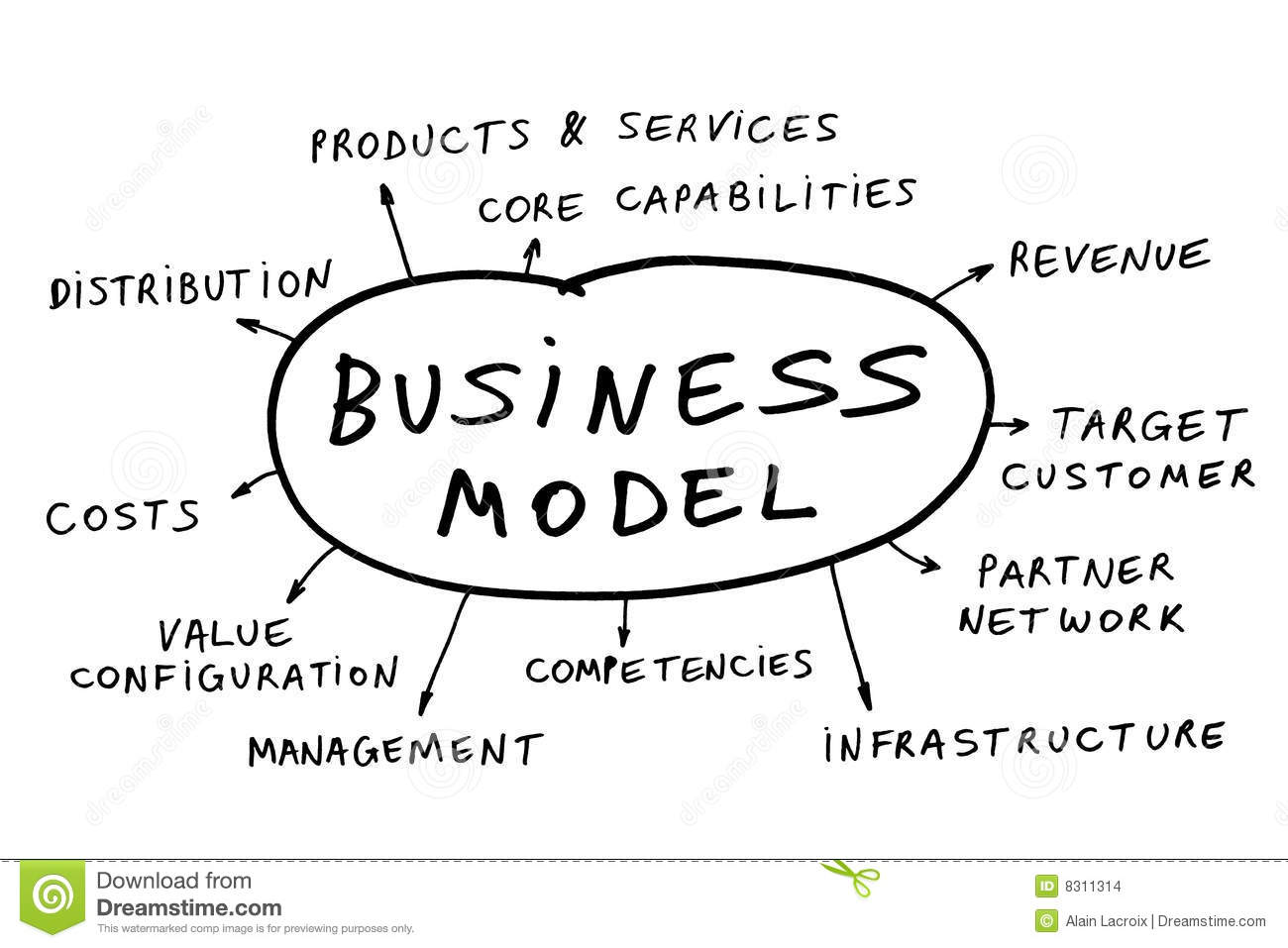
Definition #2: What is a business model? A business model is the description of how a startup will create, deliver and capture value. Alex Osterwalder’s Business Model Canvas is one framework for describing and documenting the elements of a startup’s business model.

Definition #3: What is Customer Development? Customer Development is a 4-step process by which a startup answers the questions it needs to answer in order to find a business model that is repeatable, scalable, and profitable. Step 1 and step 2 of Customer Development cover the “search” phase of a startup’s life-cycle. Step 1 is Customer Discovery. Step 2 is Customer Validation. More on those a little later.

Definition #4 What is a hypothesis? A hypothesis is a statement, or a group of statements, that proposes an answer to a question, or a solution to a problem, in a manner that is testable through experimentation. The goal of experimentation and testing is to determine if the hypothesis is correct, and to inform the subsequent actions that the startup should take on the basis of that evidence.

Step 1 in the Customer Development Process: Customer Discovery – this involves translating the initial vision behind the startup into a set of hypotheses about each component of the business model. This allows experiments to be performed that either validate or invalidate each proposed hypothesis. In my experience the exercise of testing hypotheses about the business model with prospective customers accomplishes at least two things. First the startup entrepreneur gets to hear directly from customers about the elements of the business model’s value proposition that are most critical from the point of view of the startup’s customers or partners. Second it jump-starts the sales process even before the startup has invested much time or money into building a product. The founders of a hardware startup discussed their idea for an innovative new product with a potential partner. The partner’s input proved crucial in determining the direction they followed with regard to product design – it evolved from a product with one offering to one with three distinct but complementary offerings.

The revenue model also changed based on those discussions. Even better, the partner agreed to work with this startup to bring the product to market when it is ready. Obviously, there’s still a lot to be done – product design, product development and manufacturing for example. Yet those initial discussions have been critical in conferring the kind of credibility that has made it possible for the startup to seek an audience with other potential partners. Customer discovery for this startup also involved market research to determine the priority of features from the perspective of individual end-use customers – the men and women who might actually decide to purchase the startup’s offering once it becomes available to consumers.

Step 2 in the Customer Development Process: Customer Validation – this step proves that the work done in step 1 is easily repeatable, scalable, and capable of delivering the customer volume required to build a profitable company. The startup I described above is now building prototypes based on all the information it gathered during the Customer Discovery process. Eventually we will test our ability to deploy the product in the field – a few hundred first, then a few thousand, and barring any major setbacks, tens-of-thousands, then hundreds of thousands.

During that process we will test how well the back-end software works with the hardware that we have designed and manufactured once people are actually using the device. At each step I expect we will go back to the drawing board on several aspects of the product and the business model. For example, our pricing model may not reflect reality since our market research confirmed the hypothesis that our potential customers have never encountered a device like the one we are developing. We may discover that customers will gladly pay more for the value proposition we offer than we currently plan to charge. It is important to note that we have gone through a number of product pivots during Customer Discovery. For one, we made an incorrect hypothesis about the amount of space our partners would be willing to devote to this new device, never mind all the assurances they gave us during early conversations.

We also made a number of pivots in terms of the user experience and the interface through which users will interact with the device because we realized that a number of hypotheses we had made about certain design, engineering, and manufacturing issues related to the product were just flat out wrong. The product we will soon show to our partners satisfies the desires individual end-use customers told us they seek in a product like ours4, in a manner that accounts for the constraints our partners expressed they would eventually have to contend with in deploying the devices when they come to market. Moreover, this exchange of information led us to develop a product with performance characteristics far superior to what we would have achieved within the parameters of our previous vision. We expect to make a few more pivots before all is said and done.

Developing Hypotheses During Customer Discovery

The first step in customer discovery is developing a rough estimate of market size and sketching an initial business model for your startup using the business model canvas, which I have discussed in some detail in What is Your Business Model? Using the business model as a guide, develop a hypothesis brief for each component of the business model canvas. A hypothesis brief should contain a succinct statement of the hypothesis itself as well as a sufficiently detailed but brief outline of the information that makes the hypothesis a reasonable and valid one for that business model component.

The market size hypothesis is probably the most critical, even though it does not correspond directly to any of the business model canvas components. Investors like to back companies that target potentially large markets. At the same time, be careful to differentiate the total addressable market opportunity, the serviced addressable market, and your target market. Needless to say, your initial target market will be the smallest of these three. In most cases a bottom-up estimate is better than a top-down estimate because it is relatively easy for an investor who wishes to do so to replicate a bottom-up estimate. Whereas, a top-down estimate could be viewed as “hand-waving” with no basis in reality.

The value proposition hypothesis should discuss the problem your startup solves for its customers. A segment of this brief should capture product features, and a minimum set of initial product features that early customers would be willing to pay for. This is the minimum viable product, a bare-bones version of your product that solves the “core” problem your customers face. Put another way, your minimum viable product is the least developed product that you can create in order to validate your most important hypotheses about the problem you are solving and what your customers or users will accept.

The customer segments hypothesis forces you to answer the questions “Who are my customers?” and “What problems do my customers face?” The hypothesis brief should discuss customer problems, types, and archetypes respectively. Understanding “a day in the life” of your typical customer is a powerful way to understand your startup’s customers. Finally, Steve and Bob suggest you develop a customer influence map. There is an important aspect finding customers that can be overlooked. What is the smallest group of customers that is experiencing the pain or problem you are solving most acutely? Perhaps they do not have enough money to be attractive to incumbents. Or, perhaps they are a niche that is considered weird and unprofitable by your competitors. Start your experiments there. Why? If your product indeed solves their problem, they will adopt it quickly. On the basis of broad adoption within that niche, you can plot a path to other communities of customers who are facing the same problem. In other words, find the groups of people who will be your “Innovators” and “Early Adopters” and focus your early efforts on those groups.

The channels hypothesis should differentiate between physical, web, and mobile channels. An important consideration during the development of this brief is whether your product fits the channel. At this stage it is important to pick the channel with the most potential and to focus on gaining customers and cultivating sales through that channel to the near exclusion of every other alternative. With very few exceptions, since you are still testing your hypotheses, developing your business model, and determining what product is best positioned to solve your customers problems avoid the temptation to launch via multiple channels.

I was having lunch with the founder of an early-stage startup on Thursday, last week. She was giving me an update – the struggle to raise seed capital from investors, what she’s learning about building a team, and so on. We got to talking about how she would distribute her startup’s MVP. Her initial plan would have cost her a lot of money – capital she can’t afford to spend and a significant portion of the round she’s trying to raise, because she was thinking about traditional channels – the most obvious route to the customers she thinks she needs to get to. I pointed out that without further testing, she was taking a very risky gamble whose most likely outcomes do not favor her startup. Instead I suggested she spend the least amount of money she can to test non-traditional channels, and maximize the yield from those avenues before she does anything big and splashy through traditional channels. In this example, her hypothesis was poorly formed because it failed to take her startup’s capital constraints into full consideration.

The market-type and competitive hypothesis discusses the nature of the market into which your startup is entering and tries to anticipate the competitive landscape of the market that you will be attacking. You might consider it the second half of the value proposition hypothesis – your product solves a product for a group of customers, or a market. In broad terms a market already exists, or your startup is creating a completely new market where none existed previously. Your market entry strategy will depend on the market type you identify, as will your cost of entry into that market. In an existing market, your startup will have to position itself against the competition in a manner that ensures it can win given the basis upon which you have chosen to compete.

The customer relationships hypothesis describes how you get, keep and grow your customers. It is similar to the LBGUPS model, which I discussed in What Is Your Business Model? There’s no need to emphasize that this is an important hypothesis brief – without customers or users your startup will die a not premature death. How you get, grow and keep customers is very channel dependent. Your analysis should take that into account, and should also factor in related costs.

The key resources hypothesis discusses how you’ll obtain resources that are critical to your startup’s operations but that you do not have within the startup. These resources might be physical resources, financial capital, human capital, or intellectual property. In each case it is important to list the resource and an outline of how it will be secured to enable the startup run its operations. For example, servers can be rented in the cloud at a cost that is lower than managing your own server. Another example, a first-time founder who does not yet have a technical co-founder might partner with an outsourced software development shop to build and MVP with which to run some experiments. Often the devshop will remain as a service provider till the startup becomes self-sufficient enough to bring that work in-house. I have a bias for startups that control their intellectual property.

The key-partners hypothesis describes the partners that are essential to enabling your startup to succeed. It also describes the value-exchange that keeps the partnership alive. For example, a startup might have all its development and design work done by a software engineering consulting firm established for that specific purpose. In this case the startup pays the software engineer money in exchange for software engineering related to its product. Key-partner relationships might take the form of a strategic alliance, a joint new business development effort, a key supplier relationship, or co-opetition. Certain of these are more common early in the startup lifecycle, and others are more common late in the startup lifecycle. It is important to realize that a partner should not have control over anything that is critical to your startup’s ability to exist and do business.

The key activities hypothesis summarizes your startup team’s understanding and assumptions about where its energies should be most focused in order to create the most value for its customers. These are those activities that you feel cannot be left to one of your startup’s key partners. For example, a hardware startup might view design as a key activity, while assembly is left to a manufacturing partner in a low-cost manufacturing jurisdiction.

The revenue and pricing hypothesis brief is important because it ensures that the startup can extract value for itself and its investors. It asks a number of simple questions all related to revenue. The nature of the specific questions asked depends on the channel, but the essence of those questions remains the same. Together they should enable you determine if there’s a business worth pursuing along the path you have chosen for your startup.

The cost structure hypothesis brief forms the second half of the value extraction hypotheses – the first being the revenue and pricing hypothesis. Your startup’s cost structure must ensure that it can effectively deliver on the value proposition it has promised customers, and keep a portion of the revenues that the startup cultivates in the form of profits. Here too the questions asked will be relatively simple, and will reflect the channel and the market type. For example, a startup whose only channel is the web will have a lower cost structure than one with a physical channel.

Once your hypothesis briefs are complete, your entire startup team should discuss the output. Seek contradictions, conflicts and inconsistencies. The most important reason for developing these hypotheses is to ensure that the actions that your startup is taking have the highest probability of yielding success that is possible.

During my conversations with founders I listen carefully to determine if the startup has thought about these issues, or is thinking about them – it depends on the stage. I become concerned when I get the sense that important questions have been left unasked and unanswered.


  1. Any mistakes in quoting from my sources are entirely mine. This post is an updated and adapted version of my posts The Startup Customer Development Model and Customer Discovery Phase I: State Your Business Model Hypotheses? which were published at Tekedia.com on September 3rd, 2012 and January 21, 2013 respectively. Large portions of this update are identical to the originals. ?
  2. I have adapted portions of: Chapter 2 and Chapter 4 of The Startup Owner’s Manual Vol. 1: The Step –by-step Guide for Building a Great Company, Steve Blank and Bob Dorf, Pub. March 2012 by K and S Ranch Publishing Division. ?
  3. I am paraphrasing Steve Blank and Bob Dorf, and the definition they provide in their book The Startup Owner’s Manual: The Step-by-Step Guide for Building a Great Company. I have modified their definition with an element from a discussion in which Paul Graham, founder of Y Combinator discusses the startups that Y Combinator supports. ?
  4. Market research involved nothing more than a description of the device. In other words, we relied on potential customers’ ability to imagine a future in which they could use the device we were setting out to develop. ?

Ecobank Fintech Challenge to Award $500,000 to Winning Startups

0

Ecobank is challenging Africa’s new generation of entrepreneurs to find lasting solutions to the continent’s most pressing banking issues. Submit entries in one or more key areas of interest for your Chance to win up to $500,000 funding.

Eligibility & Participation

The Challenge is open to both teams and individuals. To participate in the Event, teams must apply through the Challenge page at ecobankfintech.com before the end of 14th April, 2017.

Fintech Challenges & Pain-points

Teams are to submit applications addressing one or more of the following challenges

  • Predictive analysis using big data
  • Agency banking
  • Secured client authentication
  • Apps to work without internet connectivity
  • KYC technology
  • Customer analytics
  • Credit scoring
  • Micro Loan System
  • User experience optimizing solutions using machine learning and AI
  • Blockchain technology/solutions within Banking
  • Any other fintech solution.

To apply, click here

Comparison of Eddystone and iBeacon – Which One is Better?

0

In mid of 2013, Apple launched iBeacon globally at its Worldwide Developers Conference.  It was the foremost device maker to incorporate a beacon protocol standard into an operating system. Google has finally entered beacon space in 2015 with its own standard known as Eddystone, named after a famous Coastal lighthouses of England. Let see the difference between the two beacon protocols to see which is one better for your project!

Eddystone

  • Earlier Google’s Eddystone was called UriBeacon. It is a beacon protocol for open source beacons which could be manufactured by any industry at reasonable rates.
  • Eddystone-URL does not need a custom app but needs a beacon browser .Advantage: you don’t need to develop an app.
  • Eddystone has a built in feature known as Ephemeral Identifier (EIDs) which always keep changing and allow beacons for broadcasting a signal that can be recognized by authorized clients.
  • It is flexible but needs more complex coding when it comes to integration, since it sends more packets of information compared to iBeacon.
  • It is Android and iOS friendly. In fact, it is cross-platform and therefore, it is friendly with any platform that supports BLE beacons.
  • It has additional features like Telemetry data which can be used by the company to handle large numbers
  • They can report analytic data, remain battery power and firmware version.
  • It is open source. Therefore, developers and businesses can add and access to it.

iBeacon

  • iBeacon is a beacon protocol which has been manufactured into Apple’s iOS 7 and advance versions of the mobile operating system which allows an iPhone or iPad to connect to objects – called beacons – using Bluetooth. Beacons use a technology called Bluetooth Low Energy (BLE). It is part of Bluetooth 4.0 specification.
  • On other hand iBeacon need an app to receive that particular UUID to be able to participate.
  • While iBeacon does not have any feature like EIDs. The Signal communicated by a beacon is a public signal and can be identified by any iOS device and some Android devices with appropriate conditions.
  • It is easy to implement.
  • It is Android and iOS friendly, but native only for iOS.
  • It is a registered software. Therefore, the specification is organized by Apple.
Eddystone’s entrance into the beacon world has certainly new game for Beacon technology. It open source platform of BLE and according to ABI Research, it will be leading standard in the beacon industry by 2020.

By Brijesh Kamani – Mr. Kamani is the CEO of Teksun Group

Why Bluetooth Low Energy Will Transform Personal Area Network Connectivity

0

Bluetooth Low Energy is a new power saving alternative of Bluetooth personal area network (PAN) technology, designed for use by internet connected machines and equipment. So little in fact that a device can be operated for a whole year using only small button cell.

When was it invented?

Even though the first of these chips to be manufactured in April 2009. These concept has been around for a couple of the year and with different names. Initially, the Bluetooth Special Interest Group (SIG) come up with a concept it was known as Wibree. It was renamed as Ultra Low Power (ULP) Bluetooth Technology lately and then it has been given a name as Bluetooth low energy by the end of 2009.

How can it be used?

Today BLE adoption is being driven by Fast growing Internet of Things (IOT). In the world of connectivity, Bluetooth Low energy is the next revolution of Bluetooth. It is invented to transfer data between two devices very proficiently and with consuming only less amount of power. How it can be work is best explained with an example.

For instance, you are wearing a sports watch which monitors your blood pressure and heart rate constantly even as you are out on a training run. Without taking any action, using Bluetooth low energy your sports watch will able to transmission the data to your phone and using a phone you will able transfer this data directly to your online website. Thus, your coach can observe it in real time or even you can analyze it.

Well, this is just one example for understanding and certainly there are many other excellent potential applications.

What is this technology- Revolutionary or Evolutionary?

Till now we have discussed to this new technology as revolutionary and evolutionary. We don’t want to make our readers confuse. This technology is both. It is revolutionary in what it will allow Bluetooth to accomplish in terms of new devices and applications. While it is also evolutionary in that it forms on conventional Bluetooth technology which covers the design experience that been already expanded.

Which new devices will use this technology?

We have already mentioned one example above of how data can be transfer from a sports watch and how it may be transferred directly to your online website through your phone. BLE may be used in other sports applications such as golf club, a sensor on a bicycle, bat racket and smart training shoes. Bluetooth low energy will useful for you to monitor your performance and it can be directly transferred to the internet. Apart from sports application, BLE can also use in health care field. For example, someone with blood pressure may use Bluetooth Low energy device to continually monitor their blood pressure level and this data can be transfer directly to that person physician or doctor.

Definitely, there is lots other application which is not involved in fitness and health. Suppose it can be used in household appliances, remote control and in other entertainment appliances. .

Cost of Bluetooth lows energy

Over the last couple of years, development of this new technology is much expensive. During the initial stages, huge amount of design work has been carried. On another hand, one of the best thing of Bluetooth low energy is less expensive. In devices such as phones, Bluetooth low energy will sit alongside dual mode devices. Actually, they will go to use a just single chip and it cost will be a net cost but this will be less.

Conclusion

Bluetooth Low Energy will available soon and this technology will be life changing that will enable evolutionary growth in the level of connectivity that can be accomplished between a new generation of devices, Bluetooth devices and the internet.

By Brijesh Kamani

What Is Your Business Model?

1
Business-model components (source: forbes)

Invariably, when I am meeting the founder of a startup for the first time to discuss the possibility that KEC Ventures might invest in their startup I ask this question; “What is your business Model?”1

Typically, the response I get is unsatisfactory. In this post I will discuss what I expect startup founders to include in their answer.

To ensure we are on the same page about what a startup is, I will begin with a definition; A startup is a temporary organization built to search for the solution to a problem, and in the process to find a repeatable, scalable and profitable business model that is designed for incredibly fast growth. The defining characteristic of a startup is that of experimentation – in order to have a chance of survival every startup has to be good at performing the experiments that are necessary for the discovery of a successful business model.2 As an investor, I hope that each early stage startup in which I have made an investment matures into a company.

That leads to another question; What is a business model According to Michael Rappa; “In the most basic sense, a business model is the method of doing business by which a company can sustain itself – that is, generate revenue. The business model spells-out how a company makes money by specifying where it is positioned in the value chain.” Alex Osterwalder and Yves Pigneur say that; “A business model describes the rationale of how an organization creates, delivers and captures value.”

Other definitions exist, but taken together, these two statements provide us with enough basis for understanding what we should expect to learn from an adequately developed business model.

The business model should tell us how the entrepreneur expects to create value. To do this, the entrepreneur must decide what activities are core to the business the entrepreneur wishes to start. The question of how the entrepreneur creates value is also important because the answer to that question will often contribute to an understanding of the customer base that the business can expect to rely on.  This might seem trivial at its face. It is not. Understanding the customer base for which the business expects to create value is central to many other decisions that the business will have to make as it matures and approaches the launch of its product or service on the market.

Our definition of a business model raises a second question; how does the startup deliver value? I expect the startup founders I meet with to have started thinking about the process by which the value that the startup creates will be delivered to its target customers.

Given a reasonably well defined customer value proposition, our entrepreneur must now decide how that value is going to “be put in the hands” of the people that will become customers of the startup. The process of delivering the product or service that the entrepreneur has developed involves several distinct phases; Learn, Buy, Get, Use, Pay and Support. Employees of AT&T are believed to have developed the acronym LBGUPS (pronounced ELBEEGUPS) as a means of remembering the phases of this process as it relates to AT&T’s products. It is most effective to think of LBGUPS as a continuous, circular, and repetitive process.

  • Learn – when new customers first become aware of the product or service and acquire information and knowledge about how they may benefit from its use. Typically the startup accomplishes this through some sort of marketing, sales and public relations activity.
  • Buy – when customers decide to make a purchase after having learned about the new offering and communicate the desire to act on their decision to someone in a position to initiate the next phase of the process.
  • Get – when customers actually take delivery of the new product. This might happen in a physical or virtual store. It might involve shipping the product to the customer. If the customer is buying a service then this typically happens in person, or the service could be delivered remotely.
  • Use – when customers actually use or consume the product, or benefit from the service.
  • Pay – when customers pay for the product. This might happen simultaneously with buy. Sometimes there’s a time-lag between buy and pay – for example, in a fine dining restaurant a guest dines before before paying for the meal.
  • Support – when customers are provided with additional information that is aimed at resolving any problems they may have encountered during any of the preceding phases. Support should serve as an opportunity to encourage customers to remain, or to come back the next time they need to purchase a similar product or service. This is the role of technical support, customer service and customer relations. Done well, support should lead right back to learn.

How will your startup deliver value?

How will your startup deliver value?

Every startup must ask, and find answers to a number of questions while going through the process of delivering value to customers. What is the most effective channel for marketing, advertising, public relations, and sales? Where should we place our product or service in order to enable evaluation by potential customers as they make the buy decision? How do we put the product or service in a customer’s hands once that customer has made a purchase? What do we need to do to ensure that the customer uses our product after they have bought it and we have delivered it? How do we ensure that our customers are paying us, in full and on time? What is the mechanism by which we get paid by our customers? What problems might our customers encounter, and how should we help them resolve those problems in order to ensure that they come back to learn more about our other offerings and buy more from us in the future?

Often, each question that the startup seeks to answer will give rise to other questions that must be answered as well. This process requires trade-offs. It might be too costly to attempt to exploit every possible marketing channel and so the entrepreneur must choose only a few out of many. An over elaborate support structure might prove too expensive to maintain over the long term. Also, that might create bad-habits that the startup’s revenue structure has not been designed to carry without tipping the company into a position where it is experiencing difficulties, this touches on the issue of pricing.

Next, let’s examine the third question that our definition of a business model raises; How does the business capture value? A startup founder should be able to describe how the startup will create value, deliver that value to its customers and in-turn capture some value for itself and its investors.

Michael Rappa’s statement about business models emphasizes the importance of revenue streams. Revenues comprise the cash that a startup’s customers exchange for the product or service that the startup provides. In the process of this exchange, a transfer of ownership or usage rights takes place – in an outright sale, the customer assumes ownership. In a lease, licensing or rental agreement ownership remains with the seller, but the buyer is granted usage rights for a contractually agreed period. Revenue streams can be one-off or recurring.

I have no argument against the suggestion that startups should focus keenly on developing and growing revenue streams. However, my experience has taught me that startups must focus equal attention on profit, and on the related issue of costs.

Why?

In order to reach self-sustaining growth, a maturing start-up must quickly put itself in a position to invest in areas that are critical to its ability to create and deliver value to its customers – it has to invest in those assets that make its revenue streams possible. Costs represent the price the company pays to obtain the resources it must bring together in order to create and deliver value to its customers. A business earns a profit when its total revenues exceed its total costs. A successful business model should lead to an outcome in which customers perceive the entrepreneur as adding value. They demonstrate this by paying more for the product than it cost the entrepreneur to produce it – leading to a profit for the entrepreneur.

Earning a profit makes it possible for the startup to invest in the assets that are most critical to its ability to create and deliver value. Controlling and managing costs effectively while growing revenues will ensure that the startup maximizes its profit.

How will your startup capture value? You should be able to describe how your startup will grow revenues, manage costs, invest for growth, and maximize profits. This is not a static process. It should be dynamic and ongoing. Your startup will not be operating in a stagnant market. Therefore, your product and pricing strategies will need to adapt from time to time in response to competition as well as other market forces.

Also, depending on the stage at which KEC Ventures is considering an investment, it might not yet be clear which revenue model will work best for the startup. A seed stage startup might not yet have settled on a revenue model. A startup to which we are speaking about a series A financing should have some well formulated ideas about its revenue model, and in fact should be running some experiments to validate its hypotheses. An existing startup in our portfolio in which we are contemplating making a follow-on series B investment should most certainly have settled on a revenue model, and be in the process of scaling the business model in a repeatable, and profitable way.

I will end this discussion with some related observations;

First; It is often tempting to assume that one startup can simply copy or imitate the business model of one of its competitors. That may work in the short-term. In my opinion that is not an approach that confers a lasting competitive edge, certainly not in fledgling markets and industries, and often not in mature industries either. An important aspect of business model development is the deliberate and conscious selection among a number of alternative choices regarding product design, customer development, revenue models and cost structure; the wholesale copying of a business model simply because it has worked for another startup suggests the entrepreneur has abdicated responsibility for understanding the dynamics at play in each of those critical areas. That is a recipe for a failed startup adventure in which I am not eager participate.

While I oppose the wholesale copying of a business model that someone else has developed, I am a strong proponent of learning from the experience of other startups – the successes and the failures. There is real value in knowing what has ensured that some startups thrive. There is even more value in knowing what has proved fatal to others.

Second; It might take several attempts before a startup discovers the business model that works best – reflecting an industry in its earliest stage of development. Even then, the business model must evolve with the passage of time. Technology changes. Labor markets shift. National economies expand and contract. Opportunities not present in the past will present themselves in the future. Competitive threats that did not exist at the time the startup was formed appear as soon as other individuals notice a new chance to earn economic profits. Regulations emerge as a result of changes in political mood. A business model that does not adapt and evolve reflects a startup founder who does not grasp the nature, extent and complexity of the numerous challenges that lie ahead. Such founders, and the startups they are building, are bound to fail.

Third; The business model is not the business plan. Your business plan should certainly discuss your business model, yet the two are distinct and different. The business model is a framework within which the startup’s activities occur. The business plan is a document whose main purpose is to serve as a record of the startup’s goals, the reasons why those goals make sense and can be achieved, the manner in which the goals will be accomplished and the timeline within which the startup expects to implement its plan – presumably the plan is to become profitable as soon as possible within the tenets of the business model.

I am a fan of The Business Model Canvas. In fact, I use it each time I sit down to study a startup in which I believe KEC Ventures should invest. Using it ensures that I understand the business model, that I understand the risks that might lie ahead, and that I am comfortable that the startup indeed has found an opportunity to create, deliver, and capture value.


  1. This post is an updated version of 4 separate posts authored by me, and first published at Tekedia between Sept. 18th, 2011 and Oct. 30th, 2011. Any similarities between this article and those posts is deliberate. ?
  2. I am paraphrasing Steve Blank and Bob Dorf, and the definition they provide in their book The Startup Owner’s Manual: The Step-by-Step Guide for Building a Great Company. I have modified their definition with an element from a discussion in which Paul Graham, founder of Y Combinator discusses the startups that Y Combinator supports. ?