DD
MM
YYYY

PAGES

DD
MM
YYYY

spot_img

PAGES

Home Blog Page 7452

This Ugandan app in partnership with Swiss Re will INSURE you if you simply watch adverts on your phone

0

Very interesting idea to make insurance work in Africa. This is novel as it is an easier way to get insurance than paying money.

SureBüddy, an android application that has today launched into market, brings sponsored insurance and insurance related products to Uganda.

SureBüddy is simple and easy to use – the app renders advertisements, the consumer watches the ads, and then receives free cover as a reward. Ad images are non-intrusive, use very little data, and disappear with a click.

SureBüddy’s cover is sponsored for the user as all costs are paid by the advertiser. SureBüddy then uses the advertising revenue to reward the user directly with cover, and in this instance, the consumer benefits from watching advertisements.

Insurance penetration in Africa is amongst the lowest in the world, even though there is a crucial need for it. SureBüddy has taken insurance offerings to the people via technology – a platform to make these products less-intimidating, understandable and affordable.

To gain consumer trust towards free credible insurance plans, SureBüddy will implement the first phase of its service by providing screen cover in conjunction with Phone Doctor, and have partnered with Africell, one of the fastest-growing mobile telecommunications groups in Africa

Uganda, a country with a high smartphone penetration, is the first-to-market for SureBüddy. SureBüddy plans to roll out into 11 Sub-Saharan Africa countries, as well as India, Turkey, Indonesia, Philippines, Pakistan with South American countries to follow.

SureBüddy will work closely with Swiss Re, one of the biggest Reinsurance companies in the world, to ensure that they find the right insurance partners in every country.

“We are excited to work with an innovative company like SureBuddy and to support them with our expertise in this important growth region. It is clear that we need to consider clever ways of closing the ever increasing protection gap in the world. Swiss Re is committed to make the world more resilient, apply fresh perspectives and create smarter solutions with our clients to help the world move forward. SureBuddy will make sure that we get more protection to more consumers in a very innovative way.” says Thys Nieuwoudt, Swiss Re CEO Life & Health Africa.

For more information, you can go to the SureBüddy Facebook page.

Now the question is this: what is being insured? $10 per year or what. Users may need to ask that question!

This is how Nigerian banks could acquire their next 30 million customers

0

It is estimated that the Bank Verification Number exercise which links customers with their biometric data like facial features and fingerprints generated about 25 million unique customers in Nigeria. Those 25 million customers accounted for about 45 million bank accounts in Nigeria.

The numbers are relatively poor for a country of more than 180 million people. For the banks to get their next 30 million customers, they need to improve their games.

This is what the banks have to do – they need to practice financial inclusion in the true spirit of it. They need to learn from what is happening in Tanzania.

eKilimo

National Microfinance Bank Pic (NMB) has partnered with Mastercard with an aim to ensure the digitization of the agricultural sector in Tanzania with the rollout of eKilimo, a mobile solution developed by the Mastercard Lab for Financial Inclusion.

eKilimo, which in Swahili means ‘eAgriculture’, is a digital platform that will help, introduce efficiency, security and transparency in the agriculture supply chain. The solution will make transacting faster, safer, and easier for all stakeholders including the farmer, the buyer and the agent.

Powered by the digital platform developed by the Mastercard Lab, farmers are now able to conduct the entire transaction process of receiving payments and selling produce via a feature or smartphone, without having to walk hours to markets.

The Opportunity /Partnership

By providing digital payment to farmers, eKilimo will leverage the existing agency banking structure to facilitate account opening for farmers and joint ideation on new product features. This is in line with the Mastercard vision of a more digitally and financially included Africa.

Using digital technology to provide access to farmers and introducing transparency to the buying and selling process will drive efficiencies into this supply chain, positively impacting the economy. In the long run this should help famers gain access to formal financial services and solutions, enabling them to manage their funds ensuring a better more secure future for them and their families.

The partnership between NMB and Mastercard will see the solution enter a pilot phase in select locations in Tanzania from March 2017. Following the introduction of the same solution in Kenya under the name of 2KUZE, key insights were gathered and will be used to ensure the Tanzanian pilot is a success. This cross pollination of knowledge driven by the Mastercard Lab ensures future rollouts are done so efficiently.

What Nigerian Banks could learn

The pilot will begin with the onboarding of NMB customers that source directly from smallholders. Field agents of the customers will use the eKilimo smartphone app to perform the purchase, including weighing the produce on a Bluetooth-enabled scale and paying the farmer digitally. The farmer will receive information and their payment from eKilimo, and will be able to leverage their transaction history to access credit from NMB.

Nigerian banks could do the same with many farmers union in the nation. Doing that will bring significant number of customers into the banking system. Through this mechanism they can attract the next 30 million customers faster than they had built the first 30 million which took many decades. Zenvus, a local agtech pioneer, has solutions to assist banks drive this opportunity.

Cybersecurity Training Programs in Africa

0

Our Cybersecurity education is structured around four key pillars of policy, management, technology and digital forensics. This implies that we cover all the core needs of any organization or state institutions. While some staff like corporate lawyers may require training on policy, some staff like IT managers may need technical skills. Others like business leaders will find the management module useful. We deliver all these programs through our web portal – www.facyber.com. The program structure is presented below: certificate programs take 12 weeks; diploma programs which require certificate programs as perquisites take 24 weeks (inclusive of the certificate programs) and the nanodegree programs require a live (virtual) one week training with the diploma programs as prerequisites

Program Descriptions

Certificate in Cybersecurity Policy (CCYP): Certificate in Cybersecurity Policy deals with the policy analysis and implementation aspects of cybersecurity. It presents theory and topical issues, at government and enterprise levels, with both technical and managerial components in the fields of information systems security. The program helps learners develop skills on the policy, ethical, and legal issues associated with cybersecurity and information security.


Diploma in Cybersecurity Policy (DCYP) Capstone: This is a practical-oriented program where learners are tasked with developing solutions for a theoretical or real case cybersecurity policy issue with the guidance of a mentor. A project report is required at the end of the program.


Certificate in Cybersecurity Technology (CCYT): The Certificate in Cybersecurity Technology is designed to provide learners with skills to analyze multi-faceted complex cybersecurity issues, develop capabilities to make strategic decisions to protect organizations from threats and become competent cybersecurity professionals.


Diploma in Cybersecurity Technology (DCYT) Capstone: This is a practical-oriented program where learners are tasked with developing capabilities in the core technical aspect of cybersecurity. Learners will have access to some tools and equipment to work throughout this program. A project report is required at the end of the program.


Certificate in Cybersecurity Management (CCYM): The Certificate in Cybersecurity Management equips and prepares learners with modern skills to become effective managers across the broad nexus of cybersecurity and intrusion preventions in organizations. The central core is developing capacity to prevent anticipated cyber intrusions, using experiences to mitigate future threats, and formulating and implementing enterprise-level cybersecurity roadmaps. The program also explores the roles of regulation, policy developments, legal instruments and civil liberties.


Diploma in Cybersecurity Management (DCYM) Capstone: This is a practical-oriented program where learners are tasked with developing cybersecurity project management capabilities with the guidance of a mentor. Here, learners develop cybersecurity implementation frameworks. A project report is required at the end of the program.


Certificate in Cybersecurity Intelligence & Digital Forensics (CCDF): The Certificate in Cybersecurity Intelligence & Digital Forensics is structured to provide modern skills to those interested in digital forensics, digital intelligence and uncovering digital evidence. The program equips learners with broad analytical frameworks and prepares them to become competent cyber investigators.


Diploma in Cybersecurity Intelligence & Digital Forensics (DCDF) Capstone: This is a practical-oriented program where learners are tasked with developing capabilities in digital forensics, digital evidence and digital intelligence. Learners will have access to some tools and equipment to work throughout this program. A project report is required at the end of the program.

Using Soil Analysis to Deliver Personalized Region-Centric Fertilizers to African Farmers

0

The era of predictive farming is here in Africa. Computational algorithm could use data collected from IoT devices in farms to make location-based recommendations on fertilizer applications across farming zones, and this will be delivered through mobile devices, to stakeholders that subscribe. With this, we can make fertilizer use more effective in Africa. Welcome to the era where regional soil fertility chemistry drives pre-production of fertilizers.

Imagine if fertilizers sold in Ghana have to be different from the ones sold in Gambia because the two countries have different amounts, on averages, of nitrogen, potassium and phosphorus, in their farmlands.We want fertilizers to be packaged with the locations where they will be sold indicated on the bags. Why? The mix in the fertilizer has to be personalized specifically for the region it will be used. The era of dumb fertilizer application has to end in Africa immediately.

Read on why we think the future of farming in Africa is awesome!

Preamble

Low soil fertility, either as a result of soil degradation or inherent low soil fertility, is a major cause of low crop productivity in West Africa.  Fertilizers can result in dramatic productivity increases. However, in most countries, commodity fertilizers dominate, which do not address soil and crop-specific nutrient requirements and soil acidity constraints, and thus often give poor returns on fertilizer investments.  Much informaton is being generated through various initiatives in many parts of Africa, resulting in different but not necessarily similar or accurate fertilizer recommendations. Recently, the USAID West Africa Fertilizer Program (WAFP) compiled fertilizer recommendations for 10 crops across the agroecological zones (AEZ) of 8 West African countries and summarized them into the Fertilizer Recommendations for West Africa Map (FeRWAM). Approaches that lead to diverse recommendations need to be reviewed, and a more definitive, harmonized approach to delivering better fertilizers to farmers developed.

Roadmap

There is need to design a pathway to deliver fertilizer recommendations that will result in sustaining greater yields and returns on fertilizer investments, particularly for smallholder farmers. Important steps in this process include:

  1.  Soil analysis and nutrient deficiency mapping on a macro scale to determine the extent and variability of nutrient deficiencies and soil acidity constraints
  2.  Developing and validating soil- and crop-specific fertilizer and lime recommendations.
  3.  In collaboration with fertilizer producers, blenders, and distributors, developing the means to deliver improved fertilizer products to farmers
  4.  Addressing regulatory issues and policy constraints that may impede introduction of diverse fertilizer products into the market.

The importance and limitations of soil fertility testing and mapping needs to be understood.  And an understanding of the steps in developing and delivering profitable fertilizer recommendations must be built into any roadmap. Then, an awareness of the multiple players involved in the process of developing and delivering improved fertilizer recommendations strengthened.

Strategic Projects

The following projects will help to drive a new dawn in soil testing and fertilizer recommendations in Africa.

  •  Soil testing and mapping – This covers the benefits and limitations of testing tools, including wet chemistry and spectral approaches, and mapping of soil nutrient deficiencies and acidity constraints as a first step towards developing profitable fertilizer recommendations. Approaches employed by FeRWAM, the ATT project, OFRA, and others must be updated.
  • Developing and Validating Fertilizer Formulations – Information derived from soil testing and mapping nutrient and acidity constraints needs to be translated into fertilizer formulations, and those formulations validated before they can be considered as recommendations. Approaches including best-bet evaluations and nutrient omission trials (NOT trials) need to be pursued.
  • Scaling up fertilizer recommendations – The fertilizer industry must ultimately manufacture, market, and distribute improved fertilizers and lime. Different fertilizer companies must have different strategies and products to address this. Fertilizer subsidy programs are also a means to getting better fertilizers to farmers, and require coordination with governments in development and evaluation of improved fertilizer products.
  • Fertilizer policy and fertilizer regulations – Fertilizer policy and fertilizer regulations have in the past been designed for commodity fertilizers, and often do not facilitate the entry of better fertilizers into competitive markets. The importance of conducive fertilizer policy and regulations, with practical examples of progress, must be examined across Africa.

Zenvus Fusion

Zenvus Fusion is a service for governments and development organizations which is designed to help build Soil Fertility Geography in constituencies. It could be a state Soil Fertility Geography or even a National Soil Fertility Geography. We also support local governments.

Our product provides the data that makes it possible for farmers to understand the natures of the farmlands before they begin planting their crops. We do this by collecting many data samples to appropriately represent the soil fertility equivalence of that region or area.

The aggregated soil fertility data is made accessible for all stakeholders. The data is also GIS-tagged so that the exact locations of the soil are known.

Computational algorithm will use this data to make location-based recommendations on fertilizer applications across farming zones, and this will be delivered through mobile devices, to stakeholders that subscribe.

Also, farmers can get predictive recommendations on the most economically viable crop to grow by feeding present crop prices, fertilizer cost, and population into the algorithm.

With this soil fertilizer geography, fertilizer production will become personalized
and specifically engineered to mitigate deficiencies with deployment regions known pre-production.

We welcome inquiries from governments, development organizations etc.

These two cpanel viruses are slowing your websites – this is how to fix them

0

If your website is hosted on a cpanel, popular for Hostgator and Justhost, there is chance that your site has slowed down considerably. A virus might have attached your site and the slow-down many not be associated with traffic or bandwidth usage.

The viruses make your sites crawl and unusable by attacking your ports, preventing easy transfer of data to your web users. So when they click, they wait for so long before they can see anything.

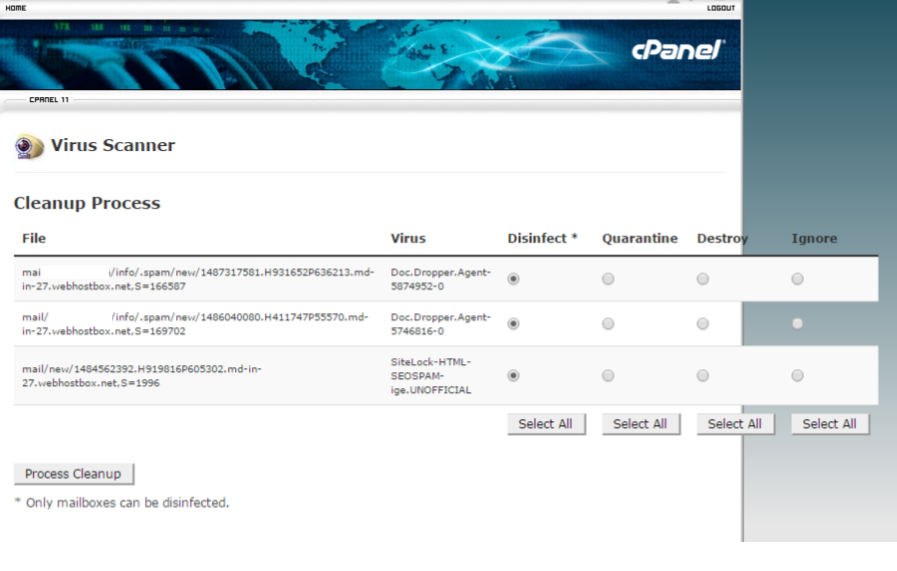
These are the viruses and you need to watch out for them:

  • Document Dropper Agent
  • SEOSPAM-ige

They are troubling and very difficult to deal with. This is what you have to do if you suspect you have these viruses.

  • Scan your cpanel area with a good anti-virus. Most cpanels come with a Virus Scanner
  • Deleted the viruses and make request to your server support team to tighten your ports. This is the most effective way to handle this issue. These viruses attach emails and can sneak in through emails. So, you must ensure that your ports are secured.