DD
MM
YYYY

PAGES

DD
MM
YYYY

spot_img

PAGES

Home Blog Page 7454

Nigerian government, Extensia to organize ‘Smarter Thinking’ Innovation Africa Digital (IAD) 2017, 14-16 March Abuja

0

‘Smarter Thinking’ Innovation Africa Digital (IAD) 2017, 14th-16th March 2017 ICT is an important enabler of growth and development. This is true in the context of socio-economic development with the well-worn correlation between broadband development and GDP growth. It is also true in the area of business improvement where ICT supports innovation, engagement, service improvement

ICT is an important enabler of growth and development. This is true in the context of socio-economic development with the well-worn correlation between broadband development and GDP growth. It is also true in the area of business improvement where ICT supports innovation, engagement, service improvement and client retention. Technology for the sake of it is a poor investment and Top down solutions designed for perceived problems are often ill received and unused leaving a disconnect between vendors/ service providers and consumers/ citizens.

‘Smarter Thinking’ can be applied to the development of Smart Cities, Smart Infrastructures, Smart Services and Smarter Organisations. ‘Smart’ is a generic term which conjures up a variety of images depending on individual experience but when we talk of ‘Smarter Thinking’, in the context of IAD 2017, we talk of connected thinking. We talk of Engagement, Collaboration, Innovation and Feedback loops. We talk in terms of co-created solutions to actual needs and we talk of feedback mechanisms to ensure we adjust technologies to evolve alongside solution needs. Three themes will prevail throughout the IAD summit:

  • Innovation – Innovation is a critical element of ‘Smarter Thinking’ and leads directly to ‘Smart’ solution development.
  • Efficiency – Efficiency savings from Smarter thinking, justify investments in technology, training and engagement.
  • Reliability – Robust infrastructures are essential to ensure the reliability of services.

Attendees will leave the summit with a clear vision of how ‘Smarter Thinking’ will result in increased efficiency, improved service and happier citizens and customers and improved social development.

Working in partnership with Galaxy Backbone Nigeria, the national Public Sector ISP and in association with NCC, NiTDA, Nigcomsat and other key stakeholders in Nigeria, the organizers look forward to welcoming you in Abuja on the 14th-16th March 2017.

How cloud services boost your organizations business

0

Editor’s Note: This piece was contributed by Arjun Dedaniya of Teksun 

Over the past two decades, internet revolution has been dramatically changing the business globally. More and more people have started depending on information technology both for professional and personal use. Cloud Services have become extensive in most personal and business activities which include the internet technology usage.

In core, the term “Cloud” is a sign for the internet itself, as an essence requirement within any network of communication between different parties. Cloud services can offer a huge range of various business applications and can be directly accessed from a web browser. Data and Resources can be accessed through the remote servers with equivalent economies of scale.

Basically, the customer is remote in every respect from the technical structural design needed to run a specific application or to deliver the proper data. This contains servers, storage facilities, and communications networks. As several storage facilities and services may be combined, improved access and delivery speed may be estimated on demand. Such funds can be organized through a planning only within a limited duration with just very minimal communications with management or provider effort.

Cloud services offer the benefits such as cost control, flexibility, resources sharing, on-demand availability and wide network access. Many cloud hosting organizations exist with the cloud configuration. Whereas the enterprise IT department would have to focus on management and procurement of its own servers since it is increased to meet demand on a variable basis, nowadays cloud services provided by the range of hosts can take the damage. Through working in the background to offer the enterprise’s client with a faultless delivery experience, improved customer satisfaction follows.

Several organizations are perfectly happy to take benefit of the elasticity that cloud services offer and feel that they are far more capable to make strategies for development and ponder on the launching of new products or services without a roll out, internal resource application and related maintenance concerns. Somewhat, cloud services can give them with “utility computing” with access on a basis of consumption or also subscription basis.

There would be many business consumers that could be sharing the computing services offered by the cloud servers, which validates the practically of these funds. These means that resources can be spent on the growth of improved server ability without the concerns that such ability could be an issue to a long time of idle use, cooperation’s the investment in the first place.

See Nigerian President speaking with soldiers in Sambisa forest via Nigeria’s NigComSat-1R satellite [Photo]

0

President Muhammadu Buhari GCFR spoke with the Nigerian troops in Sambisa as well as the UN special mission in Liberia via multimedia network powered by NigComSat-1R satellite during the 2017 Armed Forces Remembrance day event at the Eagle Square in Abuja recently.

The satellite which was launched in 2011, is a strategic communication infrastructure to improve local content development in both upstream and downstream sectors of ICT. NigComSat-1R is poised to provide excellent and secure connectivity solutions to remote and underserved areas of the country and beyond through its strong regional beams over the African continent.

NigComSat, please make this available for all Nigerians. If you do, data plans will crash and we will see a digital economy ushered.

689 million Africans live beyond 10km reach of a fibre node

0

Africa is connecting but we still have a long way to go.

In 2014 the inventory of terrestrial fibre transmission networks in Africa totaled 958,901 km (Hamilton Research) and yet in the same 2014, 56% of the population of Africa still live more than 25 miles beyond the nearest fibre node (FTTH Council Africa)

Satellite communications still provides the the most viable connectivity solution for much of Africa. There are many reasons for that:

  • Sparsely populated rural communities will never be economically viable to connect to broadband via fibre
  • Unlike other connectivity solutions, satellite offers the same broadband speeds regardless of distance from urban infrastructure •
  • Fibre can offer 100% national coverage and can be rapidly deployed with full mobility to support Healthcare, Tourism, Military, Education, Aviation, Maritime and Large Enterprise •
  • Satellite connectivity integrates seamlessly and supports other technologies to improve mobility, affordability, reliability and national broadband coverage.

Countries across Africa have ambitious connectivity agendas to support their socio-economic growth, meet Millennium Development Goals, attract inward investment and create knowledge based economies. Governments and Regulatory Authorities are searching for the elusive solution to the challenge of connecting people in remote, under-served regions. And NGO’s and UN Agencies need reliable communications to be available anywhere and at any time. Also large enterprises with dispersed and travelling workforces need ubiquitous mobile connectivity.

Satellite connectivity could become that vehicle to help execute these plans especially in Nigeria with a relatively large land mass with non-homogeneity in development.

The above makes it clear why Nigeria needs to get its satellite communication strategy right by doing all necessary to get NigComSat and NARSDA up and running.

How Achiri Arnold Nji, a Cameroonian creator of Traveler is using AI to save lives on wheels

0

It is a well-known fact that road accidents kill a lot of Cameroonians. Statistics from a World Bank report published in 2014 shows that road accidents were among the leading cause of death in Cameroon.. The sickening issue here isn’t that road accidents are disproportionately high in Cameroon and Africa in general, but that when these accidents occur, emergency services either arrive late at the scene of the accident, or don’t go at all. This leaves victims in the hands of people who know little or nothing about first aid. Most of these victims die on their way to the hospital.

Achiri Arnold Nji, a 27 year old Cameroonian, wants to do something about this problem. According to him, he was inspired by the humanitarian works of Peter Drucker and he strongly believes that with a robust system in transport and information in Africa, road accidents and emergency response can be ameliorated.

He created an app called Traveler to fix the problem.

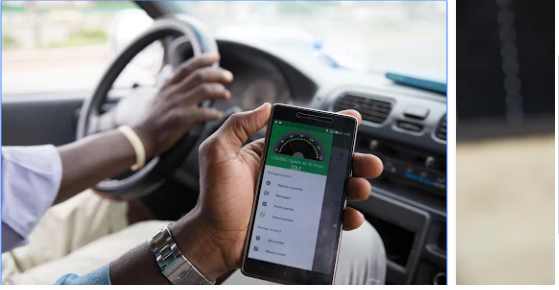
Traveler is a mobile phone app which monitors the speed, location and number of passengers on a bus, and with the help of big data and machine intelligence alerts drivers and authorities to potential dangers. The system automatically sends high speed alerts each time a given bus runs above regulatory speed limits. This helps reduce over speeding which is responsible for over 70 percent of highway accidents in Cameroon. In the unfortunate case of an accident, the app notifies emergency services and families of victims. The app also empowers people with no prior knowledge of first aid at the scene of an accident to give lifesaving assistance to victims in the absence of trained emergency personnel.

The app is free to the ordinary Cameroonian who travels every day, and it can only notify families of people who register their journeys.

Traveler is a road safety app that uses big data to track user’s journeys and contact emergency teams when an accident occurs. We also automatically notify friends and relatives of victims.

Traveler wants to be a passenger monitoring tool in their travels; allowing them to report susceptibles problems which may arise: Speeding, wrong overtaking, wrong parking, accident, …; information that will be redirected to the authorities and competent people (relatives of the victims, agencies, law enforcement, emergency medical centers, …); this with the goal of making our roads safer and healthier.

Traveler is made up of two apps that can do the same thing – one for transport companies and the other for passengers. The passenger app’s role is to permit passengers register their journeys for free so that during an emergency, friends and family are contacted automatically (for free).

Traveler also has a monitor that tracks the speed, position and performance of all buses registered in the system and automatically rates all drivers of public transport buses.

Traveler is not the only app in this space. But according to the creator, the app is unique when compared to competitors on these two specific areas.

We track interurban public transport buses and connect passengers to families, and hospitals automatically. We automatically record the location, speed, bus number and number of passengers in a bus and forward this information to road safety teams, each time a driver of a bus drives above recommended speed limits. We have made it possible to use ‘big data analytics’ to monitor the performance of drivers on the highway and give them advice concerning events susceptible to cause an accident. We literarily can predict an accident based on a driver’s speed/location coefficient (big data).

Our app provides a guide on how survivors of road accidents can take care of themselves while waiting for emergency teams. our app also provides a guide through which people with no knowledge in first aid can assist and transport victims of road accidents to nearby hospitals in the absence of emergency teams, without worsening the medical situation of the said victims. Where on earth has a phone app been developed to tackle effectively road accidents and the problems associated with them? Road accidents are the leading cause of death in the world, and a bulk (90%) of all victims (51.3 million per year) occurs in developing countries!

If you are in Cameroon, you can download the app here.