DD
MM
YYYY

PAGES

DD
MM
YYYY

spot_img

PAGES

Home Blog Page 7455

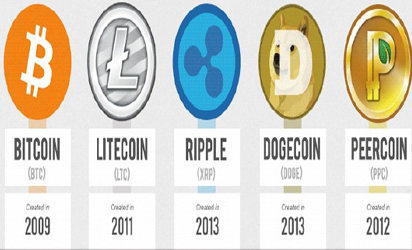
Central Bank of Nigeria bars banks from transactions on virtual currencies like Bitcoin, Ripples, Monero, Litecoin, Dogecion, Onecoin

0

The Central Bank of Nigeria, CBN has banned banks from any transactions in virtual currencies. Director, Financial Policy and Regulation department, CBN, Mr. Kelvin Amugo, who announced the ban said it was necessitated by money laundering and terrorism financing risks inherent in operations of virtual currencies

In a circular to banks and other financial institutions on virtual currency operations in Nigeria, Amogu stated:


“The emergence of Virtual Currencies (VCs) has attracted investments in payments infrastructure that provides new methods of transmitting value over the internet.

“Transactions in VCs are largely untraceable and anonymous making them susceptible to abuse by criminals, especially in money laundering and financing of terrorism.

“VCs are traded in exchange platforms that are unregulated, all over the world. Consumers may, therefore, lose their money without any legal redress in the event these exchanges collapse or close business.

“The development of VCs Payment Products and Services (VCPPS) and their interactions with other New Payment Products and Services (NPPS), give rise to the need for guidance to protect the integrity of
the Nigerian financial system. There is, therefore, the need to address the Money Laundering/Terrorism Financing risks associated with VC exchanges and any other type of institutions that act as nodes,
where convertible VC activities intersect with the regulated fiat currency financial system.

“The attention of banks and other reporting financial institutions is hereby drawn to the above risks and you are required to take the following actions pending substantive regulation or decision by the CBN.”

The Central Bank therefore advised banks to ensure that they do not use, hold, and transact in virtual currencies. The apex bank also warned the banks to ensure that existing customers that are virtual currency exchangers have effective AML/CFT controls that enable them to comply with customer identification, verification and transaction monitoring requirements.

“Where banks or other financial institutions are not satisfied with the controls put in place by the virtual currency exchangers/customers, the relationship should be discontinued immediately; and any suspicious transactions by these customers should immediately be reported to the Nigerian Financial Intelligence Unit (NFIU),” the CBN said.
?
The CBN stressed that virtual currencies such as Bitcoin, Ripples, Monero, Litecoin, Dogecion, Onecoin and similar products are not legal tenders in Nigeria, thus any bank or institution that transacts in such business does so at its own risk.


The full CBN Statement is available here – AML January 2017 Circular to FIs on Virtual Currency.

How AgroCenta is using technology to improve the lives of rural African farmers

0

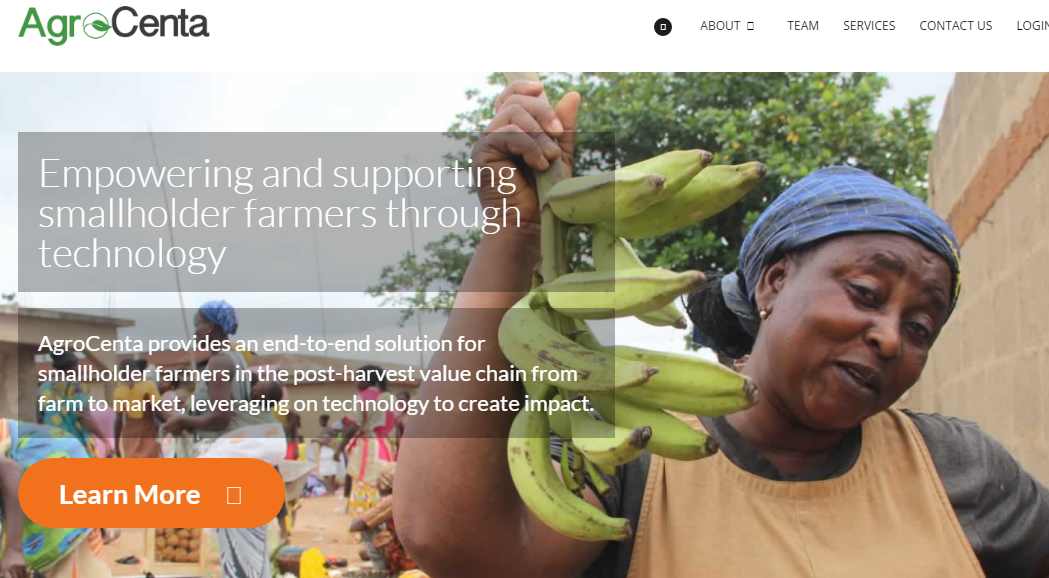
AgroCenta is an AgTech company that provides the “last mile” approach for the smallholder farmers, going a step further to help farmers sell competitively after they get market information from existing e-agriculture products on the market.

AgroCenta was founded by two ex-esoko employees, Francis Obirikorang and Michael Ocansey in 2015 to improve the agricultural value chain in Ghana. Two critical problems within the value chain, which are the lack of an access to market for smallholder farmers in the rural areas, which subjected them to activities of exploitative, buying from middlemen and the lack of a coordinated truck delivery system to cart their commodities from farms to markets to sell.

https://www.youtube.com/watch?v=Mc8l3Z2YBx0

The idea is to solve these age-old problems by introducing an online sales platform that connected smallholder farmers directly to an online market, which has wider geographic size, to sell their commodities. The end result? Exploitative buying was reduced to the barest minimum since farmers were in control of selling their commodities at prices that were favorable to them.

Once a farmer gets offers from interested buyers, the problem of logistics and transportation were sorted using AgroCenta’s TrucKR solution that allowed the smallholder farmer in any remote village in Ghana access trucks at the click of a button. You can call it the Uber for trucks for local farers. AgroCenta is changing the very lives of smallholder farmers by using technology to solve problems they encounter in agriculture.

AgroCenta’s core services are

  1. AgroTrade : Which is a sales platform that connects smallholder farmer directly to a larger market to trade fairly. AgroTrade matches smallholder farmers in rural areas to small, medium and large buyers in the urban areas.
  2. TrucKR : TruckR is the on-demand trucks and logistics aspect of AgroCenta where farmers can book for truck delivery services to cart their commodities from farms to markets just at a click of a button
  3. AgroInfo : Real time weather, market prices and extension advisory services are delivered via SMS and voice solutions to smallholder farmers using mobile technologies
  4. AgroPay : AgroPay is the financial inclusion platform for smallholder farmers where farmers in rural areas, without bank accounts, receive payments for goods and services via mobile money technologies.

AgroCenta’s success factor stems from the elimination of the exploitative buying approach from the post harvest value chain, and putting the smallholder farmer at a pivotal position where they are able to sell their commodities to interested buyers fairly, generate enough income and become financially independent.

AgroCenta is not alone in this space as the field of AgTech has seen many competitors.

AgroCenta’s main competitors are Esoko, FarmerLine and Farm Radio. These 3 competitors are “information-based” only, delivering market prices, weather information and extension advisory services via SMS to farmers. AgroCenta offers more by actually facilitating the movement of produce with their trucks.

How three geeks are fixing scholarship problems in Nigeria via ScholarX

0

Education all over the world has become increasingly expensive. Three guys are trying to fix that problem for Nigerian students.

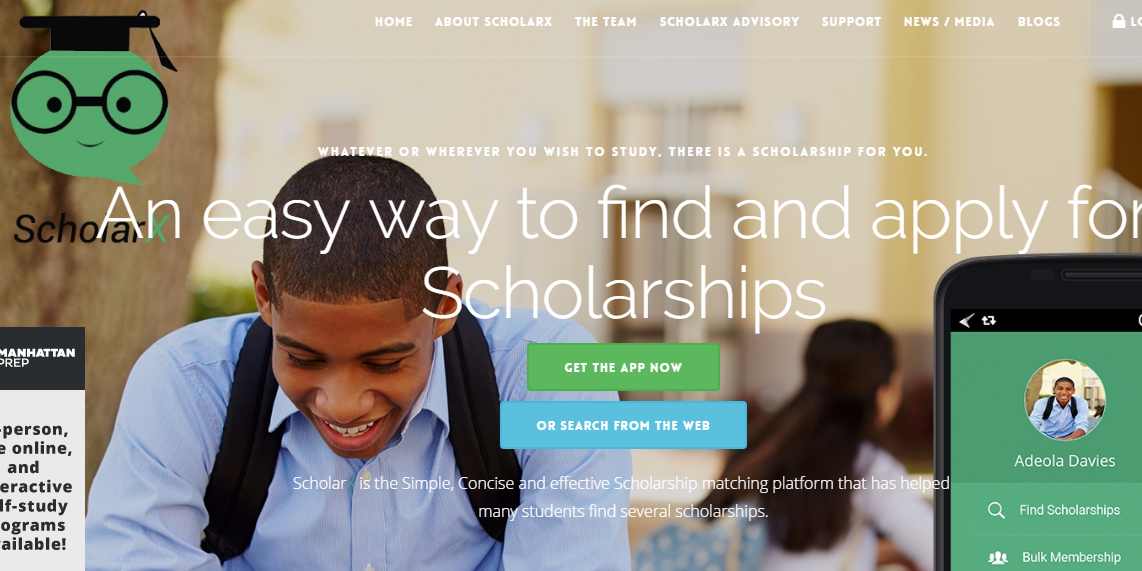
ScholarX is an app designed to help Nigerian students both home and abroad access available scholarships to mitigate the high cost of university education.

Once the students download the app from either Play Store or Apple App Store, and then install putting some pertinent information in the setup process, the list of available scholarships will show up. They have designed the app to make it possible that the list is correlated with the qualification of the students.

From there, the students can then apply. This is a dynamic process that saves the students efforts and time by helping to filter the list based on their qualifications.

ScholarX was founded by Abayomi Johnson, Maxwell Ogunfuyi and Bola Lawal.

According to the trio, the initial idea came from Maxwell, who realized how hard it was for him to access available opportunities in Nigeria and he sought to compile local based scholarships, with an intent to eventually convert into a mobile application.

The partners got together and after some brainstorming and analysis, decided to move forward with creating a platform that curates local and foreign scholarships and Nigeria.

They plan to go Africa-wide but at the moment, they offer only Nigeria-based local scholarships in the platform. The foreign scholarships cover U.S, Canada, UK and other leading nations.

The app is available here.

eTrash2Cash shares the vision of WeCyclers to empower Kano residents with Waste2Wealth

0

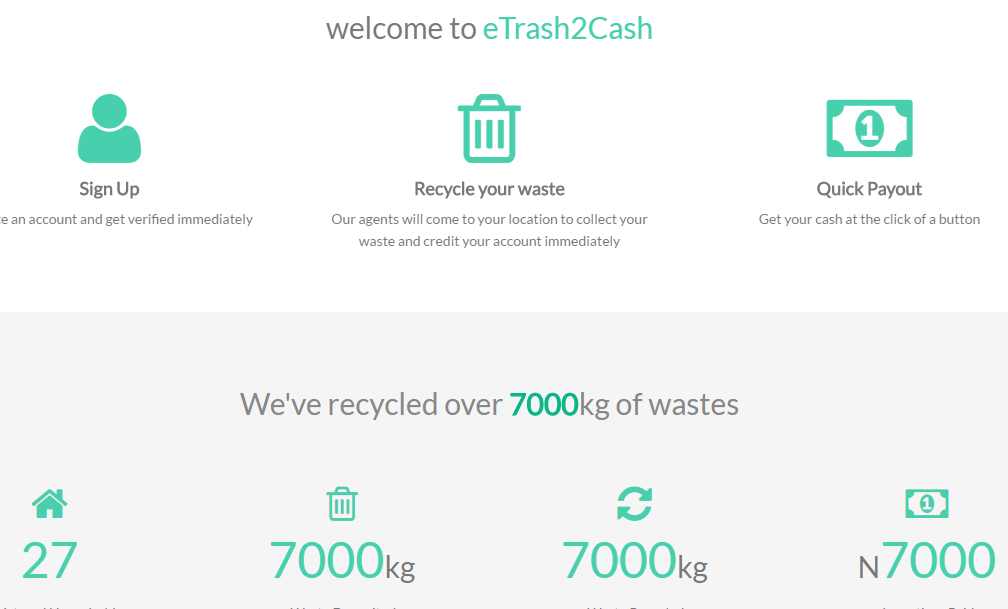
eTrash2Cash is an e-Waste Management service platform. It manages online the collection of all kinds of wastes from low-income households in Kano, Nigeria and awards them incentives. The startup  processes these wastes and makes reusable materials from them, like tissue papers from paper wastes and lumbers from plastic wastes.

eTrash2Cash is a mobile waste management company, it is the first and premier technology-based waste management company in northern Nigeria, providing strong and innovative waste collection and recycling scheme, leveraging on ICT to provide strong environmental, economic and social positive impacts. It registers and collects all varieties of wastes (paper, plastic, glass, electronics, metals, food) from 10,000 low and middle-income earning households and commercial hubs in Kano City online using web technology and gives them incentives, in form of cash rewards through mobile money (eMoney) in exchange for their wastes, depending on its quality and quantity.

eTrash2Cash sells these reusable materials to earn income.

It was founded by Salisu, Kaltumi and Chiroma in Jigawa State during their national youth service programs. But the business was moved to  Nigeria’s second largest city, Kano, to exchange households wastes for cash.

Since WeCyclers pioneered this business in Lagos, many players have mushroomed across Nigeria and Africa. Besides eTrash2Cash, there is Recycle Points (Lagos) and Chanja Datti (Abuja) besides EcoPost (Kenya) and others across African major cities.


A Note on Viral Marketing – Part I: What is it?

0

Recently, I have had to immerse myself into studying about viral marketing in order to understand some challenges faced by startups I am studying or assisting as part of my responsibilities at work. This series of posts on Viral Marketing is my attempt to document some of what I have learned.1

The term “Viral Marketing” was popularized by some combination of Tim Draper, Steve Jurvetson and Jeffrey Rayport. Jeffrey Rayport used the term “v-marketing” in an article in Fast Company in December 1996/January 1997.2 Tim Draper and Steve Jurvetson of DFJ claim to have used the term “viral marketing” in their 1997 newsletter to investors in which they discussed DFJ’s investment in Netscape. Steve Jurvetson published a blog post discussing the term in May 2000.3

Viral marketing is a collection of marketing, advertising, and sales techniques designed to exploit the power of dense social networks in order to increase product or brand awareness, increase user adoption, and drive revenue growth. This practice is not new, evidence exists to suggest that it has been in use at least since the 1800s.4

According to Steve Jurvetson viral marketing is:

  • Network-enhanced word of mouth,
  • Usage affiliated marketing – friends marketing to one another.

As a result of their belief in the power of viral marketing DFJ invested in several startups that used viral marketing techniques in order to grow; Hotmail, NetZero, Skype, eVite, SeeUthere, Keen/Inforocket, Homestead, Mimeo, and NetMind/Palm are startups he mentions in his blog post.

According to Jeffrey Rayport viral marketing is most successful when it:

  • Is stealthy in the way it approaches potential targets,
  • Offers something free but valuable upfront,
  • Exploits the natural behavior of members of its target communities,
  • Does not look like a virus – avoids eliciting initial negative reactions from its targets,
  • Exploits nodes with many weak ties in social networks rather than nodes with few strong ties,
  • Reaches the tipping point – the point at which future growth mimics the behavior of an epidemic.

So, for a startup short on time, cash, people and resources, how does one go about developing a product with viral characteristics? What makes products go viral? What mechanics enhance social transmission?

Recent research5 suggests that digital content goes viral for a simple reason, when people care they share. More specifically, digital content that evokes positive emotions like amusement, awe, or excitement, is shared more than digital content that evokes negative emotions like anger, anxiety, frustration, or sadness. Social transmission and diffusion is governed by individual-level psychological and macro-level sociological factors. What does this mean? I am unlikely to share news about a digital product6 that makes me happy, but that I feel is irrelevant to my community of friends.7 People share in order to entertain their friends, but entertaining content that is surprising and interesting is more viral than content that is merely entertaining. People share in order to inform and educate others, but content that is also practical and positive is more viral than similar content that is merely informative.  The authors make some suggestions for people developing products that might benefit from viral growth:

  • Viral marketing campaigns designed to spread adoption of a digital product should evoke high-arousal emotions – content or relaxed consumers will share less than amused consumers. The controversies that surrounded Facemash helped to propel Facebook’s adoption.8

After creating the website, Zuckerberg forwarded the link to a few friends for advice. But the link was sent out on several campus group list-serves, and traffic skyrocketed. In the course of one day, the number of visitors quadrupled – by 10 p.m., the site had been visited by 450 people, who voted at least 22,000 times. 

– Extract from 2003 Harvard Crimson article about Facemash and Mark Zukerberg.

  • Viral marketing campaigns should focus less on targeting “influentials” and more on crafting content and creating features that will cause contagious social transmission.

Why do consumers talk about some products more than others, and what drives those conversations immediately and over time? Jonah Berger and Eric M. Schwartz have studied that question.9 Their research suggests that:

  • Digital products that have higher public visibility with consumers, or that send consumers more frequent cues gain greater volumes of immediate, ongoing and overall word of mouth.10
  • Promotional giveaways may boost word of mouth, and it is better to giveaway the product itself, or to giveaway non-product items like t-shirts.11
  • Simply being “more interesting” is not a sufficient quality to maintain word of mouth.
  • There is a difference between the factors that lead to online word of mouth and offline word of mouth sharing.

Here are some examples of products that have benefited from the power of viral marketing.12

  • Hotmail was introduced to the public in July 1996. By the end of the month it had 20,000 users. By the fourth month it had exceeded 100,000 users. Hotmail gained its 1,000,000th user in January 1997. It crossed the 12,000,000 user mark within 18 months, after spending only $500,000 on marketing.13 Hotmail gained 30 million users in 30 months.14 How did this growth occur? Tim Draper convinced Sabeer Bhatia and Jack Smith to include “Get your free email at Hotmail.” at the end of each email message sent through Hotmail.15
  • Napster was introduced to a group of 30 people in June 1999 by Shawn Fanning and Sean Parker. Within a week Napster had 15,000 users. Within a year it had acquired 25,000,000 users. It peaked at 80,000,000 users within 2 years of its release, and then started to lose users because of all the legal trouble it had started to attract.16
  • Pinterest17 was launched to the public in March 2010 by Ben Silberman, Evan Sharp and Paul Sciarra. It had 2000 unique visitors in April 2010. By August 2010 it had 11,000 unique visitors. Pinterest’s monthly unique users grew at an average monthly rate of 54% in 2010, exceeding 80,000 in January 2011. The number of monthly unique users grew by an average monthly rate of 45% in 2011, and Pinterest crossed the 1,000,000 monthly unique users threshold in August 2011. It had 3,300,000 monthly unique visitors in November 2011. Monthly unique users grew to 27,323,489 in November 2012.18  In May 2012, Mashable reported that Pinterest was beginning to focus more on international expansion.19 Pinterest’s US only unique users had risen to 31,549,541 for January 2013, and 32,835,276 in October. Semiocast reported that Pinterest has 70,000,000 global users worldwide in July 2013.20
  • Facebook launched as theFacebook in February 2004. It had more than 650 registered users within the first week or so. Originally it was limited to students of Harvard.21 In May 2004 it expanded access to include Harvard, Columbia, Stanford and Yale. It hit the 1,000,000 user mark in December 2004. By May 2005 it had expanded to include more than 800 colleges, and in September 2005 it dropped “the” from theFacebook. Also in September 2005 it added high school networks, with addition of international schools following in October. Around that time it also launched Facebook Photos. Facebook’s user count hit 6,0000,000 in December 2005. It launched a product for mobile users in April 2006 and expanded to include work networks the following month. September 2006 was another big month for Facebook – it launched its news feed and mini-feed that month. It also expanded access so that anyone could become a registered user. Its registered users increased to 12,000,000 in December 2006. One year later it had 58,000,000 users. In March 2008 Facebook launched in German. Later that year it launched Facebook Chat, and also opened an office in Dublin. The “Like” button was introduced in February 2009. Facebook had 360,000,000 users in December 2009. A year later it had 608,000,000 users. In November 2011 Facebook had 845,000,000 users. By October 2012 Facebook had more than 1,000,000,000 registered, active users22. The most recent update available Facebook has 1,267,191,915 users.23
  • This chart shows growth in users for LINE, the Japanese chat app. LINE is a particularly interesting case study because it has developed an international strategy24that involves deliberate and targeted international launches.25

You will find more statistics at Statista

  • The next chart shows growth in users for KakaoTalk, the Korean messaging app.

You will find more statistics at Statista

  • This last chart shows the quarterly user count for Linked in from Q1 2009 to Q3 2013.

You will find more statistics at Statista

In the next post in this series I will examine a few case studies in a bit of detail to try to understand the specific techniques that have worked, and if possible to try to identify techniques that lead to failure.


  1. Any errors in appropriately quoting my sources is entirely mine. Let me know what you object to, and how I might fix the problem. The data in this post is only as reliable as the sources from which I obtained them. ?
  2. Jeffrey Rayport, The Virus of Marketing, Fast Company, Dec 96/Jan 97. Accessed at FastCompany.com on Nov 28, 2013. ?
  3. Steve Jurvetson, Recent Developments in The Evolution of Viral Marketing, May 1, 2000. Accessed at DFJ.com on Nov 28, 2013 ?
  4. See for example Infectious Texts: Modeling Text Reuse in Nineteenth-Century Newspapers. Also, Here’s How Memes Went Viral – In the 1800s. ?
  5. Berger, Jonah A. and Milkman, Katherine L., What Makes Online Content Viral? (December 25, 2009). Available at SSRN: http://ssrn.com/abstract=1528077 or http://dx.doi.org/10.2139/ssrn.1528077. Published in Journal of Marketing Research, Volume 49, Number 2, April 2012. Accessed Nov 28, 2013. ?
  6. I am mainly interested in the application of this research to digital products, so I will use “content” and “product” interchangeably. ?
  7. For example, language barriers could dissuade me from transmitting a particular product widely among my community of friends. Later we will see examples of viral marketing that involves targeting specific markets by LINE, a Japanese messaging app. ?
  8. See for example; Katherine A. Kaplan, Facemash Creator Survives Ad Board, Harvard Crimson, November 19, 2003. Accessed on Nov 28, 2013. Note that the article attracted 216 comments. Facemash was Facebook’s predecessor. ?
  9. Berger, Jonah A. and Schwartz, Eric M., What Do People Talk About? Drivers of Immediate and Ongoing Word-of-Mouth (April 25, 2011). Available at SSRN: http://ssrn.com/abstract=1822246. Published in Journal of Marketing Research, Volume 48, Number 5, October 2011. Accessed Nov 28, 2013. ?
  10. It is not an accident that you generally open the apps on your smartphone or tablet that send you periodic prompts more frequently than those that do not. ?
  11. A brand-new, unread email, chat, or status update could be considered a reward that fits in this category. ?
  12. I am gathering data in this Google Spreadsheets Document. If you have historical data you want to include in this effort please send it to me and I’ll add it to this document. ?
  13. Data from Tony Lloyd, Are You Using The Dynamic Power of Viral Marketing? Accessed on Nov. 28, 2013. ?
  14. MSN Hotmail: From Zero to 30 Million Member in 30 Months, February 8th, 1999. Accessed at Microsoft PressPass on Nov. 28, 2013.   ?
  15. I found at least one source that claims that Hotmail had 400,000,000 users by December 1997. ?
  16. Alex Laird, The Napster Revolution. Accessed on Nov. 28, 2013 ?
  17. Unless noted monthly unique users are estimates developed by Steve Cheney, How To Make Your Startup Go Viral The Pinterest Way, TechCrunch, November 26, 2011. Accessed on Nov. 28, 2013. Click on the link to the Google Spreadsheet document. ?
  18. Data for 2012 and 2013 is obtained from Compete.com’s Pinterest analytics dashboard. ?
  19. Lauren Indvik, Confirmed: Pinterest Raises $100 Million to Fund International Expansion,Mashable, May 16, 2012. Accessed on November 29, 2013. ?
  20. Semiocast press release: Pinterest, July 10th, 2013. ?
  21. Alan J. Tabak, Hundreds Register for New Facebook Website, Facemash Creator Seeks New Reputation With Latest Online Project, Harvard Crimson, February 9th, 2004. Accessed on Nov. 28th, 2013. ?
  22. Data obtained from Facebook Timeline, accessed on Nov. 30, 2013 ?
  23. Ellis Hamburger, 1.26 Billion Facebook Profiles Become A Clickable Monument To Humanity, The Verge, September 29, 2013. Accessed Nov. 29, 2013. ?
  24. Eric Pfanner, A Japanese Social App Contacts New Shores, New York Times, September 5, 2013. Accessed on Nov. 30, 2013 ?
  25. See for example; Japanese Messaging App LINE Comes To India. Launches TVCs Promoting Free Voice Chat And Stickers. and Social App Line targets UK after signing 260m users (including Sir Paul McCartney). There are other reports about LINE’s activities related to a launch in Spain.