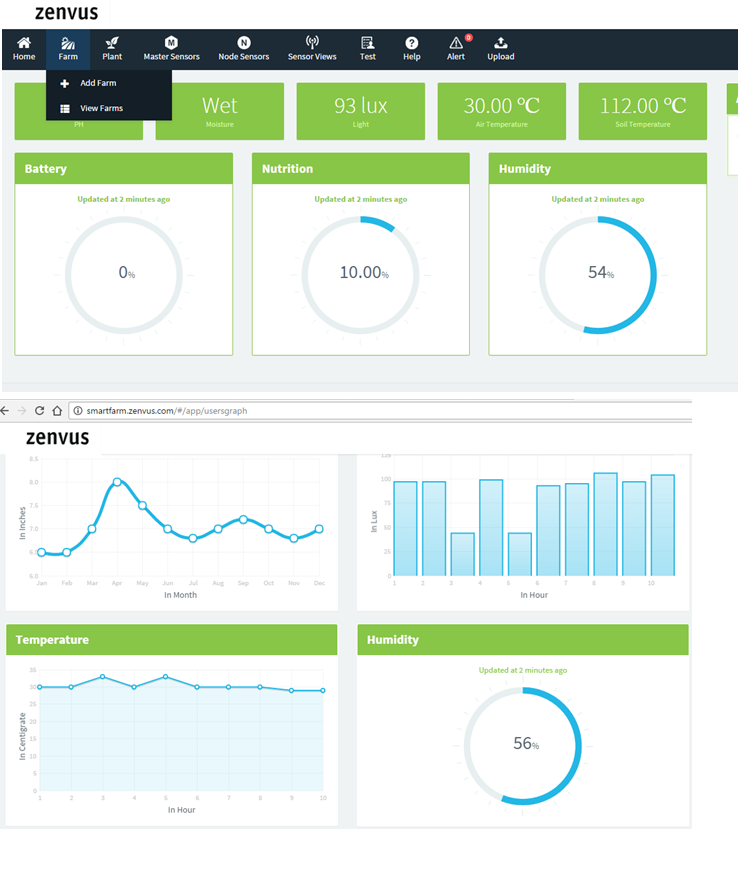
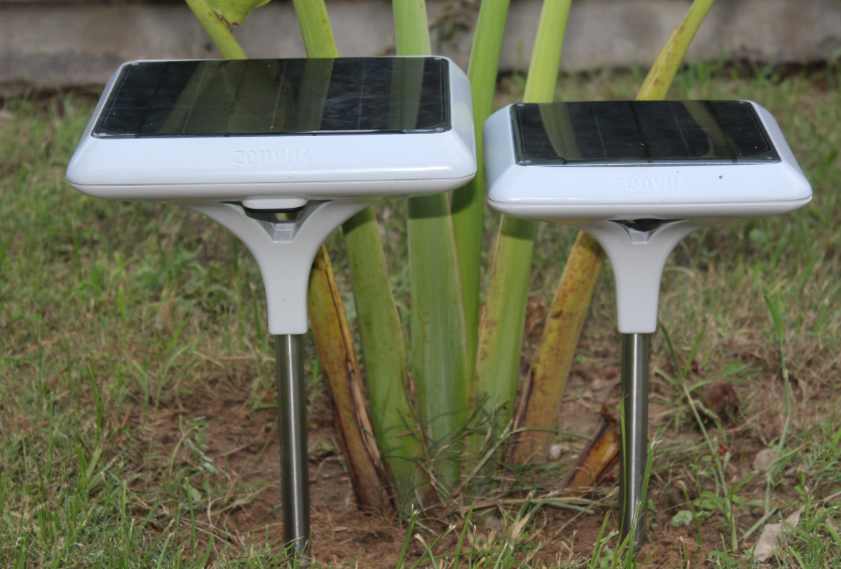
Zenvus Smartfarm is a soil fertility sensor. Zenvus Yield is a hyper-spectral camera that images farms to build Normalized Difference Vegetation Index (NDVI).
Zenvus is an intelligent solution for farms that uses proprietary electronics sensors to collect soil data like moisture, nutrients, pH etc and send them to a cloud server via GSM, satellite or Wifi. Algorithms in the server analyze the data and advice farmers on farming. As the crops grow, the system deploys special cameras to build vegetative health for drought stress, pest and diseases. Our system has the capability to tell a farm what, how, and when to farm. It has in-built GPS, compass and XL making it possible for a farmer to map the boundaries of his/her farm which could be useful during loan and insurance applications.
Data from Smartfarm and Yield which are collected from farms are sent to our servers where our computational models help make sense of them. The Web App is where the data is made actionable for farmers to access.
The Web App is a place where farmers / investors:
Register and activate their Yield and Smartfarm devices (each product comes with a unique code which makes it impossible for stolen ones to be re-used).
Login and understand what is happening in their farms.
Two Products are available:
Zenvus Insights: This helps farmers understand the soil conditions of their farmlands through sensors that deliver appropriate data to their phones or computers. With this, farmers can effectively manage fertilizer application, irrigation and in general take guesswork out of farming.
Zenvus Insights Pro: This is Zenvus Insights for investors who may want to get real-time insights on farms they have invested.
Contact your government or cooperatives and let us explore what Zenvus can do for you.
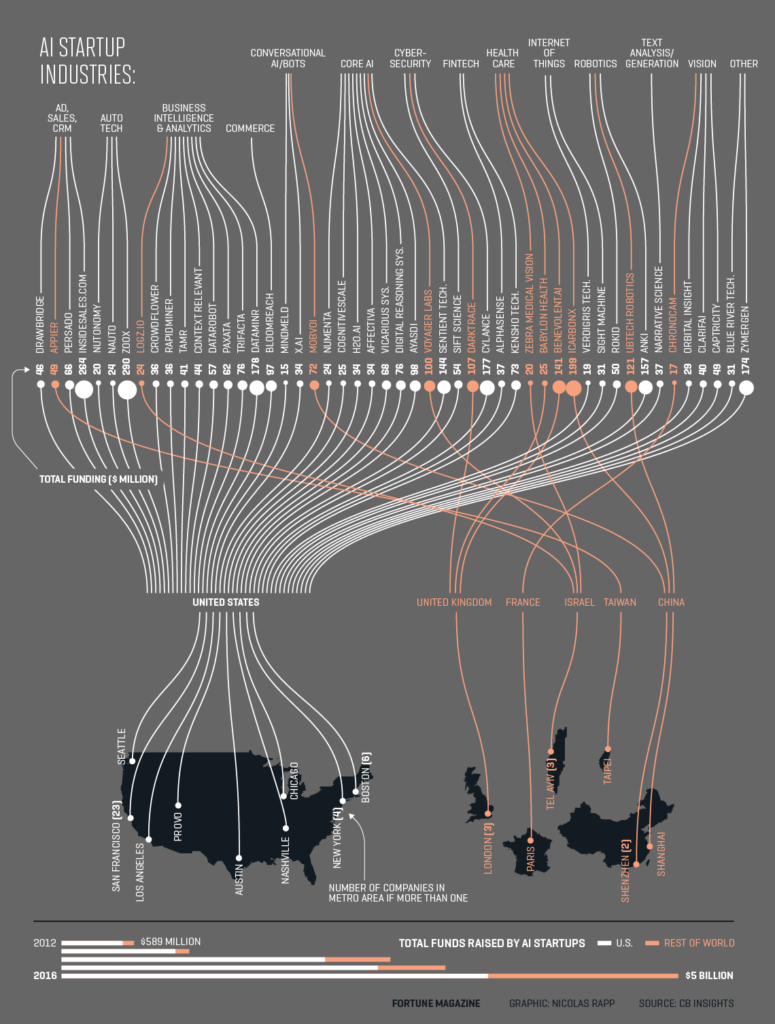
Artificial intelligence will soon reshape our world. But which companies will lead the way? To help answer that question, research firm CB Insights recently selected the “AI 100,” a list of the 100 most promising artificial intelligence startups globally. The private companies were chosen (from a pool of over 1,650 candidates) by CB Insights’ Mosaic algorithm, based on factors like financing history, investor quality, business category, and momentum.
A look at the 50 largest startups on the list, ranked by total funds raised, shows that investment in AI is surging worldwide. Here is the geography of the World Most Innovative AI Companies.
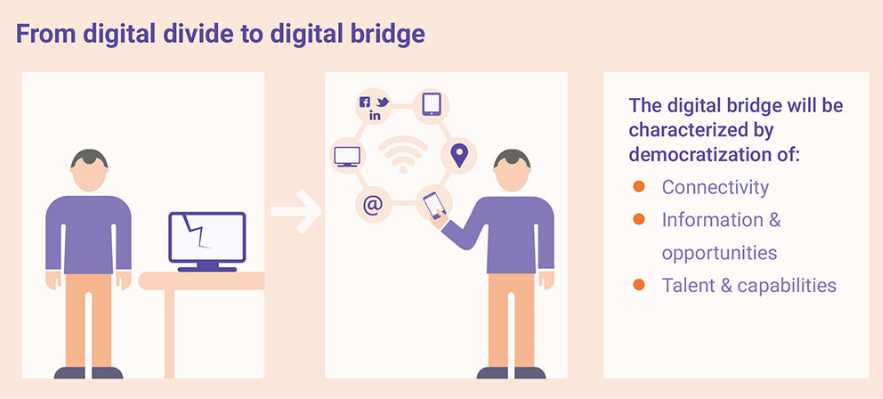
As we move towards the middle of the 21st century, emerging technologies will once and for all close the digital divide that governments, private sector, and entrepreneurs have tried to address for so long. The pace at which technology is spreading and breakthrough innovations are unfolding offers new potential for leapfrogging in Africa, overcoming barriers of making internet connectivity available across the continent without a differentiation between urban and rural areas or socio-economic and demographic groups. In the next years, technologies will allow us to democratize connectivity, access to technology, and capabilities.
The number of unique mobile subscribers is forecast to reach 725 million by 2020, translating to 54% of the expected population in that year (Source: GSMA)
Africa’s e-learning market has doubled from 2011 to 2016, reaching USD 513 million, according to a report by market researchers Ambient Insights. South Africa is Africa’s largest e-learning market, along with Angola, Nigeria, and Tunisia. Meanwhile, Senegal, Kenya, Zambia, and Zimbabwe are posting and annual e-learning market growth rate of 25% (Source Ambient Insights)
The global Artificial Intelligence market was valued at USD 126.24 Billion in 2015 and is forecast to grow at a CAGR of 36.1% from 2016 to 2024 to reach a value of USD 3,061.35 billion.
Closing the infrastructure divide: Democratizing connectivity: 75% of Africans lack access to affordable internet today, but rapid change is underway, just like the mobile revolution triggered mobile phone penetration to jump from 1% in 2000 in Africa to 73% in 2016. Today, this figure is over 100% in countries such as Tunisia, Morocco and Ghana. By 2020, Africa will have over 700 million smartphone connections. New entrants into the connectivity game are changing the competitive landscape, working towards making connectivity available to the unconnected masses.
In the short run, small scale, off-grid solar power systems such as the one developed by BuffaloGrid, have great potential to leapfrog the need for grid expansion by providing off-grid internet access, using solar power. Kenya-based BRCK provides a hardware solution that facilitates connectivity in remote settings. Across the globe, startups are beginning to create decentralized solutions that can cut out middlemen and allow peer-to-peer connectivity, matchmaking between end-users and connectivity providers and selling of access internet capacity.
In the medium to long term, aerial infrastructure innovations and drone-based internet such as Google’s Project Loon, and Facebook’s Internet.org and SpaceX are solutions in process to bridge the connectivity gap. Expected to be commercialized in 2017, Project Loon provides internet through a network of high altitude balloons. Each balloon provides internet coverage to an area of 80km in diameter. Mesh networks have the potential to offer a more secure and stable network connection and innovators like goTenna Mesh, Tuse and Village Telco have started to provide connectivity using mesh networks.
Such technology innovations paired with government action will boost connectivity at affordable prices. Countries like Rwanda are leading the way, ranking as highest Low Development Country in this year’s Affordability Drivers Index. Its success is partly due to enabling policies such as the SMART Rwanda Master Plan 2015-2020, putting information and communication technology – especially broadband – at the heart of the national development agenda.
Closing the user divide: Democratizing information and opportunities: Making use of digital technology is no longer a privilege of the “top of the pyramid” but increasingly has a value proposition for Africa’s “Base of the Pyramid”. Encouraged by the success of M-PESA, innovators are figuring out how to deliver real value to low income consumers, embedding digital technologies into devices that BoP-consumers use in their daily lives and making technology as a “means to an end” rather than an end in itself. Businesses have in the past years succeeded in creating consumer touch points using the mobile phone, disrupting distance, speed, and cost of delivering products and services. Today, the usage of mobile phones to access information and basic services is higher in low income segments than in top tier segments of society—and this success story can be repeated.
In the short term, bots replace the need for an abstract user interface and provide a natural means of communication. Chat bots are enabling communication with technology and reducing the barrier to usage, especially when it comes to providing support in the native language. SMS-based bots such as Agri8 in Kenya, use machine learning principles to make it easier for farmers to access and navigate agricultural information platforms. Emerging technologies such as AI will act as enablers in the back-end, providing the information, opportunities or services that people need: financial products, water, energy, education, healthcare services or information for example in areas such as agriculture or climate.
In the medium to long term, emerging technologies and smarter devices allow us to make high tech truly inclusive for base of the pyramid consumers: Conversational applications enabled through AI will enable consumers to do basically anything with the help of tech – not relying on high tech skills or literacy. Technology will enable users to communicate directly with computers without the need for a screen. Multimodal communication leveraging eye-tracking, gestures or voice technology will help overcome the literacy challenge.
Closing the skill divide: Democratizing capabilities: Given the speed at which technology develops, adaptability and skill development matter in order to prevent the development of a two tiered society of tech savvy users and excluded non-users. To prepare for the change, Africans can take advantage of new forms of learning and skill building. In the medium to long-term an increasing number of products and services will be digitized, demonetized, and democratized – increasingly removing the intermediary and shifting responsibility to the individual. With this newly won empowerment, there is a need to prepare the individual: Learnability, problem solving and ability to interpret information are key in the new age, where data and knowledge is easily accessible.
Just as emerging technologies enable access, they enable skilling and provision of need-based, customized, and contextual training delivered through videos, text, games and other mediums, independent of centralized educational institutions. While MOOC-enabled distance education has been around for some time, the near-term future lies in a combination of ‘education on your fingertips’ through formats such as nanodegrees and other ‘just in time interventions’. In the medium to long-term more engaging virtual reality-enabled class room education will prepare Africans to solve local problems independent of their location. The locational barrier is already being overcome by companies like Unimersiv, zSpace and nearpod. In the long-run emerging technologies will help create a future-ready generation that bridges the digital divide through skills acquired remotely.
A group of maize farmers stands huddled around an agronomist and his computer on the side of an irrigation pivot in central South Africa. The agronomist has just flown over the pivot with a hybrid UAV that takes off and lands using propellers yet maintains distance and speed for scanning vast hectares of land through the use of its fixed wings.
The UAV is fitted with a four spectral band precision sensor that conducts onboard processing immediately after the flight, allowing farmers and field staff to address, almost immediately, any crop anomalies that the sensor may have recorded, making the data collection truly real-time.
In this instance, the farmers and agronomist are looking to specialized software to give them an accurate plant population count. It’s been 10 days since the maize emerged and the farmer wants to determine if there are any parts of the field that require replanting due to a lack of emergence or wind damage, which can be severe in the early stages of the summer rainy season.
At this growth stage of the plant’s development, the farmer has another 10 days to conduct any replanting before the majority of his fertilizer and chemical applications need to occur. Once these have been applied, it becomes economically unviable to take corrective action, making any further collected data historical and useful only to inform future practices for the season to come.
The software completes its processing in under 15 minutes producing a plant population count map. It’s difficult to grasp just how impressive this is, without understanding that just over a year ago it would have taken three to five days to process the exact same data set, illustrating the advancements that have been achieved in precision agriculture and remote sensing in recent years. With the software having been developed in the United States on the same variety of crops in seemingly similar conditions, the agronomist feels confident that the software will produce a near accurate result.
As the map appears on the screen, the agronomist’s face begins to drop. Having walked through the planted rows before the flight to gain a physical understanding of the situation on the ground, he knows the instant he sees the data on his screen that the plant count is not correct, and so do the farmers, even with their limited understanding of how to read remote sensing maps.
The Potential for Artificial Intelligence in Agriculture
Hypothetically, it is possible for machines to learn to solve any problem on earth relating to the physical interaction of all things within a defined or contained environment…by using artificial intelligence and machine learning.
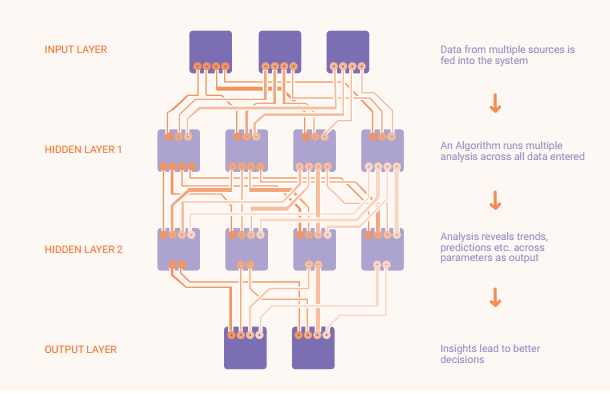
The principle of artificial intelligence is one where a machine can perceive its environment, and through a certain capacity of flexible rationality, take action to address a specified goal related to that environment. Machine learning is when this same machine, according to a specified set of protocols, improves in its ability to address problems and goals related to the environment as the statistical nature of the data it receives increases. Put more plainly, as the system receives an increasing amount of similar sets of data that can be categorized into specified protocols, its ability to rationalize increases, allowing it to better “predict” on a range of outcomes.
The rise of digital agriculture and its related technologies has opened a wealth of new data opportunities. Remote sensors, satellites, and UAVs can gather information 24 hours per day over an entire field. These can monitor plant health, soil condition, temperature, humidity, etc. The amount of data these sensors can generate is overwhelming, and the significance of the numbers is hidden in the avalanche of that data.
The idea is to allow farmers to gain a better understanding of the situation on the ground through advanced technology (such as remote sensing) that can tellthem more about their situation than they can see with the naked eye. And not just more accurately but also more quickly than seeing itwalking or driving through the fields.
Remote sensors enable algorithms to interpret a field’s environment as statistical datathat can be understood and useful to farmers for decision-making. Algorithms process the data, adapting and learning based on the data received. The more inputs and statistical information collected, the better the algorithm will be at predicting a range of outcomes. And the aim is that farmers can use this artificial intelligence to achieve their goal of a better harvest through making better decisions in the field.
In 2011, IBM, through its R&D Headquarters in Haifa, Israel, launched an agricultural cloud-computing project. The project, in collaboration with a number of specialized IT and agricultural partners, had one goal in mind – to take a variety of academic and physical data sources from an agricultural environment and turn these into automatic predictive solutions for farmers that would assist them in making real-time decisions in the field.
Interviews with some of the IBM project team members at the time revealed that the team believed it was entirely possible to “algorithm” agriculture, meaning that algorithms could solve any problem in the world. Earlier that year, IBM’s cognitive learning system, Watson, competed in Jeopardy against former winners Brad Rutter and Ken Jennings with astonishing results. Several years later, Watson went on to produce ground-breaking achievements in the field of medicine, leading to IBM’s agricultural projects being closed down or scaled down. Ultimately, IBM realized the task of producing cognitive machine learning solutions for agriculture was much more difficult than even they could have thought.
So why did the project have such success in medicine but not agriculture?
What Makes Agriculture Different?
Agriculture is one of the most difficult fields to contain for the purpose of statistical quantification.
Even within a single field, conditions are always changing from one section to the next. There’s unpredictable weather, changes in soil quality, and the ever-present possibility that pests and disease may pay a visit. Growers may feel their prospects are good for an upcoming harvest, but until that day arrives, the outcome will always be uncertain.
By comparison, our bodies are a contained environment. Agriculture takes place in nature, among ecosystems of interacting organisms and activity, and crop production takes place within that ecosystem environment. But these ecosystems are not contained. They are subject to climatic occurrences such as weather systems, which impact upon hemispheres as a whole, and from continent to continent. Therefore, understanding how to manage an agricultural environment means taking literally many hundreds if not thousands of factors into account.
What may occur with the same seed and fertilizer program in the United States’ Midwest region is almost certainly unrelated to what may occur with the same seed and fertilizer program in Australia or South Africa. A few factors that could impact on variance would typically include the measurement of rain per unit of a crop planted, soil type, patterns of soil degradation, daylight hours, temperature and so forth.
So the problem with deploying machine learning and artificial intelligence in agriculture is not that scientists lack the capacity to develop programs and protocols to begin to address the biggest of growers’ concerns; the problem is that in most cases, no two environments will be exactly alike, which makes the testing, validation and successful rollout of such technologies much more laborious than in most other industries.
Practically, to say that AI and Machine Learning can be developed to solve all problems related to our physical environment is to basically say that we have a complete understanding of all aspects of the interaction of physical or material activity on the planet. After all, it is only through our understanding of ‘the nature of things’ that protocols and processes are designed for the rational capabilities of cognitive systems to take place. And, although AI and Machine Learning are teaching us many things about how to understand our environment, we are still far from being able to predict critical outcomes in fields like agriculture purely through the cognitive ability of machines.
Conclusion
Backed by the venture capital community, which is now funneling billions of dollars into the sector, most agricultural technology startups today are pushed to complete development as quickly as possible and then encouraged to flood the market as quickly as possible with their products.
This usually results in a failure of a product, which leads to skepticism from the market and delivers a blow to the integrity of Machine Learning technology. In most cases, the problem is not that the technology does not work, the problem is that industry has not taken the time to respect that agriculture is one of the most uncontained environments to manage. For technology to truly make an impact in the field, more effort, skills, and funding is neededto test these technologies in farmers’ fields.
There is huge potential for artificial intelligence and machine learning to revolutionize agriculture byintegrating these technologies into critical markets on a global scale. Only then can it make a difference to the grower, where it really counts.
by Joseph Byrum – a senior R&D and strategic marketing executive in Life Sciences – Global Product Development, Innovation, and Delivery at Syngenta..
Through a strategic partnership with Cameroon-based K10 CASA Consulting, First Atlantic Cybersecurity Institute (Facyber) is now serving Francophone Africa. This partnership will help Facyber expand its cybersecurity learning solutions to new markets in Africa.
For us, this is a critical relationship as K10 CASA Consulting is local with deep presence in the Francophone Africa markets. K10 CASA will coordinate the enrollment of Learners in the local markets. And when necessary, it will help coordinate cybersecurity and digital forensics seminars/workshops in the markets.
First Atlantic Cybersecurity Institute (Facyber) is a cybersecurity training, consulting and research company specializing in all areas of cybersecurity including Cybersecurity Policy, Management, Technology, Intelligence and Digital Forensics.
The clientele base covers universities, polytechnics, colleges of education, governments, government labs and agencies, businesses, civil organizations, and individuals. Specifically, the online courses are designed for the needs of learners of any discipline or field (CS, Engineering, Law, Policy, Business, etc) with the components covering policy, management, and technology. Please see complete Facyber curricula here.