DD
MM
YYYY

PAGES

DD
MM
YYYY

spot_img

PAGES

Home Blog Page 746

Top 4 High ROI Crypto Presales Now: Cold Wallet (37x), DexBoss, AurealOne, Lightchain AI Battle for ROI Crown

0

Everyone’s looking for that one presale that turns a few hundred bucks into life-changing returns. While the majority of tokens peak at hype and fizzle on launch, a few show signs of staying power: real utility, traction, and token economics that reward users instead of draining them. If you’re hunting for a high ROI crypto presale, now’s the time to pay attention.

These four presales aren’t just riding hype. They’re built for momentum: and the earlier you enter, the greater the upside. At the top of the list sits Cold Wallet, a presale already showing why real product + real users = real returns.

Cold Wallet: Cashback That Pays Back

Cold Wallet isn’t just a wallet: it’s a self-custody tool that flips the entire user model. Instead of charging users to interact with the blockchain, it rewards them. Every gas fee, swap, or on/off-ramp action earns you cashback in CWT, its native token. That alone makes it one of the most attractive high ROI crypto presale picks right now.

Currently in stage 16 with $5.7 million raised and priced at $0.00942 per CWT, Cold Wallet is gearing up for a public launch where the token is expected to list at $0.3517. That’s a potential 37x gain baked into the price: before any post-launch upside from demand or exchange momentum.

What sets it apart is the strong product foundation. The wallet is already live, and Cold Wallet token just completed a $270 million acquisition of Plus Wallet, adding 2 million users to its ecosystem overnight. The cashback structure and referral bonuses drive real usage, meaning more transactions, more token burn, and more long-term holders.

This isn’t just another speculative flyer. It’s a presale that rewards conviction: and punishes hesitation. For anyone looking for a high ROI crypto presale with real upside, Cold Wallet deserves top priority.

DexBoss: Trading Engine With a Kickback

DexBoss is pushing to be the go-to decentralized trading hub for active DeFi users: but with a twist. Instead of standard trading fees, DexBoss redistributes a portion of those fees to its community via a trader-rewards system.

Its token, DBX, is still in early presale stages and aims to go live alongside its proprietary routing engine. What makes DexBoss stand out is its on-chain analytics layer that feeds traders real-time insights and pairs them with kickbacks based on trading volume.

While the platform is still in development, the roadmap includes automated liquidity incentives and tiered fee rebates, creating a user-focused cycle of retention and utility. The early presale price leaves room for a strong initial run once features roll out: giving it solid high ROI crypto presale potential for those who enter before the first exchange listings.

AurealOne: Web3 Audio Meets DeFi

AurealOne is attempting to blend music streaming with token economics: a Spotify-meets-Staking hybrid where artists and listeners both benefit. The platform allows users to earn AUR tokens by streaming, curating playlists, or participating in community ratings.

Currently in best crypto presale, AUR tokens are being distributed at a steep discount before the full audio ecosystem launches later this year. While the model is experimental, early traction from independent artists and Web3-native creators is fueling interest.

AurealOne’s appeal lies in its model: turn passive listening into active earning. If adoption catches on, early buyers of AUR could be holding a token that sits at the intersection of DeFi and creator economies. For those scouting high ROI crypto presales tied to real-world entertainment use cases, AurealOne stands out as a unique play.

Lightchain AI: Trading Signals Meet Smart Contracts

AI-backed crypto tools are everywhere right now, but Lightchain AI is packaging it differently. This project isn’t trying to be another ChatGPT-in-a-wallet clone. Instead, it uses AI to generate smart contract-ready strategies that can be deployed with a click: from automated yield farming to risk-managed DEX trading.

The presale token, LCAI, will act as the utility key to access custom models, deploy bots, and unlock priority features. The Lightchain team claims that AI-generated strategies will improve over time via a feedback engine tied to on-chain results: a bold claim, but one that could stick if early models outperform.

Right now, early buyers are picking up tokens before the full app suite is released. While still speculative, the combo of AI hype, DeFi utility, and modular smart contracts gives LCAI potential appeal: especially if real-world gains from the AI models start surfacing. It’s a calculated risk, but one with serious high ROI crypto presale potential if they hit their development milestones.

Final Thoughts

Most crypto presales make noise, then disappear. But a few: the ones with products, traction, and smart token mechanics: are built to compound. Cold Wallet leads the charge in this current cycle. With a live product, aggressive cashback model, and a presale floor price that already points toward a 37x upside, it’s not a question of if: but how much more early buyers can gain.

The clock’s ticking. High ROI presales don’t stay underpriced forever.

Best Crypto Coins for 2025: BlockDAG, Chainlink, Stellar & Cardano in the Spotlight

0

This year has already shaken up the crypto world, and the momentum is far from over. While Bitcoin and Ethereum dominate the buzz, the best crypto coins for 2025 might be the ones rising quietly, gaining traction fast. These aren’t just following trends. They’re building fresh tools, expanding ecosystems, and rolling out updates that could flip the script.

We’re looking at four names that are heating up right now: BlockDAG, Chainlink, Stellar, and Cardano. Each one brings something powerful to the table. Whether it’s tech utility, massive ROI potential, or ecosystem growth, these projects are making noise. If you want a serious edge in 2025, this is where to start.

1. BlockDAG: Live Trading and Massive 10 BTC Prize Pool

BlockDAG is making serious waves, and not just for the numbers. With more than $364 million raised and 24.8 billion BDAG coins already sold, this presale has gone beyond typical launches. Right now, the price is set at $0.0016, but that ends on August 11. After that, it jumps to $0.0276, with a final target price of $0.05. That’s a potential 3,025% return if it reaches that goal.

But it’s not only about price. The tech behind it is turning heads. The new Dashboard V4 simulates real-time trading. It has BDAG/USD charts, active order books, and wallet features. Users can place buy and sell orders, just like on an actual exchange. It’s not just watching numbers on a screen. It’s real engagement before launch.

There’s also a 10 BTC Auction going on. Anyone who buys BDAG before August 11 is entered. Rewards come from a ~$1.1 million Bitcoin pool, based on how much you buy. No chance, no picks, just direct rewards based on activity. Add to that over 2 million users already mining with the X1 app, and you’ve got a growing network around it.

If you’re trying to find the best crypto coin for 2025, BlockDAG (BDAG) stands out. It mixes hands-on tools, a strong user base, and pricing that’s still at entry-level. But the window is closing. After August 11, the price increases by 17x. Blink, and you might miss your shot.

2. Chainlink: Big Moves with Real-World Data

Chainlink is making quiet waves with something real: working tools already used across the crypto space. Trading at about $16.39, LINK is holding strong after a 4% dip. But price aside, what’s happening under the hood is major. In August 2025, Chainlink launched Data Streams for U.S. equities and ETFs, including names like NVDA, SPY, AAPL, and MSFT. These are now running live across 37 blockchains, and platforms like GMX and Kamino are using them right now.

This isn’t just theory. It’s live adoption. Whale wallets are growing, exchange supply is shrinking, and price models are setting targets anywhere from $20 to $40, depending on market breaks. One bold forecast even eyes $51 long-term. The 200-day EMA is key here. If LINK can stay above it, the breakout might come sooner than expected.

If you’re on the hunt for the best crypto coin for 2025, Chainlink demands attention. The tech is no longer in beta. It’s out there and working. The question now is whether you’re too early or already late.

3. Stellar: Real Action, Real Results

Stellar (XLM) is finally having its moment. As of August 6, it’s trading at $0.3925, coming off a massive one-day 403% surge. Why the spike? The chain has been firing on all cylinders: network upgrades, a new grant program, and a confirmed deal with Visa to handle stablecoin settlements using Stellar’s rails.

That’s not all. On-chain addresses are up by 81%, and daily transaction volume has jumped 14%. Dev activity is strong. From a chart view, XLM broke out of a falling wedge and is now aiming between $0.45 and $0.52. The big move might come after Protocol 23’s mainnet vote on September 3. If that passes, the rally could gain steam.

Analyst models are floating targets up to $0.60 and beyond. Stellar has gone from a maybe to a must-watch. When you’re stacking real use and ecosystem traction, it becomes hard to ignore for the best crypto coins for 2025 shortlists.

4. Cardano: Community Just Unlocked $71M

Cardano (ADA) kicked off August 2025 with a clear signal: the community is moving forward. A $71 million development fund got 74% approval, unlocking 96 million ADA to support Hydra (its scaling layer) and Acropolis (a major network redesign). ADA now trades around $0.7264, bouncing back from recent lows.

And it’s not just funding. Big things are on the horizon. Grayscale’s ADA spot ETF is currently under review by the SEC. A decision is expected by October 2025. If it’s approved, ADA could ride the same ETF boost that pushed Bitcoin higher. Right now, resistance sits at $0.81. A clean break there could lead to short-term jumps to $0.90 or even $1.05.

With community funding, tech upgrades, and an ETF decision in the pipeline, Cardano is making moves. That’s why it earns its place when picking the best crypto coins for 2025.

Final Word: Big Upside If You Move Fast

Not every project delivers in real time, but these four are doing just that. BlockDAG stands out with real-time trading tools and a 10 BTC Auction that ends on August 11. Chainlink is live with equity data across 37 blockchains. Stellar is locking in deals and hitting major chart targets. And Cardano just got millions in community funding to fast-track major upgrades.

If you’re focused on finding the best crypto coin for 2025, this list isn’t just speculation. These are projects already in motion. With some already approaching key dates and price shifts, the window for smart entry won’t stay open forever.

Amazon’s Zoox Secures Permit to Operate Robotaxis in California, Tesla Trains New AI-Powered FSD

0

Amazon-owned Zoox has received the go-ahead from California regulators to begin ferrying passengers in its autonomous vehicles, a decision that further intensifies the race in the self-driving space.

The approval allows Zoox to operate robotaxis on California’s public roads, marking a major step in the company’s long-standing ambition to commercialize its futuristic vehicles, which notably lack a steering wheel or pedals.

The milestone comes as competition in the robotaxi market heats up, with legacy carmakers, Big Tech, and EV pioneers all vying for a dominant position. The California Public Utilities Commission (CPUC) granted Zoox the driverless deployment permit this week, officially authorizing the company to offer commercial robotaxi rides to the public.

Zoox, which Amazon acquired in 2020 for over $1 billion, had already begun testing its uniquely designed, bidirectional vehicles without safety drivers on limited routes between its headquarters and a nearby employee parking lot in Foster City. But the new CPUC license takes the program out of the pilot phase and into a commercial rollout, albeit still limited to certain parts of the Bay Area.

The vehicle itself, more of a self-contained pod than a conventional car, is built from the ground up specifically for autonomy. With four-wheel steering, symmetrical design, and no driver cockpit, Zoox envisions a future where passengers sit face-to-face inside a robot-run ride, without ever needing to interact with a steering wheel or human operator.

“Our permit allows us to begin charging for rides in our purpose-built robotaxi on public roads. It’s a critical milestone in our deployment plan and supports our mission to make transportation safer, cleaner, and more enjoyable,” the company said in a statement Wednesday.

Tesla Ups the Ante with Next-Gen Full Self-Driving System

The Zoox announcement comes on the heels of a bold update from Tesla CEO Elon Musk, who said Wednesday that the company is currently training a new version of its Full Self-Driving (FSD) system boasting major enhancements. The upgraded system features roughly 10 times the number of parameters, which Musk said will improve its intelligence and responsiveness. It also includes major improvements in video compression, a key factor in how the system processes and understands visual input from the car’s cameras.

“Tesla is training a new FSD model with ~10X params and a big improvement to video compression loss. Probably ready for public release end of next month if testing goes well,” Musk posted on X.

Tesla’s FSD is a partially automated driving system aimed at eventually delivering full autonomy, although the company maintains that drivers must remain attentive, hands on the wheel, and ready to intervene at any time. The system builds on Tesla’s Autopilot driver-assist platform, already available in international markets like Europe and China, and uses AI models that rely on sensor and camera data to interpret real-world driving conditions.

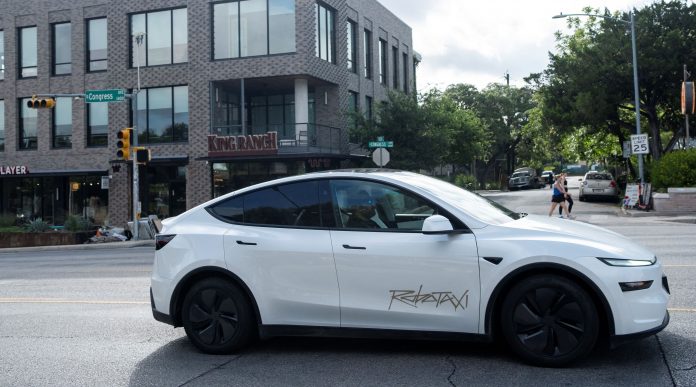
The focus on AI has become central to Musk’s broader vision for Tesla’s future. The company has argued that autonomy—not just EV production—will drive its next phase of growth, even as it struggles with shrinking margins and stiff competition from Chinese EV manufacturers. Tesla bulls believe that its robotaxi fleet, launched earlier this year in Austin, Texas, could eventually eclipse its vehicle sales as a revenue driver.

But Tesla’s core business is facing growing pressure. Automotive revenue fell by 16% in the second quarter of 2025, and European sales have taken a hit amid broader economic headwinds and shifting consumer sentiment. Meanwhile, Tesla’s stock has been battered, down over 23% this year as of Wednesday. Some of the downturn has been linked to Musk’s strained relationship with the White House, with political tensions casting a long shadow over Tesla’s positioning in domestic policy circles.

A Market on the Verge of Disruption

The approval of Zoox’s commercial operations adds to the competition in the emerging robotaxi market. Alphabet’s Waymo and General Motors’ Cruise have already made headway in rolling out self-driving services in select U.S. cities, though Cruise suffered a major regulatory setback last year after a series of incidents led to its California license being revoked.

Zoox now joins the few companies with full commercial clearance, but the road to widespread deployment remains challenging, requiring consistent safety records, scalable operations, and sustained public trust.

Tesla’s next-gen FSD release could shift that equation. If successful, it would reinforce Musk’s bet that AI-based autonomy will outpace the more hardware-intensive approaches adopted by rivals like Waymo and Zoox, which rely heavily on lidar sensors and complex arrays of cameras and radar.

However, Zoox’s greenlight from California regulators gives Amazon a concrete foothold in the self-driving ecosystem.

Google Denies AI Overview Search Tools Drain Publisher Traffic – But Data Says Otherwise

0

As concerns mount across the publishing industry over the impact of artificial intelligence on search traffic, Google is now pushing back, insisting that its AI tools aren’t killing publisher traffic, even as its own product strategy and external data suggest otherwise.

In a blog post published Wednesday, Google’s Head of Search, Liz Reid, disputed claims that the company’s AI-driven features are siphoning off clicks. Reid wrote that total organic click volume from Google Search to websites has remained “relatively stable” year-over-year, and even claimed that the “average click quality” — measured by whether users linger on a page — has “slightly increased.”

But there’s a catch: Google provided no specific metrics or transparent data to back its claims. And while Reid acknowledged that traffic has shifted from some sites to others, the company has not revealed which sites are gaining and which are losing, or how widespread the losses really are.

“User trends are shifting traffic to different sites,” Reid noted, adding that “people are increasingly seeking out and clicking on sites with forums, videos, podcasts, and posts where they can hear authentic voices and first-hand perspectives.”

What Reid doesn’t say is that much of this “authentic” traffic is no longer starting at Google. In fact, even within Google’s own executive ranks, there has been long-standing acknowledgment that search traffic is being diverted to platforms like TikTok, Instagram, Reddit, and Amazon.

According to TechCrunch, Prabhakar Raghavan, now Google’s chief technologist, said in 2022, during a tech event, that nearly 40% of young users searching for places to eat begin on TikTok or Instagram, not Google Maps or Search. Similarly, Reddit has become the preferred destination for topic-based searches, prompting Google to recently add a dedicated “forums” filter.

Google’s AI Overviews and the Zero-Click Phenomenon

The anxiety gripping publishers isn’t without cause. The rise of “AI Overviews”, summaries powered by Google’s large language models that now appear at the top of many search queries, has transformed the way users interact with results. Rather than clicking through to news or publisher websites, users often get the answer immediately, leading to what’s known as a zero-click search.

And while Google portrays this shift as beneficial, saying AI Overviews include “more links on the page than before”, real-world data paints a different picture. A Similarweb study found that zero-click news searches have surged dramatically since the rollout of AI Overviews in May 2024, jumping from 56% to 69% in just one year.

That suggests that even if links are present, users aren’t clicking through, a worrying development for publishers who rely heavily on Google for referral traffic.

Changing the Narrative: From Quantity to “Click Quality”

Interestingly, rather than focus on the volume of traffic sent to websites, Google now appears to be moving the goalposts. Reid’s post highlights “click quality” — a metric defined by how long users stay on a page, rather than how many clicks are sent overall. According to her, users who click links inside AI responses tend to “dive deeper,” making those clicks “more valuable.”

Still, this reframing doesn’t address the growing fear among publishers: that their overall share of discoverability is shrinking, while AI tools increasingly sit between them and their audiences.

Faced with mounting publisher anxiety, Google has also started offering alternative monetization pathways. In recent months, it quietly launched tools to help publishers tap into micropayments, subscriptions, and newsletter signups — as a way to compensate for declining ad-based traffic.

But critics see this as a sign of trouble, not a solution. The timing of Google’s blog post, amid increasing reports of search traffic losses and zero-click results, reads more like a PR campaign to manage perception than a genuine refutation of what publishers are experiencing on the ground.

Some analysts believe Google is essentially asking publishers to ignore what their own analytics dashboards are telling them — and to believe in the promise of AI driving more meaningful engagement instead.

Google’s attempt to redirect blame also overlooks a deeper truth: the decline in traditional search traffic predates AI. Social platforms have already eaten into Google’s dominance, especially among younger users. TikTok, Instagram, Reddit, and Amazon have been steadily pulling away search traffic for everything from restaurants to reviews to product searches.

And amid long-running complaints about declining Google Search quality — plagued by SEO spam, paywalled content, and algorithmic manipulation — users have simply started seeking answers elsewhere.

Even if Google’s claim that “billions of clicks” still flow from its search engine daily is true, the quality and distribution of that traffic have changed. AI is just the latest force accelerating a longer-term shift away from the open web and toward platform-owned experiences.

Google’s insistence that AI is not killing publisher traffic may contain a kernel of truth, but it also seems like a distraction from the uncomfortable reality that search, as we knew it, is dying — and AI is helping write its obituary.

Dogecoin Price Prediction: Can DOGE Hit $1 Before September? Little Pepe (LILPEPE) set to Outperform DOGE in 2025

0

Dogecoin (DOGE) is making headlines again as bulls push for a long-awaited breakout that could see it revisit the elusive $1 milestone. Optimism is building with technical indicators flashing green and whale accumulation on the rise.  But while DOGE eyes a near-term rally, a new meme coin contender—Little Pepe (LILPEPE)—is quietly preparing to steal the spotlight. Backed by utility, explosive presale momentum, and a groundbreaking Layer?2 infrastructure, LILPEPE is attracting serious investor attention. In this article, we examine whether DOGE can truly surge to $1 in the short term—and why Little Pepe could vastly outperform it in 2025, offering a much stronger asymmetric upside.

A Clear Path to Recovery—and Possible Hyperdrive

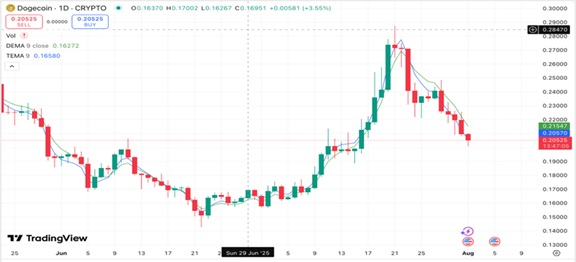
Dogecoin is currently consolidating around the $0.20 range after recovering from $0.28. Analysts, including Bitguru and Javon Marks, point to a double-bottom and a breakout from a descending channel. These are classic bullish signals that have historically preceded explosive moves.

DOGE Price Chart | TradingView

Some chartists forecast a near-term rise to $0.40–0.50, while extended bullish patterns suggest that DOGE could eventually hit $1.00, assuming sustained momentum and retail interest return.

Why the Breakout Case Still Hinges on Catalysts

Whales recently bought over 310 million DOGE in 24 hours, pushing large-wallet holdings north of 73.3 billion DOGE. This accumulation reduces the circulating supply and often signals strong confidence. At the same time, trading volume has surged by 14%, while options volume spiked 350%, suggesting heightened interest. Still, DOGE’s potential to reach $1 by September depends on trigger events like ETF approval, mainstream media attention, or renewed viral adoption—all possible but not guaranteed.

Little Pepe (LILPEPE): A Frog with Dog Energy

Little Pepe’s narrative goes beyond being Pepe Coin’s successor. It’s the top meme coin investors are watching and for good reason. LILPEPE is the native token of Pepe Chain, a Layer?2 meme ecosystem built for speed, low cost, and fair launches. It includes zero-tax trading and anti-sniper bot protection.  Little Pepe also features a dApp launchpad and Pepe’s Pump Pad, which are designed to foster ongoing usage. Unlike DOGE, which piggybacks on community nostalgia, LILPEPE backs every transaction with utility.

Presale Momentum Ignites Real Demand

Stage 8 sold out with $13.775 million raised, and Stage 9 is nearly sold out with over $14.5 million at $0.0018 per token. Each stage had been selling at record speed, showing strong confidence among the crypto community.  A viral $777,000 giveaway, confirmed Tier?1 exchange listings, and recent CoinMarketCap visibility are fueling institutional and retail buzz, with every presale stage rush reinforcing confidence.

LILPEPE Price Prediction: Asymmetric Upside Set Post-launch

LILPEPE’s momentum is exceptional. Its presale stages sell out in a few days, its community is growing by thousands day by day, and the viral giveaway is drawing positive promotion. Analysts believe LILPEPE is built for explosive gains. It’s not just leaning on viral tweets and community strength like DOGE did. It comes with an extra weapon—infrastructure.  Its conservative listing target of $0.003 would almost double its current price. Longer-term upside scenarios range from $0.18 to $0.50. This implies a potential 100×–300× gain.  Given DOGE has already rallied hundreds of billions in market cap, LILPEPE offers a faster path to life-changing returns from a much smaller base.

Why Little Pepe (LILPEPE) Can Outrun Dogecoin in 2025

LILPEPE isn’t just another meme coin—it’s a hyper-utility project built from the ground up to outperform legacy meme coins like DOGE. Here’s why:

  • Real Utility on a Layer-2 Chain: Unlike DOGE, LILPEPE powers the Pepe Chain, a full-featured Layer-2 blockchain built specifically for meme culture. This gives it real utility, something Dogecoin lacks.
  • Sniper-Proof, Fair Launch Architecture: Equipped with anti-sniper bot protection and zero-tax trading, LILPEPE ensures a fair and decentralized environment for all traders. By solving problems that have plagued past meme launches, it is poised to attract a larger crowd.
  • Built-In Launchpad for Meme Projects: It’s Pepe’s Pump Pad dApp launchpad gives meme creators a platform to launch tokens directly on the Pepe Chain. This drives ecosystem demand and long-term sustainability.
  • Confirmed Tier-1 Exchange Listings Incoming: Two major centralized exchanges are already locked in for launch, with plans to list on the world’s largest CEX. DOGE, in contrast, already trades on all major platforms, limiting fresh listing momentum.
  • Explosive Early Valuation: With an FDV still under $20M, Little Pepe has far more room to grow. DOGE’s current market cap is over $28B, making another 100x highly improbable.
  • $777K Giveaway Driving FOMO: The ongoing campaign, where 10 winners will receive $77,000 worth of $LILPEPE tokens, is creating intense viral interest and drawing in retail buyers en masse.

Final Verdict: Dogecoin vs. Little Pepe

Dogecoin has enduring brand power and plausible near-term upside. However, its legacy status and massive supply cap limit its potential for enormous returns in 2025. In contrast, Little Pepe merges meme magic with a fully functional Layer?2 ecosystem, explosive presale traction, and real-world utility. Its early-stage valuation, Tier-1 exchange plans, and fair launch mechanics make it the stronger candidate for dominating return potential this cycle. ? Stage 9 is almost sold out—buy now at $0.0018 before the next price jump. ? Join the $777,000 giveaway to win one of ten $77K token prizes.

For more information about Little Pepe (LILPEPE) visit the links below:

Website: https://littlepepe.com

Whitepaper: https://littlepepe.com/whitepaper.pdf

Telegram: https://t.me/littlepepetoken

Twitter/X: https://x.com/littlepepetoken