DD
MM
YYYY

PAGES

DD
MM
YYYY

spot_img

PAGES

Home Blog Page 7472

How Nigerian government can create one million jobs in 2017

0

We do think there is a very easy short cut for Nigeria to create one million jobs in 2017. It is possible and here is how.

Few months ago, Alibaba announced plans for a million-teenager army. The Chinese e-commerce giant plans to train youths in rural areas to start their own online businesses. Alibaba will provide funds and set up partnerships with the China Communist Youth League as part of its efforts, according to state-owned media.

E-commerce, whose development is strongly backed by China’s leadership, is spreading quickly in rural China with more farmers selling their produce online.

Premier Li Keqiang included e-commerce expansion when he laid out his “Internet Plus” strategy in an address last week at China’s annual parliamentary meeting in Beijing.

In villages, service stations have been set to help those who lack the necessary skills to trade online. Villagers can order goods at the stations and then return a few days later to collect their packages, Xinhua said.

Nigeria Government could do similar things in Nigeria and help put youth at work. These young people will become the Postal Service we do not have. So they become vehicles for Konga, Jumia etc and organic postal system we do not have. With them, e-commerce goes nationwide just like that instead of being restricted to the big cities of Lagos, Abuja, PHC and few others.

Intel Announces 5G Modem For Phones And Self-Driving Cars

0

Mobile is heating up and Intel doesn’t want to get left behind in the next evolution of the mobile business. The chipmaking giant said on Wednesday it’s launching a 5G modem chip, codenamed “Goldridge.”

5G (or fifth generation) is the next major iteration of the cellular network that will theoretically support multi-gigabit internet speeds on phones. Intel is emphasizing the modem’s applications in areas outside of phones too, such as autonomous vehicles, drones and smart city sensors. “5G will enable billions of ‘things’ to become smart through seamless connectivity, massive computing power and access to rich data and analytics stored at the edge of the cloud,” wrote Aicha Evans, the head of Intel’s communications and devices group, in a blog post about the 5G modem.

The new Intel® 5G Modem we are announcing today is a milestone for the industry, enabling businesses across the globe to develop and launch early 5G solutions. It will accelerate the development of 5G-enabled devices – offering opportunities for leaders across diverse industries to innovate with early deployments. However, today’s communications systems weren’t designed to accommodate the massive bandwidth required to support such an evolution, or the ultra-low latency needed to allow devices or even vehicles to react to split-second events.

Intel is expecting to sample the modem to customers in the second half of 2017 and go into production soon afterwards, an Intel spokeswoman said.

The big regret of Adebayo Shittu, Nigeria’s ICT minister

0

At a time, many Nigerians have concluded that the only way to grow the economy is to patronize locally made products and services. It has been established that the lack of interest for locally made ICT hardware is making the country to lose a whopping $2.8 billion yearly, Minister of Communications, Barr. Adebayo Shittu noted months ago.

The Minister said the amount is spent to import foreign ICT hardware, which he believes can be produced locally by some tech savvy Nigerians.

“Nigeria is ceding about 70 per cent of the country’s technology market to the foreign brands due to apathy for locally made products,” he said during a Stakeholders’ Compliance Workshop on the Procurement of Indigenous ICT products and Service by Ministries, Departments and Agencies (MDAs) in Abuja.

According to him, the value of Nigerian ICT hardware and services industry was estimated at $39.7billion in 2014, and forecasted to grow to 144 billion dollars by 2020, but regrets that all the available statistics show that the likes of Samsung, Acer, HP, Dell, Asus, Toshiba and Lenovo account for 70 per cent of sales in the market, leaving indigenous brands like Zinox, Omatek Computers, Brian integrated systems to account for the remaining 30 per cent.

In this 2017, tell the minister that regret is nonsense. What matters is what he will do in 2017 to actually help the local companies blossom. When government awards all the ICT contracts to foreign brand, what do they have in mind? He needs to understand that opportunities do not just happen – nations use policy to transform sectors.

We are waiting for him in this 2017.


In Tech We Trust – How 203 global banking executives see retail banking

0

A recent  report by the Economist surveyed 203 global banking executives to understand the challenges and changes they face. Over one-half (135) of the respondents work for banks with assets of less than $50b. The report concluded that, “The digital revolution has moved from existential threat to potential survival strategy for the world’s retail banks.”

The scale of disruption is unprecedented, across every market, every distribution channel and every single product line. Fintech poses a potentially fatal risk and will be a severe test of banks’ IT systems and their ability to respond to rapid changes in customer expectations, short product development times and growing cyber risks.

Key findings include:

  • The banking world of the future. By 2020 bankers expect the banking environment to be shaped strongly by technology and non-traditional competitors. They believe that retail peer-to-peer (P2P) lending will be available via banking platforms (65%); retail banking will be fully automated (64%); and more money will flow via fintech firms than traditional retail banks (57%).
  • Profits face multiple attacks. Business models must adapt to survive. Individually, the “scare scores” attached to changing customer behaviour (22%), new entrants (26%) and new technology (24%) are significantly lower than in previous years; collectively, however, they still represent a significant threat.
  • A multi-headed monster. That competitive threat will come from many quarters. Apple Pay and its ilk (20%) and other non-financials (20%) may yet emerge to really upset the traditional banking sector. As keen as regulators are to encourage competition, new banks are seen as less of a threat (16%). Robo-advisers could lure away more profitable wealthy (and the not-so-wealthy) clients (17%), and P2P lenders attract dissatisfied borrowers and savers (21%).
  • Regulators still watching. The too-big-to-fail rules are almost complete, but there is still plenty to keep compliance departments busy. Regulators now have time to cast an eye over consumer protection issues, with product design and transparency (24%) and fines and recompense orders (19%) still in play.
  • Banks are adapting. Bankers see three main areas that they must change in order to survive: adapting the role of the branch network (36%); getting the right talent (35%); and modernising their technology (31%). Banks still have the relationships and the data, but can they maintain and build on that advantage?

Simply, if you are in retail banking, you are running a technology business. And you must execute as such.

Fasmicro can help with the fabrication of your integrated circuit through MOSIS and Europractice

0

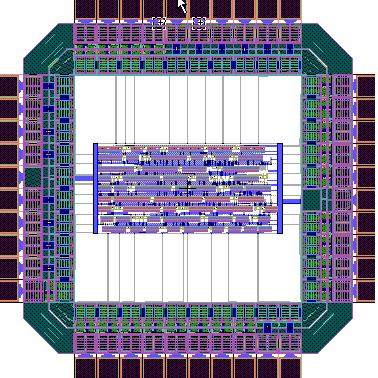
Multi-Project Chip (MPC) or Multi-Project Wafer (MPW) services integrate onto microelectronics wafers a number of different integrated circuit designs from various teams including designs from private firms, students and researchers from universities. Because IC fabrication costs are extremely high, it makes sense to share mask and wafer resources to produce designs in low quantities. Worldwide, several MPW services are available from government-supported institutions or from private firms including MOSIS, CMP and Europractice.

CMP is a service organization in ICs and MEMS for prototyping and low volume production. Circuits are fabricated for Universities, Research Laboratories and Industrial companies.
Advanced industrial technologies are available in CMOS, BiCMOS, SiGe BiCMOS, P-HEMT E/D GaAs, etc. CMP distributes and supports several CAD software tools for both Industrial Companies and Universities.
Since 1981 more than 4800 circuits for Research, Education and Industry have been fabricated. 850 academic centres and 150 industrial companies from 70 countries have been served.

With MOSIS, designs are submitted for fabrication using either open (i. e., non-proprietary) VLSI layout design rules or vendor proprietary rules. Designs are pooled into common lots and run through the fabrication process at foundries. The completed chips (packaged or unpackaged) are returned to customers.

From prototype to production, MOSIS is a design engineer’s single source for a wide variety of semiconductor processes offered by major foundries.

Costs are kept low by combining designs from many customers into multi-project wafer (MPW) runs. With prototype costs reduced, engineers can submit several variations of the same design to the same run, thus shortening time-to-market.

Final designs can then be submitted to MOSIS for low- medium volume production or dedicated Engineering wafer runs (COT).

Along with wafers and die, MOSIS provides a full range of packaging and bonding options for designs fabricated through our service.

Many silicon fabrication facilities offer MPW runs or a company can produce its own MPW, e.g. combine several of its own designs to form one wafer completely owned by the company. In the latter case, it may be profitable to use most of the wafer for production chips and a small portion for producing prototypes of next generation chips.

Fasmicro is now helping African institutions to setup the technologies required for Europractice. More on this later today.

EUROPRACTICE is a European Commission initiative, funded by the EU Seventh Research Framework Programme (FP7). The aim is to improve the competitiveness of European industry by the adoption of advanced electronics technologies.

EUROPRACTICE is a quality brand name for European service-type projects in the Microelectronics, Microsystems and Photonics fields. The EUROPRACTICE brand name covers a wide range of FP6 and FP7 projects.

Sources: Wikipedia, CMP, MOSIS, Europractice.