DD
MM
YYYY

PAGES

DD
MM
YYYY

spot_img

PAGES

Home Blog Page 7474

Comparison of Eddystone and iBeacon – Which One is Better?

0

In mid of 2013, Apple launched iBeacon globally at its Worldwide Developers Conference.  It was the foremost device maker to incorporate a beacon protocol standard into an operating system. Google has finally entered beacon space in 2015 with its own standard known as Eddystone, named after a famous Coastal lighthouses of England. Let see the difference between the two beacon protocols to see which is one better for your project!

Eddystone

  • Earlier Google’s Eddystone was called UriBeacon. It is a beacon protocol for open source beacons which could be manufactured by any industry at reasonable rates.
  • Eddystone-URL does not need a custom app but needs a beacon browser .Advantage: you don’t need to develop an app.
  • Eddystone has a built in feature known as Ephemeral Identifier (EIDs) which always keep changing and allow beacons for broadcasting a signal that can be recognized by authorized clients.
  • It is flexible but needs more complex coding when it comes to integration, since it sends more packets of information compared to iBeacon.
  • It is Android and iOS friendly. In fact, it is cross-platform and therefore, it is friendly with any platform that supports BLE beacons.
  • It has additional features like Telemetry data which can be used by the company to handle large numbers
  • They can report analytic data, remain battery power and firmware version.
  • It is open source. Therefore, developers and businesses can add and access to it.

iBeacon

  • iBeacon is a beacon protocol which has been manufactured into Apple’s iOS 7 and advance versions of the mobile operating system which allows an iPhone or iPad to connect to objects – called beacons – using Bluetooth. Beacons use a technology called Bluetooth Low Energy (BLE). It is part of Bluetooth 4.0 specification.
  • On other hand iBeacon need an app to receive that particular UUID to be able to participate.
  • While iBeacon does not have any feature like EIDs. The Signal communicated by a beacon is a public signal and can be identified by any iOS device and some Android devices with appropriate conditions.
  • It is easy to implement.
  • It is Android and iOS friendly, but native only for iOS.
  • It is a registered software. Therefore, the specification is organized by Apple.
Eddystone’s entrance into the beacon world has certainly new game for Beacon technology. It open source platform of BLE and according to ABI Research, it will be leading standard in the beacon industry by 2020.

By Brijesh Kamani – Mr. Kamani is the CEO of Teksun Group

Why Bluetooth Low Energy Will Transform Personal Area Network Connectivity

0

Bluetooth Low Energy is a new power saving alternative of Bluetooth personal area network (PAN) technology, designed for use by internet connected machines and equipment. So little in fact that a device can be operated for a whole year using only small button cell.

When was it invented?

Even though the first of these chips to be manufactured in April 2009. These concept has been around for a couple of the year and with different names. Initially, the Bluetooth Special Interest Group (SIG) come up with a concept it was known as Wibree. It was renamed as Ultra Low Power (ULP) Bluetooth Technology lately and then it has been given a name as Bluetooth low energy by the end of 2009.

How can it be used?

Today BLE adoption is being driven by Fast growing Internet of Things (IOT). In the world of connectivity, Bluetooth Low energy is the next revolution of Bluetooth. It is invented to transfer data between two devices very proficiently and with consuming only less amount of power. How it can be work is best explained with an example.

For instance, you are wearing a sports watch which monitors your blood pressure and heart rate constantly even as you are out on a training run. Without taking any action, using Bluetooth low energy your sports watch will able to transmission the data to your phone and using a phone you will able transfer this data directly to your online website. Thus, your coach can observe it in real time or even you can analyze it.

Well, this is just one example for understanding and certainly there are many other excellent potential applications.

What is this technology- Revolutionary or Evolutionary?

Till now we have discussed to this new technology as revolutionary and evolutionary. We don’t want to make our readers confuse. This technology is both. It is revolutionary in what it will allow Bluetooth to accomplish in terms of new devices and applications. While it is also evolutionary in that it forms on conventional Bluetooth technology which covers the design experience that been already expanded.

Which new devices will use this technology?

We have already mentioned one example above of how data can be transfer from a sports watch and how it may be transferred directly to your online website through your phone. BLE may be used in other sports applications such as golf club, a sensor on a bicycle, bat racket and smart training shoes. Bluetooth low energy will useful for you to monitor your performance and it can be directly transferred to the internet. Apart from sports application, BLE can also use in health care field. For example, someone with blood pressure may use Bluetooth Low energy device to continually monitor their blood pressure level and this data can be transfer directly to that person physician or doctor.

Definitely, there is lots other application which is not involved in fitness and health. Suppose it can be used in household appliances, remote control and in other entertainment appliances. .

Cost of Bluetooth lows energy

Over the last couple of years, development of this new technology is much expensive. During the initial stages, huge amount of design work has been carried. On another hand, one of the best thing of Bluetooth low energy is less expensive. In devices such as phones, Bluetooth low energy will sit alongside dual mode devices. Actually, they will go to use a just single chip and it cost will be a net cost but this will be less.

Conclusion

Bluetooth Low Energy will available soon and this technology will be life changing that will enable evolutionary growth in the level of connectivity that can be accomplished between a new generation of devices, Bluetooth devices and the internet.

By Brijesh Kamani

What Is Your Business Model?

1
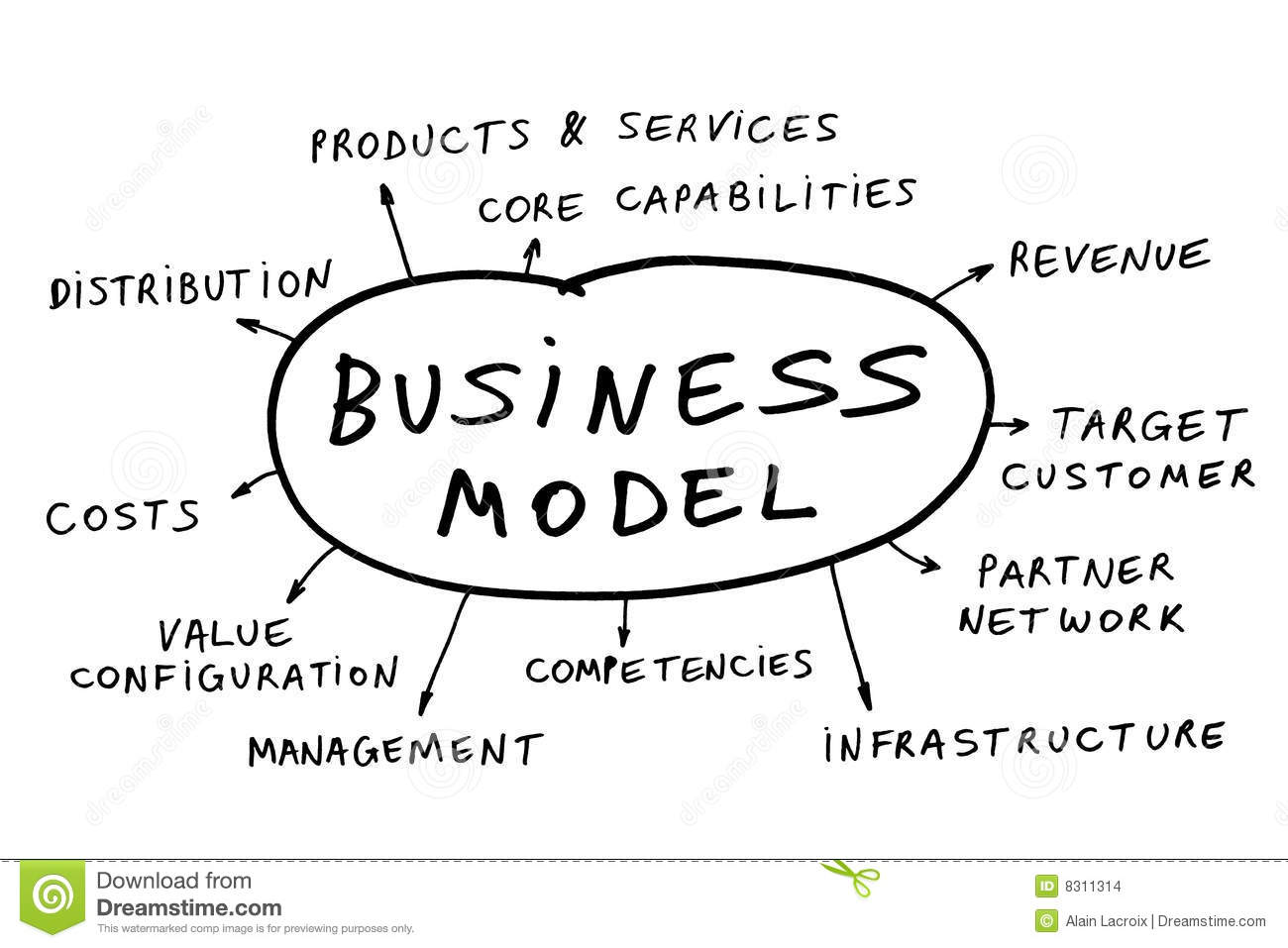
Business-model components (source: forbes)

Invariably, when I am meeting the founder of a startup for the first time to discuss the possibility that KEC Ventures might invest in their startup I ask this question; “What is your business Model?”1

Typically, the response I get is unsatisfactory. In this post I will discuss what I expect startup founders to include in their answer.

To ensure we are on the same page about what a startup is, I will begin with a definition; A startup is a temporary organization built to search for the solution to a problem, and in the process to find a repeatable, scalable and profitable business model that is designed for incredibly fast growth. The defining characteristic of a startup is that of experimentation – in order to have a chance of survival every startup has to be good at performing the experiments that are necessary for the discovery of a successful business model.2 As an investor, I hope that each early stage startup in which I have made an investment matures into a company.

That leads to another question; What is a business model According to Michael Rappa; “In the most basic sense, a business model is the method of doing business by which a company can sustain itself – that is, generate revenue. The business model spells-out how a company makes money by specifying where it is positioned in the value chain.” Alex Osterwalder and Yves Pigneur say that; “A business model describes the rationale of how an organization creates, delivers and captures value.”

Other definitions exist, but taken together, these two statements provide us with enough basis for understanding what we should expect to learn from an adequately developed business model.

The business model should tell us how the entrepreneur expects to create value. To do this, the entrepreneur must decide what activities are core to the business the entrepreneur wishes to start. The question of how the entrepreneur creates value is also important because the answer to that question will often contribute to an understanding of the customer base that the business can expect to rely on.  This might seem trivial at its face. It is not. Understanding the customer base for which the business expects to create value is central to many other decisions that the business will have to make as it matures and approaches the launch of its product or service on the market.

Our definition of a business model raises a second question; how does the startup deliver value? I expect the startup founders I meet with to have started thinking about the process by which the value that the startup creates will be delivered to its target customers.

Given a reasonably well defined customer value proposition, our entrepreneur must now decide how that value is going to “be put in the hands” of the people that will become customers of the startup. The process of delivering the product or service that the entrepreneur has developed involves several distinct phases; Learn, Buy, Get, Use, Pay and Support. Employees of AT&T are believed to have developed the acronym LBGUPS (pronounced ELBEEGUPS) as a means of remembering the phases of this process as it relates to AT&T’s products. It is most effective to think of LBGUPS as a continuous, circular, and repetitive process.

  • Learn – when new customers first become aware of the product or service and acquire information and knowledge about how they may benefit from its use. Typically the startup accomplishes this through some sort of marketing, sales and public relations activity.
  • Buy – when customers decide to make a purchase after having learned about the new offering and communicate the desire to act on their decision to someone in a position to initiate the next phase of the process.
  • Get – when customers actually take delivery of the new product. This might happen in a physical or virtual store. It might involve shipping the product to the customer. If the customer is buying a service then this typically happens in person, or the service could be delivered remotely.
  • Use – when customers actually use or consume the product, or benefit from the service.
  • Pay – when customers pay for the product. This might happen simultaneously with buy. Sometimes there’s a time-lag between buy and pay – for example, in a fine dining restaurant a guest dines before before paying for the meal.
  • Support – when customers are provided with additional information that is aimed at resolving any problems they may have encountered during any of the preceding phases. Support should serve as an opportunity to encourage customers to remain, or to come back the next time they need to purchase a similar product or service. This is the role of technical support, customer service and customer relations. Done well, support should lead right back to learn.

How will your startup deliver value?

How will your startup deliver value?

Every startup must ask, and find answers to a number of questions while going through the process of delivering value to customers. What is the most effective channel for marketing, advertising, public relations, and sales? Where should we place our product or service in order to enable evaluation by potential customers as they make the buy decision? How do we put the product or service in a customer’s hands once that customer has made a purchase? What do we need to do to ensure that the customer uses our product after they have bought it and we have delivered it? How do we ensure that our customers are paying us, in full and on time? What is the mechanism by which we get paid by our customers? What problems might our customers encounter, and how should we help them resolve those problems in order to ensure that they come back to learn more about our other offerings and buy more from us in the future?

Often, each question that the startup seeks to answer will give rise to other questions that must be answered as well. This process requires trade-offs. It might be too costly to attempt to exploit every possible marketing channel and so the entrepreneur must choose only a few out of many. An over elaborate support structure might prove too expensive to maintain over the long term. Also, that might create bad-habits that the startup’s revenue structure has not been designed to carry without tipping the company into a position where it is experiencing difficulties, this touches on the issue of pricing.

Next, let’s examine the third question that our definition of a business model raises; How does the business capture value? A startup founder should be able to describe how the startup will create value, deliver that value to its customers and in-turn capture some value for itself and its investors.

Michael Rappa’s statement about business models emphasizes the importance of revenue streams. Revenues comprise the cash that a startup’s customers exchange for the product or service that the startup provides. In the process of this exchange, a transfer of ownership or usage rights takes place – in an outright sale, the customer assumes ownership. In a lease, licensing or rental agreement ownership remains with the seller, but the buyer is granted usage rights for a contractually agreed period. Revenue streams can be one-off or recurring.

I have no argument against the suggestion that startups should focus keenly on developing and growing revenue streams. However, my experience has taught me that startups must focus equal attention on profit, and on the related issue of costs.

Why?

In order to reach self-sustaining growth, a maturing start-up must quickly put itself in a position to invest in areas that are critical to its ability to create and deliver value to its customers – it has to invest in those assets that make its revenue streams possible. Costs represent the price the company pays to obtain the resources it must bring together in order to create and deliver value to its customers. A business earns a profit when its total revenues exceed its total costs. A successful business model should lead to an outcome in which customers perceive the entrepreneur as adding value. They demonstrate this by paying more for the product than it cost the entrepreneur to produce it – leading to a profit for the entrepreneur.

Earning a profit makes it possible for the startup to invest in the assets that are most critical to its ability to create and deliver value. Controlling and managing costs effectively while growing revenues will ensure that the startup maximizes its profit.

How will your startup capture value? You should be able to describe how your startup will grow revenues, manage costs, invest for growth, and maximize profits. This is not a static process. It should be dynamic and ongoing. Your startup will not be operating in a stagnant market. Therefore, your product and pricing strategies will need to adapt from time to time in response to competition as well as other market forces.

Also, depending on the stage at which KEC Ventures is considering an investment, it might not yet be clear which revenue model will work best for the startup. A seed stage startup might not yet have settled on a revenue model. A startup to which we are speaking about a series A financing should have some well formulated ideas about its revenue model, and in fact should be running some experiments to validate its hypotheses. An existing startup in our portfolio in which we are contemplating making a follow-on series B investment should most certainly have settled on a revenue model, and be in the process of scaling the business model in a repeatable, and profitable way.

I will end this discussion with some related observations;

First; It is often tempting to assume that one startup can simply copy or imitate the business model of one of its competitors. That may work in the short-term. In my opinion that is not an approach that confers a lasting competitive edge, certainly not in fledgling markets and industries, and often not in mature industries either. An important aspect of business model development is the deliberate and conscious selection among a number of alternative choices regarding product design, customer development, revenue models and cost structure; the wholesale copying of a business model simply because it has worked for another startup suggests the entrepreneur has abdicated responsibility for understanding the dynamics at play in each of those critical areas. That is a recipe for a failed startup adventure in which I am not eager participate.

While I oppose the wholesale copying of a business model that someone else has developed, I am a strong proponent of learning from the experience of other startups – the successes and the failures. There is real value in knowing what has ensured that some startups thrive. There is even more value in knowing what has proved fatal to others.

Second; It might take several attempts before a startup discovers the business model that works best – reflecting an industry in its earliest stage of development. Even then, the business model must evolve with the passage of time. Technology changes. Labor markets shift. National economies expand and contract. Opportunities not present in the past will present themselves in the future. Competitive threats that did not exist at the time the startup was formed appear as soon as other individuals notice a new chance to earn economic profits. Regulations emerge as a result of changes in political mood. A business model that does not adapt and evolve reflects a startup founder who does not grasp the nature, extent and complexity of the numerous challenges that lie ahead. Such founders, and the startups they are building, are bound to fail.

Third; The business model is not the business plan. Your business plan should certainly discuss your business model, yet the two are distinct and different. The business model is a framework within which the startup’s activities occur. The business plan is a document whose main purpose is to serve as a record of the startup’s goals, the reasons why those goals make sense and can be achieved, the manner in which the goals will be accomplished and the timeline within which the startup expects to implement its plan – presumably the plan is to become profitable as soon as possible within the tenets of the business model.

I am a fan of The Business Model Canvas. In fact, I use it each time I sit down to study a startup in which I believe KEC Ventures should invest. Using it ensures that I understand the business model, that I understand the risks that might lie ahead, and that I am comfortable that the startup indeed has found an opportunity to create, deliver, and capture value.


  1. This post is an updated version of 4 separate posts authored by me, and first published at Tekedia between Sept. 18th, 2011 and Oct. 30th, 2011. Any similarities between this article and those posts is deliberate. ?
  2. I am paraphrasing Steve Blank and Bob Dorf, and the definition they provide in their book The Startup Owner’s Manual: The Step-by-Step Guide for Building a Great Company. I have modified their definition with an element from a discussion in which Paul Graham, founder of Y Combinator discusses the startups that Y Combinator supports. ?

Zenvus Founder Ndubuisi Ekekwe Speaks to BBC World Service

0

Fasmicro Group Founder, Ndubuisi Ekekwe, was on BBC World Service today. He spoke on our wholly-owned unit Zenvus. The interview is here (from 15.45 mins).

BBC — …ZenvusThe tech entrepreneur Ndubuisi Ekekwe through his company Zenvus plans to make farming in Africa smarter. He talks to Click about the sophisticated sensors which are part of an intelligent system that collects data from the soil…. © Alison van Diggelen)Producer: Colin Grant

Zenvus is an intelligent solution for farms that uses proprietary electronic sensors to collect soil data like moisture, nutrients, temperature, pH etc. It subsequently sends the data to a cloud server via GSM, satellite or Wifi. Algorithms in the server analyze the data and advise farmers on what, how and when to farm. As the crops grow, the system deploys hyper- spectral cameras to build crop normalized difference vegetative index which is helpful in detecting drought stress, pests and diseases on crops. The data generated is aggregated, anonymized and made available via subscription for agro-lending, agro-insurance, commodity trading to banks, insurers and investors. Zenvus also has a mapping feature which can help a farmer map the farm boundary with ease.

Revisiting What I Know About Switching Costs and Startups

0

Switching costs are another aspect of a startup’s business model that I pay attention to. Together with Network Effect, Intangibles, Cost Advantages, and Efficient Scale they form the source of economic moats.1 In this post I will discuss switching costs; what they are, how they develop and evolve, and how switching costs can help or hurt a startup.

To ensure we are on the same page, I will start with some definitions. In the rest of this discussion I am primarily focused on early stage technology startups. Also, the customer I have in mind is one whose present known needs are adequately served by the current product. Finally, I assume government intervention is not a significant factor.

Definition #1: What is a startup? A startup is a temporary organization built to search for the solution to a problem, and in the process to find a repeatable, scalable and profitable business model that is designed for incredibly fast growth. The defining characteristic of a startup is that of experimentation – in order to have a chance of survival every startup has to be good at performing the experiments that are necessary for the discovery of a successful business model.2

Definition #2: What is an economic moat? An economic moat is a structural barrier that protects a company from competition.3

Definition #3: What are switching costs? Switching costs refer to the expense in cash, time, convenience, risk, and process disruption that a customer of one product or service must incur if they change from one product from an incumbent Producer A to another product from Producer B. Switching costs can be explicit or implicit, and confer the benefit of customer lock-in to incumbent suppliers if the customer perceives the cost of switching to outweigh the benefits that would be obtained by making the switch.4

How do switching costs develop? 

Switching costs develop and become stronger when an incumbent product becomes “mission-critical” for the purpose for which the customer acquired the product in the first place. An incumbent that combines network effects with high switching costs in the same product line is well positioned to build a durable moat around its business. Economists describe at least three main assumptions about switching costs. Exogenous switching costs are believed to evolve without any intentional influence from the incumbent producer – for example; customers independently create or enhance switching costs by becoming more skilled and experienced in applying and adapting the incumbent product towards solving a wider variety of problems than the producer had originally envisioned. Endogenous switching costs evolve through deliberate actions by the incumbent – for example; volume discounts to encourage wide adoption within a company of a new software product, coupled with long-lived license agreements and punitive charges if the license is terminated between license renewal dates. Also, deeply entrenched incumbents will typically opt for incompatibility with competing products while new entrants will prefer to build in compatibility with the incumbent product that they seek to displace. Lastly, switching costs are symmetrical between all the producers competing within a given market.5

What are the types of switching costs that lead to buyer lock-in? 

One might consider switching costs to exist along a continuum that is characterised most distinctly by how intertwined each of the categories identified by economists is tightly intertwined with nearly every other category below.6

Compatibility Requirements make it difficult and expensive to switch between products. Consider an individual or organization running MS Windows contemplating a decision to switch to Linux. The implications of this choice are generally non-trivial. Compatibility requirements are largely an implicit cost that is borne by the customer.

Transaction Costs impose an explicit cost on customers who decide to switch from one product to another. For example, cable-tv subscription agreements typically impose a high penalty on subscribers who decide to terminate their agreement before it has run its full course. Any cost than can be measured explicitly and that has to be considered in switching between products falls under this category.

Cognitive Costs are the perceived hurdles customers feel they will have to overcome when they switch from one product to another. One example is the dichotomy between people who prefer Mac OS and those who prefer MS Windows. I understand the practical reasons one might have for preferring one operating system over the other; for example, one platform is more compatible with a wider variety of products in a certain category of software applications than the other. What often surprises me is the speed with which conversations between those two groups quickly devolve past anything one might consider rational, logical or practical to become an exercise in name-calling and ad-hominem attacks. Such episodes suggest that in some situations there are significant psychological issues at play that have nothing to do with the reality one might face if one tried to switch products.7

Uncertainty is the apprehension that the customer has to face regarding the quality of the new product. Uncertainty is minimized only if the customer believes that, at a minimum, the new product will match the old product in quality. As an example, consider a small business that is trying to decide if it should migrate from MS Exchange Server to Google Apps for Business at a time when its license for the former is up for renewal. Uncertainty works in favor of the incumbent product when customers have very little information about the relative performance characteristics of the new product.8

Learning Costs are the known hurdles that a customer must overcome in order to attain mastery of the new product that is at par with that customer’s mastery of the incumbent product required to accomplish the tasks the customer needs to complete. Learning costs need to be considered on their own, independent of other categories of switching costs. High learning costs tied to adopting a new product increase switching costs in favor of the incumbent. Minimal learning costs tied to the adoption of a new product lower switching costs in favor of the new product. On one hand, an individual customer might be willing to face high learning costs in situations where the consequence if things go wrong is non-fatal; for example switching from one messaging app to another. On the other hand, enterprise or small business customers who face loss of business and revenue if things go wrong will exhibit high levels of inertia in the face of high learning costs; for example switching from one company-wide CRM system to another.

Lost-Benefit Costs are costs suffered by the customer because certain benefits that have been earned but not yet consumed by the customer as a result of its historical relationship with the incumbent are non-transferrable in nature – the customer who decides to make a switch suffers a significant loss and must start to earn such benefits from scratch with the new provider. An example of this is found in the various loyalty programs that are used to induce customers from switching from one product to another; airline travel points, for instance. Mobile phone subscription roll-over minutes are another example – my roll-over minutes accumulated on AT&T’s cell phone network are not transferrable to another carrier if I choose to switch.9

How might switching costs become a disadvantage? 

Switching costs lock in customers who face the highest opportunity costs of switching from an incumbent product to another product offered by a rival. It is often the case that these customers comprise the most profitable segment of customers for the incumbent, and it is not uncommon for the incumbent to continue optimizing the product to meet their requirements, with each improvement in the incumbent product being reflected in an across-the-board increase in prices for all the incumbent producer’s customers. This iterative cycle of feature upgrades and attendant price increases will continue until it gets to a point at which the following things happen; first the product becomes too advanced for a large number of customers with “only moderate” needs and therefore, commensurately moderate switching costs. Second, at this point the medium- to long-term cost of switching is perceived by this group of customers to be less than the commensurate benefit of remaining locked into the incumbent product. Last, the rival product has matured such that it satisfactorily meets the needs of customers considered to be low-margin customers based on the business model implemented by the incumbent producer. However, these same customers comprise an attractive, high-margin customer cohort for the rival product because the rival producer is pursuing a business model that features significantly lower overhead costs than the comparable costs reflected in the incumbent’s existing business model.10

As a result the incumbent producer faces a dilemma; stay and fight for low-margin customers, or cede that ground to the rival product? The most typical response from incumbents is to cede the unprofitable customers to the rival. This gives the rival a toe-hold in the market, a position from which the rival can gradually strengthen its position and eventually migrate upstream until it poses a direct and powerful threat to the incumbent. The effect high customer switching costs have on an incumbent producer is that they lock the incumbent into a pattern of sustaining innovation. Sustaining innovation improves on already existing products, and focuses on squeezing more out of a large base of existing and and a comparatively small base of new customers. An example of sustaining innovation is Microsoft’s line of Windows and Office products; annual sales to new customers is small compared to sales generated from the installed base of Windows and Office users. Disruptive innovation seeks to satisfy non-consumption by developing products with features so simple and inexpensive in comparison to the status quo that a disproportionately large number of new customers enter the market.11 The key is that the customers that flock to the disruptive product are very unattractive to established incumbents. With time, the disruptive innovation matures to the extent that it becomes a viable substitute for the incumbent’s most profitable customers at a price point that is extremely hard for them to resist. It is at this tipping point that the incumbent’s fight for its survival begins. It is easy to dismiss disruptive innovations at the outset because the performance measurements that have become customary for the market in question do not apply in the same way for the new wave of consumption that the disruptive innovation enables. For example, consider an investor trying to decide if an investment in Facebook was a good idea in 2006. On the basis of CPMs this investor would probably have decided to pass on the opportunity to invest in Facebook, reasoning that it did not have the qualities necessary to build a highly valuable business. Except, CPMs were the wrong metric by which to judge Facebook at that point.12

What are the competitive strategies at play in markets in which switching costs matter. 

It is important for technology startups and early stage technology startups to understand the dynamic that might evolve as they seek entry into a market characterized by an incumbent who benefits from customer lock-in. Fortunately, substantial economic research exists on that topic.13

The incumbent sells to existing customers, rival new-entrant serves new buyers. This happens in markets that are relatively mature. The incumbent focuses its efforts on its existing customer base, with growth in revenues arising from endogenous growth within that customer base – e.g. Bloomberg revenues increasing because the average number of employees of each of its existing customers is increasing with time. New entrants meanwhile utilize new technology to serve new customers, initially ignoring the incumbents existing customer base. This is especially true in markets in which the incumbent producer has a high level of power relative to customers in that market – typified by dominant market share, giving it pricing power over its existing customer base. To use the parlance of Farrell and Shapiro (1998) the incumbent sells to the oldsters while the entrant sells to the youngsters.14

The incumbent excludes the new entrant. This happens when the incumbent’s fixed costs per customer are greater than the switching costs per customer. The strategy works under conditions in which the incumbent is in a position to set a price that makes it unattractive for any new entrant to enter the market. Where this is not possible the incumbent will choose to set a price that allows the market to be shared between the incumbent and the new entrant. This is why freemium business models are so powerful, especially when a freemium business model is coupled with a product that embodies network effects and switching costs. For example, think about how dominant Facebook has become because it gives its product away to users for free. Clearly, it not possible to compete with Facebook on the basis of the price users pay in exchange for the value they derive from it. The startups that will ultimately compete with Facebook do not have a cost-leadership strategy available to them, and so must instead seek an alternate path.15

New customers are won with bargains, then they are “ripped off”. This happens when customers are offered low “introductory offers” in order to entice them to adopt a product. Prices increase once lock-in has been established. As an example, consider a product that is free up to a certain usage threshold but for which continued use beyond the set threshold requires customers to pay. In this scenario, various mechanisms might be used to ensure the onset of customer lock-in, and improvements in the product’s features and capabilities are designed to nudge users over the threshold beyond which they have to become paying customers.16 This tactic is common among cable TV and satellite TV providers, and also among internet service providers.

Customers are paid to switch. Consider three segments of an incumbent producer’s customers; Existing locked-in customers, unattached or new customers, and customers locked into a rival. In this situation, rival producers will implement price discrimination. Existing locked-in customers get one set of prices, new or unattached customers get another set of prices, while customers locked into rivals are paid to switch.17 Recent reports of the battle for market share between Uber and Lyft are a great example of this tactic being applied in the real world.18 This tactic is common with cellular phone service providers and credit card issuers.

A portfolio of products is bundled together in order to increase total switching costs. This tactic is especially effective because in order to make a switch, the customer must deal with nearly all the switching costs we have previously considered at the same time and it works especially when the incumbent producer offers a product line that is so broad that most customers simply deal with the incumbent as their single supplier for the entire line of products that they use.19 For example, Microsoft’s strategy of giving away Internet Explorer in a bundle with Microsoft Windows reportedly led to the demise of Netscape Navigator. I would guess that beyond merely bundling Explorer with Windows, Microsoft built-in a number of features that made Navigator less compatible with the Windows operating system than Explorer.20

Switching costs play an important role in retaining customers, and motivating repeat purchases in the future. Technology startups can’t survive without user lock-in and incumbent suppliers with strong customer lock-in typically earn monopoly profits. Early stage startups thinking about spend some time understanding the features that create value for the customer while building customer lock-in for the startup early in product design process. The existence, or lack thereof, of switching costs amongst the incumbent’s customers will play an important role in determining the competitive response that is likely to occur once the new-entrant’s intentions become undeniable. In which case speed of market entry is critical for the new-entrant. In a market with low switching costs, one might expect vicious price wars to ensue. Generally, such price wars will always favor the presumably better capitalised incumbent. Moreover, price wars are a bad idea for the incumbent as well as the new entrants. In a market where the incumbent enjoys significant customer lock-in with ensuing monopoly profits, one generally expects new entrants to find a foothold from which they can eventually migrate up-market.


  1. Any errors in appropriately citing my sources are entirely mine. Let me know what you object to, and how I might fix the problem. Any data in this post is only as reliable as the sources from which I obtained them. ?
  2. I am paraphrasing Steve Blank and Bob Dorf, and the definition they provide in their book The Startup Owner’s Manual: The Step-by-Step Guide for Building a Great Company. I have modified their definition with an element from a discussion in which Paul Graham, founder of Y Combinator discusses the startups that Y Combinator supports. ?
  3. Heather Brilliant, Elizabeth Collins, et al. Why Moats Matter: The Morningstar Approach to Stock Investing. Wiley. Hoboken, NJ. 2014; p. 1 ?
  4. In economics switching costs are defined as the disutility that a customer experiences in switching between products. ?
  5. Pei-yu Chen and Lorin M. Hitt. Information Technology and Switching Costs. September 2005; p.9. Accessed online on Oct. 19, 2014. ?
  6. The following discussion is based largely on; Paul Klemperer. Competition When Consumers Have Switching Costs: An Overview With Applications to Industrial Organization, Macroeconomics, and International Trade. Review of Economic Studies, 1995; p. 515 – 539. Accessed online on Oct. 19, 2014. ?
  7. Klemperer calls these psychological costs. ?
  8. Ibid. Pei-yu Chen and Lorin M. Hitt. p. 4. ?
  9. Klemperer calls these discount coupons and other devices. ?
  10. This is the process described by Clayton Christensen in The Innovator’s Dilemma. ?
  11. Or, a large number of “unprofitable customers” abandon the incumbent product for the new, disruptive product. ?
  12. Read: Andrew Chen. Why I Doubted Facebook Could Build A Billion Dollar Business, and What I learned From Being Horribly Wrong. Accessed online on Oct. 19, 2014. ?
  13. Joseph Farrell, Carl Shapiro. Dynamic Competition With Switching Costs. RAND Journal of Economics; Vol. 19, No. 1, Spring 1988. and Joseph Farrell, Paul Klemperer. Coordination and Lock-in: Competition With Switching Costs and Network Effects; Handbook of Industrial Organization, Volume 3. Ed. M. Armstrong, R. Porter. Copyright 2007, Elsevier B.V. Accessed online on Oct. 23, 2014. ?
  14. See for example; Aaron Timms. The Race To Topple Bloomberg; Institutional Investor, Jan. 30, 2014 and Startups Estimize and Kensho Take Aim at Bloomberg; Institutional Investor, Jan. 30, 2014. ?
  15. Examples; Whatsapp, Instagram, Pinterest, Snapchat, Line, Kik etc. Most recently Ello has tried to carve a niche for itself by emphasizing privacy. It is too early to tell if that tactic will work. ?
  16. Examples; Google Apps for Business, now renamed Google Apps for Work started used this tactic to build a beach-head in a market dominated by Microsoft. This scenario excludes predatory pricing practices. ?
  17. Ibid; Farrell and Klemperer. ?
  18. See for example; Alison Grisworld, Uber Rival Gett is Making a Risky, Clever Play in The Ride-Sharing Game, Oct 15, 2014. and Avi Asher-Schapiro, Is Uber’s Business Model Screwing Its Workers?, Oct 1, 2014. ?
  19. Ibid; Farrell and Klemperer. ?
  20. Wikipedia; United States v. Microsoft Corp. Accessed online, Oct 23rd, 2014. ?