DD
MM
YYYY

PAGES

DD
MM
YYYY

spot_img

PAGES

Home Blog Page 7479

Updates – Industry Study: Freight Trucking (#Startups)

0

Note: John Azubuike (@jnazubuike) and I are currently conducting research on software startups in the ocean freight shipping market. We expect to publish that towards the end of January 2017.

Our blog post about freight trucking startups opened the door to numerous conversations that we may never have had, with people who know more about the freight trucking market than we do. This update is my attempt to augment our original article with some of what we learned from those conversations. If it comes across as somewhat unpolished, that’s because I decided arbitrarily that I should not let 2016 end without this update being published.

So without further ado . . .

  1. The barriers to success for startups pursuing the “Uber for freight-trucking” business model is even more fraught with danger than we were able to convey in our article. It is even more clear to us that brokers do a lot more than field a couple of phone calls, and that assuming it will be easy to cut them completely out of the picture is probably a dangerous assumption. We heard numerous anecdotes about the difficulties freight trucking services marketplace startups are facing . . . Yes, that including some that have been lionized by the tech press. Presumably, many are running on borrowed time.
  2. Compliance is as acute a problem as we have imagined. In fact, Walmart Transportation was hit with a $55 million settlement only 5 days after we published our article. Many settlements and fines do not attract the attention of the news media. If Walmart is stumbling, imagine how tough it must be for less sophisticated trucking companies to stay abreast of the complex state and Federal regulations. Compliance software that is easy to deploy, and easy for fleet managers and truck drivers to use is a necessity. A number of new entrants into the market are taking that path. Notable among them; San Diego, CA-based Platform Science whose co-founders previously ran OmniTracs, the fleet management software division of Qualcomm that was sold to Vista Equity partners for $800 million . . . in cash.
  3. Ty Findley, a member of the GE Ventures team covering Advanced Manufacturing, Logistics, and Supply Chain pointed us to the 2015 patent lawsuit between Fourkites and Macropoint, two developers of Fleet Management Software that enables fleet operators to track and trace the activities of individual trucks. In this lawsuit Macropoint accused Fourkites of violating patents held by Macropoint. The court ruled in favor of Fourkites; dismissing the Macropoint patents as invalid under the United States Supreme Court’s Alice Corp. vs. CLS Bank Int’l ruling of 2014. It will be interesting to see what forms of intellectual property prove most valuable in this market. If you have an interest you can read my work on Economic Moats in order to understand how we think about these issues.
    • Chicago-based Fourkites – announced that they closed a $13 million Series A round of financing led by Bain Capital Ventures in October 2016, and
    • Cleveland-based Macropoint – announced a $44 million growth equity round of financing from Susquehanna Growth Equity in November 2016.
  4. Based on her years of experience with technology innovation in the freight trucking market Debra T. Johnson of Eco-Edge discusses what she calls the “invisible barriers to innovation” that impede the success of startups in this market. She groups them under; Product, Customer, and Sales. Overcoming all of these invisible barriers to innovation requires founding teams that have; strong technical experience in order to build a product that works for this market, AND sufficient industry experience in order to build trust, and win credibility with potential customers.
  5. Stefan Seltz-Axmacher of Starsky Robotics sent me the following comments by email – modified, and paraphrased for clarity. Starsky is a Y Combinator startup.
    • The huge inconsistencies in data about the industry are really frustrating. It would help to know what the most authoritative sources of industry data are.
      • I agree. We generally relied on data from industry associations, and then we extrapolated to fill in the gaps we wanted estimations for. Our estimations could be wrong. We relied mainly on: OODIA Foundation, and American Trucking Association. Data from the Bureau of Transportation Statistics is more difficult to parse if one is in a hurry. We did not have access to proprietary sources of data on the industry, but some times I wonder if they are any more accurate than data that is available from public sources.
    • The market map was a bit odd in terms of how you classified some of the startups, some of the startups may have been misclassified.
      • I agree. We expected this to be the case, since the way an investor thinks about a market is often not entirely congruent with how others see it. Our market map was only an approximation about how we think of the market – for example, we would group “truck automation” together with “automated cars” . . . Since the way we see it the key outcome is “automated land transportation” which can then be applied to trucks and cars – by the same startup/company, with adequate modifications to account for the structural differences between a truck and a car. Think smart-phones versus tablet computers; iPhone versus iPad. Or, think laptop computers versus tablet computers; MacBook Air versus iPad. That being said, we’ll take another look at the market map when we feel it makes sense to give it a major update. There are many startups we did not know about when we put it together.
  6. Craig Fuller, CEO/Managing Director of TransVix stopped by our office to tell us about what they are doing to solve the dynamic assignment problem using the contract theory approach by building a derivatives market for trucking, rail, and containers. If you believe their estimates, this could be a $1.4 trillion opportunity in the United States, and possibly an $8.0 trillion opportunity globally. Yes, you read that right. Trillion, with a “capital tee”. Craig shed further light on some aspects of the trucking industry that we did not fully understand. He also laughed at me when I told him I had developed a headache as we were trying to unravel some of the mysteries of the maritime freight shipping market. He gave us some good ideas for paths along which we might conduct some research.
    • The only other startup I know about that’s pursuing a somewhat similar business model is the New York Shipping Exchange.
  7. We also heard directly from startups based outside the United States that are building software for domestic freight trucking markets in; Israel, Brazil, Germany, India. We heard anecdotes about startups in the Middle East and Eastern Europe.
  8. These news reports caught our attention in the days and weeks after we published;
    • Amazon Launches Uber-Like App for Truck Freight – December 18, 2016,
      • Intriguing, because of the relationship with Convoy – Bezos Expeditions is an investor in Convoy’s seed round, and the co-founders Grant Goodale and Daniel Lewis are both former employees of Amazon.
    • China’s Uber for Trucks Huochebang Fetches $1 Billion Valuation – December 21, 2016, and
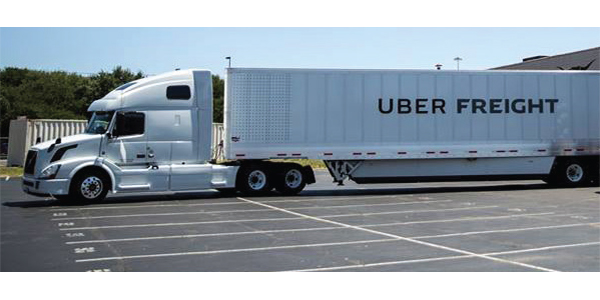
    • Uber Launches Uber Freight – December 27, 2016.
  9. Daniel Burrows, founder and ceo of XStream Trucking, a seed-stage tech startup – thinks about the problems in the freight trucking problem from the fuel efficiency side of the profitability equation. Fuel costs account for as much as a third of the operating expenses of a truck fleet. The team at XStream reports that its technology can generate fuel savings of between 2.5% and 8%. You can see the potential for those savings to add up to something significant for the industry when you consider that, according to the American Trucking Associations;1
    • Trucks consumed 52.3 billion gallons of fuel for business purposes in 2011; 37.2 billion of that in diesel fuel and 14.8 billion in gasoline,
    • The industry spent $143.4 billion buying diesel fuel in 2011

This seems to be a market that will remain active for sometime to come, and we are eager to see what new developments occur as time progresses.

We’re studying startups building technology for the ocean freight shipping market. We expect to have made enough progress to publish it in a few weeks. Stay tuned. Better yet . . . Send us ideas; @brianlaungaoaeh and/or @jnazubuike.

Update: January 3, 2017 at 17:30 to include insights from Daniel Burrows at XStream Trucking.


  1. Source: http://www.trucking.org/News_and_Information_Reports_Energy.aspx. Accessed on Jan. 03, 2017. ?

The best phone of 2016 is Google Pixel XL and here is why

0

2016 had some great competitions in the smartphone category. Apple, Samsung, LG, etc released great products. But by all means, Google Pixel XL was the best of all.

Reason: Google threw a lot into the Pixel XL design and engineered a great product with solid camera system. The rear camera is completely flush with the glass plate on the back, a design feat that Apple and Samsung have yet to achieve.

The Pixel XL features top-of-the-line specs to introduce Android 7.1 Nougat to the world. This VR-capable phone has a fast processor, smart AI software and a superb camera, all sandwiched into a funky design.

For that, Tekedia gives it the phone of the year.

More than 2 million VR headsets to ship in 2016

0

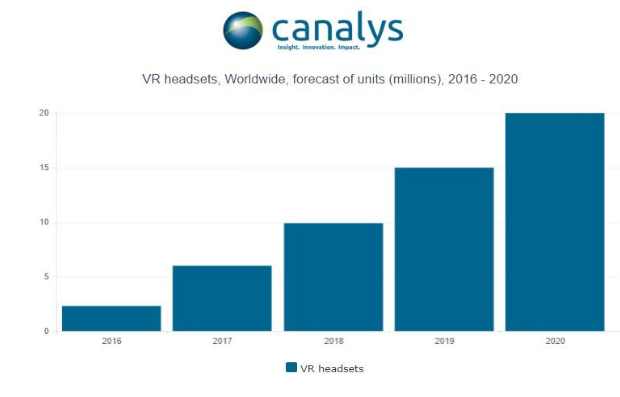
VR headsets got off to a strong start in their first year of consumer shipments. Canalys predicts shipments will exceed 2 million units worldwide in 2016. This number is forecast to grow to 20 million by 2020. The lion’s share of 2016 shipments are basic VR headsets that rely on other devices, generally being tethered by cable to a desktop PC. Shipments of smart VR headsets, which can function independently, will reach over 100,000 units. These estimates only include VR headsets with integrated displays, so exclude simple viewers, such as Samsung’s Gear VR and Google’s Daydream View, which are also shipping in the millions.

As expected, Sony has quickly become the VR market leader, with its affordable PlayStation VR catering to the vast PlayStation 4 installed base. Canalys expects over 800,000 shipments in less than three months on the market. Shipments would have been greater if it were not for one key problem: PlayStation VR was delayed until October and is still seriously supply constrained due to problems making its OLED displays.

What auto industry must do for survival and lessons for you

0

It’s common knowledge that a business must acclimate in order to stay afloat—to ever-changing market conditions, customer trends and perceptions, technology platforms, entrenched and emerging competitors, supply chain variables and a glut of other micro and macro-economic concerns. But, at the end of the day, revenue generation is the metric that truly matters. “Unfortunately, the automotive industry in particular is suffering egregious opportunity loss, and is the proverbial ‘poster child’ for other sectors who are similarly leaving behind untold millions in lost revenue,” says predictive analytics expert Lang Smith, CEO of Cloud Signalytics. “Like so many others, the auto industry on the whole just doesn’t conceptually understand, or aptly appreciate, the value of repeat business and methods to proactively facilitate future earnings.”

“The auto industry’s ‘single transaction’ model just does not effectively cultivate long-term customers,” says Lang. “Today’s cost-conscious consumer will move from one automaker to another for even the slightest of reasons, like a favorable customer service interaction. The auto industry’s overarching mandate of selling as many vehicles as possible at any cost has indeed been costly—usually at the expense of a dealership’s reputation, damaging the image of the auto industry at large.  Because the industry has realized billions of dollars in the process, far too many are apt to ‘leave well enough alone,’ turning a blind eye to untold levels of revenue that are going by the wayside. While that way of thinking may have been sufficient in the past, today’s leading-edge tech-driven sales operations can no longer forsake the fiduciary responsibility to promote maximum profitability right now and into the future.”

Lang goes on to explain that, because the auto industry largely utilizes the flawed marketing logic, “the more people we can reach; the more money we will eventually make,” they simply cannot maintain momentum—particularly amid persistently diminishing margins. However, add a predictive analytics engine into the mix—defined as the ability to more precisely predict a customer’s future spending based on their past behaviors—and the ability to make triple or even quadruple their sales revenue becomes a reality.

“Predictive analytics platforms are the Holy Grail for the auto industry—the make or break marketing methodology—the bleeding-edge, next-gen, game-changing technology—that will literally mean the difference of life or death for today’s breed of vehicle dealerships for whom status quo will no longer suffice. And for those who do survive, those using predictive analysis will be the ones who unequivocally thrive,” Lang urges.

Why? With the right analytics platform at a dealership’s fingertips, they can literally send offers to only those customers who actually want what they are selling at the time.  For example, a dealerships executes a direct mail campaign to 5,000 people. They are trying to sell the last 5 minivans on their lot and, according to their limited customer database or CRM system, they have identified 5,000 people interested in minivans and haven’t purchased a vehicle in over 2 years. However, with a predictive analytics platform in play, rather than merely identifying 5,000 people in this circumstance, imagine sending a highly tailored marketing offer to only those folks in the 5,000 segment who desire a silver minivan with beige leather interior, navigation system, a sunroof, and a price point under $40,000.

In the first scenario, the dealership likely does not know that 50% of the 5,000 in their initial target group can’t even afford to spend $25,000 for a vehicle, and 1,000 of those people may not even like the color silver. So, if the campaign execution costs roughly $1.00 per person, that’s $5,000 wasted marketing dollars even before a single vehicle has been sold. Even if a dealership did such a campaign once a month, that’s $48,000 in entirely wasted funds for not having the proper systems in place.

“With profit margins at an all-time low and getting even tighter, dealerships must spend their marketing dollars very prudently and precisely to make any money at all on sales efforts,” notes Lang. “Then there are the financing concerns, which can be an extraordinary, and avoidable, drain as well relative to time, money and resources. Good predictive analytics software will allow dealers to only spend their valuable time working with customers who have already be financially pre-qualified even before even walking in the door. In this way, there will be fewer if any sales that ‘fall through’ after so much time, effort and expense has been put forth to get to that point in the transaction.”

With all of this in mind, Lang is pioneering a proprietary software platform that singularly addresses the auto industry’s glaring need to more precisely target their future customer and propel that prospect to take action. He envisions a customer walking through a dealership’s door and being presented with the exact type of vehicle they want, with all of the desired options and in a viable price range based on past purchases. The staffer could readily discern if that person is qualified for financing at the early stage of discussions, even being able to analyze that customer’s past interest rates. This predictive analytics can do and more—for the auto industry and throngs of other sales-driven businesses.

Lang is quick to conclude that, “Gone are the days of spending hours on deals that may not manifest, replaced by the opportunity to sell more in less time, also enhancing the customer experience in kind—all boosting a dealership’s current bottom line while cultivating repeat business up ahead.”

Of course, the above scenarios are just a few of the many ways predictive analytics should become top priority for those in the auto industry who intend to stay in business for the long haul and generate maximum returns throughout—the kind that’ll make the endeavor worthwhile for all involved.

Written by Merilee Kern, is an influential media voice who serves as Chief PR & Communications Strategist for multiple agencies. 

Have you received your N-Power payment? Nigerian Government has started paying

0

President Buhari wants to make sure the N-Power scheme kickoffs in 2016.

The Federal Government has commenced the payment of N30, 000 monthly stipends for beneficiaries of the N-Power scheme, the job creation programme of the Buhari presidency, the government said.

The N-Power programme is designed to engage the massive numbers of unemployed Nigerian graduates from tertiary institutions across the country.

The unemployed graduates selected for the N-POWER programme are given assignments that will help to address issues in schools, hospitals and other areas in communities across the country.

A total of 150,000 out of the 200,000 selected in the first phase of the scheme would be deployed as support teachers to help address shortage of teachers in schools at the basic and secondary levels.

Another 30, 000 graduates would work as extension workers in various communities which will expectedly aid the government’s diversification agenda.

In strengthening community health services in line with the agenda of the Buhari administration, 20,000 graduates would be deployed as community health aides, under the first phase of the programme.

The Federal Government is overseeing the programme by way of providing the funding but the project is going to be implemented in the states by the state governments.