DD
MM
YYYY

PAGES

DD
MM
YYYY

spot_img

PAGES

Home Blog Page 750

Dogecoin Price Prediction: Can DOGE Hit $1 Before September? Little Pepe (LILPEPE) set to Outperform DOGE in 2025

0

Dogecoin (DOGE) is making headlines again as bulls push for a long-awaited breakout that could see it revisit the elusive $1 milestone. Optimism is building with technical indicators flashing green and whale accumulation on the rise.  But while DOGE eyes a near-term rally, a new meme coin contender—Little Pepe (LILPEPE)—is quietly preparing to steal the spotlight. Backed by utility, explosive presale momentum, and a groundbreaking Layer?2 infrastructure, LILPEPE is attracting serious investor attention. In this article, we examine whether DOGE can truly surge to $1 in the short term—and why Little Pepe could vastly outperform it in 2025, offering a much stronger asymmetric upside.

A Clear Path to Recovery—and Possible Hyperdrive

Dogecoin is currently consolidating around the $0.20 range after recovering from $0.28. Analysts, including Bitguru and Javon Marks, point to a double-bottom and a breakout from a descending channel. These are classic bullish signals that have historically preceded explosive moves.
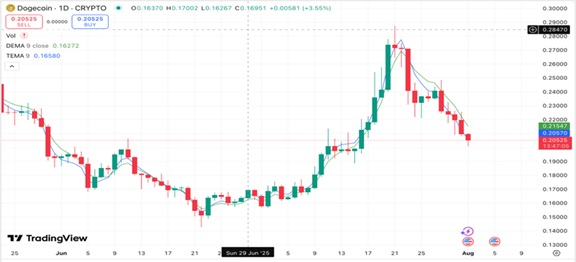
DOGE Price Chart | TradingView

Some chartists forecast a near-term rise to $0.40–0.50, while extended bullish patterns suggest that DOGE could eventually hit $1.00, assuming sustained momentum and retail interest return.

Why the Breakout Case Still Hinges on Catalysts

Whales recently bought over 310 million DOGE in 24 hours, pushing large-wallet holdings north of 73.3 billion DOGE. This accumulation reduces the circulating supply and often signals strong confidence. At the same time, trading volume has surged by 14%, while options volume spiked 350%, suggesting heightened interest. Still, DOGE’s potential to reach $1 by September depends on trigger events like ETF approval, mainstream media attention, or renewed viral adoption—all possible but not guaranteed.

Little Pepe (LILPEPE): A Frog with Dog Energy

Little Pepe’s narrative goes beyond being Pepe Coin’s successor. It’s the top meme coin investors are watching and for good reason. LILPEPE is the native token of Pepe Chain, a Layer?2 meme ecosystem built for speed, low cost, and fair launches. It includes zero-tax trading and anti-sniper bot protection.  Little Pepe also features a dApp launchpad and Pepe’s Pump Pad, which are designed to foster ongoing usage. Unlike DOGE, which piggybacks on community nostalgia, LILPEPE backs every transaction with utility.

Presale Momentum Ignites Real Demand

Stage 8 sold out with $13.775 million raised, and Stage 9 is nearly sold out with over $14.5 million at $0.0018 per token. Each stage had been selling at record speed, showing strong confidence among the crypto community.  A viral $777,000 giveaway, confirmed Tier?1 exchange listings, and recent CoinMarketCap visibility are fueling institutional and retail buzz, with every presale stage rush reinforcing confidence.

LILPEPE Price Prediction: Asymmetric Upside Set Post-launch

LILPEPE’s momentum is exceptional. Its presale stages sell out in a few days, its community is growing by thousands day by day, and the viral giveaway is drawing positive promotion. Analysts believe LILPEPE is built for explosive gains. It’s not just leaning on viral tweets and community strength like DOGE did. It comes with an extra weapon—infrastructure.  Its conservative listing target of $0.003 would almost double its current price. Longer-term upside scenarios range from $0.18 to $0.50. This implies a potential 100×–300× gain.  Given DOGE has already rallied hundreds of billions in market cap, LILPEPE offers a faster path to life-changing returns from a much smaller base.

Why Little Pepe (LILPEPE) Can Outrun Dogecoin in 2025

LILPEPE isn’t just another meme coin—it’s a hyper-utility project built from the ground up to outperform legacy meme coins like DOGE. Here’s why:

  • Real Utility on a Layer-2 Chain: Unlike DOGE, LILPEPE powers the Pepe Chain, a full-featured Layer-2 blockchain built specifically for meme culture. This gives it real utility, something Dogecoin lacks.
  • Sniper-Proof, Fair Launch Architecture: Equipped with anti-sniper bot protection and zero-tax trading, LILPEPE ensures a fair and decentralized environment for all traders. By solving problems that have plagued past meme launches, it is poised to attract a larger crowd.
  • Built-In Launchpad for Meme Projects: It’s Pepe’s Pump Pad dApp launchpad gives meme creators a platform to launch tokens directly on the Pepe Chain. This drives ecosystem demand and long-term sustainability.
  • Confirmed Tier-1 Exchange Listings Incoming: Two major centralized exchanges are already locked in for launch, with plans to list on the world’s largest CEX. DOGE, in contrast, already trades on all major platforms, limiting fresh listing momentum.
  • Explosive Early Valuation: With an FDV still under $20M, Little Pepe has far more room to grow. DOGE’s current market cap is over $28B, making another 100x highly improbable.
  • $777K Giveaway Driving FOMO: The ongoing campaign, where 10 winners will receive $77,000 worth of $LILPEPE tokens, is creating intense viral interest and drawing in retail buyers en masse.

Final Verdict: Dogecoin vs. Little Pepe

Dogecoin has enduring brand power and plausible near-term upside. However, its legacy status and massive supply cap limit its potential for enormous returns in 2025. In contrast, Little Pepe merges meme magic with a fully functional Layer?2 ecosystem, explosive presale traction, and real-world utility. Its early-stage valuation, Tier-1 exchange plans, and fair launch mechanics make it the stronger candidate for dominating return potential this cycle. ? Stage 9 is almost sold out—buy now at $0.0018 before the next price jump. ? Join the $777,000 giveaway to win one of ten $77K token prizes.

For more information about Little Pepe (LILPEPE) visit the links below:

Website: https://littlepepe.com

Whitepaper: https://littlepepe.com/whitepaper.pdf

Telegram: https://t.me/littlepepetoken

Twitter/X: https://x.com/littlepepetoken
Top Crypto to Buy: BlockDAG, Ethereum, Solana & Toncoin Push Ahead of the Pack

0

Crypto is heating up again, and the real edge comes from spotting the movers before they break out. This August, both fresh launches and familiar names are creating serious buzz in the market.

BlockDAG is getting attention for its low presale entry and hands-on tools. Ethereum continues to attract big players. Solana is surging in staking and futures. Toncoin is growing its reach through ecosystem partnerships. If you’re tracking the top crypto to buy, these four names are leading the charge and showing strong setups for what’s next.

1. BlockDAG: Early Access, Trading Features, and 10 BTC Rewards

BlockDAG’s presale is turning heads with one of the most talked-about pricing setups of 2025. With around $364 million raised and 24.9 billion coins sold, it’s moving fast. The $0.0016 price tier is open until August 11, making it a rare entry point before the price jumps to $0.0276 and later to $0.05 at launch. Buyers during this window also get a shot at a 10 BTC reward pool worth $1.1 million, where rewards scale with how much BDAG you pick up.

But this isn’t just about buying early. The new Dashboard V4 offers a full trading experience with live charts, working order books, wallet updates, and instant trade features. It’s built for hands-on users who want to train and engage before launch.

More than 2 million people are already mining BDAG on mobile through the X1 app, adding to its early traction. If you’re searching for the top crypto to buy, BlockDAG’s mix of practical tools, low cost, and reward systems gives it serious momentum.

2. Ethereum Pushes Ahead with Strong Market Signals

Ethereum continues to show why it’s one of the top crypto to buy right now. Trading between $3,600 and $3,700, ETH has surged 54% in the last month, far outpacing Bitcoin’s 10% gain. Even with a $465 million ETF outflow from BlackRock’s ETHA on August 4, the overall trend is upward. Corporate treasuries now hold around 966,000 ETH, valued near $3.5 billion, a huge leap from 116,000 ETH just seven months ago. That shift shows rising confidence from large entities, who are also eyeing Ethereum’s staking rewards of roughly 3 to 4%.

Regulation is helping too. The GENIUS Act and pending stablecoin bills are setting the stage for Ethereum to become a preferred choice for institutions wanting stability and scalability. Analysts are eyeing a move toward $4,100 as the next target, with potential to challenge the all-time high of $4,865. With strong fundamentals, steady updates, and deep support from major players, Ethereum is holding its place in any list of top crypto to buy in 2025.

3. Solana Gains Strength with Whale Activity and ETF Boost

Solana is showing serious momentum and is quickly becoming a standout among the top crypto to buy in 2025. Trading between $165 and $170, it’s riding a wave of rising interest from institutions. CME futures open interest for Solana has hit $800 million, marking a 370% jump in just a month. The first U.S.-based Solana staking ETF has also gone live, drawing even more attention. Bit Mining added to the action with a $5 million SOL buy-in and plans to raise $300 million for new treasury and infrastructure projects.

Data shows whales are active, pulling $52 million in recent withdrawals off exchanges. About 43% of holders are still at unrealized losses, which some say points to strong hands holding through turbulence. The $165–$170 zone is seen as solid support, and if SOL clears $171, it could rally toward $200 or even push past that with enough momentum. Some bulls are even eyeing long-term targets as high as $900, making Solana one to watch closely.

4. Toncoin Gathers Speed with Ecosystem Backing

Toncoin is sitting near $3.6 to $3.7 and has climbed 24% over the past month. It’s becoming more than just a Telegram-linked coin. The TON Foundation recently locked in a $400 million treasury deal with institutional backers. Meanwhile, STON.fi raised $9.5 million to strengthen cross-chain tools, adding to Toncoin’s growing role in DeFi. But the biggest news might be from Verb Technology, which raised $558 million to create the first public Toncoin treasury. That deal wraps up by August 7.

Toncoin’s future also leans on its Telegram integration. The platform now offers TON Wallet to 87 million U.S. users, boosting exposure. While there are predictions of a short-term dip to around $2.62, others see that as a potential entry point before the next wave. Between ecosystem deals and rising adoption, Toncoin is shaping up as one of the most dynamic names in the current market, offering both risk and serious reward potential.

Final Take: Four Coins Making Big Waves This Month

Looking at the top crypto to buy, these four are stepping up with real momentum. BlockDAG brings in a unique $0.0016 presale tier, interactive trading tools, and a 10 BTC auction pool, all running until August 11. It’s one of the few projects combining hands-on features with deep engagement before launch.

Ethereum is backed by both market growth and supportive regulation. Solana is making big moves through ETF launches and whale activity. Toncoin stands out with a rising ecosystem and strong support from Telegram integration. Whether you’re after a promising presale, a market leader, or a fast-moving DeFi platform, this group brings something for every type of trader in today’s evolving crypto landscape.

What Defines a Premium Casino Experience Online?

0

The digital entertainment landscape has evolved dramatically, with discerning players now expecting sophisticated experiences that rival luxury establishments worldwide. Quality platforms distinguish themselves through meticulous attention to detail, innovative technology implementation, and unwavering commitment to player satisfaction. Understanding these distinguishing characteristics helps enthusiasts identify operators that deliver exceptional value and memorable entertainment experiences across all touchpoints.

Superior Game Selection and Quality Standards

Elite platforms curate extensive libraries featuring titles from industry-leading software developers like NetEnt, Evolution Gaming, and Pragmatic Play. These partnerships ensure access to cutting-edge graphics, immersive soundtracks, and innovative gameplay mechanics that create engaging entertainment experiences for diverse preferences and skill levels.

Portfolio diversity extends beyond quantity to encompass various themes, volatility levels, and feature sets that cater to different player preferences. Premium operators regularly refresh their offerings with exclusive releases, seasonal promotions, and limited-time experiences that maintain excitement and encourage exploration of new content.

Technical excellence manifests through seamless gameplay, quick loading times, and consistent performance across desktop and mobile devices. High-definition graphics, professional audio engineering, and smooth animations contribute to immersive experiences that transport players into richly detailed virtual environments.

Game testing and certification from independent laboratories like eCOGRA and iTech Labs provide additional quality assurance, ensuring fair outcomes and reliable random number generation. These third-party validations demonstrate operator commitment to transparency and player protection.

Exceptional Customer Service and Support

Premium platforms invest heavily in comprehensive support infrastructure that addresses player needs promptly and professionally. Multiple communication channels, including live chat, email, and telephone support, provide convenient access regardless of time zones or technical preferences.

Response times for premium support typically range from immediate live chat assistance to email replies within 24 hours. Staff training programs ensure representatives possess deep knowledge of platform features, game mechanics, and regulatory requirements to provide accurate, helpful guidance.

Online casinos like vulkanbet casino exemplify premium service standards through dedicated account managers for VIP members, multilingual support teams, and proactive communication about account updates or promotional opportunities. These personalized touches create memorable interactions that foster long-term relationships.

Multilingual capabilities enable global audiences to communicate in their preferred languages, removing barriers that might otherwise limit engagement or create misunderstandings. Professional translation services and native speakers ensure cultural sensitivity and accurate information delivery.

Support documentation, including comprehensive FAQs, video tutorials, and step-by-step guides, empowers players to find answers independently while reducing wait times for complex inquiries requiring personal assistance.

Advanced Security and Fair Play Measures

Regulatory licensing from respected jurisdictions like Malta, Gibraltar, or the United Kingdom provides foundational credibility and ongoing oversight that protects player interests. These authorities maintain strict standards for financial reserves, operational procedures, and dispute resolution mechanisms.

Advanced encryption technology protects sensitive information during transmission and storage, utilizing industry-standard SSL certificates and secure payment processing systems. Regular security audits identify potential vulnerabilities and ensure continued protection against evolving cyber threats.

A comprehensive security infrastructure includes multiple layers of protection and verification processes to maintain platform integrity.

Security Feature Premium Standard Implementation Method Player Benefit
SSL Encryption 256-bit minimum Certificate verification Data protection
Account Verification Multi-step process Document validation Identity security
Payment Security PCI DSS compliance Tokenization systems Financial safety
Fair Play Testing Monthly audits Independent laboratories Outcome integrity
Fraud Prevention AI monitoring Real-time analysis Account protection
Responsible Gaming Self-exclusion tools Automated limits Player welfare

Anti-money laundering procedures and know-your-customer requirements demonstrate compliance with international financial regulations while protecting legitimate players from fraudulent activities that could compromise the platform’s reputation or stability.

Seamless User Experience and Interface Design

Intuitive navigation structures enable effortless content discovery and account management without requiring extensive technical knowledge or platform familiarity. Logical menu organization, clear labeling, and consistent design elements create cohesive experiences across all platform sections.

Mobile optimization ensures full functionality across smartphones and tablets, with responsive designs that adapt seamlessly to different screen sizes and operating systems. Native applications often provide enhanced performance and offline capabilities for improved convenience.

Loading speed optimization through content delivery networks and efficient coding practices minimizes wait times and maintains engagement during peak usage periods. Server redundancy and load balancing prevent service interruptions that could disrupt gaming sessions.

Several fundamental elements contribute to exceptional user experiences that set premium platforms apart from standard offerings:

  • Clean, modern interface design with logical information hierarchy
  • One-click access to account management and transaction history
  • Advanced search and filtering options for content discovery
  • Customizable dashboards and personalized recommendations
  • Seamless transitions between desktop and mobile devices
  • Integration with popular payment methods and digital wallets
  • Real-time notifications for promotions and account updates
  • Quick deposit and withdrawal processing with transparent timelines

Accessibility features accommodate users with various needs, including keyboard navigation, screen reader compatibility, and adjustable text sizes that ensure inclusive experiences for all players.

Generous Rewards and Loyalty Programs

Welcome packages introduce new players to platform features while providing additional value through matched deposits, complimentary spins, or extended gameplay opportunities. These introductory offers demonstrate operator confidence in their entertainment quality and encourage thorough platform exploration.

Ongoing promotional calendars maintain engagement through regular tournaments, seasonal celebrations, and exclusive events that reward active participation. These initiatives create a community atmosphere and provide additional winning opportunities beyond standard gameplay.

VIP programs recognize loyal players through tiered benefits including personalized bonuses, exclusive event invitations, and dedicated account management services. Higher tiers often include luxury rewards like travel packages, electronics, and unique experiences that extend value beyond monetary considerations.

Transparent terms and conditions outline bonus requirements, wagering obligations, and withdrawal restrictions in clear language that enables informed decision-making. Premium operators avoid hidden clauses or unrealistic requirements that could mislead players about true promotional value.

Excellence in Every Detail

Premium platforms distinguish themselves through comprehensive attention to every aspect of the player journey, from initial registration through ongoing engagement and eventual withdrawals. These operators understand that exceptional experiences result from consistent quality across all touchpoints rather than isolated moments of excellence.

Identifying truly premium platforms requires evaluating multiple criteria simultaneously rather than focusing on individual features or promotional offers. Look for operators with strong regulatory credentials, diverse high-quality game portfolios, responsive customer support, and transparent business practices.

Begin exploring premium gaming experiences today by researching licensed operators with proven track records of player satisfaction and industry recognition. Focus on platforms that demonstrate genuine commitment to quality through their game selection, security measures, and customer service standards.

Base Outage Exposes Critical Decentralization Weaknesses, Particularly Its Reliance on a Centralized Sequencer

0

Base, an Ethereum layer-2 blockchain, experienced a 33-minute outage due to a faulty sequencer and an improperly configured backup system.

The issue began at 6:07 AM UTC yesterday, the active sequencer lagged in block production, prompting Conductor, Base’s sequencer management system, to switch to a backup sequencer that was not fully set up, halting block production. The core team resolved the issue by 6:40 AM UTC, ensuring no chain reorganization was needed.

Base, securing over $4.1 billion in total value locked (TVL), plans to enhance infrastructure to ensure all sequencers can handle block-building tasks. This was Base’s second major outage, following a 43-minute disruption on September 5, 2023. Community reactions were mixed, with some, like former Coinbase engineer 0xrooter, viewing it as a sign of growing adoption, while others compared it to Solana’s past outages.

The outage was caused by a faulty sequencer and an improperly configured backup, highlighting Base’s reliance on a centralized sequencer for block production. Unlike Ethereum’s layer-1, where multiple nodes validate transactions, Base’s sequencer acts as a single point of failure, undermining the decentralized ethos of blockchain technology.

This centralization means that if the sequencer or its backup fails, the entire network halts, as seen during the 33-minute downtime, disrupting user transactions and dApp functionality. The resolution of the outage required intervention by Base’s core team, indicating centralized operational control. In a fully decentralized system, automated failover mechanisms or community-driven solutions would ideally handle such issues.

Repeated outages (this being the second major incident after September 2023) could erode trust among users and developers, especially for a network securing over $4.1 billion in TVL. If Base is perceived as unreliable due to centralized points of failure, it may struggle to compete with other layer-2 solutions like Arbitrum or Optimism, which are also working toward greater decentralization.

Community reactions, such as comparisons to Solana’s outages, underscore concerns that Base’s infrastructure may not yet be robust enough to support its growing adoption. Base’s design prioritizes scalability and low-cost transactions, but this incident highlights the trade-off with decentralization.

Centralized sequencers enable faster and cheaper transactions but introduce risks of downtime or censorship, which are antithetical to blockchain’s promise of resilience and autonomy. The sequencer’s failure and the backup’s misconfiguration reveal a critical vulnerability. In a decentralized system, no single component should be able to halt operations.

The reliance on a single sequencer (or a poorly configured backup) raises questions about Base’s resilience against targeted attacks or technical failures. The Conductor system’s failure to switch to a functional backup sequencer suggests inadequate decentralization in failover processes.

A decentralized network would ideally have multiple, independent sequencers or a permissionless mechanism to ensure continuity, which Base currently lacks. Centralized sequencers could, in theory, be manipulated to censor transactions or prioritize certain ones, posing risks to the network’s neutrality.

While no censorship was reported in this incident, the centralized control structure raises concerns about future vulnerabilities, especially under regulatory or external pressures. Base’s plan to “enhance infrastructure” to ensure all sequencers can handle block-building tasks is a step toward resilience but doesn’t address full decentralization.

Without a clear timeline for decentralizing sequencer operations or involving the community in governance, Base risks being seen as a centralized service masquerading as a blockchain. Ethereum’s layer-1 has thousands of nodes ensuring redundancy and decentralization, making outages extremely rare.

Base’s outage underscores the gap between layer-1 and layer-2 in terms of decentralization. Many layer-2 solutions, including Base, face similar issues due to their reliance on centralized components like sequencers to achieve scalability. This incident highlights an industry-wide challenge: balancing performance with decentralization.

Projects like Arbitrum and zkSync are also working toward decentralized sequencer models, but progress is slow. While the network’s $4.1 billion TVL and growing adoption signal strong potential, addressing these concerns is crucial to maintaining trust and competing in the increasingly decentralized layer-2 ecosystem.

Trump Announces 100% Tariff on Imported Chips, But Offers Exemption for U.S. Manufacturers

0

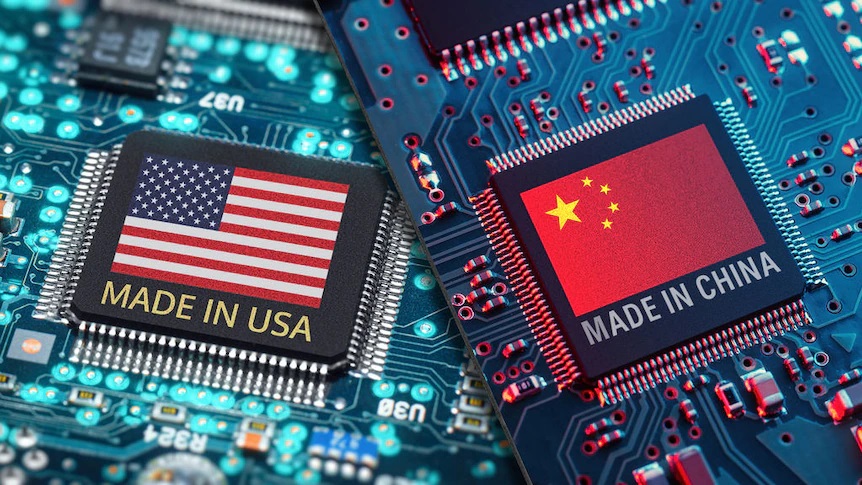
President Donald Trump on Wednesday said his administration will impose a 100% tariff on all imported semiconductors and chips, ramping up pressure on global technology and manufacturing giants to shift production to the United States.

The measure marks Trump’s most aggressive trade stance yet in his effort to localize advanced manufacturing, especially in critical sectors like AI, electronics, and defense infrastructure.

“We’re going to be putting a very large tariff on chips and semiconductors,” Trump declared from the Oval Office. “But the good news for companies like Apple is if you’re building in the United States or have committed to build… there will be no charge.”

“So in other words, we’ll be putting a tariff on of approximately 100% on chips and semiconductors.”

The president emphasized that the tariffs would not apply to companies with significant U.S.-based manufacturing operations, but did not clarify what qualifies a firm for this exemption. It remains unclear whether current investments or future pledges would be enough, or how much domestic manufacturing would be considered sufficient to bypass the new duties.

The announcement follows a growing wave of concerns that the U.S. supply chain is dangerously reliant on foreign-made chips — particularly from Asia — at a time when semiconductors are foundational to everything from smartphones and satellites to electric vehicles and artificial intelligence systems.

Several of the world’s leading chipmakers, including Taiwan Semiconductor Manufacturing Company (TSMC), Nvidia, GlobalFoundries, and Texas Instruments, have already begun expanding their U.S. presence, hoping to qualify for both subsidies under the CHIPs Act and protection from Trump’s looming tariffs.

  • Apple, which Trump singled out as an example, has committed to invest an additional $100 billion in U.S. operations over the next four years. That’s on top of its previously pledged $500 billion.
  • TSMC has pledged $165 billion toward U.S.-based fabs, including its facility in Arizona.
  • Nvidia, now the world’s most valuable company, says it will invest $500 billion in U.S. AI infrastructure by 2029.
  • GlobalFoundries committed $16 billion in June to boost semiconductor production at its New York and Vermont facilities.
  • Texas Instruments recently announced $60 billion in upgrades to seven U.S. chip fabrication plants, supplying major customers like Apple, Ford, Nvidia, Medtronic, and SpaceX.
  • The Semiconductor Industry Association reports that over 130 chip-related projects worth a combined $600 billion have been announced in the U.S. since 2020, signaling strong momentum toward reshoring advanced manufacturing.

However, most of these projects are still under construction or early-stage development, with only a handful of new fabs currently operational. Building a semiconductor plant typically takes three to five years, raising concerns that tariffs imposed before those projects go live could disrupt supply chains or inflate costs for American companies still dependent on global imports.

Tariffs, CHIPs Act, and Strategic Leverage

Wednesday’s announcement builds on earlier hints Trump made on Tuesday during his CNBC appearance, where he said the tariffs would be rolled out imminently. The decision also appears to be timed strategically as part of the broader Section 232 investigation launched in April, which probes the national security risks tied to America’s semiconductor import reliance.

While the CHIPs and Science Act of 2022 already provided $52 billion in federal incentives to bring chipmaking back to U.S. soil, Trump’s latest move underscores his administration’s shift from carrots to sticks — from subsidies to penalties.

This approach is aimed not only at compelling multinationals to “build where they sell”, but also to reduce U.S. vulnerability in a world increasingly shaped by geopolitical tensions and AI arms races.

Yet, experts warn that such drastic tariffs, especially at 100%, could raise prices for consumer electronics, strain smaller U.S. firms, and provoke retaliation from major trading partners. The administration has not released a formal framework explaining enforcement mechanisms or how it will verify whether a company’s “commitment to build” in the U.S. is credible enough to warrant exemption.

With the semiconductor sector already in flux due to AI-driven demand, shifting supply chains, and growing regulatory uncertainty, Trump’s tariff bombshell may further complicate business planning.

While the administration portrays the policy as a wake-up call to foreign and domestic firms alike, critics argue that the lack of clarity and absence of a measured rollout strategy may undermine its effectiveness.

Still, with companies like Apple, TSMC, Nvidia, and others racing to deepen their roots in the U.S., it’s clear that the global chip race is entering a new chapter.