DD
MM
YYYY

PAGES

DD
MM
YYYY

spot_img

PAGES

Home Blog Page 7509

Oando Plc continues to sell assets, Helios helping on recapitalization

0

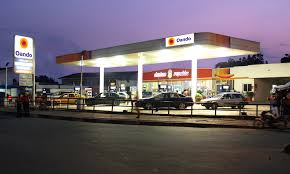
Oando PLC, an integrated oil and gas company headquartered in Nigeria, has announced the execution of a definitive agreement with a vehicle owned by funds advised by Helios Investment Partners LLP to acquire 49% of the voting rights in Oando’s midstream business subsidiary, Oando Gas and Power Limited (OGP).

The agreed transaction consideration of $115.8 million is conditional upon the receipt of regulatory approvals and subject to customary purchase price adjustments. Upon completion, Oando will retain 49% of the voting rights in OGP. The residual 2% will be held by a local entity.

Recently, in another development, Oando PLC which is listed on both the Nigerian and Johannesburg Stock Exchange, has announced a $210 million recapitalization of its downstream operations by HV Investments II B.V., (“HVI”), a joint venture owned by Helios Investment Partners (“Helios”), a premier Africa-focused private investment firm and the Vitol Group (“Vitol”), the world’s largest independent trader of energy commodities (together, the “Consortium”).

As a result of this and further to the announcement on June 30, 2015, a new company will be formed to hold interests in Oando Marketing Limited, Oando Supply & Trading Limited, Apapa SPM Limited, and Oando Trippmart Limited. Oando PLC will retain 49% shareholding in the newly formed corporate vehicle, with the Consortium owning 49%, and the residual 2% owned by a local entity.

Time is hard in Nigeria indeed. It is simply unbelievable that Oando needs to sell assets to survive the low crude prices and the recession.

What Nigeria could learn from Saudi Arabia during this recession

0

Saudi Arabia is innovating as it fights economic turbulence triggered by falling crude prices.

As part of austerity measure, Saudi Arabia on Sunday announced that it was adopting the Gregorian or Western calendar as a basis for paying civil servants.

The kingdom had adopted the lunar Islamic calendar when it was founded in 1932.

The new development brings the birthplace of Islam in line with many of its energy customers.

The Islamic lunar calendar is actually 11 days shorter than the 365-day solar year, which will actually save the kingdom money by cutting salary days for many public servants.

It is part of a larger series of cost-cutting measures recently imposed that includes cancelling some bonuses offered to state employees and hiking fees for entry visas for foreign visitors and residents.

Millions of Muslims from around the globe visit Saudi Arabia annually as part of the hajj pilgrimage to Islam’s holiest sites.

Saudi King Salman has also ordered a 20-percent cut in salaries for civil servants and a 15-percent reduction in financial perks for the kingdom’s advisory Shura council as part of far-reaching economic reforms.

The world’s top oil exporter, Saudi Arabia has seen decreasing revenues since oil prices have been in decline since 2014 as OPEC nations maintain robust output amidst static demand.

Five trends in Agricultural Finance in Africa

0

The following are the key five trends in the agricultural finance sector in Africa.

Money, money, money!
At the recent African Green Revolution Forum in Nairobi, Kenya, world leaders and other deep pocketed people pledged $30 Billion to the Agricultural sector in Africa. The pledges believed to represent the largest package of financial commitment to agricultural sector in Africa to date, will be directed to increase production, income and employment for small scale farmers and local African agricultural businesses over the next ten years.

According to Harvard’s Prof. Calestous Juma, Africa imports 83% of its food every year. In 2014, Africa spent over $35 billion (Sh3.5 trillion) on importing food, in addition to being the largest recipient of food aid globally.

Africa holds almost 50 percent of the world’s uncultivated land which is suited for growing food crops, comprising as many as 450 million hectares that are not forested, protected, or densely populated, yet, countries like Brazil, Indonesia, and Thailand currently export more food products than all of Sub-Saharan Africa combined. Africa uses less than 2 percent of its renewable water sources, compared to a world average of five percent. And just to add icing to the cake, as much as 37% of the little food we produce is lost through post-harvest losses.

Technology is taking centre stage
A warehouse receipt system that can provide a solution to the lack of assetsthat limits small and rural farmers from accessing traditional capital, Digital payments platforms for de-risk lending,  a classification system where any form of information that has to do with agriculture can be mapped so users can match to comparable sets of data for decision making and market linkages, Crowdfunding for farmers, a system that will track the origin of export produce to specific farmers, in a bid to ensure they meet set standards, Post-harvest technologies helping Kenyan farmers reduce yields loss, an improved seed multiplication and distribution business that’s bringing improved maize seeds to rural Kenya, the list goes on and on.
Mechanisation is trickling down to the people
In July 2016, the Kenyan government made news when it announced a deal with Brazil for the purchase of 11,000 tractors and combine harvesters that would be sent down to the Counties for leasing to farmers at subsidized fees. Under Kenya’s new constitution, the function of Agriculture & Fisheries has been devolved to the counties, opening up opportunities for small scale farmers to easily access services and facilities at a local level.
Climate Change is no longer a “Chinese Conspiracy Theory
Donald Trump’s twitter rants aside, Climate change is a real threat to Agriculture. The United States and China, the world’s biggest emitters of greenhouse gases, have announced they will formally ratify the Paris climate change agreement in a move campaigners immediately hailed as a significant advance in the battle against global warming. Having these two big gas emission culprits ratify the agreement brings us closer to enforcement of the Paris agreement that brought pledges from almost 200 different Governments last December. The deal coming into force would also commit the countries to aspire to keep temperatures below 1.5C above pre-industrial levels – a tall ask and one that will require those country pledges to be ramped up – and for rich countries to continue giving climate aid to poorer countries beyond 2020.

African Countries are among the most vulnerable to Climate change events, as this year’s powerful El Niño has shown. As estimated 14 million people across southern Africa are at risk of hunger this year because of severe drought. Emerging research indicates that climate change could drive down yields of African staples such as rice, wheat, and maize roughly 20 percent by 2050. Worsening and widespread drought could shorten the growing season in some places by up to 40 percent.

So far, 61 countries representing some 48% of global emissions, have formally adopted the deal. To enter into force, at least 55 countries representing at least 55% of emissions have to ratify. Fingers crossed that we hit this target before end of 2016.
Solar Energy improves rural access to Power
According to Energypedia, the energy sector in Kenya is largely dominated by petroleum and electricity, with wood fuel providing the basic energy needs of the rural communities, urban poor, and the informal sector. An analysis of the national energy shows heavy dependency on wood fuel and other biomass that account for 68% of the total energy consumption. Electricity access in Kenya is low despite the government’s ambitious target to increase electricity connectivity from the current 15% to at least 65% by the year 2022.

Solar power has come in to plug a power gap that has left majority of rural housel holds out of the power grid. Companies such as M-Kopa Solar have been on the forefront of this solution, with an estimated 200,000 rural households in Kenya having solar home systems and annual PV sales in Kenya at between 25,000-30,000 PV modules. Competition is building up in this sector, with the entry of German based MobiSol and Indian based orb Energy, all angling for the 4 Million or so rural households in Kenya.

Kenya introduced a VAT on solar products totaling 16% in Q3 2013, but this was later scrapped in 2014 thanks to lobbying by World bank backed SolarAid among others, making Solar power more affordable.

Muriu Alex
Partner, Farm Capital Africa Ltd

Google to Unveil Pixel and Pixel XL Phones on Oct 4

0

Google is set to announce Pixel and Pixel XL, its pure Android-based smartphones on October 4. Yes, the smartphones won’t be called Nexus this time and Google is adopting the Pixel branding used earlier with its Chromebook and Android tablet. With Pixel branding, Google is also emphasizing on the future of ‘Made By Google’ devices.

The new Google smartphones will be made by HTC but don’t be surprised if there is no or little mention of HTC. Rumors have pointed out the search giant is more serious about its say in the design of future devices, which maybe built by Google directly. Google’s Pixel branded phones won’t be the first Android 7.0 Nougat devices, but will be the first to support Google’s DayDream VR platform.

Lacking organic growth and product pipelines, Interswitch completes acquisition of VANSO for talent and growth

0

Africa’s leading digital payments and commerce company, Interswitch Limited,  has successfully completed a 100 per cent acquisition of Value Added Network Solutions Limited (VANSO). VANSO is a market leading mobile and security-focused financial technology provider, delivering cutting edge and innovative solutions in Africa.

The transaction has received all relevant regulatory and shareholder approvals, including the approval of the Securities and Exchange Commission. The transaction will result in VANSO’s highly successful mobile banking, SMS and security business lines being fully integrated into Interswitch’s digital commerce and technology operations in Nigeria, and across the continent where they can leverage on Interswitch’s geographic expansion.

According to Interswitch, highlights of the acquisition includes that “the current management team of VANSO will be absorbed into the Interswitch management organisation. VANSO CEO, Denis O’Brien will lead the Interswitch mobile payment’s business unit with a mandate to drive aggressive organic and geographic growth. Denis brings nearly two decades of financial technology experience in Africa.”

Interswitch is presently under severe competition challenge from new entrants like Flutterwave, eTranzact and others. Yet, its product has barely changed. Lacking this innovation, organic growth has not come. This acquisition of VANSO for N15 billion will provide growth and innovation to the digital payment pioneer headquartered in Nigeria.

Helios investment group in London invested in Interswitch few years ago. The firm had explored possible ways of exit but that has not come at a reported valuation of $1 billion. Understanding that exit is not coming, they have decided to pursue growth at all means.

In 2014, Interswitch acquired Kenya’s Paynet Group (they later rebranded to Interswitch East Africa in 2015) and this created a combined network of over 150 financial institutions, thereby strengthening Interswitch’s hold in the East African market.

This is the only way Interswitch will stay relevant through scale as Paypal expands into Africa.