DD
MM
YYYY

PAGES

DD
MM
YYYY

spot_img

PAGES

Home Blog Page 755

Africa’s AI Market Projected to Hit Market Volume of $16.53 Billion in 2030 – Mastercard Report

0

Africa’s Artificial Intelligence (AI) landscape is on a fast upward trajectory, with a new Mastercard report projecting the market to reach a volume of $16.53 billion by 2030.

This remarkable growth underscores the continent’s increasing embrace of digital innovation, driven by rising investment, expanding tech ecosystems, and the urgent need for scalable solutions across key sectors like finance, agriculture, health, and education.

With a forecasted compound annual growth rate (CAGR) of 27.42%, AI is poised to become a cornerstone of Africa’s digital transformation, unlocking new opportunities for inclusive development and economic resilience.

Mastercard in its recently published White Paper titled “Harnessing the transformative power of AI in Africa”, emphasizes the pivotal role of AI in empowering communities, enhancing inclusion, and building a future where all Africans can actively participate in the digital economy.

The payments giant notes that the technology is already influencing industries such as finance, healthcare, agriculture, urban development, and energy, with real-world applications gaining traction across various African nations.

“Africa is at an inflection point, when smart technologies hold the potential to make a real difference to people’s lives. A coordinated, integrated approach to the development and implementation of artificial intelligence (AI) strategies can propel sustainable and equitable development, with gains in fields such as economic policymaking, agriculture, manufacturing, banking, and finance”, said Mark Elliot, Division President, Africa, Mastercard.

Africa’s youthful population with a median age of just 19 years is seen as a core driver of AI adoption. The continent’s digital-savvy youth are among the earliest adopters of AI-powered tools, laying a foundation for broad-based technological transformation.

Several African countries are emerging as regional leaders in AI policy and governance. South Africa, Egypt, Rwanda, Mauritius, Kenya, and Nigeria have rolled out national AI strategies and regulatory frameworks aligned with the African Union’s Declaration on Responsible AI, promoting ethical deployment of emerging technologies.

AI is also playing a significant role in financial inclusion, particularly in markets like Kenya and Nigeria, where platforms such as M-Pesa and AI-powered credit scoring tools are expanding access to finance for underserved populations. Additionally, AI-based mobile payments are breaking down barriers, reducing onboarding costs, and improving security and convenience for users.

The job creation potential of AI is enormous, with estimates suggesting 230 million digital jobs could be generated in Sub-Saharan Africa by 2030. However, a shortage of AI talent remains a critical issue. Efforts by organizations such as Deep Learning Indaba and AI4D Africa are helping address the skills gap by training local professionals and fostering innovation.

Investment is also on the rise. In 2023 alone, AI-focused startups secured $610 million in South Africa, $218 million in Nigeria, and $15 million in Kenya. Tech giants like Google have committed $1 billion to digital transformation efforts across the continent.

Country-level efforts are also accelerating AI adoption:

Morocco is pushing forward with AI in healthcare, agriculture, energy, and finance, with banks reducing operational processing times by 30% and increasing revenues through AI tools.

Kenya has built a robust startup ecosystem supported by incubators and innovation hubs focused on ethical, inclusive AI.

South Africa has invested over $11.45 billion in telecom infrastructure since 2019, enhancing its position as a leading AI research hub.

Nigeria is leveraging AI across security, travel, payments, and health, supported by public-private partnerships like Google.org’s NGN 2.8 billion grant to boost AI education and employment.

Despite the rapid advances, Mastercard cautions that responsible governance is essential to ensure AI promotes inclusive progress rather than widening inequality. The report urges African governments, businesses, and civil society to adopt ethical AI frameworks, scale local talent, and invest in infrastructure that supports sustainable digital growth.

With 60% of the world’s arable land, a young, tech-savvy population, and growing mobile penetration, Africa is uniquely positioned to harness AI for economic transformation. By 2050, with a projected population growth of 800 million, AI will be vital in scaling productivity, meeting rising consumer demands, and unlocking shared prosperity across the continent.


The Era of Driverless Taxis Are Largely Here

0

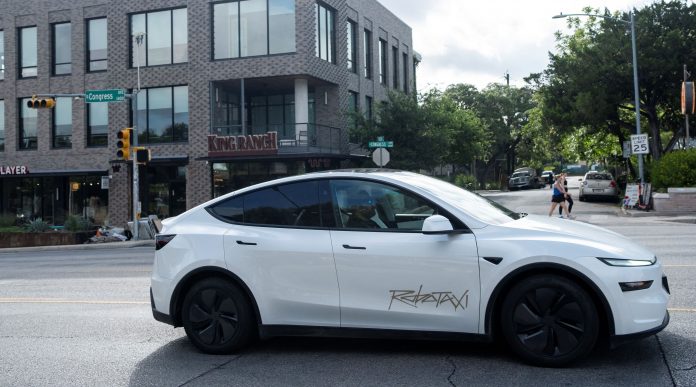
A new industry is loading, and we need to pay attention. California now has Google Waymo, Tesla Robotaxis, Amazon Zoox and General Motors’ Cruise as driverless taxis on the roads.

Give this redesign 5 more years, most airports in America may not have human-driven taxis because the machines will dominate.

I pity the politicians and policymakers because they are yet to understand the scale of unemployment that is loading in this decade of app utility. Yes, the foundational construct upon which the market system has been built up, that Labour is a critical factor of production, is now under threat.

In the industrial era, land was catalytic. As we transitioned to the knowledge economy, land was off. Today, the AI-driven economy could take out Labour at scale making it possible that 2 people can run a $1 billion company! What is safe if taxi drivers cannot hide?

Labour is losing its flavour and that is something policymakers must pay attention to

Top 4 High ROI Crypto Presales Now: Cold Wallet (37x), DexBoss, AurealOne, Lightchain AI Battle for ROI Crown

0

Everyone’s looking for that one presale that turns a few hundred bucks into life-changing returns. While the majority of tokens peak at hype and fizzle on launch, a few show signs of staying power: real utility, traction, and token economics that reward users instead of draining them. If you’re hunting for a high ROI crypto presale, now’s the time to pay attention.

These four presales aren’t just riding hype. They’re built for momentum: and the earlier you enter, the greater the upside. At the top of the list sits Cold Wallet, a presale already showing why real product + real users = real returns.

Cold Wallet: Cashback That Pays Back

Cold Wallet isn’t just a wallet: it’s a self-custody tool that flips the entire user model. Instead of charging users to interact with the blockchain, it rewards them. Every gas fee, swap, or on/off-ramp action earns you cashback in CWT, its native token. That alone makes it one of the most attractive high ROI crypto presale picks right now.

Currently in stage 16 with $5.7 million raised and priced at $0.00942 per CWT, Cold Wallet is gearing up for a public launch where the token is expected to list at $0.3517. That’s a potential 37x gain baked into the price: before any post-launch upside from demand or exchange momentum.

What sets it apart is the strong product foundation. The wallet is already live, and Cold Wallet token just completed a $270 million acquisition of Plus Wallet, adding 2 million users to its ecosystem overnight. The cashback structure and referral bonuses drive real usage, meaning more transactions, more token burn, and more long-term holders.

This isn’t just another speculative flyer. It’s a presale that rewards conviction: and punishes hesitation. For anyone looking for a high ROI crypto presale with real upside, Cold Wallet deserves top priority.

DexBoss: Trading Engine With a Kickback

DexBoss is pushing to be the go-to decentralized trading hub for active DeFi users: but with a twist. Instead of standard trading fees, DexBoss redistributes a portion of those fees to its community via a trader-rewards system.

Its token, DBX, is still in early presale stages and aims to go live alongside its proprietary routing engine. What makes DexBoss stand out is its on-chain analytics layer that feeds traders real-time insights and pairs them with kickbacks based on trading volume.

While the platform is still in development, the roadmap includes automated liquidity incentives and tiered fee rebates, creating a user-focused cycle of retention and utility. The early presale price leaves room for a strong initial run once features roll out: giving it solid high ROI crypto presale potential for those who enter before the first exchange listings.

AurealOne: Web3 Audio Meets DeFi

AurealOne is attempting to blend music streaming with token economics: a Spotify-meets-Staking hybrid where artists and listeners both benefit. The platform allows users to earn AUR tokens by streaming, curating playlists, or participating in community ratings.

Currently in best crypto presale, AUR tokens are being distributed at a steep discount before the full audio ecosystem launches later this year. While the model is experimental, early traction from independent artists and Web3-native creators is fueling interest.

AurealOne’s appeal lies in its model: turn passive listening into active earning. If adoption catches on, early buyers of AUR could be holding a token that sits at the intersection of DeFi and creator economies. For those scouting high ROI crypto presales tied to real-world entertainment use cases, AurealOne stands out as a unique play.

Lightchain AI: Trading Signals Meet Smart Contracts

AI-backed crypto tools are everywhere right now, but Lightchain AI is packaging it differently. This project isn’t trying to be another ChatGPT-in-a-wallet clone. Instead, it uses AI to generate smart contract-ready strategies that can be deployed with a click: from automated yield farming to risk-managed DEX trading.

The presale token, LCAI, will act as the utility key to access custom models, deploy bots, and unlock priority features. The Lightchain team claims that AI-generated strategies will improve over time via a feedback engine tied to on-chain results: a bold claim, but one that could stick if early models outperform.

Right now, early buyers are picking up tokens before the full app suite is released. While still speculative, the combo of AI hype, DeFi utility, and modular smart contracts gives LCAI potential appeal: especially if real-world gains from the AI models start surfacing. It’s a calculated risk, but one with serious high ROI crypto presale potential if they hit their development milestones.

Final Thoughts

Most crypto presales make noise, then disappear. But a few: the ones with products, traction, and smart token mechanics: are built to compound. Cold Wallet leads the charge in this current cycle. With a live product, aggressive cashback model, and a presale floor price that already points toward a 37x upside, it’s not a question of if: but how much more early buyers can gain.

The clock’s ticking. High ROI presales don’t stay underpriced forever.

Best Crypto Coins for 2025: BlockDAG, Chainlink, Stellar & Cardano in the Spotlight

0

This year has already shaken up the crypto world, and the momentum is far from over. While Bitcoin and Ethereum dominate the buzz, the best crypto coins for 2025 might be the ones rising quietly, gaining traction fast. These aren’t just following trends. They’re building fresh tools, expanding ecosystems, and rolling out updates that could flip the script.

We’re looking at four names that are heating up right now: BlockDAG, Chainlink, Stellar, and Cardano. Each one brings something powerful to the table. Whether it’s tech utility, massive ROI potential, or ecosystem growth, these projects are making noise. If you want a serious edge in 2025, this is where to start.

1. BlockDAG: Live Trading and Massive 10 BTC Prize Pool

BlockDAG is making serious waves, and not just for the numbers. With more than $364 million raised and 24.8 billion BDAG coins already sold, this presale has gone beyond typical launches. Right now, the price is set at $0.0016, but that ends on August 11. After that, it jumps to $0.0276, with a final target price of $0.05. That’s a potential 3,025% return if it reaches that goal.

But it’s not only about price. The tech behind it is turning heads. The new Dashboard V4 simulates real-time trading. It has BDAG/USD charts, active order books, and wallet features. Users can place buy and sell orders, just like on an actual exchange. It’s not just watching numbers on a screen. It’s real engagement before launch.

There’s also a 10 BTC Auction going on. Anyone who buys BDAG before August 11 is entered. Rewards come from a ~$1.1 million Bitcoin pool, based on how much you buy. No chance, no picks, just direct rewards based on activity. Add to that over 2 million users already mining with the X1 app, and you’ve got a growing network around it.

If you’re trying to find the best crypto coin for 2025, BlockDAG (BDAG) stands out. It mixes hands-on tools, a strong user base, and pricing that’s still at entry-level. But the window is closing. After August 11, the price increases by 17x. Blink, and you might miss your shot.

2. Chainlink: Big Moves with Real-World Data

Chainlink is making quiet waves with something real: working tools already used across the crypto space. Trading at about $16.39, LINK is holding strong after a 4% dip. But price aside, what’s happening under the hood is major. In August 2025, Chainlink launched Data Streams for U.S. equities and ETFs, including names like NVDA, SPY, AAPL, and MSFT. These are now running live across 37 blockchains, and platforms like GMX and Kamino are using them right now.

This isn’t just theory. It’s live adoption. Whale wallets are growing, exchange supply is shrinking, and price models are setting targets anywhere from $20 to $40, depending on market breaks. One bold forecast even eyes $51 long-term. The 200-day EMA is key here. If LINK can stay above it, the breakout might come sooner than expected.

If you’re on the hunt for the best crypto coin for 2025, Chainlink demands attention. The tech is no longer in beta. It’s out there and working. The question now is whether you’re too early or already late.

3. Stellar: Real Action, Real Results

Stellar (XLM) is finally having its moment. As of August 6, it’s trading at $0.3925, coming off a massive one-day 403% surge. Why the spike? The chain has been firing on all cylinders: network upgrades, a new grant program, and a confirmed deal with Visa to handle stablecoin settlements using Stellar’s rails.

That’s not all. On-chain addresses are up by 81%, and daily transaction volume has jumped 14%. Dev activity is strong. From a chart view, XLM broke out of a falling wedge and is now aiming between $0.45 and $0.52. The big move might come after Protocol 23’s mainnet vote on September 3. If that passes, the rally could gain steam.

Analyst models are floating targets up to $0.60 and beyond. Stellar has gone from a maybe to a must-watch. When you’re stacking real use and ecosystem traction, it becomes hard to ignore for the best crypto coins for 2025 shortlists.

4. Cardano: Community Just Unlocked $71M

Cardano (ADA) kicked off August 2025 with a clear signal: the community is moving forward. A $71 million development fund got 74% approval, unlocking 96 million ADA to support Hydra (its scaling layer) and Acropolis (a major network redesign). ADA now trades around $0.7264, bouncing back from recent lows.

And it’s not just funding. Big things are on the horizon. Grayscale’s ADA spot ETF is currently under review by the SEC. A decision is expected by October 2025. If it’s approved, ADA could ride the same ETF boost that pushed Bitcoin higher. Right now, resistance sits at $0.81. A clean break there could lead to short-term jumps to $0.90 or even $1.05.

With community funding, tech upgrades, and an ETF decision in the pipeline, Cardano is making moves. That’s why it earns its place when picking the best crypto coins for 2025.

Final Word: Big Upside If You Move Fast

Not every project delivers in real time, but these four are doing just that. BlockDAG stands out with real-time trading tools and a 10 BTC Auction that ends on August 11. Chainlink is live with equity data across 37 blockchains. Stellar is locking in deals and hitting major chart targets. And Cardano just got millions in community funding to fast-track major upgrades.

If you’re focused on finding the best crypto coin for 2025, this list isn’t just speculation. These are projects already in motion. With some already approaching key dates and price shifts, the window for smart entry won’t stay open forever.

Amazon’s Zoox Secures Permit to Operate Robotaxis in California, Tesla Trains New AI-Powered FSD

0

Amazon-owned Zoox has received the go-ahead from California regulators to begin ferrying passengers in its autonomous vehicles, a decision that further intensifies the race in the self-driving space.

The approval allows Zoox to operate robotaxis on California’s public roads, marking a major step in the company’s long-standing ambition to commercialize its futuristic vehicles, which notably lack a steering wheel or pedals.

The milestone comes as competition in the robotaxi market heats up, with legacy carmakers, Big Tech, and EV pioneers all vying for a dominant position. The California Public Utilities Commission (CPUC) granted Zoox the driverless deployment permit this week, officially authorizing the company to offer commercial robotaxi rides to the public.

Zoox, which Amazon acquired in 2020 for over $1 billion, had already begun testing its uniquely designed, bidirectional vehicles without safety drivers on limited routes between its headquarters and a nearby employee parking lot in Foster City. But the new CPUC license takes the program out of the pilot phase and into a commercial rollout, albeit still limited to certain parts of the Bay Area.

The vehicle itself, more of a self-contained pod than a conventional car, is built from the ground up specifically for autonomy. With four-wheel steering, symmetrical design, and no driver cockpit, Zoox envisions a future where passengers sit face-to-face inside a robot-run ride, without ever needing to interact with a steering wheel or human operator.

“Our permit allows us to begin charging for rides in our purpose-built robotaxi on public roads. It’s a critical milestone in our deployment plan and supports our mission to make transportation safer, cleaner, and more enjoyable,” the company said in a statement Wednesday.

Tesla Ups the Ante with Next-Gen Full Self-Driving System

The Zoox announcement comes on the heels of a bold update from Tesla CEO Elon Musk, who said Wednesday that the company is currently training a new version of its Full Self-Driving (FSD) system boasting major enhancements. The upgraded system features roughly 10 times the number of parameters, which Musk said will improve its intelligence and responsiveness. It also includes major improvements in video compression, a key factor in how the system processes and understands visual input from the car’s cameras.

“Tesla is training a new FSD model with ~10X params and a big improvement to video compression loss. Probably ready for public release end of next month if testing goes well,” Musk posted on X.

Tesla’s FSD is a partially automated driving system aimed at eventually delivering full autonomy, although the company maintains that drivers must remain attentive, hands on the wheel, and ready to intervene at any time. The system builds on Tesla’s Autopilot driver-assist platform, already available in international markets like Europe and China, and uses AI models that rely on sensor and camera data to interpret real-world driving conditions.

The focus on AI has become central to Musk’s broader vision for Tesla’s future. The company has argued that autonomy—not just EV production—will drive its next phase of growth, even as it struggles with shrinking margins and stiff competition from Chinese EV manufacturers. Tesla bulls believe that its robotaxi fleet, launched earlier this year in Austin, Texas, could eventually eclipse its vehicle sales as a revenue driver.

But Tesla’s core business is facing growing pressure. Automotive revenue fell by 16% in the second quarter of 2025, and European sales have taken a hit amid broader economic headwinds and shifting consumer sentiment. Meanwhile, Tesla’s stock has been battered, down over 23% this year as of Wednesday. Some of the downturn has been linked to Musk’s strained relationship with the White House, with political tensions casting a long shadow over Tesla’s positioning in domestic policy circles.

A Market on the Verge of Disruption

The approval of Zoox’s commercial operations adds to the competition in the emerging robotaxi market. Alphabet’s Waymo and General Motors’ Cruise have already made headway in rolling out self-driving services in select U.S. cities, though Cruise suffered a major regulatory setback last year after a series of incidents led to its California license being revoked.

Zoox now joins the few companies with full commercial clearance, but the road to widespread deployment remains challenging, requiring consistent safety records, scalable operations, and sustained public trust.

Tesla’s next-gen FSD release could shift that equation. If successful, it would reinforce Musk’s bet that AI-based autonomy will outpace the more hardware-intensive approaches adopted by rivals like Waymo and Zoox, which rely heavily on lidar sensors and complex arrays of cameras and radar.

However, Zoox’s greenlight from California regulators gives Amazon a concrete foothold in the self-driving ecosystem.