DD
MM
YYYY

PAGES

DD
MM
YYYY

spot_img

PAGES

Home Blog Page 7551

How a cashless system can speed up rebuilding of Northeast Nigeria

0

Editor’s Note: This piece was written by Emmanuel  Okoegwale

For the first time in years, residents of the North East of Nigeria are enjoying relative peace, thanks to the renewed efforts of the Nigerian military in routing the Boko Haram, one of the world’s deadliest terror groups, from most of their strongholds in the region.

As the North-East transits to post insurgence era, rebuilding efforts is commencing gradually by the Nigerian government with billions of dollars pledged by the World Bank, United States, United Kingdom and many other international development partners.

The North East is historically one of the least educated and developed regions in Nigeria with very poor financial services infrastructure which were priority targets for the insurgents in the early stages of the bloody insurgency. The region is clearly without a functional, effective and efficient financial services system that can support the rebuilding efforts considering the sheer volume of intervention programs such as cash transfer programs, feeding programs, education grants, health, re-integration etc, covering extensive distances in the region with Bornu state alone estimated to cover over 70,000 km2!

The rebuilding efforts will create an entire new industry in the region covering diverse stakeholders like vendors, suppliers, beneficiaries, contractors, service providers to be paid using cash or exploring digital options to reduce or remove the inefficiencies that are usually associated with the use of cash.

Gaps in the use of cash in rebuilding efforts in North East, Nigeria:

Security

Despite the fact that peace is gradually returning to the region, it will take years to complete mop-up operations, establish civil protection programs and institutions, achieve pre-conflict security level status and de-radicalize the insurgents.

It will take years of planning, implementation and sustained budgets to provide adequate security in the states. With cash based operations, cash security will have to be extended to extensive coverage of cities, towns, communities, but with cashless operations, cash security may be limited to wholesale cash movement while payouts are made in digital form.

Banking infrastructure

Banks branches were fixed targets for the insurgents in the early days and they suffered huge losses. Most Bank branches had been looted, burnt and destroyed during the attacks. Few bank branches operate skeletal services in some parts of the state capitals in the North east and do not venture out into the towns and rural communities as these are low-hanging targets for insurgents.

Rebuilding banks branch network within the affected states will take longer to achieve without any state support. Expanding services into the hinterlands or unbanked communities will not be a priority in the short term without compelling incentives.

Cost of cash

Cash movement, staffing cost and time required to disburse cash is significant in any given clime and much more expensive in an insurgency ravaged region. The inefficiencies that come with the use of cash is also high, due to the fact the beneficiaries travel long distances and  physically present themselves to collect cash at collection points with long waiting hours thereby costing them time that could be used for their businesses.

Cash disbursements are open to abuses and theft from the middlemen by charging beneficiaries higher fees, pilfer cash, etc. Moving to digital payment eliminates these challenges and ensures direct payment mechanism to intended beneficiaries in full value.

Pertinent considerations before going cashless

Telecommunications infrastructure is in a very bad state across the region due to the fact that the insurgents destroyed and looted many of the base stations. The implication is that whatever digital options to be considered, availability of mobile network should be a factor in product designs, end-user technology, user of data services etc.

An identification protocol for beneficiaries should not necessarily be the Nationally acceptable National Identification card for Know-Your-customer purposes since most of the displaced people had lost most of their personal effects during the insurgency. A new identification that addresses their documentation requirements can be deployed and factored into the cash transfer programs of the governments and international development agencies.

As the Nigeria keeps pushing the frontiers of cashless transactions driven by the determination of the regulator, increased telecommunications networks and  adoption of mobile technology, uptake in the adoption of cards and e-commerce, will the North East of Nigeria leverage on the rebuilding efforts  to move away from cash and  leapfrog to digital payments? Only time will tell.

Emmanuel  Okoegwale is a Principal Associate, MobileMoneyAfrica

How to Accelerate Innovation And Sustainable Economic Prosperity In Nigeria

0

Nigeria is on the move. It is making progress. Though there are many challenges, the new team of economic experts assembled by the President is poised to redesign the nation and move it to the path of prosperity. In this report, Tekedia offers insights and perspectives which if considered could put Nigeria towards growth and sustainable progress.

We identified industrial clusters in the nation and we recommend that Nigeria focuses the development efforts around them.

  • Transportation and logistics
  • Health systems and healthcare
  • Business services
  • Energy services
  • Agriculture and food processing
  • Chemical products and plastics
  • Entertainment and tourism

Nigeria must come with a diversified strategy where each state or region must develop a plan that will work for it. We cannot run a fix all approach because each of the regions has different strategic opportunities. So, we want to examine  the development efforts based on specific regions.

Transportation Hub

The middle belt of Nigeria offers a opportunity to build a transportation as they link the South and North. Plateau state should be transformed into a hub that can enable an advanced transportation network in the country. Most of the luxury buses pass through this region of middle belt and most of the goods move through them. With better facilities, the state can become a domain that will generate revenue and boost economic growth in the nation.

Industrial Clusters

Tekedia recommends efforts to facilitate formation of industrial clusters in the state.  Harvard Business School Professor, Michale Porter, coined the term “industry cluster” on the idea that once an industry achieves a critical mass of businesses, it will give the region an advantage over other areas in the given sector. That way other businesses will come to that region.

Tekedia sees the necessity of developing modernized clusters in Aba for shoe, Kano for leather , among other areas. The government must carefully look at all the regions and enable the creation of the right ecosystem that will help them succeed. Lagos has taken the position for ICT, we can get Sokoto to become the powerhouse of the solar systems development sub-sector. Other regions will focus on sectors they have natural competence.

It must be emphasized that jobs base camps must be developed to have the right manpower in the nation. The country must understand that each of the regions have unique opportunities. Expertise must be locally matched.

Top federal universities in the country must be anchors for new ideas and growth and the nation could play a role to invent and sustain the clusters.

Energy and Sustainable Energy

Our universities could play major roles in this area. There is also an opportunity in the Northern part to help jumpstart solar technology business. Government should expand the focus of government labs to making them innovation platforms where research outputs are taking to the market.


Healthcare

Nigeria has an opportunity in this sector. The national university teaching hospitals must be anchored to drive innovation and build a cluster of health focused private companies in the region. We need to get beyond services to encouraging local product development and design.


Inciting Innovation

Nigeria must develop and implement what is called INCITE Initiatives. INCITE means INnovation, Commercialization, Investment, Technology, and Entrepreneur. We recommend a modernized and better executed StepB Nigeria project that does not focus on federal agencies and institutes to any organization with innovation capacity, including private. Tekedia recommends $500 million to help drive this project, nationwide. Entrepreneurship and commercialization of ideas must be paramount in any plan.


Friendly Ecosystem

Nigeria remains a toxic place for business because the cost of business is high. Nigeria needs to provide basic amenities to help companies have opportunities to prosper. Also, the IPR must be strengthened so that companies can do real creative works with assurances that their works will be protected.


Foreign Direct Investment

Nigeria has a duty to make the nation to be seen within the lens as a good place for FDI. Understanding that most of the states are not economically viable without government support, Nigeria needs to invent a new process to make sure that development is not localized within Lagos, Abuja, Ibadan, PHC and other states. We have to use local tax incentives and laws to expand FDI into other regions of the nation.


Reviewing Regulations

Nigerian business ecosystem is tough. More companies collapse within ten years than succeed. Multiple taxation is common and excessive bureaucracy is rampant. While it takes few minutes to register a company in some advanced nations, it needs more than three months in Nigeria.


No African airline made top 20 safest airlines in the world, according to AirlineRatings

0

Australian consumer-aviation website AirlineRatings.com notes that 2016 was the second safest year in the history of commercial aviation, after 2013.

AirlineRatings.com, the world’s only safety and product rating website, which was launched in June 2013, has announced its top twenty safest airlines and top ten safest low-cost airlines for 2017 from the 425 it monitors.

Top of the list for the fourth year is Australia’s Qantas, which has a fatality free record in the jet era – an extraordinary record. Making up the remainder of the top twenty in alphabetical order are: Air New Zealand, Alaska Airlines, All Nippon Airways, British Airways, Cathay Pacific Airways,  Delta Air Lines, Etihad Airways, EVA Air, Finnair, Hawaiian Airlines, Japan Airlines, KLM, Lufthansa, Scandinavian Airline System, Singapore Airlines, Swiss, United Airlines, Virgin Atlantic and Virgin Australia.  –

The carriers on the list hail from Asia, North America, Australia, and Europe, with no carriers from Africa and South America making the cut.

What I Worry About When I Am Studying A Startup

0

One of the things I really like about my job studying and investing in early stage startups is that I am constantly learning something new. This is true especially when I am encountering a startup for the first time, and begin to study polished and slick pitch materials on my own, listen to the entrepreneur deliver a pitch, or independently try to educate myself about the basics of the problem that the startup is trying to solve.1

Ultimately, my goal is to make a decision; invest or don’t invest. Then I have to decide if I know enough to determine if that choice is final, or if I am open to revisiting the question when there’s more evidence to add to what I already know. Even if I do not want to invest now, I may want to have the option of investing in the subsequent capital raise.

This is an in-exhaustive list of the things I worry about during the process.2

  1. Do I understand the market? It can’t be the case that every startup is going to disrupt its industry. Do I understand the human side of the equation that the startup feels will work in its favor? Why will people behave in the way that the entrepreneur needs them to behave? Why might they not behave in that way? Where’s the evidence? If the startup is not selling to consumers I like to speak with a handful of customers to hear what they say about the product.
  2. Do I have a sense of the people behind the startup? Being an entrepreneur is extremely difficult. I have never been an entrepreneur myself, but I watched my mom try and fail to build small businesses from home when I was a child. I know how hard she worked because I helped her for 3 or 4 hours every day when I got home from school and before I did my homework. Eventually she started a school with three children from our garage. She has been running it for more than 25 years now, and it has grown to a population of hundreds of students. Building a startup requires relentlessness, resilience, optimism, determination and adaptability. I need to have a sense that the people behind the startup are committed to the vision for which they want my buy-in. I need to gain a sense of the working relationship between the members of the team, and the group dynamic at play. If there is more than one founder, I need to believe that they share an absolute trust and respect for one another. I also need to feel that they are capable of “fighting good fights” in the pursuit of building a successful startup, shepherding their investors capital, and fending off competition. I need to understand the motivation that is driving the team to do what they say they are going to do. “I would trust my co-founder with my life.” is music to my ears. When it is possible I try to spend some time with the team in a non-work social setting. I believe that a startup team that plays together and laughs together will probably stay together.
    • I like to know that there is someone in charge of setting the strategic priorities for the startup, of course this person must consult with the team and then distill the teams’ ideas and input into a coherent strategy. In this instance, I see attempts to “manage by consensus” as a signal that I ought to proceed with caution.
  3. Do I understand the different ways in which the startup can make money? Better yet is the monetizations strategy believable? I may disagree with an entrepreneur’s reasoning behind delaying implementation of a monetization strategy. But there has to be a monetization strategy, and some evidence to support it. To this end I’d like to get a sense of what the sales pipeline looks like. I get really tentative if it appears there’s no one willing to buy what the startup is selling. Any sign of customer interest is better than none. Things may change, and quickly too, but I want to know that there is some one outside of the startup’s circle of close family, friends and early adopters, who is willing to buy and use the startup’s product or service.
  4. Do I have a sense of the competition? Is there a startup that “has no competitors”? I don’t think so. An entrepreneur that tries to convince me that the startup I am studying has no competition might as well be jumping up and down, waving a red flag. No one has an unlimited amount of money. How quickly might a direct or indirect competitor respond if this startup is super successful and starts to steal revenues, customers and market share? How will small, medium and large competitors respond respectively? Can I identify any substitutes? What of complements? Could bundling our product with a complement or several complements help ward off competition? How easy is it for competitors to replicate what the startup has developed? What happens if they succeed? To this end I’d like to see an inventory of the startup’s intellectual property – patents, if applicable. But definitely trademarks, servicemarks, copyrights. I’ll want to know what the secret sauce is that will keep this startup ahead of the competition.
  5. Do I believe that the advisors have really been adding value? Or is this all just a hoax? If at all possible, I prefer to speak with two or more advisors. It is a red-flag if a startup has several advisors who are “too busy and important” to speak with a potential investor, particularly if that investor is going to take a significant portion of the round, say 25% or more.
  6. Does the cap table leave any room for new investors without the need to haggle strenuously with old investors? I once saw a cap table which showed that existing investors owned nearly 90% of a startup I was studying. Given the amount of money it had already raised over previous rounds and the progress it had made to that point, I realized that we would have had to enter into difficult negotiations with the fairly large group of previous investors. The CEO would have effectively been arbitrating a negotiation between new investors and existing investors. I would rather negotiate with founders and management. I also prefer to invest in startups in which the majority of equity is owned by founders, management, and employees. It is a good sign if I find an adequate stock option pool; 10%- 15% with a healthy portion yet to be issued.
  7. Do the financials suggest anything I should be concerned about? Money in the bank is every early stage startup’s lifeblood. Before the startup begins earning revenues, I want to know that the team is disciplined about how it budgets, allocates and spends cash on the startup’s activities. I also want to ensure that there are no big liabilities on the books. Some level of accounts payable is not a big deal. A huge accounts payable balance serves as a red-flag that requires me to ask some questions.
    • In addition to financials I want to review any operations data that the founding team relies on to monitor how things are going. How actual results compare to the startup’s historical projections will help me paint a picture for myself of how effectively the team has met its self-imposed targets in the past. I recognize that such data can be fudged, or even completely spurious. So, I’ll spend some time determining how much credence I should place on the data that I am given. I will be trying to check for internal consistency and coherence with other data that the startup has provided.
  8. What are the plans for the capital raised? Details, details, and even more details. I like to see a budget.
  9. How long before lack of money becomes a problem again? Time spent raising money is time not spent building the product and its features, or winning customers, or communicating the startup’s value proposition to the market. I need to know how long the money that has been raised will last. In the best of all worlds, the money raised should be enough to last about 18 months. That gives the team 12 months to focus on solving the startup customers’ problems, and then delivering that solution to the market before the CEO’s attention must be turned back to fund-raising. Naturally, no one will complain if the startup runs out of cash because growth in customers and revenues accelerated far beyond management’s expectations. That’s a “high class problem” – I like high-class problems, very much.
  10. Do I understand the legal documents? I have to know what I am getting into. I spend a lot of time reading the legal documents for myself, and I’ll have an attorney review them as part of my due diligence. This often results in a headache for me, but it is essential that I avoid any land-mines that might be neatly hidden somewhere. At a minimum I’ll want to see:
    • Documentation related to any previous financing rounds.
    • Contracts, letters of intent, memoranda of understanding, distribution agreements, partnership agreements – if the startup claims to be gaining traction with customers, and partners.
    • Employment agreements with key team members; inventions and other IP, confidentiality, non-disparagement in the event of separation, etc. etc. Knowing the details helps, but in certain cases I’ll accept a summary if there’s a compelling reason to do so. For example, some international startups may run afoul of employment laws in their home country if they were to provide the full details to a foreign investor.
    • I want to know about any legal disputes.
  11. What can I find out about the founders, board members, and current investors through some basic research on the internet using a search engine? This small but important step can save you from making a catastrophic mistake. At the very least, you’ll be operating from a position of knowledge rather than one of ignorance. One might even go as far as checking court and county records. Depending on the size of the investment, it might make sense to have a professional run a full background check on the key people at the startup.
  12. Do I feel rushed into making a decision? If yes, then I will always decide not to invest at that time. Early stage investing is already risky enough as it were. I do not need to increase the risk and uncertainty. On the contrary; I need to minimize it by taking intelligent risks. I try to avoid making bad investments by saying “no” when I feel rushed and pressured to take shortcuts.

Trust, but verify. That’s the principle I apply. Hopefully that will keep me around long enough to hit a few home-runs.3


  1. I want to thank Jess Hsu, Shally Madan, and Seymour Duncker. They sent me copies of the original post which I lost when I deleted the first version of Innovation Footprints. I updated that post with some more details, but the final message is the same. ?
  2. I read Bill Clark’s 10 Things You Need To Check Before Investing in a Startup regularly and often when I got my first assignment to make an investment decision about a startup. I have adapted Bill’s checklist which was published online by Mashable on May 24, 2011. Bill’s post is here: http://mashable.com/2011/05/24/startup-investing-checklist/. ?
  3. Really early stage startups are unlikely to have everything I have discussed above. I have encountered startups when there was just a founder with an idea. Then the due diligence is mainly on the idea and on the founder’s ability to make it reality. ?

Features of the Newly Realeased Nokia Android Smartphone

3

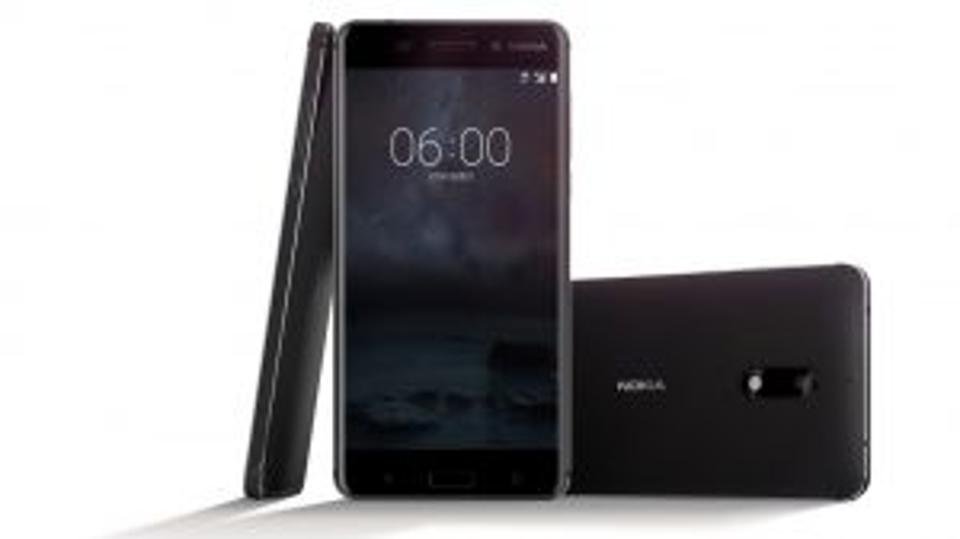
Nokia is back on smartphones. The first Android-powered smartphone to carry the Nokia name from HMD Global has been announced. The Nokia 6 features 4 GB of RAM, 64 GB of on-board storage alongside microSD support, a 16 megapixel main camera, and a 3,000 mAh battery.

This is the press release

Espoo, Finland – 8 January 2017: After securing the exclusive Nokia brand licensing rights in mobile phones in late 2016, HMD Global Oy (“HMD”) is proud to announce the launch of its Nokia 6 smartphone in China. The Nokia 6 marks the first step in HMD’s ambition to set a new standard in design, material quality and manufacturing innovation across every tier of its products by building on the hallmarks of a true Nokia phone experience. The device, which is designed explicitly with the needs of users in mind, combines quality and in-built durability to deliver a real-life premium smartphone experience at a price point for the highly aspirational Chinese consumer.

The decision by HMD to launch its first Android smartphone into China is a reflection of the desire to meet the real world needs of consumers in different markets around the world. With over 552 million smartphone users in China in 2016, a figure that is predicted to grow to more than 593 million users by 20171, it is a strategically important market where premium design and quality is highly valued by consumers.

With the arrival of Nokia 6, consumers will see superior craftsmanship and design quality in action. It takes 55 minutes to machine a single Nokia 6 from a solid block of 6000 series aluminium. It then receives two separate anodising processes, taking over ten hours to complete, with each phone being polished no less than five times. The end result is an aluminium unibody with the highest level of visual and structural quality.

Delivering quality to the core, the Nokia 6 display has a bright hybrid in-cell 5.5” screen with full HD resolution and incredible colour reproduction wrapped in 2.5D Gorilla Glass. The display stack is laminated together with a polarizer layer enabling excellent sunlight readability and slim form. The build is completed with the latest generation Qualcomm Snapdragon™ 430 processor with X6 LTE modem designed for excellent battery life and superior graphics performance.

The Nokia 6 has 4GB RAM and 64GB storage with which to run the latest version of Android Nougat and is packed with entertainment to bring to life the latest that Android has to offer. The dual amplifiers deliver a 6dB louder sound than a regular amp, giving higher voice, deeper bass and unmatched clarity. Dolby Atmos creates powerful, moving audio that seems to flow all around users. The Nokia 6 packs a 16MP phase detection auto focus rear camera for sharp detailed pictures, and an 8MP front camera. The f/2.0 aperture lenses and exclusive camera UI with automatic scene detection make it easy to take great shots every time.

Arto Nummela, CEO, HMD Global said: “Just a short while ago we announced the launch of HMD Global. From the outset we have stated that we intend to move with speed to establish a position as a player in the smartphone category and create products that truly meet consumer needs. The Nokia 6 is a result of listening to our consumers who desire a beautifully crafted handset with exceptional durability, entertainment and display features.

Our ambition is to deliver a premium product, which meets consumer needs at every price point, in every market. We start today, with our premium, high quality Nokia 6; built to deliver a fantastic core user experience for Chinese consumers. We look forward to unveiling further products in the first half of this year.”

Nestor Xu, Vice President Greater China, HMD Global said: “China is the largest and most competitive smartphone market in the world. It is no coincidence that we have chosen to bring our first Android device to China with a long-term partner. JD.com is known for its upwardly mobile customer base and it has for many years believed in the Nokia brand and sold millions of our products to Chinese customers. Launching our first smartphone device, in such a strategically important market, with JD.com a trusted online retailer marks a signal of intent.”

Juho Sarvikas, Chief Product Officer, HMD Global said: “We have set ourselves a mission to deliver the best possible smartphone experience, with a beautiful premium design touch, to everyone, at every price point. By building on true Nokia phone hallmarks of leading design and materials, an obsessive focus on the latest technology and solving real-life issues, we believe we have a unique proposition for consumers. The Nokia 6 marks the first step on our journey, with more to come in 2017.”

Shengli Hu, President of 3C Business Unit, JD.com, said: “The Nokia 6 marks a new milestone for the iconic brand, and JD.com is proud to work with HMD on this exclusive launch in China. Our 200 million active consumers come to JD.com to shop for guaranteed high-quality products from the world’s leading brands, and we are proud to provide a trusted outlet for them to reconnect with Nokia phones.”

Nokia 6 will debut exclusively through JD.com in early 2017 in China. Competitively priced for the aspirational smartphone user, the Nokia 6 is 1699 CNY at JD.com.