DD
MM
YYYY

PAGES

DD
MM
YYYY

spot_img

PAGES

Home Blog Page 7577

20 Important Questions Investors could ask Founders

0

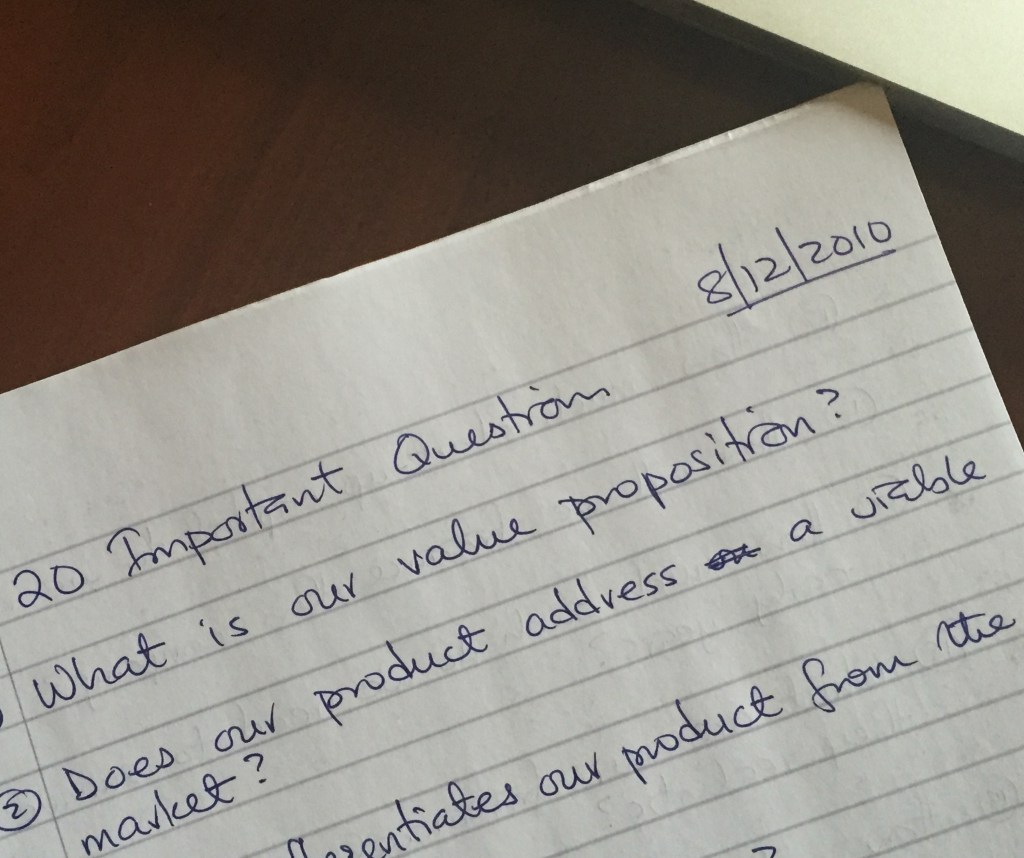
I found these notes in one of my old notebooks . . . as I was reorganizing my desk a few days ago, after taking the CFA Level III exam for a 4th time early this month. I do not have any answers written down, but I assume I wrote them down as a starting point for further analyses, research, and discussion.

  1. What is our value proposition?
  2. Does our product address a viable market?
  3. What differentiates our product from the competition?
  4. Is our business scalable, how will we grow?
  5. How committed are we to making this happen?
  6. What are our strengths?
  7. What are our weaknesses?
  8. What price will our customers pay?
  9. How much power do our suppliers have?
  10. How much power do our buyers have?
  11. How should we sell our product?
  12. How should we market our product?
  13. How big is the threat of new entrants?
  14. How will we protect our intellectual property?
  15. Should we pursue outside capital? How much do we need now?
  16. How much cash will we need to survive the early years?
  17. Are our financial projections realistic?
  18. How will we attract the kinds of people we need to join our team and how will we keep the team functioning effectively?
  19. Why are we doing this?
  20. What is our end-game?

DFID will keep Britain in Africa despite Brexit

0

The short-term implications of Brexit for African economies will be mainly noticeable through market volatility. However, according to Control Risks and NKC African Economics, the longer-term impacts on Africa from Brexit are speculative and depend as much on the attitude of future British governments as on the terms of exit. The longer term implications – both economic and geopolitical – hinge on what the terms of Britain leaving the EU are, and how this feeds through transmission mechanism to Africa through trade, aid and soft power and political influence.

Many observers in Africa see the UK’s ‘Leave’ vote as a sign that Britain will become a more inwardly-focused country with less focus and interest in upholding commitments to human rights and inclusive global development. Whether this is perception or reality, the influence of the UK’s Department for International Development (DFID) on the development agenda is likely to change. DFID has played an influential role over the past 15-20 years in setting a progressive agenda for EU development aid, not least through a commitment to spend 0.7% of GNP on overseas development aid. The fact that the UK is one of the few countries in the world to meet this target and has enshrined it in legislation underlines the role the country has played to date, but whether that continues under new leadership and beyond is now more seriously in doubt than many realise, especially if a recession is looming in the UK.

You can download the full report from NKC African Economics here .

With Facebook OpenCellular, anyone can be MTN, Glo, Etisalat and Airtel

0

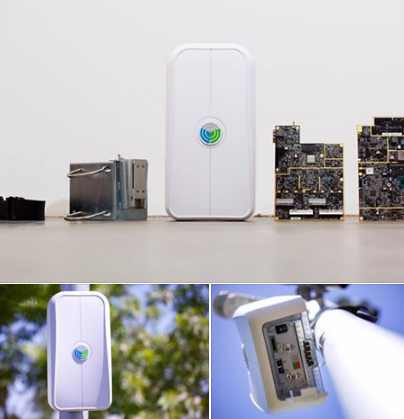
Facebook has unveiled OpenCellular, an open-source wireless access platform that will bring connectivity to remote areas of the world.

“We designed OpenCellular as an open system so anyone – from telecom operators to researchers to entrepreneurs – can build and operate wireless networks in remote places,” said Facebook CEO Mark Zuckerberg.

On our journey to connect the world, today we announced OpenCellular — an open source wireless access platform to bring connectivity to remote areas of the world.

More than 4 billion people still don’t have basic internet access, and one of the biggest challenges is figuring out how to reach remote areas existing infrastructure doesn’t cover.

We designed OpenCellular as an open system so anyone — from telecom operators to researchers to entrepreneurs — can build and operate wireless networks in remote places. It’s about the size of a shoe box and can support up to 1,500 people from as far as 10 kilometers away.

Along with our solar-powered aircraft Aquila and high-bandwidth laser beams, OpenCellular is the next step on our journey to provide better, more affordable connectivity to bring the world closer together.

Now you cannot wait to link your villages to the world wide world!

Apply to Nokia Open Innovation Challenge and Win!

0


Nigerian startups can now apply to Nokia Open Innovation Challenge, which offers companies in the IoT domain space the chance to win acceleration and a share of Euro100,000 in prize money.

The applications for the Open Innovation Challenge will close August 15 for innovators, startups and academia from around the world.

At Nokia we envision a future that’s marked by a whole new way of being. We believe in the benefits of harvesting the data produced by everything for everyone by turning it into new groundbreaking possibilities.

The Nokia Open Innovation Challenge 2016 is looking for futuristic technologies, the next big ideas and new business models in the Internet of things (IoT) domain.

Innovators, startups or academia from around the world can participate in this challenge and take a leap towards making lives better through technology. The rewards for the finalists include receiving a technology boost by entering the Nokia innovation accelerator program, access to the internal and global market of Nokia and investment opportunities from Nokia Growth Partners (NGP) and other venture capital firms. In addition, the top three teams will share incubation prize money of €100,000.

When: you can submit your innovation here  from June 6 to August 15, 2016.


Nigeria needs to copy Angola’s FACRA venture capital model

0

The economy of Angola mirrors that of Nigeria. Both are oil basket nations. They do well when there is boom and suffer when there is bust.

Nigeria has been trying to diversity into technology by giving money to entrepreneurs vi YouWin! and other initiatives at state levels. In these cases, the government runs the show with no sustainability. Angola has a private sector vehicle which does better.

FACRA is one of Africa’s largest VC Funds with assets in excess of $250 million. As an Angolan Government-backed organization, the Fund’s objective is to encourage innovation in Angola by supporting local entrepreneurs.

FACRA’s objectives involve helping to facilitate the launch and expansion of new businesses, boosting entrepreneurship, supporting the development of business skills, and promoting innovation and efficiency in Angolan small and medium enterprises. The fund also aims to build competencies, innovation and technological capabilities in businesses with which it invests.

As a government-backed venture capital fund, FACRA is a powerful instrument for the diversification of the Angolan economy. The Fund plays a particularly important role due to the current macro-economic environment, where access to financing by SMEs is difficult and the relatively small pool of skilled local workforce often impedes business expansion.

FACRA provides alternative, stable long-term equity funding to local and foreign entrepreneurs looking to enter the Angolan market. Organizations that FACRA invests in also benefit from expert business support in both a strategic and financial capacity during the business life cycle.