DD
MM
YYYY

PAGES

DD
MM
YYYY

spot_img

PAGES

Home Blog Page 7633

Nigeria needs the robot used by Dallas Police to kill suspect

0

Police used an unusual weapon to kill a man suspected of murdering five officers in Dallas on Thursday: A robot.

Dallas Police Chief David Brown told reporters during a press conference that police officers cornered a suspect and attempted to negotiate with him until the talks devolved into gunfire. Because of the danger to officers, Brown said law enforcement “saw no other option” but to use a robot carrying a bomb to kill the suspect.

That is it – Nigerian government should begin to acquire these weapons or better develop its version so that it can effectively manage the complex security challenges in the country.

Israel pivots to Africa but Nigeria missing

0

Binyamin Netanyahu has just wrapped up a four-nation visit to Africa. Its governments, facing Boko Haram, al-Shabab and other extremist groups, are eager for Israeli security assistance. The trip underlines Israel’s shifting diplomatic strategy, away from relying on its Western allies and towards a broader approach. Israel is also trying to confront Iranian attempts to gain influence in the region, reports the Economist.

His itinerary included Uganda, Kenya, Rwanda and Ethiopia and he took part in a summit with the leaders of these countries as well as South Sudan, Zambia and Tanzania. The prime minister took with him 80 businesspeople, representing 50 Israeli companies working in Africa and launching a programme for economic co-operation with sub-Saharan African countries.

We hope Nigeria makes the list next time as Nigeria needs Israel for its expertise in  agriculture  and security.

Theranos’ Elizabeth Holmes Banned

0
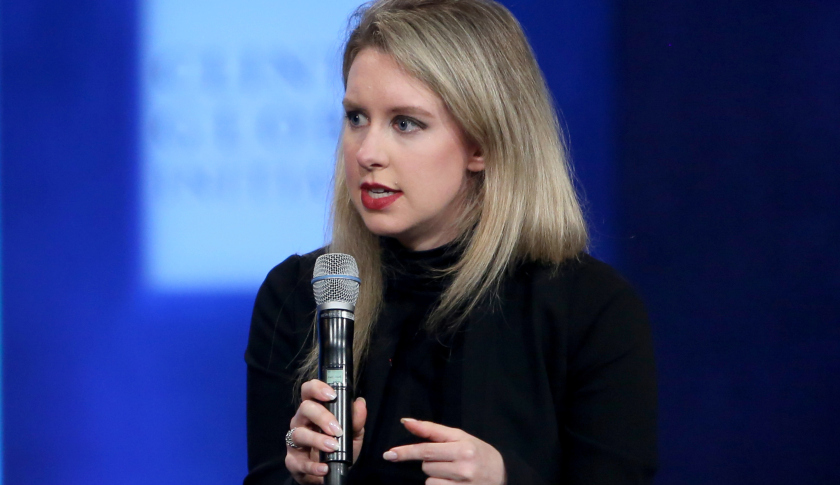
CNBC EVENTS -- Pictured: Elizabeth Holmes, Founder and CEO, Theranos speaks at the Clinton Global Initiative Annual Meeting, in New York City on September 29, 2015 -- (Photo by: Adam Jeffery/CNBC/NBCU Photo Bank)

Theranos, the embattled blood testing startup, has been dealt a major blow.

On Thursday evening, the company announced that it has received a notice from the Centers for Medicare and Medicaid Services (CMS), revoking its regulatory approval to operate and banning founder and CEO Elizabeth Holmes from running another lab for at least two years.

Among the sanctions are a monetary fine of an undisclosed amount and cancellation of the lab’s approval to receive Medicare and Medicaid payments for its services. The CMS’s decision is a result of its inspection of Theranos’s lab in Newark, Calif. last year, the company said in a press release.


20 Important Questions Investors could ask Founders

0

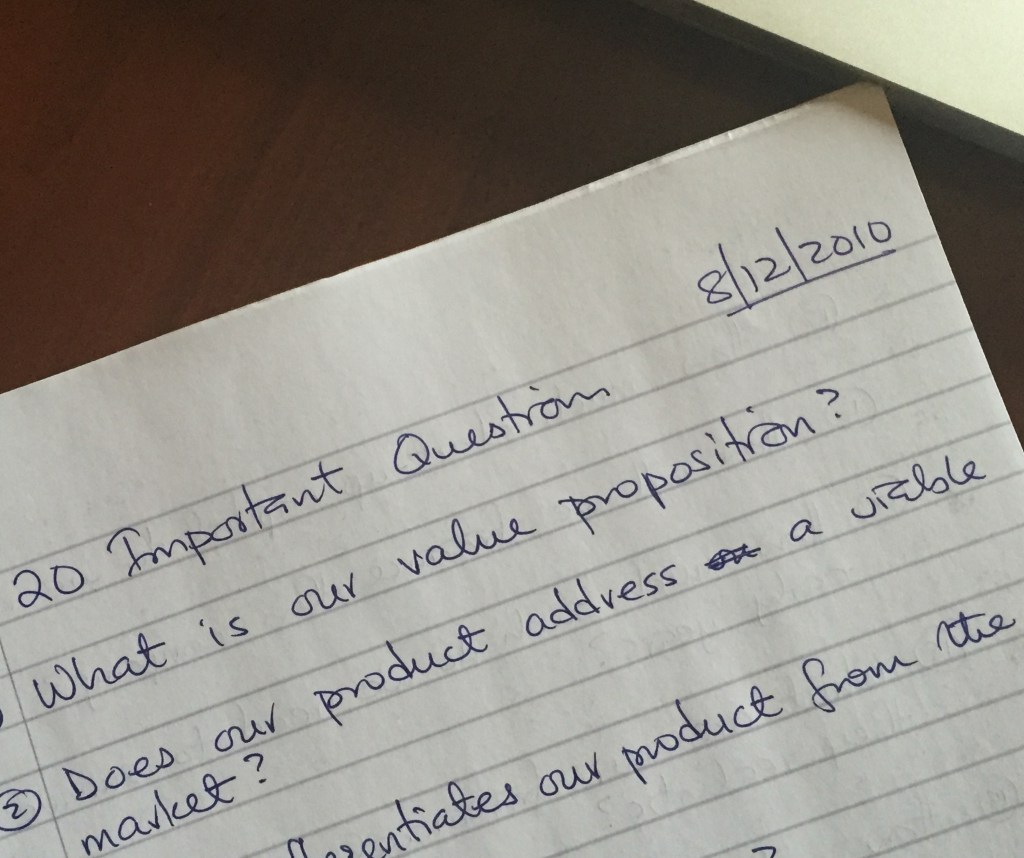
I found these notes in one of my old notebooks . . . as I was reorganizing my desk a few days ago, after taking the CFA Level III exam for a 4th time early this month. I do not have any answers written down, but I assume I wrote them down as a starting point for further analyses, research, and discussion.

  1. What is our value proposition?
  2. Does our product address a viable market?
  3. What differentiates our product from the competition?
  4. Is our business scalable, how will we grow?
  5. How committed are we to making this happen?
  6. What are our strengths?
  7. What are our weaknesses?
  8. What price will our customers pay?
  9. How much power do our suppliers have?
  10. How much power do our buyers have?
  11. How should we sell our product?
  12. How should we market our product?
  13. How big is the threat of new entrants?
  14. How will we protect our intellectual property?
  15. Should we pursue outside capital? How much do we need now?
  16. How much cash will we need to survive the early years?
  17. Are our financial projections realistic?
  18. How will we attract the kinds of people we need to join our team and how will we keep the team functioning effectively?
  19. Why are we doing this?
  20. What is our end-game?

DFID will keep Britain in Africa despite Brexit

0

The short-term implications of Brexit for African economies will be mainly noticeable through market volatility. However, according to Control Risks and NKC African Economics, the longer-term impacts on Africa from Brexit are speculative and depend as much on the attitude of future British governments as on the terms of exit. The longer term implications – both economic and geopolitical – hinge on what the terms of Britain leaving the EU are, and how this feeds through transmission mechanism to Africa through trade, aid and soft power and political influence.

Many observers in Africa see the UK’s ‘Leave’ vote as a sign that Britain will become a more inwardly-focused country with less focus and interest in upholding commitments to human rights and inclusive global development. Whether this is perception or reality, the influence of the UK’s Department for International Development (DFID) on the development agenda is likely to change. DFID has played an influential role over the past 15-20 years in setting a progressive agenda for EU development aid, not least through a commitment to spend 0.7% of GNP on overseas development aid. The fact that the UK is one of the few countries in the world to meet this target and has enshrined it in legislation underlines the role the country has played to date, but whether that continues under new leadership and beyond is now more seriously in doubt than many realise, especially if a recession is looming in the UK.

You can download the full report from NKC African Economics here .