

DD
MM
YYYY

PAGES

DD
MM
YYYY

spot_img

PAGES

Home Blog Page 7660

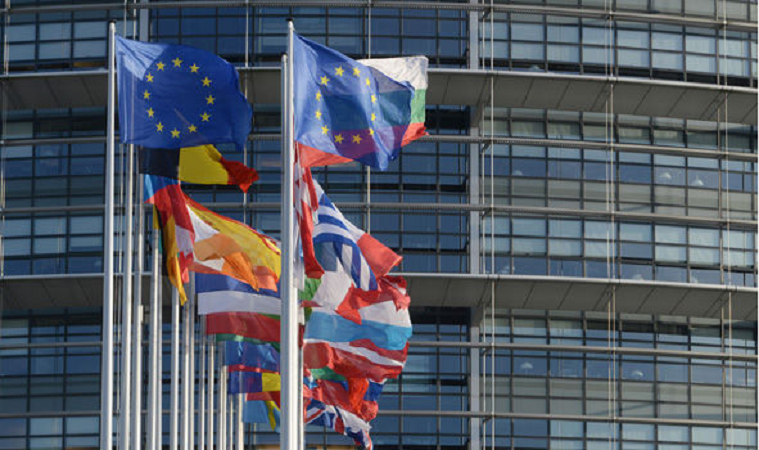
Growth Indicators Of The European Economy – Microelectronics Is A Pillar In That Economy

0

Editor’s Note: In a bid to develop the right growth model for Nigeria, the author examines some selected emerging and developed economies. Today, he takes a look at the European economy, not necessarily the EU. Understand that microelectronics covers embedded systems.

The European industry projected to invest more than N 22 billion per annum in embedded systems research and development by 2009. This is almost double what it invested in 2003. Because of the importance of embedded systems technology for key industrial sectors (from industrial automation and medical equipment to automotive and avionics), the European Commission has devoted a specific part of its Information Society Technologies (IST) program to embedded systems research.

From 2003 to 2006 alone, it has invested 140 million euro in collaborative projects between industry, academia and research centers (Kostas, 2006). These projects focus largely on systems design, safety- critical systems, embedded computing, middleware platforms, wireless sensor networks, and distributed and hybrid control systems.

Embedded systems were also one of the six “pillars” of ICT research in the European Commission‘s proposals for the 7th Framework Programme, that started in 2007. In 2004, the Technology Platform ARTEMIS (Advanced Research and Technology for Embedded Intelligence and Systems) was set up. ARTEMIS is an industry-led initiative to reinforce the EU’s position as a leading global player in the design, integration and supply of embedded systems.

The driving force behind ARTEMIS is the vision of a society where all systems, machines, and objects have become digital, communicating, self-managed resources. These transformations are possible through advances in embedded systems technologies and their large-scale deployment, not only in industry and services, but in all areas of human activity. Such developments have a range of important consequences for society and the economy which include (Kostas, 2006):

  • Life in our society and its safety and security will depend increasingly on embedded systems.
  •  The competitiveness of European industries, in almost all sectors, will rely on innovation capabilities in the area of embedded systems.
  • Given the dramatically increasing importance of embedded systems to productivity growth, these technologies will be critically important in redressing the present imbalance in productivity growth between Europe, the US and Asia.

Maintaining a leading position in embedded systems technology will require significant investment in research and development that is focused on specific joint priorities. The European economy understands that and continues to play a major role in that regard.

MoMo Kampala – Who Won The “Battle of The Gadgets”?

0

Hello Mobile Monday Kampala, Tekedia wants to know the winner of the “Battle of the Gadgets” which was moderated by Mara Foundation on June 20. Who won and how was the program actually organized. We want to know about this exciting event. Please share with us. Can one of your attendees send us a short report about what happened and how it all played. We have already emailed the organizers of MoMoKla and hope to get the feedback soon.


Mobile Monday Kampala invites you to the ‘Battle of The Gadgets’ this Monday, June 20, 2011 at the Mara Foundation Headquarters.  Come witness the Clash of the Cellular Titans as the captains of mobile phones in Uganda square off and strip bare the gadgets that we all take for granted.


Lined up for the evening we will have Samsung, Nokia, Sony Ericsson, ZTE and Android all put together in a cellphone arena for your viewing and sampling pleasure.


Plus, bring your own mobile phones fully charged and ready to enter the arena to show us what you can do with your gadget and what your gadget can do for you!


Battle of the Gadgets, will be hosted by Mara Foundation on Monday 20th June starting at 5:30 PM. The one and only Simon Kaheru will be Master of Ceremonies for the evening.  A splendid time is guaranteed for all!    Seating is limited so don’t miss out.


Mobile Monday Kampala (MoMoKla) is the first Ugandan chapter of Mobile Monday Global. Mobile Monday (MoMo) is a global network of mobile industry professionals and startups in 100 cities around the world. MoMoKla was formed on January, 20th 2010 by a group of 40 founding members consisting of professionals in Uganda’s telecommunication, academia, media and ICT sectors. The chapter was launched officially on March 8, 2010 (Women’s Day).

Huawei IDEOS™ S7 Slim Tablet – Now Playing In Kenya Via Safaricom

0

Huawei, a leader in providing innovative telecommunication solutions and maker of the popular and affordable IDEOS line of products has introduced Huawei IDEOS™ S7 Slim tablet in the Kenyan market. This is barely three months after the introduction of its Huawei IDEOS™ S7 tablet. Huawei IDEOS™ S7 Slim is available in Safaricom shops, at a retail price of Kshs. 39, 999. Just as the name suggests, this is a slimmer and fitter version of the original Huawei IDEOS™ S7.


The Huawei IDEOS™ S7 Slim made first appearance at the Mobile World Congress in Barcelona in February.


“Huawei IDEOS™ S7 Slim is a next-generation 7-inch capacitive touch-screen tablet offering a blend of style and portability, with 12.5 thickness supporting both 3G and WiFi,  and is super light for a tablet at 450g,” said Herman He, CEO Huawei Kenya. “Our goal is for more Kenyan’s to continue enjoying better android experience on affordable high-end devices”, He added.


The Huawei’s tablet looks pretty good  with a screen dominating the front and just three touch sensitivitie keys below in portrait mode. These are back, menu and home buttons. Unfortunately, the Slim S7 is so shiny, it will expose all fingerprints so you’ll have to polish the front very often.


How A Technology Institute Will Improve Research And Teaching In Africa

0

This continues the discussion on the proposed microelectronics training and research institute (MTRI) in Africa. Today, we examine how that will improve research and training in Africa. The key points in our proposals are:


  • MTRI will provide African microelectronics researchers and students with industry-caliber design resources, access to state-of-the-art prototyping technologies, tools for test and support services. This proposal will enable us acquire the facilities needed for the training and research. Also, this proposal will enable us provide the resources necessary to create technology adoption and diffusion by utilizing the expertise of African experts in Diaspora to visit the respective universities, on short term basis, to educate.
  • This proposal will provide Africa University the opportunity to develop an institute which will become in future an avenue to seek grants from many multinational firms in Africa who presently are not funding researches in Africa. MTRI will showcase the readiness of Africa’s educational institutions to conduct researchers for firms like Motorola, CISCO, HP, etc. This future anticipated industry supported R&D (research & development) will help develop our students, staff and management learn.
  • MTRI will offer our students and staff opportunities to collaborate with global partners in the areas of comparative technologies, especially solar technology, which we will vigorously conduct researches on. Our students will be enriched in this program.
  • MTRI will post some educational podcasts on our website for the general learning and education of the public. This will be followed with Internet Virtual Classroom and Labs (IVCL) to enable other African students benefit from our programs irrespective of distance.
  • MTRI is designed to be academic, market and industry centric- this positions it to deliver programs to the needs of the academia, market and industry towards producing students with world-class skills.

Financial Reform And Bailout Levy In Africa – What African Union Can Do

0

The banks are getting back to the old game. Bonuses are up, profits are swelling; the new normal has arrived. This is human nature and capitalism rewards pure greed. From American Wall Street to Nigerian Broad Street, bank books are looking better.


As a former bank, I have many friends in the banking sector. They work hard and put really ungodly hours. I used to leave my house at Ikeja (Nigeria) at 5.30am and returned 11.30pm. It was absolutely normal; after all, we were well paid.


In Africa today, the most hardworking people are the bankers. The level of productivity in the banking sector is second to none. And I want the banks to do well.


When the failure of Lehman Brothers brought the world to its knees, the world experienced how the whole global financial industry has been integrated as a single atomic unit. Only a few like the Canadian banking sector passed through that financial Armageddon with little blemish. Others like US and my native country Nigeria suffered major negative consequences.


American Congress will lead the world as they have always done in many cases. However, the world must not just fold hands and wait for Washington. Especially Africa, this is an opportunity to reform its financial sector and get the engine of economic activity on a solid ground.


We noticed that in the boom years, bankers were celebrated as geniuses. They privatized successes. And when the hell broke, they call the world to help them. And losses were socialized. This kind of artificial distortion disturbs the financial equilibrium resulting to misallocation of scare economic resources in national treasuries.


I recalled that Nigerian Central Bank raised billions of Naira over a weekend to bailout some banks when many universities were shut down because of issues associated with funding. This is a country where education, electricity, transportation and health delivery needed massive injection of funds. Between those needs and banks, the government decided to save the banks, rightly.


Bailouts create disequilibrium in the economic landscape and must be seen that way. It hurts competitive environments and makes losers to become sudden winners.


But boom and bust will always happen. King Solomon said in the Bible that there is time for everything. It is one of those things that can never be eliminated. You can mitigate the impact and plan for it or possibly defer when it happens, but economic boom and bust must take its natural cycle.


Finance has evolved over centuries and there have been countless reforms. But none will ever eliminate busts in the economy. Man by pure greed will always innovate to work around any reform in order to maximize profits. You can only reform what you know today. But technology of tomorrow will create more opportunities that will make today’s reform obsolete. And markets lead regulations by years.


Why not? There are people who have become millionaires because they have computing power to trade. The high speed trading is nothing but using computer speed to outsmart the market. Do we have a regulation for that? When I trade with my average laptop, do I have equal chances of success? Now regulate high speed trading and you will notice that you will need to do that every eighteen months according to Moore’s Law.


To cut this story short, I propose that African Union must do two things:

(1)    Task all member states to introduce a Bailout Levy of 10% on bank profits (before tax).  This is besides the fund allocated for deposit insurance scheme. This levy will be used to bailout banks when they derail and insulate the taxpayers from any help.

(2)    Task all member states to introduce Bonus Levy of 50% on all bank bonuses to employees. This is necessary since tax payers save these bank employees and during the good days, they enjoy the fun alone with their families.  It will be very unfair to allow taxpayers to go through another circle of bank bailout and allow only employees and investors to reap the profits during good times. This levy will minimize that.


I am confident that if African governments implement these policies we can have a banking system that heals itself during bust season, without any support from tax payers.


Editor’s Note: This piece was written at the crux of the last recession