
DD
MM
YYYY

PAGES

DD
MM
YYYY

spot_img

PAGES

Home Blog Page 77

Global Regulators Align as Crypto Transforms From Asset Class to Monetary Infrastructure

0

Global crypto regulation is entering a phase of convergence, with policymakers across jurisdictions increasingly aligned on core principles, regulatory objectives, and high-level frameworks for digital assets.

In the 4th edition of its Global Crypto Regulation Report 2026, PwC highlights a pivotal shift: crypto assets are moving decisively into the heart of the monetary system. According to the firm, digital assets are no longer confined to trading and speculative markets, they are now being actively used to move, settle, and manage money.

Crypto assets are increasingly performing monetary functions that were once the exclusive preserve of banks and traditional payment networks. Banks, asset managers, payment providers, and large corporates are now embedding digital assets directly into core infrastructure, balance sheets, and operating models. PwC notes that this evolution is no longer optional or peripheral, but structural.

Matt Blumenfeld, Global/US Digital Assets Lead at PwC US, emphasizes that regulatory momentum is now being driven by market realities rather than abstract policy debates.

“Regulation of crypto is no longer shaped from the outside. It is being pulled into place by market reality”, he said.

Regulators are increasingly clarifying pathways for digital assets to qualify as eligible collateral for margining and risk mitigation, including under uncleared margin rules. Recent regulatory changes and supervisory guidance are making approvals more feasible where assets meet standards for liquidation, valuation, custody, operational resilience, and enforceability.

This is laying the foundation for broader institutional adoption of tokenized assets and select cryptocurrencies in collateral management and derivatives markets.

Stablecoins: From Design to Market Architecture

PwC observes that the global regulatory approach to stablecoins has shifted decisively from design to implementation. Across major jurisdictions, there is a growing consensus on foundational regulatory principles, including full reserve backing, redemption at par, segregation of customer assets, and strong Anti-Money Laundering and Counter-Financing of Terrorism controls.

Rather than mandating state-only solutions, regulation is increasingly legitimizing private stablecoins. This approach enables “co-opetition” between banks and fintechs, fostering shared infrastructure and public-private cooperation while preserving long-term competition over specialization, user experience, and network control.

According to PwC, regulatory clarity is transforming stablecoins from a policy experiment into core financial market infrastructure. Frameworks such as MiCAR in Europe, MAS regulations in Singapore, and forthcoming US rules now define what a regulated stablecoin looks like and how it can operate within existing financial systems.

This clarity provides banks and non-bank issuers with the legal certainty required to innovate within the regulatory perimeter. Because no single institution can dominate the stablecoin market, collaboration has become a key driver of competition.

Banks, payment firms, and exchanges are increasingly working together on shared settlement rails and tokenized deposit networks to achieve liquidity and adoption at scale.

The Dollar as a Network, Not Just a Reserve Asset

PwC also underscores the growing geopolitical and monetary implications of stablecoins. Dollar-backed stablecoins are reshaping how the US dollar functions as the world’s reserve currency.

By enabling individuals and businesses, particularly in emerging markets to hold and transfer dollar value without direct access to US banks, stablecoins are turning the dollar into a digital reserve network.

For populations facing currency volatility or limited banking access, stablecoin wallets increasingly function as de facto digital dollar accounts. This technological expansion is reinforcing dollar dominance through infrastructure rather than policy.

Laura Talvitie, Digital Assets Regulatory Lead at PwC UK, warns that regulatory inaction carries strategic risks:

“With over USD 300 billion in stablecoins in circulation and more than 99 percent pegged fo the US dollar, many jurisdictions risk becoming spectators in a market they should help shape. The challenge is no longer whether to regulate, but how leading financial centres create the conditions for non-dollar stablecoins and tokenized money to scale safely and competitively, or risk the next wave of digital finance being driven from a small number of global hubs”, she said.

Outlook

As digital assets become embedded within mainstream financial infrastructure, jurisdictions that provide clear, balanced, and innovation-friendly regulatory frameworks are likely to emerge as global hubs for tokenized finance.

Stablecoins in particular, are poised to play a central role in cross-border payments, collateral management, and financial inclusion. However, the dominance of dollar-pegged stablecoins also raises strategic questions for other currencies and financial centers.
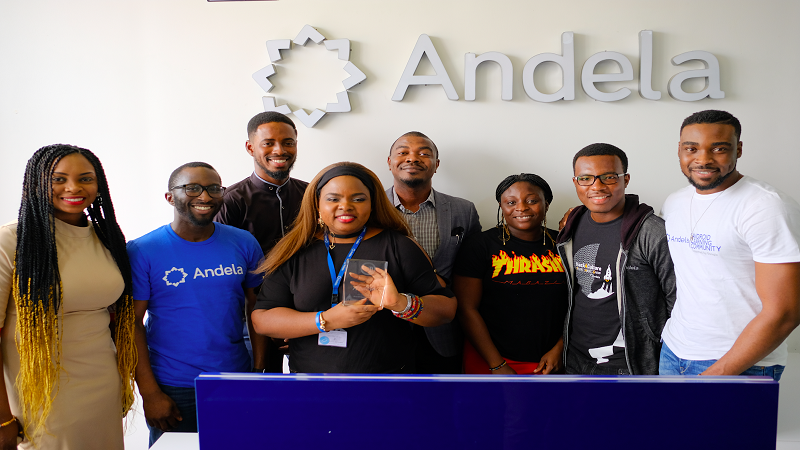

Andela Acquires Woven to Redefine Technical Hiring in The Age of AI

0

Andela, one of the world’s largest tech talent marketplaces, has acquired Woven, a human-powered technical assessment platform designed to simulate real engineering work and future-proof hiring in the age of AI.

The acquisition marks a major step in Andela’s evolving AI-native talent strategy, strengthening its ability to assess, upskill, and deploy enterprise-ready engineering teams globally.

The company noted that the deal builds on its strong foundation in technical assessments and learning, positioning it to better evaluate both engineering fundamentals and AI fluency at scale.

Speaking on the acquisition, Carrol Chang, CEO of Andela said,

“To power the AI ecosystem at scale, the world needs AI-native, enterprise-ready engineering talent en masse. Andela plus Woven equals the best technical assessment engine in the world to ensure AI fluency and real-world job success.”

Echoing this view, Barun Singh, Chief Product and Technology Officer at Andela, explained that Woven allows Andela to leapfrog traditional hiring tests by applying scenario-based assessments that closely mirror real engineering work. From day one, these scenarios will be used across Andela’s talent network to benchmark skills more accurately and ensure stronger matches between talent and client needs.

Founded with the mission to eliminate the gap between talent and opportunity, Woven brings significant strategic value to Andela.

Through the acquisition, Andela gains the following:

  • A comprehensive library of best-in-class, real-world engineering scenarios aligned to specific job functions, alongside AI-assisted generation of new scenarios

  • AI-driven scoring systems that deliver accurate, consistent, and scalable evaluations based on proven assessment rubrics refined over years of performance data

  • Deep expertise from Woven’s founding team to accelerate Andela’s long-term assessments roadmap

This acquisition builds on Andela’s earlier investments in AI-driven talent infrastructure, including the launch of Andela Talent Cloud in October 2023. As part of the deal, Woven’s founder and CEO, Wes Winham Winler, will join Andela to lead the development of next-generation assessments aimed at predicting success in AI-assisted software development and AI system creation.

Founded in 2014 by Jeremy Johnson, Iyinoluwa Aboyeji, Nadayar Enegesi, Brice Nkengsa, Ian Carnevale, and Christina Sass, Andela has grown from a single hub in Lagos, Nigeria into a remote-first global marketplace spanning more than 135 countries. The company has played a pivotal role in nurturing tech ecosystems in underserved regions such as Africa and Latin America, connecting technologists to long-term international opportunities and competitive compensation.

In 2021, Andela reached unicorn status, achieving a valuation of $1.5 billion following a $200 million Series E funding round led by SoftBank, with participation from Whale Rock, Generation Investment Management, and the Chan Zuckerberg Initiative.

At its core, Andela exists to ensure technologists have equal access to opportunity regardless of location. Its model enables companies to build diverse, distributed teams faster and more cost-effectively, while empowering skilled professionals in emerging markets to work with the world’s leading brands.

Outlook

With the acquisition of Woven, Andela is positioning itself at the forefront of AI-era hiring, where traditional coding tests are no longer sufficient. As AI becomes deeply embedded in software development, demand will continue to rise for engineers who can collaborate effectively with AI systems, not just write code.

By combining AI-driven assessments, real-world simulations, and a globally distributed talent pool, Andela is likely to strengthen its appeal to large enterprises seeking reliable, scalable, and future-ready engineering teams.

Meta Again Tops Lobbying Table As The Big Tech Push To Shape The Rules Of The AI Era

0

Meta ended 2025 by once again outspending its Big Tech peers in Washington, a development that marks how central federal policy has become to the company’s future as it navigates artificial intelligence regulation, online safety laws and renewed antitrust scrutiny.

The conglomerate raised its federal lobbying to $6.5 million in the fourth quarter of 2025, signaling how deeply the company now sees public policy as a core business risk and a strategic asset at the same time.

The spending increase, up from $5.8 million in the previous quarter, again placed Meta at the top of the Big Tech lobbying table, ahead of Amazon at $4.6 million and Google at $3.4 million. That ranking matters because it reflects more than financial muscle. It reveals which companies believe their future business models are most vulnerable to regulatory decisions emerging from Congress and federal agencies.

Meta’s footprint in Washington has reached a scale rarely seen in corporate lobbying. According to an analysis by nonprofit watchdog Issue One, the company now has roughly one lobbyist for every six members of Congress. That density gives Meta constant access to legislative offices, committees, and staffers, allowing it to track, influence, and respond to policy proposals in real time. In practical terms, it means Meta is positioned to shape the technical details of bills long before they reach the floor of the House or Senate.

Lobbying disclosures show Meta focused its fourth-quarter efforts on children’s online safety legislation, AI regulation, and controls on AI chip exports. Each of those areas carries direct commercial consequences. Kids’ safety rules affect product design, content moderation systems, and data practices across Facebook, Instagram, and WhatsApp. AI regulation could determine everything from model transparency requirements to liability frameworks for algorithmic harm. Export controls on advanced chips influence Meta’s access to the computing power needed to train and deploy large-scale AI systems.

This policy push is happening against a complex political backdrop. President Donald Trump’s administration has taken a broadly pro-AI position, framing artificial intelligence as a strategic national priority tied to U.S. competitiveness, economic growth and geopolitical influence. That stance benefits large technology companies that already have the capital, data, and infrastructure to scale AI quickly. For Meta, which is investing heavily in data centers, custom chips, and AI models, a permissive regulatory environment lowers barriers to expansion and reduces compliance friction.

At the same time, regulatory risk has not disappeared. The Federal Trade Commission confirmed it will appeal Meta’s win in the long-running antitrust case tied to its acquisitions of Instagram and WhatsApp. That appeal keeps alive the broader question of whether U.S. regulators can unwind or restrict past tech mergers, a precedent that would reshape deal-making across the industry. The case is not only about legal exposure but about the structural integrity of Meta’s business model, which is built on platform integration and data sharing across services.

The wider lobbying landscape shows how the largest tech firms are converging around similar policy priorities while defending different commercial interests. Google’s activity on AI and children’s safety legislation reflects its exposure through search, YouTube, and cloud services. Amazon’s spending is tied to cloud computing regulation, competition policy, and labor rules. Apple and Microsoft, which spent $2.7 million and $2.4 million, respectively, in the same quarter, targeted patents, copyright, AI governance, and platform rules that affect software ecosystems and app distribution models.

What stands out is the gap between these established platforms and the newer AI-first companies. Nvidia cut its lobbying spend to $1.4 million in Q4 from $1.9 million in Q3, even as its chips remain central to global AI development. OpenAI reduced spending slightly to $890,000, while Anthropic dropped to $840,000 after hitting $1 million earlier in the year.

This imbalance shows that political power in Washington is still concentrated in legacy tech giants with diversified businesses, not in the newer firms driving AI innovation.

Strategically, Meta’s lobbying surge reflects a defensive and offensive posture at the same time. Defensively, the company is seeking to manage legal exposure, regulatory constraints, and reputational risk across content moderation, data protection, and competition policy. Offensively, it is trying to shape the emerging AI rulebook in ways that favor scale, capital intensity, and integrated platforms, conditions that naturally advantage companies of Meta’s size.

There is also a longer-term industrial policy dimension. As the U.S. government tightens controls on advanced semiconductor exports and frames AI as a strategic asset, corporate lobbying becomes intertwined with national security and foreign policy debates. Companies like Meta are not only influencing consumer tech regulation but also positioning themselves within the broader U.S. strategy on technological dominance, supply chains, and global standards-setting.

In that sense, Meta’s $6.5 million quarterly spend is less about individual bills and more about structural influence. It is seen as a recognition that the next phase of tech competition will be shaped as much in congressional hearing rooms and regulatory agencies as in laboratories and data centers.

Washington is becoming a core battleground for corporate strategy as AI, platform power, and digital safety move to the center of U.S. policy, and Meta is investing accordingly to ensure it remains one of the loudest voices in that fight.

Amazon Reportedly Plans to Cut Thousands of Jobs Next Week, Exposing a Deeper Reset Inside the Company

0

Amazon is preparing for another round of corporate job cuts that underscores how deeply the company is reshaping itself after years of expansion, even as its leadership offers shifting explanations around artificial intelligence, culture, and long-term strategy.

According to two people familiar with the matter who spoke to Reuters, Amazon plans to begin a second wave of layoffs as early as next week, with the scale expected to roughly match the cuts announced in October. That earlier round eliminated about 14,000 white-collar roles, putting the company roughly halfway toward a broader plan to reduce close to 30,000 corporate positions.

If the latest cuts go ahead as outlined, Amazon will have completed one of its most sweeping restructurings outside the pandemic period.

The layoffs are expected to affect several of Amazon’s most prominent units, including Amazon Web Services, the core retail business, Prime Video, and the human resources division known internally as People Experience and Technology. The widespread nature of affected teams suggests the exercise is not a targeted response to a single underperforming unit, but a cross-company effort to shrink layers of management and rethink how work gets done across the organization.

People familiar with the plans cautioned that details could still change, reflecting the uncertainty that has become a hallmark of Amazon’s internal planning in recent years.

When Amazon announced the October cuts, the company pointed directly to artificial intelligence, telling employees in an internal note that “this generation of AI is the most transformative technology we’ve seen since the Internet.” The message echoed a broader narrative across the technology sector, where companies have increasingly tied job reductions to the efficiency gains promised by generative AI and automation, particularly for corporate and support roles.

Yet that explanation was later tempered by Chief Executive Andy Jassy, who told analysts on the company’s third-quarter earnings call that the layoffs were “not really financially driven and it’s not even really AI-driven.” Instead, he framed the reductions as cultural, aimed at addressing what he described as excessive bureaucracy and too many layers of management that had built up during Amazon’s rapid hiring over the past decade.

This means the two accounts point to a more nuanced reality. AI may not be directly replacing tens of thousands of jobs at Amazon, but it is clearly influencing how leadership thinks about productivity, staffing, and scale.

Tools that automate reporting, customer support, internal analytics, and parts of software development make it easier to justify leaner teams, even if executives stop short of saying AI is the primary driver. At the same time, Jassy’s focus on culture signals frustration with slower decision-making and internal complexity as Amazon grew into one of the world’s largest employers.

The timing of the cuts also reflects broader pressures on the business. Growth at AWS, long Amazon’s profit engine, has slowed compared with its earlier years, even as competition in cloud computing intensifies, and capital spending on AI infrastructure accelerates. Prime Video continues to absorb high content costs, while the retail business operates on tight margins in many markets. Trimming corporate headcount offers a way to contain costs while preserving investment in strategic priorities such as AI chips, data centers, and logistics automation.

The latest planned cuts add to a prolonged period of instability for employees. Since late 2022, Amazon has announced multiple rounds of layoffs across devices, retail, advertising, cloud, and HR, eroding the perception that any team is insulated from restructuring. Even business units seen as central to Amazon’s future have faced reductions, reinforcing the sense that efficiency, rather than growth alone, now defines the company’s internal calculus.

More broadly, Amazon’s move mirrors a shift across Big Tech, where companies are trying to reconcile massive spending on AI with demands from investors for discipline and returns. Framing layoffs around culture rather than profits or automation allows executives to position the changes as strategic and proactive, even as they acknowledge that the era of unchecked hiring is over.

If the coming round proceeds as expected, it will further cement a reset underway under Jassy: flatter teams, fewer managers, and a workforce shaped by both technological change and a deliberate push to remake how the company operates.

Risk, Reward, and Revenue

0

The iGaming industry has grown exponentially over the past decade, transforming from a niche market into a global entertainment powerhouse. What was once limited to small-scale online poker rooms and casino websites has evolved into a multi-billion-dollar industry with sophisticated platforms, diverse gaming options, and an emphasis on player safety. Understanding the business model behind iGaming’s success provides insight into why it continues to attract millions of users while simultaneously creating safer, more responsible gaming environments.

One key element of iGaming’s success is the diversity of game offerings. Platforms provide everything from poker and roulette to themed slot games, virtual sports, and bingo. This variety caters to a wide audience, accommodating both casual players and seasoned gamblers. By offering multiple avenues for entertainment, operators can appeal to different interests and keep players engaged over the long term. Games such as casino games online with Bally Bet exemplify this approach, combining high-quality graphics, interactive features, and accessible betting options to create a compelling user experience.

Safety and responsible gaming are also central to the iGaming business model. Regulations in many markets require platforms to implement measures that protect consumers, including age verification, self-exclusion tools, and spending limits. By creating a safer environment, operators not only comply with legal requirements but also build trust with players. Transparency in odds, secure payment systems, and fair play policies further reinforce the industry’s commitment to ethical gaming practices. These measures ensure that users can enjoy the excitement of risk and reward without exposing themselves to unnecessary harm.

Another factor contributing to iGaming’s revenue success is the use of data analytics and personalized marketing. Platforms track gameplay patterns to understand user preferences, optimize game offerings, and tailor promotions to individual players. This data-driven approach maximizes engagement and encourages repeat visits, creating a sustainable revenue stream. It also allows operators to refine their offerings in real time, ensuring that the gaming experience remains fresh, exciting, and aligned with user expectations.

Bonuses and reward systems are a crucial component of the business model. Welcome bonuses, free spins, loyalty points, and other incentives serve a dual purpose: they enhance player experience while encouraging longer play sessions. These features create a sense of progression and accomplishment, like levelling up in video games, and contribute directly to player retention and profitability. Well-designed reward systems can make players feel valued and connected to the platform, fostering a loyal user base that is essential for long-term success.

User experience and interface design are equally important in sustaining engagement. Intuitive navigation, responsive controls, and visually appealing graphics ensure that players can focus on the gameplay rather than technical frustrations. High-quality platforms also integrate seamless payment solutions, instant withdrawals, and customer support, all of which contribute to a positive perception of the brand. When combined with entertaining content, these factors make iGaming platforms highly attractive to a broad demographic of users.

The scalability of digital platforms has further fuelled the industry’s growth. Unlike traditional casinos, which are limited by physical space and operating hours, online platforms can accommodate thousands of players simultaneously and operate around the clock. This flexibility increases potential revenue, expands market reach, and allows operators to experiment with innovative game types and features without the constraints of a physical venue. The ability to scale quickly and efficiently is a hallmark of successful iGaming businesses.

Finally, partnerships and collaborations have strengthened the iGaming business model. Collaborations with software developers, payment providers, and even entertainment brands ensure that platforms stay at the cutting edge of technology and content. These partnerships allow operators to offer unique gaming experiences while maintaining high standards of quality, security, and innovation, further reinforcing the appeal to players worldwide.

In conclusion, the success of iGaming is built on a balanced business model that emphasizes risk, reward, and user safety. By focusing on both entertainment and consumer protection, iGaming operators have transformed online gaming into a dynamic and sustainable market, attracting millions of players while fostering a safe and enjoyable environment. As the industry continues to grow, the interplay of innovation, technology, and responsible business practices will remain key to maintaining engagement and trust.