DD
MM
YYYY

PAGES

DD
MM
YYYY

spot_img

PAGES

Home Blog Page 775

Tekedia Capital Investment Cycle Begins in Oct 2025

0

Good People, this is to note that the next Tekedia Capital investment cycle is scheduled to begin in the first week of Oct 2025 and end in the first week of Nov 2025. Please plan accordingly if you plan to participate.

Similarly, the next business review will be in the last week of Nov 2025.

To join Tekedia Capital, go here

CPPE Hails Nigeria’s GDP Rebasing But Calls for Regular Updates Amid Data Accuracy Concerns

0

The Centre for the Promotion of Private Enterprise (CPPE) has applauded the National Bureau of Statistics (NBS) for its recent rebasing of Nigeria’s Gross Domestic Product (GDP) but has also urged the agency to institutionalize regular and timely updates to maintain the relevance and credibility of the country’s economic data.

In a statement issued by its Chief Executive Officer, Dr. Muda Yusuf, the CPPE described the rebasing to a new base year of 2019 as a “significant milestone” in Nigeria’s economic management efforts. The move, it said, aligns the country’s statistical practices with international standards and enhances the accuracy of macroeconomic data used for policy formulation and investment planning.

However, Yusuf emphasized that more frequent rebasing exercises are necessary to ensure economic data remains current.

“The CPPE urges that future rebasing exercises be conducted more regularly and in a timely manner, in line with global standards, to maintain the relevance and credibility of Nigeria’s economic data,” the statement read.

Revised GDP and Sectoral Growth

According to the NBS report titled “Rebasing of Gross Domestic Product (GDP)”, Nigeria’s GDP stood at N372.8 trillion in 2024 following the recalibration using 2019 as the new base year. The rebased GDP figures showed that nominal GDP for 2019 was N205.09 trillion, increasing consistently to N213.63 trillion in 2020, N243.30 trillion in 2021, N274.23 trillion in 2022, N314.02 trillion in 2023, and N372.82 trillion in 2024.

The revision led to a 41.7 percent increase in nominal estimates over the previous base-year data from 2010, far lower than the 59.7 percent increase recorded during the last rebasing. Real GDP growth post-rebasing was estimated at -6.96 percent in 2020 (attributed to the COVID-19 shock), then recovered to 0.95 percent in 2021, 4.32 percent in 2022, 3.04 percent in 2023, and 3.38 percent in 2024.

The agricultural sector emerged as the leading growth driver, with its strongest performance of 2.66 percent recorded in 2020. In contrast, the industrial sector contracted by a steep 22.72 percent in the same year, while the services sector shrank by 5.37 percent.

Mounting Worries Over Data Integrity

While CPPE’s commendation highlights progress, the rebasing comes at a time of rising public and expert skepticism about the accuracy of data being published by several Nigerian government agencies. Economists and policy analysts have increasingly raised red flags over discrepancies, outdated methodologies, and inconsistencies in official economic statistics.

Some experts say delays in rebasing and a lack of sectoral transparency have contributed to poor policy choices, misallocation of resources, and uncertainty in investment decision-making.

“The NBS results show that some food-producing states are experiencing very high inflation rates, while major consuming states have significantly lower rates,” Managing Director of Financial Derivatives Company, Bismarck Rewane, said in May.

He highlighted that inflation was highest in Benue state at 51 percent, Ekiti at 34 percent, and Kebbi at 33 percent — all key food-producing states.

In contrast, “inflation was lowest in consuming states such as Ebonyi with 7.19 percent, Adamawa at 9.52 percent, and Ogun at 9.91 percent,” he said.

In January, the NBS had defended its choice of 2019 as the new base year for GDP, noting that it represented a period of “relative economic stability” compared to years dominated by pandemic disruptions and global economic shocks.

The CPPE is now calling on the government to support the NBS with stronger institutional capacity, financial independence, and legal backing to carry out its mandate without political interference.

“Reliable data is the cornerstone of economic development. Nigeria must prioritize the integrity and frequency of its statistical reports,” Yusuf said.

The rebasing exercise, while important, has reignited conversations about the broader health of Nigeria’s data infrastructure—and whether it can be trusted to inform the country’s path to recovery and growth.

Tariffs Are Here to Stay – U.S. Trade Chief Jamieson Greer Rules Out Rollback

0
USC experts talk about the importance of U.S.-China trade and how it affects the economy. (Illustration/iStock)

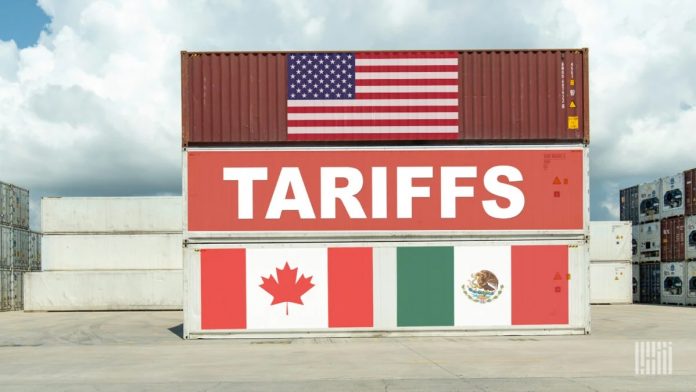
The United States has triggered a new wave of global trade tension following President Donald Trump’s sweeping tariffs on nearly 70 countries, an executive action that dramatically raises duties on a wide range of imports. And this time, Washington says there will be no turning back.

The latest tariff round, which became effective on August 1, imposes steep new levies as high as 50%, marking a significant escalation in Trump’s economic agenda. Canada was hit with a 35% tariff, up from the previous 25%, while Brazil now faces a 50% duty—one of the highest ever imposed by the U.S. India, Taiwan, and Switzerland were also hit, with rates of 25%, 20%, and 39% respectively.

Unlike previous rounds where targeted nations were offered the chance to negotiate tariff reductions, U.S. Trade Representative Jamieson Greer has made it clear that this latest package is here to stay. Speaking to CBS’s Face the Nation on Sunday, Greer said the new rates are “pretty much set,” noting that they are tied to permanent deals and national policy positions, including trade balances and geopolitical alignment.

“A lot of these are set rates pursuant to deals. Some of these deals are announced, some are not, others depend on the level of the trade deficit or surplus we may have with the country,” he said. “These tariff rates are pretty much set.”

This means there’s no room for temporary exemptions or a diplomatic off-ramp. Earlier rounds, such as those involving the European Union, allowed partial relief through side agreements, but not this one.

The sharp shift reflects a hardening of the Trump administration’s stance on global trade. The tariffs, officials say, were calculated based on specific concerns. For Canada, the hike was linked to what the U.S. claims is its failure to rein in fentanyl production and trafficking. In Brazil’s case, Washington cited the country’s worsening democratic backslide. For India, it was framed as a correction for longstanding trade imbalances. Taiwan’s rate was described as temporary, pending the outcome of broader U.S.-Taiwan negotiations.

Markets across the globe recoiled. Indian stocks fell for a second straight week. In Switzerland, government officials held an emergency session to assess the consequences of the 39% U.S. duty on Swiss exports, including luxury goods. The Swiss government is reportedly considering revising its trade package with the U.S. in retaliation.

Canada, also rattled by the unexpected spike, has moved swiftly to initiate negotiations with Washington. Canadian Trade Minister Dominic LeBlanc confirmed that Ottawa is already in direct talks with Greer’s office to seek a pathway to reduce the new 35% tariff. A phone call between President Trump and Canadian envoy Mark Carney is expected in the coming days.

Meanwhile, the U.S. is continuing separate negotiations with China, focused on unlocking trade for critical minerals and rare-earth magnets—essential for advanced electronics, defense, and clean energy sectors. According to Greer, both sides are “about halfway” toward resolving the deadlock, though it remains unclear whether any breakthrough will affect the current tariff framework.

“We’re focused on making sure that the flow of magnets from China to the United States and the- and the adjacent supply chain can flow as freely as it did before … and I’d say we’re about halfway there,” he said.

But for the rest of the targeted countries, the message is that the tariffs are not a bargaining chip—they’re a new reality. Businesses, economists, and global investors now face the implications of a more entrenched, less flexible U.S. trade regime.

In effect, Washington is now institutionalizing tariffs as a core component of its foreign policy playbook. Companies in impacted nations are already rethinking sourcing and export strategies, while foreign governments weigh retaliation or economic concessions to regain access to the U.S. market under better terms.

The world may be entering a new era of fractured trade as the U.S. doubles down on protectionism,  one where negotiation is replaced by pressure, and economic alliances hinge not just on commerce but on compliance with Washington’s broader geopolitical agenda.

Apple Beats Wall Street Expectations, Delivers Its Strongest Quarterly Performance In Nearly Three Years

0
An Apple logo is seen at the entrance of an Apple Store in downtown Brussels, Belgium March 10, 2016. REUTERS/Yves Herman/File Photo

Apple delivered its strongest quarterly performance in nearly three years, surpassing Wall Street expectations for both profit and revenue in its fiscal third quarter ended June 28.

Buoyed by robust iPhone sales and an unexpected rebound in China, the tech giant also reaffirmed its growing commitment to artificial intelligence, signaling plans to embed it deeply across its product lines.

The company posted earnings per share of $1.57, beating the $1.43 analysts had forecast, on revenue of $94.04 billion — its highest growth since December 2021. That represented a 10% increase year over year. Net income rose to $24.43 billion from $21.45 billion a year ago. Apple shares rose in after-hours trading following the announcement.

“This was an exceptional quarter by any measure,” CEO Tim Cook said in an interview with CNBC.

iPhone: Still the Growth Engine

Apple’s iPhone segment — its most crucial business — delivered $44.58 billion in revenue, growing 13% from a year earlier and beating consensus estimates of $40.22 billion. Cook credited the strong showing to the popularity of the iPhone 16, which he said is seeing “strong double-digit” sales growth compared to last year’s iPhone 15 lineup. He added that the growth was fueled in part by existing iPhone users upgrading to newer models.

Cook also revealed that roughly one percentage point of Apple’s overall 10% revenue growth came from consumers advancing their purchases in anticipation of potential tariffs.

Mac Sees Fastest Growth Among Units

While the iPhone led in absolute revenue, Apple’s Mac segment posted the fastest growth rate, climbing nearly 15% to $8.05 billion. The bump followed the company’s release of new MacBook Air laptops — its best-selling model — just ahead of the quarter.

Services, Apple’s second-largest segment, rose 13% to $27.42 billion, bolstered by growth in iCloud subscriptions and double-digit increases in App Store revenue. This area includes content subscriptions, warranty sales, licensing deals with Google, and cloud services. Apple’s gross margin for the quarter came in at 46.5%, higher than the 45.9% estimate.

Weak Spots in iPad and Wearables

Not every category recorded gains. iPad revenue fell 8% to $6.58 billion despite a new budget iPad model launched in March. Meanwhile, the wearables division — which includes Apple Watch, AirPods, and accessories — saw sales decline 8.64% to $7.4 billion.

The “Other Products” category also missed Wall Street’s forecast, signaling weakening demand in Apple’s accessory and wearable lines even as its core businesses gained momentum.

China Bounces Back

In a notable shift, Apple reported a 4% increase in Greater China revenue to $15.37 billion, after two consecutive quarters of year-over-year declines. Cook attributed part of the rebound to government subsidies that applied to some Apple devices.

“The subsidy does apply to some of our products, and it clearly helps,” he said.

That recovery in China is significant given earlier reports of intensifying competition from Chinese smartphone makers and waning local demand.

Tariff Costs and Outlook

Cook disclosed that Apple incurred $800 million in tariff-related expenses during the June quarter, lower than its prior estimate of $900 million. For the September quarter, Apple anticipates costs of about $1.1 billion, assuming no changes in U.S.-China trade policies.

Despite this, Apple expects mid- to high-single-digit increases in overall revenue and services revenue growth similar to this quarter’s 13%. Gross margins are projected to remain strong, between 46% and 47%, even accounting for tariff expenses.

A Pivot to AI

The report also highlighted Apple’s increasing investment in artificial intelligence — a space where it has trailed rivals like Google, Microsoft, and Amazon in public announcements. At June’s Worldwide Developers Conference (WWDC), Apple’s AI announcements received a lukewarm reception from investors, but Cook attempted to reframe that narrative during the earnings call.

“We are significantly growing our investments,” he said. “We’re embedding [AI] across our devices, across our platforms and across the company.”

Cook also disclosed that Apple has acquired “around seven” companies so far in 2025, although none of the deals were major in terms of cost. He emphasized Apple’s openness to mergers and acquisitions that can accelerate its product roadmap.

Asked whether emerging AI devices — such as those being built by OpenAI — might eventually compete with or replace the iPhone, Cook downplayed the threat.

“It’s difficult to see a world where iPhone is not living in it,” he said, suggesting such devices would more likely complement than displace Apple’s flagship product.

With $133 billion in cash reserves and several growth levers still active — from services to Macs to AI — Apple appears to be entering its final fiscal quarter of the year with renewed momentum.

 Nigeria’s Business Confidence Reaches 2025 Peak As Performance Index Climbs for Sixth Consecutive Month

0

Nigeria’s business climate continued to demonstrate signs of resilience, with the Business Performance Index maintaining its upward trajectory for the sixth straight month in 2025, underpinned by renewed confidence across the manufacturing sector and tempered expectations in the non-manufacturing space.

According to the June 2025 edition of the NESG-Stanbic IBTC Business Confidence Monitor (BCM) released in July, the Current Business Performance Index rose to 113.6 points, up from 109.8 in May. The index has remained well above the 100-point threshold that distinguishes expansion from contraction, signaling that Nigerian businesses, despite prevailing macroeconomic headwinds, are adapting and pushing forward.

Confidence Hits Peak Levels in 2025

The Business Confidence Measure, which gauges business expectations for future performance, surged to 134.5 points in June, the highest level recorded so far this year. This leap suggests that companies are increasingly optimistic about future growth prospects, potentially due to signs of macroeconomic stabilization, modest recovery in oil output, and early benefits from structural reforms introduced by the government.

Yet beneath this optimism, structural and systemic challenges remain entrenched. The report identifies limited access to finance as the most acute constraint confronting businesses, followed by inadequate electricity supply, foreign exchange volatility, unclear economic policies, and high rental costs. These factors continue to hinder expansion plans and operational efficiency, especially for small and medium-scale enterprises.

Manufacturing Powers Growth Amid Constraints

The manufacturing sector led all other sectors, posting an impressive index of 123.6 in June, up from 114.4 in May. This increase reflects strong performances in subsectors such as Textile, Apparel & Footwear, Cement, Plastic and Rubber Products, Wood and Wood Products, and Pulp, Paper and Paper Products. Businesses in these categories reported higher production volumes and a more stable supply chain, which collectively contributed to the sector’s strong showing.

But the sector’s momentum also recorded friction. Manufacturers face rising input costs due to shortages of raw materials, volatile electricity supply, escalating diesel prices, and a depreciating naira, which have pushed up the cost of imports and reduced profitability.

Additionally, challenges such as multiple taxation, insecurity, high import tariffs, and poor access to credit remain persistent, threatening to undermine the sector’s medium-term outlook. These issues have prompted fresh calls from stakeholders for policy intervention.

The Manufacturers Association of Nigeria (MAN) recently urged the Central Bank of Nigeria (CBN) to cut the benchmark interest rate, arguing that sustained high rates were suffocating the productive sector. At its 301st Monetary Policy Committee (MPC) meeting held July 21–22, 2025, the CBN retained the Monetary Policy Rate (MPR) at 27.5%, defying growing pressure from the real sector.

“The expectation of MAN is to have a rate cut that is supported by a robust fiscal policy framework capable of facilitating improved access to long-term loans, enhanced productivity, and sustained economic growth,” the association stated.

Non-Manufacturing Sector Sees Slower Momentum

The non-manufacturing sector maintained an index of 120.7 in June, but this marked the second month of slowing growth, falling from 122.2 in May and 123.6 in April. While the sector remains in expansion territory, the decline signals rising caution among service providers, who are contending with high operational expenses, poor infrastructure, and rising energy and transportation costs.

Sub-sectors such as Motor Vehicle and Assembly experienced downturns, even as others maintained moderate gains. Foreign exchange instability was flagged as a key concern, disrupting procurement and long-term planning.

Finance access remains a top challenge across service-oriented industries. Many businesses also lament the absence of stable, pro-business regulations and the high cost of maintaining operations in the current macroeconomic environment.

Recalibrated Framework for BCM Index

The latest edition of the Business Confidence Monitor also clarified changes to its methodology. Index points now follow a revised scale, where:

  • Below 100 indicates contraction in current performance or pessimism in future expectations.
  • Above 100 denotes expansion or optimism, respectively.

This recalibration aims to align Nigeria’s business confidence tracking with global standards, making it easier to benchmark the country’s economic sentiment against that of peer economies.

While the data points to growing optimism and sustained business activity in 2025, Nigeria’s fragile infrastructure, volatile currency, and high borrowing costs continue to pose significant risks. Experts warn that unless monetary and fiscal policy are realigned to address the structural weaknesses identified in the report—particularly around finance and energy—the country’s businesses may find it difficult to convert short-term confidence into long-term, inclusive growth.

The business community is cautiously optimistic, but the underlying message from the BCM is that momentum is not a substitute for stability, and real progress will depend on fixing the fundamentals.