

DD
MM
YYYY

PAGES

DD
MM
YYYY

spot_img

PAGES

Home Blog Page 7765

A Price-Based Model of Expanding Business in Africa

0

Many western companies design their business models based on high profit margins. It pays very well to be differentiated and pursue vertical markets. Horizontal markets are commoditized and a strategy to dominate within it is not always seen as a smart move by analysts. Increasingly firms try to innovate and differentiate in order to carve a niche where they can make hefty margins.


That is very good if your business is domiciled in the saturated Western Europe and U.S markets. There is growth inertia in these two markets with their ultra-competitions and intense regulations. Especially in the Pharmaceutical industry, there seems to be no way to expect growth in these matured economies.


So what do you do? You have to expand out of Europe and U.S to Africa, Latin America and Asia. They are the future. They have the population with enormous growth potentials. Despite the downturn in the global economy, they remain promising, especially Asia and Latin America (in this case, Brazil).


Having worked in Lagos (Nigeria) as a banker and traveled to many Africa nations, the high margin structure will not always work in Africa, especially in pharmaceutical industry. Many are still very poor; yet, they have the same needs as those in the developed world. From entertainment to drugs, they want to enjoy the western products. They want the new cars for their bad roads; they want the best drugs to manage diabetes; the new video games to relax; and so on. Any sense of high cost, people will abandon the product. It is very common to see people die slowly because they cannot afford drugs for treatable diseases.


Arguably, these drugs and cars are available in many parts of Africa. But the problem is that only few can afford them. With no insurance scheme to finance healthcare delivery, patients must pay themselves. What worked in Boston will not work in Botswana because the patient in Boston is being helped by the insurance firm while the one in southern Africa must pay cash. That is the major difference in marketing drugs between U.S and Africa.


Another example is in the telecommunication industry. Cellular handsets are very expensive in Africa when compared to the U.S. Understandably, a simple reason is lack of competition since not many firms have gotten into the markets. Another is the obvious fact that none of those gadgets are made in Africa. So, there are associated transportation and handling costs in selling them in Africa.


Nonetheless, the truth is that by not using price based model, many MNCs are undermining their potentials in developing, emerging or transitional economies like Africa and Asia. You have to offer what the customers can afford and do away with the cost based strategy. In the U.S, you can ask for any price; in Africa, you need sales volume and lower price makes it happen.


For Pharma industry, they have to rethink their strategies. It is time they cut down the prices of their drugs. Drug prices are patient problems, unlike in U.S where it is the insurance firms’ (for those that have, anyway). Many more people can give you sales volume and you will make more profits than sticking to your present pricing model and serving only less than 5% of the African market.


If you focus on pushing volume at good prices, more customers will come in. That alone will help you stay profitable. And they will be better off themselves by using your great products. Drugs, video games, etc must not be overly expensive in Asia and Africa compared to U.S and Western Europe.


Change your model and you will be happier doing business in Africa. Cut the prices and use sales volume to help people and improve your bottom line. It could be that simple
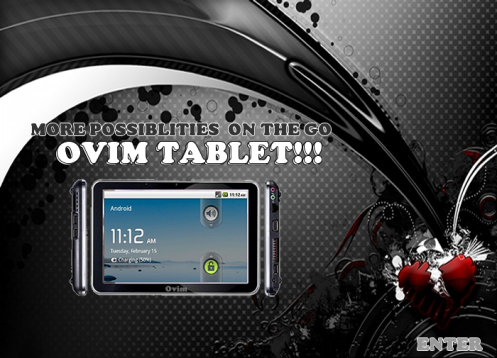
Remember Ovim Plus Takes You Perfectly To Google Android Market. Vote Freedom, Buy Ovim+, Now On Sale

0

You can read this on the official website site:

Welcome People, this is the tablet you have been waiting for. Ovim Plus is here. Like its predecessor, it is engineered with you in mind. Ovim Plus is elegant, sleek and simple. We call it the Nigeria’s tablet because there is nothing to benchmark it when you loop the affordable cost, features and the brand. It comes with 10.1 inch display and opens the door to Freedom. Oh yes Good People, Ovim Plus is ready for Android Market so you can download all those apps. Besides, if you need the local ones, you can download from our apps store. Get Ovim Plus today!


Ovim Plus – The Engine of Work and Play

Available for sale in Owerri and Lagos offices of Fasmicro.


Cost: N59,900


Order at the Sales Network or come to office


Our Bank and Payment details are here


Specs

Processor: Freescale iMX515 800MHz ARM Cortex A8

CPU: Dual core 800MHZ

O/S:Android 2.2 Support Flash10.1

Memory/Hard disk:512M/4GB

Display:10.1 TFT resistive touch screen,1024*600

Camera:Support TF card.Battery:3800mAh

support word,Excel,Power point and email function

Audio/Video:Support web video,music,chat,picture

Other function:Support HDMI WIFI , built-in 3G

Box/Kg:30.5*21.5*8.5mm/0.9KG


Ovim Plus will help you load the locally inspired Nigerian apps from the Apps Store.


For the first version of Ovim, please visit this page


Ovim is a product of Fasmicro and Microscale

Bitcoin, The Virtual Currency Explodes in Popularity. Techgeddon Risk Disguised as Inflation Buster

1


First, what is bitcom? It is “money”. Yes, Bitcoin is a digital currency created in 2009 by Satoshi Nakamoto. The name refers both to the open source software he designed to make use of the currency and to the peer-to-peer network formed by running that software, according to wikipedia.


Bitcoin eschews central authorities and issuers, using a distributed database spread across nodes of a peer-to-peer network to track transactions. Bitcoin uses digital signatures and proof-of-work to provide basic security functions, such as ensuring that bitcoins can be spent only once per owner and only by the person who owns them.


It is simply  a peer-to-peer currency. Peer-to-peer means that no central authority issues new money or tracks transactions. These tasks are managed collectively by the network.


Bitcoins, often abbreviated as BTC, can be saved on a personal computer in the form of a wallet file or kept with a third party wallet service, and in either case bitcoins can be sent over the Internet to anyone with a Bitcoin address. The peer-to-peer topology and lack of central administration are features that make it infeasible for any authority (governmental or otherwise) to manipulate the quantity of bitcoins in circulation, thereby mitigating inflation.


These are some numbers from their operations which Tekedia pooled from many sources

– 87 petaflops is the processing speed of the bitcoin network

– $130m is value of bitcoin in circulation

– 11,000 is number of bitcoin transactions per day


But hold on, this company of idea can blow you away if anything goes wrong. You better stay away until some regulations come into place.

Velti Brings Innovation in Africa’s Mobile Marketing and Advertising

0


Velti is a leading global provider of mobile marketing and advertising solutions for brands, advertising agencies, mobile operators, and media companies. The Velti mGage™ platform enables our customers to plan, manage, and optimize mobile advertising and marketing campaigns in over 30 countries worldwide, reaching more than 2.5 billion customers.


In 2010, over 825 brands, advertising agencies, mobile operators, and media companies used Velti’s platform to conduct over 2,700 campaigns. Velti is a publicly-held corporation based in Jersey, with 600 employees worldwide. Velti began trading on the NASDAQ Global Select Market on January 28, 2011, under the symbol VELT. For more information visit www.velti.com


This company now has an African focus.It has a great history and we look forward as its efforts to expand in Africa rewards it:


Over the ten years since its founding in 2000, Velti has extended its global impact with partnerships and acquisitions of leading providers of mobile marketing and advertising worldwide. In 2010, we acquired Mobclix, an important player in the rapidly expanding areas of mobile applications and analytics, giving Velti a mobile ad exchange that already connects 25 ad networks and more than 15,000 mobile application developers who collectively serve and monetize more than three billion mobile ad impressions per month. Also in 2010, we acquired Media Cannon, a developer of mobile advertising tools and technology, providing us with an expanded customer base and proprietary solutions that enable mobile advertising and mobile Internet user experience. In 2009, Velti acquired Ad Infuse, a personalized mobile advertising company which has enhanced our revenue, global reach, and customer capacity.


This is part of our series: Focus on Africa -companies that are establishing networks in the continent.

Tekedia Founder’s Article Makes Harvard Business Review (HBR) Editors’ Picks

0

When our Founder, Dr. Ndubuisi Ekekwe, asked us to give Africa a Tech blog that makes sense, we could not be happier. Our traffic is showing that. He shaped this blog, especially the simplicity of the design and crafted it the way he wanted.

Though he has left the blog in our hands (we think we are doing well), he is making waves. His recent post in HBR makes the Editors’ Pick. The post titled: “The New Entrepreneurial Waves in Africa” has been well received.


We think you will like to know our foundation.