DD
MM
YYYY

PAGES

DD
MM
YYYY

spot_img

PAGES

Home Blog Page 778

Apple Faces $1.1bn Tariff Blow from Trump’s Trade Crackdown as Revenue Climbs 10%

0

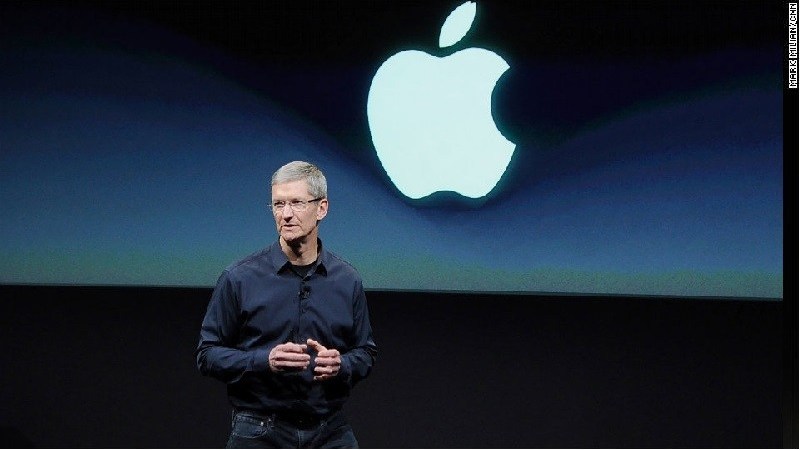
Apple is bracing for a fresh wave of costs tied to President Donald Trump’s trade policies, with CEO Tim Cook revealing that tariffs could add up to $1.1?billion to the company’s expenses in the September quarter.

Cook disclosed during Thursday’s earnings call that Apple had already swallowed about $800?million in tariff costs in the June quarter, a bit less than the $900?million estimate the company gave back in May.

Cook explained that most of the charges stemmed from tariffs imposed under the International Emergency Economic Powers Act (IEEPA), particularly targeting goods sourced from China. While Apple has been trying to diversify its supply chain to mitigate the fallout, Cook warned there were “many factors that could change, including tariff rates,” highlighting the deep uncertainty around U.S.-China trade.

Supply Chain Shuffle: India and Vietnam in Focus

The Trump administration has repeatedly pushed Apple to relocate production to the United States or face even steeper import duties. As a result, Apple has stepped up manufacturing in India, where Cook noted that “the majority” of iPhones sold in the U.S. are now produced.

Meanwhile, most Macs, iPads, and Apple Watches come from Vietnam. These moves, aimed at avoiding the highest Chinese tariffs of around 25%, still leave Apple exposed, since the Trump administration has threatened to expand tariffs to include India and Vietnam if production doesn’t shift to U.S. soil.

Even with this diversification, Apple’s sprawling supply chain, built over decades across Asia, is not easily or cheaply replicated in the U.S., Cook stressed. To blunt the impact of trade threats, Apple has committed to investing $500?billion in U.S. projects over the next four years, including building a Detroit-based manufacturing academy and expanding its domestic semiconductor sourcing.

Apple Powers Ahead Despite Trade Turbulence

Despite the tariff drag, Apple delivered impressive results in the June quarter. Revenue climbed 10% to $94?billion, while net profit rose 9%, thanks to robust demand for the iPhone 16 and steady growth in services. iPhone sales alone jumped 13% to $44.6?billion, and services revenue reached a record $27.4?billion.

Cook credited a mix of “early buy” activity from consumers wary of future price hikes and the sustained popularity of the latest flagship devices. Services—including iCloud, Apple Music, and App Store fees—helped stabilize earnings, offsetting pressure from rising production costs.

As rivals like Microsoft and Google race ahead with large-scale artificial intelligence rollouts, Apple has faced growing pressure to deliver more from its own AI initiatives. Cook confirmed plans to “significantly” expand Apple’s AI investment, and CFO Kevan Parekh said the company could pursue strategic acquisitions to strengthen its position. Analysts argue this shift is crucial if Apple wants to balance tariff-related volatility with new revenue streams.

Industry analysts note that Apple’s focus on “on-device” AI puts it on a different path than cloud-heavy competitors, with the goal of maintaining data privacy while still offering powerful features. However, Apple lags behind its peers in rolling out major consumer-facing AI products, a gap that some fear could widen if trade battles further squeeze margins.

Walking The Tariff Tightrope

Cook’s comments made it clear Apple faces a precarious few months. If tariff rates remain at their current levels, the company could see a cumulative hit of nearly $1.9?billion across two quarters. That figure might rise if Trump follows through on new threats to target imports from India or Vietnam.

Apple is betting that its diversification strategy, robust U.S. investment promises, and a pivot to AI can protect its brand and bottom line from geopolitical turbulence. But the challenges are substantial.

Shares in Apple are down 17% year-to-date, reflecting investor worries about trade risk and competitive pressures. Whether Cook can balance these crosswinds while still keeping Apple’s growth story alive will define the company’s trajectory heading into 2026.


Cysic Joins Boundless To Accelerate ZK Prover on Mainnet

0

Cysic, the first full-stack compute network, purpose-built for AI/ZK and mining workloads, has joined Boundless’ newly launched mainnet beta as a ZK prover, to offload computation from L1 chains while maintaining native security. Amid growing demand for ZK-backed compute, Cysic plays a key role in scaling ZK and contributing real-time compute power.

Cysic is now live on the Boundless Mainnet Beta! We’re powering @boundless_xyz’s cutting-edge ZK proof marketplace with Cysic’s GPU-accelerated proofs and custom ZK ASICs. Together, we’re unlocking scalable, secure ZK infrastructure.

Cysic shares early performance benchmarks, within the last week, below: 

High output: 177.3B ZK cycles on Ethereum, and 3.07B cycles on Base.

High success rates: 94.6% on Ethereum, and 80% on Base.

High prover speed: Peaking at 0.95 MHz, averaging 3.8M Wei (3.8 x 10^-18 ETH) per cycle.

Sustained activity: 9.5% uptime on Ethereum, and 8.3% in 2-hour proving tranches.

These benchmarks reflect consistent, low-cost, high-speed proving availability, even in early stages. As workloads increase, Cysic aims to ramp up GPU power provision for Boundless, bringing real-time compute throughput as proof requests across the network grow.

Cysic and Boundless are pioneering ZK prover orchestration through decentralized marketplaces, with Cysic focusing on hardware acceleration and Boundless emphasizing universal verifiable compute. Cysic’s ASIC-driven approach and mobile verifier app make it a leader in performance and accessibility, while Boundless’s zkVM and cross-chain interoperability unlock new possibilities for scalable blockchain applications.

Boundless operates a decentralized marketplace where developers submit computation requests, and provers compete to fulfill them, earning $ZKC tokens through a Proof of Verifiable Work (PoVW) mechanism. This replaces wasteful mining with a market for useful computation. The PoVW system rewards provers based on their computational contributions, scaling as more provers join, and supports applications like AI, data science, and simulations.

Boundless uses RISC Zero’s zkVM, which emulates the RISC-V instruction set, allowing developers to prove arbitrary code written in high-level languages like Rust. This makes ZK proofs accessible without requiring deep cryptographic expertise.

Together, they address critical challenges in ZK proof generation, verification, and adoption, positioning them as key players in the evolving Web3 landscape. Boundless achieves significant efficiency, reducing on-chain verification costs to as low as 35,000 EVM gas per request. This makes L1-grade security accessible and cost-effective for various protocols.

The protocol’s design separates execution and consensus, enabling exponentially more efficient transaction processing while maintaining security through mathematical verifiability. Boundless is community-owned, with an active GitHub monorepo providing tools like the Boundless Market SDK and boundless-cli for developers and miners. The Mainnet Beta, launched on Base, includes a community sale with token bonuses for early adopters.

Cysic has built a vertically integrated hardware stack – including a multi-node GPU cluster and a ZK-specialized ASIC chip that runs up to 100x faster than current solutions (1.33M Keccak fps). Cysic is also in its third and final phase of its testnet, which already has over 118K provers and 200K verifiers onboarded.

Cysic joins the Boundless Mainnet Beta as one of its first hardware-backed provers, with: Multi-node GPU Clusters. Custom ASICs at 1.33M Keccak ops/sec. Cysic full-stack ZK pipeline, completely built in-house optimized for throughput, reliability, and real-world scale.

This is how Cysic and Boundless are scaling beyond fragmented chains. ZK proofs let us decouple execution from consensus, breaking through execution ceilings and state fragmentation. Boundless orchestrates the network, Cysic powers the compute, together, we’re building faster, cheaper, and more secure infrastructure for every blockchain.

Google Has 14 Days to Dismantle Core Parts of Its Android Monopoly After Epic Games’ Court Win

0

Google has been given just 14 days to comply with a landmark court ruling that could significantly alter the landscape of its Android ecosystem, following Epic Games’ second major victory in their long-running antitrust battle.

The ruling, which upheld Judge James Donato’s permanent injunction, mandates that Google implement sweeping changes to its Play Store business practices by mid-August—unless it manages to secure an emergency stay from the Ninth Circuit Court of Appeals.

The changes stem from a jury verdict that found Google guilty of operating an illegal monopoly around Android app distribution and in-app billing. Although Google has vowed to appeal and may escalate the case to the full Ninth Circuit or the U.S. Supreme Court, the tech giant is, for now, bound by the clock. It must begin dismantling core parts of its current model within two weeks.

What Google Must Change—Immediately

The court order demands that Google stop forcing developers to use its Google Play Billing system. It also requires that Android developers be allowed to:

  • Inform users about alternative payment methods from within the Play Store.
  • Link to app downloads outside of the Play Store.
  • Set their own app pricing models.
  • Freely distribute apps on competing platforms without restrictions or penalty.

Additionally, Google must cease offering monetary perks or strategic advantages to phonemakers, carriers, or developers in exchange for prioritizing the Google Play Store or preinstalling its apps.

These reforms target what are known as anti-steering provisions—rules that, in both this case and Epic’s earlier suit against Apple, were found to unfairly restrict competition by discouraging developers from using alternative app stores or billing systems.

In its emergency motion seeking a pause, Google argued that enforcing these measures on such a short timeline would pose “substantial risks” to over 500,000 developers and “millions of users,” claiming the transition could jeopardize the “entire Android ecosystem.” So far, the courts remain unconvinced.

Specific Provisions Going Into Effect

The injunction explicitly spells out the key changes Google must implement. The remedies taking effect in 14 days include:

Remedy 4: Google is barred from sharing revenue with any entity that distributes or is planning to distribute an Android app store, in order to prevent financial coercion in favor of Google Play.

Remedy 5: Google may not tie payments, revenue share, or access to any of its services to an app being launched first or exclusively on the Play Store.

Remedy 6: The company is also banned from conditioning perks or services on the promise that developers won’t release versions of their apps with additional features on third-party stores.

Remedy 7: OEMs and carriers can no longer be pressured to preinstall Google Play in prominent device locations in exchange for financial or strategic incentives.

Remedy 9: Google must drop its requirement that developers use only Google Play Billing. It also cannot prohibit developers from communicating with users about alternative payment methods or adjusting app pricing depending on the payment platform.

Remedy 10: Developers must be free to discuss pricing and availability of apps outside the Play Store and provide direct download links.

Remedy 13: Within 30 days, both Epic and Google must jointly select a Technical Committee tasked with reviewing disputes and overseeing compliance with these reforms.

The duration of most provisions is set at three years, until November 1, 2027.

Rival App Stores and More

These immediate changes don’t yet include the most radical reforms Epic is pushing for: forcing Google to allow rival app stores to be listed and installed directly within the Google Play Store. Judge Donato gave Google eight months to design a narrowly tailored set of safety and security rules to accommodate that next phase. As it stands, rival app stores such as the Epic Games Store or Microsoft’s Xbox Store won’t appear inside Google Play before early 2026.

Still, the ruling marks a pivotal shift in Android’s regulatory oversight, and it raises the likelihood of more app store competition long-term.

Google’s Ongoing Defense

Despite the loss, Google maintains that its Android ecosystem fosters innovation and offers broad user choice. In its stay request, the company said the ruling would cause “irreparable harm,” especially since it would have to retool billing, developer communication policies, and incentive structures in just two weeks.

A three-judge panel has already rejected one stay request, affirming the district court’s full injunction as valid and appropriately scoped. The likelihood of securing another emergency pause remains uncertain.

The court’s language suggests this isn’t just about fairness for Epic—it’s about opening up an ecosystem long governed by unilateral rules and exclusive agreements, many of which have become foundational to Google’s mobile dominance.

If the Ninth Circuit or the Supreme Court doesn’t intervene, Google will have to comply with the injunction or risk contempt of court. While its appeal continues, developers and competitors are watching closely for what could be the most significant restructuring of the Android app economy since the platform launched.

For Epic, the ruling is another notch in its antitrust crusade against big tech’s walled gardens. For Google, it’s an existential test of how much control it can retain over a system that, in the words of the court, was never supposed to be a monopoly in the first place.

Implications of Strategy’s $10B Q2 Profits, $4.2B STRC Offering, and mNAV Guidelines

0

Strategy, formerly MicroStrategy, reported a record $10 billion net income in Q2 2025, driven by a $14 billion unrealized gain on its Bitcoin holdings, which grew 20% to 597,325 BTC at an average cost of $70,982 per coin. The profit, a 1,783,860% year-over-year surge, was fueled by Bitcoin’s price rising to $107,752 by June 30, 2025, under new fair-value accounting rules.

The company filed a $4.2 billion STRC preferred stock offering to fund further Bitcoin purchases, part of its “21/21 Plan” to raise $42 billion by 2027. Strategy also introduced modified net asset value (mNAV) guidelines, limiting common stock issuance when shares trade below a 2.5x premium to Bitcoin holdings, unless used for debt or dividend obligations.

This reflects Strategy’s aggressive Bitcoin treasury strategy, though critics highlight risks from leverage and Bitcoin’s volatility. Strategy’s $10 billion Q2 profit, driven by a $14 billion unrealized gain on its 597,325 BTC holdings, underscores the success of its Bitcoin-centric treasury strategy. The adoption of fair-value accounting (FAS 157) allowed Strategy to recognize Bitcoin’s price appreciation (to $107,752 by June 30, 2025).

The $4.2 billion STRC preferred stock offering signals Strategy’s continued commitment to increasing its Bitcoin reserves under the “21/21 Plan” ($42 billion by 2027). This move reinforces its position as the largest corporate Bitcoin holder, potentially increasing its influence in the crypto market. The modified net asset value (mNAV) guidelines, restricting common stock issuance unless shares trade at a 2.5x premium to Bitcoin holdings, aim to protect shareholder value.

Strategy’s aggressive Bitcoin accumulation could drive demand, potentially pushing Bitcoin prices higher, especially given its $64.4 billion Bitcoin portfolio (as of Q2 2025). However, this also ties Strategy’s financial health closely to Bitcoin’s volatility, posing risks if prices decline. The STRC offering, if successful, could set a precedent for other corporations to use capital markets to fund crypto investments, potentially increasing institutional demand for Bitcoin.

Strategy’s use of debt and preferred stock offerings to fund Bitcoin purchases introduces significant financial leverage. A sharp decline in Bitcoin’s price could strain its balance sheet, especially with $4.2 billion in new obligations. The mNAV guidelines may signal to investors that Strategy prioritizes Bitcoin holdings over traditional business operations, potentially alienating those skeptical of crypto’s long-term value.

Prospects for Institutional Adoption of Bitcoin

Strategy’s success—$10 billion in profits tied to Bitcoin—may encourage other corporations to allocate portions of their treasuries to Bitcoin, especially those with excess cash seeking inflation hedges or high-return assets. The STRC offering demonstrates how companies can use capital markets to fund crypto investments, potentially inspiring similar offerings. This could lead to broader institutional adoption as companies see a viable path to integrate Bitcoin into their balance sheets.

The adoption of fair-value accounting for digital assets (e.g., FAS 157) makes Bitcoin more attractive for institutions, as unrealized gains can be reflected in financial statements, improving reported earnings. Bitcoin’s price volatility (e.g., potential drops from $107,752) remains a significant deterrent for risk-averse institutions, particularly those with fiduciary duties to shareholders.

Companies like Tesla or Square (Block), which have previously dabbled in Bitcoin, may follow Strategy’s lead, especially tech firms with high cash reserves. Financial institutions, such as hedge funds or asset managers, could also increase Bitcoin allocations, viewing it as a portfolio diversifier. Sectors like manufacturing or retail, with lower risk tolerance, are less likely to adopt Bitcoin soon, preferring stable assets or traditional investments.

Strategy’s success could boost demand for Bitcoin ETFs and institutional-grade custody solutions, as seen with firms like Fidelity or Coinbase Institutional, making it easier for companies to enter the market. High-profile corporate adoption could normalize Bitcoin as a reserve asset, potentially reducing stigma and encouraging central banks or sovereign wealth funds to explore crypto holdings.

Strategy’s $10 billion profit and $4.2 billion STRC offering highlight its leadership in corporate Bitcoin adoption, potentially inspiring other institutions to follow suit. The mNAV guidelines reflect a cautious approach to balancing shareholder value with crypto exposure. While Strategy’s success could accelerate institutional adoption, particularly in tech and finance, barriers like volatility, regulation, and operational complexity may slow broader uptake.

Crypto Market Capitalization Drops 3% As Liquidation Exceeds $700M

0

The crypto market cap dropped by over 3%, with total liquidations exceeding $700 million, predominantly from long positions. According to CoinGlass, $737.36 million in leveraged positions were wiped out, with 85.3% being longs, reflecting overly bullish trader sentiment.

Major assets like Ethereum, XRP, and Solana saw significant losses, while meme coins faced steeper declines. The largest single liquidation was a $2.96 million BTCUSD position on Binance. This sell-off is attributed to profit-taking by retail traders or large investors and potential capital rotation ahead of an expected altcoin season.

Bitcoin remained range-bound between $116,000 and $120,000 after hitting a high of $123,218 on July 14. Traders are advised to monitor key support levels for signs of stabilization or further correction. The liquidations, primarily affecting long positions, signal heightened volatility, which can strain DeFi platforms.

With $737.36 million in leveraged positions wiped out, DeFi protocols reliant on collateralized lending (e.g., Aave, MakerDAO) may face increased liquidations of undercollateralized loans, reducing total value locked (TVL). DeFi TVL has already shown sensitivity to market downturns, with an 8% drop in active wallets reported earlier this year.

The sell-off, driven by profit-taking or capital rotation, could erode retail and institutional trust in DeFi. The Terra ecosystem’s 2022 collapse ($60 billion loss) highlights how DeFi can amplify market shocks. However, innovations like AI-driven DeFi platforms and stablecoin integrations (e.g., USDC) may stabilize liquidity by attracting institutional capital.

Despite short-term setbacks, DeFi’s long-term outlook remains robust. Projections estimate DeFi could grow into a $231 billion industry by 2030, driven by lending, borrowing, and staking innovations. The current dip may encourage platforms to enhance risk management and scalability through Layer 2 solutions.

Altcoins

Altcoins like Ethereum, XRP, and Solana experienced significant losses, with meme coins hit harder. This reflects their higher risk profile compared to Bitcoin, as altcoins often amplify market movements. Leverage buildup in altcoin derivatives ($40 billion open interest) suggests potential for further downside volatility if sentiment worsens.

The market cap drop aligns with capital rotation signals, potentially foreshadowing an altcoin season. Historical patterns (e.g., cup-and-handle in TOTAL3) indicate altcoins may outperform Bitcoin post-correction, especially with institutional interest in projects like Solana and Polkadot. Regulatory clarity and low interest rates could further boost altcoin adoption in 2025.

Altcoins tied to DeFi, AI, and tokenization (e.g., Solana, SEI, SUI) are poised for growth due to their utility in scalable ecosystems. Solana’s high transaction speeds and expanding DeFi/NFT ecosystems make it resilient despite a recent 11.52% weekly dip.

Non-Fungible Tokens (NFTs)

NFTs are highly sensitive to crypto market fluctuations, as their trading often relies on cryptocurrencies like Ethereum. The market cap drop mirrors a February 2025 NFT trading volume decline of 50% to $498 million, with a 90% capitalization loss since 2021. This suggests NFTs may struggle in the short term.

Despite the downturn, NFTs are evolving beyond digital art into gaming, music, and tokenized physical assets (e.g., Courtyard.io’s collectibles). Projects like the Trump Organization’s NFT-metaverse initiative could revive interest. NFTFi (NFT finance) is also gaining traction, enabling liquidity through NFT-collateralized loans and fractionalization.

The NFT market is projected to reach $247.41 billion by 2029, driven by rising digital art demand and new standards like ERC-1155, which reduce transaction costs. However, challenges like low liquidity and cyberattack risks persist. The interconnectedness of DeFi, altcoins, and NFTs means a market downturn can cascade across these sectors. However, NFTs offer diversification due to their lower correlation with other blockchain assets.

Global economic conditions, such as interest rate hikes or trade tariffs, exacerbate crypto volatility, impacting DeFi, altcoins, and NFTs alike. Institutional adoption (e.g., Goldman Sachs’ tokenized funds) and regulatory clarity could mitigate these risks. The crypto market’s projected growth to $10–12 trillion by 2030 suggests resilience. DeFi and altcoins will likely benefit from technological advancements, while NFTs may rebound through innovative applications and mainstream integration.