DD
MM
YYYY

PAGES

DD
MM
YYYY

spot_img

PAGES

Home Blog Page 781

Lipaworld Expands to South Africa, Empowering Financial Inclusion Through Stablecoins

0

Lipaworld, a borderless financial platform that enables immigrants, freelancers, and African businesses to send and receive money using Stablecoins, has entered South Africa to drive financial inclusion through Stablecoins.

The venture-backed fintech platform’s entry into the South African market will see it support freelancers, immigrants, and informal businesses with a faster and safer alternative to conventional banking and remittance systems.

Speaking on this expansion, the founder of Lipaworld Jonathan Katende said,

“We are not here to hype crypto. We are here to offer real financial access to people who have been overlooked or underserved by traditional systems. Stablecoins are not a fad. They are a regulated, reliable way for people to take control of their finances, build economic resilience, and participate fully in the modern economy.”

As digital currencies continue to reshape the financial landscape, stablecoins are increasingly bridging the divide between traditional banking systems and the world of cryptocurrencies, and Lipaworld is bringing that transformation into everyday use across Africa.

The use of stablecoins has increased in recent years with the average supply of stablecoins in circulation increasing roughly 28% year-over-year. Total transfer volume hit $27.6 trillion last year, surpassing the combined volume of Visa and Mastercard transactions in 2024.

Unlike volatile cryptocurrencies, stablecoins like USDC are pegged to the U.S. dollar and increasingly subject to regulation across multiple jurisdictions. USDC, issued by Circle (now listed on the New York Stock Exchange), offers a stable, reliable digital currency for payments.

Notably, several financial institutions are entering the stablecoin market. Earlier this year Standard Chartered Bank announced it was partnering with cryptocurrency companies to launch a stablecoin that will be pegged to the Hong Kong dollar. Other banks and financial technology companies such as PayPal, Bank of America, and Stripe have also launched stablecoins or indicated they intend to enter the market.

With over $2 trillion in stablecoin transactions processed globally in the past year, these digital currencies are quickly becoming the backbone of modern value exchange.

Proponents maintain that stablecoins can enable quicker and more affordable international payments, and can be used to bring financial services to the over 1 billion people worldwide who lack access to traditional banking.

In Sub-Saharan Africa—where remittance fees average 7.9% to send just $200—the need for high-speed, low-cost financial alternatives is critical.

Lipaworld founded by Jonathan Katende, wants to enhance financial inclusion in Africa, with its recent expansion to South Africa. The platform bridges the informal cash economy with modern fintech, empowering underserved communities with fast, transparent, and affordable financial tools. Through its virtual USDC accounts, digital vouchers, and peer-to-peer wallet, users can access essential services like airtime, groceries, and transport while bypassing costly remittance fees.

At its core, Lipaworld enables users to earn dollarized income through a virtual bank account, send money home using stablecoins, and spend their digital dollars on local products within its marketplace. The self-custodial wallet gives users full control, bypassing high fees, forex markups, and third-party delays.

“Our user experience is deliberately simple,” says Katende. “We hide the complexity so users can just get on with their lives. Behind the scenes, it’s stablecoin wallets—but it feels like using any familiar money transfer app. Only this one works better.”

The platform is trusted by Individuals And Teams At The World’s Best Companies which include plug-and-play, Coinbase, Circle, MoonPay, Western Union, and Visa.

Solving for South Africa’s Informal Economy

South Africa’s informal sector remains deeply excluded from mainstream financial services. Freelancers wait days for international payments.

At Lipaworld, the company believes talent shouldn’t be limited by borders, and getting paid shouldn’t be a battle. That’s why it is on a mission to make payments faster, easier, and more secure for African freelancers.

Lipaworld is tackling these challenges head-on. A freelance designer in Cape Town, for example, can now invoice clients in digital dollars, get paid within minutes, and support family in Zimbabwe—without ever stepping into a bank.

Regulation as a Foundation

Stablecoins have become an integral asset class of cryptocurrencies. However, they face various integration hurdles such as regulatory scrutiny, consumer protection concerns, and transparency issues.

Amid an industry often clouded by hype, Lipaworld remains firmly committed to transparency and regulatory compliance. The company works with licensed Payment Service Providers (PSPs) in each of its markets and actively engages with policymakers to support responsible innovation.

By addressing regulatory scrutiny and consumer protection concerns, the platform is building a new, inclusive financial system that empowers underserved communities with fast, affordable, and transparent tools, transforming South Africa’s economic landscape from the ground up.


Tekedia Capital Investment Cycle Begins in Oct 2025

0

Good People, this is to note that the next Tekedia Capital investment cycle is scheduled to begin in the first week of Oct 2025 and end in the first week of Nov 2025. Please plan accordingly if you plan to participate.

Similarly, the next business review will be in the last week of Nov 2025.

To join Tekedia Capital, go here

CPPE Hails Nigeria’s GDP Rebasing But Calls for Regular Updates Amid Data Accuracy Concerns

0

The Centre for the Promotion of Private Enterprise (CPPE) has applauded the National Bureau of Statistics (NBS) for its recent rebasing of Nigeria’s Gross Domestic Product (GDP) but has also urged the agency to institutionalize regular and timely updates to maintain the relevance and credibility of the country’s economic data.

In a statement issued by its Chief Executive Officer, Dr. Muda Yusuf, the CPPE described the rebasing to a new base year of 2019 as a “significant milestone” in Nigeria’s economic management efforts. The move, it said, aligns the country’s statistical practices with international standards and enhances the accuracy of macroeconomic data used for policy formulation and investment planning.

However, Yusuf emphasized that more frequent rebasing exercises are necessary to ensure economic data remains current.

“The CPPE urges that future rebasing exercises be conducted more regularly and in a timely manner, in line with global standards, to maintain the relevance and credibility of Nigeria’s economic data,” the statement read.

Revised GDP and Sectoral Growth

According to the NBS report titled “Rebasing of Gross Domestic Product (GDP)”, Nigeria’s GDP stood at N372.8 trillion in 2024 following the recalibration using 2019 as the new base year. The rebased GDP figures showed that nominal GDP for 2019 was N205.09 trillion, increasing consistently to N213.63 trillion in 2020, N243.30 trillion in 2021, N274.23 trillion in 2022, N314.02 trillion in 2023, and N372.82 trillion in 2024.

The revision led to a 41.7 percent increase in nominal estimates over the previous base-year data from 2010, far lower than the 59.7 percent increase recorded during the last rebasing. Real GDP growth post-rebasing was estimated at -6.96 percent in 2020 (attributed to the COVID-19 shock), then recovered to 0.95 percent in 2021, 4.32 percent in 2022, 3.04 percent in 2023, and 3.38 percent in 2024.

The agricultural sector emerged as the leading growth driver, with its strongest performance of 2.66 percent recorded in 2020. In contrast, the industrial sector contracted by a steep 22.72 percent in the same year, while the services sector shrank by 5.37 percent.

Mounting Worries Over Data Integrity

While CPPE’s commendation highlights progress, the rebasing comes at a time of rising public and expert skepticism about the accuracy of data being published by several Nigerian government agencies. Economists and policy analysts have increasingly raised red flags over discrepancies, outdated methodologies, and inconsistencies in official economic statistics.

Some experts say delays in rebasing and a lack of sectoral transparency have contributed to poor policy choices, misallocation of resources, and uncertainty in investment decision-making.

“The NBS results show that some food-producing states are experiencing very high inflation rates, while major consuming states have significantly lower rates,” Managing Director of Financial Derivatives Company, Bismarck Rewane, said in May.

He highlighted that inflation was highest in Benue state at 51 percent, Ekiti at 34 percent, and Kebbi at 33 percent — all key food-producing states.

In contrast, “inflation was lowest in consuming states such as Ebonyi with 7.19 percent, Adamawa at 9.52 percent, and Ogun at 9.91 percent,” he said.

In January, the NBS had defended its choice of 2019 as the new base year for GDP, noting that it represented a period of “relative economic stability” compared to years dominated by pandemic disruptions and global economic shocks.

The CPPE is now calling on the government to support the NBS with stronger institutional capacity, financial independence, and legal backing to carry out its mandate without political interference.

“Reliable data is the cornerstone of economic development. Nigeria must prioritize the integrity and frequency of its statistical reports,” Yusuf said.

The rebasing exercise, while important, has reignited conversations about the broader health of Nigeria’s data infrastructure—and whether it can be trusted to inform the country’s path to recovery and growth.

Tariffs Are Here to Stay – U.S. Trade Chief Jamieson Greer Rules Out Rollback

0
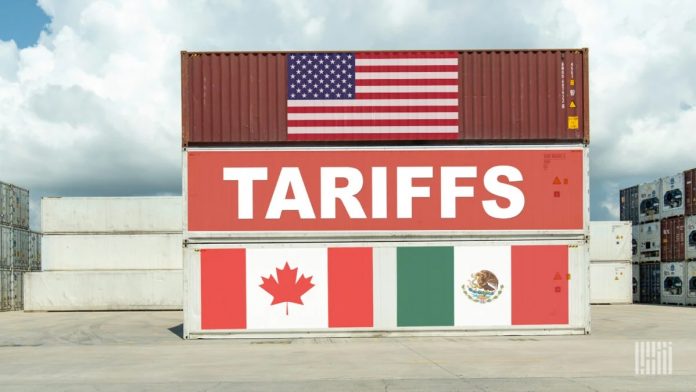
USC experts talk about the importance of U.S.-China trade and how it affects the economy. (Illustration/iStock)

The United States has triggered a new wave of global trade tension following President Donald Trump’s sweeping tariffs on nearly 70 countries, an executive action that dramatically raises duties on a wide range of imports. And this time, Washington says there will be no turning back.

The latest tariff round, which became effective on August 1, imposes steep new levies as high as 50%, marking a significant escalation in Trump’s economic agenda. Canada was hit with a 35% tariff, up from the previous 25%, while Brazil now faces a 50% duty—one of the highest ever imposed by the U.S. India, Taiwan, and Switzerland were also hit, with rates of 25%, 20%, and 39% respectively.

Unlike previous rounds where targeted nations were offered the chance to negotiate tariff reductions, U.S. Trade Representative Jamieson Greer has made it clear that this latest package is here to stay. Speaking to CBS’s Face the Nation on Sunday, Greer said the new rates are “pretty much set,” noting that they are tied to permanent deals and national policy positions, including trade balances and geopolitical alignment.

“A lot of these are set rates pursuant to deals. Some of these deals are announced, some are not, others depend on the level of the trade deficit or surplus we may have with the country,” he said. “These tariff rates are pretty much set.”

This means there’s no room for temporary exemptions or a diplomatic off-ramp. Earlier rounds, such as those involving the European Union, allowed partial relief through side agreements, but not this one.

The sharp shift reflects a hardening of the Trump administration’s stance on global trade. The tariffs, officials say, were calculated based on specific concerns. For Canada, the hike was linked to what the U.S. claims is its failure to rein in fentanyl production and trafficking. In Brazil’s case, Washington cited the country’s worsening democratic backslide. For India, it was framed as a correction for longstanding trade imbalances. Taiwan’s rate was described as temporary, pending the outcome of broader U.S.-Taiwan negotiations.

Markets across the globe recoiled. Indian stocks fell for a second straight week. In Switzerland, government officials held an emergency session to assess the consequences of the 39% U.S. duty on Swiss exports, including luxury goods. The Swiss government is reportedly considering revising its trade package with the U.S. in retaliation.

Canada, also rattled by the unexpected spike, has moved swiftly to initiate negotiations with Washington. Canadian Trade Minister Dominic LeBlanc confirmed that Ottawa is already in direct talks with Greer’s office to seek a pathway to reduce the new 35% tariff. A phone call between President Trump and Canadian envoy Mark Carney is expected in the coming days.

Meanwhile, the U.S. is continuing separate negotiations with China, focused on unlocking trade for critical minerals and rare-earth magnets—essential for advanced electronics, defense, and clean energy sectors. According to Greer, both sides are “about halfway” toward resolving the deadlock, though it remains unclear whether any breakthrough will affect the current tariff framework.

“We’re focused on making sure that the flow of magnets from China to the United States and the- and the adjacent supply chain can flow as freely as it did before … and I’d say we’re about halfway there,” he said.

But for the rest of the targeted countries, the message is that the tariffs are not a bargaining chip—they’re a new reality. Businesses, economists, and global investors now face the implications of a more entrenched, less flexible U.S. trade regime.

In effect, Washington is now institutionalizing tariffs as a core component of its foreign policy playbook. Companies in impacted nations are already rethinking sourcing and export strategies, while foreign governments weigh retaliation or economic concessions to regain access to the U.S. market under better terms.

The world may be entering a new era of fractured trade as the U.S. doubles down on protectionism,  one where negotiation is replaced by pressure, and economic alliances hinge not just on commerce but on compliance with Washington’s broader geopolitical agenda.

Apple Beats Wall Street Expectations, Delivers Its Strongest Quarterly Performance In Nearly Three Years

0
An Apple logo is seen at the entrance of an Apple Store in downtown Brussels, Belgium March 10, 2016. REUTERS/Yves Herman/File Photo

Apple delivered its strongest quarterly performance in nearly three years, surpassing Wall Street expectations for both profit and revenue in its fiscal third quarter ended June 28.

Buoyed by robust iPhone sales and an unexpected rebound in China, the tech giant also reaffirmed its growing commitment to artificial intelligence, signaling plans to embed it deeply across its product lines.

The company posted earnings per share of $1.57, beating the $1.43 analysts had forecast, on revenue of $94.04 billion — its highest growth since December 2021. That represented a 10% increase year over year. Net income rose to $24.43 billion from $21.45 billion a year ago. Apple shares rose in after-hours trading following the announcement.

“This was an exceptional quarter by any measure,” CEO Tim Cook said in an interview with CNBC.

iPhone: Still the Growth Engine

Apple’s iPhone segment — its most crucial business — delivered $44.58 billion in revenue, growing 13% from a year earlier and beating consensus estimates of $40.22 billion. Cook credited the strong showing to the popularity of the iPhone 16, which he said is seeing “strong double-digit” sales growth compared to last year’s iPhone 15 lineup. He added that the growth was fueled in part by existing iPhone users upgrading to newer models.

Cook also revealed that roughly one percentage point of Apple’s overall 10% revenue growth came from consumers advancing their purchases in anticipation of potential tariffs.

Mac Sees Fastest Growth Among Units

While the iPhone led in absolute revenue, Apple’s Mac segment posted the fastest growth rate, climbing nearly 15% to $8.05 billion. The bump followed the company’s release of new MacBook Air laptops — its best-selling model — just ahead of the quarter.

Services, Apple’s second-largest segment, rose 13% to $27.42 billion, bolstered by growth in iCloud subscriptions and double-digit increases in App Store revenue. This area includes content subscriptions, warranty sales, licensing deals with Google, and cloud services. Apple’s gross margin for the quarter came in at 46.5%, higher than the 45.9% estimate.

Weak Spots in iPad and Wearables

Not every category recorded gains. iPad revenue fell 8% to $6.58 billion despite a new budget iPad model launched in March. Meanwhile, the wearables division — which includes Apple Watch, AirPods, and accessories — saw sales decline 8.64% to $7.4 billion.

The “Other Products” category also missed Wall Street’s forecast, signaling weakening demand in Apple’s accessory and wearable lines even as its core businesses gained momentum.

China Bounces Back

In a notable shift, Apple reported a 4% increase in Greater China revenue to $15.37 billion, after two consecutive quarters of year-over-year declines. Cook attributed part of the rebound to government subsidies that applied to some Apple devices.

“The subsidy does apply to some of our products, and it clearly helps,” he said.

That recovery in China is significant given earlier reports of intensifying competition from Chinese smartphone makers and waning local demand.

Tariff Costs and Outlook

Cook disclosed that Apple incurred $800 million in tariff-related expenses during the June quarter, lower than its prior estimate of $900 million. For the September quarter, Apple anticipates costs of about $1.1 billion, assuming no changes in U.S.-China trade policies.

Despite this, Apple expects mid- to high-single-digit increases in overall revenue and services revenue growth similar to this quarter’s 13%. Gross margins are projected to remain strong, between 46% and 47%, even accounting for tariff expenses.

A Pivot to AI

The report also highlighted Apple’s increasing investment in artificial intelligence — a space where it has trailed rivals like Google, Microsoft, and Amazon in public announcements. At June’s Worldwide Developers Conference (WWDC), Apple’s AI announcements received a lukewarm reception from investors, but Cook attempted to reframe that narrative during the earnings call.

“We are significantly growing our investments,” he said. “We’re embedding [AI] across our devices, across our platforms and across the company.”

Cook also disclosed that Apple has acquired “around seven” companies so far in 2025, although none of the deals were major in terms of cost. He emphasized Apple’s openness to mergers and acquisitions that can accelerate its product roadmap.

Asked whether emerging AI devices — such as those being built by OpenAI — might eventually compete with or replace the iPhone, Cook downplayed the threat.

“It’s difficult to see a world where iPhone is not living in it,” he said, suggesting such devices would more likely complement than displace Apple’s flagship product.

With $133 billion in cash reserves and several growth levers still active — from services to Macs to AI — Apple appears to be entering its final fiscal quarter of the year with renewed momentum.