

DD
MM
YYYY

PAGES

DD
MM
YYYY

spot_img

PAGES

Home Blog Page 7816

Tablet Market – Apple Will Remain Dominant, But Will Lose Market Share, Says Packard Bell

0

Having unveiled its debut tablet computer last month, Packard Bell has said it believes the number of players in the market will contract in the coming years, though actual sales figures will skyrocket. And the firm believes it and its sister-firm Acer are well placed to take significant share of this upsurge, even if the market is unable to maintain the current number of players.


This is coming on the heels of Acer launching its competitive Tab  Iconia Tab W500 a few months ago.
“If you look at the predictions, the market will grow in the range of 100 per cent year-on-year in the coming years worldwide,” said Luca Rossi, PB vice president. “So that means there is an estimation of 50 million units in 2011, 100 million in 2012, and 150 million in 2013. So there will be exponential growth.”


“Personally I think there will be a concentration – the current market leader will continue with all the significant share. We have an aspiration for significant share as well. So I do not believe the market has room for everybody. Lets say the top three to four players will hold 90 or 95 per cent of the share. If you look at it this it is similar to the rest of the PC industry.”


However despite high hopes for its own tablet devices, Rossi does not believe that market leader Apple and its iPad can be dislodged from the top-spot anytime soon. “It is my personal opinion, that doesn’t necessarily reflect the corporate one, that Apple will continue to hold all the significant share. In the next year or two I don’t see any reason why they would lose the number one spot, but their dominance will be reduced significantly in terms of market share.”


Packard Bell is also currently making the final preparations for the release of a new one Two series all-in-one PC, namely the one Two S which features a 20-inch touchscreen, an ultra-slim, rounded design, and utilizes either Intel (2nd-gen Core) or AMD (up to a Phenom II X6) power. Set to be available in glossy black, matte white, chrome or silver, Acer’s all-in-one, can have integrated or discrete (AMD or Nvidia) graphics, a TV tuner, it boasts an optical drive, a 2 megapixel webcam, and is pre-loaded with multiple touch-enabled apps – TouchBrowser, TouchMusic, TouchPhoto, TouchVideo and TouchCam.
Speaking Tomorrow – Apps World Africa in Cape Town, South Africa

0

Our talk at  Apps World Africa, Cape Town, South Africa is tomorrow.


We will speak along this line


Apps in Nigeria: mHealth to mCommerce and beyond
– The story of successful adoption of apps for mHealth

– How can the Nigerian app market continue to develop

– What will be the next steps for the industry and how can these be
achieved
– The next wave of apps for Nigeria – Farm Apps and mCommerce

–  more


We will speak and the conference will close. This is what the official agenda has:


Apps in Nigeria: mHealth to mCommerce and beyond
• The story of successful adoption of apps for mHealth
• How can the Nigerian app market continue to develop
• What will be the next steps for the industry and how can these be achieved
• The next wave of apps for Nigeria – Farm Apps and mCommerce

Dr. Ndubuisi Ekekwe, Founder, African Institution of Technology

MTN Is Africa’s Top Corporate Brand

0

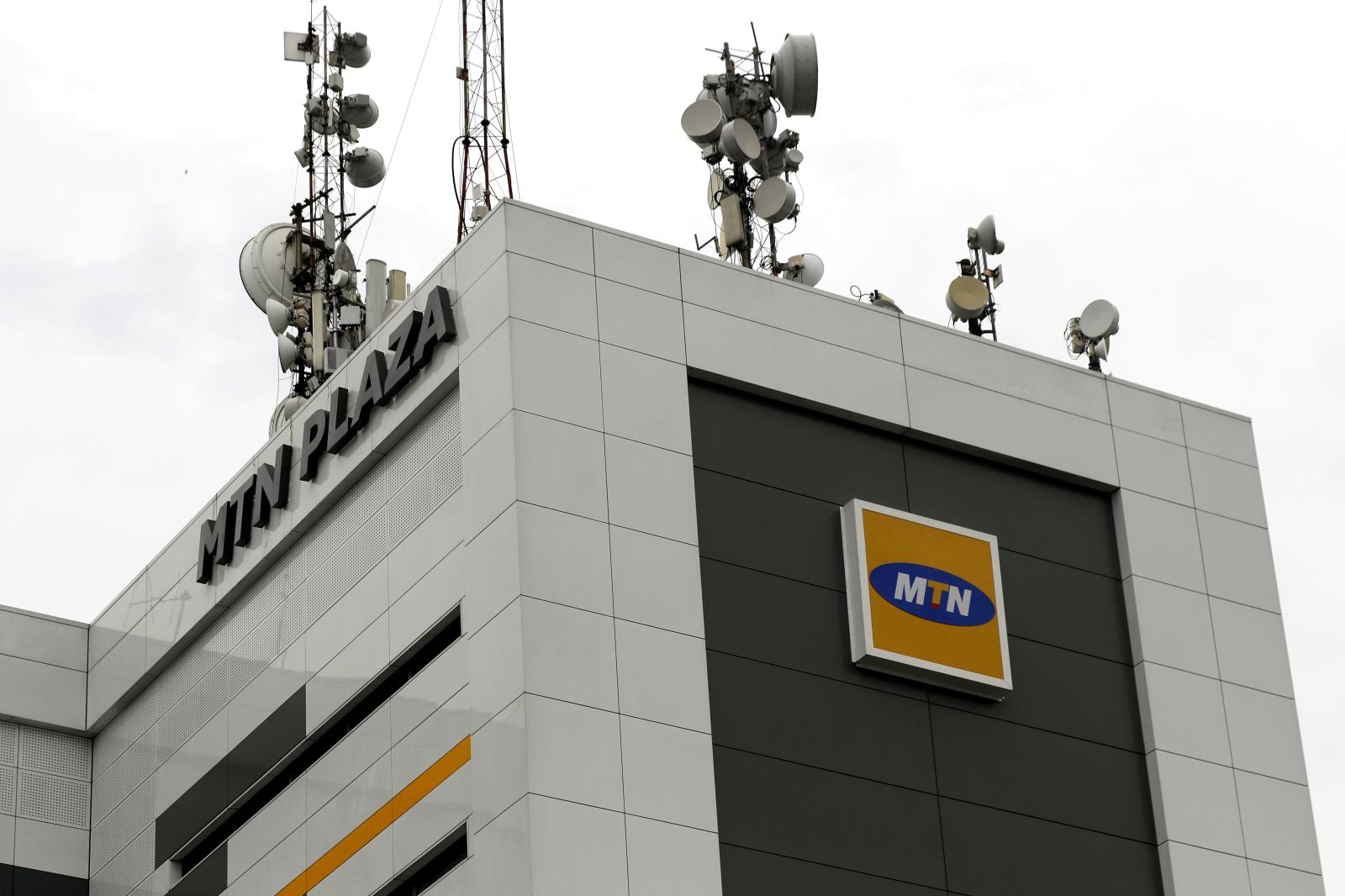
BrandFinance African Nation Brand League has named MTN as Africa’s top corporate brand. The leading mobile operator with about 147.2 million subscribers  in Africa and Middle East is the also the biggest telco by subscriber base in Africa.

MTN beat other brands from major African nations like South Africa, Egypt, Nigeria, Morocco, Algeria, Angola, Tunisia, Ghana, Kenya and Libya. Only 36 African nations were included in a global pool of 138 nation brands.

The MTN Marketing Executive, Jennifer Roberti stated:

MTN’s ranking as Africa’s most valued consumer brand is a pleasant Africa Day surprise for MTN, and news of the accolade will be well received across our global footprint, especially in Africa where we are equally the most admired brand and leading corporate in the vast majority of our markets,

This shows the phenomenal growth of the MTN business in most operations, whether measured in terms of value share or subscriber numbers – for example nearly 70% of MTN’s total subscribers are in African markets, with Nigeria contributing 40.2 million, Ghana 9 million, South Africa 19 million and Uganda 6.9 million and Cote d’Ivoire 5.4 million.


Multi Transaction Card – A Way Forward As Nigeria Journeys To Cashless Economy

6

A number of merchants in the country provide electronic payment solutions that can only be used on their platform alone (one transaction pin based cards). Bodies like NECO, WAEC, JAMB and most universities all have their electronic payment scratch cards that can only be used to register for exams, check results and for school fees payment. This means that an average student will have to buy at least a scratch card each for each case. Power Holding Company of Nigeria (PHCN) also has card for power bill payments.


Like all one transaction cards the PHCN chip card can only be used to pay for electricity bill alone. Using different cards for each transaction will still not make sense. This means Nigerians we have to carrying many different cards. This makes it pertinent for multi transaction cards to be promoted and deployed. We should be able to use a multi transaction card like Visa, InterSwitch, Cashcard, or MasterCard for registering for school fee, PHCN bill payment, Hospital bill payment, and NECO, WAEC and JAMB registration. This same card should be accepted at point-of-sale (POS) as this is important to transform the nation into cashless economy.


A point-of-sale (POS) terminal is a computerized replacement for a cash register which merchants use to take customer payments by credit card. Debit payments are collected immediately in a store that uses a POS system to run the payment. The terminals that are used in POS systems are typically connected directly to a bank that can credit the user’s account and show payment on the merchant’s books. A financial tracking system is connected to POS terminals through systems that process credit and debit card payments.


CBN should create a PoS division which will act in the capacity as card acquirer at merchant locations thereby reducing the cost of interoperability of PoS at merchant locations. As at present, it is difficult using all the card schemes at single PoS of a merchant location. The PoS acquirer (a bank in this case) must collaborate with other card acquirers or the bank acquires more (that one card scheme) like the case of present ATM card that we can use anywhere. PoS terminals can be routed through the infrastructure of National Central Switch (NCS). Central Bank of Nigeria had given directive to all banks and switching companies to connect to the NCS by December 31, 2010. This will solve the problem of banks signing multiple agreements with the switching companies as NCS will be positioned to play its role as interoperability hub of the e-payment system in the country. Switching companies, card processors, banks and Central Bank of Nigeria have to work together on commercial agreements required for parties concerned in the electronic transaction so as to determine sharing, distribution and settlement of transactions charges.


Nokia Unveils ‘Nokia Life Tools’ In Nigeria – Your Phone Works Harder For You

0

Nokia has unveiled its market information service in Nigeria. The service named Nokia Life Tools is designed to enable Nigerians receive  health tips, market date, language lessons and entertainment tips through Nokia Phones.


Nokia Life Tools is an SMS based, subscription information service designed for emerging markets which offers a wide range of information services covering healthcare, agriculture, education and entertainment. The service is currently available in India, Indonesia, China and Nigeria.


Nokia Life Tools was preceded by a pilot called Mera Nokia, in the state of Maharashtra in India in early 2009.[1] After the successful pilot, a wider commercial deployment of the service under the name Nokia Life Tools began in India in June 2009. The first two supported devices were the Nokia 2323 Classic and Nokia 2330 Classic devices, and the services in India supported 11 local languages.


The agricultural part of the service consists of localized information including weather conditions, advice about crop cycles, general tips and techniques, as well as market prices for crops. Farmers in the pilot scheme said getting daily prices on their phones reduced their dependency on agents for basic information, enabling them to negotiate with greater confidence.


The educational tools provide simple English and general knowledge courses in local languages, as well as study modules in a variety of state and ICSE board topics, including history, geography, biology, physics and chemistry. In India, it also includes a service that allows students to retrieve their exam results through their NLT app.

(source: wikipedia)