DD
MM
YYYY

PAGES

DD
MM
YYYY

spot_img

PAGES

Home Blog Page 7816

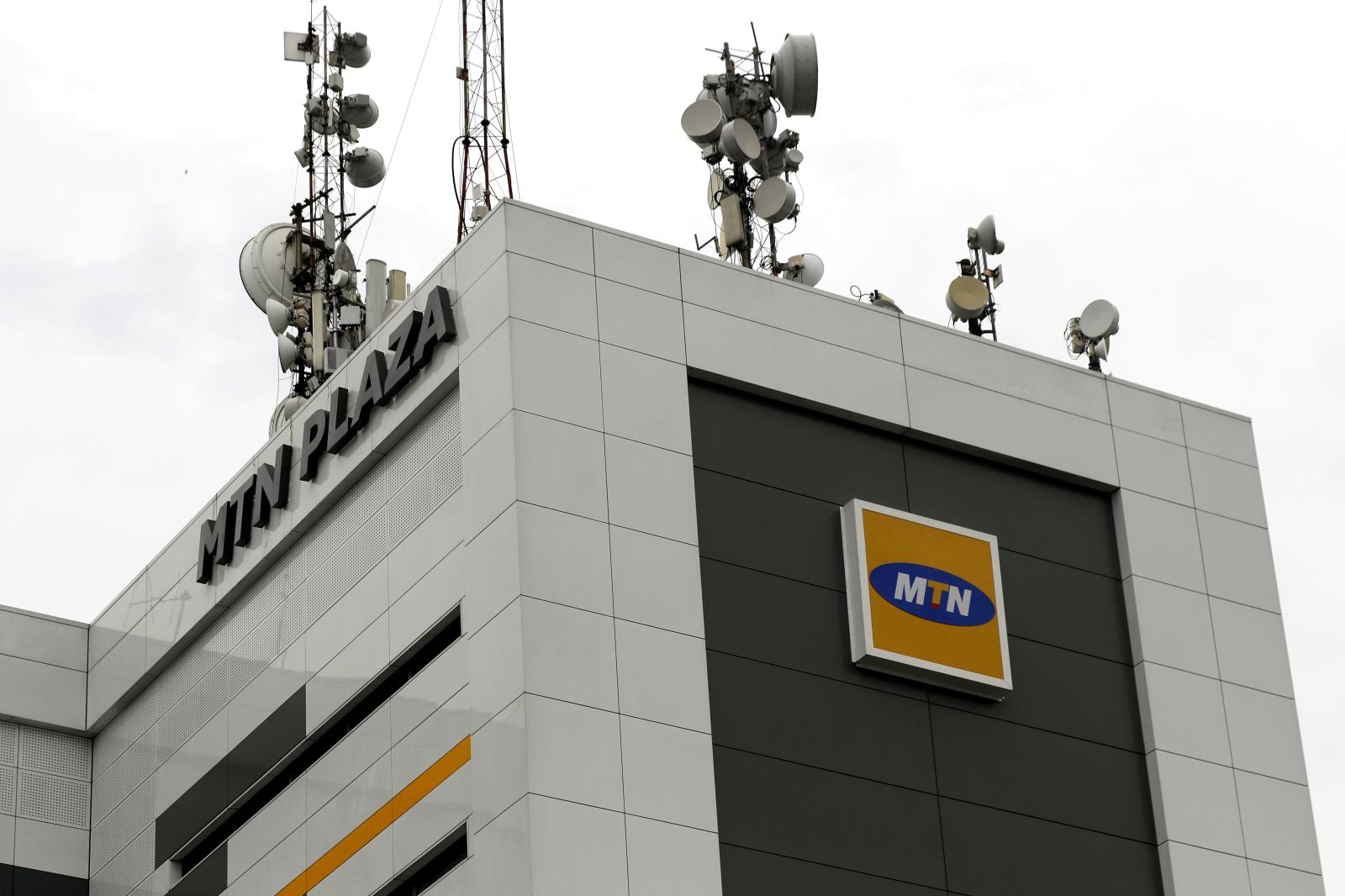
MTN Is Africa’s Top Corporate Brand

0

BrandFinance African Nation Brand League has named MTN as Africa’s top corporate brand. The leading mobile operator with about 147.2 million subscribers  in Africa and Middle East is the also the biggest telco by subscriber base in Africa.

MTN beat other brands from major African nations like South Africa, Egypt, Nigeria, Morocco, Algeria, Angola, Tunisia, Ghana, Kenya and Libya. Only 36 African nations were included in a global pool of 138 nation brands.

The MTN Marketing Executive, Jennifer Roberti stated:

MTN’s ranking as Africa’s most valued consumer brand is a pleasant Africa Day surprise for MTN, and news of the accolade will be well received across our global footprint, especially in Africa where we are equally the most admired brand and leading corporate in the vast majority of our markets,

This shows the phenomenal growth of the MTN business in most operations, whether measured in terms of value share or subscriber numbers – for example nearly 70% of MTN’s total subscribers are in African markets, with Nigeria contributing 40.2 million, Ghana 9 million, South Africa 19 million and Uganda 6.9 million and Cote d’Ivoire 5.4 million.


Multi Transaction Card – A Way Forward As Nigeria Journeys To Cashless Economy

6

A number of merchants in the country provide electronic payment solutions that can only be used on their platform alone (one transaction pin based cards). Bodies like NECO, WAEC, JAMB and most universities all have their electronic payment scratch cards that can only be used to register for exams, check results and for school fees payment. This means that an average student will have to buy at least a scratch card each for each case. Power Holding Company of Nigeria (PHCN) also has card for power bill payments.


Like all one transaction cards the PHCN chip card can only be used to pay for electricity bill alone. Using different cards for each transaction will still not make sense. This means Nigerians we have to carrying many different cards. This makes it pertinent for multi transaction cards to be promoted and deployed. We should be able to use a multi transaction card like Visa, InterSwitch, Cashcard, or MasterCard for registering for school fee, PHCN bill payment, Hospital bill payment, and NECO, WAEC and JAMB registration. This same card should be accepted at point-of-sale (POS) as this is important to transform the nation into cashless economy.


A point-of-sale (POS) terminal is a computerized replacement for a cash register which merchants use to take customer payments by credit card. Debit payments are collected immediately in a store that uses a POS system to run the payment. The terminals that are used in POS systems are typically connected directly to a bank that can credit the user’s account and show payment on the merchant’s books. A financial tracking system is connected to POS terminals through systems that process credit and debit card payments.


CBN should create a PoS division which will act in the capacity as card acquirer at merchant locations thereby reducing the cost of interoperability of PoS at merchant locations. As at present, it is difficult using all the card schemes at single PoS of a merchant location. The PoS acquirer (a bank in this case) must collaborate with other card acquirers or the bank acquires more (that one card scheme) like the case of present ATM card that we can use anywhere. PoS terminals can be routed through the infrastructure of National Central Switch (NCS). Central Bank of Nigeria had given directive to all banks and switching companies to connect to the NCS by December 31, 2010. This will solve the problem of banks signing multiple agreements with the switching companies as NCS will be positioned to play its role as interoperability hub of the e-payment system in the country. Switching companies, card processors, banks and Central Bank of Nigeria have to work together on commercial agreements required for parties concerned in the electronic transaction so as to determine sharing, distribution and settlement of transactions charges.


Nokia Unveils ‘Nokia Life Tools’ In Nigeria – Your Phone Works Harder For You

0

Nokia has unveiled its market information service in Nigeria. The service named Nokia Life Tools is designed to enable Nigerians receive  health tips, market date, language lessons and entertainment tips through Nokia Phones.


Nokia Life Tools is an SMS based, subscription information service designed for emerging markets which offers a wide range of information services covering healthcare, agriculture, education and entertainment. The service is currently available in India, Indonesia, China and Nigeria.


Nokia Life Tools was preceded by a pilot called Mera Nokia, in the state of Maharashtra in India in early 2009.[1] After the successful pilot, a wider commercial deployment of the service under the name Nokia Life Tools began in India in June 2009. The first two supported devices were the Nokia 2323 Classic and Nokia 2330 Classic devices, and the services in India supported 11 local languages.


The agricultural part of the service consists of localized information including weather conditions, advice about crop cycles, general tips and techniques, as well as market prices for crops. Farmers in the pilot scheme said getting daily prices on their phones reduced their dependency on agents for basic information, enabling them to negotiate with greater confidence.


The educational tools provide simple English and general knowledge courses in local languages, as well as study modules in a variety of state and ICSE board topics, including history, geography, biology, physics and chemistry. In India, it also includes a service that allows students to retrieve their exam results through their NLT app.

(source: wikipedia)

A Faster Economy Needs Better Tools

0

In an event last spring in New York, I heard the story of a young man who received more than $90,000 for international software projects while he was collecting unemployment benefits. He hadn’t had a visible full-time job in three years. But without tools designed for the new knowledge world, the government was unable to track that he was working, right in his room, for a small software company in Vietnam.


In the last few decades, the world has experienced series of booms and busts. Sometimes, we could blame them on lack of regulations, excessive greed, and so on. But what if we are in this vicious cycle because the economy has advanced beyond the tools developed long ago to track it?


Alan Kay stated that “the best way to predict the future is to create it.” It is possible that governments can’t predict the future because they are not necessarily dominating its creation. They are using obsolete tools to measure a dynamic knowledge world.


Just as Peter Drucker saw more than half a century ago when he popularized the term “knowledge worker,” knowledge drives our world. It is potent with power to disrupt markets and bring on new classes of consumers through affordable and efficient goods and services.


Private companies are adapting, very quickly, in this global redesign. They are creating new tools to track most variables needed to stay competitive. They create the technologies which change them, while they are using them, at a speedy pace.


Unlike the industrial era, the players in the knowledge economy are very mobile, adaptive, and agile, with brainpower instead of muscles at their core. The Internet has turned nations into conduits of knowledge, having the power to become richer by trading knowledge. The U.S., for example, exports knowledge management but buys knowledge IT skills from India. The knowledge leads to a new society. We have already seen the effects as citizens willingly share private information.


Most of the economic tools in use today were formulated during the industrial economy. Despite the transition from industrial to knowledge economy, those tools remain in use. We have seen disproportionate failures of regulators to prevent chaos in the world economic system. From mortgage crises to EU debt problems, our world has become too complex to be properly vetted and understood using the current tools. The challenge is not necessarily the regulation, but the tools the regulators are using.


Today, across nations, there are people, classified unemployed, working through their computer terminals. They still collect government benefits because our tools cannot catch them. Indeed, governments must fund the development of new tools that stay ahead of economic transformations. How can governments predict the future if they are not part of creating it?


originally published in HBR