DD
MM
YYYY

PAGES

DD
MM
YYYY

spot_img

PAGES

Home Blog Page 783

“Apple Must Do This:” Tim Cook Rallies Apple Staff Around AI Ambitions

0

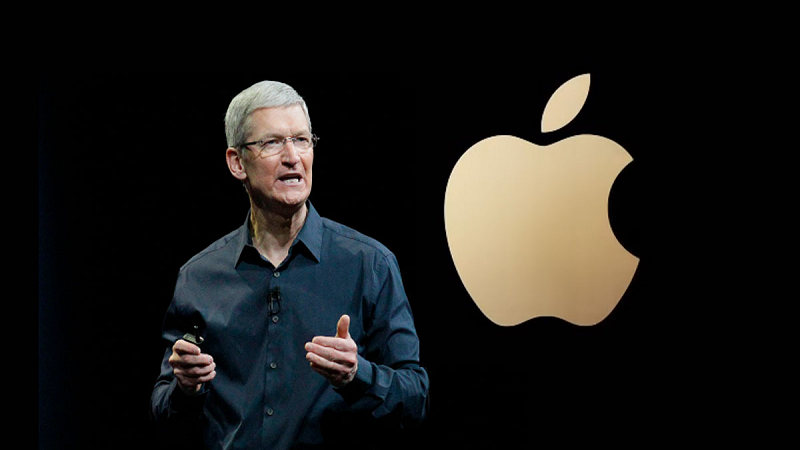
Apple CEO Tim Cook has delivered a rare all-hands address, rallying employees behind the company’s artificial intelligence ambitions and assuring them that Apple is well-positioned to lead the next big technological leap.

Speaking at the Steve Jobs Theater in Cupertino after a strong quarterly earnings report, Cook described the ongoing AI revolution as “ours to grab,” emphasizing the urgency of seizing the moment.

“This is as big or bigger than the internet, smartphones, cloud computing and apps,” Cook said, making clear that AI isn’t just a passing trend but a fundamental shift in how technology works—and how Apple must operate. “Apple must do this. Apple will do this.”

“We will make the investment to do it.”

Wall Street’s Mounting Pressure

The meeting came as Wall Street intensifies its calls for Apple to show a clear AI roadmap. Investors have grown increasingly vocal about Apple’s slow response to the AI wave, especially as competitors like Microsoft, Google, Amazon, and OpenAI move swiftly to integrate large language models and generative AI into consumer and enterprise platforms. Apple, known for its cautious and polished approach to new technologies, has so far taken a quieter route—an approach that many analysts say is no longer enough.

For much of the past year, investors have watched rivals’ AI announcements drive massive gains in stock value. Microsoft’s investment in OpenAI has reshaped its product ecosystem and pushed its valuation higher, while Nvidia’s dominance in AI chips has turned it into a trillion-dollar firm. Meanwhile, Apple’s stock has been volatile, with analysts questioning whether the company has a credible AI strategy.

The pressure grew particularly intense earlier this year after Apple skipped flashy AI launches while its peers rolled out new tools and integrations seemingly every quarter. Some investors began openly questioning whether the company, long viewed as a hardware-first business, was at risk of missing the AI revolution entirely.

Cook’s internal remarks appear designed to silence those concerns, not just within Apple’s walls but on Wall Street.

“We’ve rarely been first,” he said, referencing how Apple redefined existing product categories like smartphones and tablets without being first to market.

“There was a PC before the Mac; there was a smartphone before the iPhone; there were many tablets before the iPad; there was an MP3 player before iPod.”

But Apple invented the “modern” versions of those product categories, he said. “This is how I feel about AI.”

The statement implies that Apple may be late to show its hand, but that doesn’t mean it won’t dominate the space.

Siri’s Overhaul and Internal Restructuring

A key part of Apple’s AI revamp is a major overhaul of Siri, the company’s long-criticized voice assistant. Craig Federighi, Apple’s senior vice president of software engineering, told staff that Apple had initially planned to update Siri using a hybrid approach that combined legacy command features with modern AI tools. But the results weren’t good enough.

“We didn’t meet the quality bar,” Federighi admitted, noting that the company shifted course earlier this year, handing Siri’s redevelopment to a new team under Vision Pro chief Mike Rockwell. The team is now building a completely new foundation for Siri, with the goal of launching it sometime in 2025.

“There is no project people are taking more seriously,” Federighi added.

The revamp also includes investments in core infrastructure. Cook highlighted Apple’s internally developed chip for cloud AI computing—code-named Baltra—as well as a new AI server production hub in Houston. These moves suggest Apple is preparing to handle more processing in the cloud, similar to how OpenAI’s ChatGPT and Google’s Gemini work, rather than relying solely on on-device models.

Workforce and Product Pipeline Expanding

In the last year, Apple has hired around 12,000 people, with nearly half of those joining research and development—a sign of the company’s renewed technical focus. Apple’s chip division, led by Johny Srouji, has been particularly active in developing silicon tailored for AI workloads, both in its consumer devices and its backend systems.

Cook also reaffirmed Apple’s commitment to international expansion. He noted that a “disproportionate” share of the company’s growth would come from emerging markets. New stores are opening in India, China, and the UAE this year, with Saudi Arabia set to get its first Apple Store next year.

“We’re planting flags where we see long-term demand,” Cook said.

He also hinted at growth in other areas like Apple TV+, wearables, and health features in AirPods Pro, including hearing aid-like functionality, which could open up new use cases and markets. Meanwhile, the company remains committed to achieving carbon neutrality by 2030, despite regulatory hurdles.

Regulatory and Trade Headwinds

Even as it charges into new frontiers, Apple faces external challenges. Cook acknowledged that trade tensions are not letting up. Tariffs introduced under President Donald Trump’s administration are expected to cost the company $1.1 billion in the current quarter alone. Apple had already spent $800 million in the previous quarter dealing with these duties, primarily tied to the International Emergency Economic Powers Act (IEEPA) tariffs related to China.

Trump’s tariffs have touched nearly every Apple product, most of which are manufactured in China, Vietnam, or India. Although Apple has diversified its supply chain—with most iPhones sold in the US now coming from India and many Macs and iPads from Vietnam—it still faces threats of further tariff hikes if it doesn’t shift more production to the United States.

Riding a Wave of Momentum—But With Caution

Apple’s rally comes on the heels of a stronger-than-expected earnings report. Revenue rose 10% to $94 billion between April and June, buoyed by solid iPhone and Mac sales and a double-digit jump in App Store revenue. While that momentum has helped stabilize investor confidence, Apple’s AI narrative remains a key driver of its future valuation.

In his speech, Cook also pushed employees to move more quickly to weave AI into their work and future products.

“All of us are using AI in a significant way already, and we must use it as a company as well,” Cook said. “To not do so would be to be left behind, and we can’t do that.”

The all-hands meeting was as much about aligning internal teams as it was about reassuring the market. As Cook wrapped up the hourlong session, he struck an optimistic tone.

“I have never felt so much excitement and so much energy before as right now,” he said, without disclosing any product specifics.

However, some have summed up his message to mean that Apple is late to AI, but not out of the race.

Microsoft’s AI Bet Delivers Financial Windfall—But at a Human Cost

0

Microsoft’s latest earnings report shows the company is enjoying massive financial gains from its aggressive push into artificial intelligence and cloud computing.

But the figures also illuminate a broader and more unsettling trend in the tech industry: an accelerating shift to automation, often at the expense of human workers.

The company posted a net income of $27.2 billion for the latest quarter, up 24 percent from the previous year. Much of this surge was powered by its cloud division, Azure, which now generates over $75 billion annually—a 34 percent year-on-year growth driven by what Microsoft calls “expansion across all workloads.”

“Cloud and AI is the driving force of business transformation across every industry and sector,” CEO Satya Nadella said in the earnings statement. “We’re innovating across the tech stack to help customers adapt and grow in this new era.”

That era, it seems, is increasingly defined by artificial intelligence—not just as a service to clients, but as a fundamental restructuring tool for internal operations. Microsoft, like many tech giants, is using AI to streamline processes and reduce reliance on human labor, a strategy that has contributed to recent mass layoffs. Earlier this year, the company cut around 9,000 jobs. Reports that followed revealed executives had weighed cutting AI investments versus eliminating positions. The decision was clear: automation would stay, people would go.

This pivot cuts across the tech sector, where companies are pouring billions into AI with the promise of reducing long-term operational costs. By automating customer service, coding, data analysis, marketing, and even HR functions, firms hope to achieve greater efficiency, faster product cycles, and leaner payrolls. AI-driven tools like GitHub Copilot, chatbots, and internal large language models are now replacing tasks that once required teams of workers.

This shift is already reshaping the corporate landscape. What was once a steady march toward digitization has become a scramble to embed AI at every level of business. From Amazon’s AI-powered logistics to Meta’s algorithmic content moderation, tech companies are betting that fewer humans and more algorithms will yield higher margins.

For investors, the payoff is evident. Microsoft’s gaming division, for instance, reported a 10 percent increase in revenue, buoyed by first-party content and Xbox Game Pass subscriptions. Other services like Windows, LinkedIn, and Microsoft 365 also posted gains. But the cloud and AI segment remains the company’s most explosive growth engine, drawing the bulk of strategic focus and resources.

Yet for workers, the AI boom has taken on a more ominous tone. Many now fear displacement as companies chase automation to please shareholders. Satya Nadella once described the paradox of rising profits amid job losses as “the enigma of success.” But for laid-off employees, it’s a stark reminder of how quickly Silicon Valley can pivot from opportunity to obsolescence.

While AI may be driving productivity and profits, it is also ushering in a wave of structural unemployment, especially in roles deemed “automatable.” And with AI systems improving rapidly, even white-collar jobs once considered safe are being reevaluated through the lens of cost-cutting and efficiency.

In the amoral ecosystem of publicly traded companies, the calculation is that if AI can do it cheaper, faster, and without demanding benefits or time off, it wins. Microsoft’s latest earnings only confirm that, for now, this approach is delivering exactly what Wall Street wants. Whether it will deliver a sustainable future for workers remains a far more uncertain question.

Silicon Valley’s $250 Million AI Offer Signals a New Era of Pay in the Tech Industry

0

The artificial intelligence boom is reshaping the boundaries of compensation, ambition, and scientific prestige. Meta’s recent offer of a $250 million package to AI researcher Matt Deitke—reportedly with $100 million in the first year alone—marks a turning point in Silicon Valley’s escalating talent war, surpassing not only the pay of today’s tech professionals and athletes, but even the rewards once granted for humanity’s greatest scientific achievements.

Deitke, a 24-year-old AI researcher who previously led the multimodal system Molmo at the Allen Institute for AI and co-founded the startup Vercept, specializes in systems that process images, sound, and text together—exactly the kind of next-generation AI Meta is racing to develop. His expertise made him a prime target. And he’s not alone. Meta CEO Mark Zuckerberg reportedly offered another top engineer a staggering $1 billion to lure them into the company’s AGI efforts.

Behind these astronomical figures is a race for artificial general intelligence—AGI—or what some in Silicon Valley call superintelligence: machines capable of performing intellectual tasks at or beyond the level of humans. Tech giants like Meta, OpenAI, Google DeepMind, and Anthropic believe that the company that gets there first will hold the keys to the future, unlocking not only dominance in AI but the ability to reinvent products, create entire industries, and automate vast swaths of the global knowledge economy.

Zuckerberg recently told investors that Meta would continue pouring resources into AI research “because we have conviction that superintelligence is going to improve every aspect of what we do.” In an open letter, he called it “an exciting new era of individual empowerment,” though he stopped short of defining exactly what superintelligence means.

But the size of Meta’s investment makes its priorities clear. The company plans to spend over $80 billion on capital expenditures this year, mostly aimed at AI. One senior executive told The New York Times, “If I’m Zuck…is it worth kicking in another $5 billion or more to acquire a truly world-class team to bring the company to the next level? The answer is obviously yes.”

A New Standard of Scientific Compensation

According to Ars Technica, the numbers leave even history’s most iconic scientists in the dust. J. Robert Oppenheimer, who led the Manhattan Project that developed the atomic bomb, made about $10,000 a year in 1943—about $191,000 today. Deitke’s offer is over 300 times that. Even Thomas Watson Sr., IBM’s CEO in 1941 and one of the wealthiest executives of the time, received what would be $11.8 million in today’s money, less than a quarter of Deitke’s annualized package.

During the Apollo program, Neil Armstrong earned the equivalent of about $245,000 for his historic 1969 moon landing. Today, a top AI researcher at Meta makes that amount in three days.

Historically, even revolutionary scientists like Claude Shannon—the father of information theory—worked on modest salaries at Bell Labs during its golden era. In that era, the pay difference between the director and the lowest-paid technician was about 12 to 1. In today’s AI world, that ratio would be laughable.

Why AI Talent Is So Expensive

Several forces are driving this runaway market. Unlike government-backed mega-projects like Apollo or the Manhattan Project, the AI race is driven by competing trillion-dollar corporations. And the talent pool is tiny. Only a few dozen individuals in the world have deep experience developing frontier multimodal AI systems. Companies are bidding aggressively, sometimes offering tens of thousands of GPUs—specialized hardware required to train massive models—on top of money and equity.

Deitke’s peers, many of whom are still in their 20s, now share offer letters in private Discord and Slack groups and sometimes hire informal agents to negotiate deals. One top researcher was told by recruiters they’d be given access to 30,000 GPUs—a resource that would have taken a national lab to muster just a few years ago.

The belief among executives is that AGI will not just be a better product. It could invent other products, write software, discover scientific breakthroughs, and fundamentally transform entire economies. The stakes are so high that spending hundreds of millions on individual researchers is seen as a justifiable bet. In this context, Deitke’s $250 million offer—or even a rumored $1 billion—may seem extreme, but not irrational.

A Modern Gilded Age

These developments also mark a return to levels of industrial wealth concentration last seen in the Gilded Age. But unlike the steel barons or railroad tycoons of that era, today’s AI firms are valued in the trillions and operate at a scale that affects the entire globe. And while AI promises productivity and transformation, the economic upside is not being evenly distributed.

Meta, for example, has laid off thousands of workers even as it aggressively invests in AI. It’s a pattern seen across the tech industry: aggressive hiring for a tiny cadre of AI researchers and engineers, and widespread job cuts elsewhere. The economic model seems clear—automate what can be automated, reduce costs, and double down on scalable intellectual capital.

More Than Just Money

For some, these record-setting offers raise ethical questions about the priorities of today’s tech industry. Is the AI boom really about human empowerment, as Zuckerberg suggests, or about cornering the next trillion-dollar platform and the power that comes with it?

Whether AGI ever truly materializes remains an open question. But the belief that it might is already reshaping compensation, research priorities, and the nature of scientific work itself. For now, researchers like Matt Deitke represent the sharpest edge of that shift, where science, capital, and ambition collide.

And if he chooses to cash in and walk away in a few years, as some of his peers may, few would blame him. As one of his Vercept co-founders joked after the Meta deal became public, “We look forward to joining Matt on his private island next year.”

European Court of Justice Ruled That Volkswagen Remains Liable for Using Unlawful Defeat Devices

0

The European Court of Justice (ECJ) ruled on that Volkswagen remains liable for using unlawful defeat devices, such as temperature-sensitive emissions software, in its diesel vehicles, even if they met EU standards.

The ruling stemmed from two German lawsuits involving cars fitted with these devices, which reduced exhaust gas recirculation at temperatures below 10°C, increasing nitrogen oxide emissions beyond legal limits. The ECJ rejected Volkswagen’s argument that the devices were permissible or would have been approved by national authorities.

Compensation to buyers can be reduced based on vehicle use or capped at 15% of the purchase price but must reflect the damage caused. Volkswagen stated the ruling’s impact would be limited, as few related lawsuits remain in German courts. The decision is part of the ongoing Dieselgate scandal, which has cost Volkswagen billions in fines, refits, and settlements since 2015.

The ECJ’s decision confirms Volkswagen’s liability for compensating affected customers, though compensation can be reduced based on vehicle use or capped at 15% of the purchase price. While Volkswagen stated that the ruling’s impact would be limited due to the low number of remaining lawsuits in Germany, any additional payouts could still add to the €30 billion+ already spent on fines, settlements, and vehicle refits globally since the scandal broke in 2015.

Although Volkswagen claims few lawsuits remain in Germany, the ruling could encourage new claims in other EU countries where litigation is ongoing or dormant. This could lead to additional legal and financial burdens, particularly in markets with large numbers of affected vehicles. Ongoing legal costs and potential new claims may pressure Volkswagen’s profit margins, especially as the company invests heavily in electric vehicle.

The ruling reinforces negative perceptions of Volkswagen tied to the Dieselgate scandal, potentially affecting consumer trust and brand loyalty. This could impact sales, particularly in environmentally conscious markets like the EU, where scrutiny of emissions compliance is high. The decision underscores the need for stricter adherence to emissions regulations.

To align with EU regulations and avoid similar issues, Volkswagen may need to further refine its production processes, particularly for internal combustion engine (ICE) vehicles still in production. This could involve retrofitting existing models or accelerating the phase-out of diesel vehicles in favor of EVs.

The ruling adds pressure to Volkswagen’s transition to electric vehicles, as diesel technology continues to face legal and regulatory challenges. The company’s €180 billion investment plan through 2027, with a significant portion allocated to EVs and battery production, may need to be expedited to mitigate risks associated with ICE vehicles.

The reputational hit and financial strain could weaken Volkswagen’s competitive position against rivals like Tesla, Stellantis, or Chinese EV manufacturers, particularly in the EU, where demand for sustainable mobility is growing. The ruling may lead to heightened regulatory oversight of Volkswagen’s emissions compliance across the EU, potentially slowing down vehicle approvals or requiring costly modifications to existing models.

The ECJ’s rejection of Volkswagen’s defense sets a precedent for other automakers, signaling that defeat devices, even if allegedly permissible at the time, will face strict liability. This could prompt Volkswagen and competitors to overhaul compliance strategies. The ruling clarifies that EU law applies uniformly, meaning Volkswagen could face similar challenges in other EU member states.

Affected customers may receive compensation, though limited by usage or caps, which could influence their perception of Volkswagen’s accountability and willingness to purchase its vehicles in the future. Ongoing legal and financial risks may lead to volatility in Volkswagen’s stock price, as investors weigh the costs of Dieselgate against the company’s EV transition progress.

While Volkswagen has already absorbed significant costs from Dieselgate, the ECJ ruling introduces ongoing financial and reputational risks, particularly in the EU. The company’s operations will likely face increased compliance costs, heightened regulatory scrutiny, and pressure to accelerate its EV strategy. However, Volkswagen’s claim that the ruling’s impact is limited suggests confidence in managing remaining liabilities.

Nigeria’s Private Sector Scales Profits! (podcast)

0

The Nigerian private sector is currently experiencing an unprecedented period of growth and profitability, particularly among its blue-chip companies. This positive trend is clearly demonstrated by the impressive financial results of major players like BUA Foods, BUA Cement, Presco, Okomu Oil, and MTN Nigeria, all of whom have reported significant year-on-year increases in profits, with some even turning substantial losses into considerable gains.

Several factors are driving this remarkable performance. Firstly, intense competition has led to a “survival of the fittest” scenario, where the most dominant companies are consolidating their market positions and capturing the lion’s share of value. These “category kings” are effectively leveraging their scale and influence to dominate their respective industries. Secondly, the stabilization of the foreign exchange market has enabled companies to re-price their products and services, leading to improved revenue and profit margins. This indicates a more realistic and sustainable pricing environment.

Thirdly, the increased ease and velocity of moving money out of Nigeria have significantly improved business operations, allowing companies to manage their capital more efficiently and engage in more fluid trade.

Beyond individual company successes, broader economic indicators also paint a positive picture. There’s a noticeable increase in employment within the manufacturing sector, and the purchasing index has shown significant improvement, both signaling a growing confidence in the economy and a potential for sustained momentum.

However, the presentation also highlights a degree of caution. The potential impact of United States government tariffs on Nigerian companies remains an unknown variable. Furthermore, it is still too early to definitively conclude if this growth is widespread or concentrated among only the top-tier companies. The coming quarters will be critical in determining the breadth and sustainability of this positive trajectory. Despite these caveats, the overall sentiment is one of optimism and celebration for the current state of Nigeria’s private sector.


Podcast VideoSign-up at Blucera and check Tekedia Daily podcast category under Training module.