DD
MM
YYYY

PAGES

DD
MM
YYYY

spot_img

PAGES

Home Blog Page 79

Stellantis Forecasts 11% Decline in French Production as Overcapacity Fears Deepen

0

Stellantis expects production at its French factories to fall by about 11 percent over the next three years, marking one of the most significant adjustments to its industrial footprint in the country since the merger that created the automaker in 2021.

Trade unions said the company shared internal estimates last week showing that output across its five assembly plants is projected to drop to roughly 587,800 vehicles by 2028. Two union officials confirmed the figures, adding that they align with an earlier report published by the Financial Times.

The decline is not evenly distributed. According to one union source, three of the five plants are set for reductions, with Poissy — once a flagship site producing compact and mid-range models — facing the steepest drop. Poissy has already been under pressure this year after Stellantis temporarily halted production at the site, as well as at the Mulhouse plant, due to weakening consumer demand across Europe.

These stoppages signaled a deeper concern about excess capacity in the region, something Stellantis has been wrestling with since the slowdown in EV sales and the deceleration of Europe’s auto market.

The automaker’s outlook could still shift depending on decisions expected from Brussels on December 10. The European Commission is preparing fresh guidance on CO? rules, including adjustments that may give carmakers more flexibility on emissions compliance while offering additional support measures for the European industry. Stellantis, which has a wide lineup spanning hybrids, petrol models, and EVs, is watching the regulatory process closely. Any change in emissions targets, deadlines, or hybrid credits could influence product allocations at its French plants.

The market context around Stellantis in France is already showing signs of stress. New data released on Monday revealed that Stellantis vehicle registrations fell 5.5 percent in November. This decline pushed its French market share down to 25.3 percent from nearly 27 percent in November last year. France is one of Stellantis’ most important markets, and a sustained drop in registrations can influence broader manufacturing decisions, especially at plants operating on tight margins.

Even with the production headwinds, Stellantis posted a 13 percent rise in third-quarter revenue — but the company has warned that the improving topline does not fully reflect its mounting operational challenges. Under new CEO Antonio Filosa, Stellantis has begun restructuring parts of its portfolio, triggering one-off charges linked to changes in its product and strategic plans. These charges include billions of euros booked in the first half as the company adjusts its EV rollout, trims less profitable projects, and rebalances its platform strategy.

Filosa, who will present his full business plan early next year, has already taken steps to steady the group’s direction. He has signaled a pragmatic tilt in favor of hybrids and petrol engines, reflecting persistent demand in regions where EV uptake remains sluggish. He has also pushed to revive established nameplates such as the Jeep Cherokee SUV, responding to consumer interest in models with longstanding brand value rather than newer experimental designs. His broader mandate is to refocus Stellantis’ lineup and cut unnecessary costs without triggering sweeping job cuts in key countries such as France and Italy.

Stellantis’ French operations — which include plants in Poissy, Mulhouse, Rennes, Hordain, and Sochaux — have historically been tightly linked to government policy and labor negotiations. France remains sensitive to any reduction in industrial activity, especially in the auto sector, where production has steadily declined over the past two decades. Any projected reduction in output tends to spark debate about state support, EU policy, and long-term industrial competitiveness.

The looming EU decisions complicate matters further. European manufacturers have been lobbying aggressively for more realistic emissions rules, arguing that rapid enforcement of EV-only pathways risks accelerating job losses, eroding competitiveness, and boosting the advantage of cheaper Chinese imports. Stellantis, which has warned repeatedly about EU-China trade dynamics, is among the companies most exposed to these shifts.

For now, the company’s estimates suggest that French production will decline even as Stellantis tries to cushion the blow through model adjustments and strategic recalibration. The next phase of EU policy could determine whether the automaker pares back even more capacity or whether it can stabilize output by leaning more heavily on hybrids and traditional combustion engines over the next several years.

Money Without Exposure: The New Privacy in the Digital Age

0

Money Without Exposure: The New Privacy in the Digital Age

Rachel was never just a journalist; she was the kind of investigative reporter whose work threatened oppressive governments in Africa. One day, while trying to verify an upcoming transaction, she noticed some discrepancies in her accounts. At that point, it dawned on Rachel that her bank accounts were under surveillance. The government had partnered with several centralized authorities to monitor her inflows and outflows so as to trace her donors and sabotage her.

In order to resolve this problem, Rachel turned to Bitcoin. She wanted a technology that would protect her from tyrants. However, her expectations were soon shattered when one of her donors’ identities was revealed. For someone new to the decentralized world, fears leaked through her guts until she was perplexed, hoping that God or whatever energy behind the universe sprinkled some surprises to dissipate the career ache she was battling.

Unknowingly to Rachel, some on-chain analysts had agreed to assist the government. From senders to receivers to withdrawals were all publicly available to trace on the blockchain. So, the technology she employed for a solution became a tool for exposure.

All over the world, several investigative journalists, humanitarian aid supporters, whistleblowers, etc., are being sabotaged by their digital imprints. Traditional banks expose them, and crypto, which is meant to protect them, also fails them. So, people like Rachel become the oppressed whom they constantly agitate for. And without privacy, the freedom fighters and peace enablers today and in the future remain targets.

The Privacy Problem in Cryptocurrency

Cryptocurrency, pioneered by an anonymous programmer named Satoshi Nakamoto, is digital money aimed at making transactions distant, accessible, and fair. Bitcoin, the first-ever cryptocurrency, was launched in 2009 to address the foundational problem of a non-native payment layer and centralized authority over one’s personal funds. Beyond that, there was no way to verify banks’ claims about their internal records. So, whatever the big banks said was final. These critical problems spurred Satoshi to create something verifiable by everyone.

Blockchain technology was developed to keep transaction records intact and verifiable by a global network of computers known as nodes, each having a synchronized copy of all transactions. That makes it impossible to tamper with these transactions without public evidence. And since there’s no foundational user, you would have to hack into various computer networks before you can manipulate the system. Eventually, the strength of blockchain makes it traceable by everyone.

While Bitcoin’s introduction eliminated the middlemen in the traditional finance sector by introducing decentralization through computer-based peer-to-peer systems, there’s no way you can utilize the technology without exposing your financial imprint online. That means all your transfers, including crypto net worth, and how many of your wallets are interconnected, can be broadcast online. So, the concept of anonymity is just another facade.

Why Most ‘Private’ Crypto Isn’t Actually Private: The Four Privacy Tiers

Anonymity in crypto is the level of untraceability required for privacy. There are four privacy tiers in cryptocurrency.

Pseudonymity: Pseudonymity means using a nickname or a different identity rather than using one’s real name. In cryptocurrency, wallet addresses maintain pseudonymity, contrary to traditional banks that only allow real and verified names. However, information and transaction records are all traceable publicly via on-chain activity.

Set Anonymity: Unlike pseudonymity, set anonymity is a step ahead in privacy. Instead of having a public record of data on the blockchain, set anonymity makes the data more private by making it anonymous to a group of people known as participants, but not everyone. This means that it’s not completely private, but the more users the data is protected from, the tougher its traceability.

Full Anonymity: Full anonymity ensures complete anonymity by concealing every referential detail that can lead to traceability on the blockchain. This means that every detail of a transaction is hidden to provide complete privacy.

Confidential Transactions: Blockchain may assist in keeping a transaction confidential. In confidential transactions, the transaction amount is kept private while other information remains public.

The Cryptographic Breakthrough Bitcoin Was Missing

In 2010, Satoshi Nakamoto, the founder of Bitcoin, publicly discussed Bitcoin’s flaws alongside other developers on the Bitcoin Talk Forum. According to Satoshi, blockchain transactions require encryption for privacy reasons. However, that would only be achievable if the encrypted transactions were still accurate. Satoshi then alluded to a technology that could be used to provide a solution called Zero-Knowledge Proofs (ZK Proofs).

Zero-Knowledge Proofs help to validate the authenticity of information without revealing the information itself. They are fundamental to making transactions private on the blockchain.

How ZK Proofs Work

ZK-Proofs ensure that the transactions you perform follow specific rules. For example, they ensure that a sender’s funds are available and authorized to send. Once confirmed, the transaction will be approved and encrypted. After encryption, the transaction will remain private on the blockchain. While such transactions may seem hidden, the validation stamp is known as a ZK-Proof.

ZK-Proofs prove the correctness or authenticity of a blockchain transaction without revealing any information inside. They are usually sent to the blockchain for verification after encryption. Once verified, they are anonymously saved on the blockchain.

The Rise of Privacy Coins: From Monero and Dash to Zcash
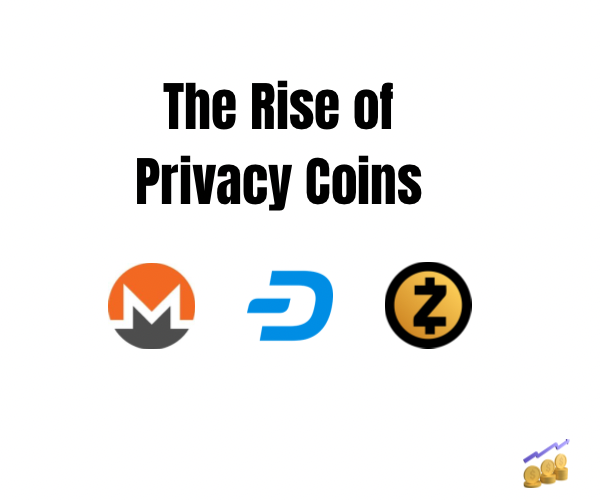
Privacy coins are cryptocurrencies created primarily as a digital payment method with more anonymity than Bitcoin.

Dash was the first-ever privacy coin. It was launched on January 18, 2014, by Evan Duffield, a software engineer, as a fork of the Bitcoin blockchain, that is, a minor tweak to the existing Bitcoin blockchain to make Dash faster, more private, and reduce fees. It was initially named XCoin before rebranding to Dash in March 2015. The cryptocurrency uses masternodes, which are transaction performers and top treasury decision-makers, and miners, who are transaction validators, to make transactions faster and anonymous.

In April of the same year, Monero was launched by anonymous developers. It was forked from Bytecoin, a protocol built on CryptoNote. Monero ensures privacy using Stealth Addresses, which generate a one-time address for each transaction to protect the receiver’s real address; Ring Signatures, which mix transactions among multiple users to conceal the sender; and RingCT, which hides transaction amounts from the public blockchain.

Zcash introduced advanced privacy in crypto. In 2013, four scientists named Matthew Green, Ian Miers, Christina Garman, and Aviel Rubin published a research paper, Zerocoin. It was an academic study that proposed a cryptographic extension to Bitcoin for anonymity.

Two years later, the Zerocoin team decided to launch Zerocash, a protocol that would implement ZK-Proofs to transcend their existing solution beyond a critical paper. To achieve this, the team reached out to Zooko Wilcox-O’Hearn, a privacy advocate and developer, to implement it. Zerocash created a company called Zerocoin Electric Coin Company (later renamed Electric Coin Company, ECC) and made Zooko Wilcox the protocol lead (CEO).

In 2016, Zooko Wilcox took the idea further by launching Zcash, a cryptocurrency that uses the existing protocol (Zerocash) to ensure full anonymity on the blockchain without jeopardizing integrity through zk-SNARKs.

What Are zk-SNARKs?

zk-SNARKs are cryptographic proofs that allow validation of information without revealing the underlying data. In this cryptographic system, the cryptography between the prover and the verifier is succinct; that is, it runs quickly (verified within a few milliseconds) and is non-interactive, using only a single request and response instead of constant messages.

Zcash: A Different Privacy Proposition

While privacy coins provide anonymity on-chain, they all differ in various ways. Zcash has a competitive edge among them with its privacy model.

Dash, for instance, mixes multiple transactions together through PrivateSend to make transactions harder to trace rather than hiding the data itself. Zcash, on the other hand, encrypts data through mathematical models such as polynomial equations (QAPs) over elliptic curves in a zk-proof system in a succinct and non-interactive way.

Although Monero provides complete anonymity, Zcash empowers users with its user-choice privacy approach, which is absent on Monero. On Zcash, users can decide whether or not to make their transactions private by choosing between transparent or shielded addresses.

The Recent Surge of Attention on Zcash’s Privacy Features

Zcash gained attention in the crypto ecosystem beyond market speculation. Its shielded address system demonstrates the capability of privacy in a digital world. Zashi, Zcash’s mobile app and extension, also makes it easy to switch between shielded and transparent addresses, perform on-chain transfers, and swap funds.

The rise in agitation for digital surveillance in recent times among governments and other institutions has increased the demand for online privacy. In Kenya, for instance, Amnesty International’s 2024/2025 report noted that the government had facilitated online threats and harassment against activists. Although the government denied these claims, such incidents reveal the risks associated with digital exposure.

Privacy in crypto puts users in control of their financial data. Angel investor Naval Ravikant highlighted on October 1, 2025, via X that “Bitcoin is insurance against fiat. Zcash is insurance against Bitcoin,” framing privacy as a protective measure in a highly monitored digital environment.

Zcash’s privacy features didn’t appear overnight. They are the results of several upgrades. Sapling (2018) enabled faster private transactions. Heartwood followed in (2020), allowing miners to receive rewards privately. In the same year, Canopy was introduced, restructuring how development is funded. NU5 (2022) introduced Halo 2 proofs and unified addresses to simplify private use, and NU6 (2024) improved the security of development funds. These changes matter not for branding, but because each one made privacy more usable and accessible on-chain.

The Future of Privacy in The Digital Age

Privacy is important for protecting digital identity in a world where online activities are actively monitored. According to CoinGecko statistics, privacy coins hold approximately $15.3 billion in market capitalization as of this writing, down from a $24 billion surge in November. The pullback reinforces the unpredictability of the cryptocurrency market.

Even with these fluctuations, privacy coins are facing regulatory scrutiny for Anti-Money Laundering (AML) and compliance. The back-and-forth with legal frameworks shows the rigorous environment in which privacy coins operate.

At the same time, the demand for privacy is growing in response to digital surveillance. Beyond transactions, privacy is rising in the blockchain ecosystem. For instance, Aztec, an Ethereum Layer-2 blockchain, launched Ignition Chain to provide full and verifiable privacy on Ethereum through ZK-proofs.

Web3 digital identity solution (DID)  is also reshaping how data is verified and stored online. Instead of exposing personal data to big tech companies or the government, where it is vulnerable to breaches and surveillance, projects like Mina Protocol use zero-knowledge proofs (ZK-Proofs) to verify data without revealing it.

A future privacy world means that individuals like Rachel, working in an oppressive environment, can contribute to social and economic development without the fear of digital exposure through external interference.

As privacy debates spike in interest, privacy coins can gain momentum. While blockchain serves as a technological tool for reshaping online data, it is not a “solve-it-all” solution. Online digital identity, NGOs, activists, and privacy enthusiasts must all contribute to safeguarding the digital economy.

NB: This article is for educational purposes only and not financial advice.

The Circular AI Business Model: A New Playbook for the AI-Driven Economy

0

Business model is the logic of a firm, and the engine room that determines how companies capture value in the marketplace. When new technologies emerge, history has shown that the winners are not always the inventors of the pure technology. Instead, victory goes to those who redesign business models, anchoring innovation on fresh pathways through which markets create and redistribute value.

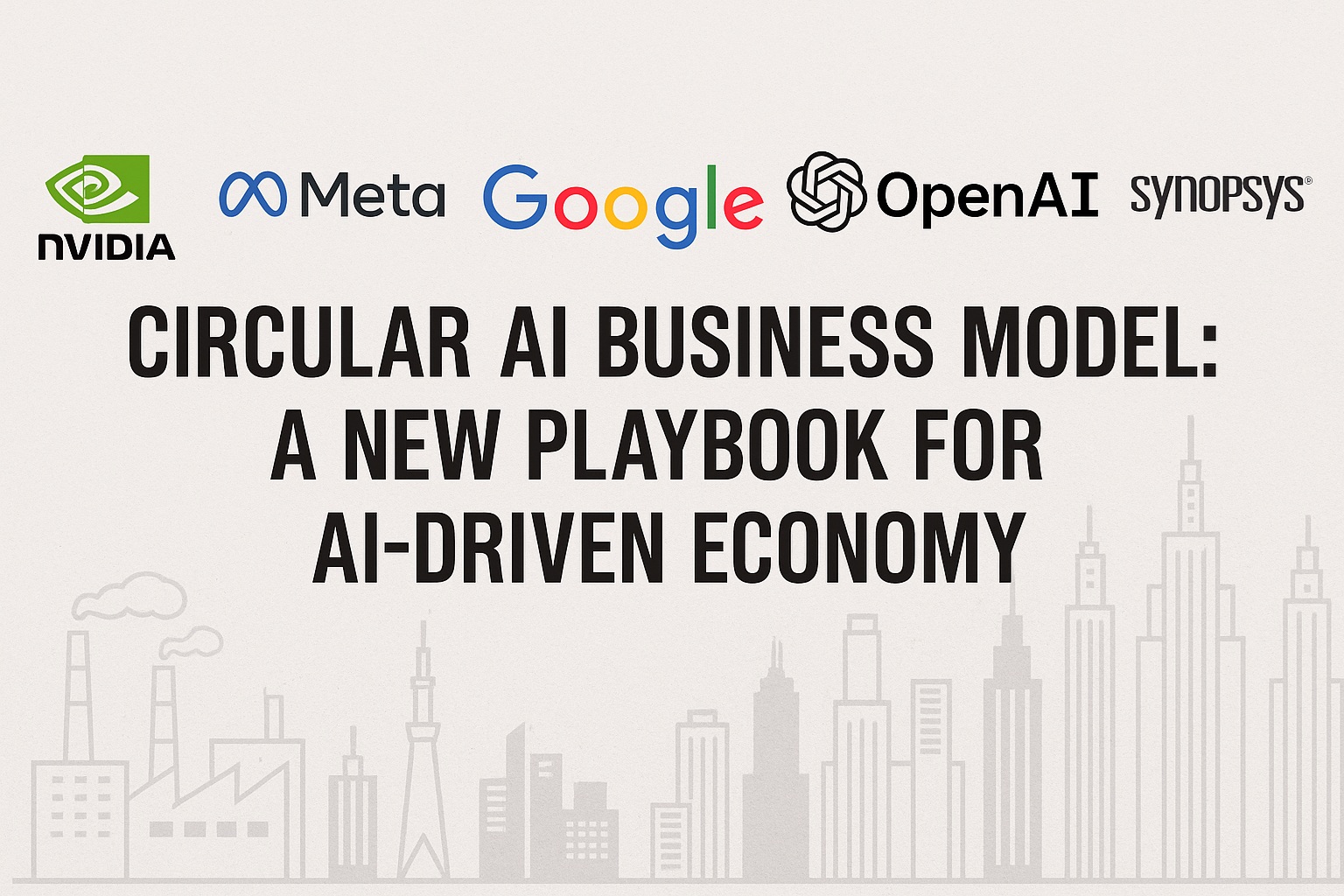
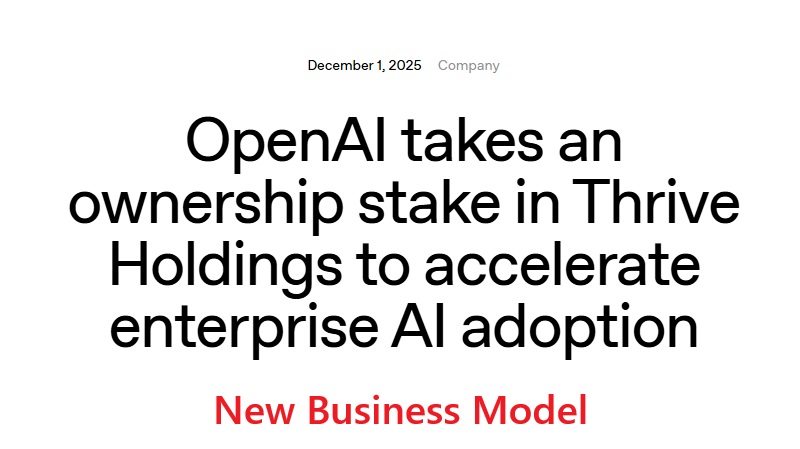
Earlier today, I explained the rising Circular AI Partnership Model that OpenAI is pioneering. In this construct, investments, enterprise deployments, and AI capabilities reinforce one another in a tight, self-sustaining loop. OpenAI invested in Thrive Holdings, not merely as a capital move, but to embed AI systems into Thrive’s portfolio of companies, retrofitting them for higher efficiency and elevated performance. Thrive had already invested in OpenAI. Now OpenAI will power its enterprise operations. That is a circular loop, capital feeding AI, and AI feeding enterprise growth, which in turn feeds capital. A new business model is emerging!

A second example: Nvidia’s $2 billion investment in Synopsys. That partnership will redefine the scale and velocity of AI and computing engineering across one of the world’s most complex design industries. Jensen Huang, Nvidia’s CEO, captured the moment with characteristic clarity: “This is a huge deal… We’re about to revolutionize one of the most compute-intensive industries in the world.”

Nvidia on Monday revealed it has purchased $2 billion worth of Synopsys’ common stock, cementing a sweeping multiyear partnership aimed at transforming the speed and scale of computing and artificial intelligence engineering across one of the world’s most design-intensive industries.

The investment — executed at $414.79 per share — forms the financial backbone of a collaboration meant to accelerate compute-heavy applications, advance agentic AI engineering, expand cloud access, and drive joint go-to-market initiatives, according to both companies. The market reaction was immediate: Synopsys stock rose 4%, while Nvidia gained 1%.

Their ambition is bold: shrink the cycle between chip design through chip manufacturing and AI model optimization. Good People, this may be one of Nvidia’s most consequential strategic moves. Why? Because before an Nvidia chip ever ships, EDA companies like Cadence, Synopsys, and others, must design and validate it. If these companies do not accelerate, Nvidia cannot advance. Nvidia’s trajectory is bounded by its upstream bottlenecks!

So, by investing in Synopsys, Nvidia is not merely buying stock; it is upgrading its supply chain, compressing time to market, and strengthening the foundational hardware layer needed to power the AI age. This is how modern technology empires are built: own the compute, shape the tools, and accelerate the pipelines that forge your future.

In 2021, in Harvard Business Review, I asked “Is Your Startup Doing Everything It Can to Capture Value?”. In that piece, I emphasized that value must not just be created; value must be captured. Today, AI companies are rethinking how they capture value. And to do that, they are inventing a new genre of business models.

Welcome to the Circular AI Business Model, the architecture that will power the AI-driven economy.

OpenAI’s New Playbook: Turning AI Partnerships Into Enterprise Wealth

OpenAI’s New Playbook: Turning AI Partnerships Into Enterprise Wealth

0

Bill Gates did not become wealthy simply because he co-invented Microsoft technologies; he became a legend because he pioneered a new business model, one where software could be sold and licensed at scale. At a time when IBM bundled software with hardware at no explicit cost, Gates rewrote the economics of computing. That business model, not just technology, created Microsoft wealth.

Elon Musk is celebrated not merely because he built an electric car company, but because he reimagined how cars themselves generate revenue. His breakthrough was not batteries; it was the business model of monetizing software inside a car. When other automakers must pay Tesla billions in carbon credits, and when drivers pay recurring fees for additional features, Musk transformed an automobile company into a software subscription machine. That is why he is the high priest of money.

Now, with OpenAI, a new business model is emerging, a circular AI partnership model with a new enterprise layer. Consider this: “OpenAI and Thrive Holdings are partnering to accelerate enterprise AI adoption. Thrive invests in, acquires, and builds businesses positioned for long-term, technology-driven transformation. The initial focus is accounting and IT services—functions with high-volume, rules-driven workflows where OpenAI’s platform can drive immediate gains.”

The move widens OpenAI’s ongoing push to diversify its revenue streams at a time when the company is still battling to turn its wildly popular ChatGPT product into a profitable business. By embedding itself directly inside operating businesses across the “real economy,” OpenAI is placing bets that its models can unlock new efficiencies, reshape traditional workflows, and ultimately return financial gains that could support its heavy compute needs.

Thrive Holdings focuses on buying, owning, and running companies that could benefit from new technologies like AI, with an early focus on accounting and IT services. As part of the deal, OpenAI will embed engineers, researchers, and product teams inside Thrive Holdings’ companies, aiming to speed up their AI adoption and cut operating costs.

This is profound. Thrive has invested in OpenAI. And now OpenAI will supply the AI engines and engineering teams to transform the companies Thrive acquires. As those companies improve productivity and profitability through AI, OpenAI benefits again.

This is a flywheel. A loop. A circular business architecture where capital, AI capabilities, and enterprise outcomes reinforce each other.

For founders building foundational AI systems, this is the emerging playbook:
Partner with investment funds whose portfolio companies can become systematic adopters of your AI infrastructure. Embed your teams, deploy your stack, deepen usage, and your revenue becomes structural, not episodic.

The future of AI will not just be about models. It will be about new business models.

Giannandrea Steps Down, Subramanya Steps In: Apple Shakes Up AI Leadership Amid Criticism and Project Delays

0

Apple has announced the most significant change to its Artificial Intelligence (AI) group since the 2024 launch of Apple Intelligence, confirming that long-serving AI chief John Giannandrea is stepping down.

The move comes as the company faces increasing pressure and criticism for falling behind its major tech rivals in the AI race.

Giannandrea, who has held the position of Senior Vice President for Machine Learning and AI Strategy since joining in 2018 and reported directly to CEO Tim Cook, will transition to an advisor role before fully retiring next spring (2026).

The New AI Chief: Amar Subramanya

Apple has hired a high-profile industry veteran to take the reins, signaling a fresh focus on foundational research and talent acquisition. Amar Subramanya will join Apple as Vice President of AI. Subramanya brings a wealth of relevant experience, having most recently served as a Corporate Vice President of AI at Microsoft. Crucially, he spent 16 years at Google, where he was the head of engineering for Google’s Gemini Assistant before his brief stint at Microsoft. He also worked at Google’s DeepMind AI unit.

Subramanya will now report to software chief Craig Federighi, marking a key organizational change. Previously, Giannandrea reported directly to Tim Cook.

Apple confirmed that Subramanya will lead critical areas, including the development of Apple Foundation Models, machine learning research, and AI safety and evaluation. The remaining teams previously under Giannandrea will be shifted under COO Sabih Khan and services chief Eddy Cue for better organizational alignment.

The shake-up occurs during a period of intense scrutiny over Apple’s AI execution. The suite, intended to put Apple alongside leaders like OpenAI and Google, has received lukewarm reviews from users and critics since its launch. One of Apple Intelligence’s centerpiece features—a significantly improved and personalized Siri assistant—was delayed until 2026, signaling internal development struggles.

CEO Tim Cook acknowledged that Federighi “has been instrumental in driving our AI efforts, including overseeing our work to bring a more personalized Siri to users next year.”

Although Apple’s stock is up 16% in 2025, it has lagged behind many other big tech companies. Investors worry that Apple is spending “much less” on the necessary cloud infrastructure, data centers, and frontier models compared to rivals like Microsoft, Google, and Meta, as its strategy prefers to run AI on-device.

Adding competitive pressure is the emergence of new AI-driven hardware. Jony Ive, Apple’s legendary hardware designer, sold his startup io to OpenAI for $6.4 billion earlier this year. Ive and OpenAI CEO Sam Altman have since collaborated on AI-driven hardware prototypes, which they intend to reveal in two years or less, potentially challenging the iPhone’s dominance built since 2007.

To address its competitive gap, Apple has increased its spending on AI and struck a key deal with OpenAI to integrate ChatGPT into some of its products, including Siri. The hiring of Subramanya, a leader experienced in commercializing foundation models at the industry’s top competitors, is a decisive move to reset and accelerate Apple’s internal AI development strategy.

Inside Amar Subramanya’s Trailblazing Run from Google Gemini to Apple’s AI Hot Seat

Apple’s appointment of Amar Subramanya as its new Vice President of AI is not just a standard executive change; it is a high-stakes talent coup that brings a chief architect of two rival AI superpowers—Google and Microsoft—to the helm of a division criticized for falling behind.

Subramanya’s career trajectory is a direct map of the global AI race’s most competitive battlegrounds. His deep expertise in turning cutting-edge Machine Learning (ML) research into products that scale to billions of users is precisely what Apple, grappling with the delay of its next-generation Siri until 2026 and lukewarm reviews for Apple Intelligence, desperately needs.

Google: The Architect of Gemini

Subramanya spent 16 years at Google, rising through the ranks to a senior leadership position defined by the company’s highest-profile AI initiative. He served as the Head of Engineering for Google’s Gemini Assistant (the successor to the Google Assistant), where he gained critical, practical expertise in building and deploying advanced AI products.

The Gemini project represents Google’s definitive effort to integrate its foundational Large Language Models (LLMs) into a highly interactive, multimodal consumer application.

His tenure included time within Google’s DeepMind AI unit, one of the world’s most influential AI research groups. This exposure gives him invaluable insight into the theoretical and engineering requirements necessary to develop state-of-the-art foundation models—the very core technology Apple needs to master.

His work at Google was centered on scaling complex machine learning and natural language processing systems, establishing a reputation as a researcher-turned-builder capable of productizing theoretical AI advances.

Microsoft: The Target of the Talent War

Subramanya’s stopover at Microsoft was brief but highly significant, placing him at the heart of Redmond’s aggressive AI expansion. He joined Microsoft in mid-2025 as Corporate Vice President of AI, reporting directly to Mustafa Suleyman, the CEO of Microsoft AI and co-founder of DeepMind.

His hiring was part of an aggressive talent acquisition strategy by Microsoft, which reportedly poached over 24 engineers and researchers from Google/DeepMind in a concentrated effort to bolster its consumer AI products.

At Microsoft, Subramanya was focused on developing advanced foundation models to drive AI-powered products such as Microsoft Copilot, which currently relies heavily on OpenAI’s GPT models. His experience was expected to accelerate Microsoft’s capability to build proprietary models and reduce its external dependency.

Upon joining Microsoft, he publicly praised the culture as “refreshingly low ego yet bursting with ambition”—a comment widely interpreted as a contrast to the competitive internal dynamics at Google. This unique perspective on both companies’ corporate cultures makes him an ideal leader to address the internal execution and collaboration challenges that have plagued Apple’s AI team.