DD
MM
YYYY

PAGES

DD
MM
YYYY

spot_img

PAGES

Home Blog Page 7928

Lifelens App Tests for Malaria in Minutes and Helps Save Lives

0

Lifelens introduces an innovative point-of-care smartphone application to address child mortality rates caused by the lack of detection and availability of treatment for malaria. Basically, a  Smartphone app which will allow people to test for the deadly disease in a matter of minutes. The group, calling themselves LifeLens, says in a video and article available on their blog that “Lifelens hopes to directly address the major problem of reducing child mortality rates throughout the world by providing a robust mobile diagnostic solution for malaria patients. The premise of Lifelens project is to digitally characterize anemia, visualize blood cell rupture and parasites, and provide three-dimensional modeling of cells through single image acquisition of low-volume blood smears by peripheral finger pricks.”

The Technology?

Lifelens devices are equipped with proprietary image analysis algorithm written in .NET with Visual Studio. The software is built in Visual Studio for a Windows Phone 7 using Microsoft Silverlight. Diagnosis is conducted using proprietary computer vision algorithms, written in C#, which can detect the presence of a malarial parasite within a patient’s blood cells. There are future plans to include Windows Azure into the system for data aggregation and reporting.

Lifelens replaces the unreliable cotton swab with a high definition, high magnification camera, equipped with proprietary image analysis algorithm written in .NET with Visual Studio. The software is designed to be used on the Windows Phone 7 OS.

The Lifelens diagnostic process consists of five steps (which can be performed by a volunteer in the field with only basic training):

1. Draw blood

2. Place on slide to create smear

3. Image with Lifelens

4. Receive diagnosis and SMS export to server

5. Disinfect slide


A Brief Introduction To Microelectronics

0

The remarkable success of information and telecommunication technology within the last few decades has been facilitated by the phenomenal growth of microelectronics technology. While nanotechnology has future prospects, microelectronics has already transformed global competition and commerce. It offers strategic advantages to firms, institutions and nations through its capacity to develop products and services cheaply and efficiently. It is the engine that drives present global commerce and industry.

The world has experienced many new dimensions in knowledge acquisition, creation, dissemination and usage courtesy of this technology. The advancement of Internet and digital photography could all be linked to better performance from microchips. When microelectronics technology advances, a dawn emerges in global economy in speed, efficiency and capacity.

Microelectronics is considered a very revolutionary technology noting the disruptions it has brought to the dynamics of the global economy via its different applications since its invention by Jack Kilby in the late 1950s. Of the gross world product (GWP), estimated (2007) at about $55 trillion (currency) (The Economist, 2008), microelectronics contributes more than 10%. Microelectronics is very pivotal to many emerging industries in the 21st century with a central position in the global economy. Because Internet, medicine, entertainment and many other industries cannot substantially advance without this technology, it has a vantage position in engineering education in many developed nations.

These nations invest heavily in microelectronics education as in the United States, Canada and Western Europe where the MOSIS, CMC and Europractice programs respectively enable students to fabricate and test their integrated circuits for full cycle design and learning experience on integrated circuits. On the other hand, developing nations increasingly lag behind in adopting and diffusing this technology in their economies owing to many factors, which include human capital and infrastructure. Absence of quality technical education has contributed to stall the transfer, diffusion and development of microelectronics in both the emerging and developing economies.

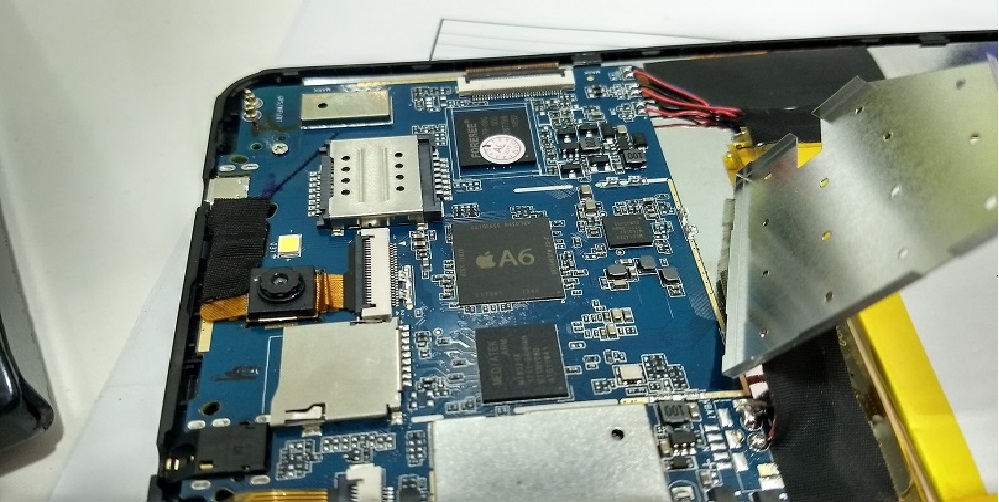
Microelectronics is a group of technologies that integrate multiple devices into a small physical area. The dimension is about 1000 larger than nanotechnology dimension; micrometer vs. nanometer. Usually, these devices are made from semiconductors like silicon and germanium using lithography, a process that involves the transfer of design patterns unto a silicon wafer. There are accompanying processes which include etching, oxidation, diffusion, etc. Several components are available in microelectronic scale such as transistors, capacitors, inductors, resistors, diodes, insulators and conductors. The microelectronics can be divided to its subfields which in turn are connected to other micro related fields. These subfields are micro electromechanical systems (MEMS), nanoelectronics, optoelectronics and single electron devices.

Integrated circuits or microchips are typical microelectronic devices, which can be found in computers, mobile phones, medical devices, toys and automobiles. There is a high level of convergence between nanotechnology and microelectronics. The major difference lies in the size of the materials; nonetheless, the techniques are very different. Complementary metal oxide semiconductor (CMOS) transistor is the most common transistor used in the industry owing to its ease of integration and low static power dissipation. Bipolar junction transistor is another popular version. With the sizes of CMOS transistor in the nanometer range, the behaviors of the transistors are radically affected by parasitic noise and power dissipation.

These problems pose potential challenges to the continuous progress of CMOS technology and microelectronics industry in general. The survivability of Moore’s Law, (after Gordon Moore, co-founder of Intel Corp) which states that the numbers of transistors in a semiconductor die double every 18 to 24 months, is presently challenged if engineers cannot downscale the transistor size any further efficiently.

This scaling has been the driver that has enabled microelectronics products to improve in speed, capacity and cost-efficiency. Many efforts have been geared to overcome the problems faced in the industry as transistors scale into the deep nanometer. They include improving the structure of the metals and polysilicon materials used in making the devices, more enhanced doping profile, new materials to keep the industry alive and well into the future.

Uganda Telecom Launches “kwiktok”

0

Uganda Telecom has launched the “kwiktok” new promotion this week.  According to reports from the company, customers are able to have 100MB of free surfing data as part of an effort to increase customer relations.

The company said that Uganda Telecom customers are now able to have 20 free SMS and 10 minutes of free talking with the “kwiktok” promotion for a small fee of 250 shillings (US$0.11).

This is resonating with Uganda Telecom investors and customers and many think this could be a turning point for the company.

It Is Pure Business – Kenyan Orange Joins Counterfeit Drugs Fight

0

Tekedia discussed this morning on  the $1.8m investment from Acumen Fund into the Ghanaian Sproxil – a counterfeit drug fighter using SMS. The just landed an agreement with Kenyan Orange in their quest to  keep fafe drugs out of Africa.


Mobile phone service providers and IT companies are looking to increase their profile through health. In an effort to win over more customers and retain their existing clients, the companies are attacking the counterfeit drug market through SMS.


Telkom Kenya (Orange) announced that it would launch next month a free SMS to assist users in the fight against the “growing menace of counterfeit drugs as it positions itself for high speed Internet (3G).”


Telkom Kenya said that subscribers will be able to write verification codes on each medicine product and patients can submit that code through SMS to see the aunthenticity of the drug against a database managed by mPedigree.


“Each request is free and takes only a few seconds to verify. Orange will provide the telecoms support for the service in its African markets when it becomes available,” said Michael Barre, France Telecom’s Vice-President of East Africa and Island region.


Orange will work with mPedigree which is a brand of Sproxil :


Through its agreement with mPedigree, a pan-African partnership of telecom, pharmaceutical and computing industries, Orange will participate in the fight against counterfeit drugs in Kenya and Cameroon, where up to 25% of drugs are potentially affected. The initiative involves printing a unique verification code, which is hidden behind a scratchable surface layer, on each packet or bottle of medicine. Patients can then submit this code via SMS in order to automatically check the authenticity of the drug against a database stored in Europe. Each request is free and takes only a few seconds to verify. Orange will provide the technical support for the system in these two countries once the service starts up in May 2011.


The full Press Release is here.


You Could Be Outsourcing Your Brain to The Social Network. You Better Watch

0


You never really liked Facebook. But you signed on when all your friends opened accounts. Despite your privacy concerns, the alternatives are few. Leave it; you have lost a stream of networks.


In this era of social networking, we simply follow the path of least resistance. And it has been proven that in doing so, we lose a bit of our independence. We begin and end the day with checking emails. Our lives resolve around people that make up our social networks (and to a lesser extent, professional networks).

Unlike before, reaching your friends demands immediacy. Otherwise, why will someone provide GPS feeds of his movements to the world? The human networks have become more communal and increasingly our social networks influence us so much that we risk losing our independent ideologies.


The reality is that when a friend begins a conversation and finds it great, others in the networks just agree, most times. Your friend rates a blog post high, even without reading it, you also rate it high. A friend likes a video and nearly everyone in the network will follow thus.


From CNN to Facebook, I have noticed that the very first comments in any post influence the dialogue the most. Those early ones will decide the direction other subsequent commentators will follow. Though there are deviations, on average, the individual judgment is lost. We just follow the path of least resistance by not disagreeing with those in our networks.


There are many reasons we act that way. One, we want to retain that friendship and will work hard not to oppose our friends. Two, we never actually read the post; we just made a decision based on the comments of our friends who might have read the entire post. Three, the desire of least resistance and fear of being attacked by providing independent insights by our networks encouraged us to follow the popular opinion.


Unfortunately, irrespective of the reason under which we make comments, our digital identities are registered and to most people, we made the comments. That create a risk as in most cases we come back to notice that we misjudged. We suddenly noticed that our casual comments were wrong and very embarrassing to the issue under discussion.


In general, our personal independence on new ideas is under siege by social networks and Internet. We follow a lot and new insights are lacking because like buyer recommendations, we believe our social networks and follow their leads. There are both positive and negative consequences to this new aspect of human existence.


On the positive side, we can easily learn new things and some really good ideas can inspire and motivate us. When a friend shares a good idea on investing, the social network can help it go viral and it can benefit most that will follow, even without asking questions.


On the negative side, it can make us very dumb. The reality is that most people do not believe that the Internet is not edited and they believe everything they read or see on the web. When someone passes an idea, we rarely ask for facts. Take the PEW poll that 18% (24% from Time Magazine) of Americans believe that President Obama is a Muslim. Despite all evidence to the contrary, the most important being his relationship with his ex-pastor. He was vilified for his pastor’s actions, yet he is still a Muslim. Before the Internet age, the network TVs would have edited out most of the issues that derail honest dialogue in political arenas. But with Internet, there is no editor and any idea can go viral.


When you watch some videos that have gone viral, nothing comes clearly on why they did. But on more observations, you can notice the social energy of networks. That brings the question of quality in media. Who truly cares? In most cases, it is not the quality that wins but social congregation. Provided that more people click a post, it has more chances of becoming more popular. And popularity is defined under the constructs of advertisement; more clicks, more money.


Personally, I will say that my article is popular if a university professor cites it, though few people have cared to read it. But in this age, it is not what matters. Popularity is simply the click rate and how it can be monetized for money.


As this dynamics emerge, firms must adapt to understand that man is inherently being changed by the social circle. Having a good advertising campaign need not focus on expensive ad, rather a focus on pushing the content to few choreographed people with larger networks and then task them to give positive reviews. As soon as they do that, others in the networks will follow thus and a viral ad is born.


Also, companies must understand that immediacy triumphs over quality. A website that is updated ten times in a day will be ranked more than one that has a higher quality (who decides?) but updated once a day. To avoid this challenge of the web algorithm, firms open visitor comments thereby increasing the level of activity.


Man is passing through a very transformative phase. Today, a student can post his homework on his Facebook account and his friends will provide answers. When he is asked to develop a class concept, he goes to Yahoo Answers and someone offers a free solution. We are increasingly outsourcing our minds to our networks. We depend less on facts today than we did a few decades back. Anything flows into the web and the world consumes. We can edit an encyclopedia (yes, Wikipedia) and reference it immediately. It does not seem to be a progressive evolution of the human species.


Author: Ndubuisi Ekekwe