DD
MM
YYYY

PAGES

DD
MM
YYYY

spot_img

PAGES

Home Blog Page 795

AI Model Wars Intensify as Google Launches Gemini 2.5 Deep Think, Escalating Race with ChatGPT, Grok

0

The race among leading artificial intelligence labs to dominate the next phase of AI reasoning has entered a new gear, with Google DeepMind rolling out Gemini 2.5 Deep Think, its most advanced AI model yet.

The company claims the new model is capable of answering complex questions by generating and weighing multiple independent thoughts before selecting the most accurate answer — a major step up from conventional single-agent AI models.

Starting Friday, Gemini 2.5 Deep Think will be available through Google’s $250-a-month Ultra subscription plan, giving high-end users access to what the company calls its “first publicly available multi-agent system.” This system works by spawning multiple AI agents to approach a question from different angles simultaneously, combining those threads into a coherent and refined response.

While the method is significantly more computationally intensive, Google says it results in vastly better reasoning and accuracy.

The rollout follows DeepMind’s presentation of the system at its I/O 2025 conference in May, but the company now says the released version incorporates newer reinforcement learning techniques that allow the model to reason more creatively and effectively.

“Deep Think can help people tackle problems that require creativity, strategic planning and making improvements step-by-step,” the company said in a statement.

In benchmarking tests, Gemini 2.5 Deep Think scored 34.8% on Humanity’s Last Exam (HLE) — a rigorous measure of AI understanding across math, humanities, and science — outperforming its competitors. Elon Musk’s xAI’s Grok 4 scored 25.4%, while OpenAI’s o3 achieved 20.3%. On LiveCodeBench 6, which tests performance on competitive coding challenges, Google’s model also led with 87.6%, outpacing Grok 4 (79%) and o3 (72%).

These gains add to the intensifying arms race in the AI sector. Over the past few months, xAI, OpenAI, and Anthropic have all pushed out new models, each touting breakthroughs in performance and reasoning.

OpenAI, for instance, has been refining its GPT-4 and o3 model lines, and recently hinted at more powerful iterations under internal testing, including a multi-agent system similar to Google’s and xAI’s. OpenAI’s Noam Brown confirmed that the company used a multi-agent setup for its own gold-medal performance at this year’s International Math Olympiad (IMO), though the model hasn’t yet been released to the public.

xAI’s Grok 4 Heavy, meanwhile, has been marketed as a direct rival to both ChatGPT and Gemini, leveraging a multi-agent system that Musk says delivers superior performance across coding, logic, and problem-solving tasks. While Grok 4 models are increasingly being integrated into the X platform, access remains limited and premium-tiered, much like Google’s Deep Think.

Anthropic is also in the mix with its Claude family of AI models. Its latest offering, Claude Research Agent, is similarly powered by multi-agent systems and designed to generate highly detailed and structured research outputs.

These moves collectively underscore a critical industry trend: the convergence around multi-agent reasoning. While traditional large language models (LLMs) typically process queries as single-threaded thought streams, multi-agent systems divide and parallelize reasoning, often using internal debate-like mechanisms. The result is not just more accurate answers, but also responses that show better reasoning steps, especially in complex tasks like mathematics, programming, and scientific discovery.

However, the progress comes with a cost. Multi-agent models require significantly more computing power, making them expensive to run and maintain. As a result, the leading tech companies have opted to restrict these models to their highest-paying subscribers. Google’s $250/month Ultra plan for Gemini 2.5 Deep Think mirrors similar premium-tier strategies from both OpenAI and xAI.

Despite the price wall, Google is also making some of the model’s capabilities available to select mathematicians and academic researchers, particularly the variation of the system that secured a gold medal at the IMO. This version, Google says, takes hours to generate responses — unlike consumer-facing models that operate in seconds — but offers the kind of deep, methodical reasoning researchers crave.

In the coming weeks, Google plans to open the Gemini API for developers and enterprise testers, aiming to observe how the multi-agent system performs in real-world environments outside Google’s sandbox.

The AI model war is clearly far from over. With every major lab now aligning behind multi-agent architecture and pushing boundaries on creativity, strategic reasoning, and deep cognition, the race is no longer just about answering questions — it’s about thinking more like humans.

Google announced the rollout of its Gemini 2.5 Deep Think artificial intelligence model on Friday, releasing the tool to its paid Ultra subscribers. First unveiled in the spring, Gemini 2.5 is a “multi-agent” reasoning model, making it well suited for devising “creative solutions to complex problems” such as math and coding, Google says. A different version of the model earned a gold medal score at the International Mathematical Olympiad last month; Google says it is also releasing that version to a group of mathematicians and researchers.

OpenAI Raises $8.3 Billion in Fresh Capital, Further Increasing Its Valuation

0

OpenAI has secured $8.3 billion in new capital as part of its ongoing $40 billion fundraising effort, according to a person with direct knowledge of the deal.

The latest tranche—oversubscribed and completed ahead of schedule—signals surging investor appetite for the company’s products and its growing dominance in the global AI arms race.

The injection of funds comes as OpenAI’s business accelerates at a pace few anticipated. The company’s annual recurring revenue (ARR) has now reached $13 billion, up from $10 billion just last month, with projections suggesting it could cross $20 billion by the end of the year. Paid enterprise users of ChatGPT, OpenAI’s flagship product, have also surged from 3 million to 5 million in just a few months.

The round was first reported by DealBook.

Investors Rush In

The latest investment was led by Dragoneer Investment Group, which contributed $2.8 billion, making it the largest single investor in this tranche. Other participants include some of the world’s most aggressive capital allocators: Blackstone, TPG, T. Rowe Price, Fidelity, Founders Fund, Sequoia, Andreessen Horowitz, Coatue, Altimeter, D1 Capital, Tiger Global, and Thrive Capital.

While Dragoneer led this tranche, SoftBank remains the lead backer of the broader $40 billion campaign, underscoring how institutional giants continue to bet heavily on OpenAI’s leadership in AI infrastructure and applications.

The raise comes amid intensifying competition among top-tier AI developers, particularly from Anthropic, which is also in the midst of a major fundraising push. The Sam Altman-led OpenAI and Dario Amodei-led Anthropic are two of the most well-funded and technically advanced players in the frontier model space.

Anthropic is reportedly in talks to raise between $3 billion and $5 billion, led by Iconiq Capital, at a potential valuation of $170 billion, according to CNBC. That would mark a massive leap from its $61.5 billion valuation in March, when it secured a $3.5 billion investment round. The pace of its growth—and the valuation jump—highlight how capital-hungry the race to build and deploy next-gen foundation models has become.

Middle East Capital Now in Play

Both OpenAI and Anthropic have turned to the Middle East to help fund their ambitions—a strategic pivot that reflects the rising cost of staying competitive in a field where computing power and specialized infrastructure are increasingly the most decisive advantages.

OpenAI is partnering with Emirati firm G42 to develop a major data center in Abu Dhabi, a project seen as critical for expanding its compute footprint and reaching new international markets.

Anthropic, meanwhile, is also reportedly courting Gulf-based sovereign wealth funds. In a leaked internal memo obtained by Wired, CEO Dario Amodei acknowledged the company had softened its earlier resistance to such funding, writing that “it’s become substantially harder to stay on the frontier” without tapping into Middle Eastern capital.

OpenAI’s ability to raise billions at pace—and at a valuation that remains sky-high—demonstrates both investor confidence in its business model and the rising stakes in AI’s global power struggle. Governments, corporations, and sovereign wealth funds are all vying for a stake in AI’s future, fueling the competition to build the smartest chatbot.

Now the AI arms race is also about who builds the infrastructure, secures the supply chains, locks down the compute, and attracts the world’s most powerful backers. For now, OpenAI appears to be leading that charge. But Anthropic, flush with new capital and fast-closing the valuation gap, isn’t far behind.

OpenAI has secured $8.3 billion at a $300 billion valuation, The New York Times reports, in a fresh round of venture capital funding that puts the ChatGPT maker ahead of its own schedule to raise $40 billion by 2026. In a round that was five-times oversubscribed, the largest investment, $2.8 billion, came from a California-based firm called Dragoneer, which has in recent memory made savvy, early bets on juggernauts including Airbnb and Uber. Other first-time OpenAI investors included Blackstone, TPG and T. Rowe Price.

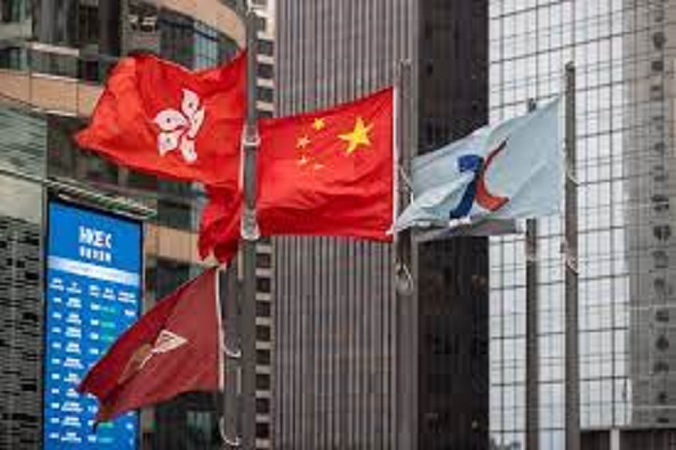
Hong Kong Releases ‘Stablecoins Ordinance’ Establishing A Licensing Regime for Fiat-Referenced Stablecoin

0

The Stablecoins Ordinance, effective August 1, 2025, establishes a licensing regime for fiat-referenced stablecoin (FRS) issuers in Hong Kong, overseen by the Hong Kong Monetary Authority (HKMA). The ordinance regulates “specified stablecoins,” primarily fiat-referenced stablecoins (FRS) pegged to one or more official currencies, such as the Hong Kong dollar (HKD), or other assets designated by the HKMA. It excludes financial instruments already regulated under existing laws (e.g., bank deposits, securities, stored value facilities, or central bank digital currencies).

Entities issuing FRS in Hong Kong or issuing HKD-referenced FRS anywhere must obtain a license from the HKMA. Only licensed issuers, authorized institutions, SFC-licensed virtual asset trading platforms, or SFC-licensed corporations can offer FRS to the Hong Kong public. Only FRS from HKMA-licensed issuers can be offered to retail investors. These include issuing FRS in Hong Kong, issuing HKD-referenced FRS outside Hong Kong.

The HKMA will issue guidelines on what constitutes “issuing in Hong Kong” (e.g., considering the issuer’s management location, operations, and reserve management). Stablecoins must be fully backed by high-quality, liquid reserve assets at least equal to their par value, with proper segregation of client assets and regular reconciliation.

Issuers must process redemption requests at par value under reasonable conditions. Licensees are treated as financial institutions, requiring customer due diligence (CDD) for transactions at or above HK$8,000, enhanced monitoring for unhosted wallets, and robust risk-based governance. Licensees must implement policies for data security, fraud mitigation, and operational contingencies.

Issuers must publish key information (e.g., redemption terms, reserve details) via white papers and websites and report audit outcomes or breaches to the HKMA. Pre-existing stablecoin issuers with a significant presence in Hong Kong before August 1, 2025, have a six-month non-contravention period to continue operations, provided they submit a license application within three months (by October 31, 2025) and receive HKMA acknowledgment.

Unlicensed activities or false claims of licensing status are offenses, punishable by fines up to HK$5,000,000 and up to seven years’ imprisonment. Daily fines of HK$100,000 may apply for ongoing violations. An appeal mechanism allows review of HKMA decisions, with the tribunal able to suspend enforcement pending review. Issuers must maintain a minimum paid-up share capital of HK$25 million or 1% of the par value of stablecoins in circulation, whichever is lower, with flexibility for the HKMA to impose additional requirements.

The HKMA encourages interested parties to contact them by August 31, 2025, for preliminary feedback, with formal applications due by September 30, 2025, for early consideration. Licensing is ongoing, but initial approvals are expected in 2026 due to a cautious, phased approach. On May 26, 2025, the HKMA released two consultation documents (closed June 30, 2025).

The ordinance aims to mitigate financial stability risks, enhance consumer protection, and maintain Hong Kong’s status as a global financial hub by fostering responsible innovation in digital assets. It aligns with international standards (e.g., Financial Stability Board’s framework) and follows the “same activity, same risks, same regulation” principle. Hong Kong’s regime is among the most comprehensive in the Asia-Pacific, contrasting with softer regulatory approaches in Singapore and Australia.

It aligns with global trends, such as the EU’s MiCA regulation (2024) and the U.S. GENIUS Act (2025), though Hong Kong’s selective licensing contrasts with the U.S.’s faster rollout. The global stablecoin market was valued at USD223 billion in May 2025, representing 6.5% of the crypto market. Hong Kong’s regime targets fiat-backed stablecoins to facilitate cross-border payments and decentralized finance while addressing risks like those exposed by the 2022 TerraUSD collapse.

The HKMA’s “high bar” and invitation-based initial phase may limit licenses to a few highly compliant applicants, potentially creating a bottleneck for smaller players. The regime’s application to HKD-referenced stablecoins issued globally ensures oversight but may deter offshore issuers due to compliance costs. While the ordinance strengthens investor safeguards, its stringent requirements (e.g., capital, AML/CFT) could stifle smaller innovators, though it attracts credible issuers to enhance Hong Kong’s financial ecosystem.

The HKMA’s forthcoming guidelines on “issuing in Hong Kong” and “active marketing” will be critical for clarity. The phased approach and lack of licenses in 2025 suggest a cautious rollout, potentially lagging behind jurisdictions like the U.S. Companies must prepare for rigorous compliance, including reserve management, AML/CFT controls, and capital requirements.

Only stablecoins from licensed issuers can be offered to retail investors, reducing fraud risks but limiting options until licenses are issued. The public should verify issuers via the HKMA’s register, as no licenses exist as of August 1, 2025. Around 50 businesses, including Ant Group and JD.com subsidiaries, are expected to apply, with a focus on HKD-pegged stablecoins for cross-border payments

Bitcoin Could Face Intense Selling Pressure in August, As Long-Term Holders Offload Assets

0

Bitcoin could face selling pressure in August 2025 due to a combination of market dynamics, macroeconomic factors, and technical indicators. Long-term holders (LTHs) have historically sold portions of their Bitcoin holdings when prices reach significant milestones. In July 2025, LTHs sold approximately 52,000 BTC as the price hit $118,000, signaling profit-taking after a strong rally.

This trend often intensifies near all-time highs, as seen previously when Bitcoin crossed $100,000, and could continue into August if prices approach or exceed recent peaks like $122,054. Bitcoin miners, who accumulated assets earlier in July 2025, began selling to lock in profits as prices peaked at $122,054. Data from CryptoQuant indicates a 0.05% rise in miner reserves between July 1 and July 22, followed by sales that added to selling pressure.

If miners continue this trend in August, it could cap price gains, especially if institutional demand doesn’t fully offset the sell-off. Recent U.S. tariffs (10–41% on select imports) announced in early 2025 have strengthened the U.S. dollar, reducing Bitcoin’s appeal as a risk asset. Geopolitical tensions, such as the Israel-Iran conflict, have also triggered risk-off sentiment, leading to liquidations and volatility. These macro factors could persist into August, prompting investors to exit high-risk positions like Bitcoin.

Technical analysis shows bearish signals on shorter timeframes. The MACD histogram at -630 and a narrowing 7-day price range (3.2% volatility) suggest a potential breakout, possibly downward, if Bitcoin fails to hold key support at $116,240. A break below this level could lead to liquidations targeting $110,000, amplifying selling pressure. Additionally, the 50-day moving average is falling on the four-hour chart, indicating a weakening short-term trend.

Bitcoin ETF inflows dropped significantly in July 2025, with Glassnode reporting an 80% decline to $496 million. This reduction in institutional buying, coupled with outflows from major ETFs like BlackRock (4,873 BTC in April), could fail to absorb selling pressure from miners and LTHs, especially if macro uncertainty deters new capital inflows.

Substantial transfers from large holders, such as Galaxy Digital moving $1.5 billion in Bitcoin to exchanges in July 2025, have fueled concerns about sell-side pressure. Similar large-scale sales could emerge in August, particularly if leveraged traders face squeezes, as seen in recent liquidations of over $700 million.

Negative media coverage or “Fear, Uncertainty, and Doubt” (FUD) can exacerbate selling pressure. Historical patterns show that media declaring Bitcoin’s decline often triggers panic selling. With Bitcoin near recent highs, any negative news could prompt retail investors to sell, especially given the Fear & Greed Index at 65–72, indicating greed that may precede a correction.

Despite these pressures, institutional demand (e.g., MicroStrategy’s $4.2 billion BTC acquisition plan) and potential Federal Reserve rate cuts (60% odds by October 2025) could mitigate downside risks. However, the balance between selling pressure from miners and LTHs versus institutional inflows will be critical in determining Bitcoin’s price trajectory in August.

Selling from Bitcoin miners has significantly decreased. On-chain analytics from CryptoQuant and Alphractal indicate that miner outflows have dropped to their lowest levels since 2024, with miners holding onto their rewards rather than selling, suggesting confidence in future price increases. For instance, miner withdrawals fell by 85% from a peak of 53,000 BTC on April 10, 2024, to around 8,000 by June 27, 2024.

This reduction is seen as a bullish signal, potentially setting the stage for price stabilization or an upward rally. Despite the decline in miner selling, other factors contribute to ongoing pressure. Reports from Glassnode and CryptoQuant highlight that long-term holders and institutional wallets have been selling, particularly after Bitcoin’s peak of $109,000 in January 2025. Short-term holders who bought at high prices (around $91,362) are also offloading, contributing to a correction that could see Bitcoin test support levels.

Bitcoin’s potential selling pressure in August 2025 stems from profit-taking by long-term holders and miners, macroeconomic headwinds, technical bearish signals, reduced ETF inflows, large holder sales, and volatile market sentiment. Investors should monitor support levels ($116,240–$114,500) and macro developments closely.

AML Bitcoin Founder, Rowland Marcus Sentenced to Seven Years Imprisonment For Wire Fraud and Money Laundering

0

Rowland Marcus Andrade, the founder of AML Bitcoin, was sentenced to seven years in federal prison for wire fraud and money laundering after defrauding investors of $10 million. He falsely promoted AML Bitcoin as a secure, regulation-compliant cryptocurrency with advanced anti-money laundering technology, claiming partnerships like one with the Panama Canal Authority, which never existed.

Andrade misused over $2 million of investor funds for personal expenses, including luxury cars and real estate in Texas. The sentence, handed down by Chief U.S. District Judge Richard Seeborg on July 29, 2025, followed a five-week trial concluding in March 2025. Andrade faces three years of supervised release after his prison term, starting October 31, 2025, with a restitution hearing set for September 16, 2025, to determine victim compensation.

The case also involved lobbyist Jack Abramoff, who was fined $55,000 and barred from securities offerings for promoting the scam in 2020. Cryptocurrency fraud has caused substantial losses, with the FBI reporting $9.3 billion lost to crypto-related fraud in 2024, a 66% increase from 2023’s $5.6 billion.

The AML Bitcoin case exemplifies how fraudulent schemes, promising secure and compliant cryptocurrencies, can mislead investors, resulting in millions misappropriated for personal gain. Retail investors, who bore 71% of 2024’s $14.5 billion in global crypto fraud losses, are particularly vulnerable. High-profile scams like the $LIBRA rug pull, which saw a token value collapse after a meteoric rise, highlight the potential for rapid, devastating financial losses when trust is exploited.

Cases like AML Bitcoin, where false claims about partnerships and technology were used to lure investors, erode confidence in the crypto ecosystem. Only 13% of current crypto owners express high confidence in cryptocurrency security, while 77% of non-owners lack confidence. The prevalence of scams, including Ponzi schemes ($3.2 billion in fraudulent gains in 2024) and pump-and-dump schemes ($740 million in losses), undermines the legitimacy of digital assets as an investment class.

The rise of “wrench attacks,” where physical violence or coercion is used to access crypto wallets, is a growing concern. 2025 is projected to see potentially twice as many such attacks as previous years, with many incidents likely underreported. High-profile crypto wealth holders face heightened risks of kidnappings and violent crimes, necessitating traditional security measures like professional consultation and cautious online behavior.

Cryptocurrency fraud is increasingly linked to geopolitical issues, with North Korean hackers stealing $1.34 billion in 2024, often to fund weapons programs. Regulatory gaps exacerbate fraud risks. The U.S.’s loosened oversight, such as reclassifying memecoins as “collectibles” to bypass SEC scrutiny, may embolden scammers. The pseudo-anonymous nature of cryptocurrencies, coupled with privacy tools like mixers (used in over 90% of fraud cases), complicates law enforcement efforts to trace illicit transactions.

Individuals over 60 are disproportionately affected, lodging 33,000 complaints and losing $2.8 billion in 2024, often through investment scams and crypto ATM frauds. Surprisingly, educated individuals and homeowners are also increasingly targeted, often due to overconfidence in their ability to spot scams.

Rising Concerns in 2025

Scammers are leveraging advanced technologies, such as AI-driven deepfake scams (e.g., a Binance executive impersonation costing a U.S. firm $25 million) and generative AI to scale fraud operations. Social engineering tactics, including romance scams like “pig butchering” (40% increase in losses in 2024) and impersonation scams (800% surge in deepfake video scams), exploit human trust rather than technical vulnerabilities.

Fraudulent platforms, wallet apps, and phishing schemes are becoming harder to detect, with fake investment platforms accounting for 40% of Interpol-reported fraud cases in 2024. Stablecoins now dominate illicit transaction volume (63% of all illicit transactions), reflecting their liquidity and fiat parity, which make them attractive for scams and laundering.

While stablecoin issuers like Tether can freeze illicit funds, the sheer volume of stablecoin activity (77% YoY growth) poses challenges for monitoring and enforcement. Crypto ATMs, often located in lower-income communities, saw a 99% increase in scam complaints in 2024, with $250 million in losses, particularly affecting the elderly. These machines, marketed as financial inclusion tools, charge high fees and are exploited for scams like fake tech support and extortion, highlighting predatory practices.

The restructuring or defunding of agencies like the SEC and DOJ, along with relaxed banking regulations, creates a regulatory vacuum that may enable fraud. Political ties to the crypto industry, including public officials launching memecoins (e.g., $TRUMP), raise concerns about conflicts of interest and regulatory capture. Chainalysis projects that crypto thefts could reach $4 billion by the end of 2025, driven by major hacks like the $1.5 billion Bybit theft.

The use of AI and other technologies is expected to make scams more scalable, potentially leading to a record number of fraud incidents in 2025. Investors should verify platforms using trusted sources (e.g., CoinGecko, CoinMarketCap), avoid unsolicited offers promising high returns, and be skeptical of influencer endorsements. Use cold wallets for storage, enable two-factor authentication (2FA), and never share private keys or recovery phrases.

The AML Bitcoin case is a microcosm of the broader cryptocurrency fraud landscape in 2025, where sophisticated scams, regulatory gaps, and technological advancements amplify risks. With financial losses escalating, trust eroding, and new threats like AI-driven fraud emerging, the crypto industry faces a critical juncture. Strengthening investor protections, enhancing security measures, and fostering regulatory clarity are essential to curb the rising tide of crypto fraud and ensure the ecosystem’s long-term viability.