DD
MM
YYYY

PAGES

DD
MM
YYYY

spot_img

PAGES

Home Blog Page 798

BlockDAG Hits 2.5M Users on X1 App, HYPE Surges With USDC News, While SUI Struggles To Maintain Momentum

0

Not every crypto project gains attention, but this week, a few earn more than they appear. Hyperliquid HYPE’s recent updates made fiat purchases simpler using Transak, a move that removes intermediaries and expands access. On the technical side, SUI market analysis shows solid support zones, but coin unlocks and a strong dollar could limit upside.

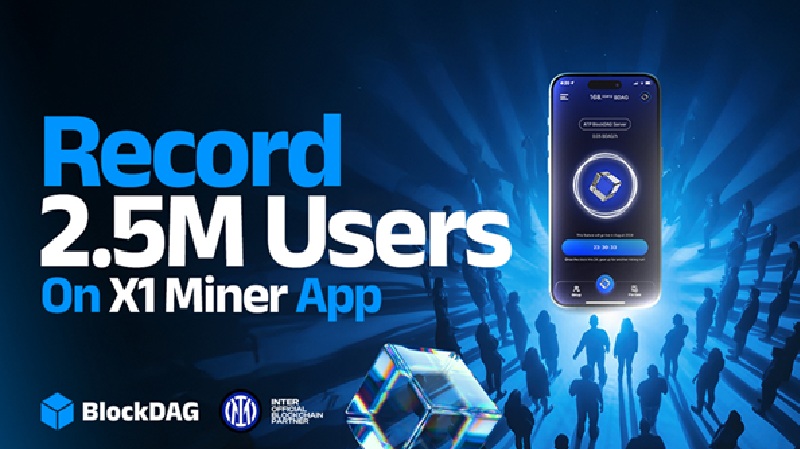
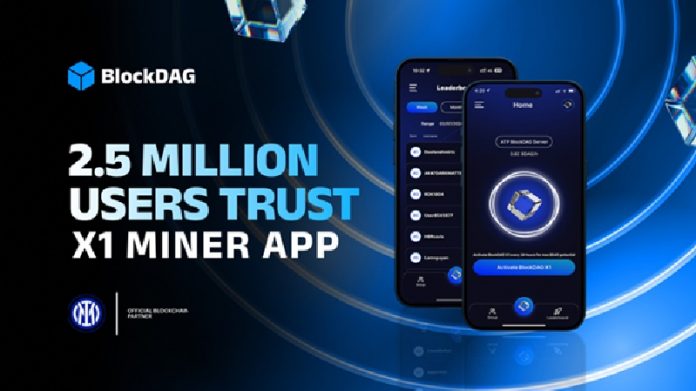
Then there is BlockDAG (BDAG) quietly surpassing chatter. Its X1 app just passed 2.5 million users, letting anyone mine from a phone. Add in the live demonstration of X1 and X10 hardware and a $358M fundraising completion, and BlockDAG appears more than mere hype. With evident adoption and functional tools, BlockDAG ranks among the top crypto coins right now.

Hyperliquid HYPE Recent Updates Transak Now Supports Fiat Onramp

Hyperliquid HYPE’s recent updates show clear progress because its listing now appears on Transak’s fiat-to-crypto onramp. This change removes centralised exchange requirements and permits the purchase of HYPE directly with fiat currencies such as USD or EUR. Transak’s platform supports both Hyperliquid and HyperEVM, covering perpetual trading and network layer use.
Though those two may seem confusing at first, bridging tools let users move between them easily. The Hyperliquid HYPE recent updates also include compatibility with wallets, including Trust Wallet and Leap Wallet. After entering a wallet address, the user verifies their email, selects the payment method, and completes the purchase. Transak also enables the sale of HYPE for fiat, completing the most recent Hyperliquid HYPE updates.

SUI Market Analysis Bullish Support Meets Selling Pressure

SUI trades near $3.81, down about 5?% in the past 24 hours after briefly touching $4.44. This pullback reflects general weakness in altcoins while the U.S. dollar strengthens. Still SUI market analysis highlights strong institutional backing. Nasdaq-listed Mill City Ventures III raised $450?million, with 98?% allocated to SUI treasur,y one of the largest corporate commitments so far.

On the chart side, SUI shows bullish support between $3.20 and $3.50 with resistance at $4.20 to $4.50. RSI sits near 73, indicating overbought conditions. Meanwhile, a $686?million coin unlock looms that may trigger selling pressure. Based on SUI market analysis, short?term gains remain possible, but downside risk exists if momentum fades or supply floods the market.

BlockDAG X1 App Adoption Surges To 2.5 Million Users

BlockDAG’s mobile X1 app now serves 2.5?million users. It allows mining of BDAG coins using only a phone. No expensive hardware required, just an app. It suits beginners who wish to engage without costly gear. The app costs nothing to download and does not drain battery or data. It runs in the background and earns daily rewards.

To showcase technology, BlockDAG hosted a live demonstration of both the X1 and the high-performance hardware X10 miner. Observers saw how simple starting mining and tracking progress could be. The X10 model delivers greater speed for people seeking higher returns. The demonstration appeared polished and transparent, and it built user confidence.

As the demo occurred, BlockDAG raised $358?M in total presale funding. It sold 24.6?billion BDAG coins across 29 batches. Batch 29 price sits at $0.0276. Launch price remains at $0.05. That special pricing promises potential returns up to 3,025?% based on that launch price. The GLOBAL LAUNCH release price currently sits at $0.0016 until August?11.

Buyers from Batch?1 already achieved a 2,660?% gain compared to the current Batch?29 price. So far, 24.6?billion coins sold. BlockDAG shows functional tools for daily use and real traction among users. It stands as a working project, not just a concept.
Final Verdict

If this week followed a theme, it showcases real progress without noise. Hyperliquid HYPE’s recent updates deliver a streamlined fiat purchase path that avoids centralised barriers. The SUI market analysis reveals a coin that balances institutional support and supply risks with mixed technical signals.

But BlockDAG moves ahead. Its X1 app operates on 2.5?million phones, the recent live demo impressed, and the $358?M presale continues to expand. With functioning tools and an active user base, and potential for over 3,025?% return,s BlockDAG has already secured its place among the top crypto coins right now. While others plan, BlockDAG already performs. And that matters most.


Presale: https://purchase.blockdag.network

Website: https://blockdag.network

Telegram: https://t.me/blockDAGnetworkOfficial

Discord: https://discord.gg/Q7BxghMVyu
U.S. SEC’s Approval of In-Kind Creations and Redemptions For Crypto ETPs Enhances Legitimacy, Liquidity, Efficiency of Cryptos

0

U.S. Securities and Exchange Commission (SEC) voted to approve orders permitting in-kind creations and redemptions for cryptocurrency exchange-traded products (ETPs), specifically for spot Bitcoin and Ethereum ETFs. This marks a significant shift from the previous cash-only model, allowing authorized participants to exchange ETF shares directly for the underlying crypto assets (Bitcoin or Ethereum) instead of cash.

This change is expected to enhance efficiency by reducing transaction costs, minimizing price slippage, and improving price tracking, aligning crypto ETPs with traditional commodity-based ETPs like gold or oil funds. SEC Chairman Paul Atkins stated that the approvals aim to create a “fit-for-purpose regulatory framework for crypto asset markets,” making these products less costly and more efficient for issuers, authorized participants, and investors.

Jamie Selway, Director of the Division of Trading and Markets, highlighted that in-kind mechanisms provide flexibility and cost savings, fostering a more efficient market. The SEC also approved other crypto-related products, including mixed Bitcoin and Ethereum ETPs, options on spot Bitcoin ETPs, Flexible Exchange (FLEX) options on certain Bitcoin-based ETPs, and increased position limits for options on specific Bitcoin ETPs (up to 250,000 contracts).

Analysts, such as James Seyffart, suggest this could pave the way for future altcoin ETFs with in-kind models from the outset. The decision reflects a broader pro-crypto policy shift, partly driven by the Trump administration and supported by figures like SEC Commissioner Hester Peirce, who has advocated for such reforms.

The approval legitimizes Bitcoin and Ethereum as investable assets, likely increasing institutional and retail participation. Higher liquidity in these cryptocurrencies can stabilize their value, making them more reliable for cross-border transactions. Greater market efficiency from in-kind mechanisms (reduced transaction costs and price slippage) could translate to more stable crypto prices, supporting their use in payments.

The infrastructure supporting in-kind ETPs, such as custody solutions and authorized participant networks, strengthens the ecosystem for crypto transactions. This could enhance the reliability of blockchain networks for cross-border payments. Regulated ETPs may encourage banks and payment providers to integrate crypto-based solutions, bridging traditional finance and blockchain networks.

The SEC’s move signals a pro-crypto regulatory shift in the U.S., potentially encouraging other countries to adopt similar frameworks. Harmonized regulations could reduce barriers to using crypto for cross-border payments, as compliance becomes more standardized. Increased trust in regulated crypto products could accelerate adoption by global financial institutions, facilitating cross-border payment systems.

The approval of mixed Bitcoin-Ethereum ETPs and the possibility of future altcoin ETFs suggest growing acceptance of diverse cryptocurrencies. Altcoins like XRP or Stellar, designed specifically for cross-border payments, could benefit from similar regulatory advancements, enhancing their use cases.

Benefits for Cross-Border Payments

Cryptocurrencies like Bitcoin and Ethereum can bypass intermediaries (e.g., correspondent banks) in cross-border payments, reducing fees. In-kind ETPs lower transaction costs within the investment ecosystem, which could indirectly support cheaper crypto-based payment networks by improving market efficiency. Traditional cross-border transfers via SWIFT can cost 3-7% per transaction, while crypto-based solutions often cost less than 1%.

Blockchain-based payments settle in minutes or seconds compared to days for traditional systems. The SEC’s approval strengthens the infrastructure for crypto, potentially encouraging faster adoption of scalable solutions like Ethereum’s rollups or Bitcoin’s Lightning Network for cross-border use. Enhanced liquidity from ETPs ensures smoother conversions between crypto and fiat, reducing delays in payment processing.

Crypto ETPs increase mainstream exposure to cryptocurrencies, encouraging their use in regions with limited banking infrastructure. Cross-border payments via crypto can serve unbanked populations, enabling peer-to-peer transfers without traditional financial intermediaries. Migrant workers sending remittances to developing countries could use Bitcoin or Ethereum for faster, cheaper transfers.

In-kind ETPs align crypto prices more closely with market values, reducing volatility in conversion rates. This stability benefits cross-border payments, where fluctuating exchange rates can erode value. Stablecoins (potentially supported by future ETPs) could further minimize volatility, making crypto a reliable medium for international transfers.

The SEC’s approval could spur innovation in crypto-based payment platforms, as firms leverage the growing acceptance of Bitcoin and Ethereum. For instance, payment processors like Ripple or Stellar could integrate with ETF-related infrastructure, enhancing cross-border efficiency. Mixed Bitcoin-Ethereum ETPs may inspire hybrid payment solutions combining the strengths of both blockchains.

Lower costs, faster settlements, and increased accessibility make crypto a compelling alternative to traditional systems. As regulatory frameworks evolve and infrastructure improves, the impact on cross-border payments could grow, potentially transforming global financial flows.

German Exports To Drop €31 Billion Due to U.S. Tariffs Imposition

0

According to Deloitte, U.S. tariffs could lead to a €31 billion annual loss in German exports in the medium term, driven by a 15% tariff on most EU goods. The German engineering sector faces the largest hit, with €7.2 billion in losses due to a 23% export drop, followed by pharmaceuticals (€5.1 billion, 20% drop) and industries like chemicals, automotive, and electrical engineering. Some losses may be offset by redirecting exports to markets like the EU, Indonesia, or South Korea.

Exports account for roughly 40% of Germany’s GDP. A €31 billion loss could reduce GDP by approximately 0.7-1%, assuming no full offset from other markets. This could exacerbate Germany’s economic stagnation, with 2025 growth forecasts already near zero.

The engineering sector (€7.2 billion loss) and pharmaceuticals (€5.1 billion) face the brunt, potentially leading to reduced production, layoffs, and lower investment. Automotive, chemical, and electrical industries would also see significant declines, eroding industrial output.

Export-dependent industries employ millions. A 15-23% export drop could threaten tens of thousands of jobs, particularly in manufacturing hubs like Bavaria and Baden-Württemberg, increasing unemployment and reducing consumer spending. Reduced exports may disrupt domestic supply chains, impacting SMEs reliant on larger exporters, further dampening economic activity.

Lower tax revenues from affected industries could strain government budgets, limiting fiscal stimulus or public investment. Redirecting exports to the EU or Asia (e.g., Indonesia, South Korea) may mitigate some losses, but this shift requires time and investment, with no guarantee of matching U.S. market demand.

Tariffs could raise input costs for German firms reliant on U.S. markets, potentially increasing prices and affecting competitiveness. While Germany’s economy is resilient, the export loss could deepen challenges in an already sluggish recovery, with ripple effects on employment, investment, and consumer confidence. Long-term adaptation to new markets may help, but short-term pain is likely.

The €31 billion drop in German exports due to U.S. tariffs, as projected by Deloitte, would significantly impact small and medium-sized enterprises (SMEs), which form the backbone of Germany’s economy, particularly in export-oriented sectors. Many SMEs are suppliers to larger exporters in engineering, automotive, chemicals, and pharmaceuticals.

A 15-23% export decline in these sectors could reduce orders, hitting SME revenues and potentially forcing production cuts or layoffs. SMEs directly exporting to the U.S. (e.g., niche machinery or components) may face sharp revenue drops due to the 15% tariff, making their products less competitive. Smaller firms lack the financial cushion to absorb such losses compared to larger corporations.

SMEs employ about 60% of Germany’s workforce. Reduced demand could lead to layoffs, particularly in manufacturing-heavy regions like Bavaria or Baden-Württemberg, exacerbating local unemployment. Tariffs may raise input costs for SMEs reliant on U.S. markets or supply chains, squeezing profit margins. Smaller firms often lack the bargaining power to negotiate better terms or absorb cost increases.

While larger firms may redirect exports to markets like the EU or Asia, SMEs often lack the resources, networks, or scale to pivot quickly to new markets, prolonging their exposure to losses. Economic uncertainty and reduced revenues could tighten credit conditions for SMEs, as banks may view them as riskier. This limits investment in innovation or market expansion, critical for competitiveness.

SMEs in export-dependent regions may face disproportionate effects, reducing local economic activity and consumer spending, further straining small businesses in retail or services. While some SMEs might adapt by targeting domestic or alternative markets, their limited resources and dependence on larger exporters make them particularly vulnerable.

A Tech Worker Turns Down Zuckerberg’s $1bn AI Recruitment Offer

0

A tech worker has reportedly turned down a staggering $1 billion pay offer to join Mark Zuckerberg’s artificial intelligence division, underscoring the brutal talent war raging through Silicon Valley’s AI ecosystem.

Meta Platforms, the parent company of Facebook and Instagram, is said to have offered multi-hundred-million-dollar compensation packages to staff at Thinking Machines, a red-hot San Francisco-based AI startup founded by Mira Murati, a former OpenAI executive. According to Wired, the eye-watering deals ranged from $200 million to $500 million over four years, with upfront packages reaching $50 million to $100 million in the first year. One standout deal allegedly approached $1 billion in total value, making it one of the largest known pay proposals in Silicon Valley history.

So far, none of the Thinking Machines employees have accepted Meta’s offers, and the firm—which has yet to ship a product—recently raised $2 billion at a valuation of $12 billion, signaling investor confidence in the startup’s long-term promise and perhaps giving its staff less reason to jump ship.

Meta, which confirmed it had approached a “handful” of employees at Thinking Machines, disputed the reported figures. A spokesperson said that while there was “one sizeable offer,” the numbers shared in media reports were inaccurate.

Murati’s rise has been meteoric. At 36, she has become one of the most powerful women in tech, building Thinking Machines into one of the most valuable pre-product AI startups in the world. Her firm’s ability to fend off Meta’s massive overtures speaks to its clout in an industry where generative AI breakthroughs are reshaping the corporate landscape.

AI Arms Race Reaches Fever Pitch

Meta’s failed recruitment push comes amid an escalating AI arms race where companies like Microsoft, Google, and Nvidia are jostling not only for dominance in market capitalization but also for control over the best minds in machine learning.

Zuckerberg has been directly leading the charge at Meta, personally reaching out to dozens of AI scientists through WhatsApp and other private channels, sweetening offers with jaw-dropping compensation deals. In January, Meta postponed a significant AI rollout known as Behemoth, prompting the CEO to spearhead a restructured initiative. That led to the creation of a new “superintelligence” lab aimed at building AI systems that could potentially surpass human capabilities.

Around 50 top-tier researchers have reportedly joined this new lab so far. In parallel, Zuckerberg orchestrated a $14.3 billion acquisition of a 49 percent stake in Scale AI, hiring founder Alexandr Wang to help lead Meta’s AI charge.

But the price tag is climbing fast. Meta’s finance chief, Susan Li, told investors on Wednesday that while AI data centers will be its largest infrastructure investment in 2026, “employee compensation in priority areas” would trigger an even sharper rise in expenses next year. That warning came as Meta reported $47.5 billion in quarterly revenue, up 22 percent, and $18.3 billion in profits, a 36 percent jump. The company’s stock rose 10 percent in after-hours trading, pushing its market valuation beyond $1.75 trillion.

Meta isn’t alone in the AI gold rush. Microsoft, which reported $76.4 billion in quarterly revenue (up 17 percent), has also been pouring billions into artificial intelligence. Its partnership with OpenAI has helped bolster its Copilot suite of AI tools, now embedded across Windows and Office products.

Microsoft’s stock rose 7 percent following its earnings release, marking its $4 trillion capitalization threshold. Earlier this year, Nvidia briefly overtook both Microsoft and Apple in market cap to hit the $4 trillion milestone, driven by insatiable demand for its AI chips.

The race for talent mirrors this valuation battle. Sam Altman, CEO of OpenAI, previously revealed that Meta had tried to poach some of his own employees with offers of up to $100 million.

The stakes are getting higher as the race for AI market share intensifies. Zuckerberg himself warned this week that AI “superintelligence” could one day “replace large swaths of society.” For now, he insists Meta aims to build AI that “empowers everyone,” betting on technologies like smart glasses as a future interface between humans and increasingly intelligent digital assistants.

But behind the lofty visions lies a fierce war of attrition. One that is not only reshaping corporate payrolls but also testing the loyalty and valuation of AI’s most promising minds.

4 Best Cryptos To Buy Before Prices Rocket: BlockDAG, Sui, Bitget Coin, And VeChain Explode 

0

Price spikes come and go, but finding true value in altcoins requires more than chasing charts. BlockDAG (BDAG), Sui (SUI), Bitget Coin (BGB), and VeChain (VET) are making waves for all the right reasons. These aren’t short-term hype plays. Each one is building solid use cases, from fast and scalable networks to enterprise-grade blockchain tools.

While crypto discussions are often filled with noise, a few projects keep standing out with real innovation and practical utility. This article breaks down four serious contenders among today’s best cryptos to buy, offering a closer look into how each is creating long-term value. Keep reading to explore what makes these projects different and why they’re gaining traction in real markets.

1. BlockDAG: Real Growth, Real Numbers, Real Potential

While many projects talk about adoption, BlockDAG is showing it in action. More than 2.5 million users are mining BDAG coins daily through the X1 app. Over 200,000 unique holders are steadily adding to their holdings. Behind this activity, over 4,500 developers are actively preparing more than 300 Web3 projects to run on the BlockDAG network.

Despite this strong ecosystem, BlockDAG remains highly accessible. As part of its GLOBAL LAUNCH release, the current price is just $0.0016 until August 11, far below the expected launch price of $0.05. That’s a possible 3,025% return from day one of trading. Buyers from Batch 1 have already seen a 2,660% gain as prices rose from $0.001 to the Batch 29 rate of $0.0276. So far, BlockDAG has raised $358M and sold over 24.6 billion coins.

With a growing community, solid infrastructure, and long-term upside potential, BlockDAG makes a strong case among the best cryptos to buy this quarter. Those entering now do so at a key moment, just before prices return to their original levels post-August 11.

2. Sui: Built for Speed and Built to Scale

Sui stands out for its fresh approach to blockchain design. Created by former Meta developers, it avoids the outdated models that cause delays and congestion in other chains. Instead, it uses a unique object-based structure and parallel transaction processing. This setup allows it to handle high-volume usage without slowing down.

Such architecture is a big plus for DeFi, gaming, and real-time apps. With near-instant confirmation times, Sui is one of the few Layer 1 chains built for serious, real-world usage. It can scale without sacrificing performance, which is essential for broader adoption.

Even as markets fluctuate, SUI has held steady. This consistency shows how it’s building strength quietly while expanding its ecosystem. With technology that supports both speed and scalability, Sui is gaining more attention as one of the best cryptos to buy in the current market.

3. Bitget Coin: Gaining Value With Every New Use

Bitget Coin (BGB) is linked to one of the top-performing derivatives platforms. It does more than just offer fee discounts. BGB unlocks a range of features such as exclusive project launches, staking access, and reward systems that appeal to active users. As Bitget grows globally, BGB grows with it. The coin’s functions keep increasing in line with the platform’s expansion. 

This makes it less of a speculative asset and more of a tool with purpose. In a space where other exchange-based coins like BNB have shown long-term value, BGB is proving its worth. Its steady growth, linked directly to platform adoption, makes it one of the best cryptos to buy for those who see the power of practical utility driving price performance.

4. VeChain: Enterprise-Focused and Widely Adopted

VeChain (VET) continues to make real-world progress by focusing on business solutions. Its technology helps with supply chain management and ensures data accuracy across global networks. Major names like BMW, PwC, and Walmart China are already using VeChain’s system in daily operations. One of its strongest features is a dual-coin setup that keeps transaction costs stable. 

That predictability makes it easier for large companies to trust and integrate VeChain’s blockchain into their workflow. VET hasn’t seen the wild price jumps that some projects rely on for attention. But its steady performance and consistent partnerships show strong fundamentals. It’s a coin that earns its place through adoption, not hype, making it a smart pick among today’s best cryptos to buy for those who prioritize reliability over volatility.

Final Thoughts

With crypto markets often dominated by trend cycles and speculation, these four projects bring something different to the table. BlockDAG’s ecosystem is already active, with millions of users and a GLOBAL LAUNCH release price offering up to 3,025% ROI. Sui is redefining how fast and scalable Layer-1 networks can be. Bitget  Coin grows directly with one of the leading exchanges, and VeChain continues building deep enterprise relationships. 

These are not just coins on a chart. They’re systems with strong foundations and proven functionality. Each of them holds its own place among the best cryptos to buy, especially for those looking beyond the noise and into real-world application.