DD
MM
YYYY

PAGES

DD
MM
YYYY

spot_img

PAGES

Home Blog Page 8

Bitcoin Payments in El Salvador Dry Up as Consumers Return to Fiat

0

El Salvador’s experiment with Bitcoin as a mainstream payment method is facing another test as everyday cryptocurrency spending appears to be fading, even in the country’s iconic Bitcoin Beach community.

Recent reports from El Zonte, the coastal town that became synonymous with Bitcoin adoption, suggest that customers are increasingly choosing traditional payment methods such as cards and U.S. dollars instead of Bitcoin.

The latest anecdotal evidence came from Bitcoin Core contributor Jon Atack, who reported that a restaurant in El Zonte received its first Bitcoin payment of the month when he used BTC to pay for lunch. Staff reportedly told him that most customers now pay by card.

In another indication of declining familiarity, a worker reportedly declined a tip in satoshis because she had forgotten how to operate the Bitcoin payment application. While the experience is only one merchant’s observation and cannot establish nationwide payment activity.

Its symbolism is significant because El Zonte was one of the earliest communities to demonstrate Bitcoin’s potential as a circular economy.

The development highlights the difference between owning Bitcoin and spending it. Bitcoin is increasingly viewed by many investors as a scarce digital asset and long-term store of value.

That investment narrative can create a powerful disincentive to spend the asset on everyday goods. If consumers expect Bitcoin to appreciate, using it to purchase lunch, groceries or other necessities can feel less attractive than paying with fiat while preserving BTC for potential future gains.

Fiat offers practical advantages. Cards and cash are familiar, widely accepted and relatively straightforward for merchants and consumers. Bitcoin payments can require additional applications, wallet familiarity and transaction processes that consumers may not consider worthwhile when conventional payment systems already meet their needs.

El Salvador’s regulatory shift has further changed the environment. The country introduced Bitcoin as legal tender in 2021, but reforms subsequently made private-sector acceptance voluntary.

The U.S. government’s trade guide for El Salvador says Bitcoin acceptance is now entirely voluntary for companies, while government entities cannot receive or make Bitcoin payments.

The same source notes that fewer than 8% of Salvadorans reported using Bitcoin for transactions in a 2024 survey, with most businesses and citizens continuing to prefer the U.S. dollar.

The International Monetary Fund has also documented the distinction between Bitcoin activity and genuine transactional adoption. Its analysis found that much of Chivo’s activity involved dollar-Bitcoin conversions rather than purchases.

While Bitcoin sales represented only a marginal share of transactions. The IMF concluded that consumers were more inclined to buy, hold or sell Bitcoin as a speculative asset than use it as a medium of exchange.

This distinction may define El Salvador’s Bitcoin experiment. The country has demonstrated that a government can accelerate cryptocurrency adoption through legislation, infrastructure and incentives.

However, turning Bitcoin into a preferred everyday currency is considerably harder because consumer behavior depends on convenience, price stability, familiarity and perceived value.

The decline in Bitcoin payments therefore does not necessarily mean that Bitcoin has disappeared from El Salvador. The cryptocurrency remains an important part of the country’s financial and political identity.

But the latest developments suggest that everyday commerce is moving in a different direction. For consumers, the question is increasingly not whether Bitcoin can be used to pay, but whether there is a compelling reason to use it when fiat already works.

El Salvador’s experience offers a broader lesson for the global crypto industry: technological availability does not automatically create consumer adoption. For Bitcoin to become a dominant payment currency, users must have a practical reason to spend it—not merely an opportunity to do so.
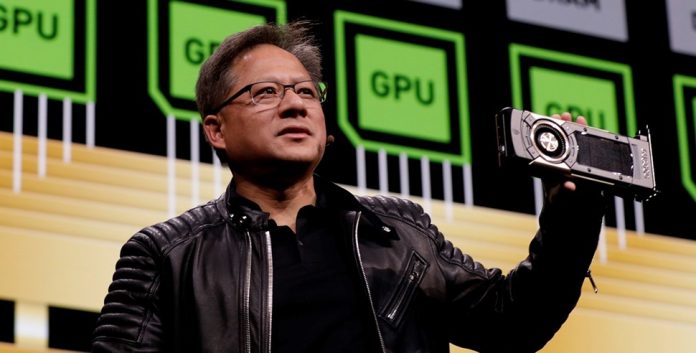

Nvidia’s Jensen Huang Enters the Open-Weight AI Race

0

Nvidia CEO Jensen Huang is taking the company deeper into the rapidly expanding open-weight artificial intelligence market.

Signaling that the world’s leading AI chipmaker wants a stronger position not only in the infrastructure layer but also in the models that power the next generation of software.

The move comes as competition intensifies among technology companies seeking greater control over increasingly capable AI systems.

Nvidia is investing $1 billion in Poolside at a $12 billion valuation, while committing an additional $6 billion to license the startup’s technology. As part of the agreement, roughly 100 Poolside engineers are expected to join Nvidia’s Nemotron project.

The scale of the transaction highlights how important AI model development has become, particularly as companies increasingly compete over open-weight systems. Poolside has emerged as an AI startup focused on software development and autonomous coding capabilities.

Bringing its engineers and technology into Nvidia could significantly strengthen the company’s efforts to build models capable of handling complex programming and reasoning tasks.

For Nvidia, the objective appears broader than simply developing another AI model. It is about creating an ecosystem in which its hardware, software and models reinforce one another. The Nemotron project is central to that strategy.

Nvidia has increasingly positioned Nemotron as a family of AI models designed for developers, enterprises and researchers. By expanding the project with Poolside’s talent and technology.

Nvidia can potentially accelerate the development of open-weight models that customers can adapt for specific applications. Open-weight AI has become an increasingly important battleground.

While companies such as OpenAI and Anthropic have largely emphasized proprietary models and controlled access, open-weight approaches give developers greater flexibility to inspect, customize and deploy models.

Meta has also invested heavily in this strategy through its Llama family, helping establish open models as a serious alternative to closed systems.

For Nvidia, entering this competition represents a logical extension of its dominance in AI infrastructure.

The company already supplies much of the computing power required to train and operate advanced AI models. Owning or controlling important model technology could allow Nvidia to capture additional value further up the AI stack.

The financial commitment is particularly notable. A $1 billion investment at a $12 billion valuation, combined with $6 billion in technology licensing, represents a substantial bet on Poolside’s capabilities and the broader importance of AI coding systems.

It also demonstrates how aggressively major technology companies are competing for scarce AI engineering talent. The addition of approximately 100 engineers could prove just as valuable as the financial investment.

Advanced AI development depends heavily on specialized researchers, engineers and infrastructure expertise, making talent acquisition one of the industry’s most important competitive advantages. Jensen Huang’s move therefore reflects a larger transformation in the AI market.

Nvidia is no longer simply supplying the engines behind the AI revolution. It is increasingly positioning itself to influence the models, tools and software ecosystems built on top of those engines.

If the Poolside partnership succeeds, Nvidia could emerge as a more significant force in open-weight AI, challenging established model developers while strengthening the strategic importance of its own computing platform.

The race is no longer just about who builds the fastest chips. It is increasingly about who controls the full AI stack.

Anthropic’s Mythos Bets and Revolut’s EURR Signal a New Phase for AI and Digital Finance

0

The convergence of advanced artificial intelligence and blockchain-based finance is becoming increasingly visible, with two developments highlighting how quickly both industries are evolving.

Prediction-market traders are placing substantial odds on Anthropic releasing a new Mythos-class model within weeks, while fintech giant Revolut has launched EURR, a euro-backed stablecoin designed to bring digital euro-denominated money directly onto blockchain networks.

Reports indicate that prediction-market participants have raised the probability of Anthropic releasing its next Mythos-class model sharply, with Polymarket pricing the chance of a release by September 15 at more than 80%.

The market has attracted significant trading volume, reflecting growing expectations that Anthropic could soon unveil another major step in its artificial intelligence roadmap.

Mythos is particularly important because Anthropic positions the model family at the frontier of cybersecurity and biology research.

The existing Mythos 5 is currently restricted to selected partners because of its advanced capabilities and potential dual-use risks. Anthropic has emphasized that broader access requires additional safeguards.

Especially because powerful AI systems can potentially be misused for cyberattacks and other dangerous applications. If a new Mythos model arrives within the next two weeks, the significance would extend beyond another AI product launch.

It could intensify competition among leading AI laboratories while raising fresh questions about model safety, cybersecurity, export controls and responsible deployment.

The prediction-market odds should also be viewed as market expectations rather than confirmation: Anthropic itself remains the authoritative source for an official launch announcement.

At the same time, Revolut is pushing the financial system further toward blockchain-based money with EURR. The fintech has begun a phased rollout of its euro-backed stablecoin to eligible customers in Denmark, Poland and Portugal.

EURR is designed to maintain a value of €1 and is issued by Bridge, a Stripe company. It is being integrated into Revolut’s retail ecosystem and is available on Ethereum and Polygon.

The importance of EURR lies in its potential to make stablecoins less dependent on the US dollar. Dollar-backed stablecoins dominate the global market, but European users transact primarily in euros.

Revolut’s approach gives customers a way to move euro-denominated value on-chain without first converting into dollars, creating a potential bridge between traditional banking, cryptocurrency and digital payments.

The rollout also arrives as European regulators continue developing clearer rules for digital assets.

Revolut says EURR is designed within the European regulatory framework, while Bridge is responsible for issuing the token. Wider availability across the European Economic Area is expected later this year, alongside plans for stablecoins tied to additional currencies.

The Mythos speculation and EURR launch illustrate two different but connected transformations. AI companies are competing to build increasingly capable digital intelligence, while fintech companies are working to put traditional currencies onto programmable blockchain networks.

The next few weeks could therefore become significant for both sectors. A new Mythos release would test the limits of frontier AI, while EURR could help determine whether euro stablecoins can move from a niche crypto product into mainstream financial infrastructure.

Both developments point toward the same broader trend: technology is steadily reshaping how intelligence, money and digital services operate.

How Pump.fun Revenue, ETH ETF Inflows and Tokenization Are Reshaping Crypto

0

The crypto market is entering a period in which activity is increasingly being shaped by three powerful forces: speculative trading, institutional capital and the tokenization of traditional financial assets.

Recent developments surrounding Pump.fun, Ethereum exchange-traded funds and Bitwise’s tokenized stock portfolios highlight how rapidly the digital-asset ecosystem is expanding beyond its traditional boundaries.

Pump.fun has recorded its highest single-day revenue since September 2025, providing another indication that activity around memecoins and on-chain speculation remains strong.

The platform has become an important part of the Solana ecosystem by allowing users to create and trade tokens with relatively low barriers to entry.

Its revenue performance is therefore more than a company-specific milestone. It offers a snapshot of speculative appetite across the broader crypto market. The renewed strength of Pump.fun demonstrates how decentralized platforms can capture substantial economic value from high-frequency retail activity.

During periods of strong market momentum, traders often move toward assets offering rapid price movements and opportunities for outsized returns. Memecoins can attract this attention quickly, although their extreme volatility also makes them among the riskiest segments of the digital-asset market.

At the same time, Ethereum is attracting a very different form of capital. Ethereum ETFs recorded approximately $179 million in daily inflows, signaling continued institutional interest in gaining exposure to the second-largest cryptocurrency through regulated investment products.

ETF inflows are closely watched because they provide an indication of demand from investors who may prefer traditional financial infrastructure over directly managing digital assets.

Strong ETF demand can also influence market liquidity and sentiment. As more capital enters Ethereum through regulated vehicles, the cryptocurrency becomes increasingly integrated into conventional investment portfolios.

This represents an important evolution from crypto’s earlier image as a largely retail-driven market. Bitwise’s launch of tokenized stock portfolios adds another dimension to this transformation.

Tokenization seeks to represent traditional financial assets on blockchain networks, allowing investors to interact with investment products using digital infrastructure.

Instead of treating blockchain merely as a marketplace for cryptocurrencies, tokenized portfolios position it as a potential foundation for delivering exposure to conventional securities.

The significance of this development extends beyond convenience. Tokenization could eventually support faster settlement, broader accessibility, programmable ownership and greater transparency.

It also creates a bridge between traditional finance and decentralized networks, potentially bringing billions of dollars of conventional assets into blockchain-based environments.

These developments reveal a crypto economy operating on multiple levels. Pump.fun represents the continuing strength of grassroots speculation and on-chain trading.

Ethereum ETFs demonstrate growing institutional participation, while Bitwise’s tokenized portfolios illustrate the migration of traditional financial products onto blockchain infrastructure.

The combination is significant because it suggests that crypto adoption is no longer following a single path. Some participants are pursuing speculative opportunities, others are seeking regulated exposure, and financial institutions are increasingly experimenting with tokenization.

The next stage of the market may therefore depend not only on cryptocurrency prices, but also on how effectively blockchain technology connects these different forms of financial activity.

If these trends continue, the boundary between traditional finance and crypto could become increasingly difficult to define. The strongest growth opportunities may emerge precisely where the two systems intersect.

Why Oil Prices Are Falling on Strait of Hormuz Reopening Expectations

0

Oil prices have come under renewed pressure as expectations grow that the Strait of Hormuz could reopen, easing concerns about one of the world’s most important energy chokepoints.

The prospect of improved shipping conditions has encouraged traders to reassess the risk premium that had pushed crude prices higher, highlighting how quickly geopolitical developments can reshape global energy markets.

The Strait of Hormuz is strategically critical to the international oil industry. A significant share of global seaborne oil and liquefied natural gas shipments passes through the narrow waterway, connecting producers in the Persian Gulf with consumers across Asia, Europe and other regions.

Any prolonged disruption can therefore create immediate concerns about supply shortages, transportation costs and energy security. Recent hopes of reopening have helped reverse some of those fears.

As the possibility of ships moving more freely through the strait becomes more credible, traders have begun pricing in a lower probability of an extended supply disruption. That shift has contributed to weaker oil prices, as markets anticipate that additional crude will remain available to international buyers.

The decline also demonstrates the importance of expectations in determining oil prices. Crude markets frequently respond to what traders believe will happen rather than waiting for physical supply disruptions to become fully visible.

When geopolitical tensions threaten major shipping routes, prices can rise rapidly because investors demand compensation for the possibility of shortages. Conversely, when diplomatic or logistical developments suggest that normal operations could resume, part of that premium can disappear just as quickly.

However, the reopening outlook does not necessarily eliminate the risks facing the oil market. The Strait of Hormuz remains vulnerable to renewed tensions, and any setback could quickly restore fears of supply interruptions.

Traders are therefore likely to remain highly sensitive to developments surrounding the waterway and the broader geopolitical environment.

For major oil-producing nations, the situation also carries significant economic implications.

Higher crude prices can increase export revenues and strengthen government finances for producers, while lower prices can provide relief for oil-importing countries. Consumers and businesses may also benefit if cheaper crude eventually translates into lower fuel and transportation costs.

The impact extends beyond petroleum. Energy prices influence inflation, manufacturing expenses, transportation and household spending. A sustained decline in crude prices could therefore ease some inflationary pressures, particularly in economies heavily dependent on imported energy.

Central banks will be watching such developments closely because changes in energy costs can affect their assessment of the broader inflation outlook.

For investors, the latest move in oil prices is another reminder that geopolitical risk remains a central force in commodity markets.

The direction of crude will depend not only on the reopening of the Strait of Hormuz but also on global demand, production levels, inventories and future political developments.

Increased hopes for the waterway’s reopening have provided a powerful reason for oil prices to retreat. Yet the market remains cautious. Until shipping activity returns to a sustained level of normality, traders are unlikely to completely remove the geopolitical premium from crude.

The coming days could therefore remain crucial for determining whether the recent decline develops into a broader trend or proves to be only a temporary reaction to improving sentiment.