DD
MM
YYYY

PAGES

DD
MM
YYYY

spot_img

PAGES

Home Blog Page 8

Sen Bernie Moreno Introduces Resolution to Amend Senate Rule XXXVII Prohibiting Senators from Entering Event Contracts

0

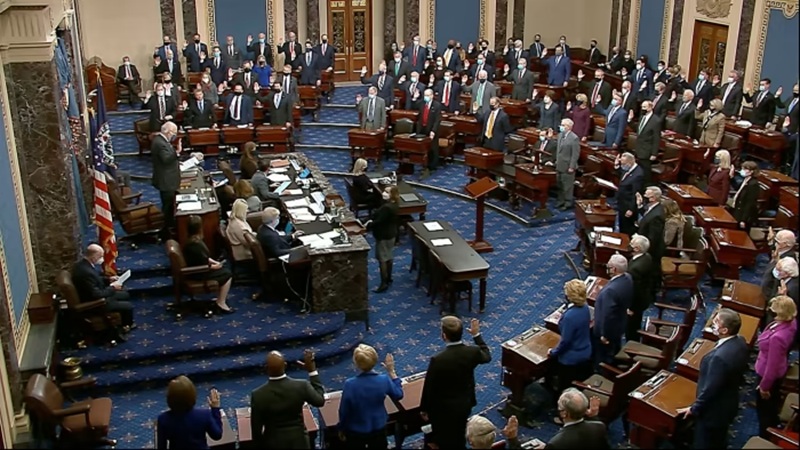
Sen. Bernie Moreno (R-OH) introduced a resolution on or around April 24, 2026, that would amend Senate Rule XXXVII to prohibit senators from entering contracts or transactions including on prediction markets like Polymarket or Kalshi whose payout depends on the occurrence or non-occurrence of a specific event.

Moreno framed it explicitly as a ban on what he called insider trading and a side hustle, stating he wanted it passed unanimously. However, reports confirm only the introduction of the resolution—not its passage. No major outlets report a floor vote or unanimous approval as of the latest available information.

This fits into broader bipartisan concern in 2026 about prediction markets: Platforms like Polymarket and Kalshi have seen explosive growth, with billions in trading volume on events including elections, policy outcomes, and more. Worries center on insider trading risks: lawmakers, staff, or officials using non-public information to bet on outcomes.

Related efforts include: The PREDICT Act; bipartisan House bill by Reps. Budzinski and Smith targeting members of Congress, the President/VP, and appointees. Bills from Sens. Merkley, Curtis, Slotkin, Schiff, and others addressing material nonpublic information (MNPI), conflicts of interest, or specific contract types.

CFTC advisories and Democratic letters urging tighter rules on insider trading and certain event contracts. Isolated cases of candidates or lawmakers facing fines and suspensions on platforms for betting on their own races. Prediction markets aggregate information efficiently and can serve as forecasting tools, but they create clear conflicts when participants have privileged access to information that could move the odds.

Extending stock-trading restrictions like the STOCK Act to event contracts makes intuitive sense for public integrity, even if enforcement is tricky and markets argue they already police manipulation. Simple resolutions to change Senate rules can sometimes move quickly with broad support, but there’s no confirmation of a vote here. If it did pass unanimously, it would be major news covered across outlets; instead, coverage stops at the introduction.

Good governance arguments support restricting elected officials from trading on non-public political information, whether stocks or event contracts. But as of now, Moreno’s resolution has been introduced with a push for unanimous consent—not passed.

Insider trading risks in the context of prediction markets arise when individuals with access to material nonpublic information (MNPI) use it to gain an unfair advantage. Traditional stock insider trading involves buying and selling shares based on confidential corporate info.

Prediction markets function similarly but on binary or event-based contracts. Lawmakers, congressional staff, executive officials, military personnel, or appointees often know about negotiations, draft bills, intelligence briefings, or planned actions weeks or months before the public.

Markets resolve based on verifiable real-world outcomes, so early knowledge of a decision directly translates to profits. Platforms can be anonymous or lightly regulated in some cases, making detection harder than in stock markets where brokers and the SEC monitor patterns.

Public officials could profit personally from decisions they help shape or learn about in their official roles. This creates: Conflicts of interest — Incentives to delay, leak, influence, or even subtly steer outcomes to move market odds in their favor. Erosion of public trust — Even the appearance of profiteering undermines confidence in government.

Betting patterns on wars, ceasefires, or foreign leader ousters could inadvertently signal classified plans or encourage leaks. A member of Congress on a key committee knows a bill will be amended or killed in closed session, bets No on its passage and profits when it fails. Examples include large bets on Polymarket for Venezuelan President Nicolás Maduro’s ouster right before a U.S. military operation, netting hundreds of thousands; spikes in bets on U.S.-Iran strikes or ceasefires shortly before announcements.

Candidates betting on their own election outcomes; Kalshi has suspended and fined candidates for this, labeling it political insider trading. Family, staff, or proxies: Spouses, aides, or associates trading while the official has access but isn’t directly placing bets. Heavy betting by insiders could move odds, influencing public perception or even pressuring policymakers.

Unlike stocks, prediction markets often lack the same level of mandatory disclosure or surveillance. The CFTC regulates some U.S. platforms and has issued advisories on fraudulent practices under Rule 180.1, but applying classical insider trading doctrines isn’t always straightforward—leading to calls for new rules.

Prediction markets exploded in volume, with billions wagered on elections, policy, and geopolitics. High-profile suspicious trades; Maduro operation, Iran-related events, pardons prompted bipartisan action: Multiple bills aim to ban or restrict officials, staff, and families from trading event contracts tied to government and political outcomes, especially when they have or could access MNPI.

Lawmakers from both parties have highlighted risks of corruption, leaks, and unfair profiteering. Platforms themselves have taken some enforcement, but critics argue self-policing is insufficient for government insiders. Markets aggregate information efficiently when clean, but insider flows can distort prices and reduce their value as forecasting tools.

Allowing unchecked trading risks turning public service into a side hustle for those with privileged info. It could encourage leaks for profit or create perverse incentives around policy timing. On the other hand, outright bans raise questions about overreach—prediction markets can reveal crowd wisdom and pressure for transparency. The risks are real because prediction markets turn political and governmental uncertainty into tradable assets, while officials are paid to resolve that uncertainty in closed settings.
Memory Crunch Takes Center Stage in Tech Earnings as Apple Warns of Growing Pain Ahead

0

The global shortage of memory chips, fueled by explosive demand for AI infrastructure, emerged as one of the dominant themes of this week’s high-stakes technology earnings season, with Apple CEO Tim Cook delivering a stark warning that the pressure is only beginning to build.

“We believe memory costs will drive an increasing impact on our business,” Cook said during the question-and-answer portion of Apple’s earnings call on Thursday.

He had already told analysts multiple times that the company faced “supply constraints” during the quarter, adding: “We’ll continue to evaluate this.”

Apple’s results were otherwise strong, an across-the-board beat on expectations and better-than-forecast revenue guidance, yet the repeated focus on memory highlighted how even the world’s most valuable company is feeling the strain from the AI-driven commodity squeeze.

Just a day earlier, both Meta and Microsoft had flagged rising memory prices as a key factor behind their sharply higher capital expenditure forecasts. Microsoft CFO Amy Hood said the company now expects $190 billion in capex for 2026, a 61% jump from last year, and attributed roughly $25 billion of that increase to higher component costs. Meta raised its own capex ceiling from $135 billion to as much as $145 billion, citing “expectations for higher component pricing.”

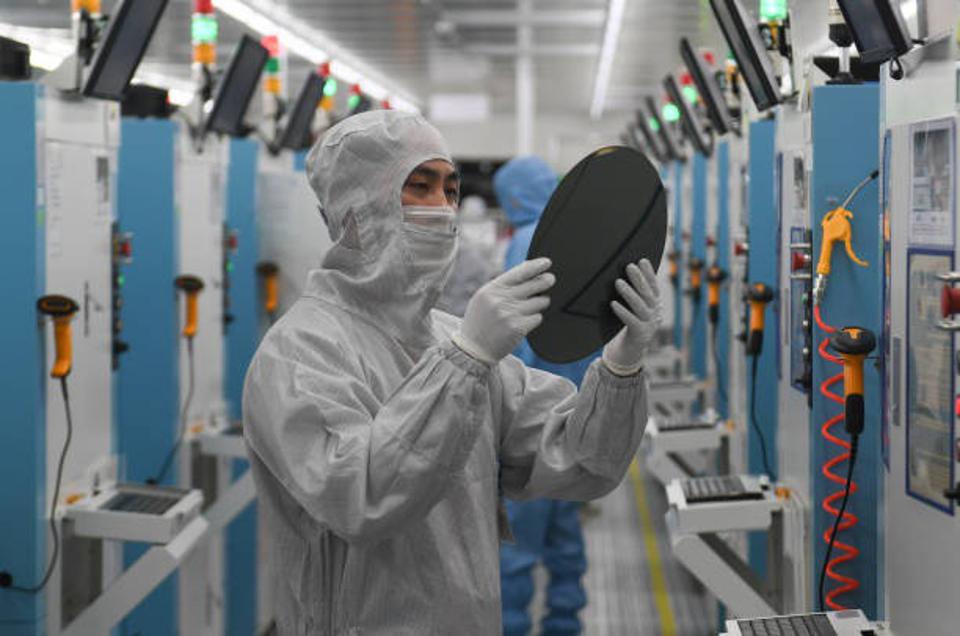
The memory crisis stems from insatiable demand for high-bandwidth memory (HBM) used in advanced AI chips. Each new generation of Nvidia’s GPUs requires significantly more memory, creating a supply bottleneck that has rippled across the entire semiconductor ecosystem. Consumer electronics, from PCs to smartphones, are now competing for scarce supply, driving prices sharply higher.

Memory maker Micron has seen its stock surge roughly 570% over the past year as investors bet on continued tightness, while rivals Samsung and SK Hynix are racing to add capacity.

For Apple, the impact has been most pronounced on certain Mac models. Cook noted that the effect was “minimal” in the December quarter but grew in the March period. He warned that the June quarter would see a bigger hit “given the continued high levels of demand that we’re seeing” for Macs.

When pressed by analysts on how Apple plans to respond, Cook was cautious, saying on multiple occasions only that “We’ll look at a range of options.”

Wall Street analysts quoted by CNBC have been raising this exact question since memory shortages intensified earlier this year. Options under discussion include locking in longer-term supply agreements, reducing memory specifications in certain products, passing on higher costs through selective price increases, or absorbing the hit to gross margins.

Morningstar analyst William Kerwin suggested Apple could pursue longer-term supply deals, noting that memory maker Sandisk highlighted “numerous new agreements just like this” in its own earnings call on Thursday.

Needham analyst Laura Martin expressed concern about the constraints facing a company long regarded as a master of hardware execution.

“It’s not great to see capacity constraints for a company with a core competence in hardware,” she said.

Some analysts believe Apple may take a tiered approach to pricing. IDC analyst Nabila Popal said price increases are likely but won’t be applied uniformly: “I think they will focus price increases on the Pro/Max while keeping the base model the same in the following Spring.”

Others pointed out that Apple has so far managed the situation relatively well. Despite the memory inflation, the company has largely avoided broad price hikes while launching several new products, including the iPhone 17e, refreshed iPad Air models with the M4 chip, and the surprisingly strong-selling MacBook Neo. Gil Luria of D.A. Davidson noted that while Apple has avoided raising iPhone prices so far, “arrangements with memory suppliers may have to change.” He outlined the difficult trade-offs: reduce memory specs, raise handset prices, or accept lower gross margins.

Still, several observers believe Apple is better positioned than most competitors to navigate the crunch. Jake Behan, head of capital markets at Direxion, said: “Apple showed that even the best operators can’t fully escape the memory squeeze. Tim Cook’s warning of ‘significantly higher’ costs in the coming quarters tells you how real the AI-driven supply crunch has become for the entire industry.”

Behan added that Apple’s massive scale, strong balance sheet, and relatively conservative approach to capital spending should give it more flexibility than rivals over time.

Morningstar’s Kerwin was similarly impressed, saying he was “impressed with Apple’s profitability amidst immense memory pricing inflation.”

The memory headache will soon become the responsibility of John Ternus, Apple’s longtime hardware chief, who is set to succeed Tim Cook as CEO in September.

For now, investors appeared to shrug off the warning. Apple’s shares rose after the company forecast revenue growth of 14% to 17% for the current quarter — well above the 9.5% consensus estimate. The market seems willing to give Apple the benefit of the doubt, betting that its pricing power, brand strength, and operational discipline will allow it to weather the memory storm better than most.

Treasury Markets Brace for a New Era of Inflation Risk as Iran War, Oil Shock, and Central Bank Divide Reshape Global Economy

0

U.S. Treasury yields held near multi-month highs on Friday as investors confronted a rapidly shifting global economic landscape shaped by war-driven energy shocks, stubborn inflation, and growing uncertainty over how far central banks may have to go to contain another wave of price pressures.

The benchmark 10-year Treasury yield traded around 4.39%, while the two-year note, which closely tracks Federal Reserve policy expectations, hovered near 3.89%, reflecting a market that increasingly believes interest rates could stay elevated far longer than previously anticipated.

What is emerging across global financial markets is a growing fear that the world economy may be entering a more unstable phase where geopolitical conflict, energy insecurity, and structurally higher inflation become persistent features rather than temporary disruptions.

The immediate trigger remains the escalating fallout from the U.S.-Iran conflict, which has transformed oil markets and complicated the policy outlook for central banks already struggling to engineer a soft landing after years of inflation shocks.

Brent crude has surged to levels not seen in years, briefly crossing above $126 per barrel this week before easing slightly. The rally has been fueled by fears that disruptions around the Strait of Hormuz, one of the world’s most strategically important energy corridors, could become prolonged.

Iran’s warning on Thursday that it would launch “long and painful strikes” against U.S. positions if Washington renews attacks reinforced concerns that the conflict remains dangerously unresolved.

Markets are now increasingly pricing in the possibility that the Middle East crisis could evolve from a temporary supply shock into a broader structural energy crisis capable of reshaping inflation, trade flows, and global monetary policy.
The inflationary implications are already becoming visible in economic data.

The U.S. Commerce Department reported that the personal consumption expenditures index, the Federal Reserve’s preferred inflation measure, rose 0.7% in March, pushing annual inflation to 3.5%. Core inflation, which excludes food and energy, remained elevated at 3.2%.

Although the figures broadly matched expectations, investors are increasingly concerned that they fail to fully capture the inflationary impact of the oil surge, which accelerated into April.

At the same time, economic growth is beginning to slow.

First-quarter U.S. GDP expanded at an annualized pace of 2%, below forecasts of 2.2%, even before the full economic consequences of the energy shock have filtered through businesses and households.

Art Hogan, chief market strategist at B. Riley Wealth, said the conflict was already undermining economic activity.

“Today’s first look at first quarter GDP came in below expectations at 2%, due in large part to the supply shock that has come in the wake of the war in the Middle East,” Hogan said. “There’s clearly a risk of a slower pace of expansion should the war continue.”

That combination of slowing growth and persistent inflation is reviving fears of stagflation, a scenario policymakers had hoped was largely confined to history.

The Federal Reserve’s latest meeting highlighted how divided officials have become over the path forward. The central bank left rates unchanged at 3.50% to 3.75%, but the meeting revealed the highest level of internal dissent since 1992. Three policymakers opposed language suggesting the Fed still retains an easing bias, signaling rising anxiety inside the institution over inflation risks.

The divide underpins a deeper shift underway in markets. Earlier this year, investors widely expected multiple interest-rate cuts in 2026. Those expectations are now rapidly fading as energy prices surge and inflation risks intensify. Bond traders increasingly believe the Fed could remain trapped between weakening growth and inflation that refuses to retreat decisively back toward target.

The same dilemma is unfolding across Europe.

Bank of England Governor Andrew Bailey struck one of his strongest warnings yet on Thursday, cautioning that persistent energy price increases could spread throughout the economy and force monetary tightening.

“If we see this pass through – becoming embedded and becoming persistent – we will have to respond, because that’s our job and that’s how we get inflation back to target,” Bailey said.

The Bank of England, European Central Bank, and Bank of Japan all held rates steady this week, but their caution underscored how the Iran conflict is beginning to dominate global monetary policy calculations.

Analysts say central banks are increasingly worried that another prolonged energy shock could recreate some of the conditions that drove inflation above 10% in several major economies after the Russia-Ukraine war.

Unlike previous market shocks, however, the current crisis is colliding with a global economy already burdened by enormous debt levels, fragile consumer demand, and slowing industrial activity.

The political dimension is also adding fresh uncertainty. Trump is facing mounting scrutiny over the legal basis for continued U.S. military involvement in the conflict. Under the War Powers Resolution, the administration faces a 60-day deadline unless Congress authorizes prolonged military action.

The White House has argued that a ceasefire reached earlier this month effectively terminated hostilities, removing the need for congressional approval. Markets, however, remain unconvinced that tensions are truly de-escalating.

That uncertainty continues to ripple across commodity and financial markets.

Gold prices fell more than 1% on Friday as rising Treasury yields reduced the appeal of non-yielding assets. Analysts said the selloff reflected growing expectations that central banks may keep rates elevated longer to combat inflation.

“Gold remains negatively correlated to oil in the short term, as it impacts interest rate expectations,” UBS analyst Giovanni Staunovo said.

Still, many strategists believe the broader environment remains supportive for safe-haven assets over the medium term as geopolitical fragmentation deepens and concerns about long-term fiscal and monetary stability grow.

The Treasury market itself has become a central barometer of those anxieties. Yields remain elevated not only because of inflation fears, but also because investors are demanding higher compensation to hold government debt in an increasingly volatile geopolitical environment.

That shift matters far beyond Wall Street because higher Treasury yields raise borrowing costs across the economy, affecting mortgages, corporate debt, consumer loans, and government financing costs. The challenge is becoming increasingly complex for policymakers. Cutting rates too early risks reigniting inflation. Keeping rates high for too long risks choking already fragile economic growth.

Defi Hack in April Surge Exceeding $600M Primarily from Vulnerabilities in Cross-chain Infrastructure

0

The recent wave of DeFi hacks in early 2026—particularly the surge exceeding $600 million in April alone—stems primarily from vulnerabilities in cross-chain infrastructure, especially bridges and messaging protocols, rather than classic on-chain smart contract bugs like reentrancy or integer overflows though those still occur.

The most prominent example is the Kelp DAO exploit on April 19, 2026, where attackers drained roughly $292–293 million in rsETH. This became the largest single DeFi hack of the year so far and triggered a broader liquidity crisis, with over $13 billion in DeFi TVL evaporating in days due to panic withdrawals including billions from Aave.

The attack did not exploit a core bug in the underlying smart contracts of LayerZero; the messaging protocol used or Kelp’s main code. Instead, it targeted a misconfigured cross-chain verification setup in the LayerZero-based bridge infrastructure.

LayerZero V2 relies on a modular security model with Decentralized Verifier Networks (DVNs)—independent entities or nodes that validate and attest to messages sent between blockchains e.g., confirming a burn on one chain allows a mint on another. In this case, Kelp’s bridge route was set up with insufficient redundancy; reports indicate configurations approaching a single point of failure, such as a 1/1 DVN or a single-entity verifier.

Attackers spoofed or tricked the messaging layer into accepting a forged valid instruction from another network. This allowed the bridge to release ~116,500 unbacked rsETH to an attacker-controlled address without corresponding collateral or burn on the source chain. The attacker then used this fake rsETH as collateral on lending platforms like Aave, borrowing real assets against it.

Since the rsETH was unbacked, the positions created bad debt that couldn’t be easily liquidated, amplifying contagion: Aave saw massive outflows, utilization spiked to near 100% in ETH pools, and lending rates jumped as users fled. Similar patterns appear in other April incidents, including the Drift Protocol hack ~$285 million on Solana which involved social engineering and compromised admin and operational access rather than pure code flaws—highlighting how off-chain infrastructure has become a prime vector.

Bridges as single points of failure: They lock or wrap massive value across chains; TVL in bridges has hovered in the tens of billions. A compromise in one can cascade because DeFi is highly composable—tokens like rsETH are used as collateral, liquidity, or primitives in dozens of protocols across 20+ chains.

LayerZero and similar protocols like Wormhole, and Axelar emphasize customization for speed and cost. Without enforced minimum security floors requiring multiple independent DVNs or mandatory timelocks, projects can deploy weak configurations that look secure on paper but fail under targeted attacks.

2025–2026 trends show a pivot from pure smart contract exploits toward infrastructure attacks—compromised private keys, supply-chain and social engineering on devs and admins, oracle misconfigurations, and verification layer manipulation. Audits often miss these because they focus on on-chain code, not operational setup or off-chain components.

Fake and unbacked assets propagate quickly through integrated lending, DEXes, and restaking. This creates liquidity drain tests where one hack sparks bank-run-style withdrawals, freezing markets and amplifying losses far beyond the initial drain. April 2026 saw at least 12 incidents totaling over $600 million; ome reports put early-year losses near $770 million+, dwarfing Q1 figures.

Cross-chain bridges have cumulatively lost billions since 2022 ~40% of all Web3 hack value in some analyses due to their honeypot nature and verification complexity. Other recurring issues include: Privileged key risks. Oracle and access control flaws. Human and operational errors e.g., removing timelocks, phishing devs, or weak multisig setups.

North Korea-linked groups like Lazarus have been linked to some high-profile cases via sophisticated social engineering.Ongoing ImplicationsDeFi remains resilient in some views with protocols quickly freezing markets and users monitoring on-chain signals. However, the incidents underscore systemic risks in interoperability infrastructure.

Fixes being discussed include stricter configuration standards, better redundancy in verifiers, enhanced operational security (MPC wallets, timelocks, role-based controls), deeper audits covering off-chain components, and improved bug bounties. No single glitch affects all DeFi uniformly—it’s a class of related vulnerabilities in cross-chain and operational layers that sophisticated actors are actively probing.

Projects using bridges or wrapped assets should review their DVN setups, security modules, and dependencies immediately. The space continues to evolve, but these events highlight that decentralization doesn’t automatically equal security when infrastructure has centralized trust points or poor defaults.

China Launches Four-Month Sweeping Crackdown on AI Abuse, Tightening Grip on Generative Technology

0

China’s top internet regulator has launched a four-month nationwide campaign targeting what it described as “malpractices in AI applications,” marking Beijing’s latest and most aggressive effort yet to tighten oversight of the country’s rapidly expanding artificial intelligence sector.

The Cyberspace Administration of China (CAC) said the campaign will focus on risks ranging from weak security controls and unregistered AI models to manipulated training data, misinformation, impersonation, and harmful synthetic content.

The move underscores growing concern inside Beijing that the explosive rise of generative AI is beginning to outpace regulatory safeguards, creating threats not only to public order and national security, but also to political control over information flows.

Under the campaign, regulators will scrutinize AI developers, online platforms, and service providers over failures to properly label AI-generated content, inadequate security reviews of models, and the spread of synthetic content deemed illegal or socially harmful.

Authorities said they will specifically target “AI data poisoning,” a growing cybersecurity concern in which malicious or manipulated information is intentionally inserted into training datasets to distort AI model outputs or compromise systems. The campaign will also crack down on the use of AI to generate false information, impersonate individuals, create “violent and vulgar” material, or produce content considered harmful to minors.

Chinese regulators said platforms and online accounts found violating the rules would face punishment, while illegal content would be removed.

The initiative comes as China races to balance two competing priorities: becoming a global AI superpower while maintaining strict political and social control over how the technology is deployed. Beijing has aggressively supported domestic AI champions, including Baidu, Alibaba, Tencent, and ByteDance, as competition with the United States intensifies. At the same time, authorities have built one of the world’s most restrictive regulatory frameworks for generative AI.

China was among the first countries to require providers of generative AI services to register algorithms with regulators and ensure AI-generated content aligns with what authorities describe as “socialist core values.” The latest crackdown suggests officials are becoming increasingly concerned about the unintended consequences of rapidly proliferating AI tools, particularly as generative systems become more sophisticated and accessible.

Analysts say Beijing is especially focused on the political risks posed by synthetic media and AI-generated misinformation at a time of heightened geopolitical tension, economic uncertainty, and rising online nationalism.

The campaign also points to broader fears among governments globally over how AI could be weaponized for fraud, cyberattacks, social manipulation, and information warfare.

“AI data poisoning” has become a growing concern internationally because compromised datasets can quietly corrupt large language models, potentially creating biased, deceptive, or dangerous outputs that are difficult to detect once systems are deployed at scale.

China’s emphasis on content labeling and registration also highlights an emerging global divide over AI governance. While Western governments have largely relied on voluntary industry commitments and evolving regulatory proposals, Beijing has pursued a far more centralized enforcement model, requiring direct oversight of algorithms, training data, and platform behavior.

The crackdown comes as China’s AI industry experiences explosive growth fueled by competition with American firms such as OpenAI, Anthropic, and Google. Chinese technology firms have accelerated investment in large language models, AI chips, and enterprise AI services in response to both commercial opportunities and pressure from Washington’s export restrictions on advanced semiconductors.

But Beijing’s regulatory tightening also reveals official concern that unchecked AI expansion could create social instability or weaken state control over digital discourse. The campaign’s focus on impersonation, misinformation, and synthetic content mirrors growing anxieties globally over deepfakes and AI-generated propaganda, particularly ahead of elections and during geopolitical conflicts.

Chinese authorities have increasingly framed AI governance as a matter of national security, arguing that generative systems must remain politically controllable and socially stable as they become more deeply integrated into finance, media, education, and public services.

The four-month campaign is expected to intensify scrutiny across China’s technology sector, particularly among startups and smaller AI developers that may struggle to meet increasingly demanding compliance requirements.