

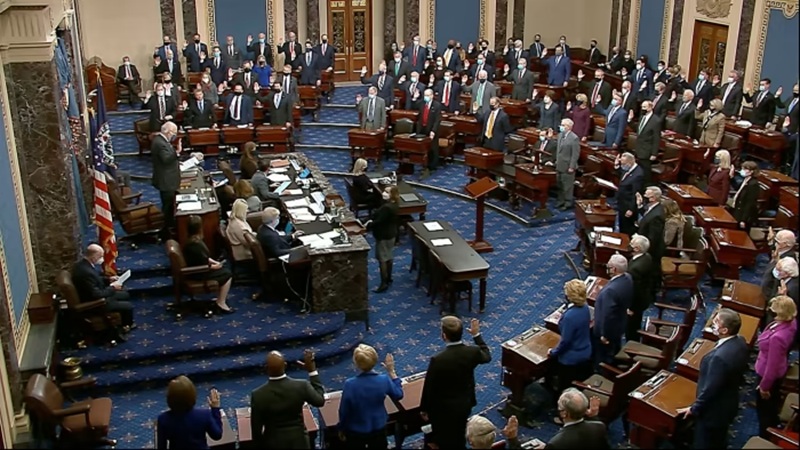
Sen. Bernie Moreno (R-OH) introduced a resolution on or around April 24, 2026, that would amend Senate Rule XXXVII to prohibit senators from entering contracts or transactions including on prediction markets like Polymarket or Kalshi whose payout depends on the occurrence or non-occurrence of a specific event.
Moreno framed it explicitly as a ban on what he called insider trading and a side hustle, stating he wanted it passed unanimously. However, reports confirm only the introduction of the resolution—not its passage. No major outlets report a floor vote or unanimous approval as of the latest available information.
This fits into broader bipartisan concern in 2026 about prediction markets: Platforms like Polymarket and Kalshi have seen explosive growth, with billions in trading volume on events including elections, policy outcomes, and more. Worries center on insider trading risks: lawmakers, staff, or officials using non-public information to bet on outcomes.
Related efforts include: The PREDICT Act; bipartisan House bill by Reps. Budzinski and Smith targeting members of Congress, the President/VP, and appointees. Bills from Sens. Merkley, Curtis, Slotkin, Schiff, and others addressing material nonpublic information (MNPI), conflicts of interest, or specific contract types.
Register for the next Tekedia Mini-MBA.
Register for Tekedia AI in Business Masterclass.
Join Tekedia Capital Syndicate and co-invest in great global startups.
CFTC advisories and Democratic letters urging tighter rules on insider trading and certain event contracts. Isolated cases of candidates or lawmakers facing fines and suspensions on platforms for betting on their own races. Prediction markets aggregate information efficiently and can serve as forecasting tools, but they create clear conflicts when participants have privileged access to information that could move the odds.
Extending stock-trading restrictions like the STOCK Act to event contracts makes intuitive sense for public integrity, even if enforcement is tricky and markets argue they already police manipulation. Simple resolutions to change Senate rules can sometimes move quickly with broad support, but there’s no confirmation of a vote here. If it did pass unanimously, it would be major news covered across outlets; instead, coverage stops at the introduction.
Good governance arguments support restricting elected officials from trading on non-public political information, whether stocks or event contracts. But as of now, Moreno’s resolution has been introduced with a push for unanimous consent—not passed.
Insider trading risks in the context of prediction markets arise when individuals with access to material nonpublic information (MNPI) use it to gain an unfair advantage. Traditional stock insider trading involves buying and selling shares based on confidential corporate info.

Prediction markets function similarly but on binary or event-based contracts. Lawmakers, congressional staff, executive officials, military personnel, or appointees often know about negotiations, draft bills, intelligence briefings, or planned actions weeks or months before the public.
Markets resolve based on verifiable real-world outcomes, so early knowledge of a decision directly translates to profits. Platforms can be anonymous or lightly regulated in some cases, making detection harder than in stock markets where brokers and the SEC monitor patterns.
Public officials could profit personally from decisions they help shape or learn about in their official roles. This creates: Conflicts of interest — Incentives to delay, leak, influence, or even subtly steer outcomes to move market odds in their favor. Erosion of public trust — Even the appearance of profiteering undermines confidence in government.

Betting patterns on wars, ceasefires, or foreign leader ousters could inadvertently signal classified plans or encourage leaks. A member of Congress on a key committee knows a bill will be amended or killed in closed session, bets No on its passage and profits when it fails. Examples include large bets on Polymarket for Venezuelan President Nicolás Maduro’s ouster right before a U.S. military operation, netting hundreds of thousands; spikes in bets on U.S.-Iran strikes or ceasefires shortly before announcements.
Candidates betting on their own election outcomes; Kalshi has suspended and fined candidates for this, labeling it political insider trading. Family, staff, or proxies: Spouses, aides, or associates trading while the official has access but isn’t directly placing bets. Heavy betting by insiders could move odds, influencing public perception or even pressuring policymakers.
Unlike stocks, prediction markets often lack the same level of mandatory disclosure or surveillance. The CFTC regulates some U.S. platforms and has issued advisories on fraudulent practices under Rule 180.1, but applying classical insider trading doctrines isn’t always straightforward—leading to calls for new rules.
Prediction markets exploded in volume, with billions wagered on elections, policy, and geopolitics. High-profile suspicious trades; Maduro operation, Iran-related events, pardons prompted bipartisan action: Multiple bills aim to ban or restrict officials, staff, and families from trading event contracts tied to government and political outcomes, especially when they have or could access MNPI.
Lawmakers from both parties have highlighted risks of corruption, leaks, and unfair profiteering. Platforms themselves have taken some enforcement, but critics argue self-policing is insufficient for government insiders. Markets aggregate information efficiently when clean, but insider flows can distort prices and reduce their value as forecasting tools.
Allowing unchecked trading risks turning public service into a side hustle for those with privileged info. It could encourage leaks for profit or create perverse incentives around policy timing. On the other hand, outright bans raise questions about overreach—prediction markets can reveal crowd wisdom and pressure for transparency. The risks are real because prediction markets turn political and governmental uncertainty into tradable assets, while officials are paid to resolve that uncertainty in closed settings.