
DD
MM
YYYY

PAGES

DD
MM
YYYY

spot_img

PAGES

Home Blog Page 8

Michael Burry Says Market Should Crash and Block OpenAI, Anthropic IPOs “For the Benefit of Humanity”

0

Michael Burry, the investor made famous by The Big Short, has escalated his warnings about the artificial intelligence boom, saying this time that a severe market downturn that prevents OpenAI and Anthropic from going public would be beneficial to humanity.

“For the benefit of humanity, the markets should tank hard and prevent the OpenAI and Anthropic IPOs,” Burry wrote Tuesday on X.

Burry went further in replies to his post, saying that the two AI companies could “suck up” and ultimately destroy “TRILLIONS of dollars of capital,” adding that the financial damage would be “the least of the damage they do.”

He also responded “Along those lines” to a user who joked about crashing the market so that “Skynet cant IPO,” invoking the fictional AI system from the Terminator films.

The comments extend a bearish argument Burry has been developing around the economics of frontier AI. His concern is not simply that AI stocks have become expensive. He argues that the industry is committing enormous amounts of capital to models, chips and data centers before the returns from that spending have been established.

That thesis puts the planned public-market debuts of OpenAI and Anthropic at the center of the debate.

Both companies require enormous amounts of capital to develop more capable models and secure the computing infrastructure needed to operate them. An IPO would provide access to a much broader pool of investors and potentially give both companies additional financing capacity as their infrastructure requirements expand.

OpenAI CEO Sam Altman said earlier this month that taking the company public in 2026 would be “ill-advised” amid concerns surrounding AI safety. Anthropic, meanwhile, is expected to pursue an IPO after the November midterm elections, according to a prospectus reviewed by Reuters.

Burry’s latest comments follow an earlier post this week in which he said he was “more confident than ever” that his bearish AI thesis would play out over the next year. He previously identified 2028 as his base-case timeline.

He said the change in his timeline prompted him to adjust his positions against several companies and indexes, including Nvidia, Palantir, Micron, Oracle and the Nasdaq 100.

At the heart of Burry’s position is the scale of investment required to build the AI ecosystem.

Technology companies and their infrastructure partners have committed enormous sums to data centers, processors, networking equipment and electricity capacity. Burry has argued that much of that expansion is increasingly supported by debt and complex financing arrangements.

“If the spending stops or slows, it all comes apart,” he wrote earlier this week.

His argument rests on the assumption that AI infrastructure spending must continue at exceptionally high levels to support current valuations and growth expectations. If companies eventually reduce capital expenditure, the consequences could extend beyond individual AI developers to chipmakers, cloud providers, data-center operators and lenders that have financed the buildout.

Higher interest rates would add another pressure point by increasing the cost of financing the infrastructure boom.

If that happens, there will be a more consequential risk than a conventional correction in AI stocks. A sharp decline in valuations could make it more difficult for private AI companies to raise capital on favorable terms, while a broader market selloff could reduce the appetite of public investors to finance companies with enormous infrastructure requirements and uncertain long-term profitability.

Burry has previously pointed to debt-fueled spending on chips and data centers as a key vulnerability. He has also questioned whether accounting practices, stock-based compensation and financing arrangements across the AI industry may make underlying economics look stronger than they are.

Those arguments remain Burry’s investment thesis rather than evidence that OpenAI or Anthropic will fail or that an AI market collapse is imminent.

The broader market has so far provided little confirmation of an imminent breakdown. AI-related companies have continued to attract capital and have been among the major drivers of equity-market gains this year. That resilience creates a significant test for Burry’s thesis. The AI industry has continued to raise money, expand computing capacity and generate growing demand even as investors debate whether the resulting valuations can ultimately be supported by cash flows.

Therefore, the IPO question carries implications beyond simply accessing public capital for OpenAI and Anthropic. A listing would expose their financial performance, infrastructure commitments and customer economics to a much broader investor base at a time when the sustainability of AI spending is already under intense scrutiny.

Burry’s position is that a market collapse before those offerings reach investors would prevent additional capital from flowing into what he considers an unsustainable investment cycle. His warning is therefore less a prediction about the mechanics of an IPO than an argument about whether the financial system should continue supplying capital to frontier AI at its current scale.

While the market continues to finance the expansion, Burry is betting that the cost of that expansion will eventually become too large to ignore.
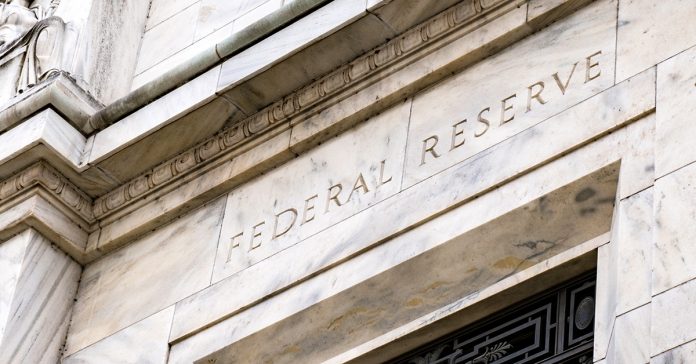

U.S. Fed Overhauls Bank Stress Tests To Curb Capital Swings And Make Results More Predictable

0

The U.S. Federal Reserve on Wednesday finalized changes to its annual stress tests for large banks, moving to make the closely watched examinations more transparent and reduce sharp year-to-year swings in the capital requirements imposed on major lenders.

The changes largely mirror proposals released by the central bank a year ago after years of complaints from the banking industry that the stress tests relied on opaque models and subjective judgments. The Fed’s revised framework seeks to give banks and investors greater visibility into how the tests are designed while preserving the role of the examinations in determining how much capital banks need to withstand severe economic losses.

The stress tests are a central component of U.S. bank regulation. Each year, the Fed subjects large lenders to hypothetical downturns involving scenarios such as recessions, market shocks, falling asset prices, and rising credit losses. The results help determine a bank’s “stress capital buffer,” an additional capital requirement that sits on top of regulatory minimums.

Under the new framework, the Fed will seek public feedback before making major changes to the models used in the tests or to the hypothetical economic scenarios used to assess banks. That marks a significant change in the way the central bank approaches a process that has historically given banks limited visibility into how the models and scenarios evolve. Greater consultation could make it easier for banks, investors and other market participants to understand why capital requirements change from year to year.

The Fed is also changing the way it calculates the stress capital buffer. Rather than basing the requirement on a single year’s stress-test result, the central bank will use the average of a bank’s two most recent results.

The objective is to reduce volatility in capital requirements without materially changing the overall amount of capital held by the banking system.

The Fed estimates that the changes will cut year-over-year volatility in capital requirements by about 50%, while leaving aggregate bank capital levels broadly unchanged.

The overhaul is not primarily a move to reduce the amount of capital banks collectively need to hold. Instead, it is designed to make the capital framework more stable and predictable, reducing the possibility that a particularly severe stress scenario in one year could suddenly force a bank to hold substantially more capital.

For banks, greater predictability could make capital planning easier. Lenders use their expected capital requirements when deciding how much money they can return to shareholders through dividends and stock buybacks, as well as how much they can deploy into loans and other investments.

Large swings in stress capital buffers can therefore affect decisions well beyond the stress test itself.

The changes also address one of the banking industry’s longstanding objections to the Fed’s process: uncertainty over the models used to translate hypothetical economic shocks into estimated losses.

Because banks cannot fully anticipate how the Fed’s models will behave under different scenarios, even lenders with similar balance sheets can face different capital outcomes. Requiring public feedback on major model and scenario changes gives the industry and other participants a formal opportunity to scrutinize those assumptions before they influence capital requirements.

The Fed’s decision comes as regulators continue to face pressure over how bank capital rules should evolve. Higher capital requirements can provide a larger cushion against losses, but they can also affect the amount of money banks have available for lending and shareholder distributions.

The stress tests have become necessary because they effectively link a bank’s capital planning to the regulator’s assessment of its resilience under hypothetical conditions. A methodology that changes sharply from year to year can yield uncertainty even when a bank’s underlying financial position has not changed by the same magnitude.

The two-year averaging mechanism addresses part of that problem by smoothing the impact of unusually high or low test results. It also means that a single year’s deterioration in a bank’s stress-test performance will have a more gradual effect on its capital requirement, while an improvement will similarly take longer to flow through completely. That could make the system less sensitive to individual annual results.

For investors, the revised framework may make comparisons across years easier because capital requirements should be less susceptible to sudden changes driven by the testing methodology itself.

The Fed’s estimate that aggregate capital levels will not materially change also signals that the central bank is seeking greater stability without fundamentally altering the amount of loss-absorbing capacity in the banking system.

The changes are therefore less about lowering the regulatory capital burden than changing how that burden is calculated and communicated. The central bank’s decision also places greater emphasis on transparency. By inviting public feedback on major changes to stress-test models and economic scenarios, the Fed is effectively acknowledging that the credibility of the exercise depends not only on the results but also on confidence in the methodology behind them.

For the largest U.S. banks, the practical effect will be a stress-testing system in which capital requirements are expected to move more gradually and with greater visibility into the assumptions driving those changes.

The Fed will retain the stress tests as a key safeguard against losses at major lenders, while attempting to address concerns that unpredictable methodology changes can themselves create unnecessary volatility in banks’ capital planning.

China Warns EU of “Resolute Response” as France and Germany Push Tougher Trade Tool

0

China has warned the European Union that it will take a “resolute response” to protect Chinese industries if Brussels moves ahead with new restrictions on Chinese companies or products, raising the risk of another escalation in trade tensions between the two economies.

China’s Ministry of Commerce said the reported EU initiative amounted to a “typical protectionist and unilateralist measure” that could disrupt the stability of China-EU trade and broader industrial supply chains.

The warning came after reports that several EU member states are preparing a joint document calling on the European Commission to accelerate the development of a new instrument for responding to what the bloc considers unfair trade practices, particularly those involving China.

The reported proposal would give the EU a mechanism resembling the United States’ Section 301 trade authority, which Washington uses to investigate foreign trade practices and impose measures in response to what it determines to be unfair conduct.

Rhodium Group senior adviser Noah Barkin reported that France and Germany are finalizing a joint paper calling for Brussels to fast-track such an instrument. According to Barkin, the document is intended to give the European Commission greater powers to restrict China’s access to the European market.

Beijing’s response indicates that the proposal is being viewed not simply as another European trade-defense measure but as a potential expansion of the EU’s ability to impose restrictions on Chinese companies.

“If the European side engages in talks and consultations with China, while increasingly pressuring China, it will seriously undermine mutual trust, interfere with the overall process of consultation,” China’s Commerce Ministry said.

The ministry said China would defend the legitimate interests of its industries if the EU introduced discriminatory measures.

The timing of the warning is significant because Beijing and Brussels have been attempting to stabilize their trade relationship through a new consultation process.

China and the EU held their first Trade and Investment Consultations in Brussels in June, agreeing to work on four areas: trade and investment balancing, export controls, intellectual property rights and reform of the World Trade Organization. The two sides also agreed to hold another ministerial-level meeting in autumn.

Chinese officials subsequently said that more than 20 consultations had been held by the respective working teams as they sought to address trade concerns. Beijing has repeatedly called for negotiations based on what it describes as mutual respect and balanced treatment.

The reported Franco-German initiative introduces a harder-edged element into those discussions. Rather than relying only on existing WTO procedures and individual trade-defense investigations, the proposed mechanism could give Brussels a broader instrument for responding to foreign trade practices.

For China, the concern is that such a framework could eventually be applied across multiple industries and become a permanent part of the EU’s trade policy toward Chinese companies.

Beijing has already signaled that it has options for responding. State-backed Global Times reported that China’s potential “strong policy toolbox” could include anti-discrimination investigations, security probes into industrial and supply chains, and scrutiny of the effects of foreign subsidies. The newspaper cited an unnamed Chinese observer for the possible measures.

That means a European trade measure could generate pressure beyond tariffs. Investigations into European companies operating in China, supply chains and foreign subsidies could create additional costs for businesses on both sides.

The dispute comes as European governments increasingly grapple with the scale of China’s industrial capacity and the competitive pressure Chinese companies are creating in sectors ranging from electric vehicles and renewable energy to chemicals, telecommunications and other advanced manufacturing industries.

Germany’s powerful industrial sector has itself been debating how aggressively Europe should respond. The German Federation of Industries recently called for stronger tools against unfair competition and greater supply-chain diversification, while cautioning against broad protectionism.

The European debate is not just about restricting Chinese imports, as it also concerns whether existing EU trade instruments are sufficient to address state subsidies, excess industrial capacity and the growing presence of Chinese companies in European markets.

That creates a difficult balance for Brussels. European governments want to protect domestic industries and reduce vulnerabilities while maintaining access to Chinese markets and avoiding a broad trade confrontation.

The same tension is visible in telecommunications. The EU is considering giving operators more time to remove equipment from high-risk suppliers such as Huawei after companies warned that replacing the equipment could cost as much as €40 billion. The issue illustrates the economic cost that can accompany efforts to reduce dependence on Chinese technology.

The stakes are equally substantial for China. The EU remains an important trading partner, while Chinese manufacturers now depend on overseas markets as domestic competition intensifies in several industries.

A widening cycle of trade restrictions and retaliation could therefore hit companies on both sides at a time when Beijing and Brussels are formally trying to rebalance their relationship through negotiations.

The immediate issue is still only a reported policy proposal rather than an EU-wide restriction already in force. The Franco-German paper is expected to call for the Commission to develop the instrument, after which member states and EU institutions would still have to determine its scope and implementation. Barkin described the proposal as potentially significant because it would signal a stronger common position from Europe’s two largest economies toward Beijing.

China’s warning nevertheless shows that Beijing is already treating the proposed mechanism as a potential escalation.

The central risk for European and Chinese businesses is that a tool originally designed to strengthen Europe’s negotiating position could become the foundation for a broader cycle of reciprocal investigations and market restrictions. With formal China-EU consultations still underway, the dispute now adds another test of whether both sides can pursue tougher trade policies without allowing their economic relationship to slide into a wider confrontation.

Oil Set for Strong Monthly Gain, Dollar Rises as Stalled Iran Talks Keep Energy Markets Tight

0

Oil prices rose on Wednesday and were on course for a strong monthly gain as stalled U.S.-Iran talks kept geopolitical risk elevated, while tight fuel markets continued to support prices even as crude supplies from the Middle East recovered.

Brent’s November contract, which expires on Wednesday, was up 57 cents, or 0.6%, at $103.16 a barrel by 0944 GMT. The more-active December contract rose 94 cents to $97.10, while U.S. West Texas Intermediate crude gained 82 cents, or 0.9%, to $90.20.

Brent was heading for a monthly gain of about 14%, its biggest increase since July, while WTI was on course to rise roughly 4%.

The widening gap between the two benchmarks has become another concerning feature of the market. The spread reached its widest level in four months as traders assessed potential U.S. restrictions on diesel exports.

Any restrictions could leave more diesel in the U.S. market, potentially pushing domestic inventories higher and reducing the incentive for refiners to process crude. That would put downward pressure on U.S. crude demand even as international oil markets remain supported by geopolitical and refined-product supply risks.

The conflicting forces highlight the unusual structure of the current oil market. Crude flows are recovering toward normal levels, but refined fuels remain tight, meaning the restoration of oil production and exports has not translated into a complete easing of the broader energy squeeze.

“Recovering crude flows should temper supply-driven price pressures, although persistent product shortages and elevated freight costs are likely to keep the broader energy market tight,” analysts at Japan’s MUFG said.

Saudi Arabia resumed oil tanker loadings from its Red Sea port of Yanbu on Tuesday after restoring operations on the East-West Pipeline, providing another indication that some of the supply disruptions caused by the Middle East conflict are beginning to ease.

Goldman Sachs estimates that Gulf oil exports recovered to 23.3 million barrels per day over the past week, roughly in line with their 2025 average. Exports doubled in September, according to the bank.

JPMorgan estimated that the 10-day average for total oil exports over the past five days stood at 20.5 million barrels per day, equivalent to 89% of 2025 levels.

The recovery is a huge boost because the oil market had been pricing in a substantial disruption to Middle Eastern supply. A sustained return of exports reduces the likelihood of a prolonged physical crude shortage and should eventually place downward pressure on benchmark prices.

But the improvement in crude availability has not fully resolved the fuel-market problem. Diesel and other refined products remain particularly sensitive to disruptions because refining capacity, shipping availability and regional inventories can become constraints even when crude itself is available.

The White House has urged the European Union to draw down emergency diesel inventories in an effort to lower global prices, according to sources.

U.S. President Donald Trump is also considering allowing sales of red-dyed diesel rather than imposing an outright export ban, potentially providing some price relief to consumers ahead of the November midterm elections. The measures underline the political and economic pressure created by elevated fuel prices. Diesel is critical to transportation, agriculture and industrial activity, making sustained shortages more consequential than movements in crude prices alone.

In the United States, crude and gasoline inventories rose last week while distillate stocks fell, according to American Petroleum Institute data cited by market sources. Investors were awaiting official figures from the Energy Information Administration, with analysts surveyed by Reuters expecting crude and product inventories to have declined.

Iran Diplomacy Remains The Market’s Biggest Variable

The prospect of a diplomatic breakthrough between Washington and Tehran has provided intermittent relief to oil markets, but those expectations weakened as talks aimed at ending the conflict stalled.

Qatar said Tuesday that it hoped shuttle diplomacy between Iran and the United States could produce a breakthrough.

Trump, however, denied reports from Axios and CNN that cited U.S. officials as saying he was prepared to offer Iran sanctions relief and release frozen Iranian funds in exchange for “concrete” steps on its nuclear programme.

The conflicting signals leave traders facing two opposing scenarios.

A diplomatic agreement could accelerate the restoration of Iranian oil exports and reduce the geopolitical premium embedded in crude prices. A breakdown in negotiations, by contrast, would leave the market exposed to continued disruption across the region.

That uncertainty is keeping traders focused on both physical supply data and political developments rather than treating the recent recovery in Gulf exports as evidence that the crisis has ended.

Oil Keeps Pressure on Bonds And The Federal Reserve

The oil market is also feeding directly into global bond markets because sustained energy prices threaten to prolong inflation.

U.S. Treasury yields eased on Wednesday after a sharp rise in the previous session, but remained at historically elevated levels. The 30-year Treasury yield fell four basis points to 5.553%, after reaching its highest level since 2002. The 10-year yield was down three basis points at 5.221%, while the two-year yield slipped one basis point to 4.876%.

Higher oil prices complicate the Federal Reserve’s policy outlook because an energy-driven inflation shock can make it harder for policymakers to reduce interest rates.

Markets had recently increased expectations for another 25-basis-point rate increase at the Fed’s October meeting, although those expectations eased on Wednesday after New York Fed President John Williams said there was “no need for urgency, and we have time to gather more information” before the meeting.

The CME FedWatch tool put the probability of an October increase at roughly 44% to 45%, down from around 70% earlier in the week.

Investors were also awaiting the Personal Consumption Expenditures price index, the Fed’s preferred inflation measure. Economists surveyed by Dow Jones expected monthly inflation of 0.3% and an annual increase of 3.7%.

The combination of expensive oil, resilient U.S. economic data and elevated government borrowing costs has therefore created a difficult backdrop for the Fed. Higher energy prices can slow economic activity while simultaneously making inflation more persistent.

Dollar Comes On Board with Strength

The same divergence in monetary-policy expectations has supported the U.S. dollar. The dollar remained close to its highest level of the year against the euro and was heading for its strongest monthly performance against the single currency in 14 months.

The euro was up slightly at around $1.135 but remained near a low reached in the previous session and was on course for a decline of almost 2.3% against the dollar in September. That would give the dollar a third consecutive quarterly advance against the euro.

A stronger U.S. economy and persistent inflation have encouraged markets to price a more restrictive Federal Reserve path than the European Central Bank, where growth remains weaker, and concerns about government debt have increased.

Some of that divergence narrowed on Wednesday. Williams’ comments reduced expectations for an immediate Fed move, while French data showed consumer inflation accelerating more than expected in September.

“I would still regard the current dollar strength as rather fragile, not least because it already appears over-stretched even relative to developments in the euro area-US interest rate differential,” said Thu Lan Nguyen, an FX analyst at Commerzbank.

The euro’s outlook will depend heavily on the relative paths of the Fed and ECB. ECB President Christine Lagarde’s comments earlier in the week were interpreted as pushing back against the prospect of consecutive rate increases, while options markets have increasingly reflected demand for protection against another decline in the euro.

Sterling meanwhile recovered from a three-month low to $1.3265 after revised data showed the British economy grew faster than initially estimated in the second quarter.

Markets are also watching German inflation data and the U.S. PCE report for further clues about the direction of monetary policy.

The Swiss franc was another notable currency mover, with the dollar trading near a 17-month high of 0.8333 francs. The franc has weakened as investors have sought alternative low-yielding funding currencies for carry trades.

The yen has become less attractive for that purpose following Japan’s currency intervention in July, repeated warnings from officials against excessive yen moves and an acceleration in domestic rate increases.

The result is a market increasingly driven by the interaction of three forces: the physical availability of energy, the inflation consequences of the Middle East conflict and the response of central banks to higher prices.

Recovering Gulf crude exports are limiting the risk of an outright oil supply shortage, but they have not yet eliminated tightness in refined products. Until fuel markets loosen materially or U.S.-Iran diplomacy produces a durable reduction in geopolitical risk, oil prices are likely to remain closely linked to inflation and interest-rate expectations across global markets.

Robinhood Introduces AI-Powered Trading as Bitwise Launches NEAR ETF

0

The financial landscape is undergoing a notable transformation as traditional trading platforms and digital-asset markets increasingly converge around continuous access, artificial intelligence, and blockchain-based investment products.

Two developments announced this week illustrate this shift particularly clearly: Robinhood’s new trading and AI initiatives unveiled at its HOOD Summit, and Bitwise’s launch of the first U.S. spot NEAR exchange-traded product under the ticker NRR. The announcements highlight how financial firms are attempting to broaden access to increasingly sophisticated market tools.

At its HOOD Summit in Houston, Robinhood announced a major expansion of its trading platform, centered on artificial intelligence and extended market access. The company introduced Robinhood Agents, an AI-powered feature embedded directly into its application.

Customers can create an AI agent capable of researching markets, developing strategies, analyzing portfolios, and executing trades according to instructions and limits established by the user. Robinhood also plans to introduce “Loops,” which will allow an agent to run an investment strategy repeatedly and continuously.

The move represents a significant change in the relationship between investors and trading platforms. Rather than simply providing information or an interface through which customers manually place orders.

Robinhood is increasingly positioning its platform as an environment where automated software can participate in the trading process. The company says users will have controls such as dedicated agentic accounts and optional manual trade approvals. Robinhood has emphasized that automated trading carries investment risks and that users remain responsible for the strategies and instructions they establish.

Robinhood is also preparing to extend equity trading beyond the conventional market week. The company announced plans for 24/7 trading in selected U.S. stocks and exchange-traded funds, including weekends, subject to regulatory review.

The initiative builds upon its existing 24 Hour Market, which currently provides trading access during extended weekday periods. Weekend trading is expected to begin with a curated group of securities and will use Bruce ATS as the alternative trading system.

Another major announcement was the introduction of perpetual futures for eligible U.S. customers. These contracts have no expiration date and will initially provide exposure to several cryptocurrencies, including Bitcoin, Ethereum, Solana, XRP, Dogecoin, Cardano, Chainlink, and Hyperliquid.

Robinhood says certain contracts will offer leverage, making them substantially more complex and potentially more volatile than conventional spot investments. Meanwhile, Bitwise expanded access to cryptocurrency investment through the launch of the Bitwise NEAR ETF (NRR) on NYSE Arca.

Beginning September 29, 2026, the fund became the first U.S. spot NEAR exchange-traded product, giving investors exposure to NEAR through a traditional exchange-listed structure. Bitwise also intends to stake the fund’s NEAR holdings, allowing the product to participate in network staking rewards.

The fund carries a 0.75% management fee and, like other crypto investments, is subject to substantial price volatility and risk of loss.  These developments demonstrate how financial services are evolving around AI automation, round-the-clock markets, derivatives, and tokenized access to digital assets.

Robinhood is bringing increasingly automated and sophisticated trading tools into a retail-focused application, while Bitwise is creating a regulated exchange-traded route for investors seeking exposure to NEAR. The broader significance lies in the convergence of technology and finance.

Markets are becoming more continuous, automated, and closely connected to digital infrastructure, although greater accessibility also brings new questions surrounding risk, regulation, leverage, and investor responsibility.