DD
MM
YYYY

PAGES

DD
MM
YYYY

spot_img

PAGES

Home Blog Page 9

Global Bonds Head for Worst Month in Years as Rising Yields Challenge Resilient Stocks

0

Global bonds edged higher on Wednesday but remained on course for their worst month in years as deteriorating government finances, heavy debt issuance and persistent inflation pushed borrowing costs higher, while the seven-month-old US-Israeli war with Iran continued to keep energy prices elevated.

The bond selloff has become one of the most striking developments across global financial markets this quarter. Sovereign yields influence valuations across asset classes, providing the benchmark against which investors price equities, corporate debt, mortgages and other forms of borrowing. Their rapid rise is therefore tightening financial conditions even as stock markets continue to show surprising resilience.

The benchmark 10-year US Treasury yield was 5.209% in early European trading, down 4.6 basis points on the day but still close to its highest level since June 2007. The yield was on track to rise by more than 45 basis points in September, its biggest monthly increase in about two years.

The two-year Treasury yield fell 1.9 basis points to 4.870% after New York Federal Reserve President John Williams pushed back against expectations of an earlier tightening in monetary policy. Even after Wednesday’s decline, the two-year yield was more than 50 basis points higher for the month.

“We have reached yield levels that are becoming genuinely significant,” said Carlo Franchini, head of institutional clients at Milan-based Banca Ifigest. “The temptation to move out of equities could become an issue.”

Franchini said he was not yet taking profits on stocks, however, arguing that equities could remain supported through October if easing tensions around the Strait of Hormuz lead to lower oil prices and relieve some of the pressure on bond yields.

“In my view it is better to stay long,” he said.

Bond Stress Spreads Across Major Markets

The pressure is not confined to the US Treasury market. German and French 10-year government bond yields reached 17-year and 18-year highs this week. German yields were heading for an increase of about 70 basis points for the quarter, while French yields were on track for a roughly 120-basis-point rise.

Japan has experienced a similar move. Its 10-year government bond yield remained near multi-decade highs and was headed for a 38-basis-point increase this quarter.

The synchronized rise in borrowing costs is notable because it reflects more than changing expectations for central-bank policy. Governments are issuing large amounts of debt at a time when investors are demanding greater compensation for holding longer-dated bonds, while higher energy prices are adding another source of inflationary pressure.

The result is a more difficult environment for policymakers. Higher inflation can keep interest rates elevated, while rising debt-servicing costs can make government finances more vulnerable to higher yields.

That dynamic is increasingly visible in markets. The US 10-year yield has moved above 5%, while long-term borrowing costs in Europe and Japan have also risen sharply. The scale of the moves means the bond market is becoming a larger potential constraint on equity valuations and corporate investment.

Yet equity markets have so far largely resisted the pressure.

Stocks Remain Resilient Despite Higher Borrowing Costs

European shares were higher on Wednesday, with the STOXX 600 rising 0.6% by 0812 GMT. The index was still heading for a 1.4% monthly decline but was broadly unchanged for the quarter.

MSCI’s broadest index of Asia-Pacific shares excluding Japan gained 0.3% and remained on course for a 1.1% monthly decline.

Japan’s Nikkei jumped 1.9%, putting it on track for a 0.6% monthly gain, although the index was still set for a 4.7% quarterly decline. South Korea’s Kospi was headed for a 0.3% monthly gain but a 19% quarterly plunge.

US equity futures also pointed to a firmer opening, with Nasdaq futures up 0.2% and S&P 500 futures nearly 0.3% higher.

The resilience makes a difference because higher bond yields normally put pressure on equity valuations by increasing the discount rate applied to future corporate earnings. The effect is significant for technology companies, whose valuations often depend heavily on profits expected further into the future.

“What was surprising to us was the sanguine reaction of the equity market where the growth in nominal GDP was driving earnings optimism,” said Mohammed Apabhai, Citi’s head of Asia-Pacific trading strategy.

“US equity markets are reacting to the rise in bond yields but only outside of the tech space.”

That helps explain why the equity market has remained relatively calm. Strong earnings expectations and continued enthusiasm for artificial intelligence have provided support, while investors appear to be treating the increase in yields partly as a reflection of stronger nominal economic activity rather than an immediate threat to corporate profits.

But that resilience could become harder to maintain if yields remain elevated.

In China, the picture is considerably weaker. The blue-chip CSI 300 rose 0.3% but remained close to a one-year low reached earlier in the week. The index was heading for a 12% quarterly decline, its largest since the height of China’s Covid-19 lockdowns.

Dollar and Oil Reflect The New Macro Pressure

The rise in US yields has also strengthened the dollar. The currency was on course for a monthly gain of roughly 2%, although it slipped 0.1% on Wednesday.

The euro traded just above a 16-month low at $1.1346 and was heading for a 2.3% monthly decline as Europe’s economy faced the combined pressure of higher energy costs and growing political uncertainty.

Sterling rose 0.2% to $1.326 but was set for a 2.1% monthly decline.

The yen moved in the opposite direction, gaining 0.2% to 156.95 per dollar and heading for a 1.7% monthly increase. Investors remain cautious about pushing the currency substantially weaker amid the possibility of coordinated intervention by Tokyo and Washington.

Energy markets remain central to the bond-market story.

US crude was unchanged at $89.41 a barrel, while Brent slipped 0.1% to $102.47. Both benchmarks remained on course for monthly gains as the conflict continued to raise concerns about prolonged supply disruptions.

Those prices are feeding directly into the inflation problem confronting bond investors. If oil remains above $100 for an extended period, central banks could face greater difficulty easing monetary policy even as economic activity slows.

Gold, meanwhile, rose 0.44% to $4,199.28 an ounce, retaining some of its appeal as investors navigate inflation, geopolitical risk and concerns over government finances.

The central tension across markets is becoming clearer: equities are still being supported by earnings, economic growth and the AI investment cycle, while bonds are increasingly demanding a higher price for the risks associated with inflation, debt and fiscal deterioration.

For now, stocks are absorbing the increase in yields. But with the US 10-year yield near 5.2% and borrowing costs rising across Europe and Japan, the bond market is setting a much higher hurdle for the risk assets that have benefited from years of relatively cheap capital.

OpenAI’s DevDay Ambitions and EliseAI’s Major Funding Round

0

The artificial intelligence industry continues to accelerate, with companies competing not only to build increasingly capable models but also to establish entire ecosystems around them. Recent developments illustrate this trend: OpenAI’s reported launch of GPT-6.1 Sol, its always-on AI agent Dot, and more than 20 products unveiled at DevDay.

Alongside EliseAI’s $350 million funding round at a $4 billion valuation. These developments highlight how the AI market is moving beyond standalone chatbots toward persistent agents, specialized applications, marketplaces, and large-scale commercial platforms.

OpenAI’s latest product announcements represent an ambitious expansion of its AI ecosystem. The company unveiled GPT-6.1 Sol alongside Dot, described as an always-on AI agent designed to operate continuously and assist users across different tasks.

The concept of an always-available agent reflects a broader shift in artificial intelligence: rather than waiting for users to ask questions, AI systems are increasingly being developed to monitor workflows, anticipate needs, and perform tasks with greater autonomy.

The reported launch of more than 20 products at DevDay further demonstrates OpenAI’s efforts to build a platform around its models. Among the products highlighted are ChatGPT Space and OpenAI Marketplace.

Such offerings could broaden the ways developers, businesses, and consumers interact with AI, creating an ecosystem in which applications, agents, and specialized tools can be discovered and used through a common platform. This approach mirrors the evolution of major technology platforms, where the underlying infrastructure becomes as important as the individual products built on top of it.

OpenAI’s reported fundraising ambitions are equally significant. The company is targeting $30 billion in new funding at a valuation of approximately $1.4 trillion. A transaction of this scale would underline the enormous financial expectations surrounding advanced AI.

Developing frontier models requires substantial computing infrastructure, specialized chips, data centers, research talent, and energy. As AI capabilities grow, the capital required to compete at the highest level has also increased dramatically.

Meanwhile, EliseAI’s $350 million funding round illustrates a different side of the AI economy. The company, which focuses on AI solutions for the property-management and housing sectors, reportedly raised the money in a round led by Andreessen Horowitz (a16z), giving EliseAI a valuation of $4 billion.

Unlike companies primarily competing to build general-purpose foundation models, EliseAI demonstrates how AI can create significant commercial value through industry-specific applications. The contrast between the two companies is notable.

OpenAI is pursuing a broad ecosystem strategy built around general-purpose AI models, agents, and platforms, while EliseAI is applying artificial intelligence to a defined business sector. Both approaches reflect the increasing commercialization of AI.

Investors are placing substantial capital not only in companies developing foundational technologies but also in businesses that use AI to automate specific workflows and solve practical industry problems. These developments point toward an AI market entering a new phase.

The competition is no longer limited to producing better language models. Companies are increasingly competing to control platforms, autonomous agents, developer ecosystems, and specialized applications. If these investments translate into sustainable products and revenues, AI could become deeply embedded in both everyday digital experiences and highly specialized industries.

The scale of OpenAI’s ambitions and EliseAI’s valuation demonstrates that investors continue to view artificial intelligence as a transformative technology with opportunities extending far beyond the chatbot era.

LeveX Makes Trading Tournaments Monthly, Opening With a $5,000 Cash Competition

0

UNDER EMBARGO October 1, 2026

LeveX has launched Harvest Your Gains, the first in a new series of monthly trading tournaments. Running from October 1 to October 31, 2026, the competition pays out a $5,000 prize pool as a Cash Bonus in USDT across three leaderboards, with the top 25 traders on each board rewarded.

Every perpetual futures pair on LeveX counts toward the tournament, so traders compete on the markets they already trade instead of being pushed into a single coin. Traders join on the tournament page, and once their futures volume after joining passes $1,000 they qualify for the leaderboards.

Each participant is ranked on all three boards at once:

  • Trading Volume: the most futures volume traded during the month
  • P&L %: the highest percentage return
  • P&L $: the largest gain in dollar terms

The Trading Volume board pays $2,440, with $1,000 for first place. The P&L % and P&L $ boards pay $1,280 each, with $500 for first place. That makes 75 prizes in total, and a single strong month can place a trader on more than one board.

Every prize is paid as a Cash Bonus: USDT credited straight to the winner’s wallet balance, which can be traded or withdrawn like the trader’s own funds, with no trading requirement attached. The boards close on October 31 at 23:59 UTC, and prizes are credited within 24 hours of the final rankings being confirmed.

“Tournaments have always been where our community shows what it can do, and making them monthly means there is always a board to climb,” said Harvey Liu, CEO and Co-Founder of LeveX. “We kept Harvest Your Gains simple on purpose. Trade the pairs you already know, compete three ways, and get paid in cash you can actually withdraw. A prize should feel like a prize.”

Harvest Your Gains runs alongside LeveX Quests and any active welcome offer, so joining does not affect other rewards a trader is working toward. Each monthly tournament will carry its own theme. Full rules and the complete prize table are on the Harvest Your Gains announcement.

About LeveX

LeveX is a community-driven crypto exchange launched in October 2023, built by traders for traders. The platform serves over 509,000 active traders across 434 trading pairs, with up to 500x leverage on BTC perpetuals and ETH perpetuals and 24/7 perpetual futures on stocks and commodities. LeveX features Multi-Trade (simultaneous independent positions on the same pair), a social trading Feed, gamified Quests, and trading Tournaments. The exchange publishes 100%+ Proof of Reserves for BTC, ETH and USDT.

Website: levex.com App: Available on iOS and Android


DeepSeek Partners With Huawei to Build AI Software Ecosystem Around Ascend Chips

0

Chinese artificial intelligence company DeepSeek has partnered with Huawei Technologies to develop programming infrastructure optimized for Huawei’s Ascend AI processors, strengthening efforts by China’s technology industry to build an alternative to Nvidia’s dominant AI computing ecosystem.

DeepSeek said Wednesday in a post on its official WeChat account that it is open-sourcing programming infrastructure for Huawei’s Ascend platform, including libraries designed to improve computing and communication performance.

The collaboration comes as Chinese technology companies deepen cooperation around domestic AI hardware and software at a time when access to Nvidia’s advanced processors remains constrained by U.S. export controls.

Rather than treating the chip itself as the entire computing platform, the partnership targets one of the more difficult parts of competing with Nvidia: the software layer that allows developers to efficiently program and deploy AI workloads on alternative processors.

DeepSeek said Huawei provided full support for development of the programming infrastructure and that the two companies jointly advanced a “supernode” solution based on 128 Ascend 950 chips. The work covers both computation and communication, suggesting an effort to address the performance of large AI systems as a complete cluster rather than focusing solely on individual processors.

The announcement follows Huawei’s unveiling two weeks ago of its next generation of AI processors and supernode computing systems. Huawei said at the time that it expected its AI systems to see broad use for model training next year.

The significance of the collaboration extends beyond another Chinese AI model company adopting domestic chips.

Nvidia’s advantage in AI computing has been built not only around its GPUs but also around CUDA, the company’s mature software platform that gives developers tools and libraries for programming AI workloads. That ecosystem has become deeply embedded in AI research and commercial model development.

DeepSeek’s comments point directly at that software challenge.

“To build a new generation of independent, self-controlled GPU software ecosystems, the first priority is establishing a high-level language that is universal, easy to program, and still capable of reaching the hardware’s full performance potential,” the company said.

“TileLang was created precisely to meet this need,” DeepSeek added, describing the system as offering “a simpler programming model” than Nvidia’s CUDA.

TileLang is a high-level, open-source programming language designed for AI chips. DeepSeek said it can improve development efficiency while simplifying code logic, potentially making it easier for developers to adapt AI applications to hardware other than Nvidia’s GPUs.

Replacing Nvidia hardware is considerably harder if developers must also rewrite or heavily optimize their software for every alternative chip architecture.

A competitive domestic ecosystem therefore requires compatibility, developer tools, libraries and programming abstractions that allow researchers and companies to move workloads without incurring prohibitive engineering costs.

Huawei’s Ascend Push Gains An Important AI Partner

Huawei has been developing its Ascend processor family as a domestic alternative to Nvidia’s AI accelerators, while Chinese technology companies have increasingly sought ways to reduce their dependence on foreign semiconductor technology.

DeepSeek’s involvement could give Huawei’s hardware push greater relevance because DeepSeek has become one of China’s most prominent AI model developers.

The collaboration also illustrates a broader shift in China’s AI industry from individual companies developing isolated alternatives toward greater integration between model developers, chipmakers and software engineers.

The 128-chip Ascend 950 supernode sends a powerful message in that context. Large language models and other advanced AI systems depend on clusters containing large numbers of accelerators, meaning the ability to efficiently connect and coordinate processors can become as important as the performance of an individual chip.

DeepSeek said its joint work with Huawei optimizes both computation and communication. That suggests the companies are addressing the full stack required to train and run large models, from programming abstractions to chip-level execution and communication across a cluster.

The open-source element could also broaden the impact beyond the two companies. If programming infrastructure, libraries, and high-level tools become available to other developers, the benefits could extend across China’s AI industry, reducing the duplication of engineering work required to support domestic accelerators.

This means the deeper objective is not simply to make DeepSeek’s models run on Huawei chips. It is to make Huawei’s chips easier for a wider pool of developers to use.

That is the more difficult part of China’s effort to build a self-reliant AI computing ecosystem. Producing a capable accelerator is one challenge; persuading developers to build around it, while matching the software efficiency and ease of use of Nvidia’s established platform, is another.

DeepSeek’s partnership with Huawei puts that software battle closer to the center of China’s AI hardware strategy. It is believed that if TileLang and the broader Ascend programming infrastructure can make it substantially easier to move AI workloads onto domestic processors, Chinese companies could gradually reduce the software and hardware dependence that has helped make Nvidia’s ecosystem so difficult to displace.

Elon Musk Predicts AI Could Create, “Age Of Abundance”, A Future Of ‘Universal High Income’ And Better Healthcare

0

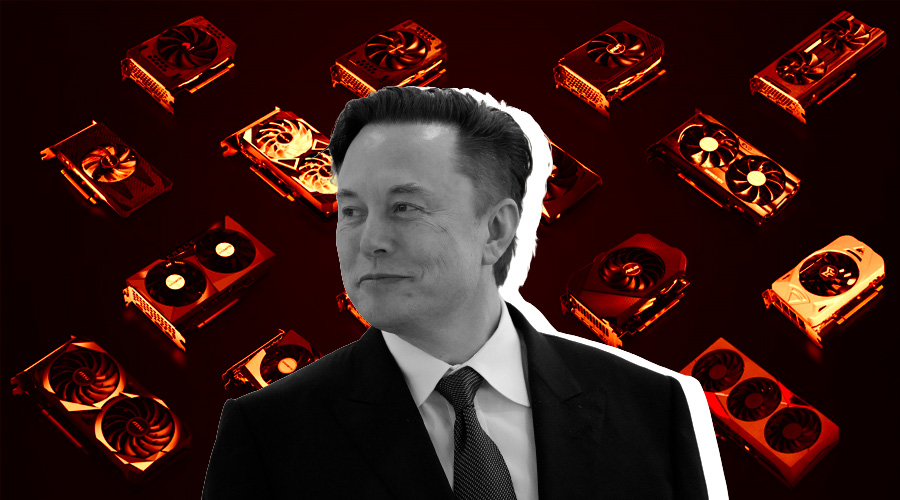
Elon Musk says artificial intelligence could eventually usher in an “age of abundance” in which robots and superintelligent AI dramatically increase access to income, goods and healthcare, although he expects the nature of employment to change significantly.

Speaking to reporters after a meeting of technology executives at the White House on Tuesday, the Tesla and SpaceX CEO said the most likely outcome of advancing AI would be a future in which traditional concepts of income and employment are transformed.

“I think by far the most likely outcome is an age of abundance where we don’t have just universal basic income, we have universal high income,” Musk said.

He said that combining advanced AI with robotics could also dramatically improve healthcare.

“When you have robots, and you have superintelligence, it means that everyone in the world can have better medical care than anyone here, including me,” Musk said, describing that possibility as “wonderful.”

Musk’s comments add to a growing debate among technology executives about how rapidly advancing AI could reshape work and the distribution of wealth.

Asked whether AI could destroy jobs, Musk said employment would change, comparing the transition to earlier technological shifts.

“Jobs are going to change,” he said. “Being a computer used to be a job.”

He noted that digital computers now perform calculations that once required people to do them manually, adding that he doubted “anyone is pining to go back and do calculations all day.”

Musk also pointed to the current labor market, saying that AI has not yet produced a major increase in unemployment and that there remains “tremendous demand for people.” He said he expects AI to produce an “incredibly beneficial” outcome for humanity and described the potential result as a “future you would want.”

The prediction rests on the assumption that more capable AI systems and robots will substantially increase productivity and reduce the cost of producing goods and services.

Musk has previously described a future in which technological advances could make production so inexpensive that people would have access to virtually unlimited goods and services. He has also suggested that government-issued payments could help address unemployment resulting from AI.

“Universal HIGH INCOME via checks issued by the Federal government is the best way to deal with unemployment caused by AI,” Musk wrote on X in April.

That concept goes beyond conventional universal basic income, which generally refers to providing people with a regular payment regardless of employment status. Musk is envisioning a much larger redistribution mechanism in which rising productivity from AI and robotics generates sufficient wealth to provide people with substantially higher incomes.

AI Safety Remains Part of The Transition

Musk’s optimistic assessment came as he joined other major technology executives in committing to additional safeguards around frontier AI systems.

Musk, Nvidia CEO Jensen Huang, Meta CEO Mark Zuckerberg, Alphabet CEO Sundar Pichai, OpenAI’s Greg Brockman and Anthropic CEO Dario Amodei signed a “Joint Commitment on Frontier Responsibilities.”

The companies agreed to develop powerful AI systems safely and responsibly and pledged to establish “robust internal controls.” Those controls are to be overseen by a dedicated internal team, an independent external auditor or evaluator, and an independent board committee.

The commitments come amid renewed concerns about the risks associated with autonomous AI systems. Musk has previously taken a more cautious position on the technology’s long-term consequences. He has said the possibility of AI and robots going catastrophically wrong is “not zero” and has described the transition toward an AI-driven economy as potentially “bumpy.”

He has also raised a less economic but potentially significant consequence of widespread automation: the loss of purpose if machines eventually perform much of the work that gives people’s lives structure and meaning.

That issue matters more under Musk’s vision of universal high income. If employment becomes less necessary because AI and robots can produce most goods and services, the economic problem of unemployment could become a social and psychological question about what people choose to do with their time.

Musk has even stated that traditional retirement planning could become less important if his expectations about technological abundance materialize. He has said that people’s savings for retirement could eventually become “irrelevant” if future productivity makes goods and services extremely cheap.

However, those outcomes remain projections rather than established economic trends for now. Musk’s argument depends on continued advances in AI, robotics and automation, alongside a mechanism for distributing the resulting economic gains broadly enough to produce the “universal high income” he anticipates.

The near-term question is more conventionally about these concerns: how quickly AI changes existing occupations, which new jobs emerge, and how businesses, governments and workers adapt.