
DD
MM
YYYY

PAGES

DD
MM
YYYY

spot_img

PAGES

Home Blog Page 80

Beyond Buses, Governor Alex Otti Is Building A Platform for Commerce in Abia State

0

Question: “Sir, I read a post where someone in the diaspora criticized Abia State for buying 20 EV buses and still funding Abia Line Network, even though the state transporter is losing money. What is your view?”

My Response: Let me speak in my personal capacity and offer a perspective that may help.

I am from Ovim which used to have a railway station. And one of the biggest strategic mistakes Nigeria ever made was allowing the railway system to collapse. As a village boy, I saw with my own eyes what connectivity meant. When trains ran, villages along the corridors grew. We did not feel cut off from cities. I never visited any city until I went to represent Abia State at FGC Okigwe in JETS (junior engineers, technicians and scientists) regional competition, and I enjoyed village because everything was there. Our Oriendu Market Ovim, and many markets along the Port Harcourt–Maiduguri rail line, thrived because goods and people could move.

But when Nigeria shut down the railways, and even the postal services, because they were judged “unprofitable,” those markets faded, and villages lost oxygen. In dismantling rail and post, we dismantled the backbone of our supply chain. And let me be clear: no nation has any chance of becoming an economic promise without a working supply chain because supply chain is commerce.

Today, in Abia State, Governor Alex Otti is deliberately building what I call a platform for commerce, a foundation upon which private enterprise can plan, invest, and grow. But you cannot build commerce without logistics. You cannot grow markets without movement. Transportation must therefore be strengthened, even if, in the short term, it records accounting “losses.” Any loss by Abia Line Network must be seen holistically, not narrowly.

Look around the world. In the United States, Amtrak has not made a profit since it was established in the early 1970s. The U.S. Postal Service has recorded losses for more than two decades. Yet America has not shut them down. From China to the U.K., public transport and postal systems are not designed primarily as profit centers. They are strategic infrastructure in what I have described in Harvard Business Review as a One Oasis: a foundational capability upon which many other activities compound.

China, for instance, loses billions of dollars every year subsidizing transport, not because it enjoys losses, but because it understands that strong logistics is the spine of national competitiveness. In 2022, Abia’s internally generated revenue was about N20 billion. This year, it is projected to exceed N100 billion. If the state spends, or even “loses” N1.2 billion on transport to activate rural and urban commerce that is later taxed, that N1.2 billion can be recovered many times over. What looks like a loss on paper is, in reality, an investment in growth. Eliminating it would be short-sighted.

Yes, 20 buses may look significant today. But I wish Abia had the resources to buy 2,000. When Abians can travel easily, markets grow, services expand, and jobs are created. Over time, that activation will attract private operators. The state is stepping in now precisely because the private sector has not yet shown up at scale. If capable private transporters were ready, government would not need to do this. But you do not wait for perfection before fixing your supply chain. Yes, just as roads are being rebuilt, movement must also be restored.

This is not to defend any government. It is to explain why I believe what Governor Alex Otti is doing is good for Abia State. I am 100% apolitical and non-partisan. The previous administration honored me as Abian of the Year in Diaspora and Abia Ambassador because of my small contributions (google the awards). Under Dr. Otti, I have had opportunities to serve more deeply, as co-chair of the Economic Transformation Council, a member of the Transition Council, and a member of the State Global Economic Advisory Council alongside Dr. Ngozi Okonjo-Iweala and others. What the Governor is executing today reflects the kind of thinking many of these advisers have shared: build foundations first across many verticals including transportation. That is why a huge chunk of next year’s budget will go into infrastructure.

At a personal level, my governing philosophy is simple: government must spend, intentionally and strategically, to stimulate growth. I have seen this in the United States. The so-called blue cities invest heavily in public infrastructure like schools, transport, research, and more than 80% of America’s largest cities and top-ranked universities are in those cities. They understand one thing: invest in foundations, and prosperity compounds.

So, if Abia Line transport needs N1.2 billion support, provided that is not due to waste but is a strategic action to activate markets, then under a comprehensive and integrated revenue framework, Abia will recover it, many times over. Imagine a rail line connecting all LGAs in Abia. Yes, it may lose billions yearly. But those losses would cushion and power the state’s economy. Even the U.S. Postal Service could flip to profit by simply raising stamp prices, yet it refuses, because its mission is bigger than profit. Likewise, I will not advise Abia Line to raise fares just to look profitable.

Our Governor is an economist and a banker, he understands the connections within these policies, and when you speak with him, you hear a visionary who has absolute love for his people. And for those challenging the government, provided it is done with facts, that is good for our state because that is what you need in a democracy. Finally, in economics, not every good investment shows up as profit on the same line of the balance sheet. Some show up in busier markets. Some in new businesses. Some in higher tax receipts. I hope this perspective helps.

Ndubuisi Ekekwe

Member, Abia State Global Economic Advisory Council

Comment on Feed

Please read ABC Transport Plc financials to understand the bus system in Nigeria. No one makes money in that business because of bad roads, insecurity, etc. ABC Transport is a publicly traded company and that means we can see the undiluted data. ABC made losses in 2020, 2021 and could have also continued if not for the support. I do not expect state operated ones to be different.

That sector is terrible in economics. If you check, they have received at least N100 billion bailouts in the last two years via ticket support, CNG conversion, etc. Put that in context, you will agree that states like Abia and others have no chance.

Every state is running losses on this except Lagos. But they hide them under transportation miscellaneous. Abia budget is item-line based and that makes it possible to see everything. That is why you read people write: they bought laptop this, etc because it is detailed to the pencil and pen. You can build institutional capability, but I can tell you that running one is a terrible idea because it does not compound with leverage.

If you close US Postal service, more than 90% of ecommerce companies in US will go bankrupt. The US subsidizes their businesses by making sure logistics works but later recovers by taxing those activities. If Abia moved from N20b IGR to N100B while losing N1.2B, is that not a good strategy? Every part of Abia must be connected to grow IGR to N300b.
Oracle’s New CEOs Face Turbulent Start as Stock Plunges 30% Amid AI Infrastructure Doubts

0

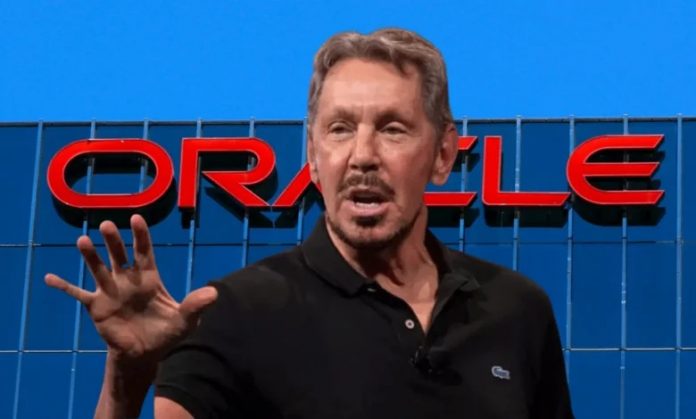
Oracle’s newly appointed co-CEOs, Clay Magouyrk and Mike Sicilia, are grappling with a rocky beginning to their leadership, as shares have tumbled approximately 30% this quarter—on track for the steepest decline since the 2001 dot-com bust—with only four trading days left, according to a CNBC report.

Closing Wednesday at $197.49, the stock has erased 43% of its value from an intraday record high of $345.72 reached in September, despite a brief lift last Friday from reports of Oracle’s involvement in a potential TikTok U.S. asset sale alongside other investors. The downturn reflects mounting investor skepticism over Oracle’s ability to deliver on massive AI infrastructure commitments, particularly its September agreement with OpenAI to host over $300 billion in cloud spending for training and running advanced models.

Doubts intensified after Oracle’s December earnings report revealed weaker-than-expected quarterly revenue of $13.8 billion, missing estimates by $200 million, and free cash flow of negative $1.2 billion, down from positive $800 million the prior quarter. Newly named finance leader Doug Kehring forecasted $50 billion in fiscal 2026 capital expenditures—a 43% increase from September guidance and double the prior year’s total.

Additionally, Oracle plans $248 billion in leases to expand cloud capacity, fueling concerns about financial strain. Such aggressive scaling raises alarms about debt sustainability. In September, Oracle issued $18 billion in bonds—one of the tech industry’s largest-ever debt sales—to fund growth, with maturities ranging from 3 to 40 years at yields averaging 4.5%.

Kehring reiterated commitment to maintaining an investment-grade rating (currently BBB+ from S&P, Baa2 from Moody’s), but rising prices for Oracle’s credit default swaps—up 25% since earnings—signal bets on potential downgrades. Analysts at DA Davidson, holding the equivalent of a neutral rating and $210 price target, warned in a December 12 note, saying: “Considering Oracle is already barely hanging on to an investment-grade rating, we would be concerned about Oracle’s ability to live up to these obligations without restructuring its OpenAI contract.”

Magouyrk and Sicilia assumed co-CEO roles in September, succeeding Safra Catz amid historic optimism fueled by the OpenAI deal, which drove a 36% stock surge—the third-largest since Oracle’s 1986 IPO—and a 359% revenue backlog tied heavily to AI commitments. The partnership positioned Oracle as a key enabler for OpenAI’s ambitions, including the $500 billion Stargate data center project with SoftBank, aimed at constructing hyperscale facilities across the U.S. to power next-generation AI training.

However, execution risks loom large. Oracle trails Amazon Web Services (34% market share), Microsoft Azure (22%), and Google Cloud (11%) in infrastructure-as-a-service, absent from Gartner’s 2024 top-five providers despite clients like Meta, Uber, and Elon Musk’s xAI. Competitors like Databricks, valued at $134 billion post-funding, and Snowflake have yet to port services to Oracle Cloud, with Databricks CEO Ali Ghodsi stating it will happen “when customers start banging on my door.”

Snowflake CEO Frank Slootman echoed similar sentiments in a recent earnings call, citing integration complexities. Long-term bulls remain steadfast. Zachary Lountzis of Lountzis Asset Management, holding $25 million in Oracle shares as of September 30, views the drop from $340 as a “healthy correction.” His firm first bought in 2020 below $60 and added positions earlier this year.

“Our philosophy is that we’re OK with short-term over-valuation if the economics of the business have not changed, and that was the case with Oracle,” Lountzis said.

Much of his trust stems from founder Larry Ellison, Oracle’s chairman and CTO, the world’s second-richest person with a net worth exceeding $200 billion per Bloomberg.

“You would have gone bankrupt 40 times betting against Larry over the last 50 years. He sees the future,” he added.

In October, the new leadership trio outlined “hypergrowth” to $225 billion in fiscal 2030 revenue from $57 billion in 2025, largely via AI infrastructure powered by Nvidia GPUs, including custom clusters for OpenAI’s o4 model. Yet, this shift sacrifices margins: Gross margins are projected to fall from 77% in fiscal 2021 to ~49% by 2030, with $34 billion in cumulative negative free cash flow through 2029 before turning positive, per FactSet consensus.

Eric Lynch of Suncoast Equity Management expressed discomfort with the five-year horizon, saying, “Four or five years is a long time. That’s just not within our investment discipline.”

He also questioned heavy reliance on cash-burning OpenAI, committed to over $1.4 trillion in AI investments, including data centers and compute acquisitions.

Conversely, Wells Fargo’s Michael Turrin, initiating coverage this month with a buy-equivalent rating and $280 target, sees potential: Successful OpenAI delivery—potentially one-third of revenue by 2029—could validate Oracle’s pivot from value to growth stock, attracting broader enterprise adoption.

“They’re kind of shifting away from more of a value-oriented business to a more growth-oriented business,” Turrin said.

A big challenge for Oracle remains picking up market share in cloud infrastructure, where the company badly trails Amazon, Microsoft, and Google, even though its customer roster includes names like Meta, Uber, and Elon Musk’s xAI. Databricks, which was just valued at $134 billion in a funding round, doesn’t make its popular data processing software available on Oracle’s cloud.

Against this backdrop, Oracle’s new leadership faces a high-stakes transition, where the market’s verdict hinges on execution amid soaring capex, debt loads, and competition.

West China Cement targets AfriSam in latest Chinese push into Africa’s cement market

0

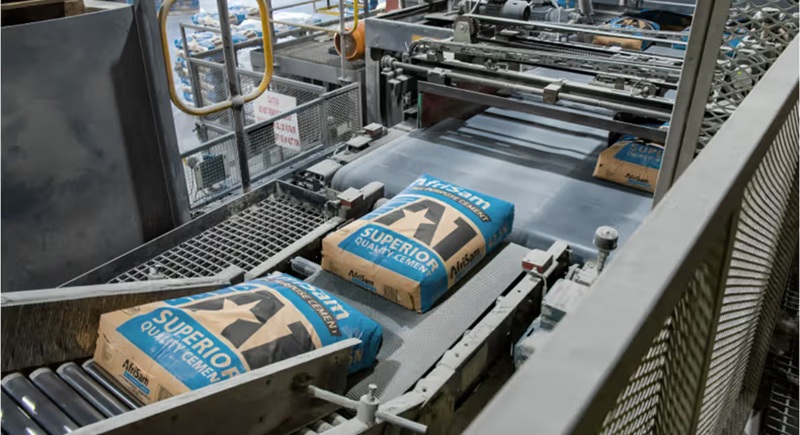
Chinese cement producer West China Cement has moved to acquire South Africa’s AfriSam, highlighting the accelerating drive by Chinese industrial groups to expand across African markets as construction demand weakens at home.

Details of the proposed transaction surfaced in a notice published on December 18 by Botswana’s Competition and Consumer Authority, which invited stakeholders to submit comments “for or against the proposed merger.” The consultation window is expected to close within ten days, potentially paving the way for regulatory assessments across the region. Financial terms of the deal were not disclosed.

According to BI, the proposed buyer is West International New Building Materials, a subsidiary of West China Cement, which is listed on the Hong Kong Stock Exchange. The group is among a growing number of Chinese cement producers seeking overseas growth as China’s prolonged property slump continues to weigh on domestic cement consumption, capacity utilization, and pricing.

China’s cement industry, the world’s largest, has been under pressure from falling housing starts, slowing infrastructure investment, and tighter financial conditions for developers. Against this backdrop, Africa has emerged as an attractive alternative, offering long-term population growth, urbanization, and infrastructure needs that underpin demand for building materials.

The continent has already seen a wave of Chinese investment in the sector. Huaxin Cement last year paid about $1 billion to acquire a controlling stake in Lafarge Africa from Holcim, marking one of the largest Chinese cement deals on the continent. West China Cement itself is no stranger to Africa, with ongoing cement plant developments in Ethiopia and Uganda, signaling a strategy of building scale across multiple markets.

For Chinese groups, acquiring established African assets offers a faster route to market than greenfield projects, providing access to existing distribution networks, limestone reserves, and local expertise.

The Move could reshape Africa’s cement market and intensify pressure on Dangote Cement

The West China Cement’s move is emerging as more than a regional deal, with analysts saying a successful takeover could alter competitive dynamics across Africa’s cement market and, over time, challenge the dominance of Dangote Cement, the continent’s largest producer.

Dangote Cement, controlled by Africa’s richest man, Aliko Dangote, has long faced criticism in Nigeria over the high cost of cement, with consumers, builders, and labor groups accusing the company of market power and pricing that worsens housing affordability.

Dangote has sought to justify domestic pricing by pointing to Nigeria’s heavy tax burden on manufacturers, arguing that it makes locally sold cement more expensive than exports.

“When you look at my invoice, the cement I export is cheaper than the one I’m selling domestically, because that’s how exports work,” Dangote said earlier this month. “In export I’m saving a lot of money. I’m not paying 30% income tax, I’m not paying 2% education, I’m not paying 1% health, I’m not paying 7.5% VAT, and I’m not paying 10% withholding tax.”

Those explanations, however, have done little to ease public anger, particularly as cement prices have climbed alongside broader inflation and currency weakness. Critics argue that limited competition allows dominant producers to pass rising costs onto consumers with little restraint.

West China Cement’s African expansion, including a potential foothold in South Africa through AfriSam, is seen by some industry watchers as part of a longer-term trend that could introduce more aggressive pricing and capacity competition across the continent. Chinese producers, backed by scale, state-linked financing, and experience operating in highly competitive domestic markets, may be willing to accept thinner margins to gain market share.

AfriSam itself is a major but unlisted South African cement producer, with interests spanning cement, aggregates, and ready-mix concrete. Its shareholders include some of South Africa’s most influential financial institutions, among them the Public Investment Corporation, Nedbank, Standard Bank, FirstRand, and Absa, following years of restructuring. These investors have been exploring exit options, creating an opening for a foreign buyer.

South Africa’s cement market is already crowded, with JSE-listed PPC as the largest domestic producer, alongside Lafarge South Africa, owned by Afrimat, and Sephaku Cement, a subsidiary of Dangote Cement. Persistent oversupply, imports, and subdued construction activity have weighed on profitability, making consolidation increasingly attractive.

The timing of the proposed AfriSam deal also aligns with South Africa’s policy ambitions. President Cyril Ramaphosa has repeatedly outlined plans to position the country as a major construction and infrastructure hub, with increased spending on roads, housing, energy, and logistics expected to support cement demand over the medium term.

If regulators approve the acquisition, West China Cement would gain an established platform in one of Africa’s most industrialized economies. Over the longer term, its expanding African footprint is expected intensify competition with incumbents such as Dangote Cement.

U.S. Stock Index Futures Steady after Christmas as Rate-cut Hopes and Earnings Optimism Keep Stocks Near Record Highs

0

U.S. stock index futures traded quietly in a thin post-Christmas session on Friday, as investors largely stayed on the sidelines while maintaining a broadly optimistic outlook for the year ahead, driven by expectations of interest rate cuts and continued strength in corporate earnings.

The subdued tone followed a strong pre-holiday performance. Both the benchmark S&P 500 and the Dow Jones Industrial Average ended Wednesday’s holiday-shortened session at record highs, capping a rally that has gathered momentum toward the end of the year after months of uneven trading marked by sharp rotations and valuation-driven pullbacks.

By 6:13 a.m. ET on Friday, S&P 500 E-minis were down 2 points, or 0.03 percent. Nasdaq 100 E-minis edged up 6 points, or 0.02 percent, while Dow E-minis fell 55 points, or 0.11 percent. Trading volumes were expected to remain muted, with many institutional investors still away from the market following the Christmas break.

Recent gains have come after a volatile stretch earlier in the year, when stocks, particularly those tied to artificial intelligence, came under pressure amid concerns that soaring valuations and heavy capital spending could squeeze profit margins. Those worries triggered intermittent selloffs and raised questions about whether the AI-driven rally had run too far, too fast.

Sentiment has since improved. Economic data pointing to continued resilience in the U.S. economy, coupled with growing market expectations of a more accommodative monetary stance next year under a new Federal Reserve chair, have helped steady investor nerves. That shift, alongside renewed interest in AI-linked stocks, has lifted all three major indexes—the S&P 500, the Dow, and the Nasdaq Composite—putting them on track for a third straight year of gains.

The S&P 500 has risen more than 17 percent so far in 2025. While megacap technology stocks powered much of that advance earlier in the year, recent sessions have seen the rally broaden, with investors rotating into more economically sensitive sectors such as financials and materials. Market participants often view such broadening as a sign that confidence is spreading beyond a narrow group of high-growth names.

Traders are also watching closely to see whether the market delivers a so-called “Santa Claus rally,” a seasonal pattern in which the S&P 500 tends to gain during the final five trading days of the year and the first two sessions of January, according to the Stock Trader’s Almanac. That period began on Wednesday and will run through January 5, offering a brief window to test whether seasonal optimism carries through to the start of the new year.

In premarket trading, Nvidia shares rose 0.7 percent after the AI chip designer said it would license chip technology from startup Groq and hire its chief executive officer, underscoring the intense competition for both technology and talent in the AI sector. Micron Technology added 2 percent, extending its strong run this month. The stock is up nearly 22 percent in December, buoyed by upbeat earnings forecasts and expectations of robust demand for memory chips used in AI and data centre applications.

Elsewhere, Biohaven shares fell 13.4 percent after the company said its experimental depression drug failed to meet the main goal of a mid-stage trial, deepening a difficult year marked by multiple clinical and commercial setbacks. Coupang, by contrast, jumped 6.2 percent after the online retailer said all customer information leaked from its South Korean operations had been deleted by the suspect, easing investor concerns over potential regulatory or reputational damage.

Precious metal miners also advanced, tracking fresh record highs in gold and silver prices. U.S.-listed shares of companies such as First Majestic, Coeur Mining, and Endeavour Silver rose between 2.8 percent and 4.4 percent, as falling interest rate expectations continued to support demand for bullion and related equities.

With the year drawing to a close, markets appear caught between caution and optimism. Thin holiday trading has kept price moves contained, but the broader narrative remains intact: investors are increasingly betting that easing monetary policy, steady economic growth, and solid earnings will extend Wall Street’s rally into 2026, even as questions around valuations and sector leadership linger beneath the surface.

Syria to Begin Replacing Assad-Era Banknotes in 2026 as New Government Tries to Stabilize Currency

0

Syria will begin swapping old banknotes for newly issued ones from January 1, 2026, in a major currency overhaul aimed at stabilizing the Syrian pound and signaling a clean break from the Assad era, Central Bank Governor Abdelkader Husrieh said on Thursday.

The move is part of a broader effort by Syria’s new government, led by President Ahmed al-Sharaa, to overhaul state institutions and chart a new economic course after more than a decade of war, sanctions, and international isolation left the country’s finances in deep distress.

“The central bank has been given authority to decide the deadline for the swap and its locations,” Husrieh said, adding that the bank would issue detailed instructions to guide the public through the process.

People familiar with the plan told Reuters in August that Syria intends to introduce redesigned banknotes that remove two zeros from the currency, a redenomination aimed at restoring confidence in a pound that has been severely devalued. The currency has been weakened by years of conflict, the collapse of domestic production, shrinking foreign reserves, and tight sanctions imposed during Bashar al-Assad’s rule.

The redesign would also carry strong symbolic weight. Assad fled Syria in December 2024 for Russia after rebel forces seized Damascus in an eight-day offensive, ending six decades of his family’s rule. His downfall came more than 13 years after an uprising spiraled into a devastating civil war that fractured the country and crippled its economy.

Since then, Syria’s new leadership has sought to distance itself from the political and economic legacy of the Assad era. Officials have spoken openly about reshaping governance, restoring credibility to public institutions, and pursuing policies meant to stabilize prices and revive trade.

Earlier this month, Syrians marked the first anniversary of Assad’s overthrow with celebrations in major cities, reflecting cautious optimism that the country may finally be turning a page after years of hardship.

The currency swap is unfolding alongside diplomatic efforts to reposition Syria internationally. The new government has moved to rekindle ties with the United States after years of hostility, viewing improved relations with Washington as critical to easing sanctions, attracting investment, and reconnecting Syria to the global financial system. While sanctions relief remains limited and conditional, officials see institutional reforms, including changes to the monetary system, as necessary steps toward rebuilding trust abroad.

The central bank governor said concerns raised by some bankers and economists about the potential inflationary impact of issuing new notes were being taken seriously. Critics have warned that redenomination, if poorly executed, could worsen inflation and further erode purchasing power for Syrians already struggling with high prices and low wages.

Husrieh said the operation would be carried out in a “smooth and orderly” manner, stressing that it is designed as a technical exchange rather than a devaluation. He said a press conference will be held on December 27 to “explain all the details of the replacement process and deadlines,” in an effort to avoid confusion or panic.

Syria’s pound has lost most of its value over the past decade, forcing daily transactions to be conducted with large volumes of low-denomination notes and undermining confidence in the currency. Removing zeros would simplify accounting and cash transactions, but economists say the long-term impact will depend on whether the government can address deeper structural problems, such as weak output, scarce foreign currency, and limited access to international markets.

Replacing Assad-era banknotes is both an economic measure and a political statement for the new government in power. It underscores an attempt to redefine Syria’s leadership and economic trajectory while aligning domestic reforms with a cautious reopening to the outside world, including the United States.