DD
MM
YYYY

PAGES

DD
MM
YYYY

spot_img

PAGES

Home Blog Page 80

Nadella Admits Microsoft’s Size Is Now a “Massive Disadvantage” as He Studies Startup Tactics to Compete in the AI Race

1

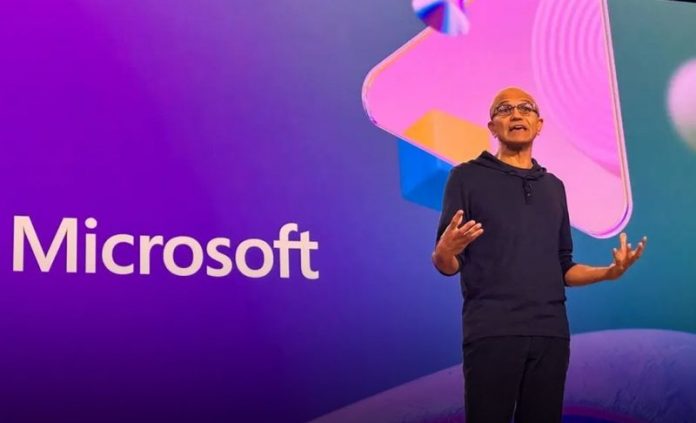
Microsoft CEO Satya Nadella is hitting the books again — not for a management course or a new technical certification, but to understand how tiny, fast-moving startups are outpacing giants like his own company in the AI era.

Speaking on the MD MEETS podcast with Axel Springer CEO Mathias Döpfner, Nadella said he has spent entire weekends studying how young companies design products. He described it as slipping into “study hall mode,” motivated by the realization that Microsoft’s sheer scale — long considered its defining advantage — has now become “a massive disadvantage” when competing with nimble AI startups.

“This entire weekend, I spent all the time trying to get myself to understand how new companies are building products,” Nadella told Döpfner in the episode released Saturday.

What he sees inside smaller AI firms is a flat structure where scientists, engineers, and infrastructure teams often share the same table.

“They’re able to make decisions instantly,” he said. At Microsoft, by contrast, “I have three divisional heads who manage those three things,” a structure that naturally slows the company down.

The comments point to a core tension at Microsoft: even as the company has become a central player in the global AI race through its multibillion-dollar partnership with OpenAI — which has powered a surge in cloud demand, corporate adoption of AI tools and the launch of products like Copilot — its traditional hierarchy risks dragging its innovation velocity at the very moment when speed matters most.

Nadella’s concerns echo a broader Silicon Valley shift. Meta has spent the past two years flattening teams. Google has reorganized AI divisions multiple times. Amazon has pushed managers closer to engineering teams and trimmed middle layers. The industry’s consensus has shifted: bureaucratic distance kills good AI ideas before they materialize.

“Unlearning the things that made you successful”

Nadella told Döpfner that thriving in the AI era requires abandoning old habits — even habits that once defined Microsoft’s rise to power. He said leaders need to replace the “know-it-all” mindset with a “learn-it-all” mentality.

“The most important skill set for long-term relevance is — how do you be a learn-it-all and not a know-it-all,” he said, adding that “you have to unlearn the things that made you successful to learn something new.”

He emphasized that empathy and emotional intelligence are now indispensable leadership traits. AI is not just a technical shift, he argued — it is a cultural and organizational one, requiring leaders to read teams, customers, and the broader social mood with a different level of sensitivity.

This thinking is already shaping Microsoft’s internal structure. A leaked organizational chart reviewed by Business Insider revealed that Nadella now has 16 direct reports — a handpicked group tasked with breaking down silos, sharing information more efficiently, and accelerating Microsoft’s push into generative AI.

Why corporate AI projects fail

Nadella also delivered a blunt diagnosis of why so many companies flounder with their AI ambitions. Most executive teams approach AI as if it’s a traditional IT upgrade — something you “install,” plug into existing workflows, and expect immediate results from.

“That mistake is going to fail by definition,” Nadella said.

To make AI actually work, he said, companies need four foundational shifts:
• rethink workflows from scratch
• adopt modern, AI-native tools
• train employees extensively
• and ensure data is not locked inside outdated legacy systems

Until organizations rebuild these foundations, he said, their AI projects will collapse under their own dead weight. Only those willing to rethink their assumptions and trim the layers that slow decisions will actually see tangible gains.

Microsoft at a crossroads

The comments highlight Microsoft’s unusual position. The company has never been more central to the global AI boom. Its partnership with OpenAI turned it into the primary commercial gateway for generative AI tools. Azure has been flooded with demand. Corporate clients have moved quickly to adopt Copilot on the promise of productivity gains.

But Microsoft also faces the classic problem of incumbency: the mass of its own success.

Startups with 20 people can ship major architectural changes in a single weekend. Microsoft, with its enormous product ecosystem, compliance obligations, enterprise clients, legal reviews, and global risk posture, can’t operate that way — at least not easily.

Nadella is essentially trying to retrofit startup agility into a company with nearly 200,000 employees.

The result is a CEO who now spends his weekends reading about how companies one-thousandth the size build products — not because he wants to, but because he must.

The AI revolution is outpacing the traditional corporate machine. Nadella seems determined not to let Microsoft become one of the legacy giants that watches from the sidelines.


Growth Journey and Winning Markets – A Tekedia Mini-MBA Graduation Week Lecture

0

In the Igbo Nation, the elders will say “when a man prepares food for his kinsmen, and they show up, it is a huge respect”. Good People, for the 18th time, Tekedia Mini-MBA continues to attract learners and professionals who come to “eat” our “food” of business knowledge. Thank you. As we round up this edition to kickstart the next edition in February, I will be leading all the live sessions this week. Our first Graduation Lecture is titled “Growth Journey and Winning Markets”.

Your business growth journey commences with the articulation of a core value proposition and the validation via a product-market fit. This initial phase is less about scale and more about establishing a foundational ‘moat’, a unique and defensible competitive advantage. As we learnt in Tekedia Institute, this moat may not be capital, which can be replicated, but rather a superior intellectual property, a robust network effect, or an unassailable supply chain.

Growth, therefore, is not merely the expansion of sales but the deepening of this competitive advantage, a strategic move to secure an enduring position. Without this underlying strategic anchor, rapid growth can prove to be a liability, as it scales up inefficiencies and exposes the business to competitive threats, akin to building a skyscraper on a foundation of sand.

Winning markets is the ultimate destination of a purposeful growth journey. This victory is not about monopolistic control but about establishing a dominant and resilient presence within a specific market segment. It requires an acute understanding of the market’s operating system, its regulatory environment, consumer behavior, and infrastructural nuances. For instance, a fintech firm seeking to win in Nigeria must navigate a complex blend of formal and informal economies, where digital solutions must coexist with and often leverage traditional financial habits.

Co-learners, the journey to win is a perpetual loop of adaptation and innovation, where firms are not only reacting to the market but actively shaping it through new business models and technological applications. In class today, I will explain why we have the capabilities needed to GROW and WIN, professionally and entrepreneurially. Zoom link in classboard.

Tue, Dec 2 | 7pm – 8pm WAT | Growth Journey and Winning Markets – Ndubuisi Ekekwe | Zoom Link in class board.

UBS-Owned Credit Suisse Charged by Swiss Prosecutors Over Mozambique ‘Tuna Bonds’ Scandal

0

Swiss federal prosecutors have filed an indictment against UBS-owned Credit Suisse, accusing the bank of failing to prevent money laundering linked to the infamous Mozambique ‘Tuna Bonds’ scandal that plunged the African nation into a severe economic crisis a decade ago.

The charges, filed by Switzerland’s Office of the Attorney General (OAG), allege that Credit Suisse and its legal successor, UBS, are criminally liable due to organizational deficiencies that prevented the detection and reporting of illicit transactions. UBS, which took over the troubled Credit Suisse in 2023, has firmly rejected the allegations, stating it will “vigorously defend our position.”

The case relates to more than $2 billion in hidden loans that Credit Suisse arranged between 2013 and 2014 for three Mozambican state-owned companies, ostensibly to fund maritime security and a state-owned tuna fishing fleet. Instead, large portions of the funds were allegedly embezzled, creating a massive, undisclosed national debt that the Mozambican parliament had not approved.

The current OAG indictment focuses on a specific transaction that occurred in 2016. Approximately $7.9 million was allegedly transferred from the Mozambique Finance Ministry to accounts held by a foreign consulting company at Credit Suisse in Switzerland.

The OAG alleges the money was obtained or facilitated through the bribery of Mozambican public officials and misconduct in the public sector. Shortly after the money was credited, the account holder transferred $7 million to accounts in the United Arab Emirates.

The OAG’s primary charge against the bank centers on its failure to take “all the required and reasonable organizational measures” in 2016 to prevent the money laundering. Specifically, the indictment highlights “considerable defects” in the bank’s risk management, compliance, and internal directives systems.

A key element of the OAG’s case involves a former Credit Suisse compliance officer, who has also been charged with money laundering. Prosecutors allege that when the bank initiated enquiries into the suspicious transaction.

The compliance officer, despite having “numerous indications” of the illicit origin of the funds, recommended that management not file a report to Switzerland’s Money Laundering Reporting Office (MROS).

Instead, the compliance officer recommended that the bank merely terminate the business relationship. This action allegedly caused or permitted the remaining funds to be moved abroad and laundered.

The Swiss finance ministry had previously fined the bank’s ex-compliance chief for failing to notify anti-money laundering authorities about the transaction, a fine that is currently under appeal.

The Economic Crisis and Previous Settlements

When the full extent of the hidden $2.2 billion debt was exposed in 2016, Mozambique was plunged into a severe economic crisis. International donors, including the International Monetary Fund (IMF), temporarily halted critical financial support, triggering a sovereign debt default and a currency collapse.

Credit Suisse has already faced severe global penalties for its role in the scandal:

Authority Date Settlement/Fine Resolution Details
U.S. & U.K. Authorities 2021 ~$475 Million Resolved bribery and fraud charges; Credit Suisse pled guilty to wire fraud.
Mozambique 2021 N/A Agreed to forgive $200 million in debt owed by Mozambique to the bank.

The current OAG indictment brings the long-running scandal back to the Swiss domestic legal system, forcing UBS—which absorbed Credit Suisse’s legacy legal risks—to fight a high-stakes criminal charge related to events that predate its acquisition.

Summary of OAG Charges in Credit Suisse Mozambique Scandal

  1. Charge Against the Banking Entity (Credit Suisse / UBS)
    This is a corporate criminal charge targeting the bank itself for systemic failures.
  • Accused Entities: Credit Suisse Group SA and its successor companies, UBS SA and UBS Group SA.
  • Charge: Failure to prevent the offence due to organizational deficiencies (under Article 102 in conjunction with Article 305bis of the Swiss Criminal Code).
  • Allegation Details: The OAG alleges the bank did not take “all the required and reasonable organizational measures” in the relevant period, specifically in 2016, to prevent the money laundering that was committed. Prosecutors pointed to “considerable defects” in the bank’s risk management, compliance, and internal directives systems in connection with combating money laundering. This failure allowed suspicious funds, allegedly obtained through bribery of Mozambican officials, to be transferred. Credit Suisse only reported its suspicion to Switzerland’s Money Laundering Reporting Office (MROS) in 2019, long after the transactions and the public exposure of the scandal.

2. Charge Against the Former Employee

This is a charge targeting an individual for their direct involvement and negligence.

  • Accused Individual: An unnamed former Credit Suisse compliance officer.
  • Charge: Money Laundering (under Article 305bis of the Swiss Criminal Code).
  • Allegation Details: The former compliance officer was tasked with investigating the suspicious transfer of approximately $7.9 million from the Mozambique Finance Ministry to a client’s account in 2016. Despite having “numerous indications” that the funds could be of illicit origin, the officer allegedly recommended to management not to file a report to money laundering authorities (MROS) but merely to terminate the business relationship. By recommending termination and carelessly handling the investigation, the compliance officer is accused of having “caused or allowed” the remaining suspect funds to be transferred abroad and thus laundered.

The OAG has dropped criminal proceedings against another former Credit Suisse employee in the same case for reasons of “procedural economy,” given that the case against the compliance officer largely covers the same set of circumstances. UBS has publicly stated it firmly rejects the conclusions against the bank entity and will vigorously defend its position.

Nvidia Buys $2bn Stake in Synopsys, Deepens AI Engineering Push With Major Strategic Partnership

0

Nvidia on Monday revealed it has purchased $2 billion worth of Synopsys’ common stock, cementing a sweeping multiyear partnership aimed at transforming the speed and scale of computing and artificial intelligence engineering across one of the world’s most design-intensive industries.

The investment — executed at $414.79 per share — forms the financial backbone of a collaboration meant to accelerate compute-heavy applications, advance agentic AI engineering, expand cloud access, and drive joint go-to-market initiatives, according to both companies. The market reaction was immediate: Synopsys stock rose 4%, while Nvidia gained 1%.

“This is a huge deal,” Nvidia CEO Jensen Huang said on CNBC’s Squawk on the Street. “The partnership we’re announcing today is about revolutionizing one of the most compute-intensive industries in the world: design and engineering.”

A Natural Alliance at a Critical Moment for AI

Nvidia has benefited more than any other company from the AI surge, largely because its GPUs serve as the backbone for building and training large language models and running enormous enterprise workloads. Synopsys sits at another critical point in the stack, providing the electronic design automation and silicon design tools needed to develop the chips and systems that AI depends on.

Synopsys CEO Sassine Ghazi said the collaboration will take engineering jobs that once ran for weeks and collapse them into hours. That kind of compression reflects the new reality facing the chip industry, where design cycles are shrinking, and complexity is increasing faster than traditional CPU-based computing can support.

Huang framed it as a once-in-a-generation architectural transition. “We’re going through a platform shift from classical, general-purpose computing running on CPUs to a new way of doing computing, accelerated computing running on GPUs,” he said. “That old way… will continue to exist, of course, but the world is shifting.”

The move also speaks to Nvidia’s broader strategy: removing the choke points that threaten to slow AI progress. For most of 2024 and 2025, the biggest pressure point in the AI supply chain was GPU availability. But as more compute comes online, engineering bottlenecks have become the next constraint.

Chip design workloads and EDA processes consume massive compute resources, and they increasingly need to run in parallel with AI model development. By integrating Synopsys’ tools directly with Nvidia’s accelerated computing platform, both companies aim to speed up:

• chip floorplanning and verification
• system architecture simulation
• software-hardware co-design
• AI model optimization on new silicon

This tight coupling shortens the loop between designing a chip, manufacturing it, and optimizing AI models to run on it — a cycle that is becoming essential as model sizes balloon and new architectures emerge.

Reinforcing Nvidia’s Dominance While Giving Synopsys Room to Scale

The partnership is not exclusive, leaving both companies free to work with other players. Still, the alliance carries strategic weight:

For Nvidia, it embeds the company deeper into the earliest stages of chip creation. That helps Nvidia influence — and accelerate — the hardware ecosystem built around its GPUs, while giving it insight into next-generation design tools that could shape future AI systems.

For Synopsys, it provides direct access to Nvidia’s compute platform at a moment when engineering workloads are exploding. That allows Synopsys to modernize its software faster, scale up cloud offerings, and remain indispensable as the complexity of AI-related chip design keeps rising.

Huang noted that Nvidia itself was “built on a foundation of design tools from Synopsys,” underscoring the long-standing relationship the companies are now formalizing with cash and compute.

The AI Industry’s “Speed Race”

The Nvidia–Synopsys partnership lands at a time when the AI sector is locked in a global race to compress development timelines. Major groups — from chipmakers to robotics firms and model developers — are trying to move from design to deployment at a pace the industry has never seen.

With this deal, Nvidia is effectively securing the upstream side of the AI pipeline while continuing to dominate the downstream training and inference markets. Synopsys gains a platform upgrade that gives it faster compute and a stronger position as engineering complexity spikes.

For an industry built on speed, the partnership signals a new phase where designing the future will require as much AI as running it.

Cloud Giants Unite: Amazon and Google Launch Joint Multicloud Networking Service Following AWS Outage

0

In a landmark collaboration signaling a fundamental shift in cloud interoperability, rivals Amazon and Google have unveiled a jointly developed multicloud networking service.

The new offering, announced on Sunday, is designed to meet the growing enterprise demand for highly reliable, high-speed connectivity at a time when even brief internet disruptions can trigger massive global outages.

The initiative combines AWS’ Interconnect–multicloud with Google Cloud’s Cross-Cloud Interconnect to create a unified solution that vastly improves network interoperability between the two computing platforms. The critical advantage of this joint service is speed and simplicity: it will enable customers to establish private, high-speed links between the two competing clouds in minutes instead of weeks, drastically simplifying the architecture for enterprises that rely on both services.

The Outage Catalyst

The urgency behind this collaboration is underscored by recent, high-profile reliability failures. The new service is being unveiled just weeks after a significant Amazon Web Services (AWS) outage on October 20 disrupted thousands of websites worldwide, knocking offline some of the internet’s most popular applications, including Snapchat and Reddit. That single outage is projected to cost U.S. companies between $500 million and $650 million in losses, according to analytics firm Parametrix, highlighting the enormous economic vulnerability tied to cloud stability.

AWS Vice President of Network Services, Robert Kennedy, emphasized the strategic importance of the collaboration, stating, “This collaboration between AWS and Google Cloud represents a fundamental shift in multicloud connectivity.”

Rob Enns, Vice President and General Manager of Cloud Networking at Google Cloud, added that the joint network is intended specifically to make it easier for customers to move data and applications seamlessly between clouds, bolstering resilience.

The partnership occurs amid intense competition in the cloud market, where technology companies are investing billions to build the infrastructure necessary to handle surging internet traffic and the accelerated computing demands of artificial intelligence (AI).

AWS remains the world’s largest cloud provider, followed by Microsoft’s Azure and Google Cloud.

In the third quarter, Amazon’s cloud business delivered robust growth, generating $33 billion in revenue—more than double Google Cloud’s $15.16 billion.

This collaboration, however, signals that while competition remains fierce in terms of overall revenue and market share, the industry is increasingly prioritizing user experience and resilience through cooperation on foundational infrastructure. Salesforce is noted as one of the early users adopting this new approach, according to Google Cloud.

While the collaboration is being hailed as a win for customers, offering secure, minutes-not-weeks network interoperability—a direct answer to the massive losses incurred from recent outages like the one that cost U.S. companies an estimated $500 million to $650 million after the October AWS disruption—it simultaneously creates a formidable, unified front that could strategically isolate Azure’s position in the lucrative multicloud market.

The New Standard of Connectivity

The joint service, combining AWS’ Interconnect–multicloud and Google Cloud’s Cross-Cloud Interconnect, aims to eliminate the complex, manual, and often costly configurations customers previously needed to stitch together networks across rival platforms. This move sets a new expectation for “direct connection” as the default, not the exception.

For years, Azure, AWS, and Google have competed fiercely, but their multicloud strategies have largely focused on making their own cloud the center of the universe—or the control plane—for managing assets everywhere else.

Microsoft has long positioned Azure as the hybrid and multicloud leader by leveraging its deep ties to the enterprise through products like Windows and Office 365. Its primary multicloud tool, Azure Arc, is designed to let customers manage resources running on-premises, on AWS, and on Google Cloud through the Azure control panel.

Azure’s networking strength has traditionally centered on robust hybrid networking via services like Azure ExpressRoute, which connect customers’ data centers to Azure.