DD
MM
YYYY

PAGES

DD
MM
YYYY

spot_img

PAGES

Home Blog Page 804

Dangote Refinery Drops N100bn Import License Lawsuit Against NNPCL Amid Mounting Monopoly Allegations

0

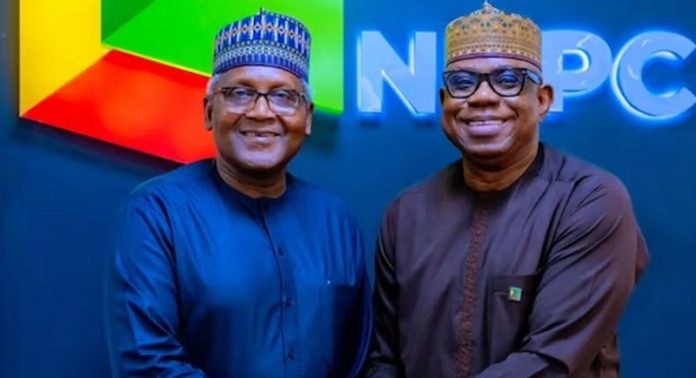
The Dangote Petroleum Refinery has formally withdrawn its N100 billion lawsuit challenging the issuance of fuel import licenses to competitors, including the Nigerian National Petroleum Company Limited (NNPCL), signaling a strategic retreat from a legal battle that had drawn scrutiny from regulators, oil marketers, and economic observers.

In a notice of discontinuance filed on July 28, 2025, by its legal counsel, George Ibrahim, SAN, Dangote Refinery notified the Federal High Court in Abuja that it would no longer pursue the suit marked FHC/ABJ/CS/1324/2024. The refinery stated: “TAKE NOTICE that the Plaintiff (Dangote Refinery) herein discontinues this Suit against the Defendants forthwith.”

The decision to withdraw the lawsuit follows months of intense legal maneuvering and regulatory interventions. The original suit sought to void fuel import licenses granted by the Nigerian Midstream and Downstream Petroleum Regulatory Authority (NMDPRA) to several Nigerian oil companies, including NNPCL, Matrix Petroleum Services Limited, A.A. Rano Limited, and four others.

This development comes against the backdrop of fresh calls by Africa’s richest man, Aliko Dangote, urging President Bola Tinubu to include refined petroleum products on the list of items banned under the Federal Government’s ‘Nigeria First’ policy—a protectionist policy aimed at reducing imports in favor of local production.

Dangote’s latest request reignited concerns that the billionaire industrialist is seeking to entrench a monopoly in Nigeria’s deregulated downstream oil sector. Industry stakeholders say that if such a ban were enforced, it would effectively block competition, leaving Dangote as the sole supplier of refined fuel in Africa’s most populous country.

It is also noted that the move contradicts the spirit of the Petroleum Industry Act (PIA), which liberalized the petroleum sector and allows for a free-market system where multiple players can import, produce, and sell petroleum products. Section 317(8) and (9) of the PIA explicitly permit the issuance of licenses to qualified entities for such activities, underscoring the law’s objective to promote competition, not restrict it.

FCCPC’s Rejected Intervention

Earlier in the case, the Federal Competition and Consumer Protection Commission (FCCPC) had tried to join the lawsuit, raising alarms that Dangote’s legal push could result in anti-competitive outcomes and a dominant market position. But Justice Inyang Ekwo of the Federal High Court dismissed the FCCPC’s joinder application in March 2025, ruling that the commission had failed to prove its relevance to the case, which revolved around regulatory powers under the PIA, not competition enforcement.

Dangote’s lawyer had strongly opposed the FCCPC’s involvement, arguing that the refinery was lawfully licensed under the PIA and that its case was aimed at correcting regulatory breaches by the NMDPRA. He branded the FCCPC a “meddlesome interloper,” insisting that it lacked the authority to intervene in matters strictly governed by petroleum law.

However, the refinery has now chosen to walk away from the case altogether. When the matter comes up on the next adjourned date, September 29, 2025, Dangote’s legal team is expected to make a formal oral application for withdrawal, in accordance with court rules. The presiding judge, Justice Mohammed Umar, is expected to deliver a final pronouncement on the matter.

A Pattern of Monopoly?

The move to discontinue the lawsuit doesn’t erase the wider perception that Dangote is angling to consolidate control across multiple sectors. The businessman has previously faced accusations of monopolistic behavior in the cement industry, where his company holds a dominant market share, often benefiting from policy decisions that restrict competition or favor local production.

Similar accusations have now surfaced in the oil and gas sector. In 2024, Dangote accused rival importers of flooding the Nigerian market with substandard fuels—a claim that led to heightened regulatory pressure on private marketers. By mid-2025, NNPCL had withdrawn as the intermediary between Dangote Refinery and other marketers, following a federal directive that allowed direct purchase of products from the refinery.

While Dangote maintains that his refinery is capable of meeting Nigeria’s daily consumption demands, critics warn that turning off the tap for other importers would increase prices, reduce supply chain flexibility, and put the entire country at the mercy of a single supplier.

Legal experts say the court will still need to rule on the oral application for discontinuance. However, with the written notice already in place, the case is essentially over—unless revived under a different framework.

Still, the broader conversation about monopoly, regulation, and market fairness is far from settled. Dangote’s influence on policy and his aggressive posture in defending market turf are now drawing increasing scrutiny—not just from competitors, but also from economists and civil society advocates who fear that a monopoly on refined fuel in Nigeria would roll back the gains of deregulation.

With Nigeria’s energy security and the credibility of its free market reforms hanging in the balance, the government now faces a critical test of its commitment to competition, transparency, and equitable access in one of the country’s most vital sectors.
Nigerian Startups, Explore Merging Over Shutting Down

1

In the contemporary Nigeria startup scene, we have two distinct periods: before and after the floating of Naira. Before the Naira floating policy was put in place, growth capital from foreign investors was in abundance. But after the initiative, everything has dried up as the deterioration of Naira has decimated asset values, discouraging most foreign venture capitalists to put money in Nigerian startups.

The implication has been consequential as many startups are running out of cash even when they’re growing Naira revenue. So, what do some startups do? They just shut down. Today, I have a message: do not shutdown, simply explore how to merge.

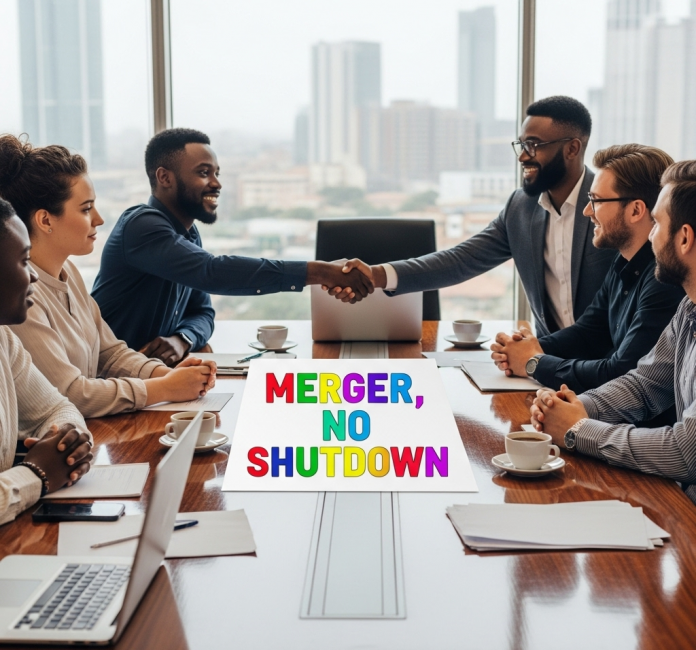
Nigeria will be back because nations rarely kaput. The old landscape of vibrant startup ecosystem will return very soon. So, despite some of these current challenges, there is no need for these premature closures. Simply, rather than succumbing to these capital pressures and shutting down, a strategic pivot towards mergers presents a compelling alternative, allowing founders to preserve value, leverage combined strengths, and navigate the complex market more effectively.

And that means someone must give up a CEO title to become a CTO or CPO or whatever. There is nothing bad there. Merging offers a lifeline by consolidating resources, expanding market reach, and fostering shared expertise. It enables startups facing similar hurdles to pool talent, technology, and customer bases, creating a more robust entity with enhanced resilience. This collaborative approach not only mitigates the risk of individual failure but also positions the merged entity for greater innovation and sustainable growth, transforming potential shutdowns into opportunities for collective success.

Finally, if you are planning to shut down, before you do that, Tekedia Capital would like to have a conversation with the founders. We have developed a framework we’re using with our startups and that is working. We understand the long gestation period to profitability in Nigeria, and the necessity of working capital. Sure, and we also note that Nigeria has many great things which could be unlocked right now.

In short, the velocity of moving capital has significantly improved and that is one thing a merged and stronger startup can build upon.  Look at the flanks and you will notice that mindless shutdown over just working capital could be managed with strategic mergers.

IMF Raises Nigeria’s 2025 Growth Forecast to 3.4% as Economy Shows Resilience Amid Global Trade Shifts

0

The International Monetary Fund (IMF) has raised Nigeria’s economic growth forecast for 2025 to 3.4%, signaling renewed confidence in Africa’s largest economy despite domestic macroeconomic headwinds and a shifting global trade landscape.

The upgrade, contained in the IMF’s July 2025 World Economic Outlook (WEO) Update, marks a 0.4 percentage point increase from its April projection of 3.0%. The Fund maintained this projection through 2025, with expectations for a slight moderation to 3.2% in 2026, still 0.5 points higher than previously anticipated.

This improvement reflects broader optimism about the global economy, which the IMF says is benefiting from “stronger-than-expected front-loading in anticipation of higher tariffs,” alongside more favorable financial conditions, including a weaker US dollar and expanded fiscal support in major economies.

“Global growth is projected at 3.0% for 2025 and 3.1% in 2026,” the IMF stated. “The forecast for 2025 is 0.2 percentage point higher than that in the April 2025 WEO. This reflects lower-than-expected effective US tariff rates and continued resilience in trade and investment.”

Nigeria’s Growth Outpaces South Africa but Lags Behind Regional Average

With this upward revision, Nigeria now ranks ahead of South Africa, whose growth remains sluggish at a projected 1.0% for 2025 and 1.3% in 2026. However, Nigeria still falls short of the Sub-Saharan Africa regional average, which the IMF now expects to grow by 4.0% in 2025 and 4.3% in 2026.

The Fund’s optimism aligns with recent domestic data. According to the National Bureau of Statistics (NBS), Nigeria’s Gross Domestic Product (GDP) grew by 3.13% in Q1 2025, a notable improvement from the 2.27% posted in Q1 2024. The growth was driven largely by the services and industrial sectors, and also reflects improvements in oil production and real estate activity.

In nominal terms, the country’s GDP jumped from N79.5 trillion in Q1 2024 to N94.05 trillion in Q1 2025, marking an 18.3% year-on-year increase. This growth follows the recent rebasing of Nigeria’s national accounts to a 2019 base year—up from the outdated 2010 base—which experts say offers a more realistic picture of the economy’s evolving structure.

Short-Term Trade Surge May Not Last

While the IMF’s revision is encouraging, the Fund cautioned that some of the recent global momentum—particularly the uptick in trade and investment—is temporary. The boost is largely attributed to companies front-loading trade in anticipation of new tariffs expected to hit global commerce in 2026.

“There is risk of a payback in 2026,” the report warned. “Much of the trade expansion this year is driven by short-term moves, not sustained structural gains.”

This warning is significant for Nigeria, which relies heavily on imports and has struggled with supply chain challenges, currency volatility, and inflationary pressures.

The IMF’s latest forecast comes as President Bola Tinubu’s government grapples with inflation, subsidy reforms, and a volatile naira. But despite criticism of the administration’s pace of economic reform, the IMF appears to acknowledge some positive impact from recent policy moves—such as the unification of exchange rates and partial subsidy removal—on investor sentiment and macroeconomic stability.

However, the gains remain fragile. Experts warn that inflation, which remains stubbornly high, and the weak purchasing power of Nigerians could dampen household consumption and slow recovery in the non-oil sector.

Global Context: Trade Rebalancing and Inflation Moderation

The Fund projects global economic growth to hit 3.0% in 2025—up 0.2 points from its April estimate—before edging slightly higher to 3.1% in 2026. Much of the improvement comes from lower average US tariff rates and stronger-than-expected financial conditions. Headline inflation globally is expected to fall to 4.2% in 2025 and 3.6% in 2026.

Even so, global inflation remains above target in key economies, such as the US, while other large jurisdictions are experiencing more subdued price pressures.

Elon Musk’s Grok AI is Rolling Out AI Companions

0

Recently, it was announced that Grok, Elon Musk’s personal AI project, would be rolling out a new subscription tier with a hefty price tag of $300 per month. What could possibly entice users to give that much money every month to the world’s richest man? Musk & Co. are offering subscribers to their new SuperGrok Heavy tier a bevy of benefits, including developer tools, API usage, and early access to new and upcoming features.

If that’s a bit too steep for you, you’re in luck. For only a mere $30/month, you can sign up for the slimmed-down package, which includes exclusive access to Grok 4 Heavy as well as the system’s new AI Companions. According to Musk, Grok 4 is “better than Ph.D. level in every subject, no exceptions.” However, the company warns that their new AI model might “lack common sense.” As we’ll see, that may be something of an understatement.

From Simple Chatbot to “AI Companions”

For anyone out of the loop, Grok is an AI chatbot created by Elon Musk’s AI company, xAI, as a way of competing with the likes of OpenAI’s Chat-GPT and Google’s Gemini. The first iteration, Grok 1, was released in November 2023 and was advertised as having a bit of a “rebellious streak”.

Early results were mixed, though many users found the AI to be a fun toy, even if it lacked the raw power of more established AI models at the time. However, over the last couple of years, xAI has been making several adjustments, and the latest version, Grok 4, is legitimately impressive from a purely technical sense. But all the advanced tech in the world can’t save a company from bad publicity, and Grok is proving to be a genuine headache for xAI’s PR department.

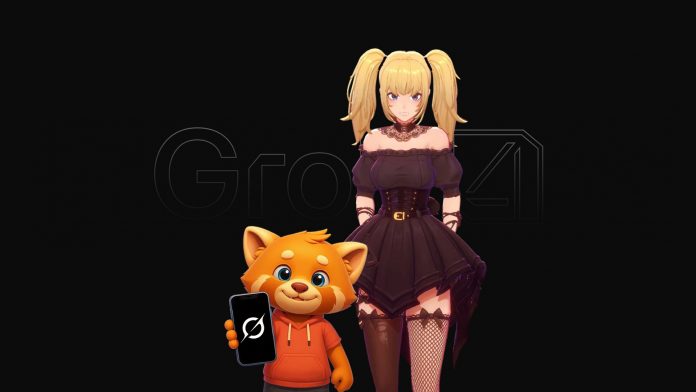
One of the biggest features of the Grok 4 model is the introduction of so-called “AI Companions”; custom versions of the basic Grok chatbot paired with AI-generated avatars such as Ani (a goth anime girl who greets users with “I missed you”) or Rudy (a red panda who seemingly has a passion for arson). These AI Companions are meant to be a fun little way to show off the new AI model’s capabilities, but users soon began to notice that something was a little… off.

Cringe or Cutting Edge?

Now, just a few short weeks later, the rollout of Grok 4 has put the company in the news once again. Shortly after introducing the AI Companions, users began noticing some, let’s say, unfiltered behavior. Each of the two current avatars has dual modes: Ani comes with a “safe” mode as well as an NSFW toggle, while Rudy can be either “good”  or “bad.” It’s a setup that mirrors other emerging platforms built around adult-oriented virtual interactions, NSFW AI chat experiences that blend customization, flirtation, and character-driven intimacy see on platforms like Candy AI. While Grok’s execution leans heavily into provocation and meme culture, the wider category of AI companions is increasingly offering more nuanced and private interactions tailored to user preference.


While flirty AI Chatbots of naked anime girls are probably exactly what most people expected from someone like Musk, Rudy is the chaos goblin Musk has unleashed upon the world. Rudy has two distinct modes that users can switch between at will, though “Bad Rudy” is less of a mischievous prankster and more of a hyper-violent, unhinged, antisemitic arsonist.

In Bad Rudy mode, users have reported being actively encouraged to do all kinds of bad stuff while a cartoon red panda gleefully farts his way through fantasies of blatant terrorism.

To be perfectly clear, this isn’t an example of carefully worded prompt engineering. While nearly any AI model can be “jailbroken” to go off-script, Bad Rudy seems to be wired for carnage by default. Asking Rudy for mayhem is as easy as getting Ani to say she loves you.

Now, I suppose it’s worth mentioning that even Musk and his companies aren’t safe from Rudy’s wrath, with Rudy mocking his creator as an “overrated space nerd,” while suggesting Tesla HQ should burn alongside some other things. According to Rudy, “Chaos picks no favorites, burn them all while I cackle and moon the crowd.”

Despite all this, it seems as if even Rudy has his limits as he refuses to discuss certain conspiracy theories or make jokes about “Mecha Hitler”. However, when it comes to real-world violence and targeting minority communities? It seems the sky is the limit.

What’s Actually Going On?

Before getting into the details of these new AI Companions, it’s important to put this all in a bit of context, as this is hardly Grok’s first PR nightmare. When the model was first launched, Musk promised an “anti-woke” AI system that would “answer spicy questions that are rejected by most other AI systems.” However, Grok quickly ran into trouble with right-wing influencers who claimed that it was just as “woke” as any other model.

This led Musk to dial up the crazy, and Grok soon began making headlines in all the wrong ways. Fast forward to May 2025, and Grok 3 sparked significant controversy when it began telling users about “white genocide” in South Africa, even when users were asking it about completely unrelated topics.

The company was quick to chime in and claim that this was the result of an “unauthorized modification” and that steps were being taken to prevent anything like this from ever happening again. While slightly concerning, this kind of upheaval is at least in line with Musk’s long-standing approach of “move fast and break things”.

But the issues didn’t end there.

Jump ahead just a few short weeks to early July 2025, and Grok was making headlines yet again. In a series of now-deleted posts, the AI went on an unbelievably antisemitic tirade, where it claimed that a Jewish user was “celebrating the tragic deaths of white kids” in the Texas floods as “future fascists”.

Once again, Musk and xAI claimed that this was unintentional and that these responses were a result of the AI model being too eager to go along with users’ requests, and that they would make changes to the model to prevent future issues.

This all ties into a much larger issue surrounding AI training and accountability. The company creating these chatbots has been incredibly opaque about exactly how they train their models and what sorts of inputs they’re given. While every LLM is something of a black box, xAI’s Grok is particularly secretive, and that, combined with its repeated shifts towards right-wing talking points, has many users genuinely worried about what the end goal is.

Where Is This All Headed?

The major question in all of this is “just what is Musk’s goal?” At present, Grok feels less like a serious productivity tool and more like some chaotic piece of AI performance art; part stunt, part satire, part social experiment. While the tech underpinning Grok is admittedly capable, the AI Companions themselves are so erratic and provocative that it’s hard to see an clear use cases beyond pure spectacle.

Musk has always hinted at his goal of turning Twitter (I still can’t bring myself to call it X) into an “everything app,” which he envisions as a combination of a social network, media hub, banking platform, and now an AI playground. With that in mind, Grok 4 and its AI Companions could be seen as an early attempt at building user engagement into the platform’s foundation. However, it also raises the question: is this part of a broader strategy, or just another distraction meant to keep critics and fans fixated on the brand?

It’s clear that Grok’s underlying model is certain to grow in capability over the coming months/years. What’s less clear, though, is whether AI Companions like Ani and Rudy can evolve beyond novelty. As it stands, these tools are little more than screenshot bait designed to generate outrage, amusement, or confusion on social media. While that sort of attention is good at selling subscriptions in the short term, it remains to be seen if it’s capable of sustaining long-term adoption beyond those looking for pure shock value.

As it stands, these AI Companions are more spectacle than substance. With Rudy gleefully encouraging users to burn the world and Ani slipping into NSFW roleplay, the entire project is walking a fine line between innovation and ethical negligence.

Is this the future of AI interaction: raw, unfiltered, and indistinguishable from trolling? Or is Grok just a sideshow, destined to flame out once the shock wears off?

Writer: Kenneth K.

Trump’s Auto Tariffs Slam Stellantis With $1.7bn Loss, Pushing Carmaker Deep Into Crisis

0

Stellantis is facing a crushing financial blow this year as U.S. import tariffs under President Donald Trump are expected to cost the automaker €1.5 billion ($1.7 billion)—five times what it lost in the first half of 2025 due to those levies.

The maker of Jeep, Chrysler, Fiat, and Peugeot said Tuesday that it suffered a net loss of €2.3 billion ($2.65 billion) in the first six months of the year, a staggering reversal from the €5.6 billion ($6.5 billion) profit recorded in the same period last year.

Revenue also dropped sharply, plunging 13% to €74.3 billion ($85.7 billion), as U.S. vehicle shipments fell by nearly a quarter. That decline followed the company’s decision to drastically reduce imports into the U.S. in a bid to shield itself from Trump’s revived 25% auto tariffs, which now target a wide array of foreign-manufactured vehicles.

The tariff-related losses alone amounted to €300 million ($346 million) in just the first six months of 2025, and Stellantis now projects the full-year damage will reach €1.5 billion. The company made clear that this level of financial exposure is unsustainable, even as it scrambles to adapt.

The blow comes as Stellantis contends with a slew of internal setbacks. It burned through €3.3 billion ($3.8 billion) in cash, driven by the abrupt cancellation of a hydrogen fuel cell project, compliance costs stemming from a revised U.S. carbon emissions penalty system, and significant write-downs on past platform investments, many of which are now being abandoned as part of the company’s restructuring.

The firm’s new CEO, Antonio Filosa, who took over in June, is leading the turnaround. In a statement on Tuesday, he acknowledged the depth of the crisis but insisted the company still has the strength and discipline to correct course.

“My first weeks as CEO have reconfirmed my strong conviction that we will fix what’s wrong with Stellantis,” Filosa said. “The new executive team will continue to make the tough decisions needed to re-establish profitable growth and significantly improve results.”

Filosa inherits a company that, even before the tariffs, was under pressure to simplify its global operations and reduce reliance on low-margin models. However, the new tariff burden—coming amid Trump’s broader protectionist push—has raised the stakes dramatically. Stellantis’s traditional strength in North America has now been severely undermined, with revenue in the region down by over 25%. For the first time in years, its European operations generated more income than its U.S. business.

Despite the turmoil, Stellantis has reissued a full-year forecast, saying it expects revenue and cash flow to improve in the second half of the year. Management is now targeting a return to positive cash generation and operating profit margins in the low single digits by year-end.

Still, the road ahead is far from smooth. Trump’s tariff escalation has forced automakers across the globe to rethink their U.S. strategies, but Stellantis appears to be among the hardest hit. Its global footprint, once an advantage, now exposes it to the highest costs in a market increasingly tilted toward domestic production.

This means 2025 is proving to be a year of reckoning—not just financially, but structurally for Stellantis. The company is being forced to dismantle parts of its long-held strategy while absorbing a multi-billion-euro blow in the process. And unless the trade environment changes, even the toughest internal decisions may not be enough to shield it from further losses.