DD
MM
YYYY

PAGES

DD
MM
YYYY

spot_img

PAGES

Home Blog Page 808

How to Use X For Business Growth

0

In today’s digital age, social media is no longer just a platform for personal interactions it has become a powerful tool for businesses to reach their audience, build brand presence, and engage customers. Among the many platforms, X (formerly Twitter) stands out as one of the most dynamic social media tools that businesses can leverage for growth, customer service, and brand awareness.

In this guide, we’ll walk you through everything you need to know about using X for business, from setting up your account to mastering content strategies and boosting engagement. Whether you’re new to X or looking to optimize your existing account, this comprehensive guide will help you make the most of X for your business.

Why Use X (Twitter) for Business?

X is a powerful platform for business growth, offering numerous benefits for companies that want to engage with their audience, build their brand, and provide excellent customer service. Here’s why businesses should use X:

  • Massive Reach: With over 540 million monthly users, X allows businesses to tap into a massive, diverse audience.
  • Real-Time Engagement: X is built for real-time conversations, making it a perfect platform for live updates, quick responses, and trending discussions.
  • Brand Awareness: X allows businesses to engage with users by sharing valuable content, which can help increase brand visibility.
  • Customer Support: X is widely used for customer service, with 64% of users preferring to message businesses rather than call them. Businesses can use X to answer questions, resolve issues, and even provide personalized support through direct messages.
  • Insights and Analytics: X provides valuable insights into your audience’s behavior, allowing you to track performance, measure engagement, and improve your strategy over time.

Setting Up Your X (Twitter) Business Account

Before diving into strategies, it’s important to set up your X business account properly. Here’s how:

Step 1: Create a Personal X Account

Start by creating a personal X account if you don’t already have one. Go to the X sign-up page and follow the prompts. Make sure to use a professional email address that reflects your business.

Step 2: Convert Your Account to a Business Profile

Once your personal account is set up, X allows you to convert it to a professional business account. This gives you access to additional features tailored to businesses, such as analytics and business-specific tools.

Step 3: Set Up Your Profile

Create an appealing profile for your business by uploading a high-quality logo as your profile image and a visually engaging header image. Your profile should be eye-catching and informative, so be sure to fill out your bio with details about your products, services, and what your business stands for.

Step 4: Link to Your Website

Make sure to include a link to your business website in your profile. This makes it easy for customers to learn more about your offerings and engage with your brand outside of X.

Content Strategies for X (Twitter) for Business

Effective content is the foundation of a successful X strategy. Here’s how you can create content that resonates with your audience:

1. Share Engaging Content

Content that educates, entertains, and informs works best on X. Share industry news, product updates, tips, and other content that adds value to your followers. Including rich media such as images, GIFs, or videos can help increase engagement.

2. Use Hashtags Wisely

Hashtags help your posts reach a larger audience. Use relevant and trending hashtags to increase discoverability. But don’t overdo it X recommends using no more than two hashtags per post.

If you’re unsure how to choose or use hashtags effectively, this guide on how to use hashtags on Twitter is a must-read. It breaks down best practices, offers strategic tips, and shows how to use hashtags to expand your reach without overwhelming your posts.

3. Post Regularly

Consistency is key. Regular posting keeps your business visible and top-of-mind for your audience. Use scheduling tools like Hootsuite or Buffer to plan your posts and stay consistent.

4. Be Authentic

Inject personality into your posts. A genuine and authentic brand voice will resonate more with your audience, making your content relatable and shareable.

Engaging with Your Audience on X

Social media is about more than just posting content—it’s about interaction. Here’s how to engage with your audience on X:

1. Respond Quickly

When customers tag your business in a post or send a direct message, respond promptly. Fast responses show your commitment to customer service and help build trust.

2. Run Polls and Surveys

Polls are a fun and engaging way to interact with your audience. They also provide valuable insights into your audience’s preferences, helping you tailor your marketing strategies.

3. Create Polls or Q&A Sessions

Polls and Q&A sessions are a great way to engage followers directly. Use X’s real-time interaction capabilities to run live sessions where your audience can ask questions or vote on key issues.

Best Practices for X (Twitter) for Business

Here are some best practices to help you get the most out of X for your business:

1. Be Authentic and Consistent

Your followers want to know the real you. Be consistent with your tone, voice, and messaging across all your posts. Authenticity helps build trust and strengthens relationships.

2. Engage in Real-Time

X is a platform for real-time interactions. Be ready to engage with your audience instantly, whether it’s responding to inquiries, addressing issues, or joining live conversations.

3. Leverage Twitter Spaces

Twitter Spaces allows you to host live audio conversations. Use this feature to engage with your audience, host industry experts, or discuss topics that matter to your followers.

4. Stay Updated on Trends

X is home to many trending topics that businesses can leverage. Keep an eye on trending hashtags and participate in relevant conversations to increase your visibility.

5. Integrate with Customer Service Tools

For seamless customer support, integrate your X account with customer service software like Zendesk. This helps centralize communications and ensures you don’t miss any customer inquiries.

Boost Your Account with Purchase Driven Growth

Building a business presence on X can be slow, especially when starting with few followers. Even with great content, it’s tough to gain traction. Investing in real followers can solve this issue by providing the social proof your account needs to get noticed.

So, gain genuine followers on X from a trusted provider like Media Mister, which can help create momentum, support your growth, and engage the right audience.

While buying followers it’s a smart way to boost initial exposure and accelerate growth, ultimately leading to organic, sustained success on X.

Conclusion

X is an incredibly powerful tool for business growth, offering opportunities for engagement, customer service, and brand awareness.

By setting up your business profile, creating valuable content, engaging with your audience, and leveraging services like Media Mister, you can unlock the full potential of X and take your business to the next level.

Start implementing these strategies today and watch your business thrive in the fast-paced world of social media.


China Proposes Global AI Cooperation Body, Countering Trump’s Deregulation Push

0

China has proposed the creation of a global artificial intelligence cooperation organization, calling for a unified international effort to manage the rapid rise of AI and its associated risks.

Premier Li Qiang announced the plan during the opening session of the World Artificial Intelligence Conference (WAIC) in Shanghai, a three-day tech gathering that draws policymakers, researchers, and corporate leaders from around the world.

Speaking on Saturday, Li described artificial intelligence as a “new engine for growth,” while warning that its development must be balanced with the urgent need for global security safeguards. He said the current governance landscape is fragmented and lacks the coordination required to manage the far-reaching implications of AI.

“The risks and challenges brought by artificial intelligence have drawn widespread attention,” Li said. “How to find a balance between development and security urgently requires further consensus from the entire society.”

China’s proposal comes just days after U.S. President Donald Trump signed an executive order aimed at aggressively deregulating the AI sector. The administration’s move is part of a broader push to solidify U.S. dominance in the field and promote so-called “patriotic AI.” The White House also warned against what it termed “woke” artificial intelligence, signaling a rejection of ethical safeguards that might slow innovation.

In contrast, China’s vision—anchored in multilateralism—emphasizes open-source development, safety, and international inclusivity. Li Qiang stressed that China is willing to share its AI advancements with other countries, particularly developing nations in the Global South, and called for the creation of an AI governance platform based in Shanghai. The platform, under China’s 13-point action plan, would serve as a hub for global dialogue, safety standards, open-source tools, and coordinated policy.

While Li did not directly name the U.S., his speech alluded to the risks of technological monopoly, cautioning that AI should not become an “exclusive game” controlled by a few powerful nations and corporations. He also pointed to challenges such as the restricted supply of AI chips and limitations on international talent exchange—an apparent reference to U.S. export curbs on advanced AI semiconductors and chipmaking equipment.

The proposal envisions collaboration under the framework of the United Nations, including new international mechanisms for dialogue and consensus-building. It also seeks to build data infrastructure and cloud systems that can support large-scale AI systems, especially in under-resourced regions. The plan underscores Beijing’s ambition to play a leading role in shaping the rules of global AI development while challenging the Western-led regulatory model.

The World AI Conference itself reflects the shifting dynamics of tech leadership. With over 800 companies in attendance, the event showcased more than 3,000 AI innovations, including 40 large language models, 50 advanced AI devices, and 60 humanoid robots. Leading Chinese firms such as Huawei, Alibaba, and robotics startup Unitree dominated the exhibition floors, although U.S. giants including Tesla, Alphabet, and Amazon were also present.

Notably absent this year was Elon Musk, who had previously participated in WAIC openings. Other prominent speakers included Geoffrey Hinton, known as the “godfather of AI,” former Google CEO Eric Schmidt, and Anne Bouverot, France’s special envoy for artificial intelligence.

The conference also took place amid growing concern about AI’s disruptive impact on information access, employment, and control. Earlier in the week, media companies raised alarm over studies suggesting AI-generated summaries in search engines could slash audience traffic by up to 80%, threatening the viability of journalism and other content-driven sectors.

As China pushes for collective governance and the U.S. races ahead with deregulation, the divide between the world’s top two tech powers is becoming increasingly stark. While the Trump administration is betting on speed, competition, and reduced oversight, China is positioning itself as a stabilizing force willing to offer what it calls “Chinese wisdom” to build a more inclusive and cooperative AI future.

Galaxy Digital Concludes The $9B Bitcoin Sale On Behalf of Satoshi-Era Investor

0

Galaxy Digital, a leading crypto asset manager, finalized the sale of over 80,000 BTC, valued at approximately $9 billion, for a Satoshi-era investor on July 25, 2025. This transaction, one of the largest in crypto history, was part of the investor’s estate planning strategy. The Bitcoin was moved in two tranches of roughly 40,000 BTC each on July 15 and July 18, with some coins sent to exchanges like Binance and Bybit.

Despite the massive sale, Bitcoin’s price remained resilient, recovering from a dip below $115,000 to trade around $117,500, and currently above $118,000 indicates a strong market absorption. However, CryptoQuant’s CEO raised concerns that the coins might be linked to the 2011 MyBitcoin hack, though Galaxy described the seller as an early investor.

The sale of 80,000 BTC, representing about 0.4% of Bitcoin’s total supply, was absorbed without significant price disruption. This suggests robust market liquidity and investor confidence, as Bitcoin’s price quickly recovered to around $117,500. The movement of such a large stash from an early Bitcoin investor highlights renewed activity among long-dormant holders. This could signal strategic wealth management or profit-taking, potentially influencing other early adopters to act similarly.

The sale being part of estate planning indicates that early crypto investors are increasingly focusing on wealth transfer, possibly prompting more institutional-grade solutions for managing large crypto holdings. Concerns raised by CryptoQuant’s CEO about a possible link to the 2011 MyBitcoin hack could spark debates about the legitimacy of large Bitcoin transactions. If verified, this could lead to regulatory scrutiny or legal challenges, affecting market sentiment.

The transfer of coins to major exchanges like Binance and Bybit underscores their role in handling high-volume trades. However, it may also raise questions about exchange transparency and the potential for market manipulation. The sale’s minimal impact on price could reinforce bullish sentiment, showing Bitcoin’s resilience. Conversely, if more Satoshi-era wallets move, it might create short-term selling pressure or volatility.

This event underscores Bitcoin’s maturing market infrastructure while highlighting risks tied to transparency and historical controversies. Many Satoshi-era investors retain their Bitcoin, betting on further price appreciation. The resilience of Bitcoin’s price post-sale suggests these holders see it as a long-term store of value.

The Galaxy Digital sale was part of estate planning, indicating a strategy to secure wealth for heirs. This may involve trusts, structured sales, or transferring assets to institutional custodians to manage tax and legal complexities.

Selling large holdings in tranches, as seen with the two 40,000 BTC transfers, minimizes market impact. Investors work with firms like Galaxy Digital to execute over-the-counter (OTC) trades, ensuring liquidity without crashing prices. Early investors may sell portions of their Bitcoin to diversify into other assets (e.g., equities, real estate, or altcoins) to mitigate risk, especially given Bitcoin’s volatility and regulatory uncertainties.

Liquidating holdings strategically can address tax liabilities. For instance, selling in a low-tax jurisdiction or timing sales to offset gains with losses can maximize returns. Given speculation about ties to events like the 2011 MyBitcoin hack, some investors prioritize anonymity, using mixers or privacy-focused methods to obscure transaction trails, while others rely on regulated firms for transparency.

Some redirect proceeds into charitable causes or new crypto ventures, leveraging their wealth to influence the ecosystem’s growth. The Galaxy Digital case highlights a blend of estate planning and gradual liquidation, reflecting a strategic balance between preserving wealth, managing risk, and navigating market dynamics. However, concerns about historical hacks suggest some investors may also face legal or ethical considerations when liquidating.

Tesla Scrambles for Redemption as Cybertruck Crashes – Now Robotaxi Seems Like Last Hope

0

Tesla is scrambling to regain investor confidence as a wave of setbacks continues to erode its dominance in the electric vehicle industry. The company, once considered untouchable in the EV space, is now relying on a bold, high-stakes pivot toward autonomous vehicles — a move seen by some as visionary, but by others as desperate.

Less than two years after its dramatic debut, the Cybertruck has turned from Tesla’s most anticipated launch into one of its biggest disappointments. The vehicle’s production has been plagued by engineering flaws and quality control issues. Sales are collapsing. According to Cox Automotive, only 4,306 Cybertrucks were sold in the second quarter of 2025, a sharp 32% drop from Q1 and a staggering 50% decline year-over-year. Those figures are not just bad — they’re the worst Tesla has posted for any model over the course of a year.

That dismal performance allowed General Motors’ GMC Hummer EV lineup — both SUV and pickup — to overtake Tesla, registering 4,508 units sold, up from 3,479 the previous quarter. In a bid to clear inventory, Tesla is now including free Full Self-Driving (FSD) software, normally priced at $12,000, with Cybertruck purchases — a striking reversal for a company that typically reserves such perks for its most loyal base.

The deeper problem, however, may be systemic. Tesla’s overall vehicle deliveries fell 16% year-over-year in Q2, missing Wall Street expectations. The slump is felt globally, with noticeable weakness in California, traditionally Tesla’s largest market, and worsening conditions in Europe, where local automakers are taking back market share. Tesla blamed factors such as Trump’s new import tariffs on Chinese EVs and the expiration of U.S. EV tax credits, but analysts say the problems go beyond policy.

The financial hit is already visible. Tesla’s quarterly earnings showed a sharp decline in profit margins as the company slashed prices in a bid to maintain relevance. And while its rivals invest in scaling production and refining quality, Tesla’s reputation has taken hits not just from vehicles but from Elon Musk’s polarizing political stances, which continue to alienate portions of the customer base.

In the face of all this, Musk is now betting the company’s future on a dream he’s been selling for years: robotaxis.

According to an internal memo, Tesla plans to launch its robotaxi service in San Francisco this weekend, with eyes on expanding across the U.S. in the coming months. Musk said he expects the fleet to reach half of the U.S. market by year-end, pending regulatory approval.

The robotaxi project is closely tied to Tesla’s Full Self-Driving software — a system that, despite years of development and testing, still operates under driver supervision and has drawn scrutiny from safety regulators. Musk insists that autonomy is around the corner, and that robotaxis will eventually generate “massive passive income” for Tesla owners and billions in recurring revenue for the company.

Some analysts are still buying into the long-term story.

“This is not just a car company anymore,” said Dan Ives of Wedbush Securities. “This is an AI and robotics play. Deliveries are under short-term pressure, but autonomous driving and the AI ecosystem could add $1 trillion to Tesla’s valuation. That’s our bull thesis.”

Keith Fitz-Gerald, Chief Investment Officer at Fitz-Gerald Group, noted: “Betting against Elon Musk is like betting against Steve Jobs. Tesla could reach a $20 trillion valuation if it executes.”

Musk responded to the claim by saying: “Extreme execution is needed, but a $20 trillion valuation is possible.”

But that extreme execution is still elusive. Tesla’s other futuristic project, the Optimus humanoid robot, is way behind schedule. The company had planned to produce 5,000 units in 2025, but more than halfway through the year, output is still in the hundreds, according to sources familiar with the matter. There’s no clear path to scaling the robot, which Musk once said could be bigger than the EV business itself.

Skepticism is mounting. Jefferies analysts called Tesla’s latest update “dull,” while Goldman Sachs said robotaxi progress appears limited. Even longtime supporters are beginning to question whether the company is spreading itself too thin across vehicles, AI, robotics, and now ride-hailing services — all while its core business declines.

The stock has reflected those concerns. Tesla shares dropped 8% on Thursday following the earnings report, clawed back 3.5% Friday, but are still down 22% year-to-date, making it the worst performer among major tech giants.

Against this backdrop, Tesla’s future seems to hinge on whether its AI and autonomy pivot can deliver — literally and figuratively. It’s a bet on a future that hasn’t yet arrived. And for a company that once reshaped the car industry, that may be its riskiest road yet.

Navy Veterans’ Startup Spear AI Raises $2.3M, Wins $6M Navy Contract to Revolutionize Underwater Surveillance with AI

0

A defense tech startup founded by two US Navy veterans has emerged as a potential game-changer in the murky world of undersea surveillance.

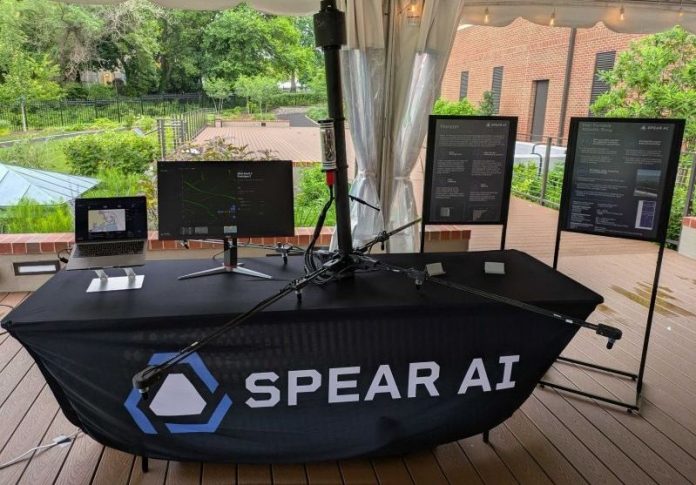
Washington-based Spear AI, launched in 2021 by Michael Hunter, a former Navy SEAL analyst, and John McGunnigle, a retired nuclear submarine commander, has landed its first external funding and secured a $6 million contract from the US Navy to enhance submarine detection systems using artificial intelligence.

The company specializes in interpreting passive acoustic data — underwater sound collected by hydrophones and other listening devices — a domain that has long been a challenge for naval forces due to the difficulty of distinguishing benign environmental sounds from potential military threats. Traditional AI systems, typically trained on labeled image or text data, struggle in this setting because underwater acoustic data is mostly unstructured and unlabeled.

Spear AI addresses this with a combination of hardware and software. Its solution includes deployable sensors that can be attached to buoys or vessels, along with proprietary AI-driven software that labels and organizes acoustic data, enabling advanced machine learning models to extract actionable intelligence from what would otherwise be an ocean of noise. The system helps operators differentiate between the sound of a pod of whales and a silent-running submarine — a vital distinction in high-stakes naval operations.

The recently awarded $6 million Navy contract focuses on deploying Spear AI’s data-labeling tool, designed to support more accurate threat classification and improve the speed at which crews can respond to evolving underwater risks. It’s a critical capability at a time when rival powers are stepping up submarine deployments, and information asymmetry under the sea remains a major vulnerability for naval forces.

In parallel, Spear AI announced a $2.3 million seed funding round backed by venture capital firms with a focus on artificial intelligence and national defense technologies. The capital will fuel the company’s growth, including a planned expansion of its 40-person workforce, which the founders say will double in the coming months. This growth will enable Spear AI to accelerate the deployment of its tech and expand its scope of applications.

Hunter and McGunnigle say they deliberately avoided raising money or chasing contracts until they had built a product capable of solving real-world problems.

“We wanted something that could deliver immediate value to operators,” Hunter said. “Then we’d go out for funding — not the other way around.”

Beyond military use, Spear AI is exploring commercial applications, including monitoring undersea infrastructure like oil pipelines and subsea internet cables — areas increasingly targeted by sabotage or requiring enhanced monitoring due to their strategic importance.

The startup is also looking to offer consulting services, aligning itself with business models used by defense tech companies like Palantir. This approach would allow Spear AI not just to sell tools but to help clients, both military and civilian, embed AI capabilities into their operations, particularly in complex, high-risk environments where accuracy and reliability are critical.

However, this further underlines the growing use of AI to increase warfare capabilities, a development in the AI arms race that has gotten in the way of a unanimous global safety guardrail. The U.S. has repeatedly expressed concerns about China’s potential in developing super military technologies powered by AI, prompting Washington’s restrictions on some chip exports to China.

China has condemned the U.S. stance. Chinese Premier Li Qiang warned on Saturday during the annual World Artificial Intelligence Conference (WAIC) in Shanghai that artificial intelligence development must be weighed against the security risks, adding that global consensus was urgently needed.

“The risks and challenges brought by artificial intelligence have drawn widespread attention … How to find a balance between development and security urgently requires further consensus from the entire society,” the premier said.

With global tensions on the rise and the Pentagon pushing to modernize its forces, startups like Spear AI are expected to play a growing role in reshaping 21st-century defense strategies. And in domains like undersea warfare — where surveillance has historically lagged due to technical limitations — the company’s AI-first approach could redefine how threats are detected and neutralized.